When we talk about professional Google Ads account management, the conversation inevitably leads to the Google Ads Manager Account, formerly known as My Client Center (MCC). Think of this as your digital command center. Instead of logging in and out of twenty different accounts—risking password fatigue and oversight errors—a manager account acts as a centralized hub.
With a single sign-in, we can oversee an entire portfolio of accounts. This manager account overview highlights how the tool is designed specifically for time-saving. For an agency like ours in Woburn, MA, this efficiency is what allows us to spend less time on administrative clicking and more time on high-level strategy.
The dashboard provides a bird’s-eye view of performance multipliers. For example, research shows that certain well-structured campaigns, such as those for seasonal events like graduation or luxury travel, can see performance multipliers of 1.1x to 1.2x when managed through a consolidated system. This level of oversight is similar to how we approach high-performing social media ads, where cross-platform data informs better lead conversion.
Who Needs Professional Google Ads Account Management?
Not every business needs a manager account, but if you fall into one of the following categories, it is a game-changer:
Multi-brand businesses: If you own a furniture store in Beverly and a lighting shop in Salem, keeping their data separate but accessible is vital.
Marketing agencies: Managing dozens of clients across Massachusetts requires a unified interface.
Large-scale advertisers: Once you hit the 20-account limit for a single email address, a manager account becomes a requirement.
Feature
Individual Account
Manager Account (MCC)
Login
Unique per account
Single sign-in for all
Reporting
One account at a time
Cross-account comparison
Billing
Individual invoices
Consolidated monthly invoicing
Access Control
Managed per account
Hierarchy-based permissions
Scalability
Manual updates
Automated rules for 1,000 accounts
Key Differences Between MCC and Google Ad Manager
It is a common point of confusion, but a Google Ads Manager Account (MCC) and “Google Ad Manager” (GAM) are two very different tools.
The MCC is for advertisers. Its purpose is campaign oversight, bidding, and managing the money you spend on Google. On the other hand, Google Ad Manager is for publishers. It is a platform for large websites to monetize their own inventory and manage direct sales of ad space. If you are looking to grow your business through search and display ads, you are looking for Google Ads account management through an MCC.
Core Benefits of Centralized Google Ads Account Management
One of the most immediate benefits we see for our clients is the simplification of the “boring” stuff—billing and reporting. In Google Ads account management, consolidated billing is a massive relief for accounting departments. Instead of chasing down fifteen different credit card statements, a manager account allows for monthly invoicing across multiple linked accounts.
Beyond the paperwork, the strategic benefits are even more impactful:
Cross-account reporting: We can compare how a “Home Services” campaign is performing in Arlington versus how it’s doing in Quincy without switching tabs.
Shared libraries: We can share negative keyword lists or remarketing audiences across multiple accounts, ensuring that if we find a “junk” keyword for one client, we can block it for all relevant clients instantly.
Conversion tracking: Implementing cross-account conversion tracking allows for a more holistic view of the customer journey.
This centralized approach mirrors the strategies used by a local Facebook marketing agency, where data from one campaign often provides the “aha!” moment for another.
Scaling Operations with Automated Rules and Monitoring
Automation is the secret sauce of modern Google Ads account management. Within a manager account, a single user can have up to 100 active rules running across as many as 1,000 accounts.
These rules act as 24/7 assistants. For instance, we can set a rule to:
Adjust Budgets: Increase daily spend by 20% on weekends for high-intent keywords.
Quality Score Triggers: Send an alert if a keyword’s Quality Score drops below 5.
Pause Low Performers: Automatically pause ads that have reached a certain spend threshold without a conversion.
One critical expert tip: Always consider time zones. Manager account rules run based on the manager’s time zone, but the data is pulled from the client’s time zone. If you are managing a client in a different zone, your “midnight” rule might actually be pulling data from their “9:00 PM,” which can lead to discrepancies if not accounted for.
Streamlining Multi-Account Campaign Execution
Efficiency is born from bulk editing. If you need to change the landing page URL for fifty different campaigns because of a website redesign, doing it manually is a recipe for errors. With centralized management, we can perform bulk status updates, ad group duplications, and even copy entire campaign structures from one account to another.
Using templates is a cornerstone of Facebook advertising agency strategies as well. By creating a high-performing “Gold Standard” campaign, we can duplicate that success across other accounts, retaining the structure and settings while simply swapping out the specific local keywords and creatives.
Advanced Tactics for Multi-Account Control and Security
Security is paramount when you are handling multiple business accounts. The manager account allows us to manage access to your Google Ads account with surgical precision.
Access Levels: Administrative vs. Standard
You don’t always want every team member to have full “keys to the kingdom.” Google provides several levels of access:
Administrative: Can manage users, edit all parts of the account, and manage billing.
Standard: Can edit campaigns but cannot manage users.
Read-only: Can see reports but cannot make changes.
Billing only: Can only see and edit payment information.
Regular security audits are a must. We recommend reviewing user invitations and active permissions quarterly to ensure that former employees or contractors no longer have access to sensitive data.
Organizing Structures for Optimal Google Ads Account Management
Organization is the difference between a clean, high-performing account and a “spaghetti” account where nobody knows what’s running. We recommend a hierarchy based on business goals or website structure.
Labeling Systems: Use labels to group accounts by industry (e.g., “Home Services”), region (e.g., “North Shore”), or account manager.
Campaign Categorization: Align your campaigns with your website’s top-level navigation.
Ad Group Relevance: Keep ad groups tightly themed. If you sell “Blue Widgets” and “Red Widgets,” they should never be in the same ad group. This ensures your ad copy is 100% relevant to the searcher’s intent.
Navigating Industry Costs and Management Fees
Understanding the financial side of Google Ads account management is essential for any business owner in Massachusetts. The cost of advertising on Google is split into two parts: the “Ad Spend” (what you pay Google) and the “Management Fee” (what you pay an agency or professional).
Understanding Industry Pricing Standards
Based on average online data, Cost-Per-Click (CPC) can range wildly from $0.50 to over $50.00 depending on the industry and the intent of the keyword. High-value sectors like insurance or legal services in competitive markets like Boston often see the higher end of that spectrum.
When it comes to management fees, industry averages typically fall in the 7% to 12% range of monthly ad spend. However, for smaller accounts or more intensive strategic work, fees can range from 5% to 30% or more.
Important Note: The pricing listed above is based on average online industry data and does not represent AQ Marketing’s actual pricing. We focus on providing a wide spread of options tailored to the specific needs of small to medium-sized businesses.
Our focus is always on ROI and budget optimization. It isn’t about how much you spend; it’s about how much that spend generates in real-world leads and sales. By identifying wasted spend through a deep audit—often finding broad match keywords that are eating budget without converting—we can frequently “pay for our own fee” just by reallocating existing funds more wisely.
Frequently Asked Questions about Google Ads Management
How many Google Ads accounts can be linked to one email?
A single email address can be associated with up to 20 Google Ads accounts. However, once you are managing more than two or three, we highly recommend moving to a Manager Account. It provides a much cleaner hierarchy and prevents the need for constant password switching.
What are the benefits of consolidated billing?
Consolidated billing allows you to receive one monthly invoice for all your linked accounts. This is particularly useful for businesses that need to apply for a credit line with Google. It streamlines accounting and provides a clear, administrative view of your total marketing investment across all brands or locations.
How do automated rules handle different time zones?
This is a tricky one! Automated rules run based on the Manager Account’s time zone. However, the performance data the rule looks at (like “clicks yesterday”) is based on the Client Account’s time zone.
For example, if your manager account is in Eastern Time (Woburn, MA) and you have a rule to pause an ad at midnight, but the client is in Pacific Time, that ad might pause three hours “early” for them. Always use the “Preview” function to see exactly when and where your rules will fire before you save them.
Conclusion
Mastering Google Ads account management is about more than just knowing where the buttons are; it’s about building a scalable, secure, and efficient system that drives growth. Whether you are a multi-location business in the North Shore or an agency looking to streamline your workflow, the tools provided by Google Ads—when used correctly—can transform your digital presence.
At AQ Marketing, we believe in digital transformation that leads to long-term, impactful results. Since 2003, we’ve been helping businesses navigate these complexities so they can focus on what they do best: running their business. If you’re ready to take the next step in your strategic growth, contact AQ Marketing for full-service digital marketing and let us help you turn your ad spend into a powerful engine for success.
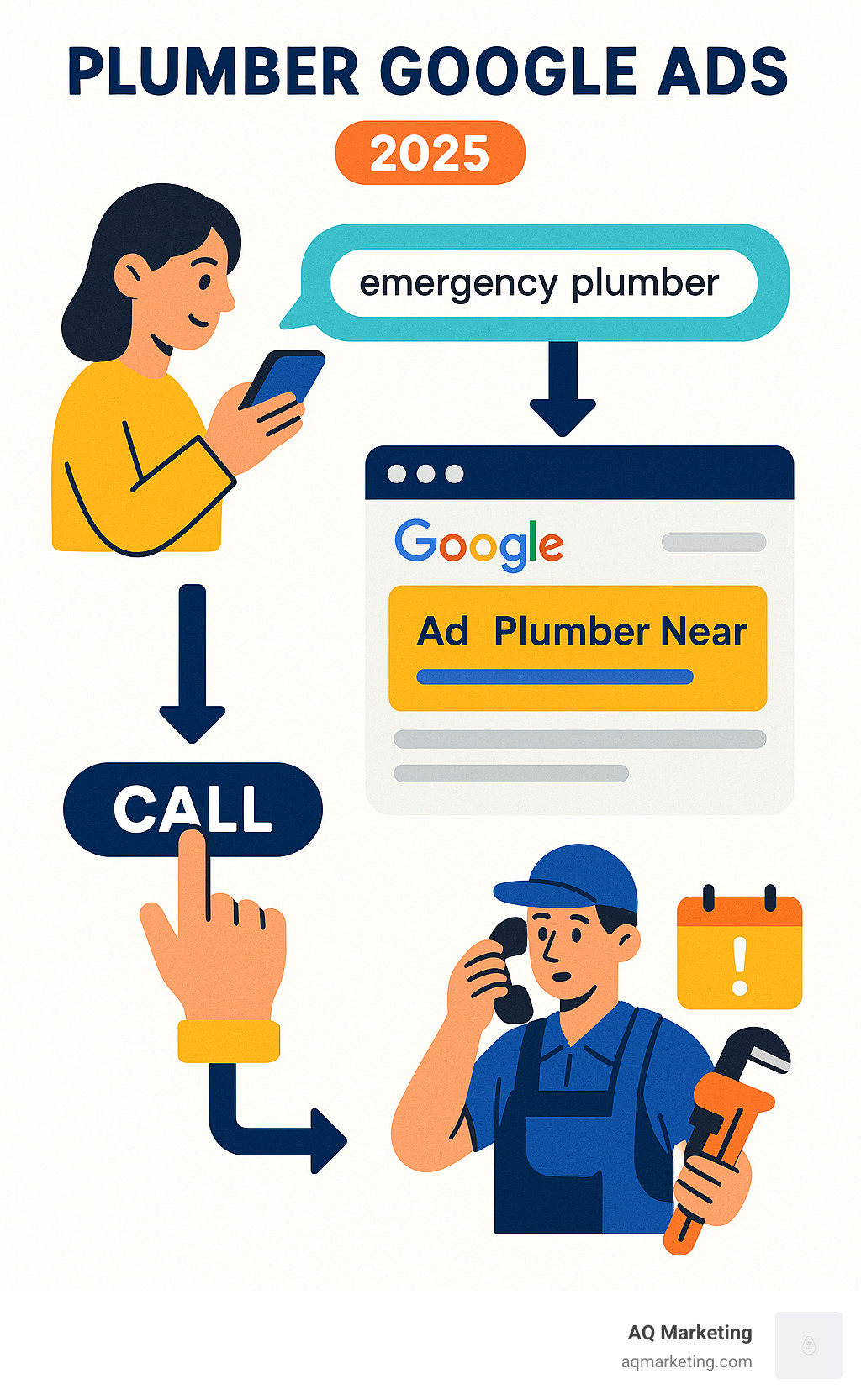
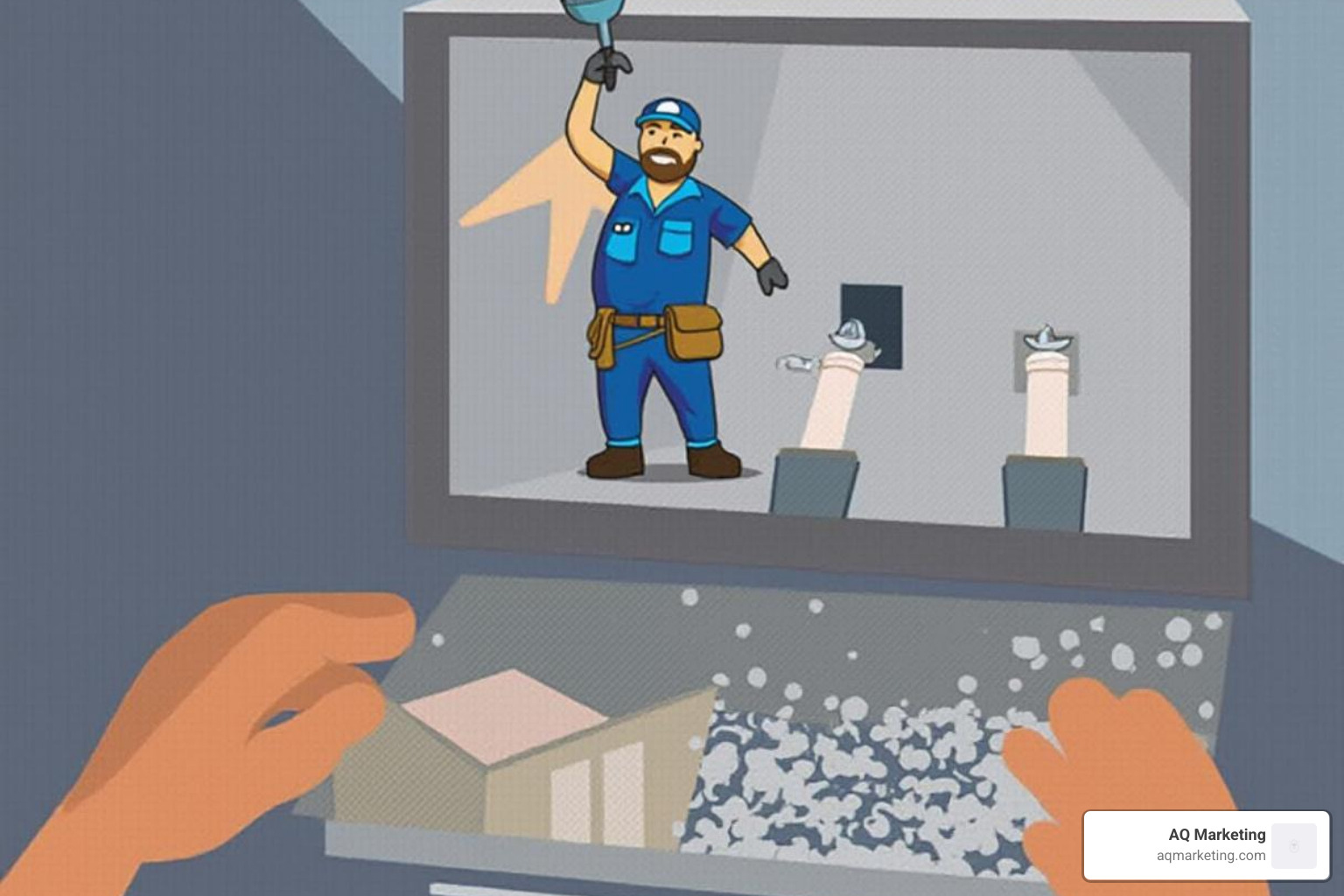
Plumber Google Ads are the fastest way to get your phone ringing with qualified leads. Unlike SEO, which takes months to show results, Google Ads can drive customers to your business within hours of launching a campaign.
Key Benefits of Plumber Google Ads:
Immediate Results – Get leads today, not months from now
Local Targeting – Reach customers in your exact service area
High-Intent Customers – Target people actively searching for plumbing services
Pay-Per-Click Model – Only pay when someone clicks your ad
Measurable ROI – Track which ads generate calls and jobs
The numbers speak for themselves. Businesses average $2 in revenue for every $1 spent on Google Ads. For plumbers, Google Local Services Ads can generate leads for $5-$150, depending on your market. One plumbing company even decreased their cost per lead by 85% while increasing leads by 2,100% through an optimized strategy.
76% of people who search for something nearby on their phone visit a business within a day. When a basement is flooding, they call the first plumber they find.
I’m Robert P. Dickey, President and CEO of AQ Marketing. With over 20 years of experience, I’ve seen that Plumber Google Ads remain one of the most effective tools for generating immediate plumbing leads.
Getting Started: Setting Up Your First Google Ads Campaign
Setting up your first Plumber Google Ads campaign can seem complex, but this guide will walk you through it.
First, you’ll need a Google account to access Google Ads. Pro tip: When prompted, choose to create a campaign without a goal’s guidance. This gives you more control over your strategy than Google’s automated suggestions. Your primary goal as a plumber is to generate leads and phone calls. For budgeting, start conservatively; you can scale up once you see what works. The pay-per-click model is cost-effective, as you only pay for actual clicks. For plumbers in Middlesex County or Southern New Hampshire, a daily budget of $30-$75 is a good starting point.
Step 1: Choosing the Right Campaign Type
Google Ads offers several campaign types for different objectives.
Search Ads: These text ads appear at the top of search results when people search for terms like “emergency plumber near me.” You pay per click, making them ideal for capturing high-intent customers.
Local Services Ads (LSAs): These appear above Search Ads and use a pay-per-lead model. You only pay for legitimate inquiries, not just clicks. LSAs also feature the “Google Guaranteed” badge, which builds instant trust.
Display Ads: These visual ads appear across websites and apps. They’re great for brand awareness and remarketing to people who have already visited your site.
Performance Max: This is Google’s newest campaign type, running ads across all channels. It offers broad reach but less control, so we recommend starting with Search Ads and LSAs.
Your campaign objectives should focus on leads, website traffic, and phone calls.
Step 2: Targeting Your Local Service Area
Google Ads lets you target your exact service area with precision.
Geographic targeting lets you focus on specific cities, zip codes, or a radius around your business. No more paying for clicks from people you can’t serve.
Location extensions display your business address in your ad, showing you’re local.
Ad scheduling (dayparting) controls when your ads run. If you offer 24/7 emergency services, run ads around the clock. Otherwise, schedule them for business hours to save money.
Device targeting is vital since 76% of local searches are on mobile. Ensure your site is mobile-friendly to avoid wasting ad spend.
Step 3: Setting Your Budget and Bidding Strategy
Your budget impacts your reach, but smart spending is about efficiency.
Start with a daily budget of $30-$75. This provides enough data to see what’s working without a huge initial risk.
Cost-Per-Click (CPC) for competitive plumbing keywords can range from $9.81 to $67.07, according to average cost per click statistics. High-value keywords like “emergency plumber” cost more.
For bidding strategies, start with manual CPC bidding to maintain control. As you gather conversion data, you can explore automated bidding.
Return on Ad Spend (ROAS) is your ultimate measure of success. Aim for at least $2 in revenue for every $1 spent on ads.
Building a High-Converting Campaign: Keywords, Ad Copy, and Landing Pages
Once your campaign structure is set, the next step is to attract the right clicks that convert into booked jobs. This comes down to three key elements: keywords, ad copy, and landing pages.
Mastering Keyword Selection for Your Plumber Google Ads Campaign
Keywords connect a customer’s problem to your solution.
High-intent keywords signal an immediate need. Focus on phrases like “emergency plumber,” “24/7 plumbing repair,” and “plumber near me.”
Service-specific keywords attract qualified customers. Use terms like “water heater repair Woburn MA” or “sewer line replacement Merrimack Valley.”
Match types control how closely a search must match your keyword:
Exact Match [ ]: Shows for the exact phrase (e.g., [drain cleaning service]). Offers precise control.
Phrase Match ": Shows for searches that include the phrase (e.g., "emergency plumber" could match “best emergency plumber near me”).
Broad Match: Shows for related searches and synonyms. Use with caution, as it can attract irrelevant clicks.
Negative keywords - are essential for saving money. They tell Google when not to show your ad. Add terms like -DIY, -jobs, -free, and -YouTube to filter out unqualified searchers.
Your ad copy is your digital billboard. Make it count.
Use strong headlines with keywords that highlight urgency and your unique value, like “Emergency Plumber 24/7” or “Fast Leak Repair Boston.”
Write benefit-focused descriptions that explain why customers should choose you. “24/7 Rapid Response, Upfront Pricing” is more appealing than just “Plumbing Services.”
Highlight your Unique Selling Proposition (USP). Whether it’s “Family-Owned Since 2003” or “5-Star Rated Service,” show what makes you different.
Include a clear Call-to-Action (CTA), such as “Call Now for Fast Service” or “Get a Free Quote.”
The Plumber’s Secret Weapon: Understanding Google Local Services Ads (LSAs)
Google Local Services Ads (LSAs) are a powerful tool for plumbers, appearing at the very top of Google search results—often above traditional ads. They are designed specifically for local service businesses and signal to customers that Google trusts your business.
The Benefits of Google LSAs
LSAs offer several compelling advantages for lead generation:
Pay Only for Leads: With LSAs, you pay for a legitimate lead (a phone call or message), not just a click. This makes them incredibly budget-friendly.
Increased Visibility: LSAs command the top spot in search results, giving you prime real estate above competitors.
The “Google Guaranteed” Badge: This badge shows customers that Google has vetted your business by checking licenses, insurance, and background checks. It’s a massive trust signal that builds instant credibility.
Simplified Management: Google handles much of the ad matching based on your profile, freeing you up to focus on your business.
Statistics show that businesses using LSAs can see an average conversion rate of 11.5% (more than double that of traditional search ads) and a 50% decrease in cost per lead.
How to Get Google Guaranteed
Earning the “Google Guaranteed” badge involves a verification process:
You must provide proof of your business licenses and general liability insurance.
Google conducts background checks on the business owner and any employees who perform services in customers’ homes.
Maintaining positive customer reviews is crucial for LSA performance, as your star rating is displayed prominently.
Once you’re guaranteed, Google may even reimburse customers up to $2,000 if they are dissatisfied with your work and your business is found to be at fault. You can learn more about the Google Guarantee on Google’s official page.
Optimizing Your Plumber Google Ads for Maximum ROI
Launching your Plumber Google Ads is just the first step. True success comes from continuous optimization to ensure peak performance and prevent budget waste. This involves tracking performance, A/B testing ad copy, and refining audience targeting.
Tracking What Matters: Conversions and Performance
If you don’t track what’s working, you’re just guessing with your budget.
Conversion Tracking is fundamental. For plumbers, a conversion is typically a phone call or a form submission. Setting this up in Google Ads shows you which ads are generating business.
Monitor these key metrics:
Cost Per Lead (CPL): How much you pay for each new inquiry.
Cost Per Acquisition (CPA): How much you pay for each new paying customer.
Return on Ad Spend (ROAS): How much revenue you generate for every dollar spent on ads.
Use Dynamic Call Tracking to assign unique, trackable phone numbers to your campaigns. This shows you exactly which ad or keyword led to a call, enabling data-driven decisions.
Regularly analyze your results in Google Ads. Review metrics like click-through rate (CTR), conversions, and conversion rate to identify trends and top performers.
Common Mistakes to Avoid with Your Plumber Google Ads
In our experience, these common pitfalls drain budgets quickly:
Poor Keyword Targeting: Using overly broad keywords without a strong list of negative keywords wastes money on irrelevant clicks.
Weak Ad Copy: Ads that lack a clear call-to-action or fail to highlight your unique selling points will be ignored.
Sending Traffic to the Homepage: Always send ad traffic to a dedicated landing page that matches the ad’s promise. This reduces friction and increases conversions.
Not Tracking ROI: Without knowing your CPL or CPA, you can’t determine if your ads are profitable.
Ignoring Mobile Users: Most local searches happen on mobile. If your ads and landing pages aren’t mobile-optimized with a clickable phone number, you’re missing most of your potential customers.
Advanced Strategies: Retargeting and SEO Integration
Once you’ve mastered the basics, layer in these advanced strategies:
Remarketing to Past Website Visitors: Show targeted ads to people who have already visited your site but didn’t convert. This keeps your brand top-of-mind and brings back potential customers.
Using PPC Data to Inform SEO: Your ad campaigns provide valuable data on which keywords convert. Use this information to guide your search engine optimization strategy for long-term, organic growth.
Creating a Unified Brand Message: Ensure your branding and messaging are consistent across all channels—from your ads and website to your service vehicles. A unified brand builds trust and recognition.
Frequently Asked Questions about Plumber Google Ads
Here are answers to some of the most common questions we hear from plumbers about Plumber Google Ads:
How much should a plumber spend on Google Ads?
The ideal budget depends on your location, competition, and goals. A busy city like Boston will have higher costs than a smaller town. Advertising for emergency services also typically costs more.
We recommend starting with a manageable daily budget of $30-$75. This allows you to gather data without a large initial investment. Once you see a positive return—meaning leads are turning into paying jobs—you can scale your budget accordingly. For a new or revamped campaign, an initial budget of around $1,000 provides enough data to make informed decisions.
How long does it take to see results from Google Ads?
One of the biggest advantages of Google Ads is speed. Unlike SEO, Google Ads can generate traffic and leads almost immediately, often within hours of launch.
While initial calls can come quickly, optimizing your campaigns for consistent profitability takes more time. This refinement process, involving testing and data analysis, can take several weeks to a few months. The goal is to get the right calls at the best possible cost.
Should I use Google Ads or focus on SEO?
The best answer is: both! Google Ads and SEO are two essential tools that work best together.
Google Ads are for immediate lead generation. They put you at the top of search results when a customer has an urgent need now.
SEO is a long-term strategy for sustainable growth. It builds your online presence over time, leading to “free” organic traffic and establishing your brand as a trusted authority.
Use Google Ads for immediate cash flow and to fill your schedule, while SEO builds the long-term equity that ensures your business thrives for years to come.
Conclusion: Keep the Phones Ringing with a Winning Ad Strategy
Your journey into Plumber Google Ads is an ongoing process of continuous optimization, strategic management, and data-driven decisions. Success isn’t a “set it and forget it” scenario; it requires constant attention to keep the phones ringing.
The power of Google Ads is its ability to deliver immediate results, putting you in front of customers with urgent needs. A well-managed campaign provides a consistent flow of leads and is a powerful engine for business growth. When combined with Google Local Services Ads and a solid SEO foundation, you create a comprehensive digital presence that captures customers at every stage of their search.
At AQ Marketing, we’ve helped businesses steer digital marketing since 2003. Based in Woburn, MA, we understand the challenges plumbers face in competitive markets like Boston, the Merrimack Valley, and Southern New Hampshire. We know how the right Google Ads strategy can transform a business.
Your time is better spent helping customers, not wrestling with keyword match types. Professional guidance can make all the difference.
If you’re ready to build a predictable lead generation system, we’re here to help. Let’s create a Google Ads strategy that keeps your schedule full.
Why Paid Search Marketing Campaigns Are Essential for Your Business
Paid search marketing campaigns are digital advertising strategies where businesses pay to display their ads in search engine results when people search for specific keywords. Here’s what you need to know:
Key Components:
Pay-per-click (PPC) model – You only pay when someone clicks your ad
Keyword targeting – Your ads appear for relevant search terms
Immediate visibility – Ads show at the top of search results
Budget control – Set daily or monthly spending limits
Measurable results – Track clicks, conversions, and ROI
Main Benefits:
Generate leads and sales quickly
Target customers actively searching for your services
Control costs with flexible budgeting
Outrank competitors in search results
With over 3.5 billion searches happening on Google every day, paid search campaigns offer businesses a direct path to reach potential customers at the exact moment they’re looking for products or services. The statistics are compelling: 65% of all high-intent searches result in an ad click, and businesses make an average of $2 for every $1 they spend with Google Ads.
Whether you’re a home services contractor trying to get more service calls, an insurance agent looking for new clients, or a fitness business wanting to fill classes, paid search campaigns can deliver the targeted traffic your business needs to grow.
I’m Robert P. Dickey, President and CEO of AQ Marketing, and I’ve been helping small and medium-sized businesses succeed with paid search marketing campaigns for over 20 years. My experience managing corporate accounts and developing direct marketing strategies has given me deep insights into what makes these campaigns profitable and effective.
What Are Paid Search Ads and Why Do They Matter?
Imagine you’re a plumber and someone’s kitchen sink just started flooding. They grab their phone and search “emergency plumber near me.” Paid search marketing campaigns make sure your business shows up right at the top of those search results, exactly when that person needs you most.
That’s the magic of paid search advertising. It’s a digital marketing strategy where you bid on specific keywords to get your ads displayed in search engine results pages. When potential customers search for terms related to your business, your ad appears at the top of the results, giving you prime real estate in the digital world.
Think of it like renting a billboard on the busiest highway in town – except this highway is made up of people actively looking for exactly what you offer. The best part? You only pay when someone actually clicks on your ad and visits your website.
The numbers tell an impressive story: about 65% of all high-intent searches result in an ad click, which means when people are ready to buy, they’re clicking on ads. Even better, businesses make an average of $2 for every $1 they spend with Google Ads. That’s the kind of return on investment that makes business owners smile.
The Main Benefits for Your Business
Targeted audience reach is where paid search really shines. Unlike throwing a newspaper ad out there and hoping someone notices, you’re reaching people who are actively searching for your products or services. It’s like having a conversation with someone who’s already raised their hand and said “I need help with this.”
Cost-effectiveness means you’re not wasting money on people who aren’t interested. You can start with as little as $10 per day and scale up as you see what works. The pay-per-click model ensures you’re only paying for actual engagement, not just people scrolling past your ad.
Budget control puts you in the driver’s seat. Set daily or monthly spending limits that fit your comfort zone. If you need to pause campaigns for any reason, you can do it instantly. No long-term contracts or surprise bills at the end of the month.
Immediate results separate paid search from other marketing strategies. While organic SEO can take months to show results, paid search marketing campaigns can start driving traffic to your website within hours of launch. This makes it perfect when you need leads quickly or you’re launching something new.
Measurable performance means you’ll know exactly what’s working and what isn’t. You can track how many people saw your ad, how many clicked, and how many became customers. This data-driven approach lets you continuously improve your campaigns and get better results over time.
Not all paid search ads look the same, and understanding your options helps you choose what works best for your business.
Text Ads are the workhorses of paid search. These appear directly in search results with a headline, description, and URL. They’re marked with a small “Ad” label so people know they’re sponsored. Text ads work great for service-based businesses and are perfect for driving traffic to specific landing pages on your website.
Shopping Ads (also called Product Listing Ads) are visual powerhouses for e-commerce businesses. They show product images, prices, and store names right in the search results. People can see exactly what they’re getting before they click, which means you get higher-quality traffic and better conversion rates.
Local Services Ads are designed specifically for service-based businesses like plumbers, electricians, and contractors. These ads appear at the very top of search results and are particularly valuable because you only pay when someone actually calls or messages you directly through the ad – not just when they click.
Responsive Search Ads are the newest type of text ad that uses machine learning to automatically adjust content for each search. You provide multiple headlines and descriptions, and the system figures out the best combination for each person’s search query. These typically perform better than traditional text ads because they’re more personalized.
Each type serves different business goals, and the right choice depends on what you’re selling and how your customers prefer to engage with your business.
Paid Search vs. Organic SEO: Which Is Right for You?
If you’re wondering whether to invest in paid search marketing campaigns or focus on organic SEO, you’re asking the right question. But here’s the thing – it’s not really an either-or decision for most businesses.
Think of it this way: paid search is like taking a taxi to get somewhere fast, while organic SEO is like planting a tree that will provide shade for years to come. Both have their place, and the best approach depends on your immediate needs and long-term goals.
Paid search gives you speed and control. Once your campaign launches, you can start seeing visitors within hours. Your ads appear at the top of search results, right where people look first. You control exactly what your ad says, where it sends people, and who sees it. If you need leads this month or you’re launching a new service, paid search is your best friend.
Organic SEO builds lasting value. When you rank well organically, you earn trust and credibility that paid ads can’t match. People often trust organic results more than ads. Plus, once you achieve good rankings, that “free” traffic can continue flowing for months or years. But patience is key – SEO results typically take three to six months to really show up.
The placement difference matters too. Paid ads sit at the very top of search results, but they’re clearly marked as ads. Organic results appear below the ads, but they often get more clicks overall because people spend more time browsing through them.
When it comes to user intent, both capture people actively searching for your services. However, paid search lets you target very specific searches and adjust your message instantly based on what’s working. With organic SEO, you’re somewhat at the mercy of how search engines interpret your content.
“Free” (requires investment in time, content, and expertise)
Speed
Immediate results
Takes months to see significant results
Placement
Top of the page (Ad section)
Below the ads
ROI
Easier to measure directly
More difficult to attribute and measure
Control
High control over ad copy, landing pages, and targeting
Less direct control over rankings
Here’s what we’ve learned after 20 years in this business: the most successful companies use both strategies together. Paid search marketing campaigns provide immediate results and valuable data about what keywords and messages work best. Then you can use that insight to inform your SEO strategy.
When customers see your business in both the paid and organic results for the same search, it builds incredible credibility. You’re not just another company – you’re the company for that service in their mind.
The bottom line? If you need results now and have a marketing budget, start with paid search. If you’re building for the long term and want to reduce your dependence on paid advertising, invest in SEO. But if you really want to dominate your market, do both.
The Core Components of Successful Paid Search Marketing Campaigns
Think of a successful paid search marketing campaign like building a house – you need a solid foundation, quality materials, and skilled craftsmanship. Each component needs to work together seamlessly, or the whole structure can fall apart.
The foundation starts with your campaign structure. This means organizing your campaigns logically – perhaps by product lines, services, or geographic areas. Within each campaign, you’ll create ad groups that contain closely related keywords and ads. It’s like organizing your toolbox – when everything has its place, you can find what you need quickly and work more efficiently.
Keywords are the heart that pumps life into your campaigns. They determine when and where your ads appear. Ad copy is your salesperson – it needs to convince people to choose you over your competitors in just a few seconds. Landing pages are where the magic happens, converting those clicks into actual customers.
When these components work together harmoniously, you create campaigns that don’t just drive traffic – they drive the right traffic that converts. For businesses looking to develop a comprehensive approach, our Digital Marketing Strategy guide shows how paid search fits into your overall marketing picture.
Step-by-Step: Setting Up Your First Paid Search Marketing Campaigns
Setting up your first paid search marketing campaign doesn’t have to feel overwhelming. I’ve walked hundreds of business owners through this process, and once you break it down into manageable steps, it becomes much more approachable.
Keyword Research is where everything begins. You need to understand what your customers actually type into Google when they’re looking for businesses like yours. Start by putting yourself in their shoes. If you needed your service, what would you search for?
Use tools like Google Keyword Planner to find search volumes and see how competitive different terms are. Here’s a pro tip: focus on long-tail keywords – those longer, more specific phrases that show real intent. Instead of competing for “plumber” (which is expensive and vague), try “emergency plumber Boston” or “water heater repair near me.”
Don’t forget about negative keywords – these prevent your ads from showing for irrelevant searches. If you’re a premium service provider, you might add “cheap” or “free” as negatives to avoid attracting bargain hunters who aren’t your ideal customers.
Bidding and Budgeting is where you take control of your costs. Start with a daily advertising budget that feels comfortable – you can always increase it as you see results. I always tell clients it’s better to start small and scale up than to blow your budget on day one.
Cost-Per-Click (CPC) bidding is usually the best place to start. You set the maximum you’re willing to pay for each click. Manual bidding gives you more control initially, while automated bidding lets Google’s algorithms optimize for your goals. We typically recommend starting manually to learn your market, then gradually transitioning to automated strategies.
Crafting Compelling Ad Copy is both an art and a science. You have just a few seconds to grab attention and convince someone to click your ad instead of your competitor’s. Include your primary keyword in the headline when possible, highlight what makes you different, and always include a strong Call-to-Action like “Call Now,” “Get Quote,” or “Schedule Today.”
A/B testing different ad variations is crucial. Test different headlines, descriptions, and CTAs to see what resonates with your audience. Sometimes changing just one word can dramatically improve your results.
How Ad Rankings Are Determined
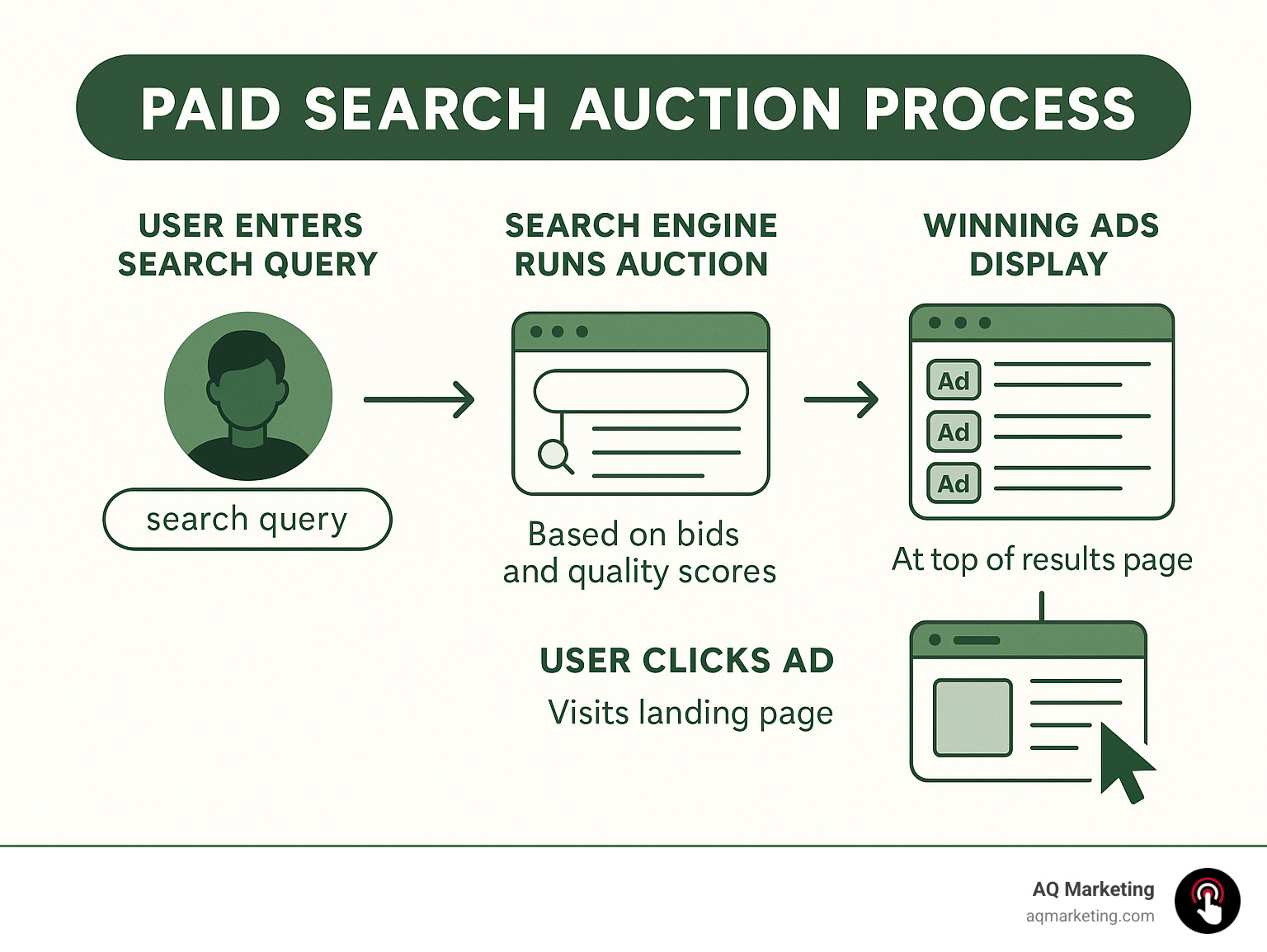
Here’s something that surprises many business owners: Google doesn’t just give the top spot to whoever bids the highest. The ad auction is much more sophisticated than that, and understanding how it works can save you money while improving your results.
Every time someone searches, Google runs an auction in milliseconds. Your Ad Rank is calculated by multiplying your bid amount by your Quality Score. Think of Quality Score as Google’s report card for your ads – it rates the quality and relevance of your keywords, ads, and landing pages on a scale of 1-10.
Quality Score has three main components: Expected Click-Through Rate (CTR) measures how likely people are to click your ad based on historical performance. Ad relevance looks at how closely your ad matches what people are searching for. Landing page experience evaluates how relevant and useful your landing page is to visitors.
This system rewards businesses that create relevant, high-quality ads and landing pages. It’s not just about having the biggest budget – it’s about providing value to searchers. When you focus on relevance and quality, you often find you can outrank competitors who are bidding more than you.
Beyond the Launch: Optimizing and Measuring Your Campaigns
Launching your paid search marketing campaigns is just the beginning. Real success comes from what you do next—using the data you collect to make steady, informed tweaks that improve results.
Think of it like tending a garden: you plant, observe, and adjust. In paid search, that means reviewing reports, trimming wasted spend, and feeding the winners with more budget. Continuous improvement is what separates campaigns that thrive from those that merely survive.
ROI tracking is your guiding star. It’s not enough to celebrate clicks; you need to know which clicks turn into leads or sales so every dollar spent can be traced back to revenue.
Best Practices for Optimizing Your Paid Search Marketing Campaigns
Refine your keyword lists weekly. Use the search terms report to add fresh, relevant phrases and to block budget-draining queries with negative keywords.
Pause underperforming ads. If an ad shows low click-through rates or high costs per conversion for two weeks in a row, turn it off and focus on better performers.
Optimize for mobile first. More than half of searches happen on phones, so make sure ads and landing pages load quickly and display correctly on small screens.
Use ad scheduling. Show ads only during the hours or days that historically bring the highest conversion rates for your business.
Match message to landing page. If your ad promises “free estimates,” the landing page must highlight that same offer—consistency boosts conversions. For more on creating effective pages, read Why Your Business Should Use Landing Pages for Lead Generation.
How to Monitor and Analyze Performance
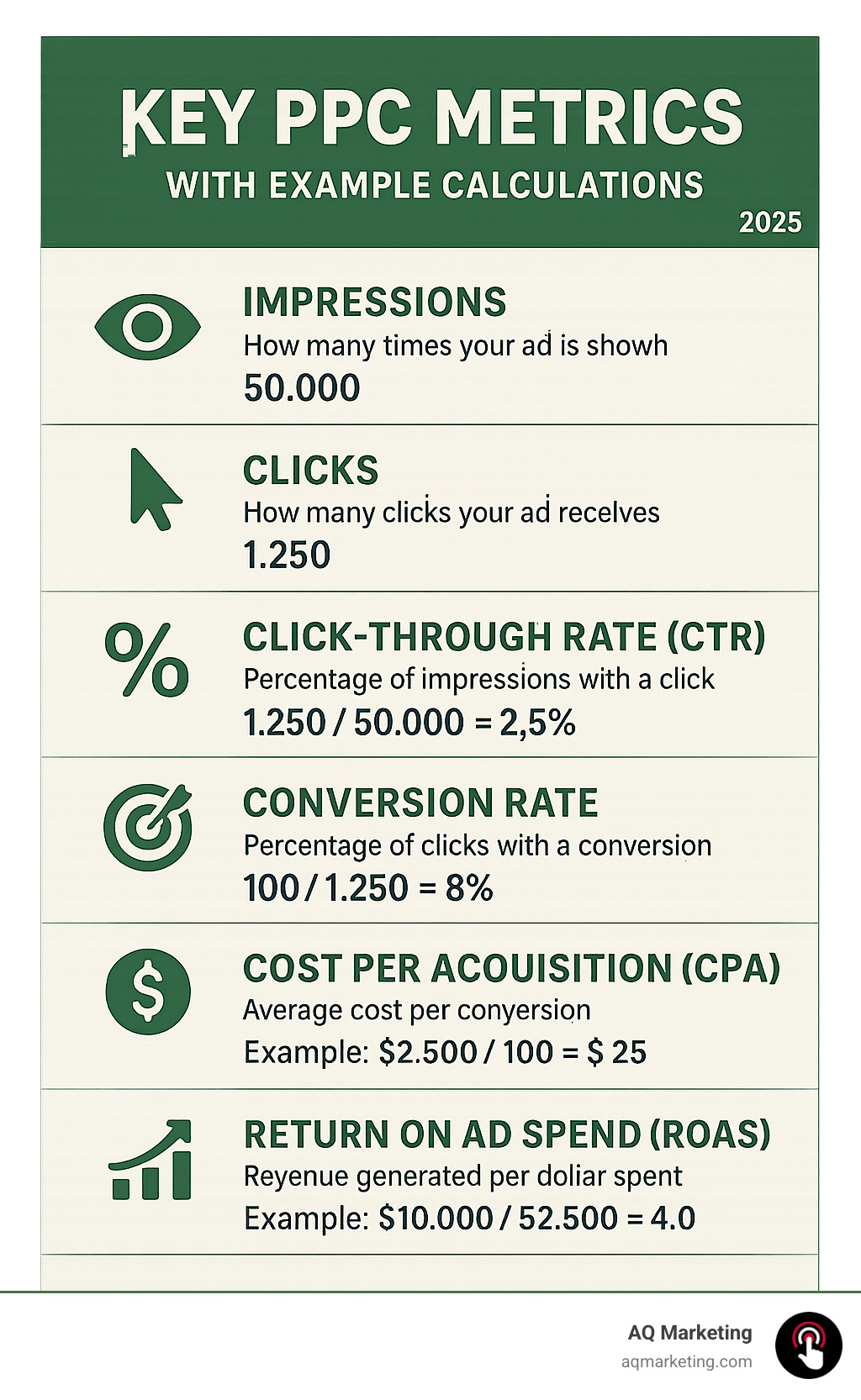
Focus on the metrics that map directly to your goals:
Impressions – how often your ads appear.
Clicks and Click-Through Rate (CTR) – show how enticing your ads are.
Conversion Rate – reveals what percentage of visitors become leads or customers.
Cost Per Acquisition (CPA) – the amount you spend to win each new customer.
Return on Ad Spend (ROAS) – revenue generated for every advertising dollar.
Most ad platforms provide dashboards that let you track these numbers at a glance. Look at trends over weeks, not days, to avoid knee-jerk reactions and to make smarter optimization decisions.
Frequently Asked Questions about Paid Search
How long does it take to see results from paid search?
Paid search marketing campaigns can start driving traffic to your website within hours of going live. It’s one of the few marketing strategies where you can literally see results the same day you launch.
But here’s the reality check – seeing traffic and seeing profitable results are two different things. While your ads can start generating clicks almost immediately after approval, optimizing for profitability takes time. Think of it like learning to drive: you can get behind the wheel on day one, but becoming a skilled driver takes practice.
We typically tell our clients to expect 2-4 weeks of data collection before making significant optimization decisions. This gives you enough information to understand what’s working and what needs adjustment. Achieving a strong ROI usually takes several weeks or months of testing and refinement, but the immediate visibility makes it worth the wait.
Can a small business with a limited budget use paid search?
Absolutely. Unlike traditional advertising where you might need thousands of dollars for a single radio or TV spot, paid search marketing campaigns let you start small and grow at your own pace.
Budget control is one of the biggest advantages of paid search. You can set daily spending caps as low as $10-20 per day, test what works, and gradually increase your investment as you see results. We’ve helped businesses succeed with monthly budgets as small as $500 – it’s all about being strategic.
The secret sauce for small budgets is focusing on highly specific, long-tail keywords that are less competitive but have higher conversion potential. Instead of competing with big corporations on expensive broad terms, you target the specific phrases your ideal customers actually use when they’re ready to buy.
For example, rather than bidding on “insurance” (which could cost $50+ per click), a local agent might target “car insurance quotes Woburn MA” – much more affordable and much more likely to convert.
However, there are some really valuable indirect benefits that can boost your overall online presence. When your paid ads increase brand visibility, more people start searching for your business by name. These branded searches are positive signals that can help your SEO efforts.
Plus, the keyword data from successful paid search marketing campaigns becomes pure gold for your content strategy. When you find which keywords convert well in your paid campaigns, you can create content around those same terms to improve your organic rankings.
The real magic happens when you use both strategies together. Paid search provides immediate visibility while you’re building organic rankings, and SEO provides long-term, sustainable traffic growth. It’s like having both a sprint and a marathon runner on your team – each serves a different purpose, but together they’re unstoppable.
Conclusion: Take the Next Step in Your Digital Marketing
Paid search marketing campaigns have proven themselves as one of the most effective ways to grow your business online. Throughout this guide, we’ve explored how these campaigns can deliver immediate visibility, give you complete cost control, help you reach your targeted audience, and provide measurable results that you can track and optimize.
The numbers don’t lie. When businesses make an average of $2 for every $1 spent on Google Ads, and 65% of high-intent searches result in ad clicks, it’s clear that paid search isn’t just another marketing channel – it’s a powerful revenue driver.
The beauty of paid search lies in its precision. Unlike traditional advertising where you’re casting a wide net and hoping for the best, paid search puts your business in front of people who are actively searching for what you offer. They’re not just browsing – they’re ready to take action.
For businesses in competitive industries like home services and insurance, this precision becomes even more valuable. When someone’s water heater breaks at 2 AM or they need insurance quotes before their policy expires, they’re not looking for general information. They need solutions, and they need them now. A well-managed paid search marketing campaign ensures your business is there when these high-intent customers are searching.
But here’s what we’ve learned after helping hundreds of businesses: Success with paid search isn’t about luck or guesswork. It requires understanding your audience, crafting compelling ads, choosing the right keywords, and continuously optimizing based on real data. The difference between campaigns that generate profitable leads and those that drain your budget often comes down to expertise and attention to detail.
The ongoing nature of optimization is crucial. Your first campaign setup is just the beginning. The real magic happens in the weeks and months that follow, as you refine your targeting, test new ad copy, and find which keywords drive the most valuable traffic for your business.
If you’re feeling overwhelmed by the complexity of paid search marketing campaigns, you’re not alone. Many business owners recognize the potential but struggle with the technical aspects and ongoing management required for success.
That’s where we come in. At AQ Marketing, we’ve been helping businesses in the Boston area and beyond steer paid search since 2003. We understand that every business is unique, and we take the time to understand your specific goals, challenges, and target audience before crafting campaigns that deliver real results.
Ready to see what paid search can do for your business? Our team of experts is here to help you build and manage effective campaigns that not only drive traffic but convert that traffic into customers. We’ll handle the technical details, ongoing optimization, and performance monitoring so you can focus on running your business.
Learn more about how we can help your business grow through our Pay Per Click Advertising Firm services. Let’s work together to create paid search marketing campaigns that deliver the results your business deserves.
Pay Per Click Advertising Firm: 10 Top-Rated Picks 2024
Why Finding the Right Pay Per Click Advertising Firm Can Make or Break Your Marketing Budget
A pay per click advertising firm specializes in creating, managing, and optimizing paid advertising campaigns where businesses pay only when someone clicks their ads. Here’s what top PPC firms deliver:
Core Services:
– Google Ads and Bing campaign management
– Keyword research and negative keyword filtering
– Ad copy creation and A/B testing
– Landing page optimization
– Bid management and budget allocation
– Performance tracking and ROI reporting
Typical Investment:
– Management fees: $350-$5,000/month or 12-30% of ad spend
– Hourly rates: $95-$150 for US-based providers
– Minimum budgets: $1,000-$50,000 depending on agency tier
The stakes are high. Research shows that less than 25% of PPC ads actually produce conversions, which means most businesses waste significant budget on poorly managed campaigns. The average cost per click sits at $2.59, but skilled firms can often reduce this while boosting results.
Whether you’re a home services contractor trying to fill your calendar, an insurance agent competing for local leads, or a fitness studio looking to drive memberships, the right PPC partner can deliver immediate visibility and measurable ROI that organic marketing simply can’t match.
I’m Robert P. Dickey, President and CEO of AQ Marketing, and I’ve spent over 20 years helping small and medium-sized businesses steer digital marketing challenges. Having worked with countless companies to optimize their pay per click advertising firm partnerships, I’ve seen how the right choice can transform a struggling campaign into a profit engine.
How Does PPC Actually Work?
Think of PPC as the world’s fastest auction – one that happens millions of times every day. When someone types “emergency plumber Boston” into Google, an invisible bidding war erupts in milliseconds among every business wanting to show up for that search.
But here’s where it gets interesting: the highest bidder doesn’t always win. Google uses something called Ad Rank, which combines how much you’re willing to pay with how good your ad actually is. This Quality Score measures whether your ad, keywords, and landing page truly match what the searcher wants.
A plumbing company with a perfectly crafted ad and helpful landing page might beat out a competitor who bids twice as much but has a generic, unhelpful ad. This is exactly why experienced pay per click advertising firm professionals obsess over Quality Score optimization – it’s like getting a bulk discount on prime advertising real estate.
The beauty of this auction model is that you typically pay just enough to edge out the next guy, often less than your maximum bid. And remember, you only pay when someone actually clicks – not when they just see your ad. According to scientific research on ad performance, understanding this dynamic is crucial since less than 25% of PPC ads actually convert into real business.
The whole process delivers instant traffic and measurable ROI in ways that feel almost magical compared to traditional advertising.
Key Benefits for Growth-Minded SMBs
For small and medium businesses, PPC feels like having a marketing superpower. The fast visibility alone changes everything – while waiting for SEO results feels like watching grass grow, PPC ads can start bringing customers to your door within hours of launching.
The budget control aspect brings real peace of mind. You set your daily spending limit, and your campaigns will never spend more. Unlike that radio ad you paid for upfront, PPC only charges when people actually engage with your business.
But the audience targeting capabilities are where things get really exciting. You can show ads only to homeowners within 10 miles of your shop, only during your business hours, only to people who’ve visited similar websites.
When PPC & SEO Team Up
The magic happens when your pay per click advertising firm works hand-in-hand with your SEO efforts instead of treating them as separate strategies.
When done right, you can dominate search results by appearing in both paid ads and organic listings for the same keywords. Users often see your brand in the ads, then feel more confident clicking your organic result below – creating an organic lift effect that boosts overall performance.
Even better, PPC campaigns become a crystal ball for your SEO strategy. The paid ads reveal exactly which keywords turn browsers into buyers, so you know where to focus your long-term organic efforts.
The end result? A lower blended CPA (cost per acquisition) as both channels reinforce each other. PPC delivers immediate results while SEO builds lasting value, creating a marketing engine that gets stronger and more cost-effective over time.
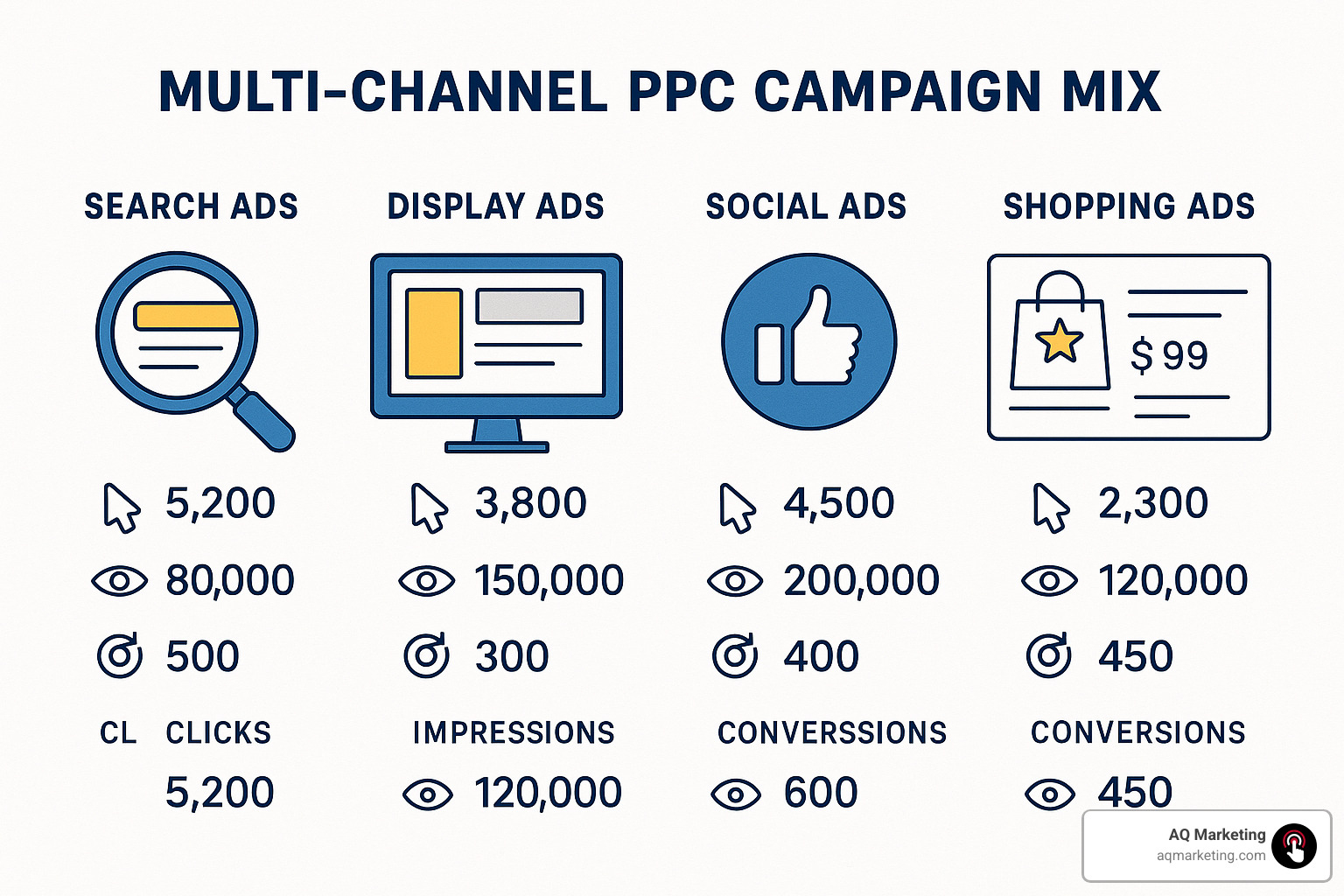
Think of PPC like a toolbox – you wouldn’t use just a hammer for every job, right? A skilled pay per click advertising firm knows exactly which campaign type works best for each situation.
The average remarketing cost per click is surprisingly low at just $0.66 to $1.23, making it one of the most cost-effective ways to convert hesitant prospects.
Search & Shopping
Search ads are your bread and butter – they catch people exactly when they’re looking for what you offer. When someone types “emergency plumber Boston” at 2 AM, they’re not browsing for fun. They need help now.
The magic happens through intent targeting. These searchers already know they have a problem and want it solved. Your job is simply to show up at the right moment with the right message.
Keyword match types give you control over how broadly you cast your net. Use exact match like [roof repair] when you want laser precision. Try phrase match “roof repair” to catch close variations. Broad match reaches the widest audience but needs careful management to avoid irrelevant clicks.
Shopping ads are game-changers for product-based businesses. Instead of just text, shoppers see your actual products with photos, prices, and reviews right in the search results.
Display & Video
Display ads work differently than search ads. Instead of waiting for people to search, you find them while they’re browsing their favorite websites. These visual ads appear across Google’s massive network of partner sites.
Think of display advertising as the digital version of a billboard – it’s all about awareness and staying top-of-mind.
Video ads let you tell your story in a way that text simply can’t match. YouTube ads can showcase your expertise, demonstrate your products, or share customer success stories.
Social & Remarketing
Social media ads on platforms like Facebook and Instagram offer targeting options that would make any marketer’s head spin. You can reach people based on their interests, behaviors, life events, and even their friends’ activities.
Custom audiences let you upload your customer list and target people just like your best clients. It’s incredibly powerful for local businesses who know exactly who they want to reach.
Remarketing is where the real magic happens – it’s like getting a second chance with everyone who almost became a customer. These ads follow people who visited your website but left without buying or calling.
Bounce recovery through remarketing works because you’re targeting warm prospects who already showed interest. They might have gotten distracted, needed to think it over, or wanted to compare options. Remarketing gently brings them back when they’re ready to decide.
The smartest approach combines multiple campaign types strategically. You might use search ads to catch immediate demand, display ads to build awareness, and remarketing to convert the fence-sitters.
What a Pay Per Click Advertising Firm Does (Step-by-Step)
Partnering with a pay per click advertising firm means handing the day-to-day math and mechanics of paid media to specialists so you can stay focused on running your company.
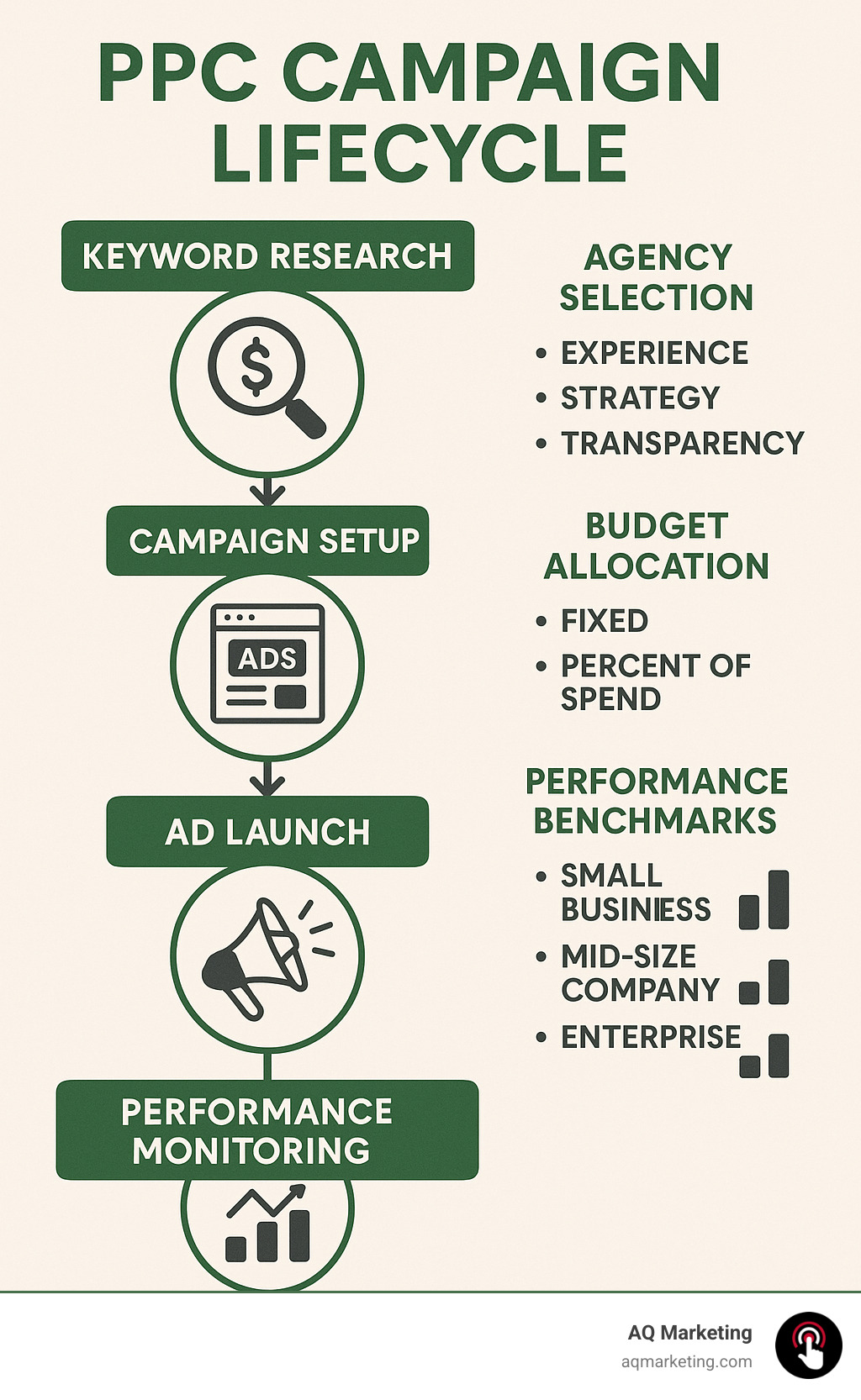
Campaign planning & strategy – A good firm digs into your goals, margins and competitors before opening a keyword tool.
Keyword & negative-keyword research – They uncover high-intent terms and block irrelevant searches that drain budget.
Ad copy creation & A/B testing – Pros craft multiple ads, then let data decide which message wins.
Bid management & optimization – Budgets and bids are tweaked daily (often hourly) with a mix of human insight and smart automation.
Landing page optimization – Every click is sent to a page that matches the ad’s promise and makes conversion painless.
Conversion tracking – Phone calls, forms, sales and even foot traffic are tied back to specific ads.
Transparent reporting – Clear, plain-English summaries show what was spent, what was earned and what will be improved next.
Bidding Approach
Best For
Pros
Cons
Manual Bidding
New campaigns, tight budgets
Full control, cost predictability
Time-intensive, slower optimization
Automated Bidding
Established campaigns, larger budgets
AI-powered optimization, time savings
Less control, requires conversion data
Keyword Intelligence Your Pay Per Click Advertising Firm Must Deliver
Volume matters, but intent matters more. Ten clicks from “emergency drain cleaning” are worth far more than a hundred from “how to unclog a drain.” Smart agencies also run competitive gap analyses to spot keywords rivals ignore and lean heavily on long-tail phrases that cost less and convert better.
Ad Creation & CRO Secrets from a Pay Per Click Advertising Firm
You have about three seconds to earn a click. High-performing ads feature:
Compelling headlines that solve a problem or spark curiosity
A crystal-clear unique selling proposition (USP)
Mobile-first design with tap-to-call buttons
Even small lifts matter – bumping a landing-page conversion rate from 2% to 3% cuts cost-per-acquisition by 33%. That’s why experienced firms never stop testing.
Budgeting, Pricing Models & Reporting
Let’s talk money – because understanding what you’ll actually pay for PPC management can save you from some nasty surprises down the road.
Hourly rates are the most straightforward option. Most US-based PPC specialists charge between $95-$150 per hour, though top-tier experts might command $200 or more. This works great for one-time audits or specific projects.
Percentage of ad spend is how most agencies structure their fees, typically charging 12-30% of your monthly ad budget. Here’s how it works: if you’re spending $5,000 monthly on ads, expect to pay $600-$1,500 in management fees. I like this model because it aligns your agency’s success with yours.
Flat monthly retainers offer predictability that many business owners prefer. These typically range from $1,000-$10,000 monthly depending on how complex your campaigns are and what level of service you need.
Project minimums exist for good reason. About 9.5% of top agencies accept projects with $1,000 minimum budgets, while 2.7% require $50,000 or more. This isn’t agencies being greedy – effective PPC management requires significant time investment regardless of your budget size.
Onboarding & Ongoing Communication
The way a pay per click advertising firm handles your first few weeks together tells you everything about how the relationship will go. Professional partnerships always start with a thorough kickoff call where they dig deep into your business goals, target audience, competitive landscape, and what success actually looks like for you.
Any agency worth their salt will also audit your existing campaigns to spot immediate opportunities. I’ve seen agencies find thousands of dollars in wasted spend just by cleaning up negative keywords in the first week.
Weekly performance updates should be brief but informative. Monthly strategy reviews are where the real value happens. These comprehensive analyses should include actionable recommendations, not just data dumps.
Quarterly business reviews step back from the day-to-day metrics to examine how your campaigns are supporting your bigger business objectives.
Here’s my non-negotiable rule: transparency is everything. You should have access to your ad accounts and understand exactly where every dollar goes. If an agency restricts account access or provides vague reporting, run.
Metrics That Matter
Not all PPC metrics deserve equal attention – and focusing on the wrong ones can actually hurt your business. Here’s what your pay per click advertising firm should prioritize.
Click-through rate (CTR) tells you if your ads are relevant and appealing to your target audience. Industry averages vary wildly, but 2-5% is typical for search ads.
Cost per click (CPC) is your actual cost when someone clicks your ad. This should generally decrease over time as campaigns optimize and Quality Scores improve.
Cost per acquisition (CPA) is often more important than CPC because it shows how much you’re actually spending to acquire each customer. This metric connects your advertising spend directly to business results.
Return on ad spend (ROAS) is calculated by dividing revenue generated by ad spend. A 4:1 ROAS means you earn $4 for every $1 spent on ads. Most businesses need at least 3:1 ROAS to be profitable.
Customer lifetime value (LTV) is the total revenue a customer generates over their entire relationship with your business. This helps determine acceptable acquisition costs.
The best agencies track all these metrics but help you focus on the ones that actually drive your business forward. Because at the end of the day, pretty dashboards don’t pay the bills – profitable customers do.
2024 Trends & Industry Adaptations
The digital advertising world moves fast, and what worked last year might be outdated today. Your pay per click advertising firm needs to stay on top of these shifts – not just to keep up, but to give you a real competitive edge.
AI-powered bidding has become the new normal. Google’s Smart Bidding system processes hundreds of signals in real-time to adjust your bids automatically. It considers everything from device type to time of day to location. The catch? You need at least 30 conversions per month for the AI to have enough data to work its magic.
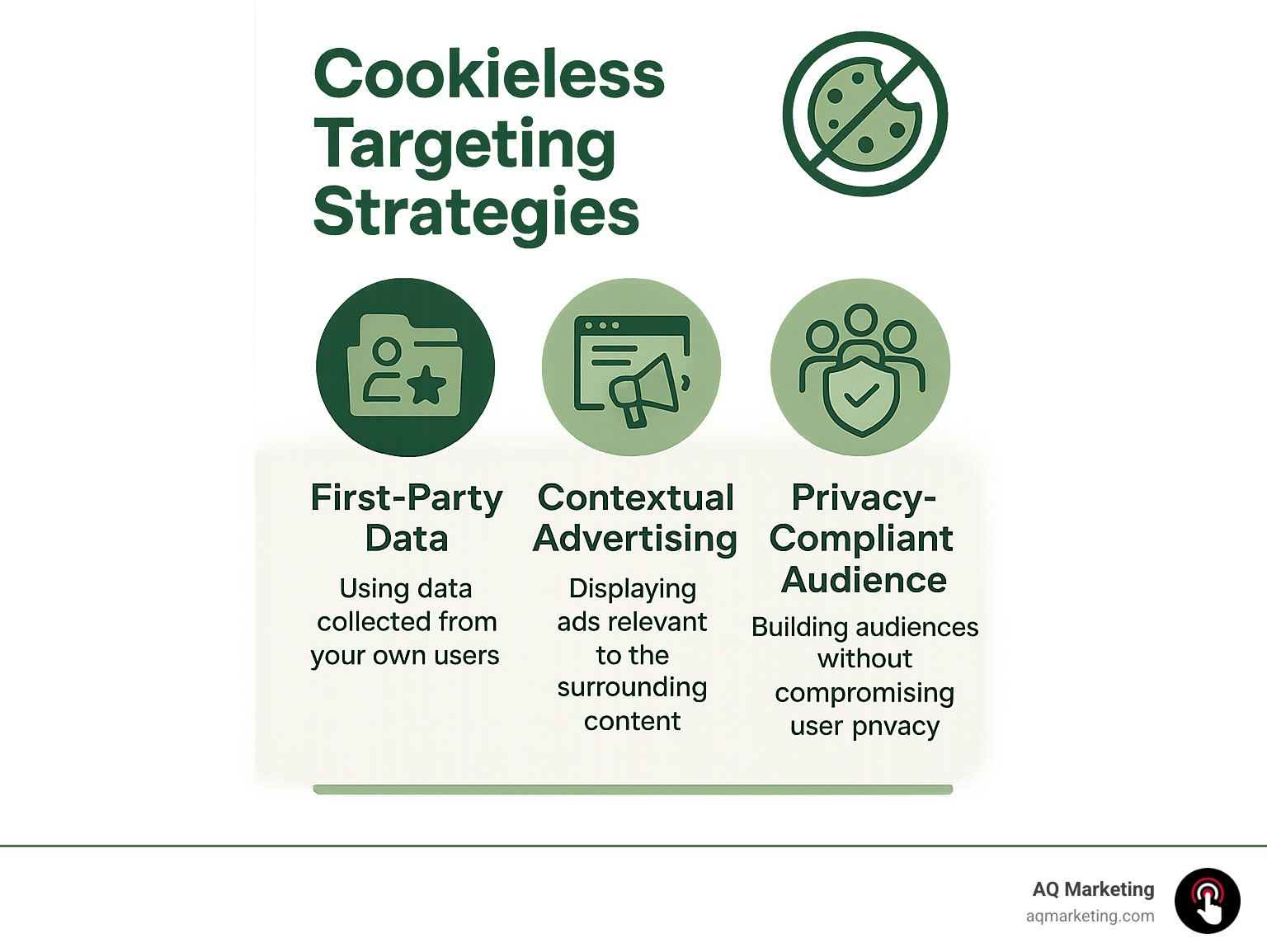
First-party data is becoming your secret weapon. With third-party cookies going away, the businesses that win will be those using their own customer information smartly. This means taking your email lists and CRM data and turning them into targeted campaigns.
Performance Max campaigns are Google’s latest attempt to simplify everything by showing your ads across all their platforms at once – Search, YouTube, Gmail, you name it. The results have been mixed so far, but Google keeps pushing these campaigns harder.
Voice search is changing how people look for businesses. Instead of typing “plumber Boston,” people ask their phones “Where can I find a good plumber near me right now?” These longer, conversational searches need different keyword strategies.
Privacy regulations keep getting stricter, which actually benefits businesses that focus on building real relationships with customers instead of just chasing anonymous clicks.
Case-Based Inspirations
Real success stories show what’s possible when everything clicks together. These aren’t pie-in-the-sky promises – they’re actual results from businesses that got their PPC strategy right.
One vacation rental company reduced their cost per click by 25% while getting 22% more people to click their ads. The secret was systematic testing of everything from headlines to landing pages.
An online retailer saw their return on ad spend jump 140% in just three months. Even better, their overall sales increased by 45% after four months of steady optimization.
A B2B company achieved something that sounds almost too good to be true: a 23% conversion rate and 4 times more leads in their first month. They did it by completely restructuring their campaigns around what their customers actually wanted.
The email marketing integration story is particularly impressive – one business saw their email open rates increase by 222% and click-through rates by 151%. When your PPC and email work together, the results multiply instead of just adding up.
Future-Proof Checklist
Your pay per click advertising firm should be preparing for what’s coming next, not just managing what’s happening now. Here’s what forward-thinking agencies focus on:
Smart automation adoption means using AI tools where they excel while keeping humans in charge of strategy and creativity. The best agencies know when to let the machines handle the number-crunching and when human insight is irreplaceable.
Consistent creative testing prevents your ads from getting stale. People stop noticing ads they’ve seen too many times, so fresh creative keeps your campaigns performing.
Clean data practices become more important as privacy rules tighten. Organized campaigns with accurate tracking don’t just perform better – they’re also easier to adapt when regulations change.
Cross-channel coordination makes your entire marketing strategy stronger. When your PPC campaigns work together with your SEO, social media, and email marketing, each channel performs better than it would alone.
The agencies that thrive in 2024 and beyond won’t just be the ones with the fanciest tools – they’ll be the ones that understand how all these pieces fit together to grow your business.
Frequently Asked Questions about Pay Per Click Advertising Firms
When you’re considering hiring a pay per click advertising firm, certain questions come up again and again. Having worked with hundreds of businesses over the years, I’ve heard these concerns countless times – and they’re all completely valid.
How much ad spend do I need before hiring a firm?
Here’s the straight truth: most professional pay per click advertising firm partnerships work best when you’re spending at least $2,000-$5,000 monthly on ads. Below that threshold, the math gets tricky.
Think about it this way – if you’re spending $1,000 on ads and paying 20% in management fees, that’s only $200 for professional management. Quality PPC management requires significant time for keyword research, ad creation, bid optimization, and reporting. At $200 monthly, agencies simply can’t provide the attention your campaigns deserve.
That said, some firms will work with smaller budgets if you’re committed to growth. The key is finding an agency that sees your potential, not just your current spend.
For businesses spending under $1,000 monthly, consider learning basic PPC management yourself initially. Use this time to grow your budget and understand what questions to ask when you’re ready for professional help.
How quickly will I see results and ROI?
This is probably the most common question I hear, and I understand why. You’re investing real money and need to know when you’ll see returns.
PPC campaigns can start driving traffic within hours of launch – that’s the beauty of paid advertising. But meaningful results take time to develop. Here’s what typically happens:
The first week or two gives you baseline data. You’ll see which keywords generate clicks, what your initial conversion rates look like, and where obvious problems exist.
By the end of month one, your agency should have enough data to make the first round of real optimizations. They’ll identify which ads perform best, adjust bids based on actual performance, and refine targeting.
Months two and three are where the magic happens. Campaigns mature, Quality Scores improve, and costs typically decrease while performance increases. This is when you start seeing the ROI that makes PPC worthwhile.
Month four and beyond should deliver consistent, optimized performance. Your agency knows what works for your business and can scale successful campaigns while testing new opportunities.
What certifications should my agency hold?
Certifications matter, but they’re not the whole story. Here’s what to look for and why:
Google Ads Certifications demonstrate that your agency’s team understands platform basics. These free certifications cover search, display, video, shopping, and measurement. Any serious PPC professional should hold current certifications.
Google Premier Partner Status is more meaningful than basic certifications. Google reserves this designation for agencies that meet strict spending thresholds, maintain strong client performance, and demonstrate ongoing platform expertise.
Microsoft Advertising Accreditation shows your agency can manage Bing Ads effectively. While Bing has smaller search volume than Google, it often delivers lower costs and less competition – especially valuable for B2B companies.
Facebook Blueprint Certification matters if social media advertising is part of your strategy. These certifications cover Facebook, Instagram, and other Meta platforms.
But here’s what I’ve learned after two decades in digital marketing: certifications don’t guarantee success. I’d rather work with an uncertified professional who has five years of hands-on experience and strong client testimonials than a newly certified expert with no real-world results.
When evaluating agencies, ask about certifications but focus more on case studies, client retention rates, and their ability to explain complex concepts in simple terms. The best pay per click advertising firm partners combine technical knowledge with business understanding – and that combination comes from experience, not just certifications.
Conclusion
Choosing the right pay per click advertising firm isn’t just about finding someone to manage your ads – it’s about finding a partner who can turn your marketing budget into a reliable growth engine. After two decades of watching businesses succeed and struggle with PPC, I’ve seen how the right choice can completely transform a company’s trajectory.
The difference really comes down to expertise and commitment. Amateur management might get you clicks, but professional management gets you customers. It’s the difference between throwing money at keywords and strategically investing in your business growth.
At AQ Marketing, we’ve been helping Massachusetts and Southern New Hampshire businesses make these critical decisions since 2003. We’ve watched the PPC landscape evolve from simple text ads to today’s AI-powered campaigns, and we understand what it takes to stay competitive. More importantly, we know that behind every campaign are real business owners with real goals – whether that’s filling your calendar with service calls or building a steady stream of insurance leads.
What sets successful PPC partnerships apart is finding an agency that truly gets your industry. A pay per click advertising firm that understands the seasonal nature of home services or the trust factors that matter in insurance isn’t just managing campaigns – they’re accelerating your business growth in ways that make sense for your specific situation.
The businesses thriving today aren’t necessarily the ones with the biggest budgets. They’re the ones making smart, strategic investments in professional management that delivers measurable results month after month.
Here’s the reality: every day you delay is another day your competitors might be capturing the customers you should be serving. The right PPC partnership doesn’t just level the playing field – it can give you a significant advantage.
If you’re ready to explore how professional PPC management could transform your lead generation, we’d love to discuss your specific situation. After all, the best approach is always one that’s custom to your unique business goals. Let’s talk about what success could look like for you.
Google Business Profile: 5 Powerful Tips for Success
Google Business Profile is an essential tool for enhancing your online presence and visibility. This free resource allows businesses to showcase themselves effectively within Google’s ecosystem. Whether you’re a local bakery or a bustling gym, having a profile on Google ensures you are visible when potential customers search for the services you offer.
Here’s what you should know:
Get Found: Your business appears in local Google searches and Maps.
Instant Credibility: Verified profiles are twice as likely to be perceived as reputable.
Customer Engagement: Easily gather reviews and share updates about your services.
The significance of a Google Business Profile is immense, particularly for small and medium-sized businesses. It acts as a digital introduction to potential customers and keeps your business information current across Google Maps and Search. From updating business hours to sharing new photos, this profile can significantly enhance your online reputation and attract new clients.
My name is Robert P. Dickey, and with over 20 years of experience as the President and CEO of AQ Marketing, Inc., I’ve witnessed how a well-optimized Google Business Profile can transform a company’s digital presence. I’m here to guide you through this essential tool so your business can shine online.
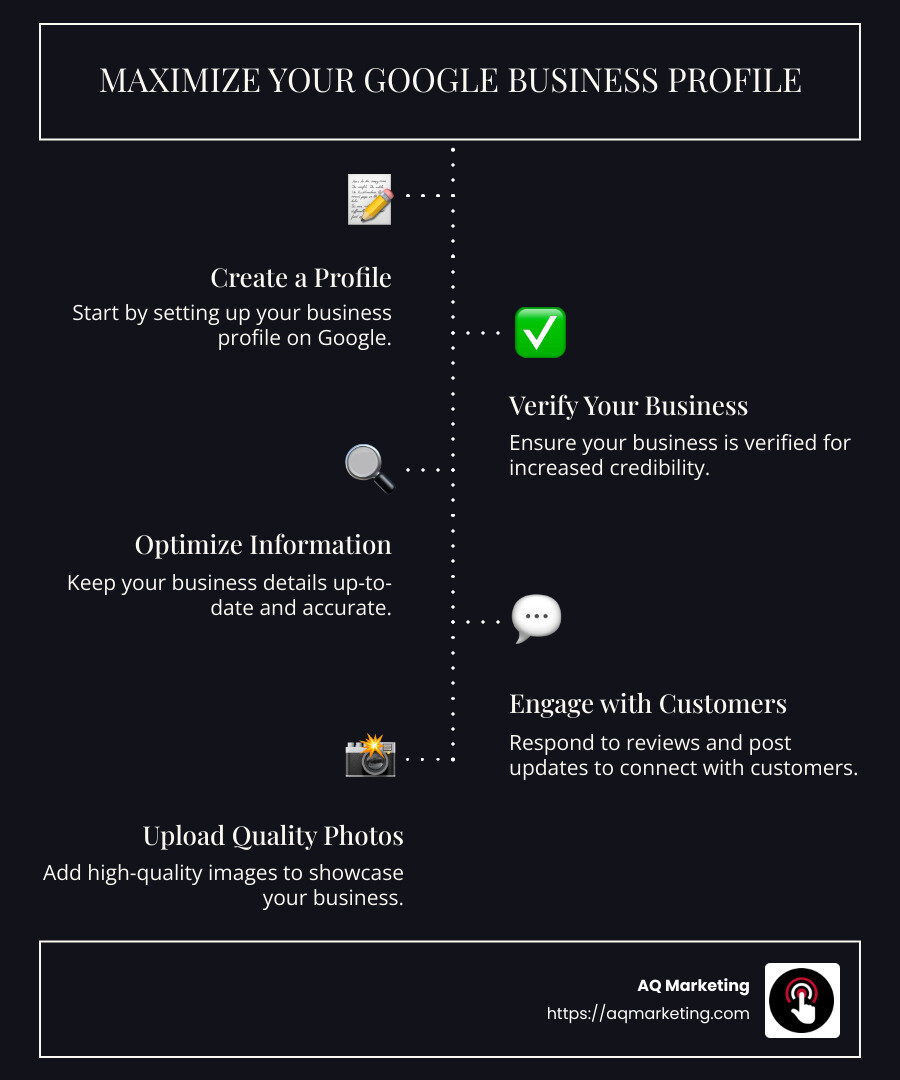
Creating a Google Business Profile is a straightforward process that can significantly improve your online visibility. Let’s walk through the essential steps to get your profile up and running.
Create Your Profile
First, head over to Google Business Profile. Click on the “Manage Now” button to start creating your account. If you already have a Google account, you can use it to sign in. If not, you’ll need to create one.
Once logged in, you will be prompted to enter your business name. Be precise and ensure it matches your branding. Avoid adding extra keywords to your business name, as this could lead to suspension by Google.
Verify Your Business
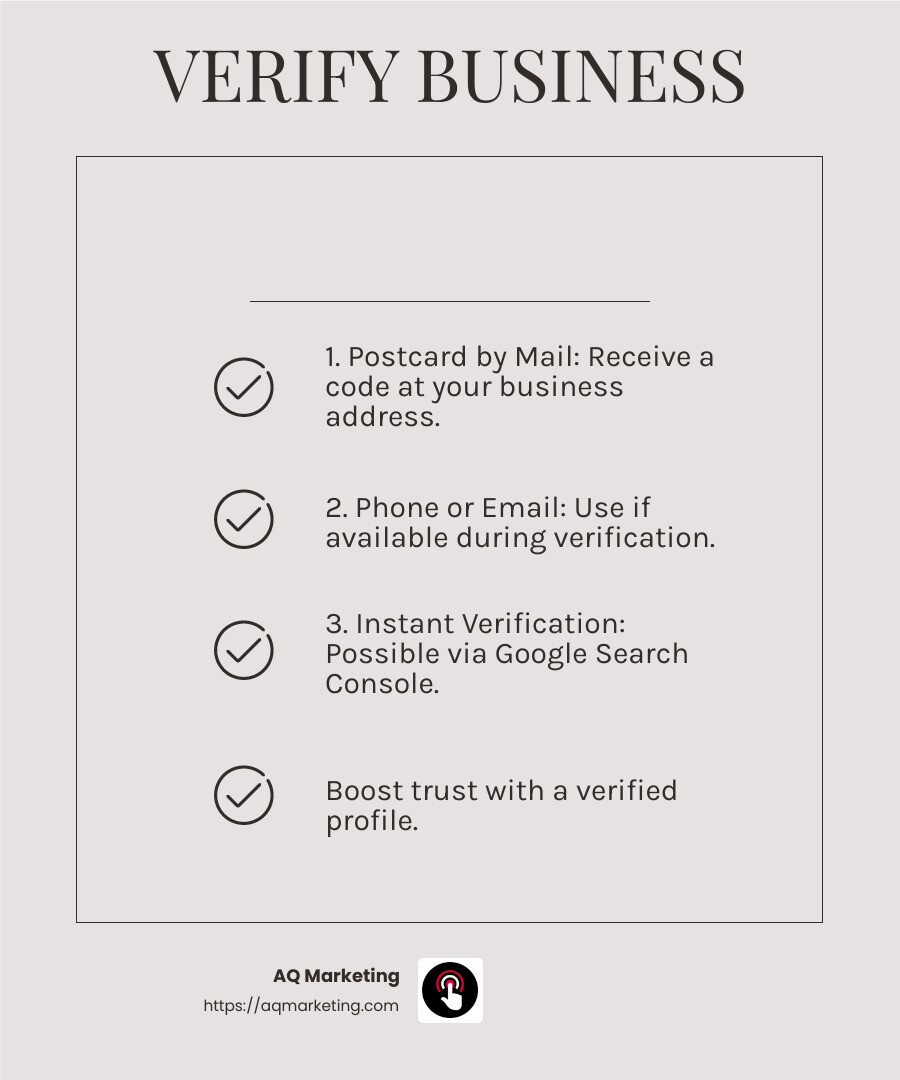
Verification is crucial. A verified profile is more likely to be trusted by users, and it ensures your business information is accurately displayed. You can verify your business in several ways:
Postcard by Mail: This is the most common method. Google sends a postcard with a verification code to your business address. Enter this code on your Google Business Profile to verify.
Phone or Email: Some businesses may have the option to verify via phone or email. If available, this option will be shown during the verification process.
Instant Verification: If you’ve already verified your business with Google Search Console, you might qualify for instant verification.
Enter Business Information
After verification, it’s time to fill out your business information. This includes:
Business Address: If you have a physical location, make sure the address is accurate. If you serve customers at their location, you can hide your address while specifying your service area.
Contact Information: Add your phone number and website URL. Ensure these details are correct, as they are crucial for customer contact.
Business Category: Choose a category that best describes your business. This helps Google understand what services you offer and makes it easier for customers to find you.
Hours of Operation: Keep these updated, especially during holidays or special events.
With your profile set up and verified, you’re ready to appear in local search results and on Google Maps. This not only boosts your visibility but also adds a layer of credibility to your business.
Optimizing Your Google Business Profile
Once your Google Business Profile is set up, the next step is optimization. This process can transform your profile from a mere listing to a powerful tool for attracting new customers. Let’s explore the key strategies:
Add Pictures
High-quality images are crucial. They make your business stand out and give potential customers a glimpse into what you offer. Here’s how to make the most of your visuals:
Profile and Cover Photos: Start with a profile photo, typically your logo, and a cover photo that best represents your business. This creates a strong first impression.
Variety of Images: Include exterior and interior photos of your location, product shots, and pictures of your team in action. This variety helps customers understand your business better.
Photo Quality: Ensure images are clear, well-lit, and free of blurriness. Avoid stock photos; instead, use original images to build trust and authenticity.
Interact with Customers
Engagement is key to building relationships with your audience. Here’s how to interact effectively:
Respond to Reviews: Monitor and respond to customer reviews regularly. Acknowledge positive feedback and address negative comments professionally. This shows that you value customer opinions.
Answer Questions: Use the Q&A feature to respond to customer inquiries. This not only provides valuable information but also demonstrates your responsiveness.
Create Google Posts: Share updates, offers, and events through Google Posts. These appear in the “Updates” section of your profile and keep your audience informed and engaged.
Attract New Customers
Optimizing your Google Business Profile can significantly boost your reach. Here’s how to attract more customers:
Use Keywords Wisely: Incorporate relevant keywords naturally into your business description and posts. This helps improve your local SEO, making it easier for potential customers to find you.
Highlight Products and Services: Use the Product Editor to showcase your offerings. Create collections with detailed descriptions and images to capture interest.
Select Attributes: Add attributes (like “LGBTQ friendly” or “Women-led”) that highlight unique aspects of your business. This can appeal to specific customer segments and improve your profile’s appeal.
By focusing on these optimization strategies, your Google Business Profile can become a powerful asset for your business.
New Features and Updates in Google Business Profile
The Google Business Profile continues to evolve, offering exciting new features to help businesses stay competitive and visible. Let’s explore some of the latest updates:
Social Media Posts Integration
Google has introduced a feature that allows businesses to display recent social media posts directly on their Google Business Profile. This means you can connect your Facebook, Instagram, YouTube, LinkedIn, Pinterest, TikTok, and X accounts to your profile.
This integration not only provides a dynamic way to engage with your audience but also offers a seamless view of your brand’s activity across platforms. The posts are automatically populated, ensuring your profile remains up-to-date with minimal effort.
New Listing Options
Google has expanded its listing options to include more detailed product and service information. You can now use the Product Editor to create collections of your products, complete with images, descriptions, and links to product pages.
This feature is particularly beneficial for small and medium-sized businesses, allowing them to showcase their offerings directly on their Google Business Profile. Restaurants, for instance, can use the “Popular Dishes” feature to highlight top menu items.
Improved Local Results
Local search results have received a boost with the latest updates. Google now prioritizes profiles with complete and accurate information, making it crucial for businesses to keep their profiles updated.
By ensuring NAP (Name, Address, Phone number) consistency across all platforms and utilizing Google’s tools like the Product Editor and Google Posts, businesses can improve their local search rankings. This means when potential customers perform a local search, your business is more likely to appear at the top of the results.
These new features and updates make the Google Business Profile an even more powerful tool for enhancing your online presence. By leveraging these updates, you can ensure your business stands out and attracts more customers. In the next section, we’ll address some frequently asked questions about the Google Business Profile to further clarify its benefits and usage.
Frequently Asked Questions about Google Business Profile
How do I access my Google Business Profile?
Accessing your Google Business Profile is easy and can be done through a few simple steps. First, ensure you have a Google account associated with your business. Once logged in, you can access your profile by typing your business name or “my business” into Google Search or Google Maps.
Alternatively, you can tap your profile picture in the Google Maps app and select “Your Business Profile” to manage your listings directly. This streamlined access allows you to update information, interact with customers, and monitor your online presence effortlessly.
Is Google Business Profile free?
Yes, the Google Business Profile is a completely free tool. It provides businesses with a platform to manage their online presence across Google Search and Maps without any cost.
This free tool allows you to improve your visibility, engage with customers, and showcase your products or services. By maintaining an accurate and updated profile, you can attract more customers and improve your search rankings—without spending a dime.
What is the difference between Google My Business and Google Business Profile?
In recent years, you might have noticed a name change from “Google My Business” to “Google Business Profile.” Despite the new name, it’s the same powerful tool designed to help businesses manage their online presence.
The name change reflects Google’s efforts to simplify and streamline its services. The functionality remains consistent, allowing you to control how your business appears on Google Search and Maps.
In summary, the Google Business Profile offers a user-friendly platform to improve your business’s online visibility and connect with potential customers. The next section will guide you on how to effectively set up your profile to maximize these benefits.
Conclusion
In today’s digital landscape, having a strong online presence is crucial for businesses of all sizes. At AQ Marketing, we understand the importance of leveraging tools like Google Business Profile to boost your visibility and connect with potential customers. This free tool is a game-changer, allowing businesses to manage their online presence effectively on Google Search and Maps.
By optimizing your Google Business Profile, you can showcase your products or services, engage with customers, and improve your search rankings. It’s not just about being found online; it’s about making a lasting impression. With features like customer reviews, business descriptions, and the ability to add images and updates, your profile becomes a dynamic representation of your brand.
We specialize in helping small to medium-sized businesses improve their online presence through a range of digital marketing services. Our expertise in SEO, website design, and social media management ensures that your business not only gets noticed but also stands out in a competitive marketplace.
If you’re ready to take your online presence to the next level, contact us today. Let us help you harness the power of digital marketing and transform the way your business is seen online. Together, we can achieve long-term, impactful results that drive growth and success.
Creative Landscaping Ads: Top 10 Powerful Tips for 2024
Releaseing Creativity in Landscaping Ads
Creative landscaping ads play a pivotal role in connecting landscaping businesses with potential customers. If you are seeking quick insights into creating creative landscaping ads, here are three key elements to focus on:
Who you are: Use your business name, tagline, and logo.
Your uniqueness: Highlight what sets your landscaping services apart.
Your strengths: Show why you excel better than anyone else.
Landscaping is a competitive field where visual appeal and differentiation can make all the difference. Creative advertising, when combined with current landscaping trends and digital marketing tactics, offers immense potential for success.
Today, it’s about more than just pretty lawns. Trends like eco-friendly practices, vertical gardening, and xeriscaping have transformed the landscape of landscaping itself. Engaging ads must therefore resonate with these modern solutions.
My name is Robert P. Dickey, President and CEO of AQ Marketing, Inc. With over 20 years of experience in digital marketing, I’ve helped numerous businesses craft compelling, creative landscaping ads that attract and convert customers. Let’s dig deeper into how you can achieve the same.
Understanding the Landscape of Creative Landscaping Ads
Creating effective and creative landscaping ads involves understanding market trends, consumer behavior, and the importance of visual appeal. Let’s break down these elements to help you build ads that stand out.
Market Trends
The landscaping industry is evolving with trends that reflect modern consumer preferences. Here are some key trends:
Eco-Friendly Practices: Many customers are now looking for sustainable landscaping solutions. This includes using compost, rainwater collection, and pollinator-friendly spaces. A survey found that 64% of Americans aim to live more sustainably due to the pandemic.
Less Lawn, More Functionality: Homeowners are reducing lawn areas in favor of more functional spaces like patios, decks, and even backyard golf courses. This trend allows for more creativity in ad visuals.
Vertical Gardening: Ideal for small spaces, vertical gardens are gaining popularity. They offer a unique selling point that can be highlighted in your ads.
Consumer Behavior
Understanding what your potential customers want is crucial for crafting ads that resonate. Here’s what to consider:
Desire for Simplicity: Many homeowners prefer low-maintenance landscaping. Ads that highlight easy-to-care-for solutions can attract this audience.
Visual Inspiration: Consumers often look for ideas and inspiration. Social media platforms like Instagram and Pinterest are popular for this. Showcasing beautiful, aspirational images can capture their interest.
Convenience and Expertise: People want hassle-free services. Highlighting your expertise, quick turnarounds, or free estimates can make your business more appealing.
Visual Appeal
In landscaping, visuals are everything. Here’s how to make your ads visually compelling:
High-Quality Images: Use bright, high-resolution photos that showcase your best work. Before-and-after shots can be particularly effective.
Bold Colors and Clean Design: Bright colors and a clean layout can make your ad stand out. Ensure your business name, logo, and contact details are clearly visible.
Emotional Connection: Use visuals that evoke emotions. Whether it’s the joy of a family gathering in a beautifully landscaped yard or the serenity of a well-maintained garden, emotions can drive engagement.
By staying informed about market trends, understanding consumer behavior, and focusing on visual appeal, you can create creative landscaping ads that not only attract attention but also convert leads into loyal customers.
Next, we’ll explore the strategies for effective landscaping advertising, focusing on brand differentiation, unique value propositions, and the best marketing channels to use.
Strategies for Effective Landscaping Advertising
Utilizing Social Media Platforms
Brand Differentiation
To stand out in a crowded market, your landscaping ads must clearly define who you are and what makes you unique. This includes your company name, tagline, and logo. Consistency in these elements across all platforms builds recognition and trust.
Unique Value Proposition
Highlight what sets you apart. Do you offer eco-friendly services? Quick turnarounds? Free estimates? Make these points clear in your ads to capture interest.
Marketing Channels
Use Facebook and Instagram to reach your audience effectively. These platforms allow for targeted advertising, ensuring your ads appear to those most likely to need your services.
Facebook
Targeting Strategies: Use Facebook’s robust targeting options. You can target users based on location, interests, and even behaviors like recent homeownership.
Ad Formats: Use carousel ads to showcase multiple services or a single image ad with a strong call to action.
Instagram
Visual Appeal: Instagram is all about visuals. Use high-quality images and videos to showcase your best work.
Stories: Instagram Stories have a higher engagement rate. Use them to share behind-the-scenes looks or quick tips on maintaining a beautiful yard.
The Power of Print in Landscaping Advertising
Flyers, Postcards, Direct Mail
Print ads can still be highly effective for landscaping businesses. They offer a tangible reminder of your services and can reach a local audience directly.
Flyers
Eye-Catching Design: Use bright colors and bold fonts. Include high-quality images and a clear call to action.
Distribution: Place them in strategic locations like local garden centers or community boards.
Postcards
Personal Touch: Send postcards to previous customers with a special offer or seasonal tips.
Targeted Mailing: Use direct mail to reach specific neighborhoods. This can be particularly effective for promoting seasonal services like spring clean-ups or fall leaf removal.
Higher Open Rates: Direct mail campaigns have an 11% higher open rate than email campaigns and generate 10 times more leads.
Design Tips: Include your logo, business name, contact information, and a compelling offer. Make sure the design is clean and professional.
By combining social media and print, you can create a multichannel marketing approach that maximizes your reach and effectiveness. Up next, we’ll dive into how to craft compelling content for your landscaping ads, focusing on copywriting and visual content.
Crafting Compelling Content for Landscaping Ads
Designing Eye-Catching Visuals
Photography
High-quality photos can make your ad stand out. Use bright colors and clear images to catch the viewer’s eye. Show before and after shots to highlight your expertise. For example, a video showing the change of a backyard can be very engaging.
Graphic Design
Use tools like Canva or Adobe Photoshop to create professional-looking ads. Incorporate your logo, business name, and contact information. A clean, visually appealing design will make your ad memorable.
Color Schemes
Bright, bold colors can attract attention. Use colors that reflect your brand and evoke feelings of nature and growth. For example, greens and blues can make your ad feel fresh and vibrant.
Visual Content
Visual content isn’t just about photos. Incorporate infographics or short videos to explain your services. Research shows that video ads on social media have a 67% ROI, making them a powerful tool to engage customers.
Writing Engaging Ad Copy
Headlines
Your headline is the first thing people see. Make it catchy and to the point. For example, “Transform Your Yard Today” is more engaging than “Landscaping Services Available.”
Descriptive Text
Use simple, clear language to describe your services. Highlight what makes you unique and better than the competition. For example, “We offer eco-friendly landscaping solutions with quick turnarounds.”
Emotional Appeal
Appeal to emotions to make your ad more compelling. Use testimonials or stories to show how your services have improved customers’ lives. For example, “Our garden redesign helped the Smith family enjoy more outdoor time together.”
Call to Action
Every ad should have a clear call to action. Tell people exactly what you want them to do next, such as “Call us for a free estimate” or “Visit our website to learn more.” Make it easy for them to take the next step.
By focusing on eye-catching visuals and engaging ad copy, you can create compelling landscaping ads that attract and convert customers. Up next, we’ll explore how to leverage technology to measure and optimize your ad performance.
Leveraging Technology in Creative Landscaping Ads
Tools for Creating Ads
Creating creative landscaping ads is easier than ever thanks to digital tools. Whether you’re a beginner or a pro, there are tools to help you design stunning ads.
Canva is a user-friendly tool that offers a wide range of templates for flyers, social media posts, and videos. You don’t need to be a designer to create professional-looking ads. Just drag and drop your images, add text, and you’re good to go.
Adobe Photoshop is another powerful tool for those with more design experience. It allows for more advanced editing and customization. You can create high-quality visuals that stand out and reflect your brand’s identity.
Vidyard is a great tool for creating video ads. Videos are highly engaging and can explain complex concepts easily. You can shoot a video on your phone and edit it with Vidyard to add effects, text, and music. Research shows that video ads on social media have a 67% ROI, making them a smart choice for your landscaping business.
Measuring Ad Performance
Creating ads is just the first step. To ensure your ads are effective, you need to measure their performance.
Google Analytics is a must-have tool for tracking your website traffic. It shows you how many people are visiting your site, where they are coming from, and which pages they are viewing. This information can help you understand what is working and what needs improvement.
Social media insights are also crucial. Platforms like Facebook and Instagram offer analytics that show how your ads are performing. You can see metrics like engagement, clicks, and shares. This helps you understand which ads resonate with your audience.
ROI analysis is important to determine the effectiveness of your ad campaigns. Calculate the return on investment by comparing the revenue generated from your ads to the cost of running them. This will help you decide where to allocate your budget for the best results.
Automation tools can save you time and effort. Tools like Hootsuite or Buffer allow you to schedule your social media posts in advance. This ensures a consistent online presence without the need to manually post every day.
By leveraging these digital tools and analytics, you can create and optimize your creative landscaping ads to achieve the best possible results. Up next, we’ll answer some frequently asked questions about making your landscaping ads stand out.
Frequently Asked Questions about Creative Landscaping Ads
How can I make my landscaping ads stand out?
To make your creative landscaping ads stand out, focus on three key elements: who you are, what makes you unique, and what you do better than anyone.
1. Who You Are: Always include your company name, tagline, and logo. This builds recognition and trust.
2. What Makes You Unique: Highlight your unique selling points (USPs). Do you offer free estimates, quick turnarounds, or sustainable products? Make it clear in your ads.
3. What You Do Better: Showcase how you excel. Are you more efficient, have a larger team, or offer the best pricing? Spell it out for your audience.
Also, use eye-catching visuals and compelling narratives. For example, Rock Farm’s Patio video uses music and action to make viewers want a new patio. Video ads on social media boast a 67% ROI, making them powerful tools for engagement.
What are the most effective platforms for landscaping advertising?
Several platforms can effectively reach your target audience:
1. Google Ads: Google is the king of search. Use targeted keywords like “landscaping near me” to display ads in search results. This can drive local traffic to your business.
2. Social Media (Facebook & Instagram): These platforms offer robust targeting options. Use them for both video and image ads. Social media insights can help you track engagement and refine your strategy.
3. Print Ads: Don’t underestimate the power of print. Flyers, postcards, and mailers can reach a wider audience for less money. Direct mail campaigns have open rates 11% higher than email campaigns and generate 10 times more leads.
Combining these platforms in a multichannel approach can maximize your reach and effectiveness.
How do I measure the success of my landscaping ads?
Measuring success involves several key metrics:
1. Google Analytics: Track your website traffic to see how many visitors come from your ads. Look at metrics like bounce rate, session duration, and conversion rate.
2. Social Media Insights: Platforms like Facebook and Instagram provide analytics showing engagement, clicks, and shares. This helps you gauge which ads resonate most with your audience.
3. ROI Analysis: Calculate the return on investment by comparing the revenue generated from your ads to the cost of running them. This will help you decide where to allocate your budget for the best results.
4. Automation Tools: Use tools like Hootsuite or Buffer to schedule posts and maintain a consistent online presence. This can save time and ensure your ads are always active.
By tracking these metrics, you can continuously optimize your creative landscaping ads for better performance and higher returns.
Conclusion
Creating effective and creative landscaping ads is not just about a single campaign; it’s about long-term strategies that build your brand and attract loyal customers.
Long-term Strategies
Consistency is key. By consistently showcasing who you are, what makes you unique, and what you do better than anyone, you build a recognizable and trustworthy brand. Use a multichannel approach to maximize your reach. Combining digital ads, social media, and print can create a comprehensive strategy that touches potential customers at various points in their journey.
AQ Marketing
At AQ Marketing, we specialize in helping landscaping businesses like yours grow. We offer a range of services from website design to search engine optimization (SEO) and social media management. Our goal is to create a custom marketing strategy that drives results.
Industry Insights
The landscaping industry is evolving. Trends like sustainable products, smart home tech, and outdoor living spaces are shaping consumer preferences. By staying updated on these trends and incorporating them into your ads, you can stay ahead of the competition.
In conclusion, building creative landscaping ads involves a blend of compelling content, strategic use of various platforms, and ongoing optimization. With the right approach, you can effectively engage your audience and grow your business.
For more information on how we can help you create impactful ads, contact AQ Marketing today. Let’s turn your vision into reality.