Plumbing Websites: 5 Inspiring Designs for Powerful Results 2025
The Digital Storefront: Why Plumbing Websites Matter
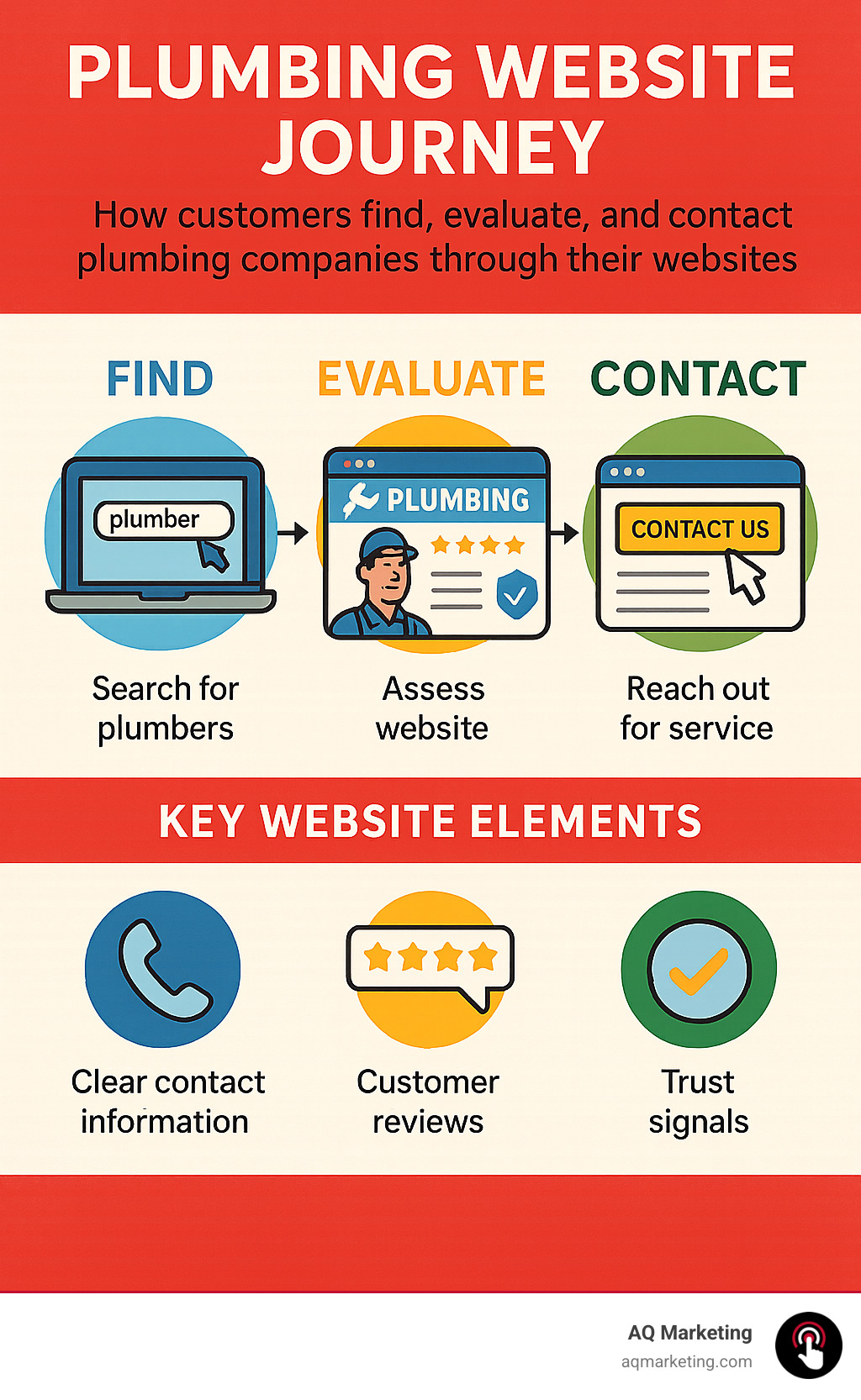
Plumbing websites are essential digital storefronts that help service providers connect with potential customers searching for solutions to their plumbing emergencies and needs. Here’s what makes an effective plumbing website:
Mobile-friendly design (64% of plumbing searches occur on mobile devices)
Clear contact information and prominent CTAs
Service pages that clearly explain offerings
Customer testimonials (91% of consumers trust online reviews)
Fast loading speed (bounce rates increase 32% when load times exceed 3 seconds)
Online booking capabilities for convenient scheduling
A well-designed plumbing website isn’t just about looking professional—it’s about converting visitors into paying customers. The best plumbing websites combine user-friendly navigation with trust-building elements like reviews, certifications, and authentic team photos to create a seamless experience that drives phone calls and form submissions.
I’m Robert P. Dickey, President of AQ Marketing with over 20 years of experience helping service businesses develop high-converting plumbing websites that generate consistent leads and showcase their expertise to local customers.
In today’s digital-first world, your plumbing website is far more than just an online brochure—it’s your 24/7 sales representative. When a homeowner’s pipes burst at midnight or their water heater fails on a Sunday morning, they’re not flipping through the Yellow Pages—they’re grabbing their smartphone.
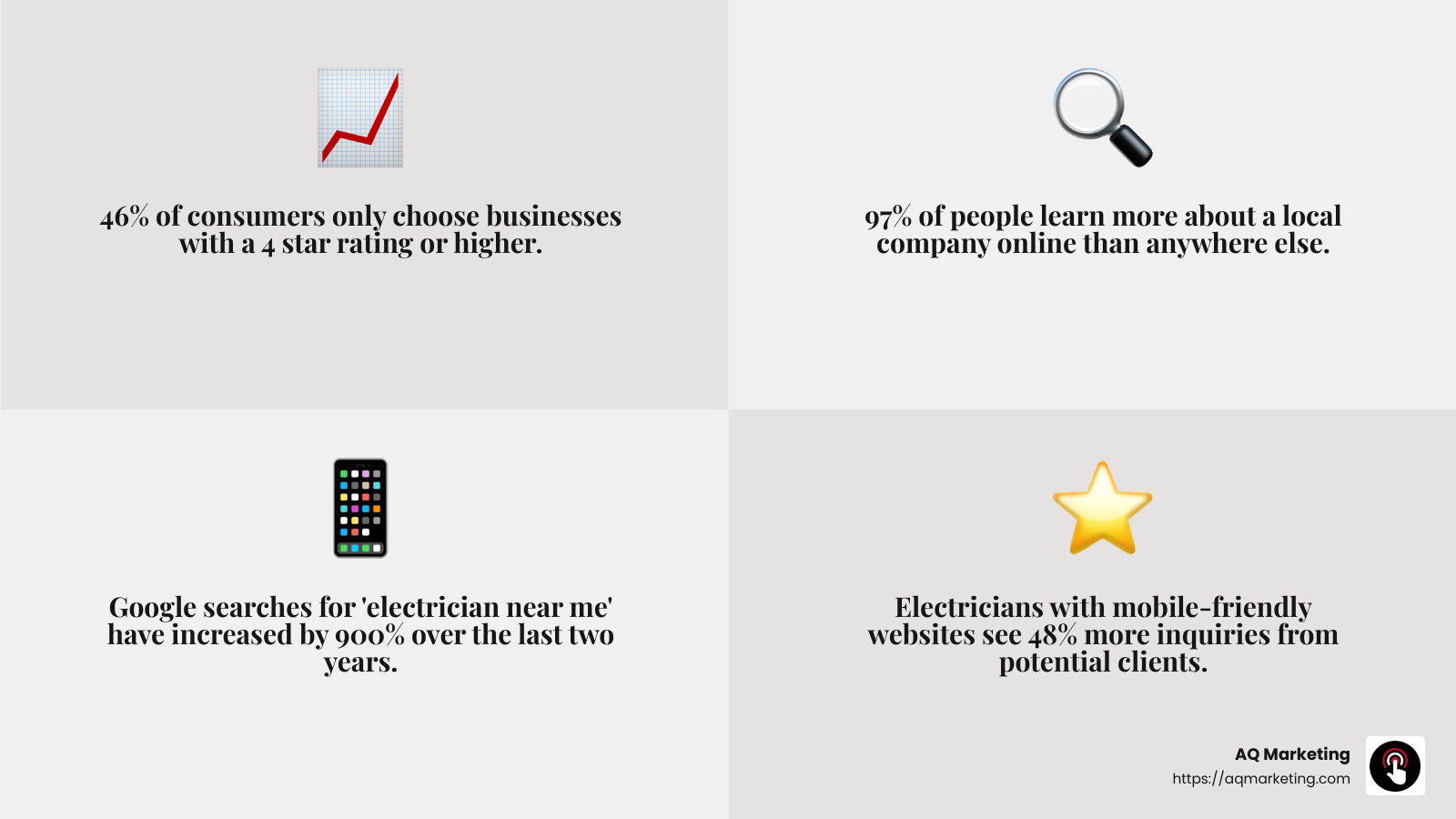
The numbers tell a compelling story about why quality plumbing websites matter:
64% of searches for plumbing services happen on mobile devices—if your site isn’t mobile-friendly, you’re potentially missing two-thirds of your market
When a website takes more than 3 seconds to load, bounce rates jump by 32%—meaning potential customers simply leave
An impressive 91% of consumers read online reviews before making decisions, making testimonials a critical trust signal on your website
“No one visits a plumbing site for fancy animations—they want clarity, trustworthiness, and contact info,” as one industry expert puts it. This highlights an important truth we’ve seen repeatedly at AQ Marketing: effective plumbing websites don’t need to be flashy, but they absolutely must be functional, trustworthy, and easy to steer.
Local SEO is another crucial factor that can’t be overlooked. When homeowners face plumbing emergencies, they’re frantically searching for “emergency plumber near me” and calling the first credible business they find. Your website needs to be optimized to appear in these critical moments when seconds count and decisions are made quickly.
The plumbing industry presents a unique opportunity—no single company controls more than 1% of the market. This creates tremendous potential for businesses with strong digital presence to capture market share. Since 2003, we’ve observed that plumbing companies throughout Massachusetts that invest in quality websites consistently outperform competitors who rely solely on traditional marketing channels.
A professional plumbing website establishes your brand authority by showcasing your expertise through detailed service pages, building trust through customer testimonials, demonstrating professionalism through quality design, providing 24/7 accessibility to your business information, and generating leads through strategic calls-to-action.
Scientific research on mobile experience confirms that mobile-friendly websites aren’t just nice to have—they’re essential for conversion. When we develop plumbing websites for our clients, mobile optimization is always our top priority, because we know that’s where your customers are looking for you.
Must-Have Features of High-Converting Plumbing Websites
After analyzing hundreds of successful plumbing websites over our 20+ years in business, we’ve finded what truly works to turn visitors into customers. These aren’t just nice-to-have features—they’re essential elements that drive real results for plumbing businesses.
Mobile-Friendliness for Plumbing Websites
When 64% of potential customers are searching for plumbers on their phones, mobile optimization isn’t optional—it’s critical. Picture this: a homeowner with water pooling around their feet isn’t running to their desktop computer. They’re grabbing their phone and looking for help fast.
Effective mobile-friendly plumbing websites feature responsive layouts that automatically adjust to any screen size, making navigation intuitive no matter the device. They include thumb-friendly buttons (at least 44×44 pixels) that are easy to tap even when someone’s in a panic. Menus should simplify on smaller screens, and click-to-call buttons should be instantly accessible for those emergency situations.
Our research shows that more than half of users will abandon a site after a poor mobile experience. At AQ Marketing, we’ve seen this play out countless times—which is why we build every plumbing website with a mobile-first approach, ensuring critical information is accessible within seconds.
CTAs that Convert on Plumbing Websites
The humble call-to-action might seem simple, but it’s the bridge between browsing and booking. The most effective plumbing websites we’ve built include strategically placed CTAs that guide visitors toward becoming customers.
Click-to-call buttons should be unmissable—typically in the top-right corner and throughout the site. Online booking widgets eliminate friction by letting customers schedule service on their own terms. Emergency service buttons deserve special treatment with distinct styling that catches the eye immediately.
One plumbing company we worked with in Middlesex County implemented our CTA strategy and saw their conversion rate skyrocket by 208%. The secret wasn’t flashy design—it was thoughtful placement that followed natural eye movement patterns and reduced decision fatigue for visitors.
Service Page Structure
How you organize your services can make or break your website’s effectiveness. Think of your service pages as your digital service truck—everything should be organized logically and easy to find.
The best plumbing websites clearly separate residential from commercial services and emergency from maintenance work. They use what we call “silo navigation” to group related services, making it easy for visitors to find exactly what they need. Benefit-focused headings address customer pain points directly—not “Water Heater Installation” but “Get Hot Water Back Fast: Professional Water Heater Installation.”
When we redesigned a Southern New Hampshire plumber’s website with this structured approach, their organic traffic increased by 344%. The change wasn’t just cosmetic—it fundamentally improved how customers interacted with their content.
Building Trust with Reviews
In an industry where strangers enter your home to solve intimate problems, trust isn’t just important—it’s everything. With 91% of consumers trusting online reviews as much as personal recommendations, your plumbing website needs to showcase social proof prominently.
We’ve found that displaying a Google Reviews badge in the hero section creates immediate credibility. Video testimonials add a personal touch that written reviews can’t match. Certification logos like BBB accreditation signal professionalism, while review snippets with star ratings on service pages reinforce trust at the decision point.
One of our plumbing clients in Essex County implemented our review integration strategy and saw a 70% improvement in client retention. People weren’t just finding them—they were coming back and referring others.
Bonus Features that Delight
The difference between a good plumbing website and a great one often comes down to those extra touches that make life easier for customers.
Live chat functionality provides immediate answers when people have questions. Online estimate calculators give ballpark figures for common jobs, setting appropriate expectations. An educational blog with maintenance tips positions you as helpful and knowledgeable—even when they’re not ready to hire.
We’ve consistently found that plumbing websites with these bonus features see higher engagement and lower bounce rates. People stay longer, explore more, and ultimately, convert at higher rates.
At AQ Marketing, we’ve been building high-converting plumbing websites since 2003. We’ve seen trends come and go, but these core elements have consistently delivered results for our clients across Massachusetts and beyond.
#1 Example of Excellence in Plumbing Website Design
There’s something instantly reassuring about certain plumbing websites that makes you feel like you’ve found a trusted neighbor rather than just another service provider. The best plumbing websites beautifully weave rich history into a modern, functional digital experience.
When you land on an effective homepage, you’re immediately greeted by heritage-focused branding. The “Trust since [year]” messaging isn’t just a tagline—it’s decades of community service speaking directly to you. This immediate establishment of credibility is something we’ve seen work wonders for service businesses across Massachusetts as well.
What truly sets exceptional plumbing websites apart is their thoughtful approach to design. A sticky call-to-action that follows you as you browse makes it effortlessly simple to reach out when you’re ready. No hunting for contact information—it’s right there when you need it.
Instead of falling into the common trap of using generic stock photos, the best sites showcase actual team members. These authentic images create a genuine connection with visitors, putting real faces to the company name. A clean, retro-inspired design feels like a comfortable handshake—professional without being stuffy.
With numerous Google reviews prominently displayed, smart plumbing businesses leverage social proof that instantly builds trust. As one industry expert notes, “A flashy or stylish color scheme may undermine the professional, trustworthy feel expected of a plumbing site.” The best sites sidestep this pitfall beautifully, embracing their heritage with colors and typography that feel authentic to their story.
The lessons from excellent plumbing websites are clear: don’t hide your years of experience—showcase them proudly as a powerful trust signal. Use real photos of your team to create stronger human connections. And keep your navigation simple so customers can quickly find exactly what they need.
When we build plumbing websites for our clients at AQ Marketing, we often point to these principles as examples of how heritage branding can create a standout digital presence that converts visitors into loyal customers.
#2 Family-Focused Plumbing Website Design
When you visit a family-oriented plumbing company’s plumbing website, you’re not just looking at another service provider – you’re being welcomed into a family. This approach stands out in the industry by creating genuine emotional connections from the moment you land on their page.
What makes these websites truly special is how they balance professionalism with warmth. Front and center, you’ll find authentic family photos featuring multi-generational teams that instantly communicate trust and long-term expertise. There’s something reassuring about seeing the actual people who might be fixing your pipes, rather than anonymous technicians.
Perhaps the most clever touch is placing glowing customer reviews as subtitles – a brilliant strategy that builds immediate confidence. As visitors scroll through these sites, they’re taken on a narrative journey through the company’s history and services, with each section flowing naturally into the next.
“One site places its subtitle as a glowing customer review to build confidence immediately,” notes an industry analyst about this effective approach – and with 91% of consumers more likely to choose a business after reading positive reviews, it’s a strategy that clearly works.
The copy throughout these family-focused sites feels like a friendly conversation rather than a technical manual. They’ve mastered the art of being concise without feeling rushed, explaining their services without drowning visitors in industry jargon. When it’s time to request a quote, the process is refreshingly simple with minimal form fields – because they understand that when you need a plumber, you don’t want to fill out a lengthy application.
What makes family-oriented plumbing websites worth learning from:
Their authentic family elements create emotional connections that corporate stock photos simply can’t match
By placing reviews in unexpected places like subtitles, they maximize the impact of social proof
Their conversational tone transforms potentially intimidating technical services into approachable solutions
For homeowners who feel anxious about inviting strangers into their homes for plumbing work, this family-oriented approach provides exactly the reassurance they’re looking for. It’s a powerful reminder that in local service businesses, the human element still matters tremendously.
#3 Modern Minimalist Plumbing Website Design
When it comes to standing out in the crowded plumbing market, a minimalist approach shows us that sometimes less truly is more. The best modern plumbing websites take a refreshingly contemporary approach that catches the eye and makes finding help a breeze.
What makes these websites so special isn’t complicated – it’s their commitment to simplicity with personality. Bright, vibrant color palettes immediately distinguish them from the sea of traditional plumbing websites using predictable blues and greens. The moment you land on their pages, bold color schemes create instant brand recognition that sticks in your memory.
These companies understand that when your toilet is overflowing at midnight, you don’t want to scroll through paragraphs of text – you need help fast. That’s why their minimalist design puts everything you need right at your fingertips. Their tagline-focused messaging immediately communicates what they do and why you should choose them, without making you hunt for information.
“Simpler single-navigation design can be more effective despite less visual polish,” one industry expert points out, and these modern sites embody this philosophy perfectly. Their straightforward approach prioritizes function over flash, making it incredibly easy for panicked homeowners to connect with them quickly.
I particularly love how they’ve thoughtfully designed their above-the-fold section. All essential contact information and booking options are visible without scrolling – a crucial feature when dealing with plumbing emergencies where every second counts. Their quick booking systems reflect an understanding that in the plumbing business, convenience isn’t just nice to have – it’s essential.
The consistent application of brand colors throughout these sites creates a cohesive experience that feels professional and intentional. This attention to detail subconsciously builds trust with visitors, showing that if they care this much about their website, they’ll likely bring the same level of care to your plumbing needs.
What we can learn from the modern minimalist approach to plumbing websites:
1. A distinctive color palette creates stronger brand recognition and memorability
2. Minimalist design isn’t lazy – it’s strategic, focusing visitor attention on what matters
3. Consistency in visual elements builds a more professional impression
These websites prove that you don’t need complicated designs or excessive content to create an effective online presence – sometimes bold simplicity is exactly what helps you stand out and convert visitors into customers.
#4 Multi-Location Plumbing Website Design
If you’ve ever wondered how a multi-location plumbing company can maintain its identity while still feeling local, the best examples offer a masterclass through their exceptional plumbing websites. They’ve struck the perfect balance between brand consistency and local relevance—something many operations with multiple locations struggle to achieve.
What really sets these websites apart is their sophisticated location-finding systems. The moment you land on their homepage, you’re prompted to enter your ZIP code to connect with your nearest location. This seemingly simple feature actually solves a major pain point for visitors who just want to know: “Can these plumbers help me where I live?”
These websites shine in several other key areas as well. The live chat support available across all pages gives visitors immediate access to help—critical when you’re dealing with plumbing emergencies that can’t wait. Their service categories are logically organized, making it easy for both homeowners and business owners to quickly find exactly what they need without wading through irrelevant information.
“Sites using hero videos to demonstrate services in action follow the ‘show, don’t tell’ principle,” as one industry observer pointed out. These successful multi-location websites accept this approach wholeheartedly, using engaging video content that shows their professionals at work. This visual demonstration of expertise builds confidence in potential customers far more effectively than paragraphs of text ever could.
What I find particularly impressive about these plumbing websites is how they’ve managed to leverage their brand recognition while still highlighting the local ownership of each location. When you visit a local page, you’ll see familiar branding that inspires trust, alongside photos and stories of the local team who’ll actually show up at your door.
There’s plenty we can learn from this approach:
For multi-location businesses, prioritize location-based functionality to quickly connect visitors with relevant services
Create dedicated sections for different customer types (like residential and commercial divisions) to streamline the user experience
Use video content strategically to demonstrate your expertise in action rather than just claiming it
These websites prove that with thoughtful design, even large operations with multiple locations can create digital experiences that feel both trustworthy and personally relevant to local customers in need of plumbing services.
#5 Premium Design Plumbing Website
Some plumbing companies stand out from the crowd with a bold approach that proves plumbing websites don’t have to follow conventional design rules to be effective.
What truly makes premium plumbing websites shine is their thoughtful attention to customer needs. Their carousel review displays automatically rotate recent testimonials, giving visitors a fresh look at real customer experiences without requiring extra clicks. This smart approach to showcasing social proof appears just three scrolls down the page – much earlier than the five scrolls typical of competitor sites.
“Websites that place review badges and widgets above the fold see higher visitor trust,” our research confirms, and these premium sites clearly understand this principle.
Their digital coupon systems are another customer-friendly feature that lets visitors instantly redeem special offers online – no printing or awkward phone mentions required. When you pair this with prominently displayed financing options, you can see how they’re actively removing barriers that might prevent someone from picking up the phone.
The comprehensive FAQ hubs deserve special mention too. By addressing common questions upfront, they’re building trust while reducing those repetitive phone inquiries that can tie up office staff. It’s a win-win approach that benefits both the company and their customers.
Perhaps most distinctive is their premium dark theme design. While most plumbing websites opt for light backgrounds with blue accents, these premium sites accept sophisticated dark palettes that create a memorable visual identity. The high-contrast elements make important information pop while giving the entire site a premium feel that distinguishes them in a crowded market.
What can other plumbers learn from this premium approach? First, strategic placement of reviews earlier in the browsing experience builds trust faster. Second, offering clear financing information removes a major purchase hesitation. And finally, don’t be afraid to accept a distinctive visual theme that aligns with your brand name and personality – standing out can be a powerful advantage in a sea of similar-looking competitors.
SEO & Visibility Tips for Plumbing Websites
Your stunning plumbing website might look amazing, but if no one can find it, it’s like a beautiful storefront hidden down an alley. Let’s talk about how to get your website in front of the people who need your services most.
Page Speed Optimization
Did you know websites on Google’s first page load in just 1.65 seconds on average? When your site takes longer than 3 seconds to load, bounce rates jump by a whopping 32%. For plumbing websites, this is particularly crucial – when someone’s basement is flooding, they’re not sticking around for a slow-loading page!
We’ve helped plumbers throughout the Merrimack Valley cut their load times by up to 40% using some straightforward techniques. Compressing those high-quality team photos (without making them look terrible), implementing browser caching, and choosing reliable hosting can make a dramatic difference. Think of it as unclogging your website’s digital pipes!
Core Web Vitals Optimization
Google’s Core Web Vitals have become the digital equivalent of a building inspection for your website. For plumbing websites to pass with flying colors, focus on these three measurements:
Largest Contentful Paint (LCP) should be under 2.5 seconds – this is how quickly your main content appears. First Input Delay (FID) needs to stay under 100 milliseconds – how responsive your site is when someone clicks something. And Cumulative Layout Shift (CLS) should remain below 0.1 – preventing those annoying layout jumps that happen when someone’s about to click “Call Now.”
“Install a cache plugin like WP Rocket to improve load times,” is advice we frequently share with our plumbing clients. It’s like installing a pressure-assist system for your website – simple but remarkably effective.
Keyword Clusters & Content Strategy
Smart plumbing websites organize their content around natural groupings of related services. Instead of trying to rank for “plumbing” (good luck with that!), focus on specific keyword clusters that match how your customers actually search.
Create a main service page (pillar content) for categories like emergency services, residential repairs, or water heater replacement. Then build supporting pages that link back to these main pages. This creates what Google sees as topical authority – showing you’re a genuine expert in specific plumbing niches.
Google Business Profile Optimization
For local plumbers, your Google Business Profile might be more important than your website itself for generating leads. It’s like having a digital storefront right on Main Street.
Make sure your business name, address, and phone number are consistent everywhere online. Add high-quality photos of your actual team (in clean uniforms!) and completed work. Respond thoughtfully to every review – yes, even the negative ones. And be precise about your service areas – this helps Google match you with the right local customers.
I’ve seen plumbing companies in Woburn double their call volume simply by optimizing this free Google tool properly.
Schema Markup Implementation
Schema markup is like giving Google a detailed blueprint of your plumbing website instead of making them figure it out themselves. It’s technical behind-the-scenes code that helps search engines understand exactly what your business offers.
For plumbers, the most valuable schema types include LocalBusiness schema with your service areas clearly defined, Review schema to highlight those glowing testimonials, and Service schema that details your specific plumbing offerings. As one of our SEO specialists likes to say, “Implementing schema markup is like giving Google a roadmap to your business information.”
On-Page SEO
Local SEO
Title tags with services & location
Google Business Profile optimization
Meta descriptions with CTAs
Local citation building
Header tags (H1, H2, H3)
Review management
Internal linking structure
Local backlinks
Image optimization with alt text
Location pages for service areas
Mobile responsiveness
Local schema markup
Page speed optimization
Local content creation
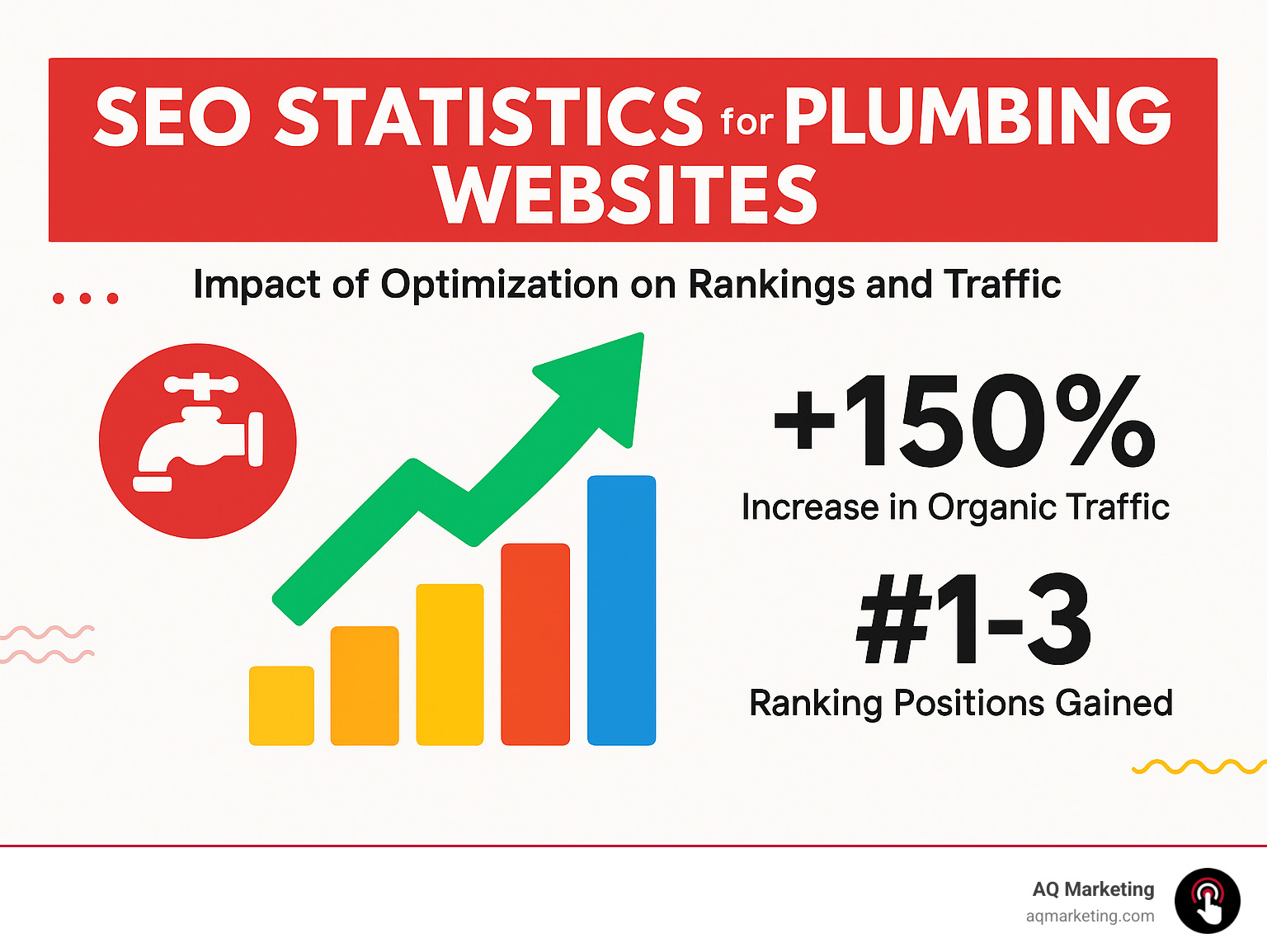
Since 2003, our team at AQ Marketing has helped plumbing companies throughout Boston, Woburn, and surrounding areas climb to first-page rankings for competitive terms. We don’t just implement these strategies – we measure the results and refine our approach until those phones start ringing.
Frequently Asked Questions about Plumbing Websites
How important is mobile responsiveness for plumbers?
Mobile responsiveness isn’t just important for plumbing websites – it’s absolutely essential. Think about it: when someone’s dealing with a burst pipe at 2 AM, they’re probably frantically searching on their smartphone, not sitting at a desktop computer. With 64% of plumbing searches happening on mobile devices, you simply can’t afford to have a website that looks terrible on phones.
I’ve seen countless plumbing companies lose potential customers because their websites were practically unusable on mobile. Tiny buttons that can’t be tapped, text that requires zooming, and forms that won’t submit properly – these frustrations send customers straight to your competitors.
“If you haven’t tried navigating your plumbing website on a smartphone, do so now and see how you experience the site through a user’s eyes,” one of our industry experts often tells clients. It’s eye-opening to view your site the way most of your customers do!
At AQ Marketing, we carefully test all plumber websites across multiple devices and screen sizes – from the latest iPhones to budget Android devices – ensuring that no matter how customers find you, they’ll have a seamless experience.
What CTA placement works best?
When it comes to calls-to-action on plumbing websites, strategic placement makes all the difference between a visitor who calls and one who leaves.
The top-right corner of your navigation is prime real estate for your phone number – this follows natural eye movement patterns and gives visitors immediate access to contacting you. Your hero section (that big area at the top of your homepage) should always include a bold, unmistakable button or form that captures attention.
For emergency services, we’ve found that floating buttons that stay visible as users scroll perform exceptionally well. These persistent CTAs serve as a constant reminder that help is just a click away. As one client told us, “That floating emergency button generated three new jobs in the first week alone!”
Plumbing websites should also place contextual CTAs at the end of service descriptions – this catches visitors right at the moment they’ve finished reading about how you can solve their specific problem. And don’t forget your footer! It provides one final conversion opportunity for those who’ve scrolled through your entire page.
For emergency services specifically, we recommend using distinctive styling – think bright red buttons with urgent language – to make these options instantly recognizable to stressed homeowners dealing with plumbing disasters.
Which reviews should be showcased?
When it comes to selecting reviews for your plumbing website, quality and relevance trump quantity every time. The most impactful testimonials share specific details about your services and the positive outcomes customers experienced.
Recent reviews (ideally from the past 3-6 months) carry much more weight than older ones. After all, potential customers want to know about your current service quality, not how you performed three years ago. Reviews that include photos of completed work are particularly powerful – they provide visual proof of your craftsmanship that words alone can’t convey.
I’ve noticed that reviews mentioning exceptional emergency response or going above and beyond tend to resonate most with potential customers. One Massachusetts plumber we work with features a review from a grateful customer whose basement flooded on Christmas Eve – that single testimonial has been mentioned by numerous new customers as a reason they called.
“Automating review requests immediately after job completion” is a practice we’ve implemented for our plumbing clients with tremendous success. This simple follow-up system ensures a steady stream of fresh testimonials without requiring constant manual effort.
While Google Reviews typically carry the most credibility with consumers, including testimonials from multiple platforms (Yelp, Facebook, BBB) helps strengthen your overall reputation. This diversity shows that your excellent service is recognized across the entire digital landscape, not just on a single platform.
Conclusion
Creating an effective plumbing website goes far beyond just picking nice colors and images—it’s about building a hardworking digital asset that brings in real leads while you’re busy unclogging drains and fixing water heaters. Think of your website as your most dedicated employee, one who never sleeps, never takes vacation, and is always ready to make a great first impression.
Since 2003, we’ve worked alongside plumbers throughout Boston, Woburn, Middlesex County, and beyond, watching how the right website transforms businesses from “just another plumbing company” into the first call homeowners make when pipes burst at 2 AM.
The most successful plumbing websites we’ve built share some important DNA. They load in a snap (especially on mobile), they instantly build trust through authentic reviews and real team photos, and they make contacting you ridiculously simple. No hoops to jump through, no hunting for your phone number—just clear paths to get help fast when water is pooling on the kitchen floor.
I’ve seen the change in our clients’ businesses when we get these elements right. One plumber in Merrimack Valley told me, “It’s like night and day—before, we were invisible online. Now we’re booking jobs while we sleep.” That’s the power of a well-crafted plumbing website.
What makes us particularly proud at AQ Marketing is seeing the tangible results our clients enjoy:
Their organic traffic climbs steadily month after month. Their phones ring more often with qualified leads (not tire-kickers). Their Google rankings improve for searches that actually matter. And most importantly, their investment in a quality website delivers measurable returns that grow their business.
Whether you’re starting from scratch or your current site needs some serious TLC, focusing on the fundamentals we’ve covered will help you build a digital presence that works as hard as you do. In the plumbing industry, where emergency searches often drive business, having a website that’s both findable and functional isn’t just nice—it’s necessary.
Ready to transform your online presence? Our team at AQ Marketing has been helping plumbers throughout Massachusetts and Southern New Hampshire build websites that don’t just sit there looking pretty—they actively generate business day and night.
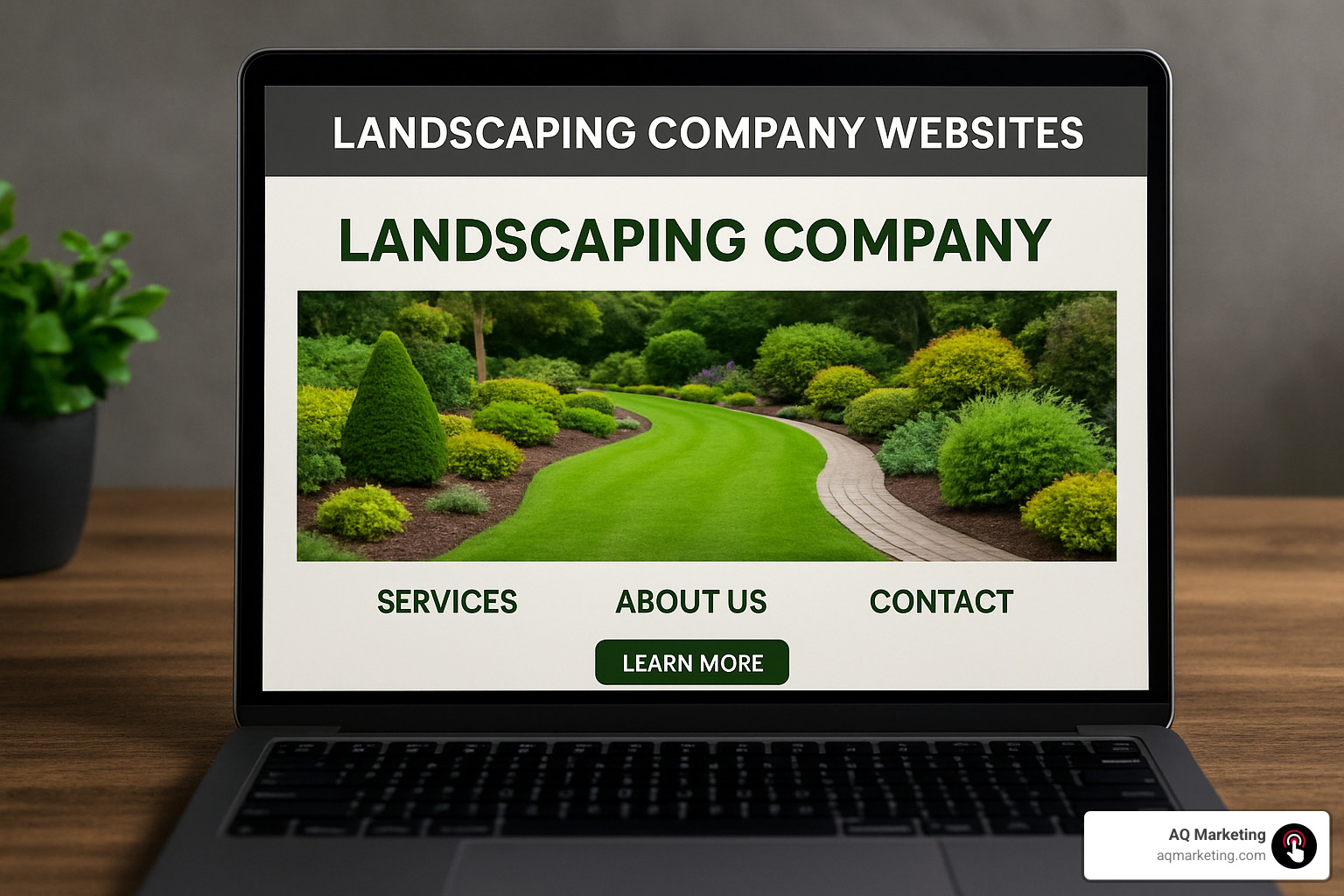
Landscaping Company Websites: 13 Best Stunning Designs 2025
Essential Elements of Landscaping Company Websites
When it comes to creating landscaping company websites that truly work, it’s not just about having a pretty online space. Your website needs to be your hardest-working employee—one that never sleeps and consistently turns visitors into paying customers.
I’ve seen how the right elements can transform a landscaping website from an online brochure into a lead-generating powerhouse. The landscaping industry has been blooming with 8.2% annual growth in recent years, making your digital presence more crucial than ever.
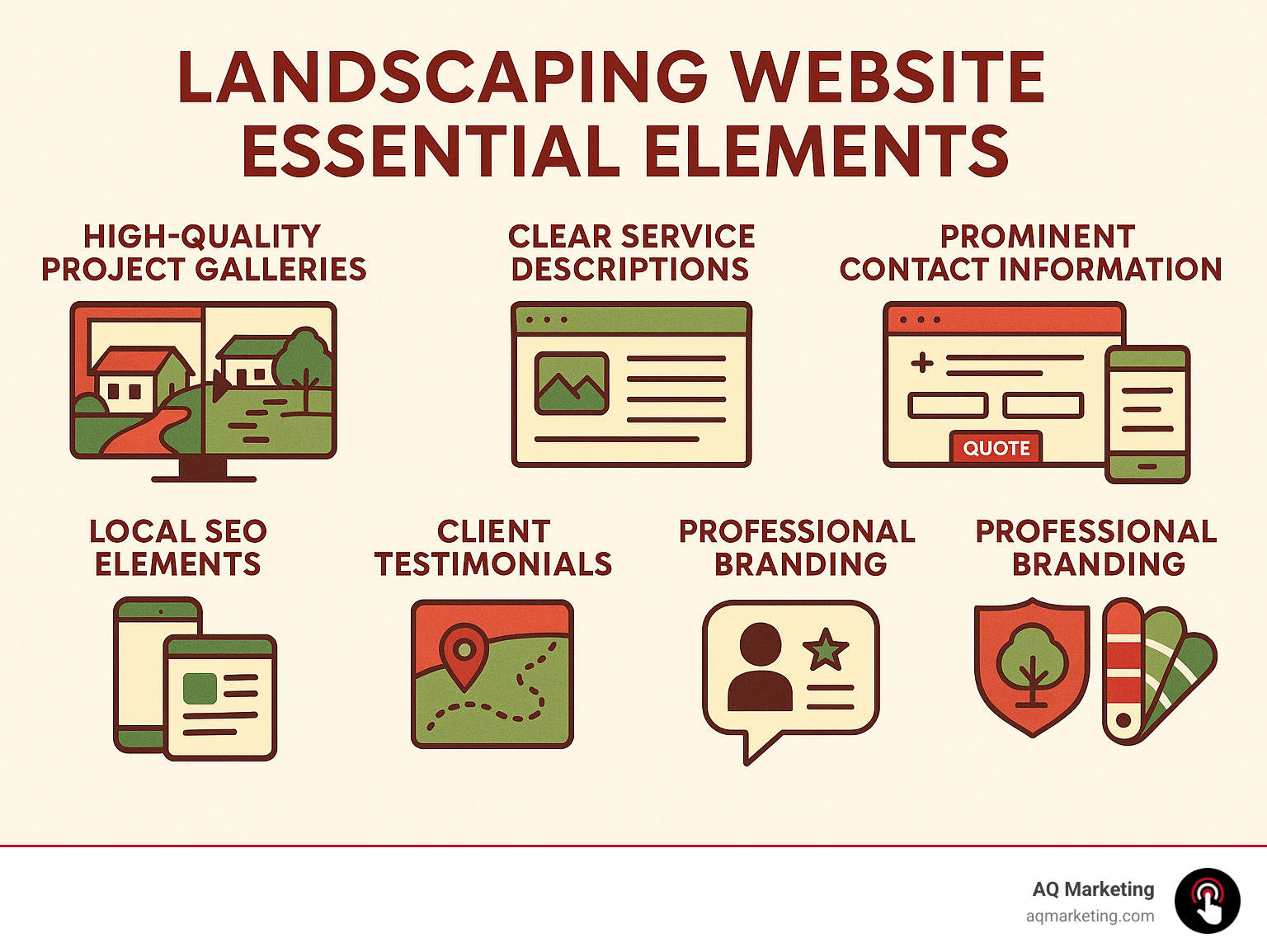
Key Features Every Landscaping Website Needs:
When potential customers search for landscaping services, they’re looking for visual proof of your expertise, clear information about what you offer, and an easy way to reach you. Your website should answer these questions immediately while showcasing what makes your company special.
A standout landscaping website needs high-quality project galleries with compelling before/after comparisons that tell the story of your transformative work. Position clear service descriptions above the fold so visitors instantly understand what you offer without scrolling. Make your contact information prominent with easily accessible quote request forms—because when someone’s ready to reach out, the last thing you want is to make them hunt for how to do it.
Your site must feature mobile-responsive design that works beautifully across all devices, as more than half of your potential clients will likely find you on their phones. Include local SEO elements like service area information that helps you get found by nearby customers searching for landscaping help. Showcase genuine client testimonials and trust indicators that reassure visitors they’re making the right choice with your company.
Finally, maintain professional branding with consistent colors and fonts that reflect your company’s personality and create a memorable impression. This isn’t just about looking nice—it’s about building recognition and trust with every interaction.
I’m Robert P. Dickey, President of AQ Marketing, and I’ve spent over 20 years helping landscaping companies create websites that don’t just look beautiful—they deliver results. Having developed countless landscaping company websites that successfully convert visitors into customers, I’ve seen which elements make the difference between a site that simply exists and one that actively grows your business.
When you visit the Full Circle Lawn Care website, you’ll immediately notice what makes exceptional landscaping company websites stand out from the crowd. Their site feels alive and dynamic, thanks to the subtle parallax scrolling effect that creates a sense of depth and dimension as you browse.
Their thoughtfully designed custom logo anchors the top of each page, instantly establishing brand recognition and professional credibility. What really catches your eye, though, is how they’ve organized their project gallery – it’s not just a collection of photos, but a visual story of changes they’ve created for real clients.
I love how they’ve arranged their service blocks in an intuitive grid pattern on the homepage. Each block features a crisp, high-quality image paired with just enough descriptive text to explain what they do without overwhelming you. This smart design helps potential clients quickly find exactly what they’re looking for without hunting through pages of content.
As one satisfied client put it: “Their website made it easy for me to see exactly what services they offered and the quality of their work. The before-and-after photos convinced me they were the right choice for my project.”
The modern design isn’t just pretty – it’s practical too. Whether you’re viewing on your desktop while researching options or quickly pulling up their contact info on your phone while in your yard, the responsive design ensures a seamless experience. This mobile-friendly approach is crucial since most people now search for landscaping services on their smartphones first.
Full Circle’s website perfectly balances visual appeal with functional design – exactly what today’s landscaping company websites need to convert visitors into clients.
Green Clips
Green Clips shows us how a landscaping company website can create love at first sight with visitors. Their homepage features a stunning, vibrant hero photo that immediately draws you in with its lush, perfectly maintained greenery. This visual first impression speaks volumes about their landscaping expertise before you read a single word.
What I particularly love about their site is the prominent location information right in the header. When homeowners are searching for landscaping services, one of their first questions is “Do they even serve my area?” Green Clips answers this crucial question instantly, saving everyone time and creating a better user experience.
Their navigation deserves special mention too. Instead of the cryptic menus you often find on service websites, Green Clips uses clear, straightforward labels that guide visitors exactly where they need to go. It’s refreshing to see a site that prioritizes user experience over flashy design elements.
The above-the-fold call-to-action button is another smart touch. It stands out visually against the background and creates an immediate opportunity for visitors to reach out. This strategic placement recognizes that many visitors have already decided they want a quote by the time they visit a landscaping website.
Throughout the site, the professional photography isn’t just there to look pretty. Each image has been carefully selected to showcase different aspects of their services—from immaculate lawn maintenance to sophisticated hardscaping projects. These visuals tell a complete story about their capabilities and attention to detail.
As one Green Clips customer put it: “The website’s clear organization and beautiful photos of their previous work gave me confidence in their abilities before I even called them.”
This thoughtful combination of practical information and visual storytelling makes Green Clips’ website not just a digital brochure, but a powerful conversion tool that builds trust and generates leads around the clock.
Cross States Landscape
When you visit Cross States Landscape’s website, the first thing you’ll notice is their masterful brand consistency. Every element—from their distinctive color palette to the typography and image style—works in harmony to create a seamless experience that reinforces their professional identity.
Their menu structure is a breath of fresh air in landscaping company websites. Instead of overwhelming visitors with too many choices, they’ve thoughtfully organized their services into logical categories that make navigation intuitive. Whether you’re looking for residential landscaping, commercial services, or seasonal maintenance, you can find exactly what you need without frustration.
What really sets Cross States apart is their smart approach to local search. Throughout their content, they’ve naturally woven in location-specific keywords that help them rank better when potential clients search for landscaping services in their area. This attention to local SEO detail gives them an edge in connecting with customers across multiple counties.
I love that they’ve placed their phone number prominently in the header, complete with area code—a small but meaningful touch that reinforces their local presence. This strategic placement means potential clients can reach out with just one tap or click from any page on the site, reducing friction in the contact process.
Their testimonial carousel is particularly effective, featuring genuine feedback from real customers that highlights different aspects of their service excellence. By placing these testimonials on high-traffic pages, they provide social proof exactly when visitors are most likely considering whether to make contact.
“We chose Cross States after seeing their impressive portfolio and reading the glowing reviews,” shared one homeowner. “Their website made it easy to understand exactly what services they offered in our area, and the prominently displayed phone number made reaching out simple.”
The combination of these elements creates a website that not only looks professional but actually works as an effective lead generation tool—proving that thoughtful design choices can significantly impact a landscaping business’s bottom line.
The Landscape Advisor
The Landscape Advisor stands out among landscaping company websites by taking a refreshingly educational approach. Rather than just showcasing services, they position themselves as genuine experts in the field—teaching visitors about landscaping principles while subtly demonstrating why they’re the right team for the job.
When you land on their homepage, you’re greeted with beautifully designed quick-link cards that make navigation a breeze. Each card features a captivating image paired with a brief description that clearly communicates the value of that service. This thoughtful organization helps visitors quickly find exactly what they’re looking for without frustration or confusion.
What I particularly love about their site is the robust educational blog. From seasonal planting guides to water conservation techniques, their content answers real questions that homeowners have about their outdoor spaces. This approach serves two brilliant purposes—it provides genuine value to visitors while simultaneously boosting their search rankings through relevant, keyword-rich content that Google loves.
“I originally visited their site looking for information about drought-resistant plants,” shares one satisfied client, “but their expertise convinced me to hire them for my entire yard renovation.”
Their lead capture form appears at just the right moments throughout the site—when visitors are most engaged and likely to take action. The form itself is refreshingly simple, asking only for essential information to maximize completion rates. This strategic placement and thoughtful design reflect a deep understanding of visitor psychology.
The Landscape Advisor demonstrates how education builds trust, and trust leads to conversions. For landscapers looking to establish themselves as authorities in their field, this website offers valuable inspiration. Learn more about creating websites that educate and convert by checking out our comprehensive guide on Landscaping Web Design.
Legacy Lawn & Landscape
When you visit Legacy Lawn & Landscape’s website, you’ll immediately notice something special – the site feels alive. They’ve mastered the art of subtle movement with micro-animations that activate as you scroll down the page, drawing your eye naturally to important information without feeling flashy or distracting.
These thoughtful scroll effects do more than just look pretty – they guide you through a story about the company. As you move down the page, elements fade in at just the right moment, creating a sense of findy that keeps you engaged. It’s like taking a pleasant stroll through a well-designed garden where each turn reveals something new.
The visuals throughout the site are carefully chosen to showcase the breadth of Legacy’s capabilities. Rather than generic stock photos, you’ll see actual projects they’ve completed – from neat garden designs to impressive hardscaping work and carefully maintained lawns. Each image serves a purpose: showing potential clients exactly what Legacy can do for their property.
What impressed me most about their site is how clearly they distinguish between their services. Instead of lumping everything together under “landscaping,” Legacy takes the time to explain what makes their approach to each service unique. This helps visitors quickly find the specific solution they need and understand why Legacy might be a better choice than competitors.
As one happy customer put it: “The website’s interactive elements kept me engaged longer than I expected. I ended up exploring their entire portfolio and was impressed by the range of projects they’ve completed.”
And don’t worry about viewing their site on your phone or tablet – all these engaging elements adapt perfectly to whatever device you’re using. The landscaping company websites that truly stand out, like Legacy’s, ensure that the experience feels complete whether you’re browsing from your desk or on the go.
Homes Landscaping
Homes Landscaping exemplifies how a bold color scheme can reinforce brand identity and create visual impact. Their black and green palette creates a sophisticated, premium feel while naturally connecting to their landscaping services.
The site makes excellent use of full-width imagery that spans the entire screen, creating immersive visual experiences that showcase their landscaping projects in impressive detail. These expansive visuals allow potential clients to envision similar changes for their own properties.
Typography plays a crucial role in their design approach, with bold, distinctive headings that create clear visual hierarchy and guide visitors through the content. The font choices reflect their brand personality—professional yet approachable.
Their portfolio grid is particularly well-executed, organizing completed projects into categories that allow visitors to filter based on their specific interests, whether they’re looking for inspiration for a backyard renovation, front yard landscaping, or commercial projects.
“The website’s bold design immediately communicated quality and professionalism,” remarked one Homes Landscaping customer. “The portfolio was easy to steer, and I could quickly find examples similar to what I wanted for my own property.”
For more inspiration on creating visually striking landscaping company websites with compelling advertising elements, explore our guide on Creative Landscaping Ads.
Country Green Landscaping
Country Green Landscaping shows us how local focus can transform landscaping company websites into powerful lead-generation tools. The moment you land on their site, you notice their local phone number with area code prominently displayed in the header – a small but mighty signal that says “we’re right here in your community.”
What really makes their site stand out is their interactive service-area map – a brilliant feature that lets potential clients instantly see if Country Green serves their neighborhood. No more wondering “do they even work in my area?” – visitors can quickly confirm coverage before making that call. This simple addition saves time for both the business and potential customers who might otherwise reach out only to find they’re outside the service zone.
Trust signals are thoughtfully placed above the fold where visitors can’t miss them. Their industry certifications, years-in-business counter, and that warm “locally owned and operated” badge all work together to create instant credibility. These elements speak directly to customers who value supporting local businesses and want experienced professionals caring for their property.
The contact-sticky bar deserves a special mention – this clever feature follows you as you browse, ensuring that reaching out is always just one click away. Whether you prefer calling, texting, or filling out a form, the persistent bar accommodates your preference without interrupting your exploration of their services and portfolio.
As one satisfied Country Green client put it: “I loved being able to immediately see that they served my county. The map feature helped me confirm they worked in my specific neighborhood before I even picked up the phone.”
This local-first approach creates an immediate connection with visitors, making them feel understood and valued before they’ve even made contact – exactly what effective landscaping company websites should accomplish.
Speedy Landscaping
True to their name, Speedy Landscaping’s website delivers exactly what busy homeowners want—a fast, frictionless experience that gets straight to the point. Their approach to landscaping company websites is refreshingly simple, with a clean, minimalist layout that strips away all the unnecessary clutter.
Instead of overwhelming visitors with multiple competing options, Speedy features a single, crystal-clear “Request Quote” button that follows you throughout the site. This focused approach eliminates the confusion of having too many choices and creates a straightforward path to conversion. One click, and you’re on your way to getting your landscaping project started—no hunting around required.
What’s particularly thoughtful about their site is the dedicated client portal link positioned in the top navigation. This small but mighty feature gives existing customers quick access to their account information, service schedules, and payment options. It’s a smart retention strategy that makes ongoing client relationships smoother and more convenient.
Behind the scenes, Speedy’s technical excellence really shines. Their obsession with page-speed optimization means visitors aren’t left waiting—pages load almost instantly, keeping impatient visitors from hitting the back button. In an industry where potential clients might be browsing during a quick lunch break or while waiting for their coffee, those saved seconds make a real difference.
Their mobile-first development approach deserves special mention. Rather than designing for desktop and then adapting to mobile (as many landscaping company websites still do), Speedy built their site with smartphone users as the priority. The result is a seamless experience on smaller screens, where the majority of their potential customers first encounter them.
As one satisfied Speedy customer put it: “I was impressed by how quickly I could request a quote. The site loaded instantly on my phone, and I had submitted my information within seconds. They called me back within the hour.”
This combination of streamlined design, strategic functionality, and technical performance creates a website experience that perfectly reflects the company’s brand promise—efficient service without unnecessary complications.
NV Landscapes LLC
NV Landscapes LLC has truly mastered the art of visual storytelling on their landscaping company website. Instead of just showing static images, they’ve acceptd video case studies that take visitors on a complete journey from the initial consultation all the way through to the finished landscape.
These videos aren’t just beautiful—they’re purposeful. Each one tells a story about change, showing how NV Landscapes solved specific challenges for homeowners. Potential clients can actually see the team in action, building confidence in their expertise before they ever make a phone call.
“The video showing the complete change of a property similar to mine was what convinced me to call,” shared one delighted NV Landscapes client. “Seeing the process from start to finish gave me confidence in their abilities.”
Perhaps the most engaging elements on their site are the before-after reels with interactive sliding comparison tools. These clever features let visitors take control, sliding back and forth to reveal dramatic landscape changes. It’s one thing to claim you can transform a property—it’s another to let visitors find the proof themselves with a simple swipe.
What makes their approach particularly effective is how they weave client testimonials directly alongside these visual elements. This creates complete narratives about each project—you see the work, hear from the satisfied homeowner, and understand the journey from problem to solution.
Behind the scenes, NV Landscapes doesn’t just create content and hope for the best. They closely track engagement metrics to understand which videos and images connect most deeply with visitors. This data-driven approach means their website continuously improves, with content becoming more effective over time.
A thoughtful touch that shows their customer-first mentality is the autoplay toggle for videos. Rather than forcing videos to play automatically (which can be jarring), they give visitors control over their browsing experience. This small consideration reflects their broader philosophy of respecting client preferences in both their digital presence and their landscaping services.
Avanti Landscaping
When you visit Avanti Landscaping’s website, their About page immediately stands out from the crowd. Rather than offering the usual generic company blurb, they tell a genuine story that draws you in – sharing their humble beginnings, growth milestones, and the passion that drives their team every day.
What I particularly love about their site is the interactive process timeline that walks potential clients through their customer journey. From the initial phone call to the final walkthrough and maintenance plan, Avanti eliminates the guesswork that often makes hiring a landscaper feel risky. You’ll know exactly what to expect at each stage.
The team photos scattered throughout the site create an instant personal connection. Instead of wondering who might show up at your home, you’ll meet Miguel the design specialist, Sarah the plant expert, and Carlos the hardscape artisan – real people with real faces and stories. Each team member’s bio highlights their expertise and years in the field, creating immediate credibility.
Core values take center stage on Avanti’s landscaping company website, appearing not as a forgotten footnote but as guiding principles woven throughout their content. Their commitment to environmental sustainability, attention to detail, and customer-first approach helps visitors understand that this isn’t just a business – it’s a team with genuine passion for creating beautiful outdoor spaces.
Trust signals appear strategically throughout the site, with badges that matter to homeowners: insurance verification, industry certifications from organizations like the National Association of Landscape Professionals, and local business awards. These credentials offer silent reassurance that your property is in capable, qualified hands.
As one client shared: “The detailed information about their team and process made me feel comfortable inviting them to work on my property. I appreciated knowing exactly what to expect before I even contacted them.”
By giving visitors an authentic look behind the curtain, Avanti transforms from an anonymous service provider into a team of real people you’d feel comfortable welcoming onto your property – a powerful difference in an industry built on trust.
Mango Paving & Landscaping
Mango Paving & Landscaping shows us how thoughtful organization can transform a website from merely functional to genuinely delightful. Their clean, structured content blocks create a visual rhythm that guides visitors naturally through their services and projects without the confusion that often plagues contractor websites.
The color palette they’ve chosen does more than just look pretty – it works hard to create emotional connections with potential clients. Those rich earthy browns and greens mirror the natural elements they work with daily, while strategic pops of brighter colors draw your eye exactly where they want it to go – straight to those “Get a Quote” buttons that drive conversions.
Have you ever noticed how some landscaping company websites use amateur photography that actually undermines their credibility? Mango avoids this pitfall entirely. Their imagery showcases completed projects with professional-quality photos that highlight textures, colors, and the fine details that demonstrate craftsmanship. You can almost feel the smooth stone pavers and see how the light plays across their garden designs.
What truly sets Mango apart is their commitment to brand consistency. From the moment you land on their homepage to the final contact form, every visual element feels like part of a cohesive family. The fonts, button styles, spacing, and visual treatments all speak the same design language – creating an impression of a company that pays attention to details.
“Their website reflects exactly what I wanted in a landscaper – organization, attention to detail, and a clear vision,” shared one homeowner who hired Mango after visiting their site. “The website experience made me confident they’d bring that same thoughtfulness to my backyard renovation.”
This cohesive approach doesn’t just make for a pretty website – it creates a powerful psychological effect. When potential clients see this level of care and intention in your digital presence, they naturally assume your landscaping work will reflect the same standards of excellence.
Grassroots Yardscaping
Ever wonder what your landscaping project looks like from above? Grassroots Yardscaping has revolutionized how we view landscaping work by featuring stunning aerial photography throughout their landscaping company website. These breathtaking bird’s-eye views offer something ground-level shots simply can’t—a comprehensive look at how all elements of a landscape design work together harmoniously.
When you visit their site, you immediately notice how these overhead perspectives showcase the true scope of their projects. A winding garden path that might seem simple from the ground reveals its artistic curves when viewed from above. Water features, garden beds, and hardscaping elements all display their thoughtful integration within the broader property design.
“I was blown away by seeing their projects from above,” shares one Grassroots client. “It gave me a completely different appreciation for how they consider the entire property as one cohesive canvas rather than just focusing on individual elements.”
This aerial approach has become Grassroots’ signature aesthetic—their visual calling card in a competitive industry. When potential clients browse through their portfolio, these distinctive overhead shots instantly set the company apart from competitors stuck with traditional photography angles.
Trust signals appear strategically throughout the site, with social proof badges highlighting their impressive ratings on Google, Yelp, and Houzz positioned right next to calls-to-action. This smart placement provides that extra reassurance right when visitors are considering making contact.
Understanding that visitors arrive at different stages in their decision-making journey, Grassroots offers dual CTA buttons that acknowledge these differences. The prominent “Get a Quote” button serves those ready to move forward, while the “View Our Portfolio” option caters to those still researching and gathering inspiration. This thoughtful approach respects where each visitor stands in their landscaping journey.
The combination of breathtaking aerial perspectives, strategically placed trust signals, and user-journey-aware navigation makes Grassroots Yardscaping’s website as thoughtfully designed as their landscaping projects—comprehensive, distinctive, and focused on the complete customer experience.
Why Great Landscaping Company Websites Convert Visitors
The most effective landscaping company websites don’t just look good—they’re strategically designed to convert visitors into leads and customers. Understanding the psychology behind these conversions can help you create a more effective online presence for your landscaping business.
When a potential customer visits your landscaping website, they’re often just a few clicks away from becoming a lead. What makes them take that crucial step? It starts with mobile responsiveness. This isn’t just a technical box to check—it’s a conversion essential. Most of your potential customers are browsing on their phones while sitting in their backyards, imagining what could be. If they have to pinch and zoom or struggle with tiny buttons, they’ll likely move on to a competitor. Sites with thumb-friendly navigation, easily readable text, and quick-loading images see significantly lower bounce rates and higher conversion rates.
The clarity of your services makes an immediate impact on conversion. When I talk with landscaping clients, they often mention how frustrating it is to visit a website and struggle to figure out exactly what the company offers. Does this company do hardscaping? Do they service my neighborhood? The most successful landscaping websites answer these questions immediately, eliminating uncertainty and helping visitors quickly determine if you’re the right fit for their needs.
“I was ready to hire someone immediately,” one homeowner told me, “but I needed to know they could handle both the irrigation system and the decorative stonework. The company that made it clear they did both got my business that day.”
The power of testimonials cannot be overstated. Our research shows that authentic client feedback with specific project details can increase conversion rates by up to 34%. Video testimonials are particularly effective—there’s something compelling about seeing a real homeowner proudly showing off their transformed outdoor space while explaining their experience with your company.
Pricing transparency is evolving in the landscaping industry. While you might hesitate to publish specific prices (understandably, since projects vary widely), providing general pricing guidelines or package information tends to attract more qualified leads. This approach builds trust and helps filter out prospects whose budgets don’t align with your services, saving everyone time.
With the landscaping industry having grown 8.2% annually in recent years according to industry statistics from Jobber, the opportunities are tremendous—but so is the competition. A conversion-focused website is no longer optional; it’s essential for capturing your share of this expanding market.
Core Feature #1: Portfolio Power on Landscaping Company Websites
A high-quality portfolio section is perhaps the most critical conversion element on landscaping company websites. For service-based businesses like landscaping companies, visual proof of work quality directly influences hiring decisions.
Nothing sells your landscaping services like powerful before-and-after galleries. These comparative displays create an immediate “wow” factor, showing potential clients the change you can achieve. I’ve watched countless visitors interact with these galleries during user testing—they spend significantly more time on these pages than any other section of the site. The most effective galleries include multiple angles of each project and brief descriptions of the challenges and solutions: “This sloped backyard presented drainage issues that we solved with a terraced design and native plantings.”
Don’t overlook the importance of alt text optimization for your portfolio images. This serves two crucial purposes: it improves accessibility for visitors using screen readers and improves SEO by helping search engines understand your content. Descriptive alt text that includes relevant keywords (e.g., “modern backyard patio design in Woburn, MA”) improves both user experience and search visibility.
The technical aspects of your portfolio matter too. Lightbox functionality creates a seamless browsing experience by allowing visitors to view enlarged images without navigating away from the page. This keeps potential clients engaged with your content rather than frustrating them with disruptive navigation. One landscaping company we worked with saw their average time on site increase by over 40% after implementing this simple feature.
If you want to stay ahead of competitors, consider adding video walkthroughs to your portfolio. These dynamic presentations allow visitors to experience completed projects from multiple perspectives, creating a more immersive showcase of your work. Even simple smartphone videos of completed projects can significantly impact conversion rates when professionally edited.
As one landscaping client shared with me, “The before-and-after gallery was what sold me. Being able to see properties similar to mine and how they were transformed gave me confidence that the company could deliver the results I wanted.”
Core Feature #2: Local SEO Must-Haves for Landscaping Company Websites
Local search optimization is particularly critical for landscaping company websites since services are geographically restricted. Implementing the right local SEO elements can dramatically improve visibility to potential clients in your service area.
Your Google Business Profile forms the foundation of local SEO success. Think of it as your digital storefront on Google—it needs to be complete, accurate, and engaging. This profile should include current business information, detailed service area boundaries, appropriate business categories, and regular posts showcasing recent projects. Companies with fully optimized Google profiles appear more prominently in local search results and on Google Maps, often capturing attention before a potential customer even visits their website.
Consistency matters tremendously in local SEO. Your NAP (Name, Address, Phone) information must be identical across your website and all online directories. Even small variations—like using “Street” in one place and “St.” in another—can confuse search engines and potentially harm your local rankings. Make sure your contact information appears in the same format everywhere it’s listed online.
For landscaping companies serving multiple towns or counties, dedicated location pages are powerful tools. Creating unique, content-rich pages for each service area (e.g., “Landscaping Services in Woburn, MA”) allows you to rank for location-specific searches while providing relevant information to potential clients in those areas. These pages should include local landmarks, neighborhood-specific information, and examples of your work in that community.
Behind the scenes, schema markup provides search engines with structured data about your business. While invisible to users, this code helps search engines understand your service areas, business hours, contact information, and services offered—potentially improving your visibility in local search results and creating more informative search listings.
According to recent WordPress statistics from Growth Scribe, over 40% of all websites now use this platform, making it a popular choice for landscaping businesses looking for flexibility and ease of use. WordPress offers numerous plugins specifically designed to improve local SEO, making it easier to implement these technical elements without extensive coding knowledge.
Pricing & Build Options at a Glance
Let’s talk dollars and sense when it comes to landscaping company websites. Whether you’re just starting out or looking to upgrade your current site, understanding your options helps you make the best choice for your business and budget.
Creating an effective online presence doesn’t have to break the bank, but it’s important to know what you’re getting at different price points. Think of it like landscaping itself—you can DIY with basic tools, hire a skilled individual, or bring in a full team with specialized equipment.
Website Option
Cost Range
Pros
Cons
DIY Website Builder
$60-300/year
Low initial cost, easy to update, no technical skills needed
Your website is more than a one-time expense. Just like maintaining a beautiful landscape, your website needs ongoing care to stay healthy and effective. Beyond the initial build costs, you’ll want to budget for:
Domain registration costs between $10-100 annually, depending on how catchy or specific your domain name is. Think of this as your digital street address—worth paying a bit more for the right one.
Hosting fees typically run $50-300 per year. This is like the land your website sits on, and better hosting means faster loading times and better security—critical factors for keeping potential customers on your site.
Regular maintenance ($50-200 monthly) covers security updates, content changes, and technical upkeep. Skipping this is like neglecting a garden—things start to look overgrown and unhealthy pretty quickly.
Content updates vary in cost depending on how often you add new project photos, service offerings, or blog posts. Fresh content helps keep your site relevant to both visitors and search engines.
Many landscaping businesses find their website needs evolve with their growth. As one landscaper shared with me: “We started with a basic template site that cost about $300 for the first year. After we grew, we invested $7,500 in a custom site with a professional portfolio section and quote request system. The ROI was clear within the first six months through increased leads and conversions.”
For newcomers to the industry, starting with a DIY website builder offers an affordable entry point with reasonable functionality. As your business blooms, investing in a custom-developed site through a freelancer or agency provides greater differentiation and better conversion optimization—much like upgrading from basic lawn maintenance to comprehensive landscape design services.
The key is matching your website investment to your current business needs while allowing room to grow. A thoughtfully planned website becomes a powerful tool that pays for itself through new customer acquisition and a strengthened professional image.
Frequently Asked Questions about Landscaping Company Websites
Should I list my prices online?
The pricing question is one that almost every landscaping business owner wrestles with when building their website. There’s no one-size-fits-all answer, but there are some thoughtful approaches to consider.
Listing prices can actually help pre-qualify your leads. When potential clients see your starting prices or packages, those who contact you are more likely to have budgets that align with your services. This saves everyone time and reduces those awkward conversations about cost expectations.
The challenge, of course, is that landscaping work is highly customized. That beautiful retaining wall might cost $3,000 for one property and $8,000 for another depending on access, materials, and site conditions.
Many successful landscaping company websites take a middle-ground approach. Instead of exact prices, they’ll include helpful starting points like “Landscape design services from $1,500” or “Typical patio installations range from $5,000-15,000 depending on size and materials.”
I’ve seen landscaping companies have great success with package pricing for recurring services. Something like “Spring Clean-Up Package: $350 for properties up to 1/4 acre” gives clear guidance while acknowledging that custom work requires personalized quotes.
One landscaping client told me, “Adding starting prices actually improved our lead quality dramatically. We get fewer tire-kickers and more serious inquiries from people ready to move forward.”
For complex projects, consider creating a simple budgeting guide that helps potential clients understand what factors influence cost. This educational approach builds trust while setting realistic expectations.
How important is mobile responsiveness for landscaping company websites?
In today’s world? Absolutely essential. The data is clear – most of your potential customers are looking at your website on their phones, often while standing in their own yards dreaming about improvements.
Think about it – someone sees a neighbor’s beautiful landscaping, immediately pulls out their phone to search for local landscapers, and lands on your site. If they have to pinch and zoom just to read your contact information, they’re likely to bounce right back to the search results.
Google knows this too. Their Core Web Vitals (which directly impact your search rankings) heavily emphasize mobile performance. Landscaping company websites with poor mobile experiences get pushed down in search results, making them harder to find in the first place.
Good mobile optimization goes beyond a site that technically “works” on phones. It means:
Touch-friendly buttons big enough for real human fingers
Forms that don’t make people squint and struggle to complete
Images that load quickly without burning through data plans
Text that’s readable without the pinch-and-zoom dance
A prominent click-to-call button for immediate contact
The numbers speak for themselves. Landscaping websites with excellent mobile experiences typically see bounce rates about 30% lower than those with poor mobile optimization. That translates directly to more leads and customers.
As one landscaper in Middlesex County told me, “After we fixed our mobile site, form submissions jumped by 64%. We had no idea how many potential clients were trying to reach us from their phones while standing in their yards!”
What role do testimonials and reviews play on landscaping company websites?
They’re absolutely golden. In landscaping, you’re asking clients to trust you with one of their most valuable assets – their property. Hearing that others had a great experience provides the reassurance they need to pick up the phone.
The most effective landscaping company websites don’t just dump all testimonials onto a dedicated “Reviews” page where they’ll rarely be seen. Instead, they strategically place relevant testimonials throughout the site where they’ll have the most impact.
For example, if someone is reading about your hardscaping services, seeing a testimonial specifically about your patio or retaining wall work right next to your contact form can be the final push they need to reach out.
Specificity matters tremendously in testimonials. Compare these two:
“Great service!” vs. “The Legacy Landscapes team completed our backyard renovation on time and within budget, even accommodating last-minute changes to our pergola design. The finished space is exactly what we envisioned!”
Which one feels more credible? The detailed testimonial tells a story that potential clients can relate to.
Including real attribution information makes testimonials even more powerful. A name, location, and project type helps visitors see that these are genuine experiences from people just like them. And when you can pair testimonials with photos of the completed project? Magic.
Our testing consistently shows that service pages with relevant, specific testimonials convert 27-34% better than identical pages without this social proof.
One landscaping client shared, “We started collecting video testimonials from happy customers and featured them prominently on our homepage. Those authentic stories from real locals in our service area completely transformed our lead generation. People tell us all the time that those videos were what convinced them to call us instead of our competitors.”
Conclusion
Creating effective landscaping company websites isn’t just about pretty pictures—it’s about crafting a digital experience that showcases your unique story while making it incredibly easy for potential clients to take the next step.
Throughout our exploration of these inspiring examples, we’ve seen how the most successful landscaping websites combine stunning visuals with strategic functionality. From Full Circle’s modern parallax design to Grassroots’ innovative aerial photography, each site demonstrates different approaches to the same goal: connecting with potential clients and converting visitors into customers.
What makes these sites work isn’t just their beautiful designs—it’s how they anticipate and answer the questions every potential landscaping client has: Do you serve my area? What services do you offer? How good is your work? And most importantly, how do I reach you?
The landscaping industry’s impressive 8.2% annual growth creates enormous opportunity, but also intensifies competition. In this environment, your website isn’t optional—it’s your most powerful marketing asset, working 24/7 to showcase your expertise and generate qualified leads.
Your website should grow with your business. Regular updates to your project portfolio, seasonal service offerings, and fresh client testimonials keep your site relevant and engaging. Behind the scenes, technical maintenance ensures everything continues to perform smoothly and securely.
At AQ Marketing, we’ve partnered with landscaping companies across Boston, Woburn, and Southern New Hampshire to create websites that don’t just look impressive—they deliver results. Our approach blends eye-catching design with strategic conversion elements and local SEO optimization custom specifically to the landscaping industry.
Whether you’re building your first website or enhancing your current digital presence, focus on creating an authentic experience that reflects the quality and care you bring to your landscaping work. A thoughtfully designed website that clearly communicates your value will become your most effective salesperson.
For more information about how we help businesses across various industries create effective online presences, visit our page on More info about industries we service.
Home Renovation Websites: 10 Inspiring Must-See Ideas
Changing Your Space: Essential Home Renovation Websites in 2025
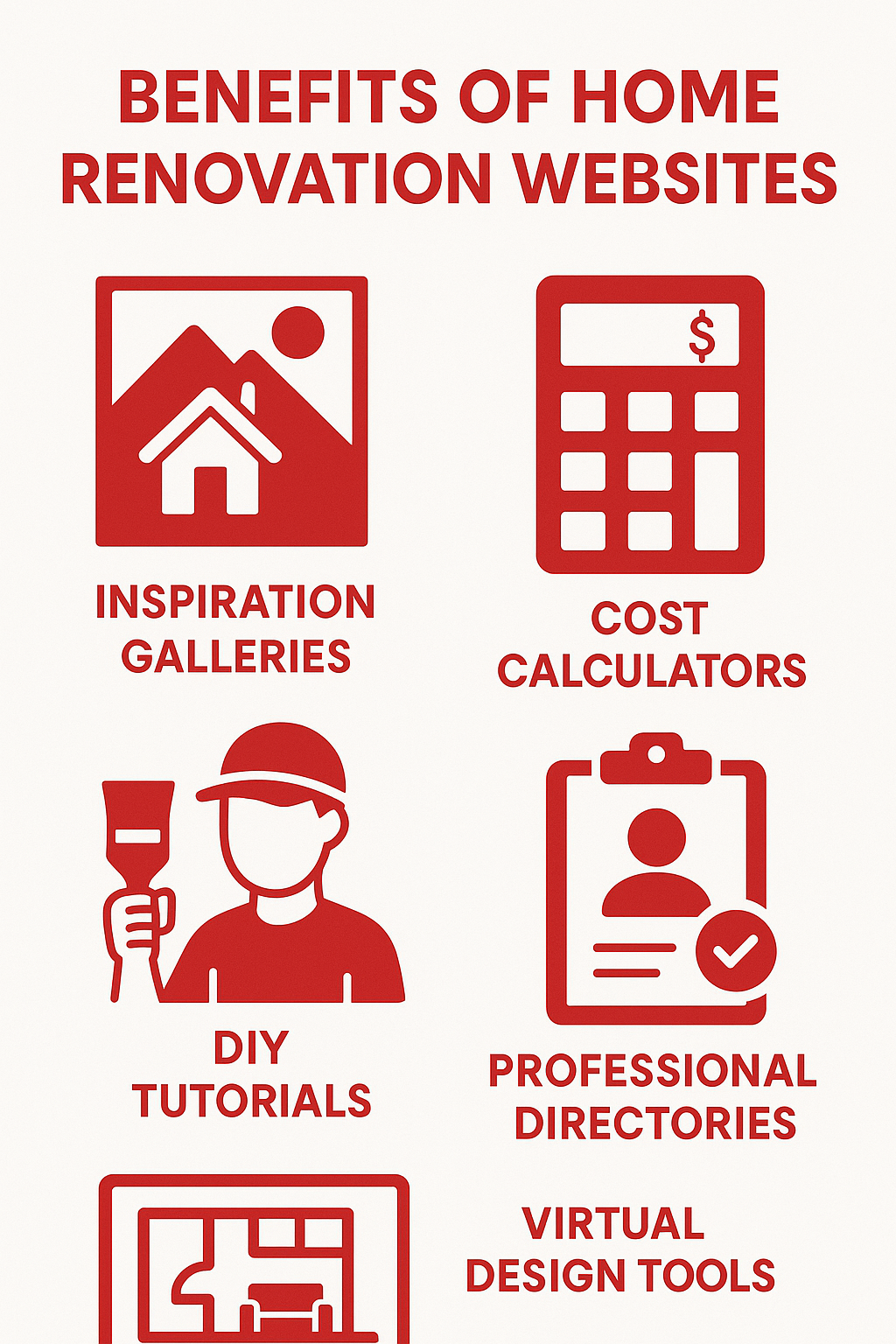
Home renovation websites are invaluable resources for homeowners looking to upgrade their living spaces in 2025. Whether you’re planning a complete home makeover or a simple room refresh, these digital platforms provide inspiration, practical guidance, and professional connections.
Top Home Renovation Websites at a Glance for 2025:
1. Houzz – Comprehensive design inspiration and professional connections
2. This Old House – Expert advice and detailed tutorials
3. HGTV – Trend-focused design ideas and TV show tie-ins
4. Retro Renovation – Vintage and period-specific renovation guidance
5. Home RenoVision DIY – DIY tutorials from professional contractors
These websites combine project galleries, expert advice, budgeting tools, and contractor connections to simplify your renovation journey.
As someone who’s helped countless home service businesses improve their digital presence, I understand the transformative power of home renovation websites. My experience at AQ Marketing includes developing strategic online solutions for renovation companies that connect homeowners with the resources they need to bring their vision to life.
The digital world is filled with countless resources for home improvement enthusiasts, but not all home renovation websites are created equal. After years of working with home service businesses throughout Massachusetts and Southern New Hampshire, we’ve come to recognize the qualities that truly set exceptional renovation websites apart from the rest.
Think of a great home renovation website as your trusted renovation partner – not just a pretty digital brochure. It should walk with you through every stage of your journey, from those first sparks of inspiration to the satisfying completion of your project.
User-Friendly Navigation
Have you ever visited a website and felt immediately lost? Nothing kills motivation faster than struggling to find the information you need. The best home renovation websites feature intuitive navigation that makes your research experience smooth and productive.
When you’re knee-deep in planning your kitchen remodel at 11 PM, you shouldn’t need a treasure map to find cabinet style comparisons. Great websites offer clear menu structures organized by room or project type, with search functions that actually understand what you’re looking for. They include helpful breadcrumb trails so you always know where you are, and they work beautifully whether you’re on your desktop or scrolling through your phone during your lunch break.
I remember speaking with a homeowner named Mickey who found her renovation inspiration through the Sweeten platform. She told me, “For years, when I went to other people’s homes, I wished I could have spaces like these. Now I do. I am so very grateful.” Her story perfectly captures how accessible, well-organized information can transform dreams into lived reality.
Trustworthy and Expert Content
In home renovation, bad advice can lead to costly mistakes – or worse. That’s why the most valuable home renovation websites provide content that’s created or verified by true industry professionals.
Take Home RenoVision DIY, for example. Their content comes from Jeff, who brings 25 years of general contracting experience to the table. “I’ve been working as a general contractor for 25 years and I’m here to share my trade skills with you,” he explains. This kind of real-world expertise means you’re getting advice that’s been tested in the trenches.
Trustworthy sites also cite their sources when discussing technical information, regularly update their content to reflect current building codes, and transparently disclose any relationships with products they recommend. They don’t just push one solution – they help you understand your options so you can make the best choice for your unique situation.
Interactive Tools and Resources
Today’s top home renovation websites go beyond just telling – they show and involve. Interactive tools transform abstract renovation concepts into tangible plans, helping you visualize and refine your ideas before committing to them.
Industry data shows that websites with interactive elements keep visitors engaged for up to 52% longer. This isn’t just good for the websites – it’s great for homeowners who leave better prepared and more confident in their renovation decisions.
Popular interactive features that truly improve the renovation planning experience include room planners that let you design to scale, material calculators that estimate exactly how much tile you’ll need, and budget trackers that help prevent those dreaded cost overruns. Color visualizers show you how that bold paint choice will actually look in your space, while style quizzes can help narrow down your aesthetic when you’re feeling overwhelmed by options.
These tools don’t just make planning more fun – they make your renovation more successful by helping you avoid common pitfalls and make decisions you’ll be happy with long-term.
Top Features of Home Renovation Websites in 2025
Project Galleries for Inspiration in Home Renovation Websites
When you’re dreaming about changing your home, sometimes you need to see it to believe it. That’s why extensive project galleries are the crown jewels of home renovation websites in 2025. These visual treasure troves showcase real-world changes that can spark that “aha!” moment for your own space.
Platforms like Houzz have mastered this approach with millions of high-quality photos neatly organized by room, style, and budget. This visual smorgasbord helps you find what actually speaks to you – something many homeowners struggle to put into words until they see it.
The most helpful galleries don’t just show pretty “after” pictures. They include the sometimes embarrassing “before” shots too, giving you the complete story of change. They provide detailed project descriptions that explain what was done, budget information that keeps expectations realistic, and designer credits if you fall in love with a particular style.
As one homeowner told us during our research: “Seeing the change of a spare bedroom into a beautiful walk-in closet gave me the confidence to tackle my own space conversion project.” That’s the power of visual inspiration – it transforms the impossible into the possible.
DIY Tutorials and Guides
For those of us who prefer to roll up our sleeves and get our hands dirty, DIY tutorials are the heartbeat of home renovation websites in 2025. These step-by-step guides empower even the most hesitant beginners to tackle projects they might otherwise pay professionals thousands to complete.
What makes a truly helpful DIY guide? It breaks down intimidating projects into bite-sized steps that don’t overwhelm. It includes detailed materials lists so you’re not making three separate trips to the hardware store. It shows, rather than just tells, with clear photos or videos of each stage. And perhaps most importantly, it warns you about the tricky parts before you’re elbow-deep in trouble.
This Old House exemplifies this approach with their library of DIY content that spans decades of home improvement wisdom. Their guides range from simple weekend projects to more ambitious renovations, all presented with the same careful attention to detail.
I particularly love Jeff from Home RenoVision DIY’s philosophy: “Helping you DIY your life!” isn’t just a catchy slogan – it’s about sharing professional secrets that empower homeowners. His tutorials reveal contractor tricks like painting without tape that pros use but rarely share with the public.
Budgeting and Cost Estimators
Let’s be honest – the financial side of renovation is often what keeps us up at night. That’s why the best home renovation websites in 2025 offer robust budgeting tools and cost estimators that help set realistic expectations before you tear out that first wall.
Our research shows that budget overruns are among the top sources of renovation headaches and relationship stress. Good websites help prevent this by providing interactive calculators that account for your specific location and project details. They break down expenses by category so you can see where your money is actually going – materials, labor, permits, and those inevitable contingencies.
The most helpful sites also offer tips for identifying potential budget-busters before they occur and suggest alternative solutions at different price points. Some even provide return-on-investment data so you can make decisions that balance your immediate desires with long-term home value.
As Remodeling101 wisely points out, a well-planned renovation isn’t just about making your space prettier – it’s about making a sound investment. Their resources help homeowners consider both the joy of improved living spaces and the practical financial returns.
Virtual Tours and 3D Modeling in Home Renovation Websites
Remember when planning a renovation meant squinting at graph paper and trying to imagine what that new kitchen layout would actually feel like? Those days are gone. Today’s advanced home renovation websites in 2025 offer virtual tours and 3D modeling that create immersive planning experiences that feel almost magical.
These technologies let you view spaces from multiple angles before committing to changes. You can test different layout options without swinging a sledgehammer. You can see how that bold paint color actually looks with your flooring and furniture. And perhaps most valuably, you can share these virtual models with contractors for more accurate quotes and fewer miscommunications.
Houzz has pioneered this approach with 3D room planning tools that let you place virtual furniture and fixtures in photorealistic renderings of your spaces. Similarly, HGTV’s Smart Home tours provide walkthrough experiences of professionally designed homes, offering inspiration that feels tangible and achievable.
These virtual tools aren’t just fun tech toys – they’re practical problem-solvers that help avoid expensive mistakes. They bridge the gap between what we can imagine and what we can actually create in our homes.
How Home Renovation Websites Assist Homeowners
Connecting with Local Professionals
Let’s face it – even if you’re a DIY champion, sometimes you need to call in the experts. This is where home renovation websites truly shine, creating bridges between homeowners and qualified local professionals who can turn your vision into reality.
Platforms like Sweeten have revolutionized the contractor-finding process with their thoughtful matching system that connects you with pre-vetted professionals specifically suited to your project. Their commitment speaks volumes: “We’re uniquely committed to your renovation’s success — no other service comes close!”
When you browse through a quality contractor directory, you’ll typically find treasure troves of information: verified reviews from real clients (not just the suspiciously perfect ones), photo galleries of completed projects, confirmation of proper licensing and insurance, details about their specialties, and simple ways to reach out directly or request a quote.
At AQ Marketing, we’ve had the pleasure of helping numerous renovation professionals like MB Construction LLC improve their digital presence, making it easier for homeowners across Massachusetts and Southern New Hampshire to find their services when searching online.
The value of these connections goes beyond convenience. As one homeowner beautifully put it: “Finding the right contractor through a renovation website saved me countless hours of research and gave me confidence in my hiring decision.” That peace of mind is priceless when you’re investing significant time and money into your home.
Access to DIY Communities and Memberships
Renovation can sometimes feel like a lonely journey – but it doesn’t have to be. Many leading home renovation websites foster vibrant communities where you can share triumphs, seek advice during challenges, and find inspiration when your motivation dips.
Home RenoVision DIY exemplifies this approach with their affordable $5 monthly membership. For less than the cost of a fancy coffee, members gain access to live Q&A sessions with professional contractors, exclusive shows featuring advanced techniques, supportive online forums where no question is too basic, and digital resources you won’t find elsewhere.
These communities transform what could be an isolating experience into a collaborative trip. There’s something incredibly reassuring about connecting with someone who’s successfully steerd the exact plumbing puzzle that’s currently causing you headaches at 10 PM on a Saturday.
Young House Love stands out in this space by sharing authentic renovation stories that resonate deeply with readers. Their honest accounts of both victories and “what was I thinking?” moments paint a realistic picture of home improvement that’s refreshingly different from the flawless changes often portrayed in glossy magazines.
Catering to Beginners and Experienced DIYers
The beauty of top-notch home renovation websites is their ability to serve everyone from first-timers to seasoned renovators. Whether you’re nervously picking up a drill for the first time or confidently tackling your tenth kitchen remodel, you’ll find resources custom to your experience level.
For beginners, sites like Remodeling101 take a gentle, encouraging approach: “Remodeling for the first time? Glad you found us – we can help.” Their step-by-step guidance builds both skills and confidence, breaking down intimidating projects into manageable tasks.
Meanwhile, experienced DIYers aren’t left behind. These same websites offer advanced content exploring specialized techniques, discussions about professional-grade tools worth investing in, solutions to complex renovation puzzles, efficiency tips to save time on familiar processes, and fresh inspiration for pushing creative boundaries.
This thoughtful balance ensures that as your skills grow, your favorite renovation resources grow with you. One enthusiastic DIYer shared: “I started with basic painting tutorials five years ago, and now I’m using the same website to guide me through building custom cabinetry.” It’s like having a renovation mentor that evolves alongside you, always ready with the next lesson when you’re ready to level up.
The Role of Technology in Home Renovation Websites for 2025
Mobile Apps for On-the-Go Planning
Let’s face it—renovation planning happens everywhere. You might spot the perfect backsplash while waiting for coffee or suddenly remember you need to measure your windows while grocery shopping. That’s why the best home renovation websites in 2025 now offer robust mobile experiences.
More than 63% of people searching for renovation ideas do so from their phones or tablets. This shift away from desktop-only browsing has transformed how these platforms deliver content and tools to homeowners.
When you’re standing in the paint aisle debating between “Coastal Fog” and “Morning Mist,” having access to your inspiration photos can save you from a costly mistake. Mobile apps from leading renovation sites let you capture ideas on the fly, check measurements while shopping, and even share updates with your contractor during site visits.
I’ve watched countless clients use HGTV’s mobile app during consultations, pulling up saved photos to show exactly what they’re envisioning. This kind of anywhere-access helps bridge the gap between imagination and communication, making the entire renovation process smoother.
The best part? You can track expenses in real-time, updating your budget as you make purchases rather than trying to remember everything when you get home. This prevents those “wait, how much have we spent already?” moments that can derail a carefully planned project.
Advanced Features: 3D Modeling and Virtual Reality in Home Renovation Websites
Remember when planning a renovation meant squinting at graph paper and trying to imagine how everything would look? Those days are thankfully behind us, thanks to the incredible visualization tools now available on home renovation websites in 2025.
These advanced technologies have transformed renovation planning from guesswork into virtual certainty. Instead of wondering whether that island will make your kitchen feel cramped, you can see it—almost as if it were already built.
The benefits go far beyond the “wow” factor. When you can virtually walk through your renovated space before committing to construction, you’re likely to catch potential issues early. That awkward corner where the refrigerator door would hit the wall? You’ll spot it before the appliance arrives, not after.
Houzz’s “View in My Room 3D” feature has been a game-changer for many of our clients. By simply pointing your phone at an empty space, you can place virtual furniture and fixtures to see how they’ll look in your actual home. This kind of try-before-you-buy approach eliminates costly mistakes and buyer’s remorse.
Contractors benefit too. When you can show exactly what you’re envisioning through a 3D model, communication improves dramatically. Gone are the days of “that’s not what I thought it would look like” surprises during construction.
The numbers back this up—homeowners who use these visualization tools consistently report higher satisfaction with their completed projects. They experience fewer mid-project changes, better budget adherence, and results that more closely match their original vision.
For anyone planning a renovation in 2025, these technologies aren’t just fancy extras—they’re essential planning tools that save time, money, and countless headaches along the way.
Ensuring Privacy and Security on Home Renovation Websites
When you’re planning your dream kitchen or perfect bathroom remodel, the last thing on your mind might be data security. But as you browse home renovation websites, you’re often sharing more than just your design preferences – you’re potentially providing information about your home, finances, and personal details.
The good news is that reputable renovation platforms take your privacy seriously. They understand that gaining your trust is essential, especially when you’re sharing details about your most personal space – your home.
During our years helping home service businesses develop their online presence, we’ve seen how important security has become to homeowners. The best home renovation websites protect your information with several key safeguards. They use encrypted connections (that’s the “HTTPS” you see at the beginning of their web address) to keep your browsing secure. They also store your personal information and project details in protected databases and limit how much of your data gets shared with third parties.
I always recommend taking a quick look at a website’s privacy policy before creating an account. It might not be the most exciting reading, but it tells you exactly how they’ll use your information. The FTC’s Guide to Online Privacy offers straightforward advice on what to look for in these policies and explains your rights as a consumer.
Some renovation companies have taken their commitment to privacy a step further. Power Home Remodeling, for example, has created what they call a “Bill of Rights” approach that explicitly states: “PRIVACY – We respect your privacy. We will only enter your home when invited and will always bring fully insured, professionally attired experts.” This kind of transparency helps build trust – something that’s incredibly important when you’re inviting someone to work on your home.
Your renovation journey often moves between online and offline interactions. You might start by browsing home renovation websites for inspiration, then have contractors visit your home to provide estimates. The most trustworthy companies maintain their commitment to privacy throughout this entire process.
When you’re sharing photos of your current space or storing renovation plans online, it’s worth checking if the platform conducts regular security audits and updates. These behind-the-scenes practices help ensure that your information stays protected even as technology evolves and new security challenges emerge.
By choosing home renovation websites that prioritize privacy and security, you can focus on what really matters – creating the home of your dreams, without worrying about your personal information being compromised along the way.
Frequently Asked Questions about Home Renovation Websites
How Do Home Renovation Websites Help with Budgeting?
Money matters can be the most stressful part of any renovation project. That’s why good home renovation websites put so much emphasis on helping you plan your finances.
When I’m working with home service clients at AQ Marketing, I always emphasize how important clear budgeting tools are for homeowners. Nobody wants those awkward “this costs how much?!” moments halfway through a project.
The best renovation sites offer interactive calculators that estimate costs based on your location and project scope—because let’s face it, a bathroom remodel in Boston costs differently than one in rural New Hampshire. These tools typically break down expenses by materials, labor, permits, and those inevitable “just in case” contingencies.
Many homeowners don’t realize that different projects yield different returns on investment. Quality home renovation websites highlight that kitchens and bathrooms typically give you the most bang for your buck, followed by curb appeal improvements and energy-efficient upgrades. This insight helps you prioritize where to spend your hard-earned money.
I particularly appreciate how Reliable Home Remodeling offers comprehensive cost guides for specific projects. Their realistic approach helps prevent that all-too-common pitfall of severely underestimating what a renovation will actually cost. Trust me, your future self will thank you for that dose of reality early in the planning process!
Can I Find Local Contractors Through Home Renovation Websites?
Absolutely! Finding trustworthy professionals might be the most valuable feature of home renovation websites for many homeowners. After all, even the most enthusiastic DIYer occasionally needs expert help.
Most quality platforms include searchable directories where you can find contractors in your specific location. What makes these listings particularly valuable is the verification process—many sites pre-screen professionals, verify their credentials, and collect reviews from previous clients. This takes a huge burden off your shoulders compared to starting your search from scratch.
Sweeten stands out with their personalized matching approach. Rather than just providing a list, they connect you with contractors specifically suited to your project’s needs and style. Their commitment to your renovation’s success creates a different experience than simply scrolling through an anonymous directory.
Here in Massachusetts and Southern New Hampshire, we’ve helped numerous contractors like MB Construction LLC build online presences that showcase their expertise. When homeowners connect with these professionals through renovation websites, they start their projects with greater confidence and clearer expectations.
Are Home Renovation Websites Suitable for Beginners?
If you’re new to home renovation, you might worry these sites are only for experienced DIYers who already know their way around a miter saw. Nothing could be further from the truth!
Many home renovation websites are specifically designed with beginners in mind. They understand that everyone starts somewhere, and they create content that meets you exactly where you are in your renovation journey.
I love how Remodeling101 speaks directly to first-timers with their welcoming approach: “Remodeling For The First Time? Glad You Found Us – We Can Help.” Their guides break down intimidating projects into manageable steps, explaining everything from basic terminology to tool selection.
Home RenoVision DIY takes a different but equally beginner-friendly approach. Founder Jeff brings 25 years of general contracting experience and shares professional trade secrets in ways that make sense to newcomers. His videos often include those “aha!” moments that transform confusion into confidence.
The best part about starting with these websites is that they grow with you. As you build skills and confidence, the same platforms offer increasingly advanced projects and techniques. They also typically host supportive communities where you can ask those “silly” questions (that aren’t actually silly at all) without judgment.
Every expert renovator started as a complete beginner. Quality home renovation websites honor that journey by providing resources that evolve with your growing expertise.
Conclusion
Home renovation websites have truly revolutionized how we approach home improvement projects in 2025. Remember when planning a renovation meant stacks of magazines, endless phone calls to contractors, and hoping for the best? Those days are behind us, thanks to these comprehensive digital resources.
From the moment you first dream about changing your outdated kitchen to the final reveal of your completed project, these websites provide everything you need to steer the journey with confidence. They’re like having a renovation expert, design consultant, and budget planner all at your fingertips.
Think about what matters most in your renovation journey. Maybe it’s finding the perfect farmhouse sink that matches your vision, or perhaps it’s connecting with a reliable contractor who won’t disappear halfway through your project. Home renovation websites excel at addressing these needs through their inspiring galleries, expert tutorials, interactive planning tools, and trusted professional directories.
At AQ Marketing, we’ve seen how these digital resources have transformed the renovation landscape. Since 2003, we’ve helped countless home service businesses throughout Boston, Woburn, and surrounding areas in Massachusetts and Southern New Hampshire build their online presence. We understand the unique challenges these businesses face in connecting with homeowners who are actively planning renovations. That’s why we’re passionate about creating digital strategies that bridge this gap. To learn more about our work in the home services industry, visit our Industries We Service page.
“Your home renovation journey can be greatly improved by leveraging the resources and tools available on these websites. The difference between a stressful renovation and a rewarding one often comes down to how well you plan and the quality of information guiding your decisions.” – AQ Marketing Team
The beauty of home renovation websites in 2025 is that they democratize access to expertise. They take what was once insider knowledge—available only to professionals or the well-connected—and make it accessible to anyone with an internet connection. Whether you’re a first-timer nervously contemplating a bathroom update or a seasoned DIYer tackling your tenth major project, these resources meet you where you are.
As you start on your next home improvement trip, the collective wisdom available on these platforms represents countless hours of professional experience and real-world lessons learned the hard way (so you don’t have to). By tapping into this wealth of knowledge, you’re not just changing the look of your house—you’re creating a more beautiful, functional, and personal home that will bring you joy for years to come.
And isn’t that what renovation is really all about?
Web Design for Electricians: Top 5 Stunning Sites 2024
Web design for electricians is more important than ever in today’s digital age. A strong online presence can significantly impact customer engagement and establish your brand. Here’s what you need to know about creating an effective electrician website:
Effective first impressions: Your website is often the first interaction potential clients have with your business, making a compelling first impression crucial.
Improved customer engagement: A well-designed, user-friendly site encourages visitors to explore your services, leading to higher conversions.
Local SEO benefits: A properly optimized website improves your visibility in local searches, attracting more clients in your area.
Your website isn’t just a digital business card—it’s a powerful marketing tool that can drive leads and boost your bottom line.
I’m Robert P. Dickey, President and CEO of AQ Marketing. With over 20 years of experience, I’ve helped small and medium-sized businesses succeed online through custom web design for electricians and digital marketing strategies. Stay tuned as we dive deeper into creating stunning electrician websites.
In online marketing, your website is your storefront. It’s where potential clients decide if they want to do business with you. A well-crafted website can make or break your credibility. When people search for electrical services, they compare websites and read reviews before picking up the phone. Your website must showcase professionalism and expertise.
Credibility and Trust
A professional-looking website builds trust. When visitors land on your page, they should immediately feel that you are reliable and competent. Include customer testimonials and a vibrant portfolio to highlight your previous work. This establishes your reputation and reassures potential clients that they’re making the right choice.
Customer Testimonials: Real quotes from satisfied customers can be the deciding factor for new clients.
Portfolio: Showcasing past projects helps visitors visualize the quality of your work.
Local SEO: Be the Go-To Sparky
Local SEO is crucial for electricians. When someone searches for “electrician near me,” you want to be at the top of their list. This means optimizing your site to rank well in local searches.
Consistent NAP: Ensure your Name, Address, and Phone number are the same across all platforms.
Location-Based Keywords: Use relevant keywords that include your service areas.
Gather Reviews: Encourage satisfied customers to leave positive reviews on Google and other platforms.
Online Marketing: Your Digital Footprint
Your website is the cornerstone of your online marketing strategy. It’s not just about having a website; it’s about having one that works for you. A well-designed site can drive traffic, generate leads, and increase conversions.
Clear CTAs: Encourage visitors to take action, like scheduling an appointment or requesting a quote.
Mobile-Responsive Design: Ensure your site looks great on any device, as many users search on their phones.
Having a robust online presence is vital for electricians looking to stand out in a crowded market. With the right web design, you can improve your credibility, improve your local SEO, and effectively market your services online.
Next, we’ll explore the Key Features of Effective Electrician Websites to ensure your site is both functional and attractive.
Key Features of Effective Electrician Websites
Creating a standout website for your electrical business involves focusing on a few key elements. These features ensure your site is not only user-friendly but also effective in attracting and converting visitors. Let’s explore what makes an electrician website truly shine.
User-Friendly Design
A user-friendly website is like a well-organized toolbox—everything is easy to find and use. Your site should have a clean layout with intuitive navigation. This means users can quickly locate the information they need, whether it’s your contact details, service offerings, or customer testimonials.
Simple Navigation: Use clear headings and a logical menu structure.
Search Functionality: Allow visitors to search for specific services or information easily.
Mobile-Responsive Design
With more people using smartphones to search for services, having a mobile-responsive website is crucial. Your site should look and function well on all devices, from desktops to tablets and mobile phones. This ensures potential clients have a seamless experience, no matter how they access your site.
Adaptive Layouts: Ensure images and text adjust smoothly across devices.
Fast Load Times: Optimize your site to load quickly on mobile networks.
Clear Calls-to-Action (CTAs)
CTAs are like the electrical switches of your website. They guide visitors on what to do next, whether it’s booking a service or requesting a quote. Make your CTAs prominent and easy to understand.
Visible Buttons: Use contrasting colors to make CTAs stand out.
Action-Oriented Language: Use phrases like “Get a Quote” or “Schedule a Service.”
Testimonials and Reviews
Including customer testimonials on your site builds trust and credibility. Potential clients are more likely to choose your services if they see positive feedback from others.
Real Customer Stories: Highlight reviews that detail specific services or experiences.
Before and After Photos: Visual proof of your work can reinforce testimonials.
Comprehensive Service Offerings
Clearly listing your services helps visitors understand what you offer and whether you can meet their needs. Use detailed descriptions and consider adding icons or images to make the information more engaging.
Service Categories: Group services into categories like residential, commercial, or emergency repairs.
Detailed Descriptions: Explain what each service entails and any unique benefits.
By incorporating these features, your electrician website can become a powerful tool for attracting and converting clients. Next, we’ll take a closer look at some Top Electrician Website Designs to inspire your own site.
Top Electrician Website Designs
When it comes to web design for electricians, a few standout examples can serve as inspiration for creating a compelling online presence. Let’s explore some of the top electrician website designs that effectively combine aesthetics, functionality, and user engagement.
Rio Electric
Rio Electric’s website is a masterclass in simplicity and efficiency. The design is clean, with a focus on easy navigation and quick access to essential information. The homepage greets visitors with a bold headline and a prominent call-to-action button, encouraging immediate engagement. The color scheme is both professional and inviting, using blues and whites to convey trust and expertise.
Key Features:
Straightforward Navigation: Users can easily find contact information and service offerings.
Mobile-Responsive Design: Ensures seamless browsing on any device.
The Happy Outlet
The Happy Outlet offers a lively and visually appealing website that immediately captures attention. The use of green and white in the color palette not only aligns with their brand but also subtly highlights their commitment to eco-friendly solutions. The site features a chatbot for real-time customer interactions, enhancing user engagement and satisfaction.
Key Features:
Interactive Chatbot: Provides instant answers to common questions.
Customer Testimonials: Builds trust with authentic reviews.
Express Electrical Services
Express Electrical Services stands out with its dynamic use of background videos showcasing electricians in action. This engaging feature draws users in, providing a glimpse into the company’s operations and professionalism. The website prominently displays over 2,000 five-star reviews, emphasizing their reputation for quality service.
Key Features:
Background Video: Adds a unique and engaging element to the homepage.
Emergency Services Highlight: Clear information on 24/7 availability and live operators.
Mel Carr Electric
The website for Mel Carr Electric is a prime example of a well-organized, clean design. Established in 1976, the company uses its long history and over 7,000 reviews to build credibility. The site features a simple layout with a focus on ease of use, ensuring visitors can quickly find what they need.
Key Features:
Historical Credibility: Highlights years of experience and customer satisfaction.
User-Friendly Layout: Prioritizes easy navigation and quick access to information.
Any Hour Services
Any Hour Services presents a visually appealing and informative website. The design is modern yet straightforward, with a color scheme that effectively guides the visitor’s eye to important sections. The site includes a blog section that provides valuable insights and tips, enhancing the company’s authority and engagement with visitors.
Key Features:
Informative Blog: Offers useful content that positions the company as an industry expert.
Clear Service Listings: Easy-to-steer sections for different service offerings.
These examples illustrate how effective web design for electricians can significantly improve a company’s online presence. By incorporating elements like engaging visuals, clear CTAs, and customer testimonials, these websites not only attract visitors but also convert them into loyal customers.
In the next section, we’ll dig into Best Practices for designing electrician websites, focusing on color schemes, navigation, and SEO optimization.
Web Design for Electricians: Best Practices
Creating a standout website for electricians involves more than just good looks. It’s about crafting a user experience that’s as reliable as the services offered. Here’s how to get it right:
Color Schemes
A well-chosen color scheme can significantly impact how visitors perceive your business. Use colors that reflect professionalism and trust. Blues and greens are popular choices, as they convey calmness and reliability.
Tip: Stick to a simple palette of two or three colors. This keeps the site clean and helps guide the eye to key areas like call-to-action buttons.
Navigation
Navigation should be intuitive. Visitors should find what they need quickly without getting lost. A straightforward menu at the top of the page is essential.
Best Practice: Include clear labels like “Services,” “Contact,” and “About Us.” Use dropdowns sparingly to avoid overwhelming users.
SEO Optimization
To ensure your website appears in local searches, optimize it for search engines. Use local keywords in your content, such as “electrician in Boston, MA.” Consistent NAP (Name, Address, Phone) across your site and listings boosts credibility.
Pro Tip: Gather customer reviews and encourage clients to leave feedback on Google. Positive reviews can improve your local SEO ranking.
User Experience
User experience is the backbone of any effective website. Ensure fast loading times and mobile responsiveness. Most users will visit your site from a mobile device, so it must look good and function well on smaller screens.
Quick Fix: Use tools like Google’s Mobile-Friendly Test to check your site’s performance and make necessary adjustments.
By focusing on these best practices, you’ll create a website that not only looks great but also functions seamlessly, attracting and retaining more clients. Next, we’ll tackle some Frequently Asked Questions about electrician website design.
Frequently Asked Questions about Electrician Website Design
How do I create an electrician website?
Creating an electrician website involves several steps, but it all starts with choosing a domain name. This is your website’s address on the internet, so pick something simple and reflective of your business. Next, you’ll need a web host to store your site files and make them accessible online. Popular options include Bluehost and SiteGround.
Once you have your domain and hosting sorted, choose a website builder. WordPress is a great choice for its flexibility and ease of use. It allows you to customize your site with themes and plugins, making it easier to manage content and design.
Tip: Look for themes specifically designed for service providers to make your site look professional right from the start.
Do electricians need websites?
Absolutely! A website serves as your digital storefront. It’s crucial for local SEO, helping potential clients find you when they search for electricians in your area. A strong online presence also boosts your credibility.
Digital advertising and online reviews are vital components of your marketing strategy. A well-designed website helps showcase customer testimonials and positive reviews, which can influence potential clients’ decisions.
Fact: More than 90% of consumers use online searches to find local services. If you’re not online, you’re missing out on a lot of potential business.
How do I market myself as an electrician?
Marketing yourself effectively requires a blend of online and offline strategies. Start by ensuring your website is optimized for local SEO. Use location-based keywords and encourage satisfied clients to leave reviews on platforms like Google.
Next, consider digital advertising. Platforms like Google Ads can help you reach a wider audience. Target ads to your local area to attract more relevant leads.
Offline, focus on building your reputation. Highlight your training and certifications on your website and marketing materials. This establishes trust and demonstrates your expertise.
Pro Tip: Invest in specialized tools that set you apart from competitors. Highlight these tools and their benefits on your website to show potential clients the value you offer.
By following these steps, you can create a strong online presence and market yourself effectively, ensuring your business stands out in a competitive industry.
Conclusion
In electrical services, having a strong online presence is no longer optional—it’s essential. At AQ Marketing, we understand the unique challenges electricians face in the digital landscape. Our mission is to transform your website into a powerful marketing tool that drives long-term results.
As a digital marketing agency specializing in home service businesses, we focus on creating custom solutions that improve your online visibility. Whether it’s through SEO optimization, compelling website design, or strategic social media management, our goal is to help your business thrive.
We believe in building websites that not only look stunning but also perform exceptionally well. Our approach ensures that your site is user-friendly, mobile-responsive, and optimized for search engines. This way, potential clients can easily find and trust you, leading to increased bookings and revenue.
But we don’t stop there. Our commitment to your success means we provide ongoing support and updates, ensuring your website remains a cutting-edge tool for your business. We focus on long-term, impactful results, so you can focus on what you do best—providing top-notch electrical services.
Ready to electrify your business? Contact us today and find how our expertise in web design for electricians can take your business to the next level.
Web hosting companies play a crucial role in the digital presence of small to medium-sized businesses. They provide the essential infrastructure needed to make your website accessible to users around the world. With a variety of options available, choosing the right web hosting company can greatly impact your website’s performance and your business’s success.
Key Benefits of Selecting a Reliable Web Host:
Improved Website Performance: Quick loading times and minimal downtime.
Improved Security: Protection against online threats.
Scalability Options: Seamless growth as your business expands.
Exceptional Customer Support: Assistance when you need it most.
Choosing the right web hosting company requires careful consideration of factors like pricing, uptime guarantees, and customer support. The right choice leads to a strong, effective online presence that helps you attract and retain customers.
I’m Robert P. Dickey, President and CEO of AQ Marketing, Inc., with over 20 years of experience helping businesses thrive through strategic web hosting decisions. My career has equipped me with insights into selecting top web hosting companies to meet diverse business needs.
When it comes to web hosting companies, selecting the right one can dramatically influence your website’s success. For 2024, we’ve identified the top players in the field, each offering unique strengths suited to different needs. Let’s explore the top 10 web hosting companies of the year.
1. HostGator
HostGator is a favorite among small businesses and entrepreneurs. Known for its unlimited storage and robust customer service, HostGator offers plans packed with features and a 45-day money-back guarantee. If you’re looking for reliability and extensive support, HostGator is a solid choice.
2. Bluehost
Bluehost is especially popular for WordPress sites. It provides shared hosting with unmetered bandwidth and a free domain for the first year. Its ease of use makes it an excellent option for those new to web hosting. Bluehost is praised for its seamless integration with WordPress and intuitive control panel.
3. DreamHost
DreamHost stands out with its strong security features and extensive domain-management tools. It offers excellent cloud hosting and unlimited data transfers. DreamHost’s easy-to-use tools make it perfect for beginners, while its competitive pricing appeals to seasoned developers.
4. InMotion Hosting
InMotion Hosting is ideal for small businesses seeking reliable performance. It offers a variety of plans, including shared, VPS, and dedicated hosting. InMotion’s standout features are its excellent customer service and robust security options, making it a trustworthy partner for growing businesses.
5. IONOS
IONOS by 1&1 is a powerhouse for large-scale cloud hosting. It offers excellent uptime and feature-rich packages, including shared, VPS, and dedicated servers. IONOS is particularly known for its scalability, making it a top choice for enterprises looking to expand their online presence.
6. Hostwinds
Hostwinds excels in reseller and VPS hosting. Its terrific uptime and customer service make it appealing to a wide range of clients. Hostwinds is also noted for its Minecraft server hosting, catering to niche markets with specific needs.
7. MochaHost
MochaHost offers affordable hosting solutions with a focus on performance. It provides a variety of plans, including shared and dedicated hosting. MochaHost is recognized for its lifetime discounts and extensive features, making it a cost-effective option for budget-conscious users.
8. WPX
WPX is renowned for its speed and simplicity, particularly for WordPress hosting. It offers managed WordPress hosting with daily backups and real-time threat detection. WPX’s user-friendly interface and excellent customer support make it a favorite for bloggers and small businesses.
9. Flywheel
Flywheel specializes in managed WordPress hosting, offering a seamless experience for creatives and agencies. Its standout features include a staging environment and collaboration tools. Flywheel is perfect for those who prioritize design and functionality in their web hosting.
10. SiteGround
SiteGround is a top choice for small businesses needing strong online presence. It ensures quick page load times and minimal downtime. SiteGround’s plans offer good value with robust tools and support, making it a dependable option for businesses ready to lift their hosting experience.
These web hosting companies each offer distinct advantages, catering to a variety of needs and preferences. Whether you’re a beginner, a small business, or a large enterprise, there’s a hosting solution here to fit your requirements.
Best Web Hosting Services for Different Needs
When choosing a web hosting provider, it’s important to consider your specific requirements. Different web hosting companies excel in various areas, catering to beginners, WordPress users, small businesses, security-conscious users, and those seeking cloud hosting solutions. Let’s explore the best options for each of these needs.
Best for Beginners
Hostinger and Bluehost are excellent choices for those new to web hosting.
Hostinger offers a streamlined onboarding process, making it easy for anyone to set up a website without technical knowledge. Its affordable pricing, combined with user-friendly tools, makes it ideal for beginners who want to create stunning blogs or online stores.
Bluehost is particularly popular for WordPress sites, providing seamless integration and an intuitive control panel. Beginners will appreciate the unmetered bandwidth and free domain for the first year, simplifying the initial setup process.
Best for WordPress Hosting
For WordPress enthusiasts, Bluehost, DreamHost, and WP Engine stand out.
Bluehost is praised for its seamless integration with WordPress, making it a top choice for those building WordPress sites.
DreamHost offers a feature-packed WordPress hosting plan with easy-to-use tools and unlimited data transfers, perfect for both beginners and seasoned developers.
WP Engine delivers powerful managed WordPress hosting, with real-time threat detection and daily backups. It offers flexibility with cloud hosting options from Amazon Web Services or Google Cloud Platform, catering to those who need robust performance.
Best for Small Businesses
Small businesses will find great value in SiteGround, HostGator, and InMotion Hosting.
SiteGround helps small businesses build a strong online presence with quick page load times and minimal downtime. Its plans offer good value with robust tools and support.
HostGator is known for its reliability and extensive customer support, making it a solid choice for small businesses. It offers unlimited storage and a 45-day money-back guarantee for peace of mind.
InMotion Hosting provides a variety of plans, including shared, VPS, and dedicated hosting, with excellent customer service and security options. It’s ideal for businesses looking for reliable performance.
Best for Security
Security is paramount for any website, and Hostwinds, A2 Hosting, and GreenGeeks excel in this area.
Hostwinds offers excellent uptime and customer service, making it appealing for those needing secure reseller and VPS hosting.
A2 Hosting is known for its robust security features and terrific uptime, ensuring your site remains safe and accessible.
GreenGeeks combines security with eco-friendly hosting solutions, providing a secure and sustainable option for environmentally conscious users.
Best for Cloud Hosting
For those seeking scalable and reliable cloud hosting, DreamHost, Ionos, and HostGator are top contenders.
DreamHost offers excellent cloud hosting services with extensive domain-management tools and strong security features. Its competitive pricing and easy-to-use tools make it a great choice for cloud hosting.
Ionos by 1&1 is renowned for its scalability, offering feature-rich packages that include shared, VPS, and dedicated servers. It’s ideal for enterprises looking to expand their online presence.
HostGator provides robust cloud hosting solutions with unlimited storage and extensive support, making it a reliable choice for those needing scalable hosting options.
These web hosting companies offer custom solutions for various needs, ensuring you find the right fit for your website goals. Whether you’re just starting out or looking to improve your online presence, there’s a hosting provider here to meet your requirements.
Key Factors to Consider When Choosing a Web Hosting Company
When selecting a web hosting company, it’s crucial to evaluate several key factors to ensure you get the best service for your needs. Let’s break down these factors:
Pricing
Pricing can be a tricky area. Many hosts offer attractive introductory rates but watch out for renewal rates that can be significantly higher. Shared hosting can start as low as $2 per month, but prices can vary widely depending on the type of hosting and features included. Be sure to consider the overall value—what features are included for the price you pay?
Uptime
Uptime is a critical factor. It refers to the amount of time your website is accessible online. The industry standard is 99.9%, equating to about nine hours of downtime annually. Some providers offer even higher guarantees at 99.99%, meaning less than an hour of downtime per year. High uptime ensures that your site remains accessible to visitors, which is vital for maintaining a professional presence.
Customer Support
Customer support can be a lifesaver when you encounter issues. Look for companies that offer 24/7 support through multiple channels like phone, chat, and email. Quick and effective support can prevent minor issues from becoming major headaches.
Security Features
Security should be a top priority. Features such as SSL certificates, firewalls, and DDoS protection help keep your site and its visitors safe. Some hosts offer additional security measures like malware scanning and automated backups. Ensuring your host has robust security features can protect your site from potential threats.
Scalability
Scalability is essential as your website grows. Does the host offer easy upgrades to more powerful servers if your site traffic increases? Services like VPS and cloud hosting provide scalable options that can grow with your business, allowing for seamless transitions without disrupting your site.
By considering these factors, you can make a well-informed decision and choose a web hosting company that aligns with your needs and goals.
Types of Web Hosting Explained
Choosing the right type of web hosting is like picking the right tool for a job. Each type has its strengths and is suited for different needs. Let’s explore these options:
Shared Hosting
Shared hosting is where multiple websites reside on a single server. Think of it like sharing an apartment. It’s affordable, making it a great choice for small sites or personal blogs. The cost is low because resources are shared. However, this means if a neighboring site gets a lot of traffic, your site might slow down. It’s best for small sites that don’t expect a lot of traffic.
VPS Hosting
VPS (Virtual Private Server) hosting is a step up. It’s like having your own condo in a building. You have more control and better performance because resources are allocated just for you, even though you’re still on a shared server. This isolation provides better security and reliability. VPS hosting costs more than shared hosting but offers better performance and customization options.
Dedicated Hosting
Dedicated hosting is like owning your own house. You get exclusive access to all the server’s resources, which means high performance and reliability. This is ideal for large businesses or high-traffic websites. However, the cost is significantly higher. You’re paying for top performance and exclusive resources. It’s best for sites that need a lot of power and have the budget to support it.
Cloud Hosting
Cloud hosting uses a network of servers to host your site. Imagine having a house that can expand as needed. It offers scalability and reliability. If your site experiences traffic spikes, cloud hosting can handle it without crashing. Costs can vary, as you often pay for what you use. This makes it flexible but potentially unpredictable in pricing. It’s great for businesses expecting growth or fluctuating traffic.
WordPress Hosting
WordPress hosting is optimized for the popular WordPress platform. It’s like having a custom-built house for your specific needs. These plans often include managed options, where the host handles updates and security, making it user-friendly. It’s ideal for those who want to use WordPress without the hassle of technical maintenance. With ease of use and features custom for WordPress, it’s perfect for bloggers and businesses using this CMS.
Choosing the right type of hosting depends on your site’s needs, budget, and future plans. Whether you’re just starting or looking to scale, understanding these options will help you make an informed decision.
Frequently Asked Questions about Web Hosting Companies
What is the best company to host your website?
Choosing the best web hosting company depends on your specific needs. IONOS is often highlighted for businesses due to its comprehensive plans, which include a year of free domain registration and an SSL certificate at no extra cost.
HostGator is another top contender, especially for small to medium-sized businesses. It offers unlimited disk space and bandwidth, paired with a 99% uptime guarantee, making it a reliable choice.
When selecting a web host, consider factors like customer support, pricing, and additional features like free domain registration or SSL certificates. These can significantly impact your website’s performance and your overall satisfaction.
Which web hosting is best for beginners?
For beginners, simplicity and support are key. Hostinger, Bluehost, and WPX are excellent choices. They offer user-friendly interfaces and affordable plans, perfect for those new to web hosting.
Bluehost is particularly noted for its seamless integration with WordPress, making it an ideal choice for those looking to start a blog or a small business website. WPX is praised for its fast customer support and ease of use, ensuring that even those without technical expertise can manage their websites effectively.
When starting out, look for hosts that offer 24/7 support and easy-to-use website builders. This will help you get your site up and running with minimal hassle.
How much does it cost for a website host?
The cost of web hosting can vary widely depending on the type of hosting and the features included. Shared hosting plans, which are the most affordable, can start as low as $2 to $5 per month. These plans are suitable for personal blogs or small websites.
VPS hosting offers better performance and more resources, typically ranging from $20 to $60 per month. For high-traffic sites or businesses requiring dedicated resources, dedicated hosting can cost anywhere from $80 to over $200 monthly.
Cloud hosting costs can fluctuate based on usage but generally start around $10 per month. This option is ideal for sites with variable traffic that need scalability.
While cost is an important factor, it’s equally crucial to consider the value you get for your money, such as support, uptime guarantees, and added features like security and backups.
Conclusion
In 2024, web hosting companies have evolved to offer a diverse range of services custom to meet specific needs. Whether you’re a beginner launching your first blog or a small business owner seeking robust security, there’s a hosting solution for you. The key is to align your choice with your unique requirements, considering factors like pricing, scalability, and customer support.
At AQ Marketing, we understand the importance of selecting the right web hosting service for your business. As a digital marketing agency, we specialize in helping small to medium-sized businesses improve their online presence. From SEO to website design, our services are designed to deliver long-term, impactful results. If you’re looking to build or improve your website, explore our website services to see how we can assist you.
In summary, the landscape of web hosting is rich with options. Whether you prioritize affordability, performance, or customer support, there’s a provider out there that fits your needs. As you steer your choices, the right web host can significantly impact your website’s success. Here’s to finding the perfect fit for your digital journey!
Free Web Hosting Services: 7 Best Reliable Platforms 2024
Free web hosting services can be a game-changer for beginners and budget-conscious entrepreneurs wanting to establish an online presence without excessive costs. You might be a newcomer to the digital scene or someone trying to keep expenses low while launching an online venture. Here’s a quick breakdown of the best platforms to kick-start your digital journey without spending a dime:
Hostinger (via 000webhost): Ad-free hosting with PHP and MySQL support.
Wix: Drag-and-drop builder with 500MB storage.
Render: Offers seamless cloud hosting solutions.
Weebly: Custom for ease with drag-and-drop tools.
AwardSpace: Provides a robust and ad-free environment.
WordPress: Ideal for bloggers needing up to 3GB storage.
InfinityFree: Unlimited disk space and bandwidth.
Web hosting refers to a service allowing your website to be accessible on the internet. It essentially offers storage space on a server where your website files live. Free web hosting services are a cost-effective option but may come with some limitations like limited storage, bandwidth, ads, or security features. However, if you’re in the early stages of web development or testing concepts, these platforms could serve your purpose remarkably well.
I’m Robert P. Dickey, President of AQ Marketing. With over 20 years of experience in helping businesses succeed digitally, I understand the landscape of free web hosting services and how startups can leverage these platforms for growth.
Web hosting is like renting a space on the internet for your website. Just as you need a physical address to receive mail, your website needs a server to store its files and a domain name to be found online.
Storage Space
Think of storage space as the digital equivalent of a closet. It’s where all your website’s files—images, text, videos—are kept safe. Some free web hosting services offer limited storage, which might be enough if your site is small and simple. For instance, Wix provides 500MB of storage, while AwardSpace offers 1GB.
Server
A server is a powerful computer that stores your website’s data and sends it to users’ browsers when they visit your site. It’s like the engine that keeps your website running. Free web hosting services typically use shared servers, meaning your site shares resources with others. This can affect performance but is a cost-effective solution for beginners.
Domain Name
Your domain name is your website’s address on the internet, like www.yourwebsite.com. It’s how people find you online. Some free web hosting platforms, like Weebly and WordPress, offer a subdomain (e.g., yoursite.weebly.com) as part of their package. However, having a custom domain can make your site look more professional.
Internet Access
Once your website is stored on a server and has a domain name, it needs internet access to reach people all over the world. This is where web hosting comes in, connecting your site to the internet so users can visit it anytime, anywhere.
Free web hosting services provide a stepping stone for those new to website creation or those wanting to test ideas without financial risk. While they come with limitations, such as ads or restricted features, they offer a valuable opportunity to learn and grow in the digital space.
7 Best Free Web Hosting Platforms in 2024
Choosing the right free web hosting services is essential for anyone looking to get started online without spending a dime. Let’s explore some of the best platforms available in 2024, each offering unique features to suit different needs.
Hostinger (000webhost)
Hostinger’s free hosting service, known as 000webhost, stands out for its robust features. Users enjoy a user-friendly cPanel for easy website management, along with Cloudflare protection for improved security. The platform provides 300 MB of SSD storage, supports PHP and MySQL, and offers an ad-free experience. Plus, no payment method is required to start, making it an attractive choice for beginners.
Wix
Wix is renowned for its drag-and-drop interface, which allows users to build websites without any coding knowledge. It offers secure servers and an automatic setup, ensuring your site is live quickly. With 500MB of storage and a Wix subdomain, it’s perfect for small projects or personal sites. However, note that Wix places ads on free websites, which can be removed by upgrading to a premium plan.
Render
Render provides a cloud platform designed for modern applications, featuring auto-scaling and load balancing to handle traffic spikes efficiently. Its continuous deployment feature keeps your site up-to-date, and it includes free SSL certificates for secure communication. If you’re looking for a platform that supports various programming languages and frameworks, Render is a solid choice.
Weebly
Weebly, known for its drag-and-drop tools and free templates, makes website building straightforward. It provides 500MB of storage and an SSL certificate for security. Although you’ll have to use a Weebly subdomain and display ads, upgrading to a premium plan can eliminate these limitations. Weebly’s intuitive interface is ideal for those who want a simple setup process.
AwardSpace
AwardSpace offers an ad-free hosting experience with 1GB of storage and a free domain with subdomains. Its CMS installer supports platforms like WordPress and Joomla, making setup a breeze. A built-in firewall improves security, providing a safe environment for your website. AwardSpace is an excellent option for those seeking more storage and customization without ads.
WordPress
WordPress is a leading platform for creating websites, offering 3GB of storage and a WordPress subdomain. Its free themes and automatic backups simplify website management. While ads are displayed on free sites, upgrading to a paid plan removes them and open ups additional features. WordPress is perfect for bloggers and anyone looking to leverage its vast ecosystem.
InfinityFree
InfinityFree provides unlimited disk space and bandwidth, making it an attractive option for larger sites. It supports 400 MySQL databases and offers ad-free hosting with a free DNS service. Free SSL certificates ensure your site is secure. InfinityFree is ideal for those who need extensive resources without the cost, offering flexibility and scalability.
Each of these platforms offers unique benefits, so consider your specific needs and goals when choosing the best free web hosting service for your project. Whether you prioritize ease of use, storage capacity, or additional features, there’s a solution out there for you.
Advantages and Limitations of Free Web Hosting Services
Free web hosting services can be a great entry point for beginners or those on a tight budget. However, they come with both advantages and limitations that are important to understand.
Advantages
Cost-Effective: The most obvious advantage is that it’s free. This allows users to experiment with building websites without any financial commitment.
Ease of Use: Many free hosting providers, like Wix and Weebly, offer intuitive drag-and-drop interfaces. These platforms often come with templates and easy setup processes, making them user-friendly for beginners.
No Long-Term Commitment: Free hosting services typically don’t require contracts or long-term commitments. This flexibility is beneficial for those who are just testing the waters.
Limitations
Limited Bandwidth and Storage:
Free hosting services often impose strict limits on bandwidth and storage. For instance, Hostinger offers only 300 MB of SSD storage, and Wix provides 500 MB. This can restrict the size and functionality of your website.
Advertisements:
Many free hosting platforms, such as Wix and WordPress, display ads on your website. These ads can detract from the user experience and make your site look less professional. Removing these ads usually requires upgrading to a paid plan.
Security Concerns:
Security features in free hosting are often basic. While some platforms like Hostinger offer Cloudflare protection, others may not provide essential security tools like SSL certificates or automatic backups. This can leave your site vulnerable to attacks.
Uptime Reliability:
Free hosting services may not guarantee high uptime. This means your website could experience more frequent downtime compared to those hosted on paid services. For instance, uptime guarantees are typically absent, which can affect site accessibility.
Limited Customer Support:
Support for free hosting services is usually limited. Users might find themselves on their own if technical issues arise, as comprehensive support is often reserved for paying customers.
When considering free web hosting services, weigh these pros and cons carefully. They can be suitable for small, personal projects or learning purposes but may not meet the needs of more demanding or professional websites.
How to Choose the Best Free Web Hosting Service
Selecting the right free web hosting service can feel overwhelming, especially with so many options. To make the best choice, focus on a few key factors: user needs, storage, bandwidth, ease of use, security, and support.
Understand Your User Needs
Start by identifying what you want from your website. Is it a personal blog, a small portfolio, or a test site? Each purpose has different needs. For example, if you’re just starting out and want a simple blog, InfinityFree offers a user-friendly interface and unlimited disk space, which might be ideal.
Storage and Bandwidth
Storage and bandwidth are crucial. Storage determines how much content you can host, while bandwidth affects how much traffic your site can handle. If you plan to have lots of images or videos, you’ll need more storage. InfinityFree provides unlimited disk space, while Hostinger offers 300 MB, suitable for smaller sites.
Ease of Use
For beginners, ease of use is vital. Platforms like Wix and Weebly offer drag-and-drop tools and templates, making them accessible even if you have no coding experience. These tools can help you get your site up and running quickly without technical headaches.
Security
Security is a must-have. While free hosting services often provide basic security, some go further. Hostinger, for instance, includes Cloudflare protection and DDoS defenses, which can help protect your site from common threats. Always check if SSL certificates are available, as they encrypt data and boost your site’s credibility.
Customer Support
Support can be a lifeline when issues arise. Unfortunately, free hosting services often have limited support. InfinityFree lacks immediate support options like live chat, but it does offer a comprehensive knowledge base. If you anticipate needing help, consider a service with a robust support system, even if it’s not free.
Balancing Features and Limitations
Free hosting services often come with trade-offs. While they provide a cost-effective way to get started, they might not offer the features or reliability needed for a professional site. Evaluate each service based on your specific needs and be prepared for possible constraints like ads or limited uptime.
By focusing on these factors, you can find a free web hosting service that aligns with your goals and helps you build a functional and secure website.
Frequently Asked Questions about Free Web Hosting Services
Can I get free website hosting?
Yes, you can absolutely get free website hosting! Many platforms offer this service, making it easy for beginners or those on a tight budget to get started.
GitHub Pages is a popular choice for developers. It allows you to host static websites directly from a GitHub repository. It’s perfect for showcasing your coding projects or creating a personal portfolio. However, it does require some knowledge of Git.
If you’re comfortable setting up your own environment, a local server can be a great way to host a site for free. This method involves using software like XAMPP or WAMP to run a server from your computer. It’s a good option for testing and development but not ideal for live sites accessible by the public.
Is Google web hosting free?
While Google doesn’t offer traditional free web hosting, there are some alternatives within its ecosystem.
Google Sites is a simple website builder that allows you to create basic websites for free. It’s user-friendly and integrates well with other Google services, but it lacks advanced customization options.
For those with technical skills, Google Workspace offers a free tier for developers to explore cloud solutions, though it’s more suited for those interested in cloud computing rather than straightforward web hosting.
What is the best free hosting server?
Choosing the best free hosting server depends on your needs. Here are some noteworthy options:
InfinityFree: Offers unlimited disk space and bandwidth, along with a user-friendly interface. It’s excellent for personal blogs and small projects.
000webhost: Known for its reliability, it provides a user-friendly cPanel and ad-free hosting, making it a solid choice for beginners.
AwardSpace: Offers ad-free hosting with 1GB storage and a free domain, making it ideal for WordPress users.
Byethost: Great for experienced developers, offering a robust toolkit and the ability to manage your own tech stack.
GoogieHost: Provides free hosting with features comparable to paid services, including a free website builder and SSL certificates.
Each of these options has its strengths, so consider what features are most important to you before making a decision.
Conclusion
As we’ve explored the landscape of free web hosting services, it’s clear that there are viable options to help you kickstart your online presence without breaking the bank. However, while these platforms offer a great starting point, they often come with limitations like ads, restricted storage, and limited customer support. For those seeking to grow their online footprint, investing in professional services becomes crucial.
This is where AQ Marketing steps in. Based in Woburn, MA, we specialize in digital marketing solutions that drive long-term, impactful results for small to medium-sized businesses. Our expertise spans across SEO, website design, and social media management, focusing on industries such as home services and insurance. Our goal is to improve your online presence, ensuring your business not only competes but thrives in the digital landscape.
Whether you’re looking to build a robust website or need a comprehensive digital marketing strategy, our team is here to help. We understand the importance of a well-optimized website and effective marketing campaigns in reaching your target audience and achieving your business goals.
Ready to take your online presence to the next level? Explore our website services and find how we can support your business growth.
In conclusion, while free web hosting platforms offer a starting point, partnering with a professional agency like AQ Marketing can provide the strategic edge needed for lasting success.