Why Enterprise Local SEO Is One of the Highest-ROI Channels for Multi-Location Brands
Enterprise local SEO is the practice of managing and optimizing local search visibility across dozens, hundreds, or even thousands of business locations — all at once, with consistency, and at scale.
Here’s a quick breakdown of what that means in practice:
Factor
What It Means for Enterprise Brands
What it is
Coordinated local search optimization across multiple locations
Who it’s for
Brands with 20+ locations, franchise networks, regional chains
Core goal
Appear in Google’s local results (Map Pack) for every location
Key challenges
NAP consistency, review management, content at scale, governance
Typical results
More foot traffic, calls, direction requests, and local conversions
If your brand has multiple locations, every single one of those locations is a potential revenue engine — or a missed opportunity.
Consider this: 46% of all internet searches have local intent. And 50% of smartphone users visit a business within a day of running a local search. That’s not a small, niche audience. That’s a massive, high-intent buying pool showing up every single day.
Yet most large organizations treat local SEO like a small-business afterthought. They push a national SEO strategy across every market and wonder why individual locations underperform.
The reality is simple. A customer in Worcester, MA searching “insurance agency near me” doesn’t care about your national brand campaign. They want the closest, most trusted, most visible option — right now.
That’s the gap enterprise local SEO is built to close.
I’m Robert P. Dickey, President and CEO of AQ Marketing, and with over 20 years helping businesses grow their digital presence, I’ve seen how a structured enterprise local SEO strategy can transform multi-location brands from invisible to dominant in their local markets. In this guide, I’ll walk you through exactly how it works — and how to build a system that scales.
Defining Enterprise Local SEO: Scale, Complexity, and Authority
At its core, enterprise local SEO is about taking the foundational principles of local search and scaling them across a massive corporate footprint. While a single-location storefront in Woburn, MA can manually update its operating hours or respond to reviews on a Friday afternoon, a brand with fifty locations across New England faces an entirely different mountain of complexity.
When we talk about enterprise-level optimization, we are looking at a multi-layered digital ecosystem. This involves aligning brand authority, managing complex site architectures, and executing hyper-targeted geographic campaigns across various municipal boundaries.
For large organizations, local search isn’t just a marketing tactic; it is a critical piece of business infrastructure. Implementing comprehensive Search Engine Optimization Services at this scale requires a deep understanding of how national brand authority can be channeled down to individual, neighborhood-level pages.
Unlike standard Local SEO for Small Business, which focuses on a single geographic node, enterprise brands must signal to search engines that they are both globally authoritative and locally relevant in every single market they touch.
Why Enterprise Local SEO Demands a Different Playbook than SMB Campaigns
If you try to run an enterprise campaign using a small-business playbook, your system will break. Traditional local search campaigns are highly manual. Enterprise local search optimization, however, requires rigid automation, strict governance, and deep technical integration.
Large websites often consist of thousands of pages, multiple subdomains, or even distinct regional brand names. This complexity introduces significant risks: crawl budget waste, duplicate content penalties, fragmented domain authority, and brand compliance issues.
To illustrate how these two approaches differ, let’s look at how tasks scale when moving from a single shop to an enterprise-level brand:
Operational Dimension
Traditional Local SEO (SMB)
Enterprise Local SEO
Location Management
1 to 5 physical storefronts
20 to 1,000+ physical sites or service areas
Data Management
Manual entry on Google Business Profile
API-driven data syndication & automated feeds
Content Strategy
Individually written pages for a single city
Scalable, localized templates with dynamic database injection
Review Management
Business owner responds directly to reviews
Centralized escalation paths, approval workflows, and AI sentiment analysis
Site Architecture
Simple, flat hierarchy (e.g., 5–10 pages)
Deep, complex taxonomies with dedicated state, city, and neighborhood pages
Brand Compliance
Complete freedom of local messaging
Strict corporate brand guidelines and compliance reviews
Managing this level of complexity is why many large organizations partner with an Enterprise SEO Agency: SEO for Large Businesses | Orbit Media to ensure their corporate site structure remains technically sound while serving dozens of local markets.
The Multi-Location Revenue Opportunity
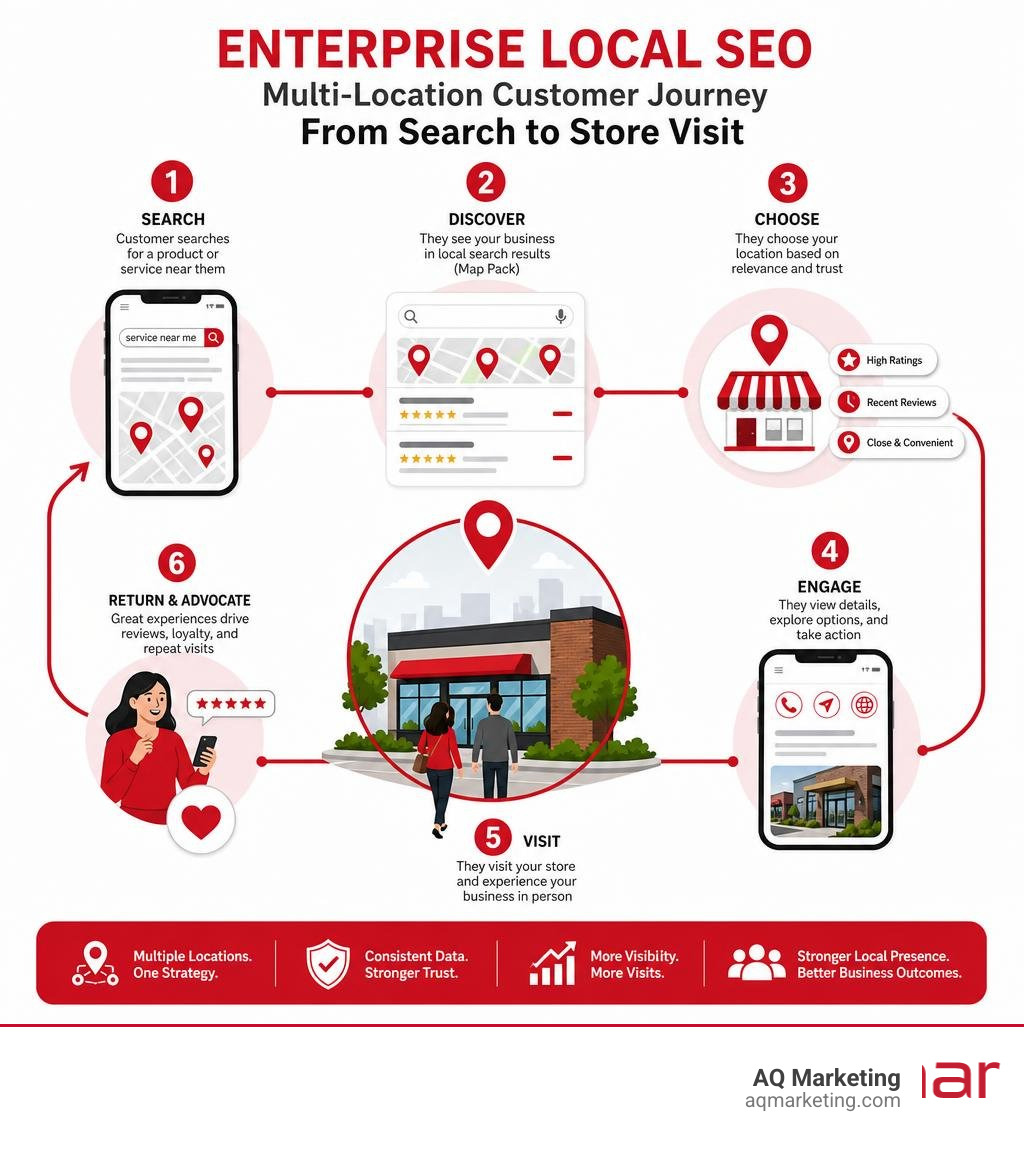
Why go through all this trouble? Because the financial payoff is massive. Local search is one of the highest-intent marketing channels available. When someone searches for a service followed by a specific town name—like “home service providers in Lawrence, MA”—they are not looking for a research paper. They are looking to buy.
Across the digital marketing landscape, structured enterprise campaigns consistently deliver eye-opening metrics:
Multi-location brands have demonstrated up to a 347% ROI from local search optimization investments in just 90 days (for example, generating $127K in tracked revenue from a modest $9.6K initial investment).
Franchise networks and branch systems report an average 49% increase in organic leads after deploying structured local search programs.
Targeted on-page fixes and schema updates for multi-location brands have triggered organic traffic increases of 300% or more.
When you optimize your system-wide presence, you unlock a compounding effect. Each local page that gains visibility feeds authority back to your primary domain, creating a rising tide that lifts all your locations. To capture this high-intent traffic, brands rely on specialized Local Search Optimization Services to turn search engine visibility into physical foot traffic and local phone calls.
Core Ranking Factors and the Entity-Anchor Framework
In 2026, search engines do not merely match strings of text on a page. Google operates as an “identity engine” powered by its Knowledge Graph—a massive database of real-world entities (people, places, organizations) and the relationships between them.
To win at enterprise local SEO, your brand must transition from basic keyword optimization to Entity SEO. This means establishing your business, and each of its physical locations, as a verified, trusted entity in Google’s database. This is achieved through the Entity-Anchor Framework, which treats your Google Business Profile (GBP) and your local landing pages as verified nodes in the underlying entity graph.
By anchoring your digital presence to verified public registries, professional associations, and structured data, you build a shield of trust that stabilizes your local rankings against algorithm updates. We always design our Top Search Ranking Factors in 2022 and beyond strategies around these semantic signals, ensuring that search engines can easily connect the dots between your brand and the physical neighborhoods you serve.
Integrating Enterprise Local SEO with Google Business Profile Management
Your Google Business Profile is the absolute anchor of your local entity. For enterprise brands, keeping these profiles updated cannot be an ad-hoc task. It requires a systematic approach to profile completeness.
Search engines reward profiles that maintain 95% or more field completion. This means your team must systematically address:
Primary and Secondary Categories: Choosing the exact primary category (e.g., “Insurance Agency” rather than a broad “Corporate Office”) and layering highly relevant secondary categories.
Factual Attribute Mapping: Filling out every business attribute, from wheelchair accessibility to online appointment options, and auditing them monthly as Google releases new industry-specific tags.
Optimized Service Menus: Writing detailed, 300-character factual descriptions for every service offered at that specific location to improve eligibility for conversational search.
At AQ Marketing, we emphasize that consistent Google My Business Marketing is the foundation of local pack visibility. Without complete and identical data across your website and your GBP, search engine algorithms will experience “data doubt,” which suppresses your visibility in the local Map Pack.
Review Velocity and Reputation Management
Online reviews are no longer just a conversion booster; they are a critical ranking signal. In fact, 97% of consumers check online reviews before making a purchase decision. But from an SEO perspective, search engines analyze reviews for two primary signals: velocity and unstructured semantic data.
Review velocity refers to how consistently your locations receive new feedback. Having 500 reviews from three years ago is far less valuable than receiving 10 to 15 high-quality reviews every single month. Additionally, Google’s natural language processing (NLP) models read the actual text of these reviews. When a customer in Boston writes, “The team helped me set up my business policy in Downtown Boston,” they are feeding Google high-signal, unstructured data that confirms both your service offering and your geographic proximity.
To manage this across hundreds of locations, enterprises must implement structured review workflows. This includes using pre-approved, compliant response templates, setting up immediate alerts for negative feedback, and training local staff to request reviews containing specific service names and neighborhood terms. Consistent Google Business Marketing ensures that your reputation remains spotless and highly visible across every market.
Technical Architecture and Hyperlocal Content at Scale
A beautiful website is useless if search engine crawlers get lost in a labyrinth of poor site architecture. For multi-location brands, technical SEO is the gatekeeper of organic visibility. If your site structure is messy, search engines will quickly exhaust their crawl budget on duplicate or low-value pages, leaving your critical local landing pages unindexed.
To prevent this, enterprises must design a clean, logical taxonomy. The gold standard for multi-location site architecture is a hierarchical structure:
brand.com/locations/ (The main directory hub)
brand.com/locations/massachusetts/ (The state-level directory)
brand.com/locations/massachusetts/boston/ (The city or neighborhood landing page)
This clean hierarchy allows search engine crawlers to easily discover and pass domain authority down to individual local pages. Our experienced Search Engine Optimization Experts specialize in building these scalable technical frameworks, ensuring that your site remains lightning-fast, mobile-first, and highly crawlable.
Scalable Location Pages and Schema Markup
Every physical location must have its own dedicated landing page on your main website. This page acts as the digital counterpart to your physical storefront. To make these pages highly readable to search engine spiders, you must implement advanced, nested schema markup.
Your local pages should utilize LocalBusiness or industry-specific schema (like InsuranceAgency or HomeAndConstructionBusiness). Within this schema, you must define:
The @id Property: A unique URI that establishes the page as a distinct entity.
The sameAs Property: Links to verified external profiles, such as the corresponding Google Business Profile, local chamber of commerce listings, or state licensing registries.
The areaServed Property: Explicitly defining the geographic boundaries, postal codes, or cities that the specific branch services.
By implementing these structured data types, you turn raw HTML into clear, machine-readable facts. This structured approach is a core element of the Search Engine Optimization Services we provide to help multi-location brands secure prominent real estate in both traditional and AI search results.
Creating Unique Local Content Without Doorway Penalties
One of the biggest traps in enterprise local SEO is the use of thin, templated location pages. If you simply copy and paste the exact same text across 100 city pages, merely changing the city name, search engines will flag these as “doorway pages” and filter them out of search results.
To build real local authority without triggering duplicate content penalties, you must create unique, hyperlocal content. This can be achieved at scale by combining structural templates with localized data blocks:
Incorporate Neighborhood Vernacular: Instead of just targeting generic city names, reference local landmarks, historic districts, and neighborhood nicknames (e.g., mentioning proximity to the Common in Boston, or service areas in the Merrimack Valley).
Display Local Reviews and Testimonials: Dynamically pull reviews left by customers in that specific zip code directly onto the corresponding location page.
Highlight Community Involvement: Feature local event sponsorships, charity partnerships, or profiles of the local branch staff.
For example, a brand operating in the Merrimack Valley might feature localized service guides for areas like Lawrence, MA, or highlight community projects in Wakefield, MA. If you are targeting western Massachusetts, collaborating with an Award Winning Amherst, MA SEO Agency – Baystate Marketing or optimizing pages for an SEO Marketing Company in Adams, MA can provide the hyper-local context needed to win those specific regional searches.
Using smart, database-driven Small Business SEO Strategies allows you to keep your content fresh, deeply relevant, and entirely unique to each community.
Navigating AI-Driven Search and Zero-Click Visibility
The search landscape in June 2026 is fundamentally different than it was just a few years ago. With the rapid rise of AI Overviews, Gemini, ChatGPT Search, and Perplexity, the way consumers find local businesses has shifted. We are now firmly in the era of “zero-click search,” where users get their answers directly on the search engine results page without ever clicking through to a website.
For enterprise brands, this means your content must be structured in a way that AI crawlers can easily digest, synthesize, and recommend. If your website lacks the clear, structured data that AI systems need, your brand will become virtually invisible to conversational search engines. Our Search Engine Optimization Experts are constantly adapting our strategies to ensure our clients’ websites remain the primary “source of truth” for these advanced AI systems.
AI Search Engines and the 1.2% Selection Challenge
AI-driven search is incredibly selective. While traditional Google searches present users with pages of blue links, AI search engines are roughly 30x more selective, with some platforms, like ChatGPT, surfacing only 1.2% of total search results in their final recommendations.
Furthermore, 45% of retail and service leaders are missing critical AI recommendations simply because their websites lack the structured data that AI crawlers require to verify business information. To survive in this environment, enterprise brands must implement an active “source of truth” strategy:
Publish an llms.txt File: Provide a clean, markdown-formatted directory of your site’s key pages specifically designed for LLM crawlers to read.
Ensure AI Crawler Accessibility: Verify that your robots.txt file does not accidentally block critical AI agents like GPTBot, PerplexityBot, or ClaudeBot.
Maintain Citation Parity: Ensure your business details (NAP) are identical across all major data aggregators, as AI systems cross-reference multiple web sources to verify your business’s legitimacy before recommending you.
Preparing for Conversational Queries and AI Overviews
Conversational search queries are much longer and more natural than traditional keyword searches. Instead of typing “plumber Woburn MA,” a user might ask their AI assistant, “Who is a highly-rated commercial plumber near Woburn that is open on Sundays and handles emergency pipe leaks?”
To capture these long-tail, conversational queries, your local pages must be optimized for semantic search:
Leverage FAQ Schema: Include robust FAQ sections on every location page that answer actual customer questions, marked up with clean FAQPage schema.
Write Factual, Direct Answers: Structure your content in a clear “question-and-answer” format that AI engines can easily extract and display in AI Overviews.
Focus on Natural Language: Use conversational, authoritative language that addresses actual user intent.
By working with an experienced Search Engine Optimization Consultant, your brand can build a content framework that aligns perfectly with these advanced conversational algorithms, securing your place as the recommended local option.
Operational Challenges and Governance Frameworks
The greatest obstacle to successful enterprise local SEO is rarely a lack of budget; it is operational friction. Managing hundreds of local profiles, keeping operating hours accurate, responding to reviews, and maintaining brand compliance across a massive corporate network is an administrative nightmare.
Without a clear governance framework, data fragmentation quickly sets in. Local managers might change their store hours on a whim, upload low-quality photos, or respond to negative reviews in a way that violates corporate policy. To prevent this, enterprises must establish clear systems that define who owns what. Partnering with one of the Best SEO Companies can help you establish these critical operational guardrails, ensuring brand consistency while allowing for local flexibility.
Centralized Control vs. Local Flexibility
To scale successfully, we recommend a “hybrid” governance model that balances corporate oversight with local insights:
In this model, the Corporate HQ maintains strict control over the core business data—such as legal names, website URLs, and structured schema markup. This prevents accidental data corruption and ensures strict brand compliance.
Meanwhile, Local Managers are given restricted, role-based access to handle tasks that require local knowledge, such as uploading real-time photos of their local team, updating special holiday hours, and flagging spam reviews. This hybrid workflow ensures your brand speaks with one cohesive voice while remaining deeply connected to each local community.
API Syndication and Cohort Management
Manually updating hundreds of Google Business Profiles is a recipe for disaster. To maintain absolute data accuracy, enterprise brands must utilize API data syndication tools (such as Yext, Uberall, or Rio SEO) to sync their core location data from a single, centralized database out to all major directories and search engines simultaneously.
Additionally, managing large networks is much easier when you segment your locations into cohorts. Instead of treating all 500 locations as a single block, you can group them by:
Performance Tier: Allocating more optimization resources to underperforming locations.
Regional Cohorts: Grouping locations by state or county to run localized promotion campaigns.
Service Type: Segmenting locations by the specific services or products they offer.
This systematic approach allows corporate marketing teams to push bulk updates to specific groups of locations instantly, ensuring your entire digital footprint remains accurate, consistent, and highly optimized.
Frequently Asked Questions About Enterprise Local SEO
How long does it take to see results from an enterprise local SEO campaign?
While standard SEO campaigns often require 6 to 12 months to show national traction, local SEO optimization typically delivers faster results. Initial ranking lifts in Google’s Map Pack and cleanups of major citation directories can show measurable improvements in 4 to 8 weeks.
However, building deep, sustainable organic authority for newly launched city landing pages is a longer-term process. You can expect these local pages to build consistent, top-tier rankings over 3 to 6 months of ongoing optimization, review generation, and local link building.
What are the most common mistakes enterprises make with local search?
The three most common mistakes we see enterprises make are:
Relying on Thin, Templated Location Pages: Using identical copy across dozens of local pages, which search engines treat as low-value doorway pages and suppress from search results.
Allowing Inconsistent NAP Data: Having slight variations in your business Name, Address, or Phone number across different directories, which creates algorithmic doubt and lowers your rankings.
Ignoring Review Velocity: Focusing solely on total review count while neglecting the consistent, monthly flow of new, high-quality reviews that search engines require in 2026.
How do you measure the ROI of multi-location local search optimization?
Measuring success goes far beyond tracking generic keyword positions. To calculate true ROI, enterprises should focus on high-intent conversion actions, including:
Google Business Profile Insights: Tracking direct phone calls, map direction requests, and website clicks originating directly from the Map Pack.
Geographic Traffic Analysis: Monitoring organic website traffic coming specifically from the target zip codes of your physical locations.
Local Conversion Actions: Tracking online appointment bookings, contact form submissions, and localized lead generation.
For large organizations looking to scale their digital footprint, collaborating with experienced Best SEO Companies or top-tier Boston SEO Agencies is the best way to build custom reporting dashboards that clearly attribute revenue back to your local search investments.
Regarding the cost of managing these campaigns, typical enterprise local SEO engagements based on average online data range from $1,500 to over $12,000 per month, depending on the total number of locations and the competitive landscape of your markets. Please note that this pricing is based on average industry data and does not represent AQ Marketing’s actual pricing.
Conclusion
Enterprise local SEO is no longer an optional marketing tactic; it is a vital revenue infrastructure for multi-location brands. In an era where AI search engines are highly selective and consumers demand instant, localized answers, the brands that build scalable, structured, and authentic local search systems are the ones that will dominate their markets.
Since 2003, AQ Marketing has been helping businesses across New England navigate the complexities of the digital landscape. From our headquarters in Woburn, MA, we specialize in delivering long-term, impactful results through website design, structured SEO, and proactive reputation management.
Whether you operate home services, insurance agencies, or multi-location retail branches, we have the experience and the systems to help you scale your online presence and turn local search visibility into measurable business growth.
Hiring a Small Business Website Developer: What You Need to Know
Why Finding the Right Website Developer Can Transform Your Business
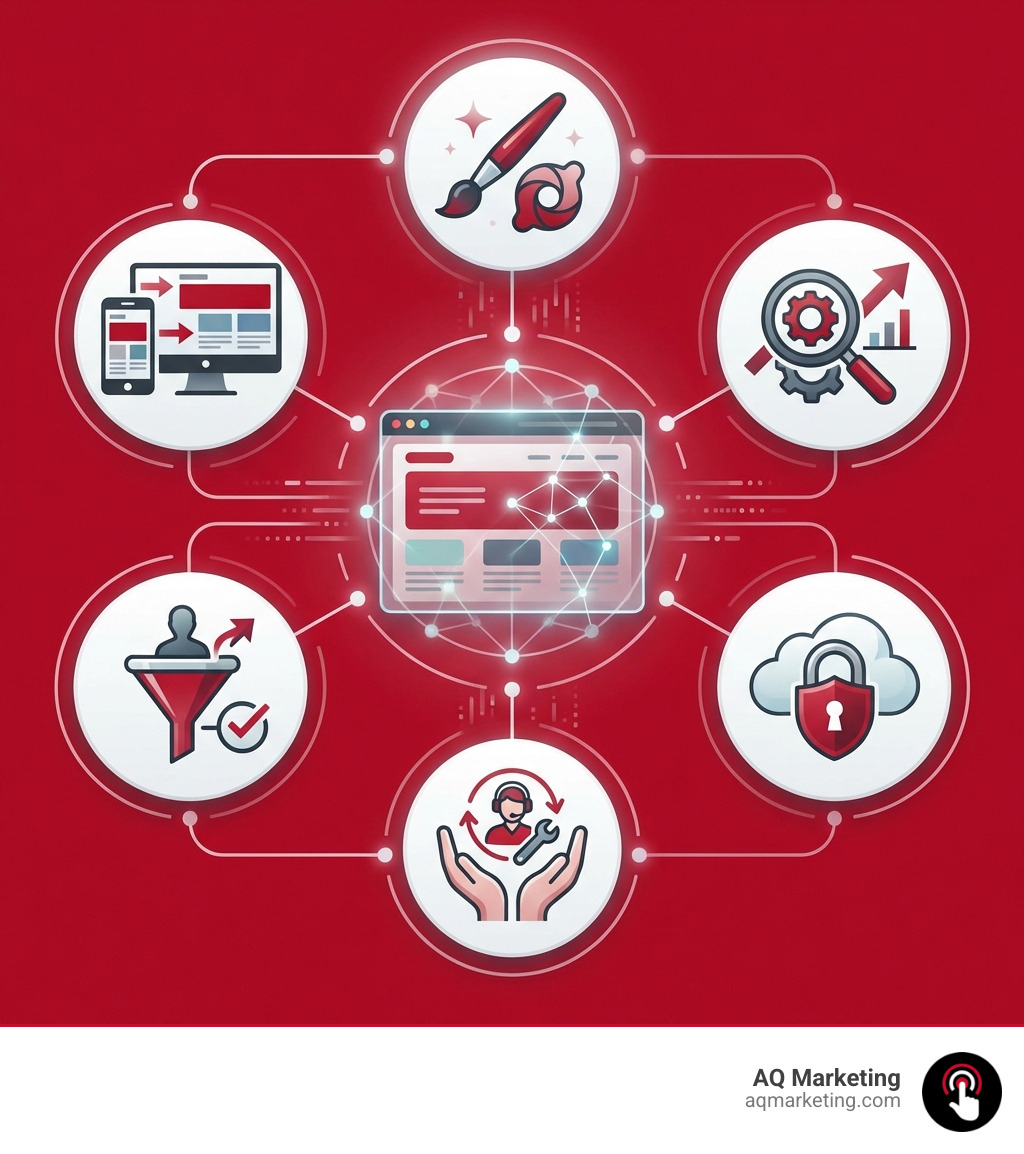
A small business website developer is a professional who designs, builds, and maintains websites specifically for small businesses, helping you create a strong online presence, generate leads, and compete effectively in your market.
What a Small Business Website Developer Does:
Designs custom, mobile-responsive websites custom to your business
Implements SEO best practices to help customers find you online
Integrates lead generation tools like contact forms and calls-to-action
Ensures your site is secure, fast, and user-friendly
Provides ongoing maintenance and technical support
Optimizes your site for conversions and business growth
Many business owners feel stuck with their website, frustrated by DIY setups, hidden fees, or unreliable developers. You know a professional online presence is crucial, but the tech can feel overwhelming, and it’s hard to know who to trust.
The right developer does more than build pages – they create a 24/7 sales tool that supports your business, brings in qualified leads, and builds credibility. Your website should work for you, not against you.
I’m Robert P. Dickey, President and CEO of AQ Marketing. With over 20 years of experience as a small business website developer and digital marketing expert, I’ll guide you through making a smart hiring decision.
Why a Professional Website is Your Most Powerful Marketing Asset
Your website is your digital storefront and often the first impression you make on potential customers. A professional site establishes trust and credibility, preventing you from being overlooked. It tells customers you are serious about your business and invested in providing a quality experience.
Many small businesses opt for cheap or DIY solutions that fall short due to poor design, slow speeds, and missing features, which hinders lead generation. A professional small business website developer avoids these pitfalls, building a site that is visually appealing and strategically designed to meet your goals.
Your website should be a tool that supports your sales process and boosts revenue. For more insights on how strategic web design can transform your business, explore our web design services.
The Role of a Small Business Website Developer in Lead Generation
A primary goal of any business website is to generate leads. A professional small business website developer understands this and designs your site to be a highly effective lead generation machine.
Here’s how a developer ensures your website drives business:
Conversion-Focused Design: Every element is chosen to guide visitors toward a desired action, like filling out a form or making a call.
Clear Calls-to-Action (CTAs): Developers place prominent and compelling CTAs throughout your site, making it easy for visitors to take the next step.
User Experience (UX) Optimization: A user-friendly site with intuitive navigation encourages visitors to stay longer, improving conversion rates.
Trust Signals: Elements like testimonials, security badges, and clear contact information build trust and reassure visitors that your business is reputable.
Form Integration: They seamlessly integrate easy-to-use contact forms and other lead capture tools that function flawlessly.
Analytics Tracking: A good developer integrates analytics to track performance, allowing you to measure lead generation efforts and make data-driven decisions.
By focusing on these aspects, a small business website developer ensures your site is not just an online brochure, but a dynamic tool that actively contributes to your bottom line. To learn more about how we integrate these strategies into our work, visit our page on digital marketing services.
How a Professional Site Helps You Stand Out
In a crowded marketplace, a professionally developed website is your secret weapon for differentiating your brand and making a memorable impact.
Custom Design: Unlike templates, a custom site is built from the ground up to reflect your unique brand identity, ensuring authenticity.
Unique Branding: Your website becomes an extension of your brand, with consistent visuals and messaging that build brand recognition and loyalty.
Professional Photography and Visuals: High-quality visuals are critical for capturing attention. Developers use professional or premium stock imagery to ensure your site looks polished.
Compelling Copywriting: Many developers offer or recommend copywriting services to ensure your website’s text is clear, persuasive, and optimized.
Showcasing Expertise: A well-structured site allows you to highlight your expertise through portfolios, case studies, and your value proposition, positioning you as an authority.
Consider the website for Dr. Victoria Chan, a Naturopathic Doctor. This was a very custom design, likely built to reflect her unique holistic approach to mental health, which would immediately help her stand out in her niche. Similarly, a custom design for a construction supply company like Valley Construction Supply can convey professionalism and reliability that generic sites simply cannot match.
Core Services: What to Expect from a Small Business Website Developer
Engaging a professional small business website developer means investing in a comprehensive suite of services to establish and maintain a robust online presence.
Here are the essential services you should expect:
Custom Website Design: A developer crafts a unique visual layout and user interface custom to your brand, audience, and goals, ensuring your site stands out.
Responsive (Mobile-First) Development: Since most traffic is mobile, your site must work perfectly on all devices. A mobile-first approach ensures an optimal user experience by designing for small screens first.
Content Management System (CMS) Integration: Developers integrate user-friendly CMS platforms (e.g., WordPress) so you can easily update content like text, images, and blog posts yourself.
Search Engine Optimization (SEO) Foundations: A site is built with foundational SEO best practices—like proper structure, clean code, and fast load times—to help it rank higher in search results.
E-commerce Functionality: For online sales, a developer can integrate solutions like Shopify or WooCommerce, setting up products, carts, and secure payments. For example, the Casablanca Bakery website required complex custom e-commerce features.
Website Hosting & Security: Developers assist with reliable hosting for accessibility and speed. They also implement security measures like SSL certificates (HTTPS) and firewalls to protect your site and data.
Foundational SEO and Performance Optimization
A professional small business website developer knows visibility and speed are as important as looks. They implement strategies to ensure your site is found by search engines and provides a seamless user experience.
On-Page SEO: Developers optimize pages with keywords, meta tags, headers, and alt text to rank higher and earn more relevant traffic.
Technical SEO: This includes server and website optimizations like XML sitemaps and improved site structure to help search engines crawl and index your site effectively.
Fast Loading Speeds: Page speed is a critical ranking factor. Developers optimize sites to load in under 1 second, as slow speeds (over 3 seconds) can cause significant traffic loss.
Mobile-Friendliness: A responsive design is paramount, ensuring your site adapts perfectly to any screen size for an optimal viewing experience.
User-Friendly Navigation: An intuitive navigation structure with clear menus helps both users and search engines understand your website.
Secure (HTTPS) Setup: An SSL certificate encrypts data, which is crucial for security, user trust, and is a minor Google ranking signal.
By focusing on these foundational elements, your developer lays the groundwork for long-term organic visibility. For a deeper dive into how we approach search engine optimization, visit our search engine optimization page.
Ongoing Website Maintenance and Support
Launching a website is just the beginning. Your site requires ongoing care to remain secure, performant, and up-to-date. A professional small business website developer often provides maintenance and support to ensure your investment continues to yield returns.
These services typically include:
Software Updates: Developers manage regular updates to your CMS, themes, and plugins for security and functionality, preventing compatibility issues.
Security Monitoring: Proactive monitoring for malware and other threats protects your site and data. This includes firewalls, security scans, and breach cleanup.
Performance Checks: Regular checks for loading speed, uptime, and server response times ensure optimal performance.
Content Updates: Many developers assist with minor content changes like updating text or adding images, freeing up your time.
Troubleshooting: A developer can promptly diagnose and fix any issues that arise, minimizing downtime.
Backup Management: Regular backups ensure your site can be quickly restored in case of a major failure, preventing data loss.
Choosing a developer who offers reliable ongoing support means you never have to worry about your website again, allowing you to focus on running your business. For more details on maintaining a healthy website, check out our website development services.
How to Choose the Right Small Business Website Developer
Selecting the right small business website developer is a critical decision for your online success. It’s about finding a partner who understands your vision and can build a functional, revenue-generating website.
Here’s what to consider:
Portfolio Review: Examine a developer’s past work for user-friendly sites relevant to your industry. A diverse portfolio, like our work for Valley Construction Supply or Dr. Victoria Chan, demonstrates versatility.
Industry Experience: A developer with experience in your niche will understand your specific needs, audience, and competitive landscape.
Client Testimonials and Reviews: Check what other clients say about a developer’s responsiveness, professionalism, and ability to deliver results.
Communication Style: Choose a developer who communicates clearly, is responsive, and seeks to understand your business goals.
Understanding Your Business Goals: A good developer will understand your objectives (e.g., lead generation, sales) and propose aligned solutions.
Local vs. Remote Developers: A local Massachusetts developer (e.g., in Woburn, MA) offers face-to-face meetings and local market knowledge. Remote developers offer a wider talent pool. Choose based on your project needs and communication style.
What to Look for in a Small Business Website Developer
Beyond the basic considerations, a truly exceptional small business website developer possesses qualities and offers advantages that set them apart.
Technical Expertise: A developer should have a strong grasp of current web technologies, including mobile-first design, page speed optimization, and secure coding.
Design Sense: An eye for aesthetics and user experience is crucial for creating a site that is functional, visually appealing, and intuitive.
Marketing Knowledge: The best developers understand a website is a marketing tool and have foundational knowledge of SEO and conversion optimization.
Transparent Process: Look for a clear process with defined milestones and regular updates to keep you informed.
Scalable Solutions: Your website should be built with flexible solutions that can grow with your business without a complete overhaul.
A Partner, Not Just a Vendor: Find a developer who acts as a true partner, offering advice and showing genuine interest in your success.
Here are some key questions to ask a potential small business website developer:
What is your typical website development process from start to finish?
Can you show me examples of websites you’ve built for businesses similar to mine?
How do you ensure websites are mobile-responsive and load quickly?
What are your SEO best practices during development?
How do you handle website security and backups?
What kind of ongoing maintenance and support do you offer after launch?
How do you manage communication and updates throughout the project?
What are your pricing models, and what is typically included?
How do you approach e-commerce integration, if applicable?
What happens if I need changes or updates after the site is live?
Custom-Coded vs. Template-Based Websites
When discussing your project with a small business website developer, you’ll likely choose between a custom-coded and a template-based website. Understanding the differences is key to an informed decision.
Unique Design vs. Pre-built Themes:
Custom-coded websites are built from scratch for a completely unique design custom to your brand, allowing for maximum creativity. The design for Dr. Victoria Chan’s website is a great example.
Template-based websites use pre-designed themes. While customizable, the underlying structure is shared with other sites using the same template.
Scalability and Flexibility:
Custom-coded sites offer superior scalability and can be easily adapted or expanded as your business evolves.
Template-based sites can have limitations on customization and scaling, potentially leading to “bloated” code from too many plugins.
Performance Differences:
Custom-coded websites often have superior performance, speed, and security due to cleaner, leaner code, resulting in faster load times and better SEO.
Template-based sites, especially from drag-and-drop builders, can carry extra code that slows them down.
Ownership and Control:
With a custom-coded site, you have full ownership of the codebase, offering complete freedom for future modifications.
Template-based platforms might tie you to their ecosystem, limiting your ability to migrate or make certain changes.
Long-Term Costs:
A custom-coded website has a higher initial investment but can be justified by long-term flexibility, performance, and unique branding.
Template-based sites are more affordable upfront, but costs can accrue over time due to limitations and licensing fees.
Your choice depends on your budget, your need for uniqueness, and your long-term vision. A good small business website developer will discuss these trade-offs with you to recommend the best approach for your specific business.
The Typical Website Development Process
A structured development process ensures a smooth project that stays on track, on budget, and aligned with your expectations.
Findy & Strategy: This initial phase is about understanding your business, goals, and audience to define the project’s scope and overall strategy.
Sitemap & Wireframing: We create a sitemap (a blueprint of your site’s pages) and then wireframe key page layouts, focusing on user experience (UX) and calls-to-action.
Design Mockups: Our designers create high-fidelity mockups of key pages based on the wireframes. This allows you to approve the look and feel before coding begins.
Development & Coding: Once designs are approved, our developers write the code, integrate the CMS, and build functionalities, ensuring the site is responsive. Complex projects, like the Casablanca Bakery website, require meticulous custom solutions.
Content Integration: We place your content (text, images, videos) into the site. We can also assist with sourcing stock photos and AI-generated text to get you started.
Testing & Quality Assurance: The site undergoes rigorous testing for functionality, responsiveness, broken links, speed, and security to ensure a flawless user experience.
Launch & Post-Launch Support: After your website goes live, we provide post-launch support, including monitoring, maintenance, and training on how to manage your new CMS.
This structured process ensures that your website is built efficiently, effectively, and to the highest standards.
Understanding Website Development Pricing
When hiring a small business website developer, it’s crucial to understand pricing models. Costs vary significantly based on complexity, features, and developer experience.
It’s important to note: Pricing listed here is based on average online data and does not represent AQ Marketing’s actual pricing. When listing typical industry pricing ranges, we provide a wide spread. The high end must be at least 3x the average price. We never imply what clients charge for these amounts.
Here are common pricing models:
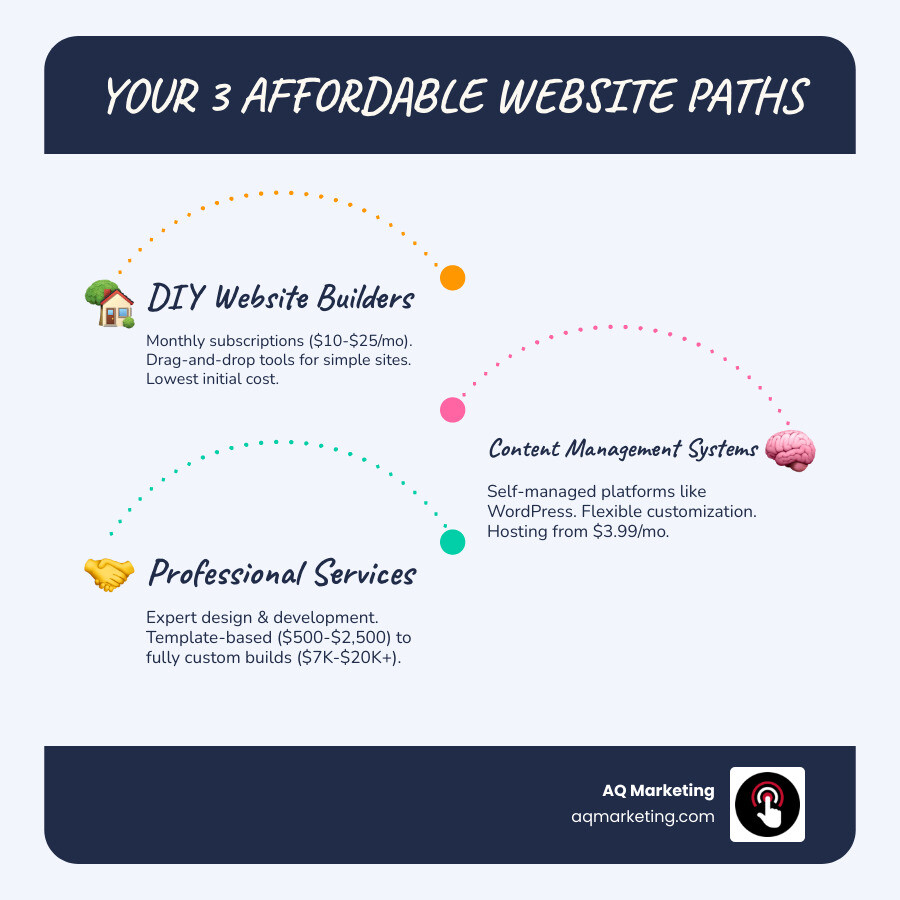
Project-Based Fees: The most common model, where a fixed price is quoted for a defined scope, providing budget predictability. A standard site might range from $2,500 to $15,000+, while complex sites with e-commerce can be $8,000 to $50,000 or more.
Hourly Rates: Some developers charge an hourly rate for smaller tasks, ongoing maintenance, or projects with an undefined scope. Rates can range from $50 to $250+ per hour.
Monthly Retainers: Popular for ongoing maintenance, support, and updates. Retainers can range from $100 to $1,000+ per month. Some agencies bundle design and hosting into a monthly package, starting around $175/month with a contract.
Factors Influencing Cost:
Website Size: The number of pages directly impacts the development effort.
Custom Features: Unique functionalities, integrations with third-party software, or custom coding will increase the cost.
E-commerce Integration: Adding online store capabilities, product catalogs, and payment gateways adds significant complexity and cost. E-commerce solutions can start from $5,000 and go well beyond $25,000.
Design Complexity: Highly custom, intricate designs require more design and development time than modified templates.
Content Creation: If the developer is responsible for writing content or sourcing professional photography, this will add to the overall price.
SEO & Marketing Integration: Comprehensive SEO setup and integration with marketing tools can also influence the cost.
It’s essential to have a clear understanding of what is included in any quoted price to avoid hidden fees or unexpected expenses.
Conclusion
Hiring a small business website developer is one of the most impactful decisions you can make for your company’s future. Your website is more than just an online brochure; it’s a dynamic asset that can drive leads, build credibility, and provide a significant competitive advantage.
Investing in a professional website is an investment in your business’s long-term growth. It ensures your online presence is robust, secure, user-friendly, and optimized to attract and convert your ideal customers. By partnering with the right developer, you gain a strategic ally who understands how to leverage the digital landscape for your success.
At AQ Marketing, we have been helping small to medium-sized businesses in Massachusetts, including areas like Woburn, MA, Amesbury, MA, and many other towns, improve their online presence since 2003. Our expertise in website design, SEO, and digital marketing allows us to deliver long-term, impactful results that help your business thrive.
Ready to transform your online presence and open up your business’s full potential? We invite you to book a 15-minute phone call with us to discuss your website needs and how we can help you achieve your goals.
Why Marketing for Entrepreneurs Is the Key to Beating the Odds
Marketing for entrepreneurs isn’t just important—it’s a growth engine that helps small and mid-sized businesses build visibility, earn trust, and generate consistent leads. Here’s what you need to know:
Entrepreneurial marketing is a dynamic, insight-driven approach that emphasizes creativity, experimentation, and strong customer relationships
It differs from traditional marketing by focusing on maximizing impact with limited resources while staying agile
Key benefits include prioritizing customer relationships, fostering innovation, and maintaining flexibility as markets evolve
A clear strategy helps you build brand awareness, boost engagement, establish trust, and drive qualified inquiries and sales
When you’re building a business from the ground up, you don’t always have the advantage of large advertising budgets or years of brand recognition. But you can compete effectively by being clearer, faster, and more strategic.
Entrepreneurial marketing is about doing more with less—by focusing on the channels and messaging that produce measurable outcomes for your business. It’s the difference between spreading efforts thin across every platform and investing in a smart mix of website performance, SEO visibility, content that educates, and paid campaigns that convert.
This guide will walk you through core concepts—from developing the right mindset and building a solid marketing plan, to using modern digital tools and measuring what matters. Whether you’re launching your first venture or scaling an established business, you’ll find practical, strategy-first guidance built for real-world constraints.
I’m Robert P. Dickey, President and CEO of AQ Marketing, and I’ve spent over 20 years helping small and medium-sized businesses steer the digital marketing landscape. Throughout my career, I’ve specialized in marketing for entrepreneurs who want to grow with clear strategy, strong execution, and measurable results.
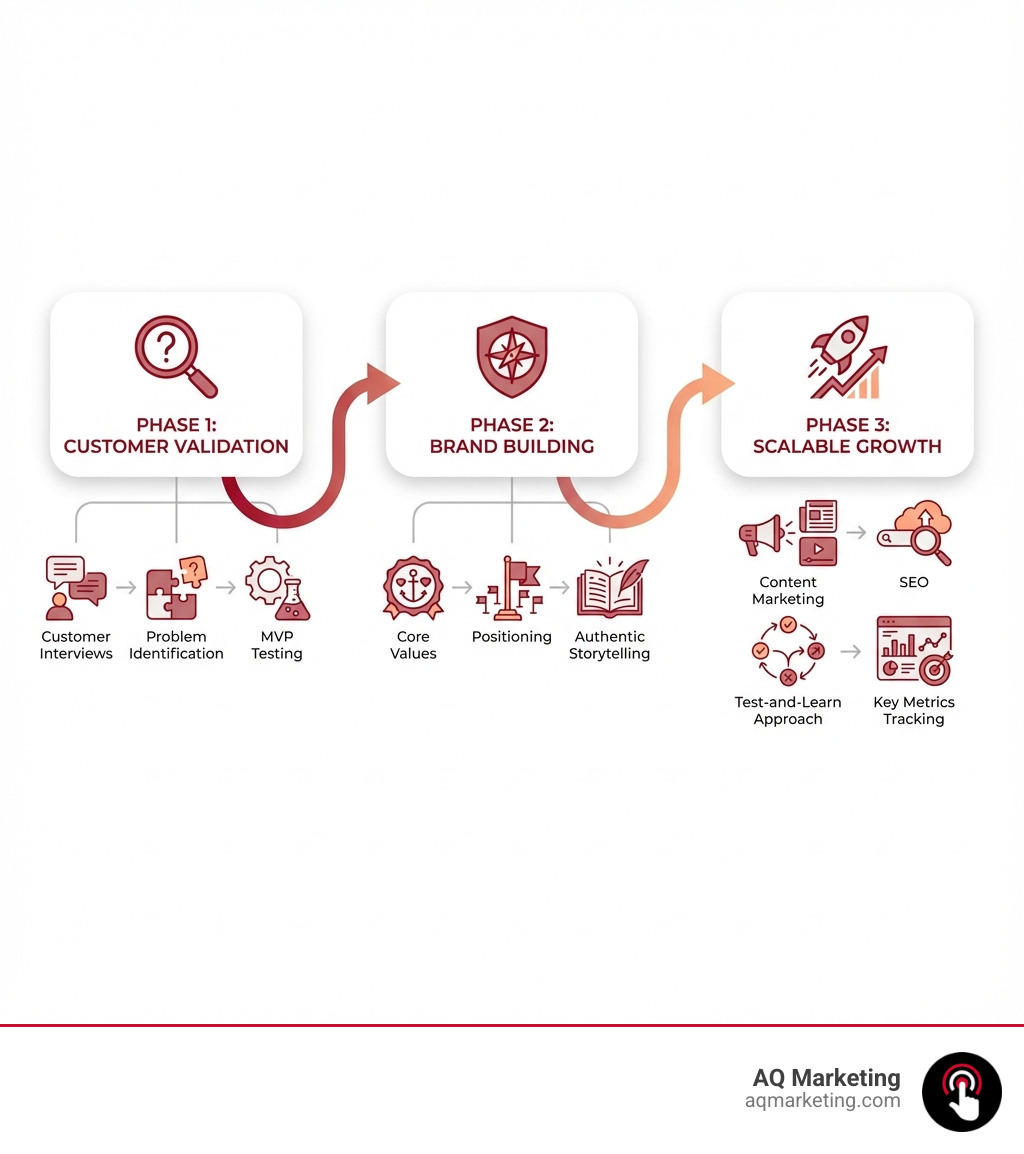
To help you visualize the core ideas, imagine an infographic that clearly breaks down the key differences between entrepreneurial marketing and traditional marketing—highlighting how agility, experimentation, and customer relationships set modern entrepreneurs apart.
The Entrepreneurial Marketing Mindset: Doing More with Less
As entrepreneurs, we often start with more ambition than time and budget. This is where the entrepreneurial marketing mindset truly shines. It’s a dynamic approach that emphasizes innovation, experimentation, and strategic growth—making it ideal for new ventures and growing small businesses. It means being resourceful, agile, and relentlessly customer-centric. We don’t just sell products; we solve problems and build relationships.
What is Entrepreneurial Marketing vs. Traditional Marketing?
To understand marketing for entrepreneurs, we first need to define what entrepreneurial marketing is and how it stands apart from its traditional counterpart.
Entrepreneurial marketing is characterized by its emphasis on innovation and experimentation. Instead of relying on large budgets to optimize proven strategies, entrepreneurs uncover market opportunities, test messaging quickly, and adapt based on real customer feedback. It’s about building a brand from the ground up, earning early traction, and refining what works.
Traditional marketing, on the other hand, is typically rooted in established companies with the resources to manage mature brands and long-running campaigns. Their efforts often involve standardized communications, one-way relationships, and a focus on financial and market-share goals, driven by extensive data analysis.
Entrepreneurial marketing is a game-changer because it helps businesses create momentum without wasting budget. It encourages clarity in positioning, faster learning cycles, and tighter alignment between messaging and what customers actually want.
For startups and small businesses, this approach is vital for amplifying brand impact even with a minimal marketing budget. It helps build strong audience connections, stay agile, take calculated risks, and continuously optimize tactics based on customer insights. We invite you to explore our cost-effective marketing strategies for more insights.
Building Your Foundation: The Entrepreneurial Marketing Plan
Every successful journey starts with a map, and for marketing for entrepreneurs, that map is a well-crafted marketing plan. It’s a strategic document that outlines our overall positioning and specific tactics, guiding us toward our business objectives. Without it, we’re simply hoping for the best, and as the saying goes, “trying to market your business without a plan is a little like going on a road trip without GPS.”
Step 1: Define Your Mission and Goals
Before we can tell others about our business, we need to be crystal clear about what we stand for.
SWOT Analysis: We start by examining our current situation. A SWOT analysis helps us identify our Strengths, Weaknesses, Opportunities, and Threats. This brutal honesty is imperative for truly understanding our market position and how we can differentiate ourselves.
Setting SMART Goals: What do we want to achieve? Our marketing goals should be Specific, Measurable, Achievable, Relevant, and Time-bound. For instance, instead of “increase sales,” we aim for “increase online leads by 20% in the next quarter.” These goals should stem from our high-level business outcomes. We’ve put together some great resources on how to set digital marketing goals that can help you get started.
Defining Marketing Objectives: These are the specific outcomes we expect from our marketing efforts. A clear roadmap of what we aim to achieve in terms of lead generation, sales, market share, brand awareness, or customer acquisition is essential.
Step 2: Identify Your Target Audience and Competition
We aren’t trying to catch every fish in the sea; we’re only trying to catch the ones we want.
Buyer Personas: We create semi-fictional, holistic ideals of our perfect customers based on market research and real data. These buyer personas help us visualize our target audience, resonate with them, and innovate based on their desires. For each persona, we consider their demographics, interests, where they “hang out” online, their problems, and who influences them. We can also categorize them by their “jobs, pains, and gains” – what they’re trying to achieve, what frustrates them, and what benefits they seek. We can find more information on identifying your target market here.
Competitive Analysis: We need to know who we’re up against. This involves researching our direct business competitors and our digital marketing competitors (those vying for the same keywords and audience online). We examine what content they’re creating, how they differentiate themselves, and where they’re succeeding or failing based on customer reviews. This helps us find market niches that competitors aren’t filling or areas where we can outperform them. For a deeper dive, check out more info about competitive research.
Step 3: Craft Your Value Proposition and USP
Once we know who we’re talking to and who else is talking to them, we need to articulate why we are the best choice.
Value Proposition Definition: This is what we promise our customers our product or service will give them. It answers crucial questions: What makes our product or service different? How is it relevant to their needs? What problems do we solve for them?
Unique Selling Proposition (USP): Our USP helps differentiate our products and services, explaining what our company does best. It’s the unique benefit we offer that our competitors don’t (or can’t). To define it, we ask: How do customers use our products? What are our fundamental business values? What makes us better than the competition? For assistance in defining your brand’s visual identity and ensuring consistency, explore our brand identity & logo design services. You can also check out The Ultimate Guide to Finding Your Unique Selling Proposition for more insights.
The Modern Entrepreneur’s Toolkit: Digital Marketing Strategies
In today’s world, a powerful online presence is non-negotiable for marketing for entrepreneurs. It’s our digital storefront, our communication hub, and our primary tool for reaching and engaging customers.
Building a Powerful Online Presence
Our website is the digital hub of our business. It’s often the first impression potential customers have of us, so it needs to be exceptional.
Website as the Digital Hub: Our website must clearly describe our business, use powerful graphics, display contact information prominently, and feature a clear call to action. It should be easy to steer, with content grouped into searchable sections. For a seamless and effective online presence, consider our custom website design and SEO services.
Mobile-First Design and User Experience (UX): With more people browsing on their phones, our website must be mobile-responsive. Page speed is also crucial; we aim for less than a two-second load time average to capture attention and improve SEO. People click on sites they trust, so an SSL certificate is essential for security and ranking.
Local SEO: For businesses serving specific geographic areas, local SEO is a game-changer. Authenticating our business with Google Business Profile is one of the best ways to boost local search results, ensuring people in our area can find us easily.
Content Marketing and Storytelling for Entrepreneurs
One thing that may always remain true in marketing is that stories sell. Stories build brand awareness because people love them. They are a way to build relationships, find common ground, and show the consumer what our brand is all about. We can learn more about why stories sell in marketing here.
Building Trust Through Content: Content marketing allows us to educate prospects, earn trust, and establish ourselves as experts. This can include blog posts, videos, infographics, and how-to guides.
Blogging for SEO: Creating valuable blog content regularly is a key driver of organic traffic. Each post provides new indexed pages for search engines, and when optimized with relevant keywords, it helps our website rank higher. For more on this, check out What is Content Marketing.
Video Marketing: Video performs better because it’s more engaging. Almost 70% of people prefer videos when learning about new products, and 84% have been convinced to buy after watching a brand video. Videos can boost our reach and engagement on both social media and email platforms.
Mapping and Optimizing the Customer Journey
Understanding how our customers ultimately reach a purchase is complex, but crucial.
Customer Journey Stages: We map out the customer journey, from initial awareness to decision and beyond. This typically involves:
Awareness: The customer realizes they have a problem or need. Our marketing here focuses on education and visibility.
Consideration: The customer researches potential solutions. Our content provides in-depth information and demonstrates our expertise.
Decision: The customer chooses a product or service. Our marketing highlights our unique value proposition and offers clear calls to action.
Conversion Rate Optimization (CRO): At each stage, we identify opportunities to optimize our process and convert interest into action. This means ensuring our website has clear conversion elements, easy-to-use forms, and smooth navigation. For a detailed guide on this, refer to Defining the Customer Journey and Aligning Tactics at Every Stage.
Scaling for Growth: Resources, Retention, and Results in marketing for entrepreneurs
Once we’ve laid the groundwork, the next step in marketing for entrepreneurs is to scale smartly—by allocating resources efficiently, improving retention, and measuring performance consistently.
Smart Budgeting and Resource Allocation
Budgeting is often where entrepreneurs feel the pinch, but strategic planning helps ensure your spend supports business outcomes.
Marketing Budget Guidelines: While every business is unique, a common guideline suggests a marketing budget around 2% to 5% of revenue for B2B and 5% to 10% for B2C. Pricing listed is based on average online data and does not represent AQ Marketing’s actual pricing. In practice, budgets can vary widely—approximately 1% to 30%+ of revenue depending on growth stage, competition, and goals.
Building a Marketing Team: Even with limited resources, you can build capability in phases—often starting with a strong website foundation (design, SEO, and content) and then layering in lead generation support like Google Ads (PPC), social media advertising, and automated workflows. If building an in-house team isn’t feasible, partnering with an agency can provide specialized expertise and scale. To learn more about how an agency can support your growth, read What to Expect from a Digital Marketing Agency.
The Power of Customer Retention and Relationships
Acquiring new customers is typically more expensive than retaining existing ones. Strong retention programs also create compounding growth through repeat purchases, referrals, and reviews.
Importance of Customer Loyalty: Happy customers become repeat purchasers and brand promoters—and their feedback can inform improvements.
Email Marketing & Outreach: Email can be a high-performing channel for nurturing leads and engaging customers when paired with strong segmentation and consistent value. For businesses looking to accelerate follow-up, AQ Marketing also supports Website Visitor ID & Email Outreach and CRM & automated lead generation workflows to help teams respond faster and stay organized.
Monitoring, Measuring, and Improving Your Marketing for Entrepreneurs
“What gets measured gets managed.” This is where the true power of modern marketing for entrepreneurs shows up.
Key Performance Indicators (KPIs): We track KPIs to determine if efforts are paying off, including:
Website traffic: How many people are visiting your site, and from which channels?
Conversion rates: What percentage of visitors take desired actions (calls, form fills, bookings)?
Organic keyword rankings: How well you rank for high-intent searches tied to your services
Email engagement: Open rates and click-through rates
Google Business Profile performance: Calls, direction requests, and website clicks from local search
Paid advertising performance (PPC): Cost per lead, conversion rate, and qualified lead volume
Analytics Tools: Tools like Google Analytics, Google Business Profile insights, ad platform reporting, and CRM dashboards provide the data needed to make better decisions.
Continuous Improvement Cycle: Marketing is not a “set it and forget it” activity. Regular reviews—monthly, and sometimes weekly for PPC—help you reallocate budget, improve messaging, and increase results over time.
Frequently Asked Questions about Marketing for Entrepreneurs
We often hear similar questions from new business owners navigating the complex world of marketing for entrepreneurs. Here are some common ones:
How much should a startup spend on marketing?
The amount a startup should spend on marketing varies widely based on industry, growth goals, and business model (B2B vs. B2C). As a general guideline, businesses often allocate 2% to 5% of their revenue for B2B and 5% to 10% for B2C. However, for a new startup focused on rapid growth, this percentage might be higher in the initial years. It’s crucial to focus on the Return on Investment (ROI) of each marketing activity rather than just the raw spend. What matters most is that every dollar spent is strategic and measurable. Please remember, these figures are general industry averages and do not represent AQ Marketing’s specific pricing.
What is the most effective marketing strategy for a new business?
There isn’t a single “most effective” strategy, as it largely depends on your specific business, target audience, and resources. However, an integrated digital marketing approach is almost always essential. This typically includes:
A strong, mobile-responsive website that serves as your central hub.
Search Engine Optimization (SEO) to ensure your target audience can find you when they’re searching for solutions. Our Search Engine Optimization Services can help you build this crucial foundation.
Content marketing (blog posts, videos, guides) to educate your audience, build trust, and establish authority.
Strategic social media engagement on platforms where your target audience spends their time.
Email marketing to nurture leads and build customer relationships.
The key is to start with a solid plan, understand your audience deeply, and be prepared to experiment and adapt.
How can I do marketing with no money?
While “no money” is tough, “very little money” is definitely doable with smart marketing for entrepreneurs. Here are some strategies:
Guerrilla Marketing: This involves unconventional, creative, and low-cost tactics to get maximum results. Think street art, flash mobs, or viral stunts (if appropriate for your brand).
Content Creation: Start a blog, create social media posts, or make short videos using your phone. Focus on providing value and solving problems for your audience.
Social Media Engagement: Actively participate in online communities where your target audience hangs out. Offer advice, answer questions, and build genuine relationships without overtly selling.
Networking: Attend local business events, join online forums, and connect with other entrepreneurs. Word-of-mouth is powerful.
Basic SEO: Optimize your Google Business Profile, get listed in online directories, and ensure your website (even a simple one) has clear, keyword-rich content.
The goal is to leverage your time, creativity, and existing network as much as possible.
Conclusion: Your Partner in Entrepreneurial Growth
Marketing for entrepreneurs can feel like a daunting challenge, but with the right mindset, a solid plan, and a commitment to continuous improvement, it’s an incredibly powerful engine for growth. We’ve explored how entrepreneurial marketing—with its emphasis on findy, resourcefulness, and customer relationships—differs from traditional approaches and why it’s crucial for startups. We’ve also walked through the essential steps of building a marketing plan, leveraging digital tools, and the importance of customer retention and diligent measurement.
Remember the cycle: Mindset, Plan, Execute, Measure. Accept the agility, creativity, and customer focus that defines successful entrepreneurial ventures. We believe in empowering entrepreneurs like you to not just survive, but to thrive in competitive markets.
Ready to grow your business with proven strategies? Explore our digital marketing services for small businesses. At AQ Marketing, we’re dedicated to helping businesses in Massachusetts and beyond improve their online presence and deliver long-term, impactful results. Let’s build something great together.
Why Every Small Business Needs a Marketing Budget Template
A marketing budget template for small business is essential for making every dollar count and driving measurable growth. Without a structured approach, businesses often overspend on tactics that don’t work or underfund channels that could deliver strong returns.
Quick Answer: Finding the Right Marketing Budget Template
Percentage of Revenue Model – Allocate 6-8% of gross revenue for established businesses, 10-15% for growth-focused companies
Essential Categories to Include – Digital advertising, content marketing, SEO, software/tools, website maintenance, personnel/agency costs
Free Templates Available – SCORE and industry associations offer downloadable spreadsheet templates
Key Tracking Metrics – ROI per channel, customer acquisition cost, conversion rates, and monthly spend vs. budget
Many small business owners struggle with marketing budget planning. They either spend reactively—jumping on every new tactic without a plan—or they simply guess at numbers without understanding what drives results. This leads to wasted money, missed opportunities, and frustration.
A marketing budget isn’t just a spreadsheet. It’s your roadmap for growth. It helps you:
Align spending with business goals
Make strategic decisions instead of reactive ones
Track what’s working and what isn’t
Justify investments to stakeholders
Avoid common pitfalls like hidden costs
The good news? Creating an effective marketing budget doesn’t require a finance degree. With the right template and understanding of key principles, you can build a budget that supports sustainable growth.
I’m Robert P. Dickey, President and CEO of AQ Marketing, and over my 20+ years helping small businesses succeed, I’ve seen how a well-structured marketing budget template for small business transforms marketing from a cost center into a growth engine. Let me walk you through exactly how to build one that works for your business.
Basic marketing budget template for small business glossary:
How Much Should a Small Business Allocate to Marketing?
Think of marketing not as an expense, but as an investment in your business’s future. Just like you invest in inventory or equipment, you need to invest in reaching your customers. The question isn’t if you should spend on marketing, but how much and where to get the best return.
For many small businesses, figuring out this magic number can feel like throwing darts blindfolded. Fortunately, there are some established benchmarks and models we can lean on. The U.S. Small Business Administration (SBA) offers a helpful guideline: they recommend spending 6% to 7% of your gross revenue on marketing and advertising if your revenue is less than $5 million a year in sales.
However, this isn’t a one-size-fits-all answer. Recent data from Fall 2024 shows that marketing accounts for 10.1% of overall company budgets, and around 7.7% of company revenues. Interestingly, small businesses with fewer than 50 employees tend to allocate a higher percentage, with marketing accounting for 15.1% of their budget for 17% of their revenue. This often reflects the need for newer or smaller businesses to build brand awareness and acquire customers more aggressively. Larger companies, with more established brands, might spend less proportionally.
Your marketing budget should always align with your business goals. Are you looking to maintain your current customer base, or are you aiming for aggressive growth in the competitive Massachusetts market? Your answer will significantly influence your allocation. For more insights on smart spending, check out our guide on Marketing Budgets for Small Businesses: Spend Smart, Grow Big.
Factors Influencing Your Budget Percentage
Several factors play a crucial role in determining the ideal percentage of revenue your small business should dedicate to marketing:
Industry Sector: Some industries are simply more competitive or rely more heavily on marketing to drive sales. For instance, a local service business in a busy area like Woburn or Boston might need a more robust local SEO and advertising budget than a niche B2B software company.
Business Capacity: Can your current operations handle a significant influx of new customers? Over-marketing without the capacity to deliver can lead to poor customer experiences.
Growth Goals: Are you a new venture aiming for rapid market penetration, or an established business looking for steady, incremental growth? New businesses often need to spend more to build brand awareness and acquire their initial customer base.
Competitor Landscape: What are your competitors doing? While we never recommend blindly copying, understanding their marketing efforts can help you identify gaps or areas where you need to be competitive.
Market Conditions: Economic shifts, seasonal trends, and new technologies can all influence how much you need to spend and where. For example, holiday seasons often see increased ad spend in retail.
Common Budgeting Models
When it comes to structuring your marketing budget, several models can guide your decisions. Each has its pros and cons, and the best approach for your small business might even be a hybrid.
Budgeting Model
Description
Pros
Cons
Percentage of Revenue
Allocate a fixed percentage of your past or projected revenue to marketing. (e.g., 6-7% for businesses under $5M revenue).
Simple to calculate; provides a clear upper limit.
Can lead to under-spending in downturns; doesn’t directly link to specific goals; may not be enough for new businesses.
Goal-Driven (Objective-Based)
Determine your marketing goals, then identify the activities and resources needed to achieve them, and budget accordingly.
Directly links spending to desired outcomes; encourages strategic thinking.
Can be difficult to estimate costs accurately; may lead to overspending if goals are too ambitious without sufficient resources.
Market-Responsive
Adjust your budget based on competitor activity, market trends, and economic conditions.
Flexible and adaptive; keeps you competitive.
Requires constant monitoring and quick adjustments; can be reactive rather than proactive; difficult to forecast long-term.
All-You-Can-Afford
Allocate whatever funds are left over after other business expenses are covered.
Ensures financial stability in other areas.
Views marketing as an afterthought, not an investment; often leads to inconsistent and insufficient marketing efforts.
We often find that a goal-driven approach, informed by percentage-of-revenue benchmarks, works best for our clients in Massachusetts and beyond. It ensures every dollar has a purpose and is tied to a tangible outcome.
Key Components of a Small Business Marketing Budget
Once you have a handle on how much to spend, the next step is deciding where to spend it. This involves breaking down your total budget into various categories, covering everything from digital channels to the tools and people who make it all happen.
A well-structured marketing budget template for small business will include a mix of digital and traditional elements, account for fixed and variable costs, and, crucially, help you identify and plan for those sneaky hidden costs. Our focus at AQ Marketing is always on cost-effective strategies that deliver long-term, impactful results for businesses in areas like Boston, Cambridge, and Springfield. We believe in smart spending, not just big spending.
Digital Marketing Channels
The digital landscape is where the majority of marketing action happens today. In fact, digital advertising is projected to make up 62.7% of global ad spending in 2025, and digital channels now command 57.1% of paid media spend. This shift isn’t surprising, given the reach and measurability of online platforms.
Here’s a breakdown of essential digital marketing components for your budget:
Website Design and Maintenance: Your website is your 24/7 storefront. Budget for initial design or redesign, ongoing hosting, security, and regular updates. We specialize in Small Business Website Design and can help you create an online presence that converts.
Website SEO (Search Engine Optimization): Getting found on Google is critical. This includes costs for keyword research, on-page optimization, technical SEO, and link building. Investing in SEO is a long-term play that pays dividends. Learn more about how we help with Website Design and Marketing.
Content Marketing: Creating valuable blog posts, videos, infographics, and other content that attracts and engages your target audience. Content marketing generates three times more leads than some traditional methods, making it a powerful investment.
Paid Advertising (PPC – Pay-Per-Click): This covers ads on platforms like Google Ads and social media (Facebook, Instagram, LinkedIn). It offers immediate visibility and targeted reach. Our Digital Marketing Services for Small Businesses include expert management of PPC campaigns.
Social Media Marketing: While organic social media is often described as “free,” managing it effectively takes time and resources. Paid social media advertising is also a significant component for many businesses. We can help with Social Media Management for your business.
Email Marketing & Automation: Building and nurturing relationships with customers through email campaigns and automated workflows. Email marketing, when used strategically, is a powerful way to nurture leads and retain customers.
Modern marketing relies heavily on technology. Don’t forget to budget for the subscriptions and licenses that power your efforts:
Customer Relationship Management (CRM): Tools to manage customer interactions and data, crucial for sales and marketing alignment.
Marketing Automation: Software that automates repetitive marketing tasks like email sequences, social media posting, and lead nurturing.
Analytics Platforms: Essential for tracking performance and understanding your audience. Nearly half of businesses (47%) start with Google Analytics for a reason – you can’t improve what you don’t measure.
Design Tools: Software for creating visual content, whether it’s for your website, social media, or ads.
Social Media Management Tools: Platforms that help schedule posts, monitor engagement, and analyze performance across various social channels.
Personnel and Outsourcing
Who will execute your marketing strategy? This is a significant part of your budget.
In-house Staff Salaries: If you have dedicated marketing employees, their salaries and benefits are a core budget item.
Freelancer Costs: For specific projects like content creation, graphic design, or video production, freelancers can offer specialized skills without the overhead of a full-time employee.
Agency Partnerships: Many small businesses choose to partner with marketing agencies for comprehensive support. This can include strategy, execution, and reporting across multiple channels.
Pricing disclaimer: Pricing listed is based on average online data and does not represent AQ Marketing’s actual pricing. Typical industry agency costs can range widely depending on location, experience, and scope of work. For example, retainers might start in the low thousands per month and, for complex, multi-channel campaigns, can extend to several tens of thousands or more. The high end of the range can be three times or more higher than the mid-point to reflect full-service, enterprise-level needs. We encourage you to discuss your specific needs with us to get a custom proposal tailored to your business and goals.
Your Marketing Budget Template for Small Business (+ Examples)
The idea of creating a marketing budget from scratch can be daunting. That’s where a well-designed marketing budget template for small business becomes your best friend. It provides a structured framework, ensuring you don’t miss crucial categories and making it easier to track your spending. It takes the guesswork out of budgeting and helps you stay organized.
SCORE, a nonprofit organization dedicated to helping small businesses, offers a helpful Annual Marketing Budget Template | SCORE that can be a great starting point.
Sample Marketing Budget Template for a Small Business
Here’s a breakdown of key categories and example line items you’d typically find in a comprehensive marketing budget template for small business:
Digital Advertising
Google Search Ads (PPC)
Social Media Ads (Facebook, Instagram, LinkedIn)
Display Advertising
Retargeting Campaigns
Ad creative development
Content Creation & Marketing
Blog post writing (e.g., for local events in Worcester or Boston)
Video production (e.g., customer testimonials in Massachusetts)
Infographic design
E-books or whitepapers
Photography
Content promotion (paid boosts)
Search Engine Optimization (SEO)
Keyword research tools
Technical SEO audits
Link building efforts
Local SEO optimization (e.g., Google Business Profile for your Woburn business)
Website & Tools
Website hosting & domain renewal
CMS (Content Management System) fees
Marketing automation software
CRM software
Analytics tools (e.g., Google Analytics premium features)
Design software subscriptions
Personnel & Agency Costs
In-house marketing staff salaries/benefits
Freelance writers, designers, video editors
Digital marketing agency retainers (like AQ Marketing for comprehensive services)
Events & PR
Sponsorships for local events (e.g., community fairs in Abington or Canton)
Trade show booth fees
Event marketing materials
Public relations services
Award submission fees
Example Budget Allocations
The way you allocate your budget will depend heavily on your business type, industry, and specific goals. Here are a few examples to illustrate how different small businesses might structure their marketing spend:
B2B SaaS Company (e.g., a software provider in Cambridge, MA)
Monthly Budget: $25,000
Content Marketing: 30% ($7,500) – For thought leadership, lead generation, and SEO.
Paid Search + Paid Social: 30% ($7,500) – For targeted lead generation and demo requests.
Brand/Creative: 10% ($2,500) – For developing sales collateral and brand assets.
PR + Events (online webinars): 10% ($2,500)
Tools/Software: 10% ($2,500) – For CRM, marketing automation, analytics.
Agency/Freelancer Support: 10% ($2,500) – For specialized tasks like SEO or ad management.
Small Local Service Business (e.g., a plumber in Plymouth, MA)
Monthly Budget: $2,000
Local SEO & Content: 25% ($500) – Google Business Profile optimization, local blog posts.
Google Ads (PPC): 35% ($700) – For immediate visibility on local searches.
These examples are illustrative, but they demonstrate how a marketing budget template for small business can help you visualize and allocate resources strategically.
Tracking ROI and Optimizing Your Spend
Creating a budget is just the first step; the real progress happens when you track its performance and optimize your spend. We’ve seen many businesses in Massachusetts succeed by relentlessly focusing on data. As we like to say, if you can’t measure it, you can’t manage it.
Why is tracking so essential? It connects your spending directly to your results, helping you understand which efforts are driving leads, sales, and customer engagement. Key Performance Indicators (KPIs) like Customer Acquisition Cost (CAC), Return on Ad Spend (ROAS), and conversion rate become your guiding stars.
How to Measure Marketing ROI
Measuring marketing ROI can feel complex, but it’s crucial for smart budgeting.
Attribution Models: Understand how different touchpoints contribute to a conversion. Was it the first ad click, the email, or the final website visit?
Using Analytics Tools: Platforms like Google Analytics, CRM systems, and specialized marketing automation tools are invaluable. They provide the data you need to see where your customers are coming from and what actions they’re taking.
Regular Budget Reviews: Don’t just set your budget and forget it. Conduct monthly check-ins and in-depth quarterly reviews. This helps you compare actual spend against projected spend and identify what’s working.
Quarterly Adjustments: Based on your reviews, be prepared to adjust. If a campaign is outperforming expectations, consider reallocating funds to scale it. If something isn’t working, re-evaluate and reallocate.
A/B Testing: Continuously test different ad creatives, landing pages, and email subject lines to optimize performance and get more from your budget.
Adapting Your Budget
Flexibility is a superpower in marketing. The market is constantly changing, and your budget needs to be able to adapt.
Shifting Funds: If you find that your LinkedIn ads are generating significantly more qualified leads than your Facebook ads, shift more of your budget to LinkedIn. This data-driven reallocation ensures you’re always investing in the most effective channels.
Refining Underperforming Activities: It can be tempting to leave a campaign running because you’ve invested time in it, but thoughtful optimization or reallocation is often the best move if ROI isn’t where it needs to be.
Responding to Market Changes: A new competitor, a shift in consumer behavior, or an unexpected economic event can all necessitate budget adjustments. Being agile allows you to capitalize on new opportunities or mitigate risks.
Frequently Asked Questions about Small Business Marketing Budgets
We often hear similar questions from small business owners in Massachusetts and beyond when they’re tackling their marketing budgets. Let’s address some of the most common ones.
What are the most common mistakes to avoid when creating a marketing budget?
Even with the best intentions, it’s easy to stumble. Here are some pitfalls we see small businesses fall into:
Forgetting Hidden Costs: It’s not just ad spend. Meghan Keaney Anderson, a former HubSpot VP of marketing, points out that marketers often forget about key costs beyond just promotion. Think about software subscriptions, freelancer fees, design tools, and even travel for events.
Not Aligning with Goals: A budget without clear goals is just a list of expenses. Ensure every dollar is tied to a specific, measurable objective.
Setting It and Forgetting It: Your budget isn’t static. Many small businesses either spend carelessly or don’t allocate enough money. This often happens when budgets aren’t reviewed regularly.
Overlooking ROI Data: If you’re not tracking what’s working, you’re essentially guessing. Make data-driven decisions about where to increase or decrease spend.
Underfunding Brand Awareness: It’s tempting to only fund direct-response campaigns, but brand building is crucial for long-term success, even if its ROI is harder to measure immediately.
What are the most cost-effective marketing channels for a tight budget?
When every penny counts, focus on channels known for strong returns:
Content Marketing: Consistent, high-quality content builds trust and authority over time.
SEO (Search Engine Optimization): While it takes time, strong organic search rankings bring consistent, high-quality traffic without direct ad costs per click. It’s a long-term investment that can yield compounding returns.
Email Marketing: Email is a powerful and affordable way to nurture leads and retain customers when used with a clear strategy and quality list.
Organic Social Media: Consistent organic posting can build community, drive engagement, and direct traffic to your website without direct ad spend.
How often should I review and adjust my marketing budget?
We recommend a multi-tiered approach to budget review:
Monthly Check-ins: Briefly review your actual spend against your projected spend each month. This allows you to catch any significant overruns or underruns early.
In-depth Quarterly Reviews: Conduct a more thorough analysis every three months. Evaluate campaign performance, adjust strategies based on data, and reallocate funds as needed. This is where a well-maintained budget spreadsheet truly shines.
Annual Planning Cycle: This is your big picture review and planning session for the next year, taking into account past performance, new goals, and market shifts.
Regular adjustments based on campaign performance and market shifts ensure your budget remains a living, evolving document that actively supports your business growth.
Partner with Experts to Maximize Your Marketing Budget
Creating and managing an effective marketing budget, especially with a comprehensive marketing budget template for small business, is a strategic exercise that can significantly impact your company’s success. It transforms marketing from a nebulous cost into a data-driven growth engine. By understanding how much to spend, where to allocate those funds across digital channels, and how to track your return on investment, you empower your business to thrive.
At AQ Marketing, we’ve been helping small to medium-sized businesses across Massachusetts, from Nantucket to Pittsfield, improve their online presence and achieve long-term, impactful results since 2003. We understand the unique challenges and opportunities faced by local businesses in industries like home services and insurance. Our expertise in website design and development, SEO, website content writing, backlink building, website visitor ID and email outreach, AI webchat and AI voice receptionist solutions, CRM and automated lead generation workflows, citation building and listings, reputation management and review generation, social media organic posting, Google Business Profile marketing, Google advertising (PPC), and social media advertising (PPC) is geared towards making every dollar of your marketing budget work harder for you.
To ensure every dollar of your marketing budget works harder for you, explore our comprehensive Digital Marketing Services for Small Businesses: Your Path to Growth. Let us help you turn your marketing budget into a powerful tool for sustained success and digital transformation. We’re here to help you navigate the complexities of digital marketing and achieve your growth ambitions.
Affordable website solutions are the foundation of your digital presence—whether you’re a home services contractor, insurance agent, or fitness studio owner. The right website doesn’t have to cost a fortune, but it does need to work hard for your business.
Here are your three main paths to getting online affordably:
DIY Website Builders – Monthly subscription services ($10-$25/month) with drag-and-drop tools like Wix, Squarespace, or Weebly
Content Management Systems – Self-managed platforms like WordPress with flexible customization and hosting starting at $3.99/month
Professional Website Services – Template-based sites ($500-$2,500), semi-custom designs ($2,500-$7,000), or fully custom builds ($7,000-$20,000+)
Your website is your digital storefront. It’s often the first impression potential customers get of your business. A professional, easy-to-steer website builds credibility, connects you with customers 24/7, and serves as the hub for all your online marketing efforts.
The good news? You don’t need to spend thousands upfront to get started. The key is understanding what you’re paying for and choosing the solution that matches your technical skills, budget, and growth plans.
I’m Robert P. Dickey, President and CEO of AQ Marketing, and over the past 20+ years I’ve helped hundreds of small businesses steer their options for affordable website solutions that actually generate leads. The businesses that succeed online aren’t necessarily the ones that spend the most—they’re the ones that invest smartly in the right foundation for their needs.
Understanding Website Costs: What Are You Really Paying For?
When we talk about affordable website solutions, it’s crucial to understand that “affordable” doesn’t mean “free” (though some basic options come close!). It means getting the most value for your investment. The cost of a website can vary dramatically based on its complexity, features, and how it’s built.
Pricing Disclaimer:The pricing listed below is based on average online data from various sources and does not represent AQ Marketing’s actual pricing. Website costs can fluctuate widely, and the high end of some services can exceed three times the average price depending on specific requirements and market conditions.
Beyond the initial build, there are ongoing costs to consider:
Domain Name Registration: This is your website’s address (e.g., yourbusiness.com). It’s a relatively small annual fee, typically around $10-$20.
Web Hosting Fees: This is where your website’s files live, making it accessible on the internet. Hosting costs can range from a few dollars a month for basic shared hosting to hundreds for dedicated servers. We’ll dive deeper into hosting options shortly.
Let’s break down the typical cost considerations for different types of websites:
Template-Based Websites
Template websites are often the most budget-friendly option for small businesses looking to establish an online presence quickly. These sites use pre-designed layouts that you can customize with your own content, images, and branding elements. They are excellent for those with limited budgets or who need to launch fast.
Cost Range: Template websites typically range from $500 to $2,500.
Pros: Very quick to launch, significantly lower upfront cost, often user-friendly for basic content updates.
Cons: Limited customization options, your site might look similar to others using the same template, can sometimes feel generic.
Best For: Startups, small local businesses (like a new plumbing service in Woburn, MA, or a boutique shop in Essex County) that need a professional online brochure without complex features.
Semi-Custom Websites
A semi-custom website offers a middle ground between off-the-shelf templates and fully bespoke designs. With this approach, we start with a high-quality template or framework and then tailor it significantly to match your brand’s unique identity and specific functional needs. This allows for more distinct branding and added features without the full expense of a custom build.
Cost Range: Semi-custom websites fall in the mid-range, with prices typically between $2,500 and $7,000.
Pros: More unique design than a pure template, better brand alignment, ability to integrate specific features, good balance of cost and customization.
Cons: Takes longer to develop than a template site, still has some underlying structural limitations of the base template.
Best For: Growing businesses (such as a real estate agency in Boston, MA, or a consulting firm in Southern New Hampshire) that need a professional, branded site with specific functionalities like online booking or a detailed service catalog.
Fully Custom Websites
For businesses with unique requirements, complex functionalities, or a strong desire for a completely distinctive online presence, a fully custom website is the ultimate solution. Every element, from the design to the code, is built from the ground up to meet your exact specifications. This ensures a truly unique site that perfectly reflects your brand and supports highly specialized business processes.
Cost Range: Fully custom websites can cost anywhere from $7,000 to $20,000 or more, with some enterprise-level projects reaching much higher figures.
Pros: Unparalleled uniqueness and brand reflection, complete control over design and functionality, optimized for performance and scalability, built for specific business goals.
Cons: Highest upfront investment, longest development time, requires a clear vision and detailed planning.
Best For: Established businesses, e-commerce platforms with extensive product catalogs, or companies needing bespoke integrations and advanced user experiences. If you’re looking for custom solutions, we offer more information about our custom web design services.
Exploring Your Top 3 Affordable Website Solutions
Choosing the right path for your business’s online presence involves weighing several factors: your technical skill level, your budget, and your long-term growth aspirations. There’s no one-size-fits-all answer, but we can help you steer the options.
Option 1: DIY Website Builders as Affordable Website Solutions
For many small businesses, especially those just starting out or with very limited budgets, DIY website builders offer the most accessible entry point to the web. These platforms are designed for ease of use, allowing you to create a professional-looking site without any coding knowledge.
How They Work: Website builders typically feature drag-and-drop interfaces where you can position text, images, and videos. They come with pre-designed templates that you can customize. Many now leverage AI-powered tools to assist with design and content generation, making the process even faster.
Cost: For about $10 per month (or around $25 if you’re selling products), and a few hours of your time, DIY website builders can help you create a unique, eye-catching website. Many also offer free tiers, such as Wix, GoDaddy Websites + Marketing, Strikingly, Weebly, and Ucraft, which provides a good option for trying out building a website or an online store without a full commitment.
Pros:
Lowest initial cost: Free tiers or low monthly subscriptions make them highly affordable.
User-friendly: No coding required, intuitive drag-and-drop editors.
Quick to launch: You can often have a basic site up in a few hours or days.
Integrated features: Many include basic SEO tools, marketing features, and even e-commerce capabilities.
AI assistance: Tools from Hostinger, Squarespace, and GoDaddy can help with design and content.
Cons:
Limited customization: While templates are flexible, you’re usually restricted to the platform’s ecosystem.
Scalability issues: May not be suitable for complex sites or high traffic volumes in the long run.
Vendor lock-in: Moving your site to another platform can be difficult due to proprietary code.
Branding: Free plans often include the builder’s branding (e.g., mysite.wixsite.com), which can look less professional. A custom domain name, which boosts credibility, is often free for the first year with an annual premium plan purchase.
Examples:
Wix Website Builder: Best overall for its extensive features and 99.9% uptime.
Squarespace Website Builder: Excellent for website customization and visually appealing templates, especially for service-based businesses like photographers or consultants.
Weebly Website Builder: Good for easy page editing and integrates well with Square for e-commerce.
GoDaddy Websites + Marketing Website Builder: Strong for marketing and SEO tools.
Hostinger Website Builder: Noted for its AI-powered tools.
Option 2: Content Management Systems (CMS) for Flexible, Affordable Website Solutions
Content Management Systems (CMS) like WordPress offer a powerful blend of flexibility, control, and affordability. They are the backbone of a vast portion of the internet and provide a robust platform for businesses of all sizes.
What is a CMS? A CMS is software that allows you to create, manage, and modify content on a website without specialized technical knowledge. If you can use a Word document, you can update a WordPress website!
WordPress Dominance:WordPress is the undisputed leader, powering more than 40% of the internet and over 30,000,000 websites worldwide. Its open-source nature means it’s free to use, and a massive community contributes to its development.
WordPress.com vs. WordPress.org: This can be a point of confusion!
WordPress.org (Self-Hosted): This is the free, open-source software you download and install on your own web hosting. It offers maximum control and flexibility, allowing you to use any theme or plugin. This is what we typically recommend for businesses seeking long-term growth and customization. You’ll need to arrange your own hosting (starter plans often begin around $3.99/month).
WordPress.com (Managed Service): This is a commercial service that hosts your WordPress site for you, acting more like a website builder. It’s simpler to set up but offers less control and flexibility than a self-hosted WordPress.org site, with features and customization often limited by your chosen plan.
Cost: The software itself is free. Your main costs will be web hosting (starter plans from $3.99/mo), a domain name, and potentially premium themes or plugins. Custom WordPress websites, if professionally built, can range from $5,000 to $50,000 depending on complexity.
Pros:
Best flexibility: Thousands of free and premium themes and plugins for almost any functionality imaginable.
Scalability: Can grow with your business from a simple blog to a complex e-commerce site.
Ownership and control: You own your data and have complete control over your site’s code and design (with WordPress.org).
Strong SEO capabilities: Excellent for search engine optimization with the right setup and plugins.
Community support: A vast global community offers extensive resources and help.
Cons:
Steeper learning curve: More complex than drag-and-drop builders, especially for beginners.
Maintenance responsibility: You’re responsible for updates, security, and backups (though managed WordPress hosting can help).
Security concerns: While robust, WordPress can be vulnerable to hacking if not kept updated and secured with proper precautions.
Plugin dependency: Too many plugins can slow down your site.
Other CMS Options: While WordPress is dominant, other CMS platforms like Joomla and Drupal exist. Drupal is known for high flexibility and security, often favored by developers. Joomla sits in the middle, offering dynamic sites with some developer ease. However, for most small to medium-sized businesses in New England, WordPress offers the best balance of power and user-friendliness.
Option 3: Hiring a Professional
For many business owners, their time is best spent running their business, not building websites. This is where hiring a professional web design agency or freelancer comes in. While it might seem like a higher upfront cost, it can be a highly affordable website solution in the long run by saving you time, ensuring quality, and providing strategic guidance.
Freelancers vs. Agencies:
Freelancers: Often more budget-friendly for simpler projects, offering personalized attention.
Agencies (like us at AQ Marketing): Provide a full team of experts (designers, developers, SEO specialists, marketers), offering comprehensive solutions, strategic insights, and ongoing support. We bring over 20 years of experience to every project.
Cost: As discussed, professional services can range from $500 for a template-based site to $20,000+ for a fully custom solution.
Pros:
Expertise and experience: Access to professional design, development, and marketing knowledge.
Custom solutions: Custom websites that perfectly align with your brand and business goals.
Strategic guidance: Professionals can advise on best practices for SEO, user experience, and conversion.
Time-saving: You can focus on your core business while experts handle the website.
Quality and reliability: A professionally built site is typically more robust, secure, and performant.
Ongoing support: Many agencies offer maintenance, updates, and marketing services post-launch.
Cons:
Higher upfront cost: Requires a more significant initial investment than DIY builders.
Communication: Requires clear communication and collaboration to ensure the final product meets expectations.
Dependency: You may rely on the professional for future updates or changes if you don’t have access to the CMS.
Business Process with a Professional (e.g., AQ Marketing):
Free Consultation: We start with a discussion to understand your business, goals, and target audience.
Planning & Strategy: We develop a detailed plan, outlining features, functionality, and user experience.
Design & Development: Our team crafts a visually appealing and functional website, often creating custom WordPress themes for optimal performance and ease of use for you.
Content Integration: We help ensure your content is optimized for search engines and presented beautifully.
Quality Assurance & Launch: Rigorous testing is performed before your site goes live.
Ongoing Support & Marketing: We provide continued support, maintenance, and can integrate digital marketing strategies like Search Engine Optimization (SEO) to help your new site get finded.
7 Non-Negotiable Features Your Business Website Must Have
Regardless of whether you choose a DIY builder, a CMS, or a professional agency, certain elements are non-negotiable for any business website aiming for success. These core functionalities ensure a positive user experience, strong search engine visibility, and future-proof your investment. Skimping on these can turn an “affordable” solution into a costly headache down the road.
### Mobile-First Responsive Design
Mobile traffic dominates internet usage. Your website must display perfectly on all devices—smartphones, tablets, and desktops. Google prioritizes mobile-friendly sites in its rankings, making responsive design crucial for SEO and user experience. If your site isn’t mobile-friendly, you’re effectively turning away a significant portion of your potential customers.
### Rock-Solid Security (SSL)
Security is paramount. An SSL certificate (Secure Sockets Layer) encrypts data transferred between your website and visitors, protecting sensitive information. You’ll see it as “https://” in your browser bar. Without it, browsers will flag your site as “not secure,” deterring visitors and harming your credibility. This is a must-have for trust and SEO.
### Fast Loading Speed
Patience is a virtue, but not for internet users! Slow websites frustrate visitors and lead to higher bounce rates. Search engines also penalize slow sites. Optimize images, leverage caching, and choose reliable hosting to ensure your site loads quickly. A fast site keeps visitors happy and engaged.
### Foundational Search Engine Optimization (SEO)
What good is a beautiful website if no one can find it? Foundational SEO ensures your site is structured in a way that search engines can understand and rank. This includes proper meta tags, descriptive URLs, and relevant keywords. While advanced SEO is an ongoing process, the basics must be baked into your site from day one to get finded online.
### Clear Calls-to-Action (CTAs)
Every page on your website should have a purpose. Clear Calls-to-Action (CTAs) guide visitors towards that purpose, whether it’s “Call Us Today,” “Request a Quote,” “Book an Appointment,” or “Learn More.” Without clear direction, visitors might get lost and leave your site without taking the desired action.
### Professional Business Email
Using a professional email address (e.g., info@yourbusiness.com) rather than a generic Gmail or Yahoo account instantly boosts credibility. Most web hosting packages include professional email services, making this an easy and affordable way to improve your business’s image.
### Integrated Tools (e.g., online scheduling tools)
For many service-based businesses, efficiency means integrating tools that streamline operations. This could include online scheduling, payment processing, or customer relationship management (CRM). For example, tools like Acuity Scheduling allow clients to book appointments directly through your site, complete with service descriptions and pricing. Squarespace Payments enables streamlined checkout and secure payment processing. These integrations improve customer experience and reduce administrative burden.
How to Choose the Right Web Design Partner (and Avoid Red Flags)
Selecting a web design partner is a critical decision for your business. You want a team that understands your vision, delivers quality work, and helps you achieve your online goals. Here’s what we recommend looking for:
Proven Portfolio: Review their past projects. Do they have experience in your industry or with similar types of websites? A strong portfolio demonstrates their capabilities and aesthetic.
Client Testimonials & Reviews: What do their previous clients say? Look for feedback on communication, quality of work, and post-launch support.
Transparent Process: A reputable agency will clearly outline their development process, from initial consultation to launch and ongoing support.
Clear Communication: The ability to communicate effectively throughout the project is vital. You should feel heard and informed at every stage.
Red Flags to Watch Out For
Just as important as knowing what to look for is knowing what to avoid. Here are some red flags that should make you cautious when choosing a web design agency:
Unclear or Vague Pricing: If an agency is hesitant to provide a detailed breakdown of expenses or offers only vague pricing structures, proceed with caution. Transparency in pricing is essential.
No Portfolio or Case Studies: A lack of visible past work is a significant red flag. How can you assess their quality or style if they can’t show you what they’ve done?
Poor Communication: If they’re slow to respond, unclear in their explanations, or difficult to reach during the initial stages, imagine how challenging communication will be during the project.
Overpromising Results: Be wary of agencies that promise instant results or guarantee #1 rankings on Google. SEO and digital marketing take time, effort, and strategic planning. Realistic expectations are key.
High-Pressure Sales Tactics: A trustworthy partner will educate you and help you make an informed decision, not pressure you into a quick commitment.
Frequently Asked Questions About Affordable Websites
We often hear similar questions from small business owners in the Boston, MA area and across New England who are looking for affordable website solutions. Here are some of the most common:
How much should a new small business website cost?
As we’ve discussed, the cost can vary widely based on your needs and the chosen solution.
DIY Website Builders: Monthly subscriptions typically range from $10-$25, plus domain and potentially premium features.
Template-Based Professional Builds: If you opt for a professional to customize a template, expect to pay between $500 and $2,500.
Semi-Custom Professional Builds: For a more unique, branded site, the range is typically $2,500 to $7,000.
Fully Custom Professional Builds: For bespoke designs and complex functionality, costs start at $7,000 and can go upwards of $20,000.
Your website is an investment in your business’s future. The “cheapest” option isn’t always the most cost-effective if it doesn’t meet your needs or requires constant fixes.
How long does it take to build a business website?
The timeline for building a business website depends significantly on its complexity and your chosen approach.
DIY Website Builders: You could launch a basic site in a few hours to a few days.
Professional Builds (Template to Semi-Custom): Typically, a well-executed professional website project takes anywhere from 4 to 12 weeks. This includes findy, design, development, content integration, and quality assurance.
Fully Custom Websites: These can take several months, or even longer, due to the intricate planning and development involved.
A major factor influencing the timeline is content creation. Having your text, images, and other assets ready can significantly speed up the process.
Can I update my own website after it’s built?
Yes, absolutely! The ability to update your own website is a key feature of many affordable website solutions.
DIY Website Builders: These platforms are specifically designed for users to manage and update their content easily through their intuitive interfaces.
Content Management Systems (CMS) like WordPress: We typically build our client sites on WordPress because it’s user-friendly. Once your site is built, we can train you on how to add new pages, update text, swap images, and manage blog posts without needing to know code. This empowers you to keep your site fresh and relevant.
Custom-Coded Sites: If your site is built with custom code outside of a CMS, you might need a developer for updates, unless specific content areas are built with an editable interface. This is why we lean towards CMS solutions for most of our clients.
Conclusion: Building Your Digital Foundation for Growth
Creating a website for your small business doesn’t have to be an overwhelming or expensive endeavor. With the right approach and understanding of your options, you can establish a powerful online presence that drives growth and connects you with your customers in Boston, Woburn, Middlesex County, Essex County, Merrimack Valley, and Southern New Hampshire.
Whether you choose a DIY builder for its low entry cost, leverage the flexibility of a CMS like WordPress, or partner with a professional agency for a custom solution, the key is to focus on value and strategic investment. A website is not just a digital brochure; it’s a dynamic tool for lead generation, customer service, and brand building.
At AQ Marketing, we’ve spent over two decades helping businesses like yours steer the digital landscape. We pride ourselves on delivering long-term, impactful results, from expert website design and development to comprehensive SEO strategies. We believe in empowering our clients with solutions that fit their budget and fuel their success.
Why Early Stage Marketing Matters More Than Your Product
Early stage marketing is the strategic foundation that determines whether your new venture will thrive or become another statistic. Here’s what you need to focus on:
Essential Components of Early Stage Marketing:
Customer Validation – Talk to real customers before building anything expensive
Brand Foundation – Define your story, values, and unique promise
Lean Testing – Run small experiments to find what works before scaling
Product-Led Growth – Let your product drive awareness and adoption
Key Metrics – Track CAC, LTV, and conversion rates that matter
The hard truth? Twenty-two percent of startups fail because of marketing problems—not product problems. The most common cause is premature scaling, where founders hire marketing teams and buy ads before they’ve proven anyone actually wants what they’re selling. It takes seven to twelve interactions for people to remember who you are, let alone take action, so consistency matters more than big budgets in your early days.
I’m Robert P. Dickey, and over my 20+ years helping businesses grow, I’ve seen countless founders waste money on early stage marketing tactics that looked impressive but delivered nothing. The ventures that succeed focus on validation first, then build sustainable growth engines.
Laying the Foundation: Before You Market, You Must Validate
Before we even think about launching a campaign or designing an ad, the most crucial step in early stage marketing is deeply understanding our potential customers and validating our core idea. This phase is often called “customer development,” and it’s where we focus on learning, not just selling. The goal is to avoid the pitfall of premature scaling, which is adding human resources and infrastructure costs before customer validation, and is the most common cause of startup failure. We want to ensure we’re building something people genuinely need and want.
The Dangers of Premature Scaling
Imagine pouring resources into creating a beautiful website or running expensive ad campaigns, only to find that your product doesn’t resonate with anyone. That’s premature scaling in action. It leads to wasted resources, burnout, and ultimately, failure. Our focus in the very early stages should be on validating our product-market fit. This means aligning our product with a genuine market need before investing heavily in marketing.
In fact, early-stage startups do not need a traditional marketing team. Instead, they should use a single Customer Development team. This team’s primary focus is understanding customer problems and building solutions, rather than approaching sales, marketing, or business development as separate tasks. The ideal early-stage startup team often consists of a “hacker, hustler, and designer,” each contributing to this holistic customer development process.
Adopting the Customer Development Model
We accept Steve Blank’s Customer Development Model, a proven framework that guides startups through four critical stages:
Customer Findy: This is where we identify our target customers, their problems, and how our proposed solution might address those problems. This involves extensive customer interviews. We ask open-ended questions, listen intently, and avoid pitching our solution too early. A great resource for this is “The Mom Test,” which teaches us how to have effective customer conversations that yield honest insights, not just polite affirmations.
Customer Validation: Here, we test if our solution actually solves the identified problems and if customers are willing to pay for it. This might involve building a minimum viable product (MVP) and getting early users to try it out.
Customer Creation: Once our product is validated, we move into actively acquiring and converting customers. This is when we start thinking about broader marketing strategies.
Company Building: Finally, with a proven business model and a growing customer base, we focus on scaling the company.
This framework ensures we have a proven business model before we attempt to scale our marketing efforts. It’s about being strategic and methodical, rather than rushing into costly marketing activities. For more information on how a well-structured process can benefit your venture, consider exploring our insights into our custom website design process.
Building Your Brand Identity from Day One
Our brand is far more than just a logo or a catchy slogan; it’s the very essence of who we are, what we stand for, and the promise we make to our customers. It’s the story we tell, the values we embody, and the unique personality that sets us apart. In the competitive landscape of early-stage ventures, building a strong, authentic brand from day one is paramount. It’s the foundation upon which all successful early stage marketing is built, fostering trust and loyalty long before significant sales begin.
A clear brand strategy provides internal alignment, guiding every decision we make—from product development to customer service. Externally, it shapes how the market perceives us, influencing choices over competitors and even customers’ willingness to pay a premium. If we want our performance marketing efforts to truly work, we need that brand foundation. To dig deeper into how we help shape unique identities, you can find more info about our brand identity & logo design services.
Defining Your Core Brand Elements
To build a robust brand, we must first define its core elements:
Company Purpose and “Why”: What is our mission? Why do we exist beyond making a profit? This “why” should be aspirational and potentially even “scary” in its ambition, not merely descriptive of our function.
Brand Story: What is our origin story? What challenges did we overcome? How does this narrative resonate with our customers’ own journeys?
Value Proposition: What unique value do we offer? How are we a leader at delivering something a well-defined set of customers cares deeply about?
Tone of Voice: How do we communicate? Are we formal, playful, authoritative, empathetic? Consistency in tone helps build a recognizable brand personality.
Running a brand workshop is an excellent way to align our team on these elements. For example, the three-hour brand sprint offers a structured framework to quickly and effectively define our brand’s identity, ensuring everyone is on the same page.
Building Trust and Authenticity
In today’s market, consumers are savvy; they seek more than just flashy ads. They want to understand the people behind the brand, the mission driving the company, and the reasons to invest their trust and dollars. For early stage marketing, building trust and authenticity is crucial.
Storytelling: We convey our vision compellingly, share our journey, and invite customers to be part of that story. This creates a deeper connection than simply listing features.
Transparency: Openness about our processes, challenges, and successes builds credibility. This includes being honest about what our product can and cannot do.
Personalized Connections: As a startup, we have the advantage of being agile enough to foster personalized connections early on. Engaging directly with early adopters, listening to their feedback, and treating them like royalty can turn them into powerful brand champions.
Showcasing the People and Mission: Highlighting our team, their expertise, and our shared passion for the company’s mission humanizes the brand and deepens audience trust and loyalty.
This deep engagement helps us adapt our messaging and product positioning in a way that feels relevant and authentic. Building a strong reputation is a continuous process, and we understand its importance. For more information on managing how your brand is perceived and interacting with customers, explore What is Reputation Management in Customer Service?.
Core Strategies for Early Stage Marketing
With our customer validation complete and a strong brand identity in place, we’re ready to explore the most effective strategies for early stage marketing. Our approach is always agile, resourceful, and focused on maximizing impact with limited budgets. This section covers the most effective, budget-friendly strategies to gain traction and build momentum for our new venture.
Leveraging Content and SEO for Organic Growth
Content marketing and Search Engine Optimization (SEO) are powerful allies for early-stage startups. They allow us to build thought leadership and authority, driving organic traffic without the immediate costs associated with paid advertising. In 2022, 61% of marketers said improving SEO to grow their organic presence online was their top inbound marketing priority, highlighting its long-term value.
Creating Valuable Content: We focus on producing high-quality, educational content—blogs, guides, case studies, videos—that addresses our audience’s pain points and provides genuine solutions. This establishes us as an expert in our field. For insights into developing compelling content, visit What is Content Marketing?.
Strategic SEO: Our SEO strategy begins with thorough keyword research, focusing on long-tail keywords. These specific, often longer phrases attract highly-qualified visitors who are actively searching for solutions we provide. We optimize our website content, meta descriptions, and technical aspects to rank higher in search results. This ensures that when potential customers in Woburn, MA, or any of our service areas search for solutions, they find us. To understand the broader impact of SEO, read How SEO Helps Your Company Grow.
Adopting a “Test-and-Learn” Approach to Early Stage Marketing
In the dynamic world of early-stage startups, a “test-and-learn” approach is crucial for refining marketing strategies. Instead of committing large budgets to unproven channels, we use small-scale tests to see what resonates with our audience and double down on what works. This minimizes risk and ensures our marketing spend is as efficient as possible.
Experimentation: We continuously experiment with different messages, channels, and content formats. This could involve A/B testing headlines on a landing page, trying various social media posts, or experimenting with different calls-to-action.
Data-Driven Decisions: Every experiment generates data. We carefully track engagement, conversions, and customer feedback to understand what’s working and what isn’t. This data informs our next steps, allowing us to pivot quickly if a strategy isn’t yielding results.
Iterative Optimization: Marketing is never “done.” We continuously optimize our campaigns based on the insights gained from our tests. This iterative process ensures we’re always improving and adapting to our audience’s evolving needs and market changes. This agile approach is key to success, and you can learn more about it in our guide to digital marketing strategies for small business.
The Role of Product-Led Growth in Your Early Stage Marketing Strategy
Product-Led Growth (PLG) is a powerful paradigm for early stage marketing, particularly for SaaS and tech startups. It places the product itself at the center of the customer experience, using it as the primary driver for awareness, acquisition, and retention. This strategy blurs the lines between product and marketing, creating a seamless user experience that encourages adoption and upgrades.
Freemium Models and Free Trials: Offering a valuable free version of our product or a time-limited free trial allows potential customers to experience the product’s benefits firsthand. This “try before you buy” approach builds trust and demonstrates value, often leading to higher conversion rates than traditional sales pitches.
Product as the Marketing Channel: In a PLG model, the product is designed to be inherently shareable, easy to use, and provide immediate value. Features like integrated sharing options, intuitive onboarding, and in-app messaging become key marketing tools. The product itself becomes our best salesperson.
Customer-Centricity: PLG is deeply rooted in customer-centricity. We constantly gather user feedback, analyze product usage data, and iterate to improve the product experience. This ensures that the product continues to solve customer problems effectively, leading to organic growth through word-of-mouth and satisfied users.
Measuring What Matters: Key Metrics for Startups
In the world of startups, it’s easy to get caught up in “vanity metrics”—numbers that look good on paper but don’t truly reflect business health. For early stage marketing, we must focus on metrics that directly impact growth and profitability. This means moving beyond likes and followers to understand the true return on our marketing efforts.
Data analytics is our compass, guiding us through the murky waters of early growth. Tools like Google Analytics are essential and, best of all, free for tracking website performance, user behavior, and conversion funnels. This allows us to make informed decisions and optimize our strategies continuously.
Essential KPIs to Track
To truly understand our business health and the effectiveness of our marketing, we focus on a few key performance indicators (KPIs):
Customer Acquisition Cost (CAC): How much does it cost us to acquire a new customer? This includes all marketing and sales expenses divided by the number of new customers acquired over a given period. A low CAC is crucial for early-stage profitability.
Lifetime Value (LTV): How much revenue can we expect a customer to generate over their relationship with our company? LTV helps us understand the long-term value of our customer base.
LTV:CAC Ratio: This ratio tells us if our business model is sustainable. Ideally, our LTV should be significantly higher than our CAC (e.g., 3:1 or more) to ensure we’re profitably acquiring customers.
Conversion Rate: The percentage of visitors who complete a desired action, such as signing up for a trial, downloading a resource, or making a purchase. Optimizing this metric can significantly improve our marketing ROI.
Churn Rate: The rate at which customers stop using our product or service. High churn can quickly negate growth, so retaining customers is often more cost-effective than acquiring new ones. In fact, retention can be 5x cheaper than acquisition.
Monthly Recurring Revenue (MRR): For subscription-based businesses, MRR is a critical indicator of predictable revenue and growth.
These metrics provide a clear picture of our business’s health and the effectiveness of our marketing efforts. By setting clear objectives and regularly tracking these KPIs, we can make data-driven decisions that propel our startup forward. To understand how to define these and other goals, explore How to Set Digital Marketing Goals.
Frequently Asked Questions about Early Stage Marketing
When should a startup hire a dedicated marketing team or agency?
A startup should only consider hiring a dedicated marketing team or marketing agency after it has completed the customer validation stage. This means we have a proven product, a defined target market, and a repeatable sales process. At this point, we are ready to scale our marketing efforts. Hiring too early, before achieving product-market fit, can lead to wasted resources and premature scaling—a common cause of startup failure. Until then, the initial team, often comprising a “hacker, hustler, and designer,” should integrate marketing activities within their broader customer development efforts.
What are the most effective, low-budget marketing strategies for startups?
For startups with limited resources, the most effective low-budget strategies focus on organic growth and building a community. These include:
Content Marketing: Creating valuable blog posts, guides, case studies, and videos that address our audience’s pain points. This establishes thought leadership and attracts organic traffic.
Search Engine Optimization (SEO): Optimizing our website and content for search engines helps potential customers find us when they’re actively searching for solutions. We focus on long-tail keywords relevant to our services in areas like Woburn, MA, and surrounding communities. For deeper insights, explore our Search Engine Optimization (SEO) services.
Building an Email List: Capturing email addresses allows us to nurture leads with valuable content and build direct relationships, independent of social media algorithms.
Engaging on Relevant Social Media Platforms: Instead of trying to be everywhere, we identify where our target audience spends their time (e.g., LinkedIn for B2B, Instagram for certain B2C niches) and focus our efforts there. Consistency across two to three channels is essential, as it takes seven to twelve interactions for people to remember who we are.
Seeking Strategic Partnerships: Collaborating with complementary businesses or influencers can expand our reach to new audiences cost-effectively.
The key is to provide consistent value and build trust over time, rather than spending heavily on immediate, but unsustainable, paid campaigns.
How is marketing for a startup different from a large company?
Marketing for a startup is fundamentally different from marketing for a larger, established company in several key ways:
Agility and Experimentation: Startups operate with extreme agility, constantly experimenting with a “test-and-learn” mindset. This contrasts with larger companies that often rely on well-defined playbooks and established brand recognition.
Resource Constraints: Startups almost always have limited budgets and human resources. This necessitates creativity, resourcefulness, and a heavy reliance on organic, cost-effective strategies. Larger companies typically have significant marketing budgets and dedicated teams for various functions.
Focus on Validation vs. Optimization: Startup marketing is primarily focused on validating assumptions, finding product-market fit, and achieving initial traction. The goal is to find a scalable growth model. Larger companies, on the other hand, often focus on defending market share, optimizing existing channels, and refining established campaigns.
Brand Building from Scratch: Startups must build their brand trust and authenticity from the ground up, often through direct customer engagement and compelling storytelling. Larger companies leverage decades of brand equity and recognition.
Integrated Roles: In early-stage startups, roles often blur. The founders and early team members are deeply involved in customer findy, product development, and initial marketing efforts. In larger companies, marketing is a specialized department with distinct functions.
While both aim for growth, the journey and the tools used in early stage marketing are uniquely custom to the startup environment’s inherent challenges and opportunities.
Conclusion: Planting the Seeds for Long-Term Growth
Early stage marketing is a journey of findy, validation, and strategic execution. It demands a unique mindset—one that prioritizes learning over immediate sales, authenticity over superficial campaigns, and agility over rigid plans. By focusing on understanding your customer, building an authentic brand, and leveraging agile strategies like content and SEO, you can create a strong foundation for sustainable growth.
Consistency and patience are key—it takes time to build momentum and for people to remember who you are. As you move from validation to growth, partnering with an experienced team can help you scale effectively. At AQ Marketing, we specialize in helping businesses like yours steer these crucial early stages to achieve long-term success. We understand the local landscape, from Boston to Worcester, and are committed to delivering impactful digital marketing solutions custom to your unique needs.