
Digital marketing strategies for small business: 10 impactful tactics
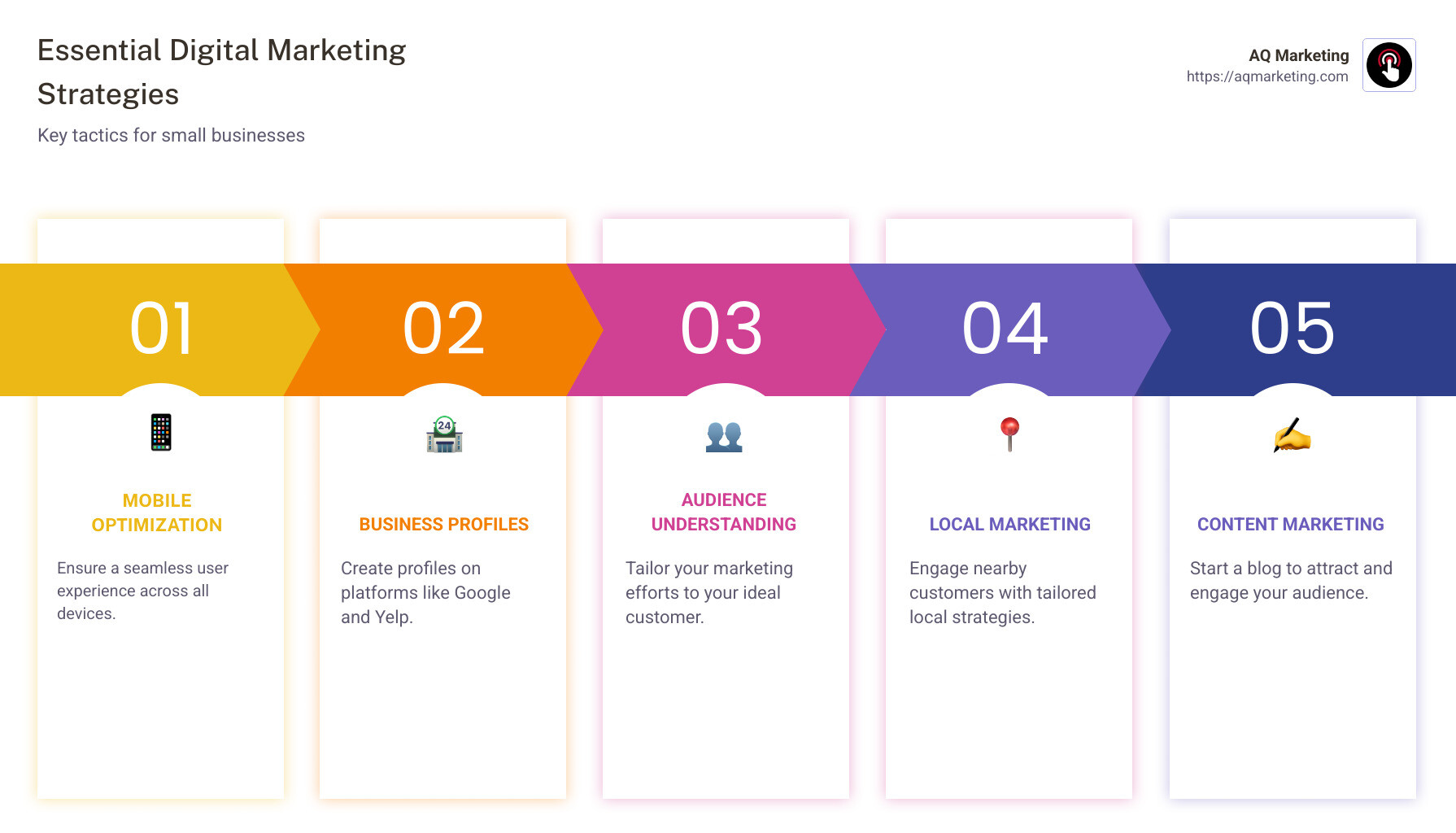
Digital marketing strategies for small business are essential for companies looking to improve their online presence and compete effectively in today’s digital landscape. Small businesses can significantly benefit from leveraging these strategies to connect with their target audience and drive growth. Here are some key tactics that can make a real difference:
- Optimize your website for mobile to ensure a seamless user experience across all devices.
- Create business profiles on platforms like Google and Yelp to improve visibility.
- Understand your target audience to tailor your marketing efforts effectively.
- Use local marketing to attract nearby customers.
- Start a blog to attract and engage your audience through content marketing.
With these strategies, small businesses can compete toe-to-toe with larger companies, building meaningful relationships and establishing themselves as leaders in their fields.
I’m Robert P. Dickey, President and CEO of AQ Marketing, a seasoned expert in digital marketing strategies for small business. With over 20 years in the digital marketing industry, I’ve helped many businesses achieve success and growth by crafting innovative marketing strategies.
Digital marketing strategies for small business word roundup:
– Digital Marketing Services for Small Business
– business marketing service
– how digital marketing helps small business
Understanding Digital Marketing for Small Businesses
Digital marketing strategies for small business play a crucial role in growing your brand and reaching your target audience. Let’s break down four fundamental components: SEO, content marketing, social media, and email marketing.
Search Engine Optimization (SEO)
SEO is the art of making your website more visible on search engines like Google. It’s about getting your site to show up when people search for things related to your business. Think of it as your online visibility booster.
Why is SEO important?
- Organic Traffic: Unlike paid ads, SEO brings in visitors naturally. This means more people find you without you having to pay for each click.
- Keyword Planning: Focus on what your potential customers are searching for. Use specific terms that match their needs. For example, instead of just “phones,” try “affordable smartphones in Boston.”
- Google Recognition: When Google sees your site as relevant and valuable, it ranks you higher. This builds trust with visitors.
Content Marketing
Content marketing is about sharing valuable information that draws people in and keeps them coming back. It’s not just about selling; it’s about helping and engaging.
Why focus on content marketing?
- Authority Building: Regularly posting useful content positions your business as an expert in your field.
- Blog Strategy: Start a blog to share tips, stories, and insights. A consistent blog can drive traffic and improve search rankings.
- Engagement: Content like articles, videos, and infographics can be shared across platforms, reaching more people.
Social Media Marketing
Social media is where your brand can come alive and interact with customers on a personal level. It’s not just about posting; it’s about building relationships.
How to use social media effectively:
- Brand Personification: Show the human side of your business. Engage in conversations and respond to comments.
- Engagement: Use polls, Q&A sessions, or live videos to interact with your audience.
- Social Ads: Even with a small budget, social media ads can reach a wide audience. Platforms like Instagram are particularly effective.
Email Marketing
Email marketing remains a powerful tool, even in the era of social media. It allows direct communication with your audience.
Benefits of email marketing:
- Automation: Set up automated emails to nurture leads and guide them through the buyer’s journey.
- Personalization: Tailor your messages based on customer behavior and preferences.
- Nurturing Flows: Develop email sequences that provide value and encourage action.
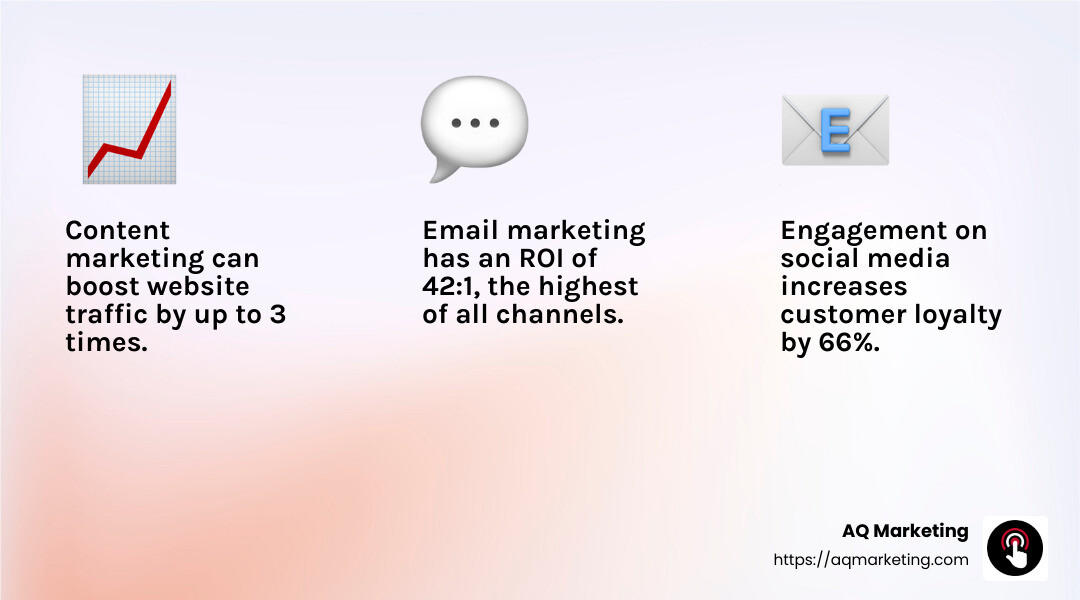
By mastering these digital marketing strategies, small businesses can connect with their audience, build trust, and drive growth. These tactics lay the groundwork for more advanced techniques like influencer marketing and video marketing, which we’ll explore in the next section.
Key Digital Marketing Strategies for Small Businesses
Search Engine Optimization (SEO)
SEO is your ticket to gaining organic traffic. When done right, it brings visitors without the cost of ads. The secret? Keyword planning. Choose terms your customers are likely searching for. Instead of broad terms like “shoes,” try “eco-friendly shoes in Woburn.”
Google recognition is crucial. When Google trusts your site as valuable, it ranks you higher. This builds credibility with potential customers.
Content Marketing
Your content is your voice. It’s how you share knowledge and attract attention.
- Authority Building: Regularly post useful content to become an expert in your field. This builds trust with your audience.
- Blog Strategy: A blog is a great tool for sharing insights and stories. It drives traffic and boosts search rankings. Aim for consistency—regular posts keep your audience engaged.
- Engagement: Share articles, videos, and infographics across platforms to reach a broader audience.
Social Media Marketing
Social media brings your brand to life. It’s your chance to connect with customers personally.
- Brand Personification: Show your human side. Engage in conversations and respond to comments. Make your brand relatable.
- Engagement: Use features like polls or live videos to interact with your audience. Encourage participation.
- Social Ads: Even with a small budget, ads on platforms like Instagram can reach a large audience efficiently.
Local Search Optimization
Local search is vital if you have a physical location. Google My Business is a powerful tool for this.
- User-Generated Content: Encourage customers to leave reviews and post photos. This content improves your local presence.
- Local Presence: Update your business info regularly. Ensure your address, hours, and contact details are accurate.
Email Marketing
Email remains a stronghold in digital marketing. It allows for direct, personalized communication.
- Automation: Use automated emails to nurture leads through the buyer’s journey. This saves time and ensures consistency.
- Nurturing Flows: Develop sequences that provide value and prompt action. Tailor messages based on customer behavior.
By leveraging these digital marketing strategies for small business, you can effectively connect with your audience, build trust, and drive growth. These foundational tactics set the stage for more advanced strategies like influencer marketing and video marketing, which we’ll dive into next.
Advanced Digital Marketing Techniques
Influencer Marketing
Influencer marketing is all about partnerships. It’s like teaming up with the popular kid in school to boost your social standing. Find influencers whose values match your brand and who have a credible audience that aligns with your target market.
Sponsored content is a common approach. This involves influencers sharing posts about your product or service. It should feel natural and genuine, not forced. Think of it as a recommendation from a trusted friend.
A great example is Rahama Wright, founder of Shea Yeleen, who saw a huge awareness lift after being featured on social media by well-known platforms. This kind of exposure can significantly boost your brand’s visibility.
Video Marketing
Video marketing is your chance to tell stories that captivate. Videos are dynamic and engaging, offering a way to connect that text simply can’t match. Whether it’s a product demo, a behind-the-scenes look, or a customer testimonial, storytelling is key.
Choose the right video platforms. YouTube is a giant, but don’t overlook social media channels like Instagram and Facebook. Each platform has its strengths, so tailor your content accordingly.
AI tools can streamline this process. Use AI-powered video editing software for a polished look, and analytics platforms to track performance. Consistency is crucial—regularly posting videos keeps your audience engaged.
Pay-Per-Click (PPC) Advertising
PPC advertising is your ticket to immediate traffic. Unlike organic methods, PPC lets you reach potential customers right away. It’s like turning on a faucet—traffic flows as soon as your campaign goes live.
Google Ads is a popular choice for PPC. It allows for targeted ads, meaning you can pinpoint who sees your ads based on demographics, interests, and even location. This ensures you’re reaching the right people at the right time.
PPC doesn’t have to drain your budget. Start small, monitor results, and adjust to maximize ROI. The goal is to boost your online presence while you build your organic strategies.
These advanced techniques, when used wisely, can lift your digital marketing efforts. They offer new ways to engage and convert your audience, setting the stage for success. Next, we’ll address common questions about digital marketing strategies for small businesses.
Frequently Asked Questions about Digital Marketing Strategies for Small Businesses
What are the 7 C’s of digital marketing?
The 7 C’s of digital marketing provide a framework to craft a successful strategy. Here’s a quick breakdown:
- Customer: Know your audience. Tailor your marketing to meet their needs and preferences.
- Content: Create valuable and relevant content that speaks to your audience’s interests.
- Context: Ensure your content is timely and relevant to the current trends and events.
- Community: Build a community around your brand. Engage with your audience and encourage interaction.
- Convenience: Make it easy for customers to find and interact with your business online.
- Cohesion: Ensure all your marketing efforts are aligned and work together seamlessly.
- Conversion: Guide your audience towards taking action, whether it’s making a purchase or signing up for a newsletter.
How can small businesses start with digital marketing?
Starting with digital marketing can seem daunting, but it doesn’t have to be. Follow these steps:
- Begin with SEO: Focus on optimizing your website to rank higher in search engine results. This is a cost-effective way to increase visibility.
- Establish a Social Media Presence: Create profiles on relevant social media platforms. Engage with your audience by sharing content and responding to comments.
- Use the 7 C’s Approach: Use the 7 C’s to guide your strategy. Prioritize understanding your customer and creating content that resonates with them.
- Experiment and Adapt: Digital marketing is not one-size-fits-all. Test different strategies and adjust based on what works best for your business.
What are low-cost digital marketing strategies for small businesses?
For small businesses with tight budgets, focusing on low-cost strategies can be effective:
- Search Engine Optimization (SEO): As mentioned, SEO is a powerful tool for increasing organic traffic without a hefty price tag. Focus on keyword research and quality content.
- Content Marketing: Use blogs, articles, and social media posts to engage your audience. Share tips, how-tos, and insights related to your industry.
- Social Media Engagement: Regularly post and interact on social media. This builds a community and keeps your brand top-of-mind without significant costs.
- Email Marketing: Use email to nurture leads and maintain customer relationships. Automated campaigns can save time and ensure consistent communication.
These strategies offer a strong foundation for small businesses looking to make an impact without breaking the bank. They emphasize building relationships and delivering value, which are key to long-term success.
Next, we’ll explore how these strategies can be custom to meet the unique needs of your business.
Conclusion
In the changing landscape of digital marketing, small businesses have a vast array of tools at their disposal to achieve long-term success. At AQ Marketing, we specialize in crafting impactful strategies that not only lift your online presence but also drive sustainable growth.
Our approach is rooted in understanding the unique needs of small businesses. We know that each business has its own story, and our goal is to help you tell it effectively. By leveraging digital marketing strategies for small businesses, such as SEO, content marketing, and social media engagement, we can help you connect with your target audience in meaningful ways.
One of the key advantages of partnering with us is our focus on long-term results. We don’t just aim for quick wins; we build strategies that stand the test of time. Our team, based in Woburn, MA, brings years of experience and expertise to the table, ensuring that your marketing efforts are not only current but also future-proof.
We believe in the power of personalized marketing. By tailoring our strategies to your specific industry and audience, we ensure that your brand remains relevant and competitive. Whether you’re a home service provider or an insurance company, our team is dedicated to helping you achieve your business goals.
Ready to take your digital marketing to the next level? Find how AQ Marketing can help you achieve long-term success with our custom strategies.
In conclusion, digital marketing offers small businesses a world of opportunities. With the right strategies and a focus on delivering value, you can improve your online presence and drive meaningful engagement. At AQ Marketing, we’re here to guide you every step of the way. Let’s craft your success story together.