Landscaping Web Design: Top 5 Stunning Sites 2025
Landscaping Web Design plays a pivotal role in today’s digital landscape, acting as the virtual gateway for potential clients. A well-crafted website not only highlights a landscaping company’s artistic flair but also underscores its professionalism and expertise. Here’s why it’s essential:
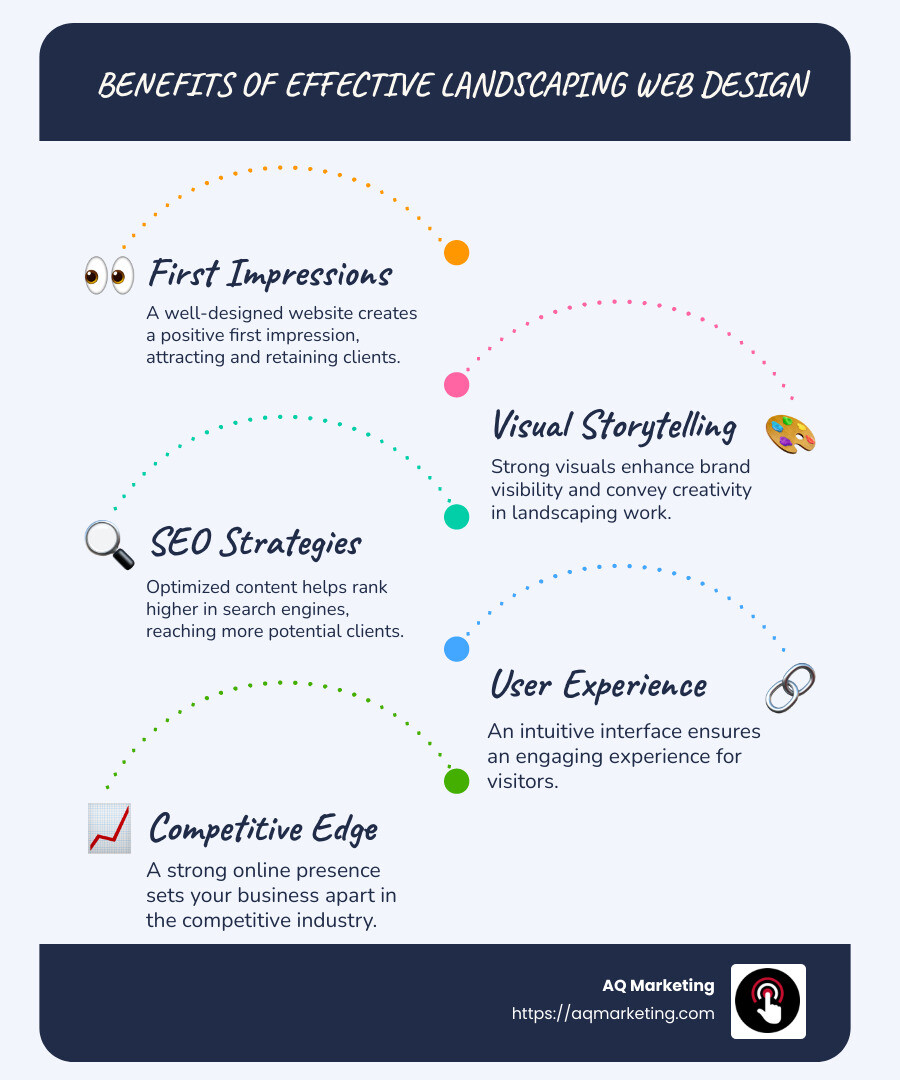
- Captures and holds client interest with a strong first impression
- Enhances brand visibility through compelling visual storytelling
- Achieves higher search engine rankings with strategic SEO
- Delivers a seamless and engaging user experience
In the competitive landscaping industry, a robust online presence through an outstanding website distinguishes a business. It blends striking imagery, clear content, and interactive features to convey the transformative nature of landscaping work. This digital showcase invites potential clients to envision the beauty of exceptional outdoor living spaces.
I’m Robert P. Dickey, President and CEO of AQ Marketing. With over two decades in digital marketing, I’ve supported businesses in thriving online, particularly with Landscaping Web Design projects. Let’s explore how your website can bloom as vibrantly as your landscaping work does offline.
Key Elements of Effective Landscaping Web Design
Creating a standout Landscaping Web Design involves blending several crucial elements. These elements work together to ensure that your website not only looks great but also functions effectively. Here’s what you need to focus on:
User-Friendly Interface
A user-friendly interface is the cornerstone of any successful landscaping website. It ensures visitors can easily find what they’re looking for without frustration. This involves:
- Intuitive Navigation: Make it simple for users to move around your site. Use clear, descriptive menu labels and keep the navigation consistent across all pages.
- Responsive Design: With more users accessing websites via mobile devices, your site must look and function well on all screen sizes. Mobile optimization is crucial—if your site doesn’t perform well on mobile, you risk losing potential customers.
SEO Strategies
Search Engine Optimization (SEO) is essential for ensuring your landscaping website is visible to potential clients. Effective SEO strategies include:
- Keywords and Phrases: Use relevant keywords throughout your site to help search engines understand what your site is about. For example, including terms like “landscaping services” or “garden design” can improve your search rankings.
- Local SEO: Highlight your location to attract nearby clients. This can be done by incorporating location-specific keywords and creating content about local landscaping trends.
- High-Quality Content: Regularly update your site with fresh content, such as blog posts or project showcases. This not only helps with SEO but also keeps visitors engaged.
Visual Storytelling
In the landscaping industry, visuals are often more powerful than words. Effective visual storytelling can set your website apart by:
- Showcasing a Portfolio: Use high-quality images and videos of completed projects to demonstrate your expertise.
- Interactive Elements: Incorporate features like virtual tours or before-and-after sliders to engage visitors and give them a clear picture of what you can achieve.
- Consistent Branding: Use a cohesive color scheme and fonts that reflect your brand’s identity.
By focusing on these key elements, your landscaping website can become a powerful tool for attracting and retaining clients. It will not only reflect the beauty and creativity of your work but also ensure a seamless experience for every visitor.
Top 5 Inspiring Landscaping Websites
When it comes to Landscaping Web Design, certain websites stand out for their creativity, functionality, and ability to convey the essence of a brand. Let’s explore five inspiring examples:
1. Huntergreen
Huntergreen’s website is the epitome of class and simplicity. The use of artistic visuals, such as illustrations and photography, immediately captivates visitors. These visuals effectively convey the brand’s creative spirit. Despite the artistic elements, the site maintains a clean and minimalist layout. The strategic use of white space allows content to breathe, ensuring a clutter-free experience. The color palette, featuring shades of green and muted earth tones, aligns perfectly with the brand’s identity.
2. Sweeney’s Custom Landscaping
Sweeney’s website captures attention with stunning visuals. High-quality images of lush gardens and vibrant flowers instantly connect with the company’s core services. The content is well-organized, offering detailed information on each service. An intuitive navigation structure guides visitors seamlessly. The site also includes a “Blog” and “Review” section, enhancing its value by addressing common landscaping issues and showcasing testimonials. Well-positioned call-to-action buttons encourage engagement, reinforcing Sweeney’s reputation as a trusted partner.
3. Green Options
The Green Options website showcases a neat, structured layout. Dynamic images, vibrant hues, and legible typography improve its appeal. The content is crisply divided into categories, facilitating smooth navigation. The site highlights Green Options’ third-party certifications, emphasizing their commitment to excellence and eco-friendly practices. The “What’s On” segment offers current news and insights, spotlighting the company’s latest endeavors and achievements.
4. Branch Out
Upon landing on Branch Out’s website, visitors are greeted by a bold hero statement: “CREATING COMPELLING OUTDOOR SPACES & OPPORTUNITIES TO GATHER.” This immediately sets the tone for the brand’s offerings. High-quality images of landscaped gardens and outdoor spaces create an instant connection with the company’s expertise. The natural color palette, dominated by greens and browns, complements the landscaping theme, invoking serenity and elegance. The “DESIGN PROCESS” segment provides a clear roadmap from consultation to installation.
5. Mulkern Landscaping & Nursery
Mulkern’s website is fun and engaging, featuring a bold hero section with eye-catching colors. Large, clear images are used on every page, allowing quick visibility of the business’s offerings. The flexible layout adapts to changing needs while maintaining a professional appearance. Mulkern’s site effectively showcases their work, making it easy for potential clients to envision their own outdoor spaces.
These examples demonstrate how effective Landscaping Web Design combines aesthetic appeal with functionality. By leveraging visual storytelling, intuitive navigation, and engaging content, these websites not only attract visitors but also convert them into clients.
Landscaping Web Design Tips
Creating a standout Landscaping Web Design can feel daunting, but with the right approach, it’s entirely achievable. Here are some key tips to guide you through the process:
Design Inspiration
Start by seeking inspiration from the best in the industry. Websites like Tomlinson Bomberger showcase how vibrant visuals and harmonious color schemes can convey a brand’s dedication to outdoor beautification. Their homepage, with its inviting message and testimonials, is a great example of how to build trust and engagement.
Explore various design styles and elements that resonate with your brand’s identity. Consider incorporating elements that echo the tranquility and vibrancy of nature, much like the sensory gardens described in the Coastal Maine Botanical Gardens. These gardens use strategic plant selections and auditory elements to create an immersive experience, a concept you can apply digitally with thoughtful design choices.
Template Selection
Choosing the right template is crucial. It’s the backbone of your website, influencing its layout and functionality. Opt for a flexible template that allows for future growth and customization. Ensure it supports essential features like mobile optimization, as highlighted in the FAQ on Landscaping Website Design. Mobile-friendly designs are vital since most users will access your site on their phones.
When selecting a template, consider one that aligns with your brand’s aesthetic and offers customizable options for colors, fonts, and layouts. This flexibility ensures your website can evolve as your business grows.
Customization
Once you’ve chosen a template, it’s time to make it uniquely yours. Customization is where your brand’s personality shines through. Use high-quality images to create a stunning portfolio that potential clients can explore. As suggested in the research, an interactive gallery or virtual tour can be a compelling feature, allowing visitors to envision their dream landscapes.
Incorporate an intuitive navigation system and strategically placed call-to-action buttons to guide users seamlessly through your site. This approach not only improves user experience but also increases conversion rates.
Customization also involves aligning your website’s content with its design. Ensure your messaging is clear and consistent across all pages. Use engaging headlines, concise text, and bullet points to convey information effectively.
By drawing inspiration from successful designs, selecting the right template, and customizing it to reflect your brand, you can create a Landscaping Web Design that captivates and converts.
Frequently Asked Questions about Landscaping Web Design
Is there an app to design landscaping?
Yes, there are several apps available that make designing landscapes straightforward and fun. One popular choice is the PRO Landscape Companion, which is compatible with both Android and iPad devices. This app allows you to visualize your landscaping ideas with ease. Users can create detailed plans, add plants, and even see how their designs will look over time. It’s a handy tool for both professionals and DIY enthusiasts who want to bring their garden visions to life on a digital platform.
How to make a landscaping website?
Building a landscaping website involves several key steps to ensure it attracts and engages visitors effectively. Here’s a simple guide to get you started:
- Domain Purchase: Your domain name is your online address. Choose something memorable that reflects your brand. Once selected, purchase it through a reliable domain registrar.
- Essential Pages: Your website should include crucial pages like Home, About Us, Services, Portfolio, Blog, and Contact Us. Each page serves a specific purpose and helps visitors steer your site easily.
- SEO: Search Engine Optimization is vital for making your website visible on search engines like Google. Use relevant keywords, meta tags, and descriptions to improve your site’s search ranking. For example, including terms like “landscape design services” can help attract local clients.
- Analytics: Implement analytics tools to track visitor behavior on your site. This data helps you understand which pages are popular and how users interact with your content, allowing for continuous improvement.
What are the 7 steps to landscape design?
Creating a beautiful landscape involves careful planning and execution. Here are the seven essential steps:
- Plan: Begin by sketching out your ideas. Consider the space, your goals, and any existing features you want to keep or remove.
- Remove Lawn: If necessary, remove existing lawn areas to make room for new designs. This step helps prepare the ground for new features.
- Hardscape: Install hardscape elements like patios, walkways, and retaining walls. These structures provide the framework for your landscape.
- Soil: Prepare the soil by testing and amending it as needed. Healthy soil is crucial for plant growth.
- Irrigation: Set up an efficient irrigation system to ensure your plants receive adequate water without waste.
- Plants: Choose plants that suit your climate and design aesthetic. Consider factors like sun exposure, water needs, and maintenance.
- Water: Add water features such as ponds or fountains to improve the tranquility of your space. These elements can create a soothing atmosphere and attract wildlife.
By following these steps, you can transform any outdoor area into a serene and inviting landscape.
Conclusion
As we wrap up our exploration of Landscaping Web Design, it’s clear that creating an effective online presence is crucial for businesses in the landscaping industry. At AQ Marketing, we understand the unique challenges that home service companies face in the digital landscape. Since 2003, we’ve been helping businesses improve their online presence with impactful digital marketing strategies.
Our approach focuses on delivering long-term results. We specialize in website design, SEO, and social media management, ensuring that your business not only attracts visitors but also converts them into loyal customers.
We believe that a well-designed website serves as the cornerstone of your digital marketing efforts. It’s not just an online brochure but a dynamic space where potential clients can experience your brand’s story and expertise. By implementing SEO best practices, we ensure your landscaping services are easily found by those searching for them. This drives organic traffic, making your website a powerful tool for growth.
Moreover, our expertise extends beyond just web design. We offer comprehensive digital marketing services custom to the needs of home service businesses. From creating engaging social media content to managing paid search ads, we cover all aspects of online marketing. This holistic approach ensures that every touchpoint with potential clients is optimized for success.
In conclusion, partnering with AQ Marketing means investing in a digital strategy that works. Our team is committed to helping your business thrive in the competitive landscaping industry. With our support, you can focus on what you do best—creating beautiful outdoor spaces—while we take care of your online presence.
Let us help your business grow and succeed. Contact us today for a free consultation and find how we can make a difference for your landscaping company.