The Granite State Goes Social: Why Your NH Organization Needs a Strategy
Social media NH represents more than just posting updates—it’s about connecting with your local community, building trust, and driving real business results in the Granite State. Whether you’re a Manchester restaurant, a Portsmouth nonprofit, or a Nashua-based service provider, your potential customers are already using social media to research, engage, and make decisions about where to spend their money.
Quick Answer: Key Benefits of Social Media for NH Organizations
Build Local Awareness – Reach neighbors and community members where they already spend time online
Generate Quality Leads – Convert social engagement into phone calls, form fills, and foot traffic
Showcase NH Pride – Highlight your connection to local events, seasons, and community values
Compete Effectively – Level the playing field against larger, out-of-state competitors
Strengthen Reputation – Respond to reviews and feedback in real-time
New Hampshire’s tight-knit communities present a unique opportunity for businesses and nonprofits. From the Lakes Region to the Seacoast, from the North Country to the Massachusetts border, residents value authenticity and local connections. Social media lets you tap into that community spirit at scale.
The challenge? Most organizations approach social media without a clear strategy. They post sporadically, ignore engagement opportunities, and fail to measure what matters. Or worse, they spread themselves too thin across every platform without understanding where their audience actually spends time.
According to research from NH-based agencies, businesses that combine organic content with strategic paid advertising see significantly better results than those relying on posting alone. The data backs this up—organizations using data-driven social media strategies report increases in organic traffic ranging from 360% to 664%, with lead generation growing by as much as 800%.
Social media also plays a critical role in how New Hampshire handles public communication. State agencies like the Department of Safety, Department of Environmental Services, and even local libraries maintain active social presences to inform, educate, and engage with residents. If government entities recognize the value of these platforms, businesses and nonprofits certainly should too.
But social media in New Hampshire comes with its own considerations. The state’s Right to Know Law can impact how public-facing organizations handle social communications. Seasonal businesses need to plan for tourism peaks and winter lulls. And in a state where everyone seems to know everyone, maintaining authenticity isn’t optional—it’s essential.
I’m Robert P. Dickey, President and CEO of AQ Marketing, and over my 20+ years in digital marketing, I’ve helped countless New England businesses build effective social media NH strategies that drive measurable results. My approach combines local market knowledge with proven digital tactics that work specifically for organizations serving Granite State communities.
The good news? You don’t need a massive budget or a dedicated social media team to succeed. What you need is a clear strategy, consistent effort, and an understanding of what makes New Hampshire audiences unique. This guide will walk you through exactly that—from choosing the right platforms to creating content that resonates with the 603 area code.
Understanding the NH Audience
Before you post your first update, you need to understand who you’re talking to. New Hampshire residents aren’t just New Englanders—they’re fiercely proud of their state’s unique character.
Local pride runs deep here. From “Live Free or Die” license plates to fierce debates about the best fall foliage routes, Granite Staters identify strongly with their home. Your social media should reflect and celebrate this pride, not ignore it.
The state’s small size creates a community-focused mindset. People support local businesses, attend town events, and value word-of-mouth recommendations. Social media amplifies these community connections, letting you reach beyond your immediate neighborhood while maintaining that local feel.
Small business support isn’t just talk—it’s action. Events like Small Business Saturday see strong participation across NH towns. Residents actively choose to shop local when they know about their options. Your social media helps them find and remember you.
The four-season lifestyle shapes everything in New Hampshire. Your social media strategy needs to adapt to these rhythms—ski season content differs dramatically from summer lake content or fall foliage posts. Organizations that acknowledge and accept these seasonal shifts connect better with their audience.
Tourism impacts even businesses that don’t consider themselves tourism-focused. Summer visitors to the Lakes Region, fall leaf-peepers, and winter skiers all use social media to find restaurants, shops, and services. Your local business can capture this seasonal revenue with the right social approach.
Key Benefits for NH Businesses and Nonprofits
Let’s talk about what social media actually does for your bottom line in New Hampshire.
Increased brand awareness is the most obvious benefit. When you post consistently, you stay top-of-mind with your community. The next time someone needs your service or product, you’re already familiar—not a stranger.
Direct customer engagement transforms relationships. Instead of one-way advertising, social media lets customers ask questions, share experiences, and interact with your brand. This two-way conversation builds loyalty that traditional marketing can’t match.
Lead generation happens when you give people clear next steps. A well-crafted Facebook post about your spring promotion, combined with an easy way to book or buy, turns scrollers into customers. The research shows NH organizations seeing lead increases of 360% to 800% with strategic social media.
Community building creates customers for life. When you engage with local events, support community causes, and participate in neighborhood conversations, you become more than a business—you become part of the fabric of your town.
Showcasing local expertise positions you as the go-to authority in your field. Share tips, answer common questions, and demonstrate your knowledge. In a small state like NH, being recognized as an expert in your town or region drives significant business.
Choosing Your Platforms: The Social Media NH Landscape
This section addresses the primary platforms used by New Hampshire organizations and how to choose the right ones. It’s tempting to try to be everywhere, but a smart strategy focuses on quality over quantity. We help businesses in Merrimack Valley and Southern New Hampshire make these crucial decisions.
Dominant Platforms in New Hampshire
When it comes to social media NH, certain platforms stand out due to their widespread adoption and utility for both businesses and public entities.
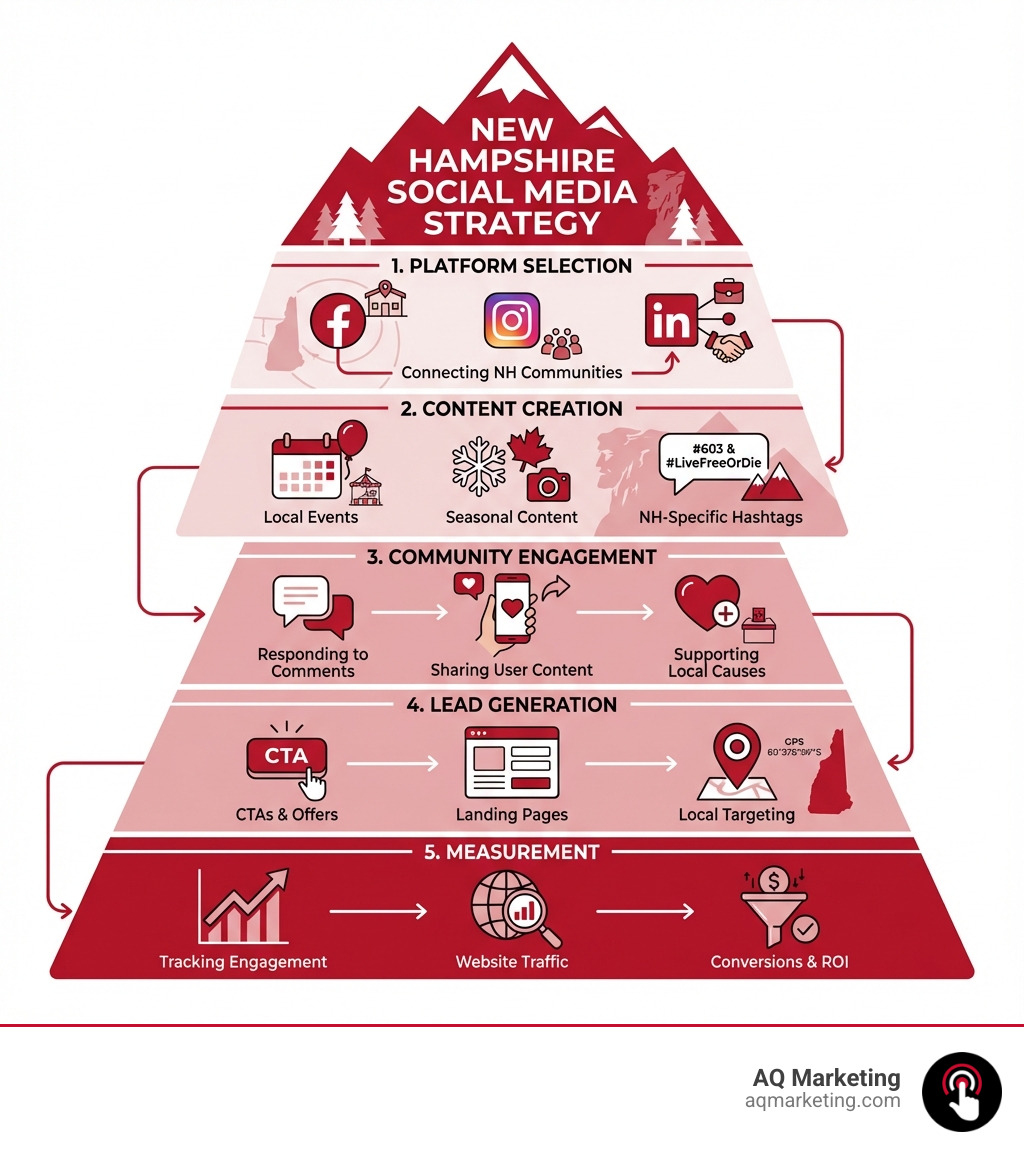
Facebook for community: Facebook remains a powerhouse in New Hampshire, especially for community groups, local businesses, and government agencies. The New Hampshire State Library, for instance, maintains multiple Facebook pages for different initiatives, including NH Audio Books and the Center for the Book. The NH Department of Safety also heavily uses Facebook for public information and interaction. For nonprofits, Facebook is invaluable for promoting events like NH Gives, sharing success stories, and fundraising. Its robust group features also foster strong local communities.
Instagram for visuals: Instagram is the go-to platform for visually driven businesses and organizations. New Hampshire’s scenic beauty, from its mountains to its seacoast, makes it a natural fit for Instagram. The NH Department of Environmental Services and NH Fish and Game both have active Instagram presences, showcasing the state’s natural resources. Businesses in tourism, hospitality, retail, and even local artists like Jeremy Noyes Photography leverage Instagram to display their work and attract followers. Nonprofits use it to share impactful images and video stories.
Twitter/X for news: While its name has changed, Twitter (now X) continues to be a primary source for breaking news, real-time updates, and quick communication in NH. Many state government entities, including Governor Sununu, the State Senate, and the NH Department of Transportation, use Twitter/X for official announcements and immediate information dissemination. For businesses, it’s a powerful tool for customer service, monitoring industry trends, and engaging in relevant conversations.
LinkedIn for B2B: For businesses operating in the B2B space or professional services, LinkedIn is indispensable. The NH Department of Economic Development maintains a strong LinkedIn presence, connecting with businesses and promoting economic growth. It’s the ideal platform for networking, recruiting talent, and establishing thought leadership within your industry.
YouTube for storytelling: YouTube is crucial for organizations that benefit from longer-form video content. State agencies like the NH Department of Safety and the NH Department of Agriculture and Markets use YouTube to share educational videos, public service announcements, and event highlights. Businesses can use it for product demos, tutorials, customer testimonials, and behind-the-scenes glimpses.
For a comprehensive look at how the state itself leverages these platforms, you can review a look at the state’s official accounts. This directory illustrates the broad adoption of social media across various public sector entities in New Hampshire.
How to Select the Right Channels for Your NH Entity
Choosing the right social media channels isn’t about joining every platform; it’s about strategic alignment. Our approach involves a deep dive into your unique situation.
Audience demographics: Where does your ideal customer or supporter spend their time online? If you’re targeting younger demographics, TikTok or Instagram might be more effective. For older, community-focused audiences, Facebook often yields better results. For professionals, LinkedIn is key. Understanding your audience is the first step to successful social media NH marketing.
Business goals: What do you want to achieve? If your goal is brand awareness, platforms with broad reach and visual appeal (like Facebook and Instagram) are good choices. For lead generation, platforms that support direct calls-to-action and advertising (like Facebook and LinkedIn) are often more effective. Nonprofits focused on fundraising might prioritize platforms with integrated donation features.
Industry type: Different industries thrive on different platforms. A restaurant or tourism business will benefit greatly from Instagram’s visual nature, while a financial advisor might find more success building trust on LinkedIn. A home services business could leverage Facebook for local community engagement and reviews.
Resource allocation: Be realistic about your capacity. Managing multiple active social media channels effectively requires time, content creation, and monitoring. It’s better to excel on one or two platforms than to spread yourself thin across many and achieve mediocre results. We help our clients identify where their efforts will have the most impact.
To truly amplify your message and reach the right people, we recommend a custom approach to platform selection. You can learn more about this in our guide on amplify your reach with the right channels.
Crafting Content That Connects with the 603
This section covers best practices for engaging with New Hampshire audiences and leveraging social media for business growth. In a state known for its authenticity, your content needs to reflect that.
Best Practices for Engaging the Social Media NH Audience
New Hampshire audiences appreciate genuine connection. Here’s how we recommend fostering that through your content:
Authenticity: Be real. New Hampshire residents value honesty and transparency. Share your story, your values, and the people behind your business. Avoid overly polished, generic corporate speak. For nonprofits, sharing the human impact of your work resonates deeply with supporters.
Responsiveness: Engage in conversations, don’t just broadcast. Respond to comments, messages, and mentions promptly. This shows you’re listening and value your community’s input. The NH Department of Safety’s “Rules of Engagement” highlight the importance of respectful and relevant interaction, a principle that applies to all organizations.
Highlighting local events: Participate in and promote local happenings. Whether it’s a town fair, a farmers market, or a community fundraiser, tie your content to these events. For example, the NH State Library promotes various local initiatives, demonstrating community involvement. This positions your organization as a true community partner.
User-generated content: Encourage your customers or supporters to share their experiences with your brand. Re-share positive posts (with permission, of course!). This builds social proof and creates a sense of community ownership. For nonprofits, this could be photos from volunteers or testimonials from beneficiaries.
NH-specific hashtags: Use hashtags that resonate with the local identity. #603 (the state’s primary area code), #LiveFreeOrDie, and #VisitNH are popular choices. You can also create hyper-local hashtags for your town or specific events, like #ExeterNH or #NHGives. Hashtags increase visibility and connect you with relevant conversations.
Social media isn’t just for likes; it’s a powerful engine for generating leads and growing your business or mission.
Calls-to-action (CTAs): Every post should have a purpose. Do you want people to visit your website, call for a quote, sign up for a newsletter, or make a donation? Include clear, concise CTAs that guide your audience to the next step. “Learn More,” “Shop Now,” “Get a Free Estimate,” or “Donate Today” are all effective examples.
Landing pages: When driving traffic from social media, send users to dedicated landing pages designed for conversion. These pages should be relevant to the social post and have a single, clear objective. This streamlines the user experience and improves your conversion rates.
Contests and giveaways: These are fantastic for generating excitement and collecting leads. Ask users to like, share, and tag friends to enter, and require an email address for participation. This expands your reach and builds your email list for future marketing efforts. Consider partnering with other local NH businesses for even greater impact.
Social media advertising: Organic reach can only go so far. Paid social media advertising allows for precise targeting, ensuring your message reaches the most relevant audience in specific NH towns or regions. You can target by demographics, interests, behaviors, and even custom audiences. This is where we see those impressive lead generation increases for our clients.
For businesses looking to maximize their reach and lead generation specifically through paid campaigns, our Facebook Marketing Agency services can provide targeted solutions.
The Power of Video in Your NH Strategy
Video content dominates social media feeds, and for good reason—it’s engaging, informative, and highly shareable. For social media NH, video offers a fantastic way to showcase the state’s charm and your business’s personality.
Showcasing scenery: If your business benefits from New Hampshire’s natural beauty, video is your best friend. Short clips of local landmarks, seasonal changes, or outdoor activities can captivate your audience and tie your brand to the beloved Granite State landscape.
Business tours: Give potential customers a virtual walk-through of your establishment. A quick video tour of your restaurant, shop, office, or facility can build familiarity and trust before they even visit.
Customer testimonials: Authentic testimonials are incredibly powerful. Video testimonials allow satisfied customers to share their positive experiences in their own words, adding a layer of credibility that text simply can’t match.
Event recaps: Attended a local fair or hosted an open house? A short video recap with highlights and interviews can extend the reach of the event and show your community involvement.
Behind-the-scenes content: People love to see the human side of a business. Share videos of your team at work, the process behind your products, or a typical day at your office. This builds connection and authenticity.
Video content doesn’t have to be Hollywood-level production. A smartphone and good lighting can go a long way. The key is storytelling.
Measuring Success and Navigating NH-Specific Rules
This section details how to measure campaign effectiveness and addresses unique challenges and regulations in New Hampshire. Without measurement, your social media efforts are just a shot in the dark.
How to Measure Social Media Effectiveness
Effective social media NH strategies aren’t just about posting; they’re about analyzing what works and what doesn’t. We focus on data-driven insights to refine your approach.
Key Performance Indicators (KPIs): Define what success looks like for your specific goals. For brand awareness, KPIs might include reach, impressions, and follower growth. For lead generation, focus on click-through rates, website visits from social, and conversion rates. Nonprofits might track donations, sign-ups, or volunteer registrations.
Engagement rate: This metric measures how actively your audience interacts with your content (likes, comments, shares, saves). A high engagement rate indicates your content is resonating. We look beyond vanity metrics to understand true audience connection.
Website traffic: How much traffic is your social media driving to your website? Use UTM parameters and Google Analytics to track visitors, bounce rates, and time on site from your social channels. This directly links social efforts to your online presence.
Conversion tracking: The ultimate goal for many businesses is conversion. Set up conversion tracking on your website to attribute sales, form submissions, or phone calls directly back to your social media campaigns. This is crucial for demonstrating ROI.
Follower growth: While not the only metric, steady, organic follower growth indicates that your content is attracting new, relevant audiences. We emphasize attracting quality followers who are genuinely interested in your offerings.
Even with a solid strategy, organizations in New Hampshire face specific problems in their social media marketing efforts.
Limited resources: Many small businesses and nonprofits operate with tight budgets and small teams. This can make consistent content creation, active engagement, and detailed analytics feel overwhelming. It’s about working smarter, not harder, and prioritizing where your efforts will have the biggest impact.
Seasonality: New Hampshire’s strong seasonal economy means businesses often have peaks and troughs in activity. Your social media strategy needs to adapt, with different content and advertising campaigns for summer tourism, fall foliage, winter sports, and quieter off-seasons. This requires flexible planning.
Standing out in a small market: In New Hampshire’s close-knit communities, word travels fast, and competition for local attention can be fierce. Authenticity, strong community ties, and a unique brand voice are essential to differentiate yourself from local competitors.
Keeping up with trends: Social media platforms are constantly evolving with new features, algorithms, and content formats. Staying current requires ongoing learning and adaptation, which can be challenging for busy business owners. This is where an experienced digital marketing partner can be invaluable.
New Hampshire Regulations and Guidelines
A unique aspect of managing social media NH for public entities, and a good guideline for all, involves understanding state-specific regulations.
Right to Know Law: For government agencies and potentially some nonprofits that receive public funding, communications on social media accounts are subject to New Hampshire’s Right to Know Law. This means that posts, comments, and messages can be requested as public records. The NH Department of Safety explicitly states this in their “Rules of Engagement,” emphasizing that all communications are potentially public.
Public records: This extends beyond just formal statements. Any interaction, whether by a state employee or the public, may be subject to these requests. This highlights the need for careful consideration of what is posted and how interactions are managed.
Importance of a social media policy: To steer these regulations and maintain brand consistency, every organization should have a clear social media policy. This policy should outline guidelines for content, engagement, moderation, and employee conduct. The NH Department of Natural and Cultural Resources provides a comprehensive “Social Media Rules of Engagement” document that serves as an excellent example of what such a policy entails, covering prohibited content, user responsibilities, and disclaimers.
We advise all our clients, especially those with public-facing roles or operating in regulated industries, to develop and adhere to robust social media policies. You can view an example of state-level Social Media Rules of Engagement to understand the considerations involved.
Frequently Asked Questions about Social Media in NH
What is the best social media platform for a small business in New Hampshire?
The best platform depends on your target audience and goals. However, Facebook is an excellent starting point for most NH businesses due to its large user base and strong community features. Many New Hampshire state agencies and local businesses use Facebook for broad communication and community engagement. Its ability to create local groups and events makes it ideal for connecting with tight-knit communities across the state. Visual-heavy businesses like restaurants, retail shops, or tourism operators should also prioritize Instagram, given New Hampshire’s scenic appeal. Instagram allows you to showcase your products, services, and the beautiful local environment, which resonates well with residents and tourists.
How can my nonprofit organization best use social media in NH?
Nonprofits in New Hampshire can leverage social media to amplify their mission and connect with their community. Platforms like Facebook and Instagram are ideal for telling impactful stories, sharing successes, and showcasing the human impact of your work. You can use these channels to promote fundraising events, such as the statewide NH Gives initiative, where social media is crucial for driving donations. We recommend sharing behind-the-scenes content, featuring volunteers, and providing clear calls-to-action for donations or sign-ups. Engagement is key; respond to comments, thank donors publicly (with consent), and use relevant local hashtags to reach a broader audience. Authenticity and transparency are highly valued by New Hampshire communities.
Is social media advertising effective for reaching customers in specific NH towns?
Yes, social media advertising is highly effective for local targeting and is a cornerstone of successful social media NH strategies. Platforms like Facebook and Instagram offer advanced targeting that allows you to reach users by specific towns, zip codes, or a radius around your business. You can also target based on demographics, interests, and behaviors, ensuring your ads are seen by the most relevant potential customers in communities like Manchester, Nashua, or Portsmouth. This precision makes social media advertising a powerful tool for local businesses to efficiently allocate their marketing budget and attract customers in their neighborhood or service area.
Taking Your NH Social Media to the Next Level
A strong social media NH presence is a vital part of a comprehensive digital marketing strategy for any New Hampshire organization. By understanding the local landscape, creating authentic content, and engaging with the community, you can build trust and drive growth. We’ve seen how a strategic approach transforms online presence into tangible business results for our clients in Merrimack Valley and Southern New Hampshire.
From choosing the right platforms that align with your audience and goals, to crafting compelling content that resonates with the Granite State’s unique character, every step should be intentional. Measuring your efforts through key performance indicators ensures you’re continually optimizing for success, while understanding local regulations keeps you compliant.
For businesses looking to implement a professional, results-driven strategy that handles the complexities of content, engagement, and analytics, partnering with an experienced agency can make all the difference. We pride ourselves on delivering long-term, impactful results custom to your specific needs. Learn more about our Social Media Marketing Services.
The Startup Dilemma: High Stakes and the Power of Smart Marketing
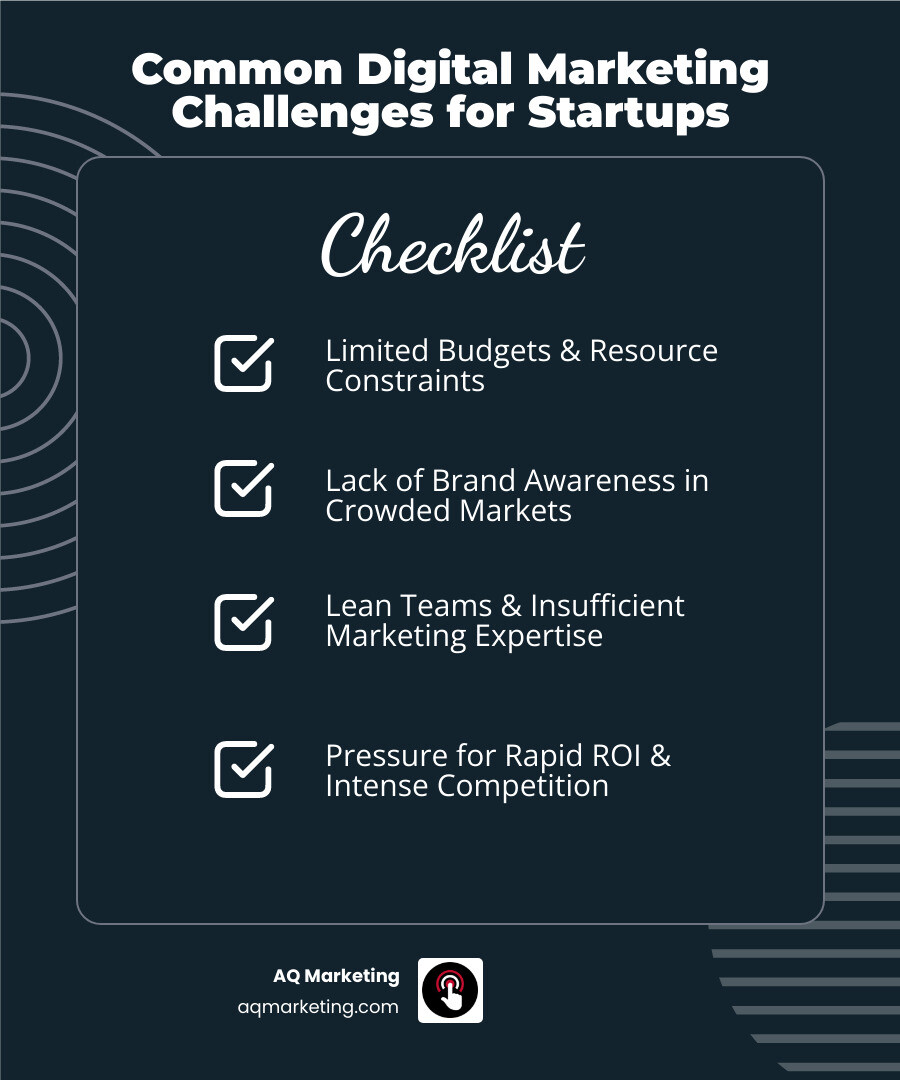
Digital marketing companies for startups are specialized agencies that understand the unique pressures of early-stage businesses: limited budgets, lean teams, and the urgent need to prove ROI fast. With over 300 million new startups emerging globally each year and over 90% failing within three years, smart marketing is often the key differentiator. When choosing a partner, look for:
Startup specialization and an understanding of growth marketing
Data-driven strategies to ensure every dollar delivers results
Scalability to grow with your business
Full-funnel expertise from awareness to retention
Flexible pricing models suited for startups
Startups lack the luxury of time and resources. Growth must be achieved quickly on a tight budget, making every marketing dollar count for brand awareness, customer acquisition, or proving traction to investors.
I’m Robert P. Dickey, President and CEO of AQ Marketing. For over 20 years, I’ve helped startups and small businesses steer digital marketing to build sustainable growth. My experience confirms that the right digital marketing companies for startups are pivotal in turning potential into predictable success.
Startups face unique challenges, from building a brand from scratch to standing out in a saturated market. A great product isn’t enough; you need a strategic approach to reach your audience. Without a solid digital marketing plan, even innovative startups risk invisibility. Specialized digital marketing companies for startups understand this. They replace traditional tactics with rapid experimentation and growth marketing to open up a new business’s true potential.
Why Startups Need Specialized Digital Marketing Partners
Why should a startup, already stretched thin, hire an external digital marketing partner? Unlike established corporations, startups operate where speed and efficiency are paramount. A specialized agency is not a luxury but a necessity for several reasons:
Cost-Effectiveness: An agency provides a full team of experts—specialists in SEO, PPC, content, and social media—at a fraction of the cost of hiring an in-house team. This avoids salaries, benefits, training, and the risk of a bad hire.
Immediate Expertise & Advanced Tools: You gain instant access to seasoned professionals and cutting-edge marketing software that would be prohibitively expensive to acquire independently. An agency team hits the ground running with proven strategies.
Scalability and Flexibility: As your startup’s needs evolve, an agency can scale its services up or down accordingly. This provides flexibility without the overhead of hiring or firing staff.
Strategic Insight & Fresh Perspectives: An external partner brings an unbiased viewpoint, identifying opportunities your internal team might miss. They act as a strategic partner, aligning marketing efforts with your long-term business goals.
Focus on Core Business: Outsourcing marketing allows your team to concentrate on product development, sales, and customer service, which is critical for extending your runway and building a better product.
Building a Foundation for Growth from Day One
From day one, a startup must establish its market presence. A specialized digital marketing partner helps build this foundation for growth:
Brand Awareness: In a world with 300 million new startups annually, you need to be seen. An agency builds powerful brand awareness campaigns to ensure your target audience knows who you are and what you offer.
Customer Acquisition: Digital marketing is the engine for generating leads and sales. Agencies create targeted campaigns across multiple channels to bring qualified customers to your door.
Proving ROI: Investors and stakeholders need to see results. Agencies implement comprehensive tracking and analytics to demonstrate the return on your marketing spend, enabling data-driven decisions.
Long-term Vision: While quick wins are vital, sustainable growth requires a long-term strategy. An agency can act as a fractional CMO, guiding your journey from early traction to market leadership.
We at AQ Marketing understand this foundational work. Our goal is to build a robust online presence that sets the stage for continuous growth. Learn more about our digital marketing services.
Core Services: Building Your Startup’s Digital Foundation
Building a successful startup demands a robust digital presence, constructed through a suite of core digital marketing services that guide customers through their journey.
Website Design and Development
Your website is your 24/7 online storefront and often the first interaction a customer has with your brand. Professional design is non-negotiable.
First Impression & Credibility: A well-designed website conveys professionalism and trustworthiness. A clunky or outdated site can turn customers away instantly.
User Experience (UX): A seamless experience with easy navigation and fast loading times is paramount for engagement and conversions.
Conversion-Focused Design: Every element should guide users toward becoming leads or customers, with clear calls to action and frictionless pathways.
Mobile Responsiveness: Your site must adapt flawlessly to any screen size, a critical factor for both user satisfaction and search engine rankings.
We specialize in creating intuitive, visually appealing websites built to drive conversions. Find out how our custom website development services can give your startup a powerful online presence.
Search Engine Optimization (SEO)
While paid ads offer immediate visibility, Search Engine Optimization (SEO) is the cornerstone of long-term, sustainable growth. It ensures your target audience finds you organically when they search for solutions you provide.
Long-Term Success: Unlike ads, SEO builds enduring visibility, attracting organic traffic month after month.
Qualified Organic Traffic: Users finding you through search are actively looking for your services, making them highly qualified leads.
Visibility and Credibility: High search rankings increase visibility and build trust with potential customers.
Strategic Keyword & Content Creation: Effective SEO starts with identifying the right keywords. We create high-quality content that answers your audience’s questions and establishes your authority.
Technical SEO: We optimize your site’s backend—including speed, mobile-friendliness, and structure—to help search engines crawl and index it efficiently.
For startups needing to generate leads and sales quickly, Pay-Per-Click (PPC) advertising is indispensable. It puts your brand directly in front of a targeted audience at the exact moment they are searching.
Quick Customer Acquisition: PPC campaigns deliver immediate results, driving traffic and conversions to prove market traction rapidly.
Targeted Advertising: Platforms like Google Ads and social media ads allow for granular targeting based on demographics, interests, and behaviors, ensuring your budget is spent efficiently.
Lead Generation: PPC is highly effective for generating qualified leads, from sign-ups to direct inquiries.
ROI Maximization: Through constant monitoring and optimization, we ensure every dollar of your ad spend works as hard as possible.
Our expertise in maximizing online marketing budgets helps your startup acquire customers quickly. Explore how our digital advertising services can deliver immediate impact.
Brand Development and Positioning
In a crowded market, a great product isn’t enough. You need a distinctive brand identity that resonates with your audience and communicates your unique value.
Brand Identity and Logo Design: This includes your name, logo, visual style, and tone of voice. A well-designed logo is often the most recognizable element of your brand, and we believe it should be bold and different.
Value Proposition & Messaging: We help you clearly define the unique problem you solve and craft compelling messaging that communicates your value. Today’s customers buy into companies with solid values and missions.
Differentiation: Our process identifies what makes your startup unique and builds a strategy to highlight those differentiators, ensuring you are a memorable entity.
We help startups build everything from naming and logo to visual identity and messaging. Let us help you develop your brand identity to make a lasting impression.
Social Media and Reputation Management
Social media is a vital space for building communities, engaging with customers, and managing your public perception. For startups, it’s a powerful tool for brand building.
Community Building: Social media allows you to connect directly with your audience on platforms like TikTok, Instagram, Slack, and Discord, turning customers into brand advocates.
Brand Voice and Engagement: These platforms are where your brand’s personality shines. Engaging with your audience through comments and conversations builds loyalty and trust.
Social Proof and Online Reviews: Positive reviews and testimonials are gold for startups. We help you proactively manage your online reputation and generate positive reviews that validate your brand’s quality.
How to Choose the Right Digital Marketing Companies for Your Startup
Choosing the right digital marketing companies for startups is a critical decision. It’s like picking a co-founder for your marketing efforts—you need a partner who understands your vision and has the expertise to execute.
Key Criteria for Evaluating Digital Marketing Companies for Startups
When evaluating agencies, we recommend a rigorous selection process based on these key criteria:
Specialization in Startups: Look for agencies that understand startup dynamics: rapid experimentation, lean budgets, and the urgency to prove ROI.
Data-Driven Approach: The agency must be committed to data and analytics, providing transparent reporting on KPIs and using insights to refine strategies.
Proven Track Record: Ask for case studies or testimonials from startups, not just large enterprises. They should demonstrate how they helped a similar business achieve growth.
Scalability and Flexibility: The agency should offer services and contracts that can scale with your business as it grows or pivots.
Cultural Fit and Collaboration: The agency should feel like an extension of your team, with open communication and a deep understanding of your vision.
Transparent Reporting: You need clear, actionable reports that connect marketing activities directly to business outcomes.
We believe in connecting deeply with our clients to understand their vision and deliver measurable results.
Understanding Pricing Models and Budgeting
For startups, budgeting for marketing is a delicate balance. A general rule is to allocate 10-20% of your total budget to marketing, though this varies by industry and growth stage. When engaging digital marketing companies for startups, you’ll encounter a few common pricing models:
Retainer-Based: A fixed monthly fee for ongoing services.
Pros for Startups: Predictable cost, continuous support, integrated partnership.
Cons for Startups: Higher upfront commitment, less flexibility for drastic changes.
Project-Based: A fixed price for a specific project, like a website redesign.
Pros for Startups: Clear scope and cost, good for one-off needs.
Cons for Startups: Less ongoing strategic support.
Performance-Based: The fee is tied to specific outcomes, like leads or sales.
Pros for Startups: High accountability, costs align with success.
Cons for Startups: Can be complex to track, may lead to a focus on short-term wins over long-term strategy.
Disclaimer: Pricing information is based on general industry data and does not reflect our company’s pricing. Typical industry ranges can vary widely, with high-end costs often being 3x or more than the average.
Higher upfront commitment, less flexibility for drastic changes
Project-Based
Clear scope and cost for specific deliverables, one-off needs
Less ongoing strategic support, potential for fragmented efforts
Performance-Based
High accountability for results, costs align with success
Complex metric definition, potential for short-term focus over strategy
We work with clients to define a budget that maximizes ROI.
Measuring Success: How to Evaluate Agency ROI
Once you’ve partnered with an agency, you must continuously evaluate their effectiveness and ROI using clear Key Performance Indicators (KPIs).
Here are the critical metrics we focus on:
Customer Acquisition Cost (CAC): How much it costs to acquire a new customer.
Lifetime Value (LTV): The total revenue a customer is expected to generate.
Conversion Rates: The percentage of visitors who complete a desired action (e.g., purchase, sign-up).
Traffic Growth: A steady increase in relevant visitors to your website.
Lead Quality: The degree to which leads fit your ideal customer profile.
Data and analytics are non-negotiable in startup marketing. They enable informed decisions and prove the tangible impact of our efforts. And in a landscape where, according to Google, 15% of all daily searches are unique, partner with an agency that adapts to capture new opportunities.
Frequently Asked Questions about Startup Marketing
What is a full-funnel marketing approach and why is it important for startups?
A full-funnel marketing approach is a strategy that targets customers at every stage of their journey: awareness (top), consideration (middle), and conversion (bottom). For startups, this is crucial because it builds a sustainable pipeline of leads and fosters brand loyalty. Instead of focusing only on immediate sales, it nurtures relationships and builds trust over time, leading to more consistent and scalable growth.
We use channels like social media for awareness, SEO for consideration, and PPC for conversion, providing personalized messaging at each stage to build trust. Learn more about our digital marketing services that use this full-funnel strategy.
What are the most important digital marketing trends for startups in 2025?
For startups, staying ahead of digital marketing trends is crucial. Looking towards 2025, several will be particularly impactful for digital marketing companies for startups:
AI-Powered Personalization: AI enables hyper-personalized experiences at scale, from ad targeting to AI webchat solutions, helping deliver the right message at the right time.
Video-First Content: Short-form video (TikTok, Reels), livestreams, and interactive content remain dominant for building brand awareness and telling a dynamic story.
Community-Driven Marketing: Building exclusive online communities (e.g., on Slack or Discord) fosters customer loyalty and turns customers into brand advocates.
Micro-Influencer Partnerships: Partnering with influencers who have smaller, highly engaged niche audiences is a cost-effective way to build trust and reach specific demographics.
Purpose-Driven Branding: Consumers, especially younger generations, care about a brand’s values. Communicating your sustainability practices and social mission will foster stronger connections.
These trends highlight the need for agility and creativity—qualities that specialized agencies provide.
How can an agency help a startup with brand positioning?
Brand positioning is about carving out a unique and compelling space for your startup in the minds of your target audience. An agency is critical in this process:
Market Research and Differentiation: We conduct in-depth research to understand your industry and competitors, identifying opportunities to differentiate your brand. We believe in standing out, not fitting in.
Brand Story and Messaging: An agency helps craft a powerful narrative that communicates your mission and values, setting the tone for all communications.
Consistent Visual Identity: We ensure a cohesive visual identity—from your logo and color palette to typography—that builds recognition and reinforces your brand’s personality.
Targeted Communication Strategy: Once your brand is defined, we develop a strategy to communicate your unique position across the right digital channels.
By helping you articulate what makes your startup unique, an agency ensures your brand is not just visible, but memorable.
Partnering for Growth: Your Next Step
The startup journey is exhilarating but fraught with challenges, especially in achieving digital visibility. Choosing the right digital marketing companies for startups is a strategic investment in your future. It’s about securing a partner who understands your unique struggles—tight budgets, lean teams, the urgent need for growth—and can translate them into scalable, predictable success.
We’ve seen how the right partnership transforms a promising idea into a thriving business, from our home base in Woburn, MA, to across Middlesex County, Essex County, and Southern New Hampshire. The goal is long-term growth built on a solid foundation of smart strategy.
To steer the digital landscape and build a strong foundation for growth, you need an experienced team. Explore how specialized digital marketing for your business can accelerate your journey from startup to industry leader.
The Global Insurance Brokerage Industry: A Market Snapshot
The insurance brokerage industry is a dynamic sector where intermediaries connect clients with the best insurance providers. Here’s a quick overview of this vital market:
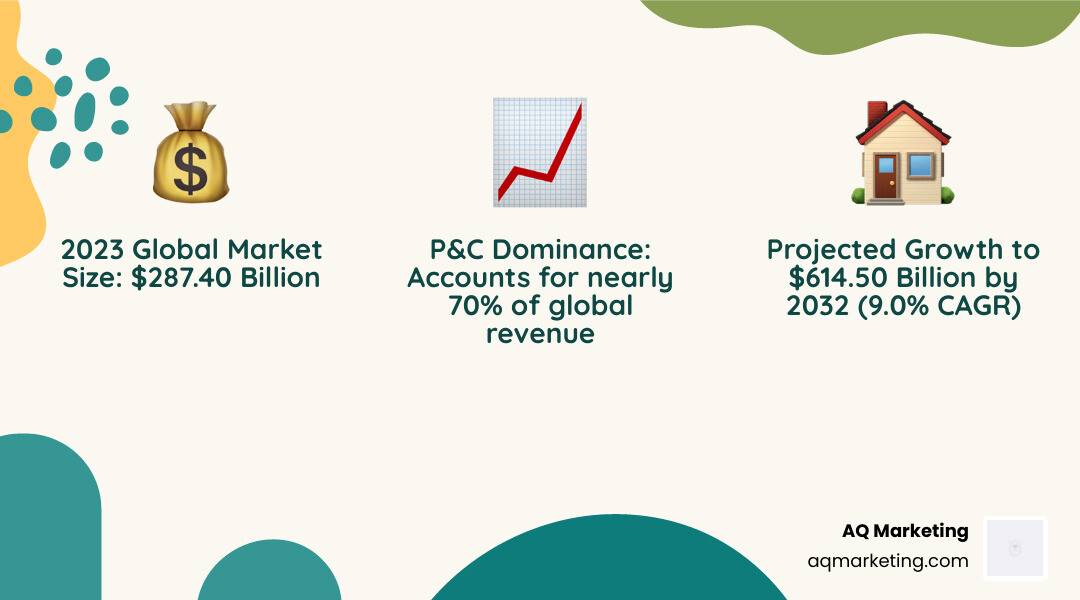
Market Size (2023): Approximately $287.40 billion globally.
Projected Growth (2024-2032): Expected to reach $614.50 billion by 2032, with a Compound Annual Growth Rate (CAGR) of 9.0%.
Dominant Segment: Property & Casualty (P&C) insurance, making up nearly 70% of global revenue in 2023.
Leading Region: North America, with over 30% of the market share in 2023.
The industry is changing rapidly due to advancing technology, evolving client expectations, and new regulations. This guide explores these shifts, what they mean for brokers and clients, and how to steer this complex landscape.
I’m Robert P. Dickey, President and CEO of AQ Marketing. With over two decades of experience, I’ve seen how effective marketing drives success in the insurance brokerage industry, where I’ve helped many clients with their digital journey.
This section provides a comprehensive overview of the current market, detailing its size, growth drivers, segmentation, and regional dynamics, setting the stage for understanding the forces at play.
Market Size and Growth Projections
The numbers paint a compelling picture of the insurance brokerage industry‘s health. Valued at USD 287.40 billion in 2023, the global market is projected to reach USD 614.50 billion by 2032, growing at a strong Compound Annual Growth Rate (CAGR) of 9.0% to 9.3%.
This optimism stems from the industry’s economic resilience. Insurance is a “must-have” expense for individuals and businesses, as the need to manage risk intensifies during economic downturns. This stability makes the sector attractive for investment, ensuring continued growth despite economic shifts like interest rate increases.
Several key factors are fueling this impressive growth:
Complex Risk Landscape: The world faces increasingly complex risks, from climate-related natural disasters to cybersecurity threats. Brokers are essential for helping clients steer these sophisticated exposures and find appropriate coverage.
Increasing Insurance Awareness: As economies expand, more people and organizations recognize insurance as a necessity for financial security and business continuity, not just a luxury.
Population Growth and Urbanization: A growing global population, especially in urban centers, increases demand for insurance. Asia’s urban population alone is expected to grow by 50% by 2050, creating a massive new market.
Digital Change: The digital revolution is improving efficiency and customer experience through mobile apps, AI-powered risk assessments, and other tools that make insurance more accessible and personalized.
Regulatory Complexity: Navigating complex and varied insurance regulations is a major challenge. A broker’s expertise is invaluable for ensuring compliance and finding suitable, legal coverage.
At AQ Marketing, we understand how vital digital presence is for brokers to capitalize on these drivers. Our digital marketing services are designed to help brokers reach new clients and communicate their value effectively in this digital age.
Market Segmentation and Key Trends
The insurance brokerage industry is segmented to meet varied client needs:
By Insurance Type:
Property & Casualty (P&C) Dominance: P&C is the dominant segment, accounting for about 70% of global revenue in 2023. It covers risks to property and liabilities, with growth fueled by complex risk scenarios and urbanization.
Life Insurance Growth: The life insurance segment is ready for significant growth, driven by a greater focus on financial planning. Regions like Asia-Pacific show massive untapped potential.
By Brokerage Model:
Retail Brokerage: Dominating the market in 2023, retail brokers serve clients directly. Their growth is tied to technology that improves the customer experience.
Wholesale Brokerage: Wholesale brokers connect retail brokers with carriers for complex or specialty risks. This segment is growing as businesses focus more on robust risk management.
By End-User:
Individual Clients: This segment led the market in 2023, driven by demand for personalized advice on personal insurance lines.
Corporate Clients: The corporate segment is set for major growth as businesses of all sizes require expert help with complex risks and compliance.
Regional Market Analysis
The insurance brokerage industry varies by region:
North America’s Market Dominance: North America leads the global market, holding over 30% of revenue in 2023. This is due to its advanced technology, high insurance penetration, and complex regulatory framework, which necessitates broker expertise. The US market alone is estimated at $234.8 billion in 2025.
European Market Complexity: Europe is a diverse market with varying levels of maturity. Businesses face complex risks like cyber threats and climate events, driving demand for specialized brokers. Regulatory divergence, especially post-Brexit, also highlights the broker’s value.
Asia-Pacific’s Rapid Growth: This region is ready for the fastest growth (projected CAGR of 7.20% by 2030), driven by economic expansion, rising incomes, and urbanization. Low current insurance penetration rates represent a massive opportunity.
The Age of Consolidation: M&A and Private Equity’s Influence
The insurance brokerage industry is experiencing a wave of consolidation. Mergers, acquisitions (M&A), and private equity investments are reshaping how brokerages compete, operate, and serve clients. This section explores the drivers behind this trend and its impact on brokerages of all sizes.
The Driving Forces Behind M&A
The insurance brokerage industry is seeing unprecedented M&A activity, with nearly 50 deals in Canada in the first half of 2024 alone. This is driven by several factors:
High competition: Smaller brokers join larger platforms for more resources and market access.
Aging founders: Many owners are retiring and see selling as a logical succession plan, especially with attractive valuations.
Economies of scale: Larger firms can negotiate better carrier deals, invest in technology, and attract top talent more easily.
Private Equity (PE) investment: PE firms are heavily investing in the industry due to its stability, strong cash flow, and client retention. More than half of the top 30 US brokers are now backed by financial sponsors, highlighting PE’s significant influence.
When private equity gets involved, it’s about more than just money; it’s about changing how brokerages operate.
PE firms reshape business models by focusing on operational efficiency, standardizing processes, and pursuing aggressive growth, often shifting from a local to a national approach. This drive for efficiency aims to build brokerages that can scale quickly.
The high demand from PE has also resulted in high valuation multiples, making it an attractive time for independent owners to sell.
Additionally, consolidated entities can capitalize on cross-selling opportunities, offering a wider range of products to an expanded client base and increasing revenue per client.
The Impact on Brokerages and Clients
This consolidation trend impacts both brokerages and their clients.
Local and regional brokers are consolidating into larger national or international companies through “roll-up” strategies designed to build scale. This has led to the rise of national platforms, which can benefit clients with more resources, deeper expertise, and competitive pricing due to greater bargaining power.
However, challenges exist. Post-merger integration can be difficult, involving the blending of cultures, systems, and talent. Poor integration can lead to inefficiencies. Another challenge is maintaining an entrepreneurial culture; larger firms must work to preserve the personal, client-centric approach of smaller brokerages while leveraging the benefits of scale.
At AQ Marketing, we understand how important it is to have a strong and consistent brand, especially when companies merge. Our brand identity & logo design services help merged entities present a unified, trustworthy image to their clients.
Navigating the Modern Risk Landscape: Challenges and Opportunities
While new challenges emerge, they bring unprecedented opportunities for growth and innovation. This section examines the problems brokers face and the tools they can use to overcome them.
Top Challenges Facing the Insurance Brokerage Industry Today
The insurance brokerage industry faces several key challenges:
Regulatory Compliance: Constantly changing laws and licensing requirements vary by location, demanding that brokers stay current to protect clients and avoid penalties. For example, some regions require cyber incident reporting within 72 hours.
Cybersecurity Risks: Brokers are prime targets for cyberattacks due to the sensitive client data they handle. Ransomware attacks have surged 1,281% since 2020, making data protection crucial for maintaining client trust.
Market Volatility: Economic uncertainty and interest rate hikes can alter insurance needs and affordability, requiring brokers to be agile and adapt their strategies.
Competition from Direct-to-Consumer Models: Online platforms and embedded insurance (a market projected to redirect USD 70 billion in P&C sales by 2030) offer convenience and lower prices, pushing brokers to emphasize their value through personalized service.
Talent Acquisition and Retention: A global shortage of skilled workers and an aging workforce make it difficult to attract and retain talent, especially those with expertise in new technologies and complex risks.
The Insurtech Revolution: A Broker’s Greatest Opportunity
The Insurtech revolution offers powerful tools to empower brokers, not replace them.
Digital Change: Essential for modern operations, digital platforms, mobile apps, and online portals improve efficiency and client connectivity, making insurance more accessible.
Artificial Intelligence (AI) and Machine Learning: These game-changers help brokers assess risk, personalize recommendations, and automate tasks. For example, McGill & Partners used AI to cut quote times by up to 75%.
Data Analytics for Risk Assessment: Deep data analysis allows for more precise policy recommendations, custom solutions, and early identification of market trends.
Automation of Policy Processing: Automating tasks like policy issuance and claims management frees brokers to focus on expert advice and client relationships.
CRM Tools: Customer Relationship Management systems are crucial for tracking interactions and providing personalized client care.
Insurtech Collaborations: Partnering with Insurtech startups gives brokers access to cutting-edge technologies like blockchain or IoT without in-house development, as seen with Heffernan Insurance Brokers’ collaboration with TrustLayer.
At AQ Marketing, we understand how crucial a modern online presence is. Our website design & development services are built to integrate these powerful tools, giving brokers a strong digital foundation that makes operations smoother and client experiences even better.
The Evolving Value Proposition of an Insurance Broker
In a complex digital world, the value of an insurance broker is shifting from salesperson to trusted advisor. Their key contributions include:
Expert Advice: Brokers provide deep knowledge of policies and conditions to ensure clients get the right coverage, embodying the idea that “Your Best Insurance is an Insurance Broker.”
Personalized Service: Unlike automated channels, brokers offer custom solutions based on a deep understanding of a client’s specific risks and goals.
Strategic Risk Management: Brokers help clients plan ahead by identifying potential problems and offering ongoing advice as risks evolve.
Client Advocacy: During a claim, brokers guide clients through the process and negotiate with insurers to ensure a fair and timely resolution.
Navigating Policy Complexity: Brokers simplify complex insurance terms, ensuring clients understand what they are purchasing.
Access to Specialized Markets: They can find coverage for niche or hard-to-place risks that are unavailable through standard channels.
ESG Factors: Brokers are increasingly helping clients align their insurance with Environmental, Social, and Governance (ESG) goals.
At AQ Marketing, our reputation management services help brokers effectively share this incredible value proposition, building trust and strengthening their standing in the community.
The Future Outlook for the Insurance Brokerage Industry
Looking ahead, the insurance brokerage industry is on an exciting path, shaped by amazing technology, ongoing consolidation, and what clients expect from their trusted advisors. This section will give you a peek into what’s coming and how brokerages can prepare to shine.
Key Predictions for the Next 5-10 Years
Several key trends will define the insurance brokerage industry over the next 5-10 years:
Continued Consolidation: The M&A wave, driven by private equity, will continue, leading to fewer, larger national and international brokerage firms.
Deeper Technology Integration: AI, machine learning, and data analytics will be integrated into all brokerage functions, making services more proactive and predictive.
Hyper-Personalization of Services: Technology will enable custom-made solutions, including flexible pricing and dynamic risk advice based on real-time data.
Greater Focus on Advisory: As technology automates routine tasks, the broker’s role will evolve into that of a strategic advisor, focusing on complex risk management and bespoke solutions.
Rise of Niche Brokers: Demand will grow for brokers with deep expertise in specialized areas like cyber threats or climate change, who can command premium fees for their insights.
ESG Factors Become Crucial: Environmental, Social, and Governance (ESG) considerations will become central to insurance products and investment strategies, with brokers helping clients manage ESG-related risks.
Adapting to Succeed: Strategies for Modern Brokerages
To thrive in this changing world, brokerages must adapt. Here are key strategies for success:
Accept Technology: Invest in digital tools like CRM systems, automation, and AI-powered analytics to streamline operations and improve the client experience.
Focus on Clients: Shift from a sales-focused to a client-centric model. Understand their needs, offer personalized services, and build lasting relationships.
Prioritize Cybersecurity: Protect sensitive client data with robust security measures, regular checks, and cyber insurance for your own firm to build trust.
Stay Informed on Regulations: Keep up with changing rules to ensure compliance and provide informed advice to clients on new requirements.
Develop Niche Expertise: Specializing in specific industries or complex risks can differentiate your brokerage and command higher value.
Cultivate a Strong Online Presence: A great website, search engine optimization, and active social media engagement are critical for building a powerful digital brand and attracting clients.
At AQ Marketing, we’re experts in search engine optimization and helping businesses like yours get found by the right clients. Whether you’re in Boston, MA, Woburn, MA, Middlesex County, MA, Essex County, MA, or Southern New Hampshire, we understand the local landscape and how to make your brokerage truly shine online.
Frequently Asked Questions about the Insurance Brokerage Industry
Curious about the ins and outs of the insurance brokerage industry? You’ve come to the right place! We’ve gathered some of the most common questions and provided clear, straightforward answers to help you understand this vital and evolving sector.
What is the main driver of growth in the insurance brokerage market?
The primary driver for growth in the insurance brokerage industry is the increasing complexity of modern risks, such as cyberattacks and climate-related events. Businesses and individuals need expert guidance to steer this landscape. Additionally, growing insurance awareness, demand for personalized policies, and the accessibility offered by digital tools are fueling the need for knowledgeable brokers.
How is technology changing the role of an insurance broker?
Technology, especially AI and data analytics, is changing the broker’s role from a transactional agent to a strategic risk advisor. It automates administrative tasks, enabling brokers to focus on high-value consultation. These tools also allow for more accurate risk assessment, personalized services, and improved client communication, freeing up brokers to build stronger relationships and provide proactive advice.
Is the insurance brokerage industry still a good business?
Yes, the insurance brokerage industry remains an excellent business. It is highly resilient, as insurance is a “must-have” expense that provides stability even during economic downturns. Strong M&A activity and private equity investment signal high investor confidence and profitability. For brokerages that accept technology, specialize in niche areas, and prioritize client relationships, the opportunities for growth are massive.
Conclusion: Partnering for Growth in a Dynamic Industry
The insurance brokerage industry is undergoing a fascinating change, driven by technology and consolidation. While much is changing, the core value of a broker’s expert, personal advice is more critical than ever. The future is bright for brokerages that adapt, innovate, and demonstrate their value in a digital world.
To thrive in this digital-first environment, a strong online presence is essential. AQ Marketing specializes in building powerful digital footprints for businesses in the Merrimack Valley, across New England, and from our local Woburn, MA office, helping them get noticed and connect with more clients.
Ready to build a future-proof brand and expand your reach?
Plumbing Websites: 5 Inspiring Designs for Powerful Results 2025
The Digital Storefront: Why Plumbing Websites Matter
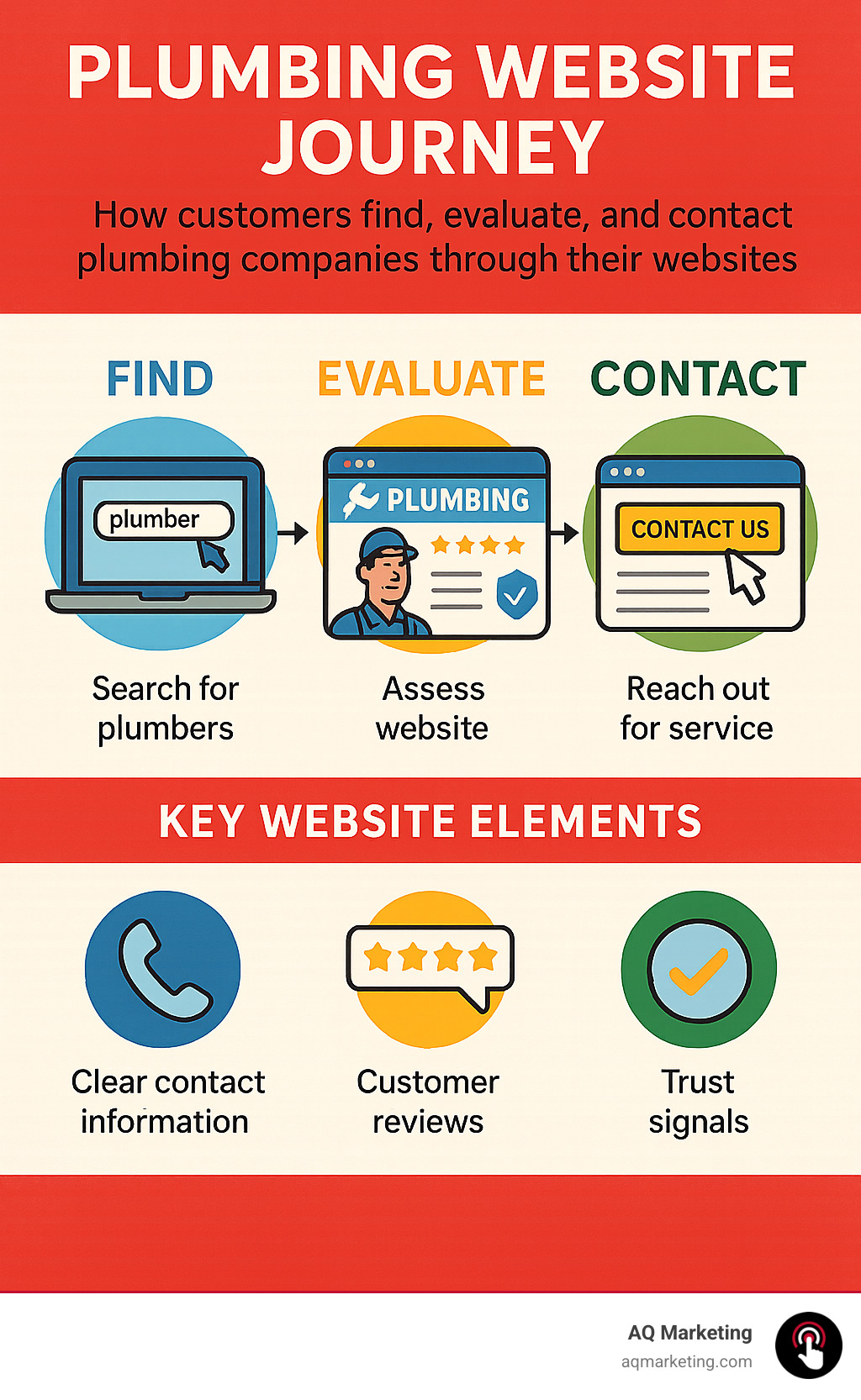
Plumbing websites are essential digital storefronts that help service providers connect with potential customers searching for solutions to their plumbing emergencies and needs. Here’s what makes an effective plumbing website:
Mobile-friendly design (64% of plumbing searches occur on mobile devices)
Clear contact information and prominent CTAs
Service pages that clearly explain offerings
Customer testimonials (91% of consumers trust online reviews)
Fast loading speed (bounce rates increase 32% when load times exceed 3 seconds)
Online booking capabilities for convenient scheduling
A well-designed plumbing website isn’t just about looking professional—it’s about converting visitors into paying customers. The best plumbing websites combine user-friendly navigation with trust-building elements like reviews, certifications, and authentic team photos to create a seamless experience that drives phone calls and form submissions.
I’m Robert P. Dickey, President of AQ Marketing with over 20 years of experience helping service businesses develop high-converting plumbing websites that generate consistent leads and showcase their expertise to local customers.
In today’s digital-first world, your plumbing website is far more than just an online brochure—it’s your 24/7 sales representative. When a homeowner’s pipes burst at midnight or their water heater fails on a Sunday morning, they’re not flipping through the Yellow Pages—they’re grabbing their smartphone.
The numbers tell a compelling story about why quality plumbing websites matter:
64% of searches for plumbing services happen on mobile devices—if your site isn’t mobile-friendly, you’re potentially missing two-thirds of your market
When a website takes more than 3 seconds to load, bounce rates jump by 32%—meaning potential customers simply leave
An impressive 91% of consumers read online reviews before making decisions, making testimonials a critical trust signal on your website
“No one visits a plumbing site for fancy animations—they want clarity, trustworthiness, and contact info,” as one industry expert puts it. This highlights an important truth we’ve seen repeatedly at AQ Marketing: effective plumbing websites don’t need to be flashy, but they absolutely must be functional, trustworthy, and easy to steer.
Local SEO is another crucial factor that can’t be overlooked. When homeowners face plumbing emergencies, they’re frantically searching for “emergency plumber near me” and calling the first credible business they find. Your website needs to be optimized to appear in these critical moments when seconds count and decisions are made quickly.
The plumbing industry presents a unique opportunity—no single company controls more than 1% of the market. This creates tremendous potential for businesses with strong digital presence to capture market share. Since 2003, we’ve observed that plumbing companies throughout Massachusetts that invest in quality websites consistently outperform competitors who rely solely on traditional marketing channels.
A professional plumbing website establishes your brand authority by showcasing your expertise through detailed service pages, building trust through customer testimonials, demonstrating professionalism through quality design, providing 24/7 accessibility to your business information, and generating leads through strategic calls-to-action.
Scientific research on mobile experience confirms that mobile-friendly websites aren’t just nice to have—they’re essential for conversion. When we develop plumbing websites for our clients, mobile optimization is always our top priority, because we know that’s where your customers are looking for you.
Must-Have Features of High-Converting Plumbing Websites
After analyzing hundreds of successful plumbing websites over our 20+ years in business, we’ve finded what truly works to turn visitors into customers. These aren’t just nice-to-have features—they’re essential elements that drive real results for plumbing businesses.
Mobile-Friendliness for Plumbing Websites
When 64% of potential customers are searching for plumbers on their phones, mobile optimization isn’t optional—it’s critical. Picture this: a homeowner with water pooling around their feet isn’t running to their desktop computer. They’re grabbing their phone and looking for help fast.
Effective mobile-friendly plumbing websites feature responsive layouts that automatically adjust to any screen size, making navigation intuitive no matter the device. They include thumb-friendly buttons (at least 44×44 pixels) that are easy to tap even when someone’s in a panic. Menus should simplify on smaller screens, and click-to-call buttons should be instantly accessible for those emergency situations.
Our research shows that more than half of users will abandon a site after a poor mobile experience. At AQ Marketing, we’ve seen this play out countless times—which is why we build every plumbing website with a mobile-first approach, ensuring critical information is accessible within seconds.
CTAs that Convert on Plumbing Websites
The humble call-to-action might seem simple, but it’s the bridge between browsing and booking. The most effective plumbing websites we’ve built include strategically placed CTAs that guide visitors toward becoming customers.
Click-to-call buttons should be unmissable—typically in the top-right corner and throughout the site. Online booking widgets eliminate friction by letting customers schedule service on their own terms. Emergency service buttons deserve special treatment with distinct styling that catches the eye immediately.
One plumbing company we worked with in Middlesex County implemented our CTA strategy and saw their conversion rate skyrocket by 208%. The secret wasn’t flashy design—it was thoughtful placement that followed natural eye movement patterns and reduced decision fatigue for visitors.
Service Page Structure
How you organize your services can make or break your website’s effectiveness. Think of your service pages as your digital service truck—everything should be organized logically and easy to find.
The best plumbing websites clearly separate residential from commercial services and emergency from maintenance work. They use what we call “silo navigation” to group related services, making it easy for visitors to find exactly what they need. Benefit-focused headings address customer pain points directly—not “Water Heater Installation” but “Get Hot Water Back Fast: Professional Water Heater Installation.”
When we redesigned a Southern New Hampshire plumber’s website with this structured approach, their organic traffic increased by 344%. The change wasn’t just cosmetic—it fundamentally improved how customers interacted with their content.
Building Trust with Reviews
In an industry where strangers enter your home to solve intimate problems, trust isn’t just important—it’s everything. With 91% of consumers trusting online reviews as much as personal recommendations, your plumbing website needs to showcase social proof prominently.
We’ve found that displaying a Google Reviews badge in the hero section creates immediate credibility. Video testimonials add a personal touch that written reviews can’t match. Certification logos like BBB accreditation signal professionalism, while review snippets with star ratings on service pages reinforce trust at the decision point.
One of our plumbing clients in Essex County implemented our review integration strategy and saw a 70% improvement in client retention. People weren’t just finding them—they were coming back and referring others.
Bonus Features that Delight
The difference between a good plumbing website and a great one often comes down to those extra touches that make life easier for customers.
Live chat functionality provides immediate answers when people have questions. Online estimate calculators give ballpark figures for common jobs, setting appropriate expectations. An educational blog with maintenance tips positions you as helpful and knowledgeable—even when they’re not ready to hire.
We’ve consistently found that plumbing websites with these bonus features see higher engagement and lower bounce rates. People stay longer, explore more, and ultimately, convert at higher rates.
At AQ Marketing, we’ve been building high-converting plumbing websites since 2003. We’ve seen trends come and go, but these core elements have consistently delivered results for our clients across Massachusetts and beyond.
#1 Example of Excellence in Plumbing Website Design
There’s something instantly reassuring about certain plumbing websites that makes you feel like you’ve found a trusted neighbor rather than just another service provider. The best plumbing websites beautifully weave rich history into a modern, functional digital experience.
When you land on an effective homepage, you’re immediately greeted by heritage-focused branding. The “Trust since [year]” messaging isn’t just a tagline—it’s decades of community service speaking directly to you. This immediate establishment of credibility is something we’ve seen work wonders for service businesses across Massachusetts as well.
What truly sets exceptional plumbing websites apart is their thoughtful approach to design. A sticky call-to-action that follows you as you browse makes it effortlessly simple to reach out when you’re ready. No hunting for contact information—it’s right there when you need it.
Instead of falling into the common trap of using generic stock photos, the best sites showcase actual team members. These authentic images create a genuine connection with visitors, putting real faces to the company name. A clean, retro-inspired design feels like a comfortable handshake—professional without being stuffy.
With numerous Google reviews prominently displayed, smart plumbing businesses leverage social proof that instantly builds trust. As one industry expert notes, “A flashy or stylish color scheme may undermine the professional, trustworthy feel expected of a plumbing site.” The best sites sidestep this pitfall beautifully, embracing their heritage with colors and typography that feel authentic to their story.
The lessons from excellent plumbing websites are clear: don’t hide your years of experience—showcase them proudly as a powerful trust signal. Use real photos of your team to create stronger human connections. And keep your navigation simple so customers can quickly find exactly what they need.
When we build plumbing websites for our clients at AQ Marketing, we often point to these principles as examples of how heritage branding can create a standout digital presence that converts visitors into loyal customers.
#2 Family-Focused Plumbing Website Design
When you visit a family-oriented plumbing company’s plumbing website, you’re not just looking at another service provider – you’re being welcomed into a family. This approach stands out in the industry by creating genuine emotional connections from the moment you land on their page.
What makes these websites truly special is how they balance professionalism with warmth. Front and center, you’ll find authentic family photos featuring multi-generational teams that instantly communicate trust and long-term expertise. There’s something reassuring about seeing the actual people who might be fixing your pipes, rather than anonymous technicians.
Perhaps the most clever touch is placing glowing customer reviews as subtitles – a brilliant strategy that builds immediate confidence. As visitors scroll through these sites, they’re taken on a narrative journey through the company’s history and services, with each section flowing naturally into the next.
“One site places its subtitle as a glowing customer review to build confidence immediately,” notes an industry analyst about this effective approach – and with 91% of consumers more likely to choose a business after reading positive reviews, it’s a strategy that clearly works.
The copy throughout these family-focused sites feels like a friendly conversation rather than a technical manual. They’ve mastered the art of being concise without feeling rushed, explaining their services without drowning visitors in industry jargon. When it’s time to request a quote, the process is refreshingly simple with minimal form fields – because they understand that when you need a plumber, you don’t want to fill out a lengthy application.
What makes family-oriented plumbing websites worth learning from:
Their authentic family elements create emotional connections that corporate stock photos simply can’t match
By placing reviews in unexpected places like subtitles, they maximize the impact of social proof
Their conversational tone transforms potentially intimidating technical services into approachable solutions
For homeowners who feel anxious about inviting strangers into their homes for plumbing work, this family-oriented approach provides exactly the reassurance they’re looking for. It’s a powerful reminder that in local service businesses, the human element still matters tremendously.
#3 Modern Minimalist Plumbing Website Design
When it comes to standing out in the crowded plumbing market, a minimalist approach shows us that sometimes less truly is more. The best modern plumbing websites take a refreshingly contemporary approach that catches the eye and makes finding help a breeze.
What makes these websites so special isn’t complicated – it’s their commitment to simplicity with personality. Bright, vibrant color palettes immediately distinguish them from the sea of traditional plumbing websites using predictable blues and greens. The moment you land on their pages, bold color schemes create instant brand recognition that sticks in your memory.
These companies understand that when your toilet is overflowing at midnight, you don’t want to scroll through paragraphs of text – you need help fast. That’s why their minimalist design puts everything you need right at your fingertips. Their tagline-focused messaging immediately communicates what they do and why you should choose them, without making you hunt for information.
“Simpler single-navigation design can be more effective despite less visual polish,” one industry expert points out, and these modern sites embody this philosophy perfectly. Their straightforward approach prioritizes function over flash, making it incredibly easy for panicked homeowners to connect with them quickly.
I particularly love how they’ve thoughtfully designed their above-the-fold section. All essential contact information and booking options are visible without scrolling – a crucial feature when dealing with plumbing emergencies where every second counts. Their quick booking systems reflect an understanding that in the plumbing business, convenience isn’t just nice to have – it’s essential.
The consistent application of brand colors throughout these sites creates a cohesive experience that feels professional and intentional. This attention to detail subconsciously builds trust with visitors, showing that if they care this much about their website, they’ll likely bring the same level of care to your plumbing needs.
What we can learn from the modern minimalist approach to plumbing websites:
1. A distinctive color palette creates stronger brand recognition and memorability
2. Minimalist design isn’t lazy – it’s strategic, focusing visitor attention on what matters
3. Consistency in visual elements builds a more professional impression
These websites prove that you don’t need complicated designs or excessive content to create an effective online presence – sometimes bold simplicity is exactly what helps you stand out and convert visitors into customers.
#4 Multi-Location Plumbing Website Design
If you’ve ever wondered how a multi-location plumbing company can maintain its identity while still feeling local, the best examples offer a masterclass through their exceptional plumbing websites. They’ve struck the perfect balance between brand consistency and local relevance—something many operations with multiple locations struggle to achieve.
What really sets these websites apart is their sophisticated location-finding systems. The moment you land on their homepage, you’re prompted to enter your ZIP code to connect with your nearest location. This seemingly simple feature actually solves a major pain point for visitors who just want to know: “Can these plumbers help me where I live?”
These websites shine in several other key areas as well. The live chat support available across all pages gives visitors immediate access to help—critical when you’re dealing with plumbing emergencies that can’t wait. Their service categories are logically organized, making it easy for both homeowners and business owners to quickly find exactly what they need without wading through irrelevant information.
“Sites using hero videos to demonstrate services in action follow the ‘show, don’t tell’ principle,” as one industry observer pointed out. These successful multi-location websites accept this approach wholeheartedly, using engaging video content that shows their professionals at work. This visual demonstration of expertise builds confidence in potential customers far more effectively than paragraphs of text ever could.
What I find particularly impressive about these plumbing websites is how they’ve managed to leverage their brand recognition while still highlighting the local ownership of each location. When you visit a local page, you’ll see familiar branding that inspires trust, alongside photos and stories of the local team who’ll actually show up at your door.
There’s plenty we can learn from this approach:
For multi-location businesses, prioritize location-based functionality to quickly connect visitors with relevant services
Create dedicated sections for different customer types (like residential and commercial divisions) to streamline the user experience
Use video content strategically to demonstrate your expertise in action rather than just claiming it
These websites prove that with thoughtful design, even large operations with multiple locations can create digital experiences that feel both trustworthy and personally relevant to local customers in need of plumbing services.
#5 Premium Design Plumbing Website
Some plumbing companies stand out from the crowd with a bold approach that proves plumbing websites don’t have to follow conventional design rules to be effective.
What truly makes premium plumbing websites shine is their thoughtful attention to customer needs. Their carousel review displays automatically rotate recent testimonials, giving visitors a fresh look at real customer experiences without requiring extra clicks. This smart approach to showcasing social proof appears just three scrolls down the page – much earlier than the five scrolls typical of competitor sites.
“Websites that place review badges and widgets above the fold see higher visitor trust,” our research confirms, and these premium sites clearly understand this principle.
Their digital coupon systems are another customer-friendly feature that lets visitors instantly redeem special offers online – no printing or awkward phone mentions required. When you pair this with prominently displayed financing options, you can see how they’re actively removing barriers that might prevent someone from picking up the phone.
The comprehensive FAQ hubs deserve special mention too. By addressing common questions upfront, they’re building trust while reducing those repetitive phone inquiries that can tie up office staff. It’s a win-win approach that benefits both the company and their customers.
Perhaps most distinctive is their premium dark theme design. While most plumbing websites opt for light backgrounds with blue accents, these premium sites accept sophisticated dark palettes that create a memorable visual identity. The high-contrast elements make important information pop while giving the entire site a premium feel that distinguishes them in a crowded market.
What can other plumbers learn from this premium approach? First, strategic placement of reviews earlier in the browsing experience builds trust faster. Second, offering clear financing information removes a major purchase hesitation. And finally, don’t be afraid to accept a distinctive visual theme that aligns with your brand name and personality – standing out can be a powerful advantage in a sea of similar-looking competitors.
SEO & Visibility Tips for Plumbing Websites
Your stunning plumbing website might look amazing, but if no one can find it, it’s like a beautiful storefront hidden down an alley. Let’s talk about how to get your website in front of the people who need your services most.
Page Speed Optimization
Did you know websites on Google’s first page load in just 1.65 seconds on average? When your site takes longer than 3 seconds to load, bounce rates jump by a whopping 32%. For plumbing websites, this is particularly crucial – when someone’s basement is flooding, they’re not sticking around for a slow-loading page!
We’ve helped plumbers throughout the Merrimack Valley cut their load times by up to 40% using some straightforward techniques. Compressing those high-quality team photos (without making them look terrible), implementing browser caching, and choosing reliable hosting can make a dramatic difference. Think of it as unclogging your website’s digital pipes!
Core Web Vitals Optimization
Google’s Core Web Vitals have become the digital equivalent of a building inspection for your website. For plumbing websites to pass with flying colors, focus on these three measurements:
Largest Contentful Paint (LCP) should be under 2.5 seconds – this is how quickly your main content appears. First Input Delay (FID) needs to stay under 100 milliseconds – how responsive your site is when someone clicks something. And Cumulative Layout Shift (CLS) should remain below 0.1 – preventing those annoying layout jumps that happen when someone’s about to click “Call Now.”
“Install a cache plugin like WP Rocket to improve load times,” is advice we frequently share with our plumbing clients. It’s like installing a pressure-assist system for your website – simple but remarkably effective.
Keyword Clusters & Content Strategy
Smart plumbing websites organize their content around natural groupings of related services. Instead of trying to rank for “plumbing” (good luck with that!), focus on specific keyword clusters that match how your customers actually search.
Create a main service page (pillar content) for categories like emergency services, residential repairs, or water heater replacement. Then build supporting pages that link back to these main pages. This creates what Google sees as topical authority – showing you’re a genuine expert in specific plumbing niches.
Google Business Profile Optimization
For local plumbers, your Google Business Profile might be more important than your website itself for generating leads. It’s like having a digital storefront right on Main Street.
Make sure your business name, address, and phone number are consistent everywhere online. Add high-quality photos of your actual team (in clean uniforms!) and completed work. Respond thoughtfully to every review – yes, even the negative ones. And be precise about your service areas – this helps Google match you with the right local customers.
I’ve seen plumbing companies in Woburn double their call volume simply by optimizing this free Google tool properly.
Schema Markup Implementation
Schema markup is like giving Google a detailed blueprint of your plumbing website instead of making them figure it out themselves. It’s technical behind-the-scenes code that helps search engines understand exactly what your business offers.
For plumbers, the most valuable schema types include LocalBusiness schema with your service areas clearly defined, Review schema to highlight those glowing testimonials, and Service schema that details your specific plumbing offerings. As one of our SEO specialists likes to say, “Implementing schema markup is like giving Google a roadmap to your business information.”
On-Page SEO
Local SEO
Title tags with services & location
Google Business Profile optimization
Meta descriptions with CTAs
Local citation building
Header tags (H1, H2, H3)
Review management
Internal linking structure
Local backlinks
Image optimization with alt text
Location pages for service areas
Mobile responsiveness
Local schema markup
Page speed optimization
Local content creation
Since 2003, our team at AQ Marketing has helped plumbing companies throughout Boston, Woburn, and surrounding areas climb to first-page rankings for competitive terms. We don’t just implement these strategies – we measure the results and refine our approach until those phones start ringing.
Frequently Asked Questions about Plumbing Websites
How important is mobile responsiveness for plumbers?
Mobile responsiveness isn’t just important for plumbing websites – it’s absolutely essential. Think about it: when someone’s dealing with a burst pipe at 2 AM, they’re probably frantically searching on their smartphone, not sitting at a desktop computer. With 64% of plumbing searches happening on mobile devices, you simply can’t afford to have a website that looks terrible on phones.
I’ve seen countless plumbing companies lose potential customers because their websites were practically unusable on mobile. Tiny buttons that can’t be tapped, text that requires zooming, and forms that won’t submit properly – these frustrations send customers straight to your competitors.
“If you haven’t tried navigating your plumbing website on a smartphone, do so now and see how you experience the site through a user’s eyes,” one of our industry experts often tells clients. It’s eye-opening to view your site the way most of your customers do!
At AQ Marketing, we carefully test all plumber websites across multiple devices and screen sizes – from the latest iPhones to budget Android devices – ensuring that no matter how customers find you, they’ll have a seamless experience.
What CTA placement works best?
When it comes to calls-to-action on plumbing websites, strategic placement makes all the difference between a visitor who calls and one who leaves.
The top-right corner of your navigation is prime real estate for your phone number – this follows natural eye movement patterns and gives visitors immediate access to contacting you. Your hero section (that big area at the top of your homepage) should always include a bold, unmistakable button or form that captures attention.
For emergency services, we’ve found that floating buttons that stay visible as users scroll perform exceptionally well. These persistent CTAs serve as a constant reminder that help is just a click away. As one client told us, “That floating emergency button generated three new jobs in the first week alone!”
Plumbing websites should also place contextual CTAs at the end of service descriptions – this catches visitors right at the moment they’ve finished reading about how you can solve their specific problem. And don’t forget your footer! It provides one final conversion opportunity for those who’ve scrolled through your entire page.
For emergency services specifically, we recommend using distinctive styling – think bright red buttons with urgent language – to make these options instantly recognizable to stressed homeowners dealing with plumbing disasters.
Which reviews should be showcased?
When it comes to selecting reviews for your plumbing website, quality and relevance trump quantity every time. The most impactful testimonials share specific details about your services and the positive outcomes customers experienced.
Recent reviews (ideally from the past 3-6 months) carry much more weight than older ones. After all, potential customers want to know about your current service quality, not how you performed three years ago. Reviews that include photos of completed work are particularly powerful – they provide visual proof of your craftsmanship that words alone can’t convey.
I’ve noticed that reviews mentioning exceptional emergency response or going above and beyond tend to resonate most with potential customers. One Massachusetts plumber we work with features a review from a grateful customer whose basement flooded on Christmas Eve – that single testimonial has been mentioned by numerous new customers as a reason they called.
“Automating review requests immediately after job completion” is a practice we’ve implemented for our plumbing clients with tremendous success. This simple follow-up system ensures a steady stream of fresh testimonials without requiring constant manual effort.
While Google Reviews typically carry the most credibility with consumers, including testimonials from multiple platforms (Yelp, Facebook, BBB) helps strengthen your overall reputation. This diversity shows that your excellent service is recognized across the entire digital landscape, not just on a single platform.
Conclusion
Creating an effective plumbing website goes far beyond just picking nice colors and images—it’s about building a hardworking digital asset that brings in real leads while you’re busy unclogging drains and fixing water heaters. Think of your website as your most dedicated employee, one who never sleeps, never takes vacation, and is always ready to make a great first impression.
Since 2003, we’ve worked alongside plumbers throughout Boston, Woburn, Middlesex County, and beyond, watching how the right website transforms businesses from “just another plumbing company” into the first call homeowners make when pipes burst at 2 AM.
The most successful plumbing websites we’ve built share some important DNA. They load in a snap (especially on mobile), they instantly build trust through authentic reviews and real team photos, and they make contacting you ridiculously simple. No hoops to jump through, no hunting for your phone number—just clear paths to get help fast when water is pooling on the kitchen floor.
I’ve seen the change in our clients’ businesses when we get these elements right. One plumber in Merrimack Valley told me, “It’s like night and day—before, we were invisible online. Now we’re booking jobs while we sleep.” That’s the power of a well-crafted plumbing website.
What makes us particularly proud at AQ Marketing is seeing the tangible results our clients enjoy:
Their organic traffic climbs steadily month after month. Their phones ring more often with qualified leads (not tire-kickers). Their Google rankings improve for searches that actually matter. And most importantly, their investment in a quality website delivers measurable returns that grow their business.
Whether you’re starting from scratch or your current site needs some serious TLC, focusing on the fundamentals we’ve covered will help you build a digital presence that works as hard as you do. In the plumbing industry, where emergency searches often drive business, having a website that’s both findable and functional isn’t just nice—it’s necessary.
Ready to transform your online presence? Our team at AQ Marketing has been helping plumbers throughout Massachusetts and Southern New Hampshire build websites that don’t just sit there looking pretty—they actively generate business day and night.
Landscaping Company Websites: 13 Best Stunning Designs 2025
Essential Elements of Landscaping Company Websites
When it comes to creating landscaping company websites that truly work, it’s not just about having a pretty online space. Your website needs to be your hardest-working employee—one that never sleeps and consistently turns visitors into paying customers.
I’ve seen how the right elements can transform a landscaping website from an online brochure into a lead-generating powerhouse. The landscaping industry has been blooming with 8.2% annual growth in recent years, making your digital presence more crucial than ever.
Key Features Every Landscaping Website Needs:
When potential customers search for landscaping services, they’re looking for visual proof of your expertise, clear information about what you offer, and an easy way to reach you. Your website should answer these questions immediately while showcasing what makes your company special.
A standout landscaping website needs high-quality project galleries with compelling before/after comparisons that tell the story of your transformative work. Position clear service descriptions above the fold so visitors instantly understand what you offer without scrolling. Make your contact information prominent with easily accessible quote request forms—because when someone’s ready to reach out, the last thing you want is to make them hunt for how to do it.
Your site must feature mobile-responsive design that works beautifully across all devices, as more than half of your potential clients will likely find you on their phones. Include local SEO elements like service area information that helps you get found by nearby customers searching for landscaping help. Showcase genuine client testimonials and trust indicators that reassure visitors they’re making the right choice with your company.
Finally, maintain professional branding with consistent colors and fonts that reflect your company’s personality and create a memorable impression. This isn’t just about looking nice—it’s about building recognition and trust with every interaction.
I’m Robert P. Dickey, President of AQ Marketing, and I’ve spent over 20 years helping landscaping companies create websites that don’t just look beautiful—they deliver results. Having developed countless landscaping company websites that successfully convert visitors into customers, I’ve seen which elements make the difference between a site that simply exists and one that actively grows your business.
When you visit the Full Circle Lawn Care website, you’ll immediately notice what makes exceptional landscaping company websites stand out from the crowd. Their site feels alive and dynamic, thanks to the subtle parallax scrolling effect that creates a sense of depth and dimension as you browse.
Their thoughtfully designed custom logo anchors the top of each page, instantly establishing brand recognition and professional credibility. What really catches your eye, though, is how they’ve organized their project gallery – it’s not just a collection of photos, but a visual story of changes they’ve created for real clients.
I love how they’ve arranged their service blocks in an intuitive grid pattern on the homepage. Each block features a crisp, high-quality image paired with just enough descriptive text to explain what they do without overwhelming you. This smart design helps potential clients quickly find exactly what they’re looking for without hunting through pages of content.
As one satisfied client put it: “Their website made it easy for me to see exactly what services they offered and the quality of their work. The before-and-after photos convinced me they were the right choice for my project.”
The modern design isn’t just pretty – it’s practical too. Whether you’re viewing on your desktop while researching options or quickly pulling up their contact info on your phone while in your yard, the responsive design ensures a seamless experience. This mobile-friendly approach is crucial since most people now search for landscaping services on their smartphones first.
Full Circle’s website perfectly balances visual appeal with functional design – exactly what today’s landscaping company websites need to convert visitors into clients.
Green Clips
Green Clips shows us how a landscaping company website can create love at first sight with visitors. Their homepage features a stunning, vibrant hero photo that immediately draws you in with its lush, perfectly maintained greenery. This visual first impression speaks volumes about their landscaping expertise before you read a single word.
What I particularly love about their site is the prominent location information right in the header. When homeowners are searching for landscaping services, one of their first questions is “Do they even serve my area?” Green Clips answers this crucial question instantly, saving everyone time and creating a better user experience.
Their navigation deserves special mention too. Instead of the cryptic menus you often find on service websites, Green Clips uses clear, straightforward labels that guide visitors exactly where they need to go. It’s refreshing to see a site that prioritizes user experience over flashy design elements.
The above-the-fold call-to-action button is another smart touch. It stands out visually against the background and creates an immediate opportunity for visitors to reach out. This strategic placement recognizes that many visitors have already decided they want a quote by the time they visit a landscaping website.
Throughout the site, the professional photography isn’t just there to look pretty. Each image has been carefully selected to showcase different aspects of their services—from immaculate lawn maintenance to sophisticated hardscaping projects. These visuals tell a complete story about their capabilities and attention to detail.
As one Green Clips customer put it: “The website’s clear organization and beautiful photos of their previous work gave me confidence in their abilities before I even called them.”
This thoughtful combination of practical information and visual storytelling makes Green Clips’ website not just a digital brochure, but a powerful conversion tool that builds trust and generates leads around the clock.
Cross States Landscape
When you visit Cross States Landscape’s website, the first thing you’ll notice is their masterful brand consistency. Every element—from their distinctive color palette to the typography and image style—works in harmony to create a seamless experience that reinforces their professional identity.
Their menu structure is a breath of fresh air in landscaping company websites. Instead of overwhelming visitors with too many choices, they’ve thoughtfully organized their services into logical categories that make navigation intuitive. Whether you’re looking for residential landscaping, commercial services, or seasonal maintenance, you can find exactly what you need without frustration.
What really sets Cross States apart is their smart approach to local search. Throughout their content, they’ve naturally woven in location-specific keywords that help them rank better when potential clients search for landscaping services in their area. This attention to local SEO detail gives them an edge in connecting with customers across multiple counties.
I love that they’ve placed their phone number prominently in the header, complete with area code—a small but meaningful touch that reinforces their local presence. This strategic placement means potential clients can reach out with just one tap or click from any page on the site, reducing friction in the contact process.
Their testimonial carousel is particularly effective, featuring genuine feedback from real customers that highlights different aspects of their service excellence. By placing these testimonials on high-traffic pages, they provide social proof exactly when visitors are most likely considering whether to make contact.
“We chose Cross States after seeing their impressive portfolio and reading the glowing reviews,” shared one homeowner. “Their website made it easy to understand exactly what services they offered in our area, and the prominently displayed phone number made reaching out simple.”
The combination of these elements creates a website that not only looks professional but actually works as an effective lead generation tool—proving that thoughtful design choices can significantly impact a landscaping business’s bottom line.
The Landscape Advisor
The Landscape Advisor stands out among landscaping company websites by taking a refreshingly educational approach. Rather than just showcasing services, they position themselves as genuine experts in the field—teaching visitors about landscaping principles while subtly demonstrating why they’re the right team for the job.
When you land on their homepage, you’re greeted with beautifully designed quick-link cards that make navigation a breeze. Each card features a captivating image paired with a brief description that clearly communicates the value of that service. This thoughtful organization helps visitors quickly find exactly what they’re looking for without frustration or confusion.
What I particularly love about their site is the robust educational blog. From seasonal planting guides to water conservation techniques, their content answers real questions that homeowners have about their outdoor spaces. This approach serves two brilliant purposes—it provides genuine value to visitors while simultaneously boosting their search rankings through relevant, keyword-rich content that Google loves.
“I originally visited their site looking for information about drought-resistant plants,” shares one satisfied client, “but their expertise convinced me to hire them for my entire yard renovation.”
Their lead capture form appears at just the right moments throughout the site—when visitors are most engaged and likely to take action. The form itself is refreshingly simple, asking only for essential information to maximize completion rates. This strategic placement and thoughtful design reflect a deep understanding of visitor psychology.
The Landscape Advisor demonstrates how education builds trust, and trust leads to conversions. For landscapers looking to establish themselves as authorities in their field, this website offers valuable inspiration. Learn more about creating websites that educate and convert by checking out our comprehensive guide on Landscaping Web Design.
Legacy Lawn & Landscape
When you visit Legacy Lawn & Landscape’s website, you’ll immediately notice something special – the site feels alive. They’ve mastered the art of subtle movement with micro-animations that activate as you scroll down the page, drawing your eye naturally to important information without feeling flashy or distracting.
These thoughtful scroll effects do more than just look pretty – they guide you through a story about the company. As you move down the page, elements fade in at just the right moment, creating a sense of findy that keeps you engaged. It’s like taking a pleasant stroll through a well-designed garden where each turn reveals something new.
The visuals throughout the site are carefully chosen to showcase the breadth of Legacy’s capabilities. Rather than generic stock photos, you’ll see actual projects they’ve completed – from neat garden designs to impressive hardscaping work and carefully maintained lawns. Each image serves a purpose: showing potential clients exactly what Legacy can do for their property.
What impressed me most about their site is how clearly they distinguish between their services. Instead of lumping everything together under “landscaping,” Legacy takes the time to explain what makes their approach to each service unique. This helps visitors quickly find the specific solution they need and understand why Legacy might be a better choice than competitors.
As one happy customer put it: “The website’s interactive elements kept me engaged longer than I expected. I ended up exploring their entire portfolio and was impressed by the range of projects they’ve completed.”
And don’t worry about viewing their site on your phone or tablet – all these engaging elements adapt perfectly to whatever device you’re using. The landscaping company websites that truly stand out, like Legacy’s, ensure that the experience feels complete whether you’re browsing from your desk or on the go.
Homes Landscaping
Homes Landscaping exemplifies how a bold color scheme can reinforce brand identity and create visual impact. Their black and green palette creates a sophisticated, premium feel while naturally connecting to their landscaping services.
The site makes excellent use of full-width imagery that spans the entire screen, creating immersive visual experiences that showcase their landscaping projects in impressive detail. These expansive visuals allow potential clients to envision similar changes for their own properties.
Typography plays a crucial role in their design approach, with bold, distinctive headings that create clear visual hierarchy and guide visitors through the content. The font choices reflect their brand personality—professional yet approachable.
Their portfolio grid is particularly well-executed, organizing completed projects into categories that allow visitors to filter based on their specific interests, whether they’re looking for inspiration for a backyard renovation, front yard landscaping, or commercial projects.
“The website’s bold design immediately communicated quality and professionalism,” remarked one Homes Landscaping customer. “The portfolio was easy to steer, and I could quickly find examples similar to what I wanted for my own property.”
For more inspiration on creating visually striking landscaping company websites with compelling advertising elements, explore our guide on Creative Landscaping Ads.
Country Green Landscaping
Country Green Landscaping shows us how local focus can transform landscaping company websites into powerful lead-generation tools. The moment you land on their site, you notice their local phone number with area code prominently displayed in the header – a small but mighty signal that says “we’re right here in your community.”
What really makes their site stand out is their interactive service-area map – a brilliant feature that lets potential clients instantly see if Country Green serves their neighborhood. No more wondering “do they even work in my area?” – visitors can quickly confirm coverage before making that call. This simple addition saves time for both the business and potential customers who might otherwise reach out only to find they’re outside the service zone.
Trust signals are thoughtfully placed above the fold where visitors can’t miss them. Their industry certifications, years-in-business counter, and that warm “locally owned and operated” badge all work together to create instant credibility. These elements speak directly to customers who value supporting local businesses and want experienced professionals caring for their property.
The contact-sticky bar deserves a special mention – this clever feature follows you as you browse, ensuring that reaching out is always just one click away. Whether you prefer calling, texting, or filling out a form, the persistent bar accommodates your preference without interrupting your exploration of their services and portfolio.
As one satisfied Country Green client put it: “I loved being able to immediately see that they served my county. The map feature helped me confirm they worked in my specific neighborhood before I even picked up the phone.”
This local-first approach creates an immediate connection with visitors, making them feel understood and valued before they’ve even made contact – exactly what effective landscaping company websites should accomplish.
Speedy Landscaping
True to their name, Speedy Landscaping’s website delivers exactly what busy homeowners want—a fast, frictionless experience that gets straight to the point. Their approach to landscaping company websites is refreshingly simple, with a clean, minimalist layout that strips away all the unnecessary clutter.
Instead of overwhelming visitors with multiple competing options, Speedy features a single, crystal-clear “Request Quote” button that follows you throughout the site. This focused approach eliminates the confusion of having too many choices and creates a straightforward path to conversion. One click, and you’re on your way to getting your landscaping project started—no hunting around required.
What’s particularly thoughtful about their site is the dedicated client portal link positioned in the top navigation. This small but mighty feature gives existing customers quick access to their account information, service schedules, and payment options. It’s a smart retention strategy that makes ongoing client relationships smoother and more convenient.
Behind the scenes, Speedy’s technical excellence really shines. Their obsession with page-speed optimization means visitors aren’t left waiting—pages load almost instantly, keeping impatient visitors from hitting the back button. In an industry where potential clients might be browsing during a quick lunch break or while waiting for their coffee, those saved seconds make a real difference.
Their mobile-first development approach deserves special mention. Rather than designing for desktop and then adapting to mobile (as many landscaping company websites still do), Speedy built their site with smartphone users as the priority. The result is a seamless experience on smaller screens, where the majority of their potential customers first encounter them.
As one satisfied Speedy customer put it: “I was impressed by how quickly I could request a quote. The site loaded instantly on my phone, and I had submitted my information within seconds. They called me back within the hour.”
This combination of streamlined design, strategic functionality, and technical performance creates a website experience that perfectly reflects the company’s brand promise—efficient service without unnecessary complications.
NV Landscapes LLC
NV Landscapes LLC has truly mastered the art of visual storytelling on their landscaping company website. Instead of just showing static images, they’ve acceptd video case studies that take visitors on a complete journey from the initial consultation all the way through to the finished landscape.
These videos aren’t just beautiful—they’re purposeful. Each one tells a story about change, showing how NV Landscapes solved specific challenges for homeowners. Potential clients can actually see the team in action, building confidence in their expertise before they ever make a phone call.
“The video showing the complete change of a property similar to mine was what convinced me to call,” shared one delighted NV Landscapes client. “Seeing the process from start to finish gave me confidence in their abilities.”
Perhaps the most engaging elements on their site are the before-after reels with interactive sliding comparison tools. These clever features let visitors take control, sliding back and forth to reveal dramatic landscape changes. It’s one thing to claim you can transform a property—it’s another to let visitors find the proof themselves with a simple swipe.
What makes their approach particularly effective is how they weave client testimonials directly alongside these visual elements. This creates complete narratives about each project—you see the work, hear from the satisfied homeowner, and understand the journey from problem to solution.
Behind the scenes, NV Landscapes doesn’t just create content and hope for the best. They closely track engagement metrics to understand which videos and images connect most deeply with visitors. This data-driven approach means their website continuously improves, with content becoming more effective over time.
A thoughtful touch that shows their customer-first mentality is the autoplay toggle for videos. Rather than forcing videos to play automatically (which can be jarring), they give visitors control over their browsing experience. This small consideration reflects their broader philosophy of respecting client preferences in both their digital presence and their landscaping services.
Avanti Landscaping
When you visit Avanti Landscaping’s website, their About page immediately stands out from the crowd. Rather than offering the usual generic company blurb, they tell a genuine story that draws you in – sharing their humble beginnings, growth milestones, and the passion that drives their team every day.
What I particularly love about their site is the interactive process timeline that walks potential clients through their customer journey. From the initial phone call to the final walkthrough and maintenance plan, Avanti eliminates the guesswork that often makes hiring a landscaper feel risky. You’ll know exactly what to expect at each stage.
The team photos scattered throughout the site create an instant personal connection. Instead of wondering who might show up at your home, you’ll meet Miguel the design specialist, Sarah the plant expert, and Carlos the hardscape artisan – real people with real faces and stories. Each team member’s bio highlights their expertise and years in the field, creating immediate credibility.
Core values take center stage on Avanti’s landscaping company website, appearing not as a forgotten footnote but as guiding principles woven throughout their content. Their commitment to environmental sustainability, attention to detail, and customer-first approach helps visitors understand that this isn’t just a business – it’s a team with genuine passion for creating beautiful outdoor spaces.
Trust signals appear strategically throughout the site, with badges that matter to homeowners: insurance verification, industry certifications from organizations like the National Association of Landscape Professionals, and local business awards. These credentials offer silent reassurance that your property is in capable, qualified hands.
As one client shared: “The detailed information about their team and process made me feel comfortable inviting them to work on my property. I appreciated knowing exactly what to expect before I even contacted them.”
By giving visitors an authentic look behind the curtain, Avanti transforms from an anonymous service provider into a team of real people you’d feel comfortable welcoming onto your property – a powerful difference in an industry built on trust.
Mango Paving & Landscaping
Mango Paving & Landscaping shows us how thoughtful organization can transform a website from merely functional to genuinely delightful. Their clean, structured content blocks create a visual rhythm that guides visitors naturally through their services and projects without the confusion that often plagues contractor websites.
The color palette they’ve chosen does more than just look pretty – it works hard to create emotional connections with potential clients. Those rich earthy browns and greens mirror the natural elements they work with daily, while strategic pops of brighter colors draw your eye exactly where they want it to go – straight to those “Get a Quote” buttons that drive conversions.
Have you ever noticed how some landscaping company websites use amateur photography that actually undermines their credibility? Mango avoids this pitfall entirely. Their imagery showcases completed projects with professional-quality photos that highlight textures, colors, and the fine details that demonstrate craftsmanship. You can almost feel the smooth stone pavers and see how the light plays across their garden designs.
What truly sets Mango apart is their commitment to brand consistency. From the moment you land on their homepage to the final contact form, every visual element feels like part of a cohesive family. The fonts, button styles, spacing, and visual treatments all speak the same design language – creating an impression of a company that pays attention to details.
“Their website reflects exactly what I wanted in a landscaper – organization, attention to detail, and a clear vision,” shared one homeowner who hired Mango after visiting their site. “The website experience made me confident they’d bring that same thoughtfulness to my backyard renovation.”
This cohesive approach doesn’t just make for a pretty website – it creates a powerful psychological effect. When potential clients see this level of care and intention in your digital presence, they naturally assume your landscaping work will reflect the same standards of excellence.
Grassroots Yardscaping
Ever wonder what your landscaping project looks like from above? Grassroots Yardscaping has revolutionized how we view landscaping work by featuring stunning aerial photography throughout their landscaping company website. These breathtaking bird’s-eye views offer something ground-level shots simply can’t—a comprehensive look at how all elements of a landscape design work together harmoniously.
When you visit their site, you immediately notice how these overhead perspectives showcase the true scope of their projects. A winding garden path that might seem simple from the ground reveals its artistic curves when viewed from above. Water features, garden beds, and hardscaping elements all display their thoughtful integration within the broader property design.
“I was blown away by seeing their projects from above,” shares one Grassroots client. “It gave me a completely different appreciation for how they consider the entire property as one cohesive canvas rather than just focusing on individual elements.”
This aerial approach has become Grassroots’ signature aesthetic—their visual calling card in a competitive industry. When potential clients browse through their portfolio, these distinctive overhead shots instantly set the company apart from competitors stuck with traditional photography angles.
Trust signals appear strategically throughout the site, with social proof badges highlighting their impressive ratings on Google, Yelp, and Houzz positioned right next to calls-to-action. This smart placement provides that extra reassurance right when visitors are considering making contact.
Understanding that visitors arrive at different stages in their decision-making journey, Grassroots offers dual CTA buttons that acknowledge these differences. The prominent “Get a Quote” button serves those ready to move forward, while the “View Our Portfolio” option caters to those still researching and gathering inspiration. This thoughtful approach respects where each visitor stands in their landscaping journey.
The combination of breathtaking aerial perspectives, strategically placed trust signals, and user-journey-aware navigation makes Grassroots Yardscaping’s website as thoughtfully designed as their landscaping projects—comprehensive, distinctive, and focused on the complete customer experience.
Why Great Landscaping Company Websites Convert Visitors
The most effective landscaping company websites don’t just look good—they’re strategically designed to convert visitors into leads and customers. Understanding the psychology behind these conversions can help you create a more effective online presence for your landscaping business.
When a potential customer visits your landscaping website, they’re often just a few clicks away from becoming a lead. What makes them take that crucial step? It starts with mobile responsiveness. This isn’t just a technical box to check—it’s a conversion essential. Most of your potential customers are browsing on their phones while sitting in their backyards, imagining what could be. If they have to pinch and zoom or struggle with tiny buttons, they’ll likely move on to a competitor. Sites with thumb-friendly navigation, easily readable text, and quick-loading images see significantly lower bounce rates and higher conversion rates.
The clarity of your services makes an immediate impact on conversion. When I talk with landscaping clients, they often mention how frustrating it is to visit a website and struggle to figure out exactly what the company offers. Does this company do hardscaping? Do they service my neighborhood? The most successful landscaping websites answer these questions immediately, eliminating uncertainty and helping visitors quickly determine if you’re the right fit for their needs.
“I was ready to hire someone immediately,” one homeowner told me, “but I needed to know they could handle both the irrigation system and the decorative stonework. The company that made it clear they did both got my business that day.”
The power of testimonials cannot be overstated. Our research shows that authentic client feedback with specific project details can increase conversion rates by up to 34%. Video testimonials are particularly effective—there’s something compelling about seeing a real homeowner proudly showing off their transformed outdoor space while explaining their experience with your company.
Pricing transparency is evolving in the landscaping industry. While you might hesitate to publish specific prices (understandably, since projects vary widely), providing general pricing guidelines or package information tends to attract more qualified leads. This approach builds trust and helps filter out prospects whose budgets don’t align with your services, saving everyone time.
With the landscaping industry having grown 8.2% annually in recent years according to industry statistics from Jobber, the opportunities are tremendous—but so is the competition. A conversion-focused website is no longer optional; it’s essential for capturing your share of this expanding market.
Core Feature #1: Portfolio Power on Landscaping Company Websites
A high-quality portfolio section is perhaps the most critical conversion element on landscaping company websites. For service-based businesses like landscaping companies, visual proof of work quality directly influences hiring decisions.
Nothing sells your landscaping services like powerful before-and-after galleries. These comparative displays create an immediate “wow” factor, showing potential clients the change you can achieve. I’ve watched countless visitors interact with these galleries during user testing—they spend significantly more time on these pages than any other section of the site. The most effective galleries include multiple angles of each project and brief descriptions of the challenges and solutions: “This sloped backyard presented drainage issues that we solved with a terraced design and native plantings.”
Don’t overlook the importance of alt text optimization for your portfolio images. This serves two crucial purposes: it improves accessibility for visitors using screen readers and improves SEO by helping search engines understand your content. Descriptive alt text that includes relevant keywords (e.g., “modern backyard patio design in Woburn, MA”) improves both user experience and search visibility.
The technical aspects of your portfolio matter too. Lightbox functionality creates a seamless browsing experience by allowing visitors to view enlarged images without navigating away from the page. This keeps potential clients engaged with your content rather than frustrating them with disruptive navigation. One landscaping company we worked with saw their average time on site increase by over 40% after implementing this simple feature.
If you want to stay ahead of competitors, consider adding video walkthroughs to your portfolio. These dynamic presentations allow visitors to experience completed projects from multiple perspectives, creating a more immersive showcase of your work. Even simple smartphone videos of completed projects can significantly impact conversion rates when professionally edited.
As one landscaping client shared with me, “The before-and-after gallery was what sold me. Being able to see properties similar to mine and how they were transformed gave me confidence that the company could deliver the results I wanted.”
Core Feature #2: Local SEO Must-Haves for Landscaping Company Websites
Local search optimization is particularly critical for landscaping company websites since services are geographically restricted. Implementing the right local SEO elements can dramatically improve visibility to potential clients in your service area.
Your Google Business Profile forms the foundation of local SEO success. Think of it as your digital storefront on Google—it needs to be complete, accurate, and engaging. This profile should include current business information, detailed service area boundaries, appropriate business categories, and regular posts showcasing recent projects. Companies with fully optimized Google profiles appear more prominently in local search results and on Google Maps, often capturing attention before a potential customer even visits their website.
Consistency matters tremendously in local SEO. Your NAP (Name, Address, Phone) information must be identical across your website and all online directories. Even small variations—like using “Street” in one place and “St.” in another—can confuse search engines and potentially harm your local rankings. Make sure your contact information appears in the same format everywhere it’s listed online.
For landscaping companies serving multiple towns or counties, dedicated location pages are powerful tools. Creating unique, content-rich pages for each service area (e.g., “Landscaping Services in Woburn, MA”) allows you to rank for location-specific searches while providing relevant information to potential clients in those areas. These pages should include local landmarks, neighborhood-specific information, and examples of your work in that community.
Behind the scenes, schema markup provides search engines with structured data about your business. While invisible to users, this code helps search engines understand your service areas, business hours, contact information, and services offered—potentially improving your visibility in local search results and creating more informative search listings.
According to recent WordPress statistics from Growth Scribe, over 40% of all websites now use this platform, making it a popular choice for landscaping businesses looking for flexibility and ease of use. WordPress offers numerous plugins specifically designed to improve local SEO, making it easier to implement these technical elements without extensive coding knowledge.
Pricing & Build Options at a Glance
Let’s talk dollars and sense when it comes to landscaping company websites. Whether you’re just starting out or looking to upgrade your current site, understanding your options helps you make the best choice for your business and budget.
Creating an effective online presence doesn’t have to break the bank, but it’s important to know what you’re getting at different price points. Think of it like landscaping itself—you can DIY with basic tools, hire a skilled individual, or bring in a full team with specialized equipment.
Website Option
Cost Range
Pros
Cons
DIY Website Builder
$60-300/year
Low initial cost, easy to update, no technical skills needed
Your website is more than a one-time expense. Just like maintaining a beautiful landscape, your website needs ongoing care to stay healthy and effective. Beyond the initial build costs, you’ll want to budget for:
Domain registration costs between $10-100 annually, depending on how catchy or specific your domain name is. Think of this as your digital street address—worth paying a bit more for the right one.
Hosting fees typically run $50-300 per year. This is like the land your website sits on, and better hosting means faster loading times and better security—critical factors for keeping potential customers on your site.
Regular maintenance ($50-200 monthly) covers security updates, content changes, and technical upkeep. Skipping this is like neglecting a garden—things start to look overgrown and unhealthy pretty quickly.
Content updates vary in cost depending on how often you add new project photos, service offerings, or blog posts. Fresh content helps keep your site relevant to both visitors and search engines.
Many landscaping businesses find their website needs evolve with their growth. As one landscaper shared with me: “We started with a basic template site that cost about $300 for the first year. After we grew, we invested $7,500 in a custom site with a professional portfolio section and quote request system. The ROI was clear within the first six months through increased leads and conversions.”
For newcomers to the industry, starting with a DIY website builder offers an affordable entry point with reasonable functionality. As your business blooms, investing in a custom-developed site through a freelancer or agency provides greater differentiation and better conversion optimization—much like upgrading from basic lawn maintenance to comprehensive landscape design services.
The key is matching your website investment to your current business needs while allowing room to grow. A thoughtfully planned website becomes a powerful tool that pays for itself through new customer acquisition and a strengthened professional image.
Frequently Asked Questions about Landscaping Company Websites
Should I list my prices online?
The pricing question is one that almost every landscaping business owner wrestles with when building their website. There’s no one-size-fits-all answer, but there are some thoughtful approaches to consider.
Listing prices can actually help pre-qualify your leads. When potential clients see your starting prices or packages, those who contact you are more likely to have budgets that align with your services. This saves everyone time and reduces those awkward conversations about cost expectations.
The challenge, of course, is that landscaping work is highly customized. That beautiful retaining wall might cost $3,000 for one property and $8,000 for another depending on access, materials, and site conditions.
Many successful landscaping company websites take a middle-ground approach. Instead of exact prices, they’ll include helpful starting points like “Landscape design services from $1,500” or “Typical patio installations range from $5,000-15,000 depending on size and materials.”
I’ve seen landscaping companies have great success with package pricing for recurring services. Something like “Spring Clean-Up Package: $350 for properties up to 1/4 acre” gives clear guidance while acknowledging that custom work requires personalized quotes.
One landscaping client told me, “Adding starting prices actually improved our lead quality dramatically. We get fewer tire-kickers and more serious inquiries from people ready to move forward.”
For complex projects, consider creating a simple budgeting guide that helps potential clients understand what factors influence cost. This educational approach builds trust while setting realistic expectations.
How important is mobile responsiveness for landscaping company websites?
In today’s world? Absolutely essential. The data is clear – most of your potential customers are looking at your website on their phones, often while standing in their own yards dreaming about improvements.
Think about it – someone sees a neighbor’s beautiful landscaping, immediately pulls out their phone to search for local landscapers, and lands on your site. If they have to pinch and zoom just to read your contact information, they’re likely to bounce right back to the search results.
Google knows this too. Their Core Web Vitals (which directly impact your search rankings) heavily emphasize mobile performance. Landscaping company websites with poor mobile experiences get pushed down in search results, making them harder to find in the first place.
Good mobile optimization goes beyond a site that technically “works” on phones. It means:
Touch-friendly buttons big enough for real human fingers
Forms that don’t make people squint and struggle to complete
Images that load quickly without burning through data plans
Text that’s readable without the pinch-and-zoom dance
A prominent click-to-call button for immediate contact
The numbers speak for themselves. Landscaping websites with excellent mobile experiences typically see bounce rates about 30% lower than those with poor mobile optimization. That translates directly to more leads and customers.
As one landscaper in Middlesex County told me, “After we fixed our mobile site, form submissions jumped by 64%. We had no idea how many potential clients were trying to reach us from their phones while standing in their yards!”
What role do testimonials and reviews play on landscaping company websites?
They’re absolutely golden. In landscaping, you’re asking clients to trust you with one of their most valuable assets – their property. Hearing that others had a great experience provides the reassurance they need to pick up the phone.
The most effective landscaping company websites don’t just dump all testimonials onto a dedicated “Reviews” page where they’ll rarely be seen. Instead, they strategically place relevant testimonials throughout the site where they’ll have the most impact.
For example, if someone is reading about your hardscaping services, seeing a testimonial specifically about your patio or retaining wall work right next to your contact form can be the final push they need to reach out.
Specificity matters tremendously in testimonials. Compare these two:
“Great service!” vs. “The Legacy Landscapes team completed our backyard renovation on time and within budget, even accommodating last-minute changes to our pergola design. The finished space is exactly what we envisioned!”
Which one feels more credible? The detailed testimonial tells a story that potential clients can relate to.
Including real attribution information makes testimonials even more powerful. A name, location, and project type helps visitors see that these are genuine experiences from people just like them. And when you can pair testimonials with photos of the completed project? Magic.
Our testing consistently shows that service pages with relevant, specific testimonials convert 27-34% better than identical pages without this social proof.
One landscaping client shared, “We started collecting video testimonials from happy customers and featured them prominently on our homepage. Those authentic stories from real locals in our service area completely transformed our lead generation. People tell us all the time that those videos were what convinced them to call us instead of our competitors.”
Conclusion
Creating effective landscaping company websites isn’t just about pretty pictures—it’s about crafting a digital experience that showcases your unique story while making it incredibly easy for potential clients to take the next step.
Throughout our exploration of these inspiring examples, we’ve seen how the most successful landscaping websites combine stunning visuals with strategic functionality. From Full Circle’s modern parallax design to Grassroots’ innovative aerial photography, each site demonstrates different approaches to the same goal: connecting with potential clients and converting visitors into customers.
What makes these sites work isn’t just their beautiful designs—it’s how they anticipate and answer the questions every potential landscaping client has: Do you serve my area? What services do you offer? How good is your work? And most importantly, how do I reach you?
The landscaping industry’s impressive 8.2% annual growth creates enormous opportunity, but also intensifies competition. In this environment, your website isn’t optional—it’s your most powerful marketing asset, working 24/7 to showcase your expertise and generate qualified leads.
Your website should grow with your business. Regular updates to your project portfolio, seasonal service offerings, and fresh client testimonials keep your site relevant and engaging. Behind the scenes, technical maintenance ensures everything continues to perform smoothly and securely.
At AQ Marketing, we’ve partnered with landscaping companies across Boston, Woburn, and Southern New Hampshire to create websites that don’t just look impressive—they deliver results. Our approach blends eye-catching design with strategic conversion elements and local SEO optimization custom specifically to the landscaping industry.
Whether you’re building your first website or enhancing your current digital presence, focus on creating an authentic experience that reflects the quality and care you bring to your landscaping work. A thoughtfully designed website that clearly communicates your value will become your most effective salesperson.
For more information about how we help businesses across various industries create effective online presences, visit our page on More info about industries we service.
Home Renovation Websites: 10 Inspiring Must-See Ideas
Changing Your Space: Essential Home Renovation Websites in 2025
Home renovation websites are invaluable resources for homeowners looking to upgrade their living spaces in 2025. Whether you’re planning a complete home makeover or a simple room refresh, these digital platforms provide inspiration, practical guidance, and professional connections.
Top Home Renovation Websites at a Glance for 2025:
1. Houzz – Comprehensive design inspiration and professional connections
2. This Old House – Expert advice and detailed tutorials
3. HGTV – Trend-focused design ideas and TV show tie-ins
4. Retro Renovation – Vintage and period-specific renovation guidance
5. Home RenoVision DIY – DIY tutorials from professional contractors
These websites combine project galleries, expert advice, budgeting tools, and contractor connections to simplify your renovation journey.
As someone who’s helped countless home service businesses improve their digital presence, I understand the transformative power of home renovation websites. My experience at AQ Marketing includes developing strategic online solutions for renovation companies that connect homeowners with the resources they need to bring their vision to life.
The digital world is filled with countless resources for home improvement enthusiasts, but not all home renovation websites are created equal. After years of working with home service businesses throughout Massachusetts and Southern New Hampshire, we’ve come to recognize the qualities that truly set exceptional renovation websites apart from the rest.
Think of a great home renovation website as your trusted renovation partner – not just a pretty digital brochure. It should walk with you through every stage of your journey, from those first sparks of inspiration to the satisfying completion of your project.
User-Friendly Navigation
Have you ever visited a website and felt immediately lost? Nothing kills motivation faster than struggling to find the information you need. The best home renovation websites feature intuitive navigation that makes your research experience smooth and productive.
When you’re knee-deep in planning your kitchen remodel at 11 PM, you shouldn’t need a treasure map to find cabinet style comparisons. Great websites offer clear menu structures organized by room or project type, with search functions that actually understand what you’re looking for. They include helpful breadcrumb trails so you always know where you are, and they work beautifully whether you’re on your desktop or scrolling through your phone during your lunch break.
I remember speaking with a homeowner named Mickey who found her renovation inspiration through the Sweeten platform. She told me, “For years, when I went to other people’s homes, I wished I could have spaces like these. Now I do. I am so very grateful.” Her story perfectly captures how accessible, well-organized information can transform dreams into lived reality.
Trustworthy and Expert Content
In home renovation, bad advice can lead to costly mistakes – or worse. That’s why the most valuable home renovation websites provide content that’s created or verified by true industry professionals.
Take Home RenoVision DIY, for example. Their content comes from Jeff, who brings 25 years of general contracting experience to the table. “I’ve been working as a general contractor for 25 years and I’m here to share my trade skills with you,” he explains. This kind of real-world expertise means you’re getting advice that’s been tested in the trenches.
Trustworthy sites also cite their sources when discussing technical information, regularly update their content to reflect current building codes, and transparently disclose any relationships with products they recommend. They don’t just push one solution – they help you understand your options so you can make the best choice for your unique situation.
Interactive Tools and Resources
Today’s top home renovation websites go beyond just telling – they show and involve. Interactive tools transform abstract renovation concepts into tangible plans, helping you visualize and refine your ideas before committing to them.
Industry data shows that websites with interactive elements keep visitors engaged for up to 52% longer. This isn’t just good for the websites – it’s great for homeowners who leave better prepared and more confident in their renovation decisions.
Popular interactive features that truly improve the renovation planning experience include room planners that let you design to scale, material calculators that estimate exactly how much tile you’ll need, and budget trackers that help prevent those dreaded cost overruns. Color visualizers show you how that bold paint choice will actually look in your space, while style quizzes can help narrow down your aesthetic when you’re feeling overwhelmed by options.
These tools don’t just make planning more fun – they make your renovation more successful by helping you avoid common pitfalls and make decisions you’ll be happy with long-term.
Top Features of Home Renovation Websites in 2025
Project Galleries for Inspiration in Home Renovation Websites
When you’re dreaming about changing your home, sometimes you need to see it to believe it. That’s why extensive project galleries are the crown jewels of home renovation websites in 2025. These visual treasure troves showcase real-world changes that can spark that “aha!” moment for your own space.
Platforms like Houzz have mastered this approach with millions of high-quality photos neatly organized by room, style, and budget. This visual smorgasbord helps you find what actually speaks to you – something many homeowners struggle to put into words until they see it.
The most helpful galleries don’t just show pretty “after” pictures. They include the sometimes embarrassing “before” shots too, giving you the complete story of change. They provide detailed project descriptions that explain what was done, budget information that keeps expectations realistic, and designer credits if you fall in love with a particular style.
As one homeowner told us during our research: “Seeing the change of a spare bedroom into a beautiful walk-in closet gave me the confidence to tackle my own space conversion project.” That’s the power of visual inspiration – it transforms the impossible into the possible.
DIY Tutorials and Guides
For those of us who prefer to roll up our sleeves and get our hands dirty, DIY tutorials are the heartbeat of home renovation websites in 2025. These step-by-step guides empower even the most hesitant beginners to tackle projects they might otherwise pay professionals thousands to complete.
What makes a truly helpful DIY guide? It breaks down intimidating projects into bite-sized steps that don’t overwhelm. It includes detailed materials lists so you’re not making three separate trips to the hardware store. It shows, rather than just tells, with clear photos or videos of each stage. And perhaps most importantly, it warns you about the tricky parts before you’re elbow-deep in trouble.
This Old House exemplifies this approach with their library of DIY content that spans decades of home improvement wisdom. Their guides range from simple weekend projects to more ambitious renovations, all presented with the same careful attention to detail.
I particularly love Jeff from Home RenoVision DIY’s philosophy: “Helping you DIY your life!” isn’t just a catchy slogan – it’s about sharing professional secrets that empower homeowners. His tutorials reveal contractor tricks like painting without tape that pros use but rarely share with the public.
Budgeting and Cost Estimators
Let’s be honest – the financial side of renovation is often what keeps us up at night. That’s why the best home renovation websites in 2025 offer robust budgeting tools and cost estimators that help set realistic expectations before you tear out that first wall.
Our research shows that budget overruns are among the top sources of renovation headaches and relationship stress. Good websites help prevent this by providing interactive calculators that account for your specific location and project details. They break down expenses by category so you can see where your money is actually going – materials, labor, permits, and those inevitable contingencies.
The most helpful sites also offer tips for identifying potential budget-busters before they occur and suggest alternative solutions at different price points. Some even provide return-on-investment data so you can make decisions that balance your immediate desires with long-term home value.
As Remodeling101 wisely points out, a well-planned renovation isn’t just about making your space prettier – it’s about making a sound investment. Their resources help homeowners consider both the joy of improved living spaces and the practical financial returns.
Virtual Tours and 3D Modeling in Home Renovation Websites
Remember when planning a renovation meant squinting at graph paper and trying to imagine what that new kitchen layout would actually feel like? Those days are gone. Today’s advanced home renovation websites in 2025 offer virtual tours and 3D modeling that create immersive planning experiences that feel almost magical.
These technologies let you view spaces from multiple angles before committing to changes. You can test different layout options without swinging a sledgehammer. You can see how that bold paint color actually looks with your flooring and furniture. And perhaps most valuably, you can share these virtual models with contractors for more accurate quotes and fewer miscommunications.
Houzz has pioneered this approach with 3D room planning tools that let you place virtual furniture and fixtures in photorealistic renderings of your spaces. Similarly, HGTV’s Smart Home tours provide walkthrough experiences of professionally designed homes, offering inspiration that feels tangible and achievable.
These virtual tools aren’t just fun tech toys – they’re practical problem-solvers that help avoid expensive mistakes. They bridge the gap between what we can imagine and what we can actually create in our homes.
How Home Renovation Websites Assist Homeowners
Connecting with Local Professionals
Let’s face it – even if you’re a DIY champion, sometimes you need to call in the experts. This is where home renovation websites truly shine, creating bridges between homeowners and qualified local professionals who can turn your vision into reality.
Platforms like Sweeten have revolutionized the contractor-finding process with their thoughtful matching system that connects you with pre-vetted professionals specifically suited to your project. Their commitment speaks volumes: “We’re uniquely committed to your renovation’s success — no other service comes close!”
When you browse through a quality contractor directory, you’ll typically find treasure troves of information: verified reviews from real clients (not just the suspiciously perfect ones), photo galleries of completed projects, confirmation of proper licensing and insurance, details about their specialties, and simple ways to reach out directly or request a quote.
At AQ Marketing, we’ve had the pleasure of helping numerous renovation professionals like MB Construction LLC improve their digital presence, making it easier for homeowners across Massachusetts and Southern New Hampshire to find their services when searching online.
The value of these connections goes beyond convenience. As one homeowner beautifully put it: “Finding the right contractor through a renovation website saved me countless hours of research and gave me confidence in my hiring decision.” That peace of mind is priceless when you’re investing significant time and money into your home.
Access to DIY Communities and Memberships
Renovation can sometimes feel like a lonely journey – but it doesn’t have to be. Many leading home renovation websites foster vibrant communities where you can share triumphs, seek advice during challenges, and find inspiration when your motivation dips.
Home RenoVision DIY exemplifies this approach with their affordable $5 monthly membership. For less than the cost of a fancy coffee, members gain access to live Q&A sessions with professional contractors, exclusive shows featuring advanced techniques, supportive online forums where no question is too basic, and digital resources you won’t find elsewhere.
These communities transform what could be an isolating experience into a collaborative trip. There’s something incredibly reassuring about connecting with someone who’s successfully steerd the exact plumbing puzzle that’s currently causing you headaches at 10 PM on a Saturday.
Young House Love stands out in this space by sharing authentic renovation stories that resonate deeply with readers. Their honest accounts of both victories and “what was I thinking?” moments paint a realistic picture of home improvement that’s refreshingly different from the flawless changes often portrayed in glossy magazines.
Catering to Beginners and Experienced DIYers
The beauty of top-notch home renovation websites is their ability to serve everyone from first-timers to seasoned renovators. Whether you’re nervously picking up a drill for the first time or confidently tackling your tenth kitchen remodel, you’ll find resources custom to your experience level.
For beginners, sites like Remodeling101 take a gentle, encouraging approach: “Remodeling for the first time? Glad you found us – we can help.” Their step-by-step guidance builds both skills and confidence, breaking down intimidating projects into manageable tasks.
Meanwhile, experienced DIYers aren’t left behind. These same websites offer advanced content exploring specialized techniques, discussions about professional-grade tools worth investing in, solutions to complex renovation puzzles, efficiency tips to save time on familiar processes, and fresh inspiration for pushing creative boundaries.
This thoughtful balance ensures that as your skills grow, your favorite renovation resources grow with you. One enthusiastic DIYer shared: “I started with basic painting tutorials five years ago, and now I’m using the same website to guide me through building custom cabinetry.” It’s like having a renovation mentor that evolves alongside you, always ready with the next lesson when you’re ready to level up.
The Role of Technology in Home Renovation Websites for 2025
Mobile Apps for On-the-Go Planning
Let’s face it—renovation planning happens everywhere. You might spot the perfect backsplash while waiting for coffee or suddenly remember you need to measure your windows while grocery shopping. That’s why the best home renovation websites in 2025 now offer robust mobile experiences.
More than 63% of people searching for renovation ideas do so from their phones or tablets. This shift away from desktop-only browsing has transformed how these platforms deliver content and tools to homeowners.
When you’re standing in the paint aisle debating between “Coastal Fog” and “Morning Mist,” having access to your inspiration photos can save you from a costly mistake. Mobile apps from leading renovation sites let you capture ideas on the fly, check measurements while shopping, and even share updates with your contractor during site visits.
I’ve watched countless clients use HGTV’s mobile app during consultations, pulling up saved photos to show exactly what they’re envisioning. This kind of anywhere-access helps bridge the gap between imagination and communication, making the entire renovation process smoother.
The best part? You can track expenses in real-time, updating your budget as you make purchases rather than trying to remember everything when you get home. This prevents those “wait, how much have we spent already?” moments that can derail a carefully planned project.
Advanced Features: 3D Modeling and Virtual Reality in Home Renovation Websites
Remember when planning a renovation meant squinting at graph paper and trying to imagine how everything would look? Those days are thankfully behind us, thanks to the incredible visualization tools now available on home renovation websites in 2025.
These advanced technologies have transformed renovation planning from guesswork into virtual certainty. Instead of wondering whether that island will make your kitchen feel cramped, you can see it—almost as if it were already built.
The benefits go far beyond the “wow” factor. When you can virtually walk through your renovated space before committing to construction, you’re likely to catch potential issues early. That awkward corner where the refrigerator door would hit the wall? You’ll spot it before the appliance arrives, not after.
Houzz’s “View in My Room 3D” feature has been a game-changer for many of our clients. By simply pointing your phone at an empty space, you can place virtual furniture and fixtures to see how they’ll look in your actual home. This kind of try-before-you-buy approach eliminates costly mistakes and buyer’s remorse.
Contractors benefit too. When you can show exactly what you’re envisioning through a 3D model, communication improves dramatically. Gone are the days of “that’s not what I thought it would look like” surprises during construction.
The numbers back this up—homeowners who use these visualization tools consistently report higher satisfaction with their completed projects. They experience fewer mid-project changes, better budget adherence, and results that more closely match their original vision.
For anyone planning a renovation in 2025, these technologies aren’t just fancy extras—they’re essential planning tools that save time, money, and countless headaches along the way.
Ensuring Privacy and Security on Home Renovation Websites
When you’re planning your dream kitchen or perfect bathroom remodel, the last thing on your mind might be data security. But as you browse home renovation websites, you’re often sharing more than just your design preferences – you’re potentially providing information about your home, finances, and personal details.
The good news is that reputable renovation platforms take your privacy seriously. They understand that gaining your trust is essential, especially when you’re sharing details about your most personal space – your home.
During our years helping home service businesses develop their online presence, we’ve seen how important security has become to homeowners. The best home renovation websites protect your information with several key safeguards. They use encrypted connections (that’s the “HTTPS” you see at the beginning of their web address) to keep your browsing secure. They also store your personal information and project details in protected databases and limit how much of your data gets shared with third parties.
I always recommend taking a quick look at a website’s privacy policy before creating an account. It might not be the most exciting reading, but it tells you exactly how they’ll use your information. The FTC’s Guide to Online Privacy offers straightforward advice on what to look for in these policies and explains your rights as a consumer.
Some renovation companies have taken their commitment to privacy a step further. Power Home Remodeling, for example, has created what they call a “Bill of Rights” approach that explicitly states: “PRIVACY – We respect your privacy. We will only enter your home when invited and will always bring fully insured, professionally attired experts.” This kind of transparency helps build trust – something that’s incredibly important when you’re inviting someone to work on your home.
Your renovation journey often moves between online and offline interactions. You might start by browsing home renovation websites for inspiration, then have contractors visit your home to provide estimates. The most trustworthy companies maintain their commitment to privacy throughout this entire process.
When you’re sharing photos of your current space or storing renovation plans online, it’s worth checking if the platform conducts regular security audits and updates. These behind-the-scenes practices help ensure that your information stays protected even as technology evolves and new security challenges emerge.
By choosing home renovation websites that prioritize privacy and security, you can focus on what really matters – creating the home of your dreams, without worrying about your personal information being compromised along the way.
Frequently Asked Questions about Home Renovation Websites
How Do Home Renovation Websites Help with Budgeting?
Money matters can be the most stressful part of any renovation project. That’s why good home renovation websites put so much emphasis on helping you plan your finances.
When I’m working with home service clients at AQ Marketing, I always emphasize how important clear budgeting tools are for homeowners. Nobody wants those awkward “this costs how much?!” moments halfway through a project.
The best renovation sites offer interactive calculators that estimate costs based on your location and project scope—because let’s face it, a bathroom remodel in Boston costs differently than one in rural New Hampshire. These tools typically break down expenses by materials, labor, permits, and those inevitable “just in case” contingencies.
Many homeowners don’t realize that different projects yield different returns on investment. Quality home renovation websites highlight that kitchens and bathrooms typically give you the most bang for your buck, followed by curb appeal improvements and energy-efficient upgrades. This insight helps you prioritize where to spend your hard-earned money.
I particularly appreciate how Reliable Home Remodeling offers comprehensive cost guides for specific projects. Their realistic approach helps prevent that all-too-common pitfall of severely underestimating what a renovation will actually cost. Trust me, your future self will thank you for that dose of reality early in the planning process!
Can I Find Local Contractors Through Home Renovation Websites?
Absolutely! Finding trustworthy professionals might be the most valuable feature of home renovation websites for many homeowners. After all, even the most enthusiastic DIYer occasionally needs expert help.
Most quality platforms include searchable directories where you can find contractors in your specific location. What makes these listings particularly valuable is the verification process—many sites pre-screen professionals, verify their credentials, and collect reviews from previous clients. This takes a huge burden off your shoulders compared to starting your search from scratch.
Sweeten stands out with their personalized matching approach. Rather than just providing a list, they connect you with contractors specifically suited to your project’s needs and style. Their commitment to your renovation’s success creates a different experience than simply scrolling through an anonymous directory.
Here in Massachusetts and Southern New Hampshire, we’ve helped numerous contractors like MB Construction LLC build online presences that showcase their expertise. When homeowners connect with these professionals through renovation websites, they start their projects with greater confidence and clearer expectations.
Are Home Renovation Websites Suitable for Beginners?
If you’re new to home renovation, you might worry these sites are only for experienced DIYers who already know their way around a miter saw. Nothing could be further from the truth!
Many home renovation websites are specifically designed with beginners in mind. They understand that everyone starts somewhere, and they create content that meets you exactly where you are in your renovation journey.
I love how Remodeling101 speaks directly to first-timers with their welcoming approach: “Remodeling For The First Time? Glad You Found Us – We Can Help.” Their guides break down intimidating projects into manageable steps, explaining everything from basic terminology to tool selection.
Home RenoVision DIY takes a different but equally beginner-friendly approach. Founder Jeff brings 25 years of general contracting experience and shares professional trade secrets in ways that make sense to newcomers. His videos often include those “aha!” moments that transform confusion into confidence.
The best part about starting with these websites is that they grow with you. As you build skills and confidence, the same platforms offer increasingly advanced projects and techniques. They also typically host supportive communities where you can ask those “silly” questions (that aren’t actually silly at all) without judgment.
Every expert renovator started as a complete beginner. Quality home renovation websites honor that journey by providing resources that evolve with your growing expertise.
Conclusion
Home renovation websites have truly revolutionized how we approach home improvement projects in 2025. Remember when planning a renovation meant stacks of magazines, endless phone calls to contractors, and hoping for the best? Those days are behind us, thanks to these comprehensive digital resources.
From the moment you first dream about changing your outdated kitchen to the final reveal of your completed project, these websites provide everything you need to steer the journey with confidence. They’re like having a renovation expert, design consultant, and budget planner all at your fingertips.
Think about what matters most in your renovation journey. Maybe it’s finding the perfect farmhouse sink that matches your vision, or perhaps it’s connecting with a reliable contractor who won’t disappear halfway through your project. Home renovation websites excel at addressing these needs through their inspiring galleries, expert tutorials, interactive planning tools, and trusted professional directories.
At AQ Marketing, we’ve seen how these digital resources have transformed the renovation landscape. Since 2003, we’ve helped countless home service businesses throughout Boston, Woburn, and surrounding areas in Massachusetts and Southern New Hampshire build their online presence. We understand the unique challenges these businesses face in connecting with homeowners who are actively planning renovations. That’s why we’re passionate about creating digital strategies that bridge this gap. To learn more about our work in the home services industry, visit our Industries We Service page.
“Your home renovation journey can be greatly improved by leveraging the resources and tools available on these websites. The difference between a stressful renovation and a rewarding one often comes down to how well you plan and the quality of information guiding your decisions.” – AQ Marketing Team
The beauty of home renovation websites in 2025 is that they democratize access to expertise. They take what was once insider knowledge—available only to professionals or the well-connected—and make it accessible to anyone with an internet connection. Whether you’re a first-timer nervously contemplating a bathroom update or a seasoned DIYer tackling your tenth major project, these resources meet you where you are.
As you start on your next home improvement trip, the collective wisdom available on these platforms represents countless hours of professional experience and real-world lessons learned the hard way (so you don’t have to). By tapping into this wealth of knowledge, you’re not just changing the look of your house—you’re creating a more beautiful, functional, and personal home that will bring you joy for years to come.
And isn’t that what renovation is really all about?