Why Your Professional Small Business Website Matters More Than Ever
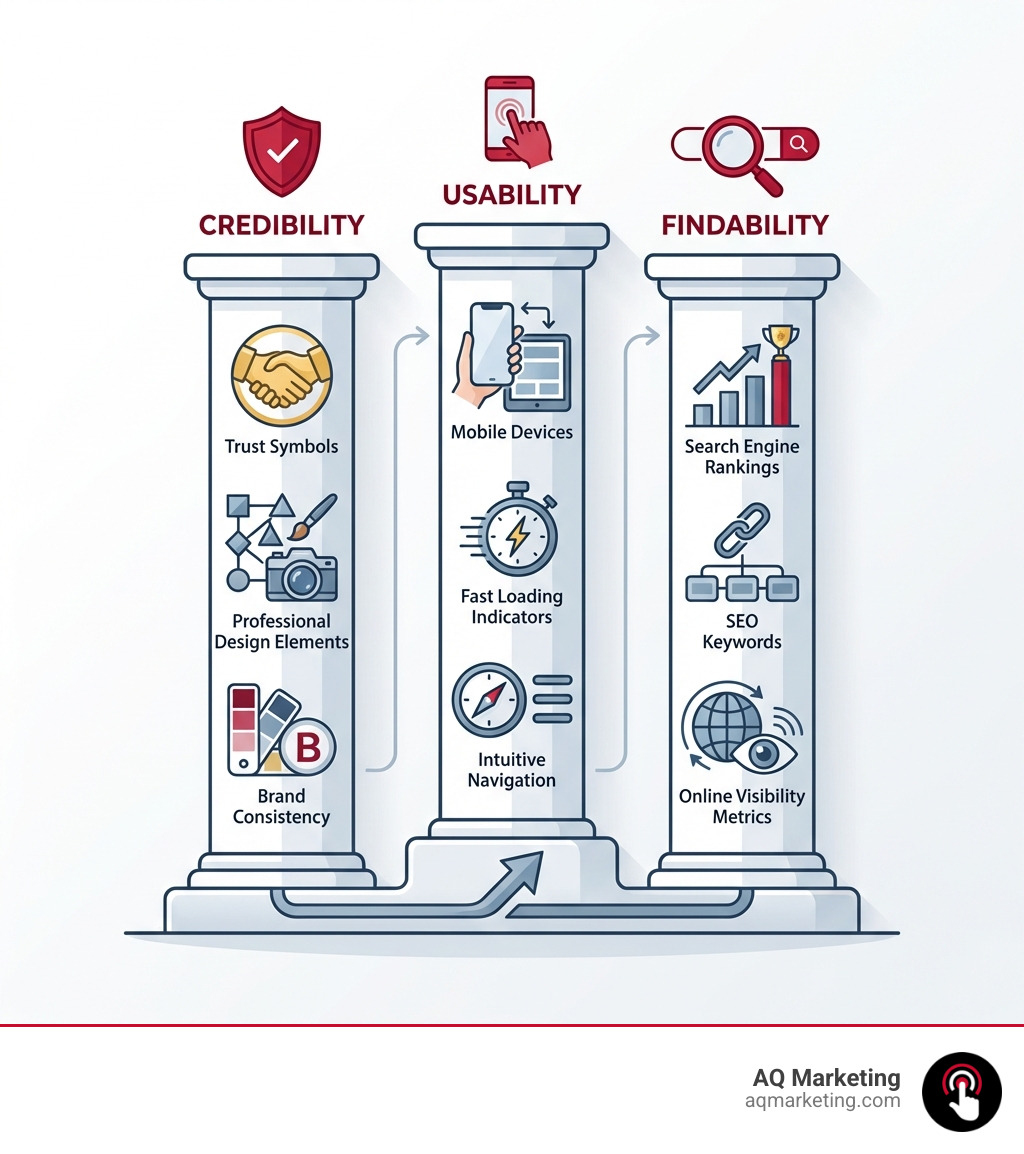
A professional small business website is the digital foundation of your business. Here’s what it must deliver:
Three Essential Elements:
- Credibility – Professional design with consistent branding, quality photography, and a clear message that establishes trust
- Usability – Intuitive navigation, fast loading speeds, and mobile-responsive design that works on any device
- Findability – Search engine optimization (SEO) that helps potential customers find your business online
Key Pages You Need:
- Homepage with clear value proposition
- About Us page to build connection
- Products/Services page with detailed descriptions
- Contact page with multiple ways to reach you
- Testimonials or case studies for social proof
Your website isn’t just an online brochure. It’s your 24/7 salesperson, your credibility builder, and often the first interaction a potential customer has with your business.
With millions of websites competing for attention, you only get one chance to make a strong first impression. A strategic, user-friendly website supports trust, engagement, and long-term growth by making it easy for people to understand your value and take the next step. A website makes it real for today’s consumers.
I’m Robert P. Dickey, President and CEO of AQ Marketing, and I’ve spent over 20 years helping small and medium-sized businesses build *professional small business websites that generate real results. My experience across marketing, print, and digital has shown me exactly what works—and what doesn’t—when it comes to creating a credible online presence.*
Let’s break down how to build a website that doesn’t just exist online, but actively grows your business.
Professional small business website terms to remember:
The Blueprint: Essential Elements of a Professional Small Business Website
Building a professional small business website means crafting a digital experience that reflects your brand and resonates with your audience. A great website blends aesthetics, functionality, and strategic communication.
At its core, a professional website for small businesses should incorporate several essential elements:
- Strong Branding: Your website is a direct extension of your brand identity. It needs to visually communicate who you are and what makes you unique.
- Exceptional User Experience (UX): The site should be easy to steer, intuitive, and enjoyable for visitors. Good UX keeps people on your site longer and encourages them to take action.
- Clear Navigation: Users should never feel lost. A well-structured menu guides visitors effortlessly through your content.
- Compelling Calls-to-Action (CTAs): What do you want visitors to do? Call? Buy? Fill out a form? Clear, prominent CTAs direct users toward conversion.
- High-Quality Photography and Visuals: Blurry or generic images undermine credibility. Invest in professional photos that showcase your products, services, or team.
- Engaging Content: Beyond text, consider videos, infographics, and other media that tell your story and provide value.
- Security and Trust Signals: An SSL certificate, privacy policy, and clear contact information build visitor trust.
These elements work together to create a cohesive and effective online platform. For comprehensive support, explore our Website Design Services.
Key Design and Branding Considerations
Design is more than aesthetics; it’s about strategic choices that build your brand and guide customers. A professional website’s design must be intentionally crafted to establish credibility, encompassing your color palette, layout, navigation, and overall message.
Consider these key aspects:
- Brand Identity: More than a logo, it’s your business’s personality and values. Your site must consistently reflect this identity visually and in its tone.
- Color Palette: Colors evoke emotion. Choose a palette that aligns with your brand and target audience. Consistent color use reinforces brand recognition.
- Visual Layout: Arrange elements in a clean, organized, and scannable way. Use white space to prevent clutter and improve readability.
- Typography: Your chosen fonts impact aesthetics and readability. Select professional, legible fonts that complement your brand.
- Logo Placement: Your logo should be clearly visible, typically in the top-left or center of your header, and linked back to your homepage.
- Communicating Brand Values: Your design and content should communicate what your business stands for. For example, a sustainable brand might use green elements or imagery.
These considerations are fundamental to creating a website that not only looks good but also effectively communicates your brand. For more detailed guidance, check out our New Business Website Design Best Practices.
Key Pages Every Professional Small Business Website Needs
While every business is unique, certain pages are universally essential for a professional small business website. These pages form the backbone of your online presence, providing visitors with crucial information.
Here’s a list of pages we believe every small business website should include:
- Homepage: Your digital storefront. It must grab attention, state what you do, and guide visitors to key areas. It should feature your most important information and communicate your brand values immediately.
- About Us Page: Tell your story here. Share your mission, values, and team to build trust and a personal connection.
- Products/Services Page: Detail your offerings. Use high-quality images, descriptions, pricing, and CTAs for products. For services, outline the details, benefits, and how to engage.
- Contact Page: Make it easy for customers to reach you. Include your phone, email, physical address (crucial for local MA businesses), and a contact form.
- Blog: An excellent way to provide value, establish authority, and drive organic traffic. We’ll cover content strategy later.
- Testimonials/Reviews Page: Social proof is powerful. Showcase positive feedback to build credibility and trust.
- FAQ Page: Answer common questions to save time and demonstrate expertise.
Depending on your industry, you might also need a Menu, E-commerce store, Appointments, Gallery, or Careers page. Prioritize pages based on your business needs. For industry-specific examples, see our guide on 5 Must-Have Pages for Law Firm Websites.
Ensuring Your Website is Mobile-Friendly and Accessible
A website that isn’t mobile-friendly is not a professional small business website. With most traffic coming from mobile devices, a non-optimized site alienates a huge portion of your potential customers.
Here’s what we focus on:
- Responsive Design: Your website automatically adjusts its layout to fit any screen size, from desktops to smartphones, optimizing the user experience for each device.
- Mobile-First Approach: We often design for mobile users first, then scale up. This ensures a streamlined experience on the most common devices.
- Fast Loading Speeds: Mobile users expect speed. Slow pages cause high bounce rates. We optimize images, code, and servers for quick loading on all devices.
- Accessibility (WCAG): A professional website must be accessible to everyone, including those with disabilities. This means following WCAG standards for features like alt text, keyboard navigation, and color contrast. Accessibility is fundamental to a successful website.
- User Testing: Regularly test your site on various devices to identify and fix usability issues.
Ensuring your website is Mobile Friendly Business Websites and benefits from Responsive Web Design Benefits is paramount for reaching your audience effectively.
Choosing Your Path: Platforms, Tools, and Costs
After understanding the essential elements, you must decide how to build your professional small business website. This involves choosing a platform, using the right tools, and understanding the costs. The decision often comes down to custom design versus templates.
At AQ Marketing, we guide our clients through this crucial decision, ensuring their choice aligns with their business goals and budget. We operate as a full-service Website Design Agency, offering expertise in both approaches.
Custom Website Design vs. Templates
This is a significant decision for any small business. Both options have merits and cater to different needs.
Template-Based Websites:
- Pros: Typically quicker to launch and more affordable, often including intuitive builders that allow businesses to get online with a professional-looking website and make basic updates without needing to code.
- Cons: Limited design flexibility, often look generic, can be harder to optimize for SEO, and may not scale with business growth.
Custom Website Design:
- Pros: Offers complete uniqueness, letting your brand’s personality shine. A custom design ensures your business is lifted above the competition. It’s built to your specifications for optimal scalability, performance, and SEO, providing a superior user experience tailored to your audience.
- Cons: Requires a larger upfront investment and a longer development timeline.
When to choose each option:
- Startups on a tight budget or needing a basic site quickly can benefit from a well-chosen template.
- Established businesses with unique branding or growth plans should opt for professional Small Business Website Design Services. This makes your website a strategic asset, not just a placeholder.
The Role of AI in Modern Website Creation
AI is rapidly changing website creation. AI-powered tools are becoming more sophisticated, offering significant benefits for small businesses.
- AI-Generated Content: AI can help create product descriptions, blog outlines, and marketing copy, saving significant time. You can generate text and then tweak it to fit your brand’s voice.
- AI Design Assistants: These tools assist with layouts, color palettes, and image placement based on user data, allowing for effortless creation without technical skills.
- Time-Saving Benefits: By automating tasks, AI frees up time for business owners to focus on core operations and growth.
- Personalization: AI analyzes user data to deliver personalized content, enhancing the user experience and increasing conversions.
- AI Webchat and Voice Receptionist Solutions: AI can also power chatbots for instant support or AI voice receptionists to streamline customer interactions. AQ Marketing offers these services to improve website functionality.
While AI offers incredible efficiencies, human oversight and strategic input remain crucial to ensure the content and design truly reflect your brand.
Understanding the Costs of Building and Maintenance
Understanding the investment for a professional small business website is crucial for budgeting. Costs vary based on your chosen path (DIY, template, or custom) and site complexity.
Here’s a general overview of typical cost factors:
| Cost Factor | DIY/Template-Based (Low End) | Professional Custom Design (High End) |
|---|---|---|
| Domain Name | $10-$20/year | $10-$20/year |
| Hosting | $5-$30/month | $30-$200+/month |
| Design & Development | $0-$500 (template, basic customization) | $5,000-$30,000+ (complex features, e-commerce) |
| Content Creation | $0 (DIY) | $500-$5,000+ (professional writing, photography) |
| Maintenance & Updates | $0-$50/month (platform fees) | $100-$500+/month (security, backups, software updates) |
| Marketing (SEO/PPC) | Variable (DIY learning curve) | $500-$5,000+/month (ongoing campaigns) |
Important Note: Pricing listed above is based on average online data and typical ranges seen across the broader industry. It does not represent AQ Marketing’s actual pricing, and these figures should never be interpreted as AQ Marketing’s fees. Industry pricing can vary widely, with the high end often being at least 3× the average price. For example, while a basic template might cost a few hundred dollars, a complex, custom-built e-commerce platform could run into tens of thousands.
Remember to budget for ongoing costs like security, software licenses, content updates, and marketing (SEO/PPC). These are vital to keep your site secure, relevant, and visible.
The Engine of Growth: Attracting and Engaging Your Audience
A professional small business website is a dynamic tool for attracting and retaining customers. It’s the central hub for your digital marketing, from content and social media to online sales.
Our goal is always to ensure your website actively contributes to your business’s growth. This holistic approach involves strategic content, integrated social media, and effective e-commerce solutions. For a broader understanding of how these elements fit into a larger strategy, consider our Digital Marketing for Small Business services.
Developing a Content Strategy That Converts
Content drives your website and establishes you as an authority. A well-defined content strategy is a critical roadmap for your content plan, topics, and goals.
- Blogging for Business: Consistently publishing quality blog content improves search engine findability and provides value to your audience, establishing expertise and trust.
- Content Planning: Identify and answer your target audience’s questions. This involves keyword research to understand their search terms.
- High-Quality Content: Focus on providing value with well-researched, well-written, and visually appealing content like guides, articles, or videos.
- Establishing Authority: By consistently sharing expert knowledge, your website becomes a trusted resource, positioning your business as a leader in your industry.
For new businesses, especially those in our service areas across Massachusetts, a strong content strategy is vital for building initial visibility. Learn more about how to get started with Marketing for Local Business Start Ups Building Your Website.
Integrating Social Media to Improve Reach
Social media is a powerful amplifier for your website, extending its reach and fostering community. A professional website should be seamlessly connected to your social presence.
- Linking Social Profiles: Ensure prominent links to your Facebook, Instagram, LinkedIn, and other relevant social media accounts are easily accessible on your website.
- Displaying Social Feeds: Integrate live social feeds on your site to keep it dynamic, showcase activity, and encourage follows.
- Encouraging Shares: Add social sharing buttons to your content. This makes it easy for visitors to share with their networks, increasing traffic and exposure.
- Building Community: Use social media to engage with your audience, answer questions, and build relationships. Regularly share your website content on your social channels to encourage visits.
Integrating social media effectively is a key part of our Social Media Organic Posting strategies, helping to drive traffic and engagement to your website.
Leveraging Your Website for E-commerce and Sales
For many small businesses, the website is a direct revenue channel. Your professional small business website can be a powerful e-commerce engine for products, goods, or services.
- Product Pages: For e-commerce, clear descriptions, high-quality images, pricing, and reviews are essential to help customers make a purchase decision.
- Service Descriptions: Detail each service with clear descriptions, pricing, and imagery so clients understand what they’re getting.
- Secure Payment Systems: Integrate trusted payment gateways (e.g., Square, Stripe) for smooth, secure transactions. This is non-negotiable for building customer trust.
- Online Booking Tools: For service-based businesses, tools like Acuity Scheduling can be integrated to allow clients to book appointments directly through your site.
- Streamlined Checkout Process: A complex checkout process kills conversions. Keep it simple, clear, and minimize the steps.
Starting small, tracking performance, and adjusting your strategy as your business grows is a smart approach to e-commerce. Your website can truly be designed to grow your business, as highlighted in Create a business website that’s designed to grow.
Maximizing Visibility: Optimizing Your Professional Small Business Website for Search Engines (SEO)
A beautiful, functional website is only half the battle. If customers can’t find it, it serves no purpose. Search Engine Optimization (SEO) is the practice of increasing traffic quality and quantity from organic search results, making your professional small business website findable.
Our primary goal with SEO is to ensure your business gets found by the right people at the right time. This boosts online visibility and drives qualified leads to your digital doorstep. For a deeper dive into improving your online presence, explore our strategies to Boost Online Visibility.
Fundamentals of Search Engine Optimization (SEO)
For small businesses, understanding SEO fundamentals can make a huge difference.
- Keyword Research: The cornerstone of SEO. We identify the terms your target audience uses when searching for your offerings. Naturally incorporating these keywords into your content is crucial.
- On-Page SEO: This refers to optimizations you make directly on your website pages.
- Title Tags: The title that appears in search results and browser tabs. It should be concise, descriptive, and include your primary keyword.
- Meta Descriptions: The summary under your title in search results. While not a direct ranking factor, a compelling description encourages clicks.
- Header Tags (H1, H2, H3): These structure your content for users and search engines. Use H1 for the main topic and H2s for subtopics.
- Image Optimization: Use descriptive filenames and alt text for all images. This helps search engines understand them and improves accessibility.
- Technical SEO: This involves optimizing non-content elements. It includes ensuring your site is fast, mobile-friendly, secure (HTTPS), and easily crawlable by search engines.
By focusing on these fundamentals, we help small businesses in places like Woburn, MA, and across the state, build a strong foundation for organic search success.
The Power of Local SEO for Small Business
For businesses in specific geographic areas, local SEO is incredibly powerful. It helps nearby customers find you when they search for terms like “plumber near me” or “best restaurant in Amherst, MA.”
- Google Business Profile (GBP): This free Google tool is essential. Optimizing your GBP listing with accurate info, photos, services, and reviews significantly impacts local search rankings.
- Local Citations: Ensure your business name, address, and phone number (NAP) are consistent across online directories. Inconsistencies can confuse search engines.
- Online Reviews: Encourage satisfied customers to leave reviews on GBP, Yelp, and other platforms. Positive reviews boost credibility and local search visibility.
- Location-Specific Keywords: Integrate local keywords into your website content, such as “web design Acton, MA” or “digital marketing services in Springfield, MA.”
- Service Area Pages: If you serve multiple towns, create dedicated pages for each one (e.g., a page for your services in Plymouth, MA).
For businesses serving local communities throughout Massachusetts, mastering local SEO is key to connecting with nearby customers. We specialize in Digital Marketing Massachusetts to help our clients dominate their local markets.
Measuring Performance and Making Data-Driven Adjustments
A professional small business website is an ongoing project. To ensure results, you must measure performance and make data-driven adjustments.
- Google Analytics: This free tool offers invaluable traffic insights, showing visitor numbers, sources, pages visited, and time on site.
- Key Metrics: Focus on metrics that align with your business goals.
- Bounce Rate: The percentage of visitors who leave after viewing only one page. A high rate can indicate poor content or UX.
- Session Duration: How long visitors spend on your site. Longer sessions often suggest engaging content.
- Conversion Tracking: Set up goals in Analytics to track specific actions, like form submissions, phone calls, or purchases.
- A/B Testing: Experiment with different headlines, CTAs, or layouts to see what performs better. This iterative process helps optimize for conversions.
- Continuous Improvement: Regularly review analytics to see what’s working. Start small, track performance, and adjust your strategy as you grow to make smarter decisions about boosting traffic and engagement.
Frequently Asked Questions about Small Business Websites
Why is a mobile-friendly website so important today?
Most internet traffic is now mobile. A non-mobile-friendly site creates a poor user experience, leading to high bounce rates and lost opportunities. Google also prioritizes mobile-friendly sites in its rankings, so a non-responsive site is harder to find. A Responsive Website Design ensures a seamless experience on all devices, which is critical for findability and credibility.
How long does it take to build a professional website?
The timeline for building a professional small business website varies based on complexity. A simple template site might take a few weeks. A professional custom website design with extensive features and content can take several months, involving strategy, design, development, and testing.
What are the most common website design mistakes to avoid?
Common pitfalls that undermine an online presence include poor navigation, slow load times, no clear calls-to-action, non-responsive design, and low-quality content. Avoiding these 5 Website Design Mistakes is crucial for credibility, visitor retention, and conversions.
Conclusion: Your Digital Foundation for Future Growth
In today’s market, a professional small business website is a necessity, not a luxury. It’s the cornerstone of your digital identity—your 24/7 salesperson, brand ambassador, and most powerful growth tool. Every element, from design and usability to SEO, is critical for establishing credibility and trust.
Your website is a long-term asset requiring ongoing attention and data-driven adjustments to thrive. It’s about building a digital foundation that looks good and actively converts visitors into customers.
Navigating website design and digital marketing is complex for busy owners, but it also creates a tremendous opportunity for growth and digital transformation. That’s where AQ Marketing comes in. Since 2003, we’ve helped businesses across Massachusetts build powerful online presences. We partner with you to craft a site that communicates your brand, attracts ideal customers, and drives real results.
Ready to take the next step in building a professional small business website that truly works for you? We invite you to schedule a 15-minute phone call with us. Let’s discuss your unique needs and how we can help you build an online presence that stands out. Take the next step in building your digital presence with professional Website Design for Small Business, supported by SEO, content, AI webchat, lead workflows, and marketing solutions that work together to grow your business.