

Why Insurance Marketing Solutions Matter More Than Ever in 2026
Insurance marketing solutions are the tools, strategies, and platforms that help insurance agencies and carriers attract new clients, nurture leads, and retain policyholders — all while staying compliant with industry regulations.
Here’s a quick look at the most common types:
| Solution Type | What It Does |
|---|---|
| Lead Generation | Finds and delivers high-intent prospects |
| Marketing Automation | Sends timely, personalized outreach at scale |
| Local SEO & Digital Presence | Helps clients find you online before competitors |
| CRM & Analytics | Tracks performance and improves decision-making |
| Direct Mail (Dimensional) | Creates physical, memorable touchpoints that stand out |
| Agent Support Tools | Streamlines agent recruitment, onboarding, and enablement |
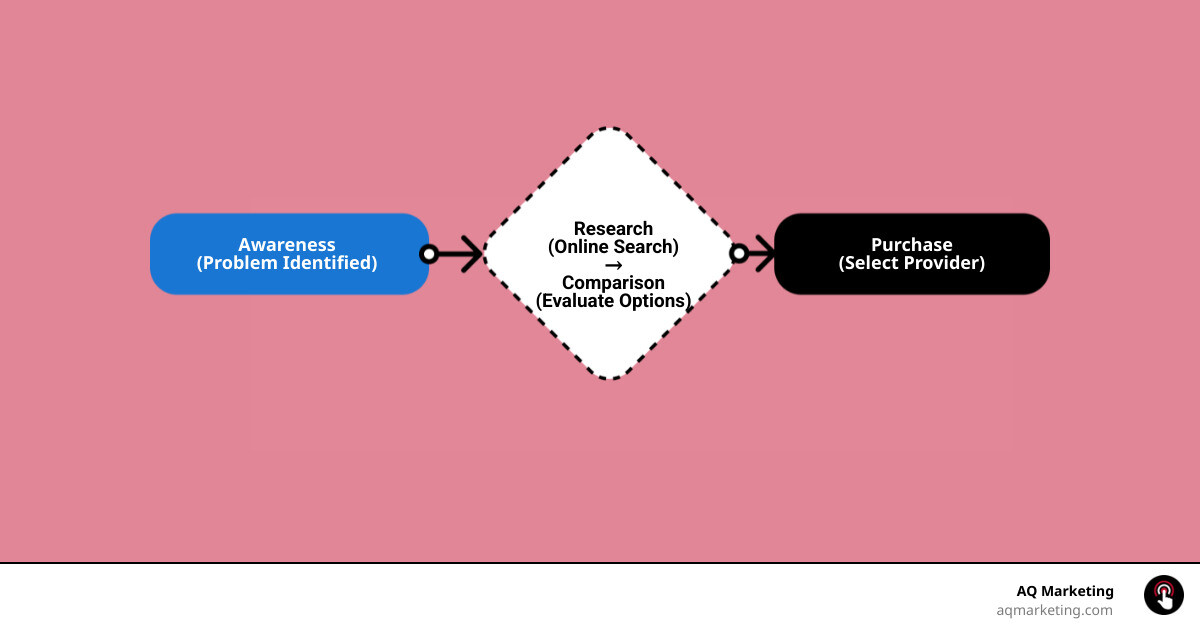
The insurance industry is competitive — and it’s getting harder to stand out. Consider this: 74% of consumers research insurance providers online before ever speaking to an agent. And yet, many agencies are still relying on outdated tactics that simply don’t convert the way they used to.
Digital transformation isn’t coming. It’s already here. In April 2026, agencies that haven’t modernized their marketing approach are leaving real revenue on the table.
I’m Robert P. Dickey, President and CEO of AQ Marketing, and my background in direct mail, print, and digital account management gives me a hands-on perspective on what makes insurance marketing solutions actually work for small and mid-sized agencies. In the sections below, I’ll break down the tools and strategies that are driving real results right now.
Core Types of Insurance Marketing Solutions
Navigating Digital Marketing for Insurance Companies requires a multi-pronged approach. We’ve moved past the era where a simple listing in the phone book was enough. Today, the most successful agencies in Massachusetts use a combination of digital and physical tools to keep their pipelines full.
The core of any modern strategy revolves around four pillars:
- Lead Generation: This isn’t just about buying lists; it’s about finding high-intent shoppers. Whether it’s through Exclusive Insurance Leads for Life, Health & Financial Pros or organic search, the goal is to find people actively looking for coverage.
- Marketing Automation: Staying “top of mind” shouldn’t be a full-time manual job. Automation tools handle the heavy lifting of sending renewal reminders, birthday greetings, and educational content.
- Digital Presence: If 62% of people explore an insurance provider’s site before engaging an agent, your website is effectively your first impression.
- Agent Support: For larger agencies, recruitment and training tools are vital. Providing agents with the right tech—like insuremarketingsolutions.com—allows them to focus on closing rather than administrative data entry.
Digital Insurance Marketing Solutions for Local Growth
In the Bay State, local relevance is everything. When someone in Burlington or Worcester searches for “home insurance near me,” you want your agency to be the first name they see. This is where SEO for Insurance Agencies becomes your most valuable asset.
Local SEO involves optimizing your Google Business Profile and ensuring your name, address, and phone number are consistent across the web. Content marketing plays a massive role here as well. By creating “evergreen” content—articles that answer common questions about Massachusetts-specific policy requirements—you build authority. Research shows that 74% of consumers perform online research before buying insurance; if they find the answers on your blog, you’ve already won half the battle.
High-Impact Dimensional Direct Mail
While we love digital, there is still something incredibly powerful about a physical object you can hold. In a world of overflowing inboxes, “dimensional mail” is a breath of fresh air. This is a specialized subset of insurance marketing solutions that uses 3D elements to grab attention.
Some of the most effective tools in this category include:
- VR Viewers: One company saw broker engagement jump from 3% to 21% after mailing VR viewers to promote investment products.
- Pop-up Cubes: These are mailers that spring into a 3D shape when opened. They often sit on a prospect’s desk for weeks as a “desktopper,” keeping your brand visible. One carrier saw a 40% increase in quote response rates using these over traditional envelopes.
- Video Brochures: Imagine a physical folder that plays a high-definition video as soon as it’s opened. Brighthouse Financial famously increased annuity revenue sold by independent advisors by 40% using this high-tech approach.
Leveraging Technology and Data Analytics for ROI
In April 2026, data is the “secret sauce” of insurance. We no longer have to guess which campaigns are working. Modern The Shifting Sands: What’s Hot in Insurance Marketing trends show that data analytics allow us to track the entire customer journey.
Using a CRM (Customer Relationship Management) system, you can see exactly where a lead came from and how they interacted with your brand. Call analytics are equally important; they help you understand script adherence and identify which “conversion drivers” are actually leading to bound policies.

| Engagement Metric | Digital Ads (Average) | Dimensional Mail (Top Performers) |
|---|---|---|
| Response Rate | 1% – 3% | 15% – 25% |
| Brand Recall | Low | High (Desktop presence) |
| Initial Cost | Low to Moderate | High |
| Long-term ROI | Scalable | High Impact |
Automation and AI-Driven Insurance Marketing Solutions
AI is no longer a buzzword; it’s a productivity multiplier. Digital Marketing for Insurance Agents now includes “agentic AI” that can handle prospect identification and lead scoring.
Imagine a system that ranks your prospects by “buying intent” based on their online behavior. Instead of calling 100 cold leads, your agents spend their time calling the 10 leads that AI has flagged as “ready to buy.” This leads to a massive improvement in productivity—some reports indicate up to a 182% boost in marketing automation efficiency when AI is properly integrated into the workflow.
Measuring Effectiveness and Return on Investment
How do you know if your insurance marketing solutions are actually paying off? We look at several key metrics:
- TAP/MC: This stands for Total Annual Premium divided by Marketing Cost. It’s a direct look at how much premium you’re generating for every dollar spent. One credit union campaign achieved a 3.71 TAP/MC using digital strategies.
- Conversion Rates: For example, the industry average for landing page conversion is around 20%. However, high-performing insurance pages can hit nearly 40% with the right optimization.
- CSAT (Customer Satisfaction Score): Platforms like insuremarketingsolutions.com often boast high CSAT scores because they make the user experience seamless.
Overcoming Industry Challenges: Compliance and Trust
Insurance is a trust-based business. You aren’t selling a widget; you’re selling a promise of protection. This makes reputation management a critical part of your marketing. One Trustpilot survey found that 31% of respondents find financial institutions untrustworthy. You overcome this by showcasing real reviews and maintaining a professional, secure online presence.
Compliance is the other big hurdle. Between state regulations, the TCPA (Telephone Consumer Protection Act), and HIPAA for health insurance, there are many “no-go” zones. Professional insurance marketing solutions are built with these guardrails in mind, ensuring your messaging is always on the right side of the law. For more on this, check out our Insurance Agency Marketing Tips.

Building Policyholder Loyalty and Retention
It is significantly cheaper to keep a client than to find a new one. Hire or Write: The Ultimate Guide to Insurance Website Content That Converts explains that content isn’t just for new leads—it’s for current ones too.
Regular, helpful communication—like explaining how a new Massachusetts law affects auto coverage—builds loyalty. When you provide value beyond just a monthly bill, you move from being a “vendor” to a “trusted advisor.” This shift is what drives a 142% increase in new policies year-over-year for some of the most successful organizations.
Frequently Asked Questions about Insurance Marketing
How do I choose the right insurance marketing partner?
When vetting a partner, look for:
- Vertical Expertise: Do they actually understand the insurance world, or are they a generalist agency?
- Compliance Knowledge: Can they prove they stay up to date with TCPA and state-specific regulations?
- Integration: Will their tools talk to your current Agency Management System?
- Reporting: Do they provide full-funnel reporting that ties marketing spend directly to bound policies?
What is the average cost of insurance marketing solutions?
Pricing for these services can vary wildly depending on the scale of your agency. Please note that the pricing listed below is based on average online data and does not represent AQ Marketing’s actual pricing.
- Small Local Agencies: May spend between $1,500 and $3,500 per month on basic SEO and lead gen.
- Mid-Sized Regional Firms: Often invest $4,000 to $8,500 per month for integrated digital and automation suites.
- Enterprise Carriers: Can spend $15,000 to $50,000+ per month on comprehensive, multi-channel national campaigns.
How does AI improve insurance lead quality?
AI uses predictive modeling to identify “in-market” shoppers. By analyzing behavioral triggers—like someone searching for “how to buy a home in MA”—AI can flag a lead for homeowners insurance before they even start looking for quotes. This allows you to capture intent much earlier in the buyer’s journey.
Conclusion
At AQ Marketing, we’ve been helping businesses in the Woburn, MA area and across the state—from Andover to Worcester—since 2003. We know that for insurance pros, the “old way” of doing things is becoming a liability.
The most effective insurance marketing solutions are the ones that blend high-tech data with high-touch personal service. Whether you’re looking to dominate local search or automate your lead nurturing, the goal is always the same: long-term, impactful results that grow your book of business.
Ready to modernize your agency’s digital footprint? Let’s talk about building a strategy that works as hard as you do.
