seo for insurance agencies: 7 Proven Ways to Win in 2025
Why SEO Matters for Insurance Agencies
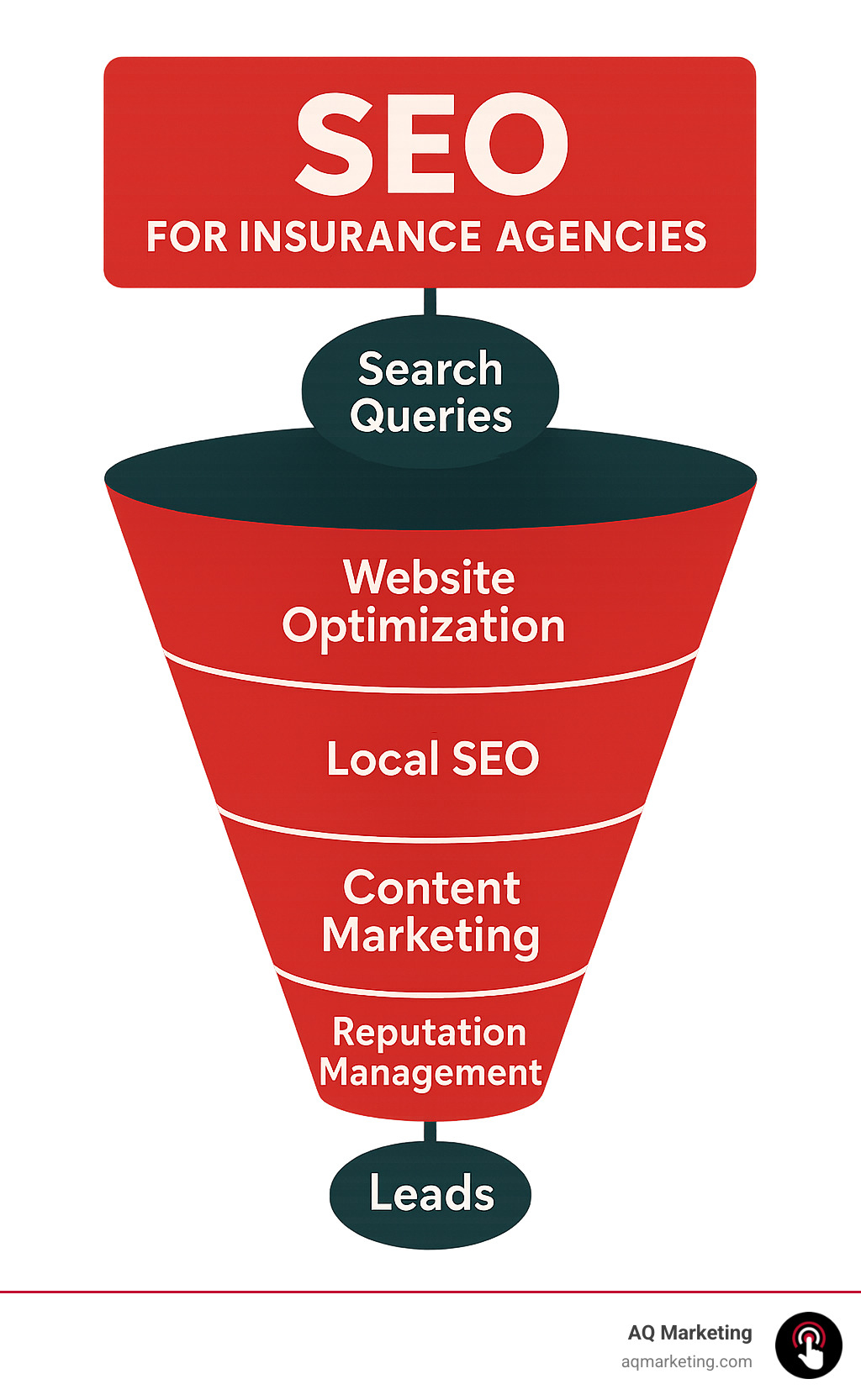
SEO for insurance agencies is the process of optimizing your website and online presence to attract more qualified leads through search engines. If you’re looking to improve your agency’s visibility online, here’s what you need to know:
- Definition: SEO helps insurance agencies appear higher in Google search results when potential clients search for insurance services
- ROI: SEO leads have a 14.6% close rate compared to just 1.7% for outbound methods like direct mail
- Timeline: Expect initial results in 3-6 months, with significant improvements within 12 months
- Core Components: Technical setup, local optimization, content strategy, and reputation management
In today’s digital landscape, your insurance agency’s online visibility can make or break your business. With 69% of insurance customers searching online before scheduling an appointment and 68% of insurance consumers not having one company in mind when they start searching, a strong SEO strategy isn’t just nice to have—it’s essential.
When potential clients need insurance, they don’t flip through the Yellow Pages anymore. They turn to Google, with over 3 billion searches happening daily. If your agency isn’t showing up in those results, you’re essentially invisible to a massive pool of potential clients.
“SEO isn’t just about ranking higher—it’s about establishing trust and authority in a competitive market where potential clients are actively searching for solutions.”
The insurance industry is highly competitive online, with average cost-per-click rates for paid ads among the highest of any industry. This makes organic SEO not just effective but cost-efficient compared to alternatives.
I’m Robert P. Dickey, President and CEO of AQ Marketing with over 20 years of experience helping businesses succeed online, including implementing SEO for insurance agencies that drives qualified leads and sustainable growth. My approach combines technical expertise with practical strategies that won’t drive you crazy.
The Building Blocks of SEO for Insurance Agencies
Think of your insurance agency’s website as a house. Without a solid foundation, even the most beautiful interior design won’t keep it standing. Technical SEO is that foundation—not the most glamorous part of the process, but absolutely essential for success.
According to our experience working with insurance agencies across Boston and the Merrimack Valley, technical issues are often the biggest roadblocks to ranking well. Here’s why: Google’s algorithm prioritizes websites that provide excellent user experiences, and that starts with technical performance.
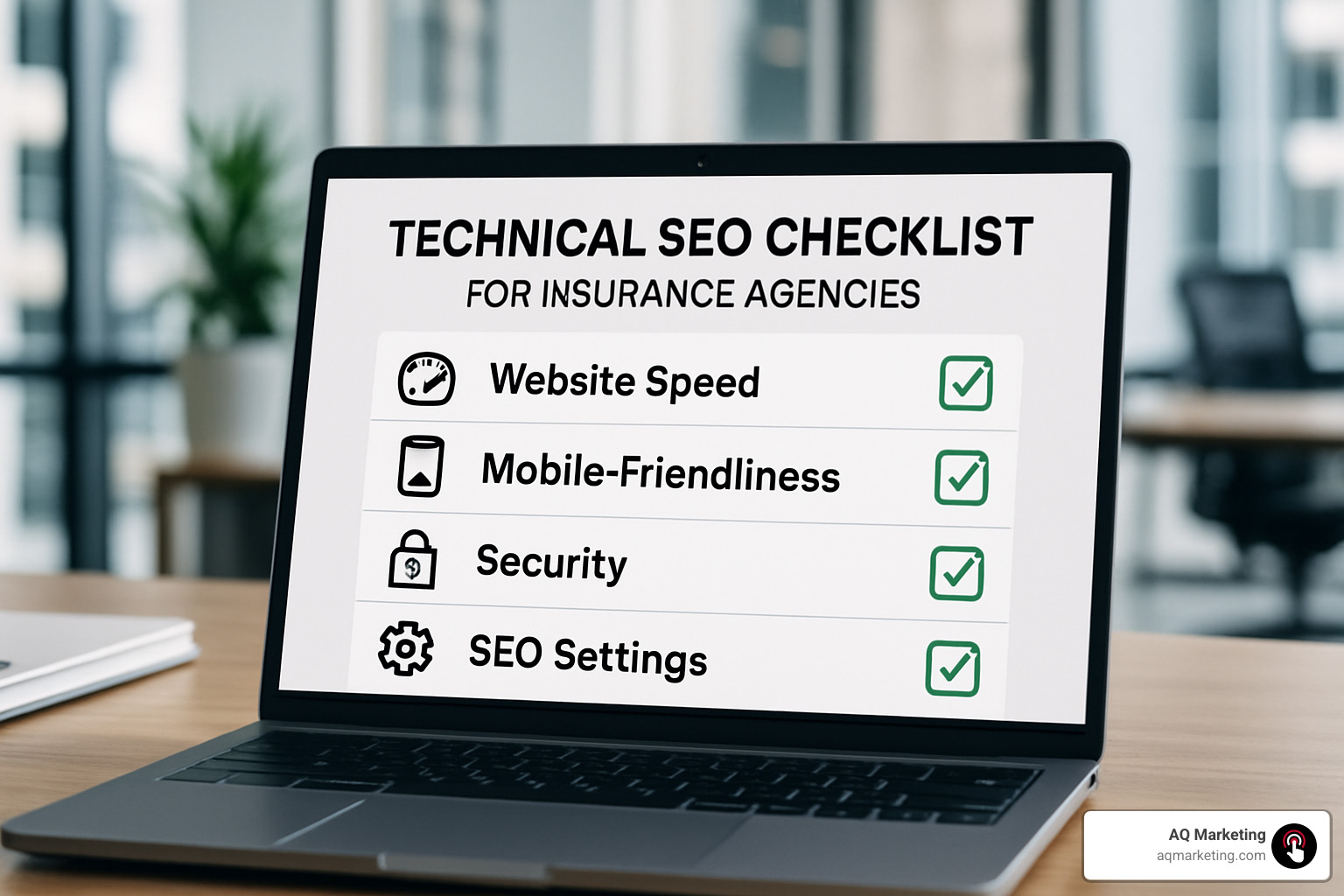
Google’s Core Web Vitals—metrics that measure loading performance, interactivity, and visual stability—directly impact your rankings. When we audit insurance sites, we typically find that improving these technical elements alone can boost rankings by 15-30% within months.
Technical checklist for “seo for insurance agencies”
Before diving into content creation or link building, ensure your technical foundation is solid:
Your website needs premium hosting with servers in the US. Many insurance agencies we work with in Middlesex County see dramatic improvements in site speed after upgrading from budget hosting. “Our quotes jumped by 17% after we stopped using our cousin’s friend’s hosting service,” one agent told me with a laugh.
An SSL certificate isn’t optional anymore. Not only is HTTPS a ranking factor, but it builds trust with security-conscious insurance shoppers. As one client shared, “Our quote requests increased by 22% the month after adding SSL.” When people are entering personal information for insurance quotes, they need to feel secure.
Your robots.txt configuration might sound technical, but it’s simply telling search engines which pages they should look at and which ones to ignore. Think of it as giving Google a map of your website—without it, they might waste time in all the wrong places.
Core Web Vitals optimization sounds complicated, but it boils down to making your site fast and stable. Your largest image or text block should load in under 2.5 seconds, your site should respond to clicks quickly (under 100 milliseconds), and your layout shouldn’t jump around as elements load. One agency owner told me, “I never realized how frustrating our slow site was until we fixed it—now I’m not embarrassed to send people to it.”
Proper analytics setup with Google Analytics 4 and Google Search Console is like having a dashboard in your car. Without these tools, you’re driving blind, hoping you’re heading in the right direction.
One insurance agency in Southern New Hampshire came to us after spending months creating content with zero results. Our technical audit revealed their site was blocking Google from indexing most pages due to an improperly configured robots.txt file—a quick fix that led to a 156% increase in organic traffic within 60 days.
Learn more about page load speed
Common technical pitfalls
When reviewing seo for insurance agencies, we regularly find some common technical issues that hold back otherwise great websites:
Slow server response is like having a receptionist who puts callers on hold for too long. According to our tests, 40% of visitors abandon insurance sites that take more than 3 seconds to load. Budget hosting might save you $10 a month but cost you thousands in lost leads.
Duplicate content happens when insurance agencies use template websites with identical content across multiple pages. Google sees this as copying homework—not a good look. Each page needs unique, valuable content that serves a specific purpose.
Thin pages with minimal content (under 300 words) rarely rank well. We recommend at least 800-1,200 words for service pages. Think about it: would you trust an insurance agent who could only speak for 30 seconds about auto policies?
Mixed content warnings appear when secure (HTTPS) pages contain non-secure (HTTP) elements. This triggers browser security warnings that erode trust—critical for insurance agencies handling sensitive information. One agency owner told me, “We lost a $4,000 policy because the client thought our site wasn’t secure.”
One agency client in Essex County had inadvertently created duplicate versions of every page by having both www and non-www versions accessible. After implementing proper canonical tags and redirects (essentially telling Google which version is the “real” one), their organic traffic increased by 43% within three months.
Using our SEO Tools, you can identify many of these technical issues before they impact your rankings. Think of it as preventive maintenance for your digital presence—much easier than fixing problems after they’ve damaged your rankings.
Crafting High-Intent Content that Converts
With your technical foundation in place, it’s time to focus on what actually brings in leads: content that addresses the specific needs and questions of your potential clients.
The key to successful SEO for insurance agencies is understanding the difference between generic insurance content and high-intent content that actually drives conversions. Anyone can write about “what is auto insurance”—but content that addresses specific pain points converts at a much higher rate.
Mapping keywords to pages (seo for insurance agencies)
I’ve seen this scenario countless times: an insurance agency publishes great content but still doesn’t rank well. Why? Because they haven’t mapped their keywords strategically.
Start with comprehensive keyword research focused on what actually matters. High-intent transactional keywords like “best flood insurance agents near me” signal someone ready to buy, not just browse. These are gold for conversion. Don’t forget to include location modifiers such as “homeowners insurance in Woburn MA” to capture local traffic—after all, insurance is fundamentally a local business.
Long-tail question keywords might seem less valuable because of their lower search volume, but don’t be fooled. Questions like “how does Massachusetts no-fault auto insurance work” often convert at much higher rates because they target people seeking specific solutions.
For truly effective SEO for insurance agencies, organize your content into topic clusters. Think of your website as a hub-and-spoke system. Your pillar pages serve as comprehensive guides on main insurance types, while supporting blog posts link back to these pillars, strengthening their authority. Location pages highlighting your local expertise complete this powerful structure.
I remember working with a State Farm agent in Merrimack Valley who implemented this exact pillar-cluster model. The results? A stunning 149.6% increase in annual leads over five years, with consistent year-over-year growth averaging 31.2% in online leads. That’s the power of strategic content organization.
When we perform content gap analysis for our insurance clients, we almost always find they’re missing bottom-of-funnel content. While they’ve covered the basics, they’ve overlooked specific content addressing local coverage questions, policy comparisons, cost calculators, and claims process explanations. These gaps represent immediate opportunities to boost conversion rates.
Content types that win trust
Insurance isn’t just a transaction—it’s a relationship built on trust. Your content needs to establish your agency as both knowledgeable and trustworthy. Here’s what consistently performs best for our insurance clients:
How-to blogs with real examples work wonders. Content like “How to File a Flood Insurance Claim in Massachusetts” with actual steps and local insights builds immediate credibility. Your prospects can picture themselves following your guidance.
Explainer videos have become essential, especially for mobile users trying to understand complex insurance concepts. One of our clients saw time-on-site jump by 27% after adding simple 2-3 minute explainer videos to key service pages.
Premium tools and calculators do double duty—they provide genuine value while capturing leads. Interactive elements like coverage calculators or premium estimators keep visitors engaged and demonstrate your expertise in tangible ways.
Case studies tell your success stories better than any generic claims ever could. Real examples of how you helped clients steer difficult claims or save significant money demonstrate your value authentically.
Local content shows you’re not just any insurance agency—you’re their insurance agency. Content specific to insurance needs in your service areas shows you understand the unique challenges faced by local residents.
Google’s E-E-A-T guidelines (Experience, Expertise, Authoritativeness, and Trustworthiness) matter tremendously in insurance, which Google considers a “Your Money or Your Life” topic. Having licensed insurance professionals write or review your content isn’t just good practice—it’s practically essential for ranking well.
Don’t overlook your meta descriptions—they’re essentially free advertising in search results. A compelling meta description can significantly improve your click-through rates. Here’s a guide on meta descriptions to help you craft ones that actually get clicks.
At AQ Marketing, our On-Page SEO Services include content strategy and creation specifically customized for insurance agencies in Massachusetts and Southern New Hampshire. We understand the local market because we live and work here too.
Local Search Domination for Insurance Agents
For most insurance agencies, local SEO is where the gold is. When someone searches for “insurance agent near me” or “auto insurance in [your city],” you want to be at the top of those results.
According to our data, 53% of insurance queries have local intent, and the “map pack” (the local business listings that appear with a map in search results) receives up to 44% of clicks for these searches. That’s nearly half of all potential clients making decisions based on what they see in those local results!

The foundation of local SEO success is your Google Business Profile (formerly Google My Business). This free listing is arguably the most valuable digital real estate for insurance agencies focused on local clients. Think of it as your digital storefront – it’s often the first impression potential clients have of your business.
Optimizing GBP step-by-step
Here’s our proven process for optimizing Google Business Profile for insurance agencies:
Complete your profile 100% – and I mean every single field. Your business name should appear exactly as it does elsewhere. Include your physical address (if you have an office), phone number (preferably local rather than toll-free), and website URL (ideally linking to a location-specific page). Don’t forget business hours, services (list all insurance types you offer), and a well-crafted business description that naturally incorporates your target keywords.
Choosing the right categories is crucial. Select “Insurance Agency” as your primary category, then add relevant secondary categories like “Life Insurance Agency” or “Auto Insurance Agency” to help Google understand exactly what you offer.
High-quality photos make a tremendous difference – our research shows agencies with 100+ photos get 520% more calls than the average business. Include shots of your office exterior (with visible signage), office interior, team photos, your logo, and images of you helping clients. These visual elements build trust before a prospect ever contacts you.
Don’t overlook effective CTAs (calls to action). Use the appointment URL, messaging, and call buttons to make it easy for prospects to reach you. The fewer clicks between finding you and contacting you, the better.
Regular posting keeps your profile fresh and engaged. Share weekly insurance tips, policy updates, or local events to demonstrate that you’re active and involved in your community.
One of our independent agent clients in Woburn saw a 78% increase in calls after implementing these GBP optimization tactics. The best part? It cost nothing but their time – Google Business Profile is completely free to claim and optimize.
Review & reputation signals
Reviews represent just under 10% of all Google ranking factors, making them a critical component of SEO for insurance agencies. Beyond rankings, 97% of consumers use online reviews to determine whether to pursue a service. In the trust-based world of insurance, this percentage is likely even higher.
For insurance agencies looking to boost their review profiles, we recommend a three-pronged approach:
Actively soliciting reviews makes all the difference. Create a simple process for requesting feedback from satisfied clients. One effective approach we’ve found is sending a follow-up email with a direct link to your Google review page after resolving a claim or starting a new policy. The timing is perfect – they’ve just experienced your service and the process is fresh in their minds.
Responding to all reviews – both positive and negative – shows you’re engaged and care about client experiences. Address concerns empathetically and offer to resolve issues offline. This public display of customer service can actually turn a negative review into a positive impression for potential clients reading your responses.
Implementing review schema adds structured data markup to your website to display star ratings directly in search results. This visual improvement can significantly increase click-through rates, as searchers are naturally drawn to those gold stars.
A client in Southern New Hampshire implemented our review solicitation system and increased their Google reviews from 12 to 87 in just six months, with their average rating improving from 3.8 to 4.7 stars. This directly contributed to a 34% increase in organic traffic and a 22% increase in quote requests – real business growth from a simple reputation management strategy.
Beyond Google, maintaining consistent NAP (Name, Address, Phone number) information across all online directories and citation sources is essential. Even minor discrepancies can hurt your local rankings. We’ve seen agencies drop completely out of the map pack due to inconsistent information across platforms.
For more insights on how your website design impacts local SEO, check out our article on The Connection Between Web Design and SEO.
Authority & Link Building Without the Headaches
Link building remains one of the most powerful—and most challenging—aspects of SEO for insurance agencies. Google still uses backlinks as a primary ranking factor, viewing them as “votes of confidence” from other websites.
However, in the insurance industry, link building requires special care. Google scrutinizes financial and insurance websites more carefully than most other industries due to their YMYL (Your Money or Your Life) classification.
When it comes to building authority online, remember this golden rule: quality trumps quantity every single time. One high-authority link from a respected insurance association or local business publication carries more weight than dozens of random directory listings. Think of it like references on a resume – one glowing recommendation from an industry leader speaks volumes compared to a list of acquaintances.
Safe link tactics for insurance sites
After helping dozens of insurance agencies improve their online presence, we’ve finded several link-building approaches that are both effective and safe for your business:
Local sponsorships create natural backlink opportunities while strengthening your community ties. One of our Merrimack Valley clients sponsors a little league team and earns links from both the league’s website and local news coverage of games. These links signal to Google that you’re a legitimate, established business in your area.
Podcast guesting lets you share your insurance expertise while earning quality backlinks. I recently helped an agent in Boston secure a guest spot on a popular financial planning podcast, resulting in not just a valuable backlink but also three new commercial clients who heard the episode!
Resource pages on community websites are like digital bulletin boards where your agency can be featured. Libraries, chambers of commerce, and government sites often maintain lists of local resources, including insurance providers. These links carry authority and local relevance.
PR outreach through platforms like HARO (Help A Reporter Out) connects you with journalists seeking expert insurance insights. We’ve helped clients earn mentions in major publications by simply answering questions about insurance trends or policy changes. One 15-minute email response turned into a backlink from a nationally recognized financial website with millions of monthly visitors.
Industry partnerships with complementary businesses like mortgage brokers, real estate agents, and auto dealers can lead to natural link exchanges. These relationships often begin as referral partnerships and evolve into digital connections that benefit both parties.
For those new to the link-building world, I highly recommend Brian Dean’s comprehensive guide to backlinks. Another fantastic resource is Help a B2B Writer, which works similarly to HARO but focuses specifically on business topics.
What to avoid
In my 20+ years helping businesses improve their online presence, I’ve seen plenty of link-building mistakes. For insurance agencies, certain tactics can be particularly damaging:
Link farms might seem tempting when you’re eager to build your backlink profile quickly, but these mass-produced, low-quality links can trigger Google penalties – especially for insurance websites. One agency came to us after their rankings plummeted following a cheap link-building package that connected them to hundreds of irrelevant, spammy sites.
Paid directories rarely provide genuine SEO value anymore. While there are exceptions (like industry-specific insurance directories), most paid listings are recognized by Google as what they are – purchased links rather than earned endorsements.
Spam comments on blogs not only fail to improve your SEO but can actively harm your reputation. When we audit new clients’ backlink profiles, we occasionally find their previous SEO companies left promotional comments on random blogs. These look unprofessional and signal low-quality SEO practices to Google.
Excessive reciprocal linking – the “I’ll link to you if you link to me” approach – can raise red flags when overdone. While some natural link exchanges between complementary businesses make sense, creating link circles purely for SEO purposes can backfire.
Irrelevant guest posting on websites unrelated to insurance or local business dilutes your topical authority. Focus your content efforts on platforms where your target audience actually spends time.
A word of caution from real experience: An insurance agency in Middlesex County hired us after receiving a manual penalty from Google. Their previous SEO provider had built hundreds of low-quality links from irrelevant websites. It took six months of carefully disavowing toxic links and creating quality content to help them recover their rankings. Don’t let this happen to you!
Building authority takes time, but doing it right means creating a sustainable foundation for your insurance agency’s online success. The patience you invest now will pay dividends for years to come.
Measuring Success & Avoiding Costly Mistakes
Effective SEO for insurance agencies requires measuring the right metrics and avoiding common pitfalls. Too many agencies focus solely on rankings without tracking how those rankings translate to actual business results.

I’ve seen this time and again – agencies get excited about ranking #1 for a term, but then can’t tell me how many new policies it generated. According to Search Engine Land, organic search is responsible for 53% of all site traffic, making it critical to measure your SEO performance accurately.
When we work with insurance clients across Massachusetts, we track key performance indicators that actually matter to your bottom line. This includes organic traffic growth (both overall and for specific pages), keyword rankings (especially for high-intent terms), and most importantly, your organic conversion rate. After all, what good is traffic if nobody contacts you?
We also closely monitor phone calls from organic search using call tracking, your cost per acquisition so you know exactly what you’re spending to get each lead, and ultimately, your return on investment. This comprehensive approach ensures you can see exactly how your SEO efforts translate to new policies.
DIY tracking stack
If you’re handling your own SEO tracking (which many of our smaller insurance clients do before they grow), here’s a straightforward setup that won’t overwhelm you:
First, properly configure Google Analytics 4 with conversion events that matter – quote form submissions, phone calls, chat initiations, and visits to high-intent pages like your pricing page. One Essex County agent told me, “Setting up GA4 seemed intimidating at first, but once I focused on just tracking these key actions, it became manageable.”
Next, use Google Search Console regularly to monitor which search terms are actually bringing visitors to your site. Pay special attention to your click-through rates – if lots of people see your listing but few click, your title tags and meta descriptions likely need work.
Implement some form of call tracking with dynamic number insertion. This technology shows different phone numbers to visitors from different sources, so you’ll know exactly which channels drive calls. When integrated with your CRM system, you can follow leads from first click to signed policy.
Top mistakes insurance agencies make
After working with dozens of insurance agencies throughout New England, I’ve noticed some common SEO missteps that cost agencies dearly:
Keyword stuffing remains surprisingly common. I still see pages crammed with awkward phrases like “cheap auto insurance Boston best rates Massachusetts” that read like robot text. Today’s search algorithms prioritize natural language that actually helps potential clients.
Duplicate content is another frequent issue, especially with multi-location agencies. Using identical content across different location pages dilutes your ranking potential. Each page needs unique elements that reflect the specific community you serve.
Ignoring mobile optimization is a critical mistake when over 60% of insurance searches happen on smartphones. One agent in Southern New Hampshire saw quote requests double after we optimized their mobile experience – people simply weren’t filling out their clunky mobile form before.
Many agencies also lack a proper follow-up system for SEO leads. Even the best traffic is wasted without prompt response. As one client put it, “We were getting the leads but losing them because nobody was responding quickly enough during busy periods.”
Perhaps the most common mistake is expecting overnight results. SEO is a marathon, not a sprint. Agencies that abandon efforts after a month never see the compounding returns that come with persistence. Your competitors who’ve been at it for years aren’t ranking by accident.
For comprehensive support that addresses all these challenges, check out our Search Engine Optimization Service, which includes ongoing tracking and adjustments based on real performance data.
Frequently Asked Questions about SEO for Insurance Agencies
How long until SEO brings leads?
This is the question I hear most often, and I’ll give you the same honest answer I give all our clients: it depends on your starting point, competition, and investment level.
For most insurance agencies in Massachusetts and New Hampshire, the timeline looks something like this:
During the first 1-3 months, we focus on technical improvements and initial content optimization. You probably won’t see dramatic ranking changes yet, but we’re laying crucial groundwork.
Around 3-6 months, you’ll notice visibility improvements and initial ranking gains. Some of your more specialized service pages may start generating leads.
Between 6-12 months is when things get exciting – significant traffic increases and consistent lead generation typically begin here. This is when patience pays off.
SEO is a compounding asset. One agency we work with in Woburn saw modest results in the first six months but now generates 65% of their new business through organic search three years later. They regularly tell me it’s the best marketing investment they’ve ever made.
Can we handle seo for insurance agencies in-house?
Many agency owners ask if they can manage SEO internally, and the honest answer is: partially. Some aspects can absolutely be handled in-house, like creating local content and maintaining your Google Business Profile.
However, comprehensive SEO requires a significant time investment – typically 10-20 hours per week for proper implementation. Most agency owners I know barely have 10 extra minutes in their day, let alone 10 hours.
Professional SEO tools can cost $1,500-3,000 annually, which may not make financial sense for a single agency. And perhaps most importantly, effective SEO requires specialized expertise in technical optimization, content strategy, and link building – each requiring different skill sets.
Most successful insurance agencies we work with use a hybrid approach: handling some content creation in-house while partnering with specialists (like us at AQ Marketing) for technical optimization, strategy, and link building. This gives you the best of both worlds.
Is PPC faster than SEO?
Yes, pay-per-click advertising delivers immediate visibility and traffic. If you need leads tomorrow, PPC can deliver. However, there are important tradeoffs every insurance agency should consider:
PPC typically has a higher cost per acquisition – insurance keywords are among the most expensive in Google Ads, with some terms costing $50+ per click. I’ve seen agencies spending $75-100 per click for competitive terms like “business insurance Boston.”
With PPC, you’re building no equity – when you stop paying, your visibility immediately disappears. It’s like renting versus owning. One day you’re everywhere, the next you’re nowhere.
PPC also tends to deliver diminishing returns over time as click costs increase, while SEO costs typically stabilize as your authority grows. Several of our long-term clients now generate leads at less than $25 per acquisition through SEO, compared to $200+ through PPC.
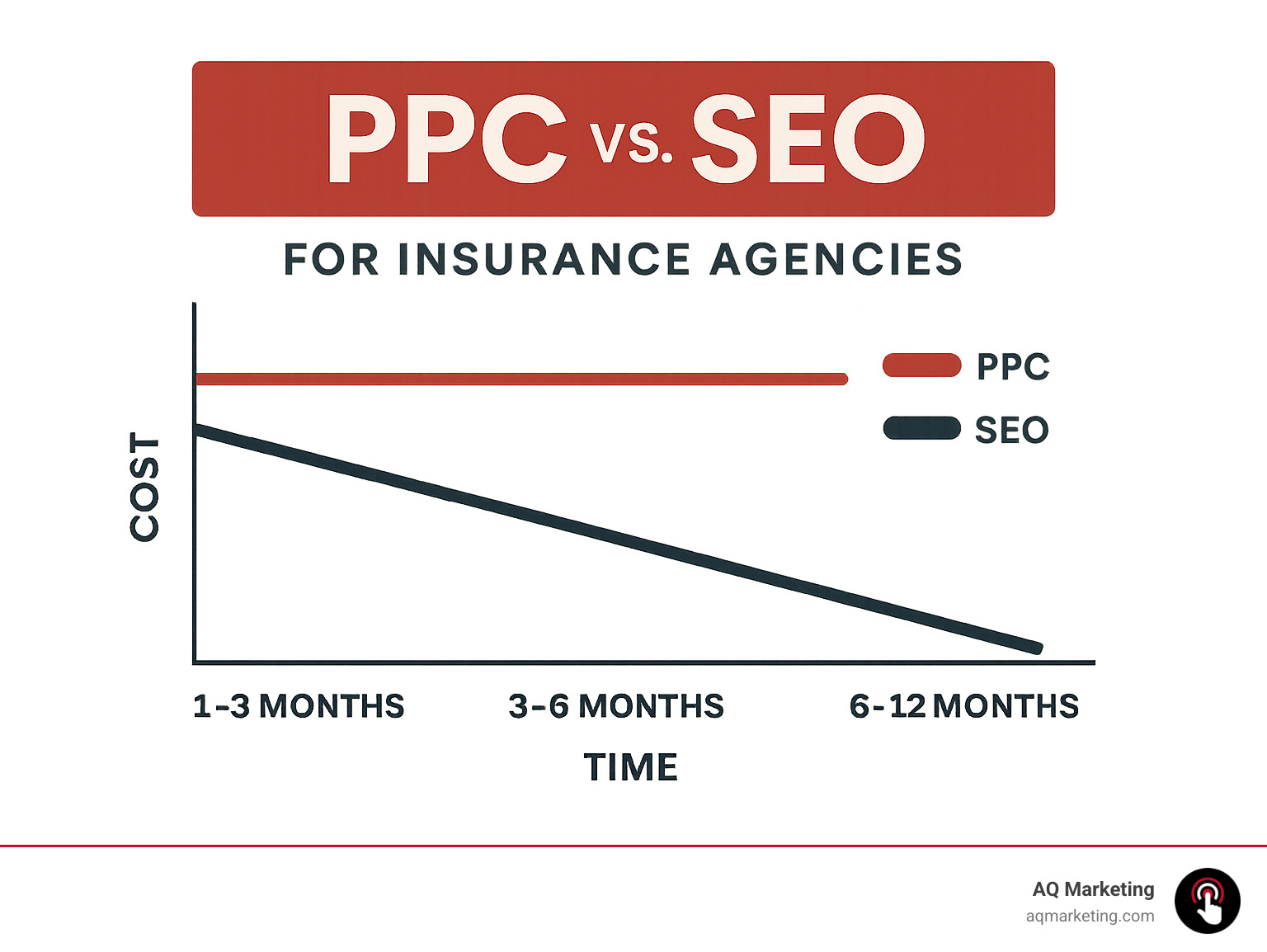
The most effective approach for most insurance agencies is using PPC for immediate lead generation while simultaneously building SEO for long-term, sustainable growth. Many of our clients in Essex County and the Merrimack Valley use this complementary strategy to great effect – PPC targets high-value, immediate-intent keywords while SEO captures the broader market of information-seekers who will become clients in the future.
Conclusion
Implementing effective SEO for insurance agencies doesn’t have to feel like climbing Mount Everest. By focusing on the core elements we’ve discussed—solid technical foundation, quality content that answers real questions, local search optimization, and relationship-based link building—you can create a sustainable advantage that grows stronger over time.
After working with dozens of insurance agencies across Massachusetts and Southern New Hampshire since 2003, I’ve noticed that the most successful ones share some common traits:
They accept patience, understanding that SEO rewards the persistent. Unlike the instant (but expensive) gratification of paid ads, SEO builds momentum that compounds month after month. As one of our Woburn-based clients put it, “The first six months were quiet, but by year two, our website became our best producer.”
They obsess over user experience rather than search engines. When you truly help visitors understand their insurance options and make informed decisions, Google notices. Your content should answer questions so thoroughly that potential clients think, “These people really get my situation.”
They leverage their local expertise at every opportunity. National insurance sites can’t match your knowledge of flood zones in Essex County or auto insurance requirements in Massachusetts. This local focus creates natural opportunities for both content and backlinks.
They measure what matters—not just rankings but actual policies sold. By connecting your analytics to your sales process, you can see exactly which keywords and content pieces drive revenue, not just traffic.
They never stop improving. The insurance agencies seeing the best results treat their websites like living documents, regularly refreshing content, responding to reviews, and adapting to both algorithm changes and market shifts.
Ready to transform your agency’s online presence? Start with these practical next steps:
- Run a technical audit to find and fix the issues holding back your performance
- Fully optimize your Google Business Profile with photos, posts, and accurate information
- Create content specifically addressing high-intent local insurance queries
- Set up proper analytics to track leads through to sales
- Build relationships with complementary local businesses for natural link opportunities
At AQ Marketing, we’ve been helping insurance agencies steer the digital landscape since 2003. We understand both the insurance business and the unique SEO challenges you face in cities like Boston, Woburn, and throughout Middlesex County, Essex County, and the Merrimack Valley.
Our approach focuses on sustainable, ethical techniques that build long-term value rather than quick fixes that fade—because like a good insurance policy, your SEO strategy should protect your future, not just your present.
Feeling overwhelmed or just want expert guidance? We’re happy to provide a comprehensive assessment of your current SEO performance and develop a customized strategy for your specific market and goals. Let’s steer through the complexities of digital marketing together, without the headaches.
More info about Digital Marketing for Insurance Companies