

What is Local SEO and Why is it Crucial for Your Website’s Success?
Local Search Engine Optimization (SEO) is a specialized strategy designed to enhance your business’s online visibility for location-specific searches. Unlike traditional SEO, which aims for broad national or global rankings, local SEO focuses on connecting you with customers in your immediate geographic area. This is particularly vital for businesses with physical locations in towns like Woburn, MA, or those serving specific regions such as the greater Boston area, including communities like Waltham, Lawrence, or Springfield.
The importance of local SEO cannot be overstated. Consider this: almost half of all the Google searches have a local intent. This means that a significant portion of potential customers are actively looking for businesses like yours “near me” or within a specific town. When someone searches for “plumbing services in Boston” or “insurance agencies in Worcester,” they often have an immediate need and a high intent to make a purchase or engage with a service.
Understanding the Local Search Landscape
When users perform local searches, Google and other search engines strive to provide the most relevant local businesses. This often results in what’s known as the “Map Pack” – a prominent section at the top of the search results page displaying a map with 3-4 local business listings. Appearing in this Map Pack is a game-changer, as these top positions capture a significant share of clicks. The number 1 page in Google search results gets approximately 32% of all clicks from searchers using the same keyword.
Local search caters to immediate needs. Think about someone needing an “AC repair in Austin” during a heatwave (or, in our case, “AC repair in Lowell, MA” during a Massachusetts summer). They aren’t browsing; they need a solution fast. Businesses that appear prominently in these local results are perfectly positioned to capture that high-intent traffic. Strong local visibility translates directly into increased website traffic, more phone calls, more foot traffic to your physical location, and ultimately, more revenue. For more insights on how SEO can fuel your business growth, explore our guide on How SEO Helps Your Company Grow.
How Can You Optimize Your Google Business Profile to Boost Local Rankings?
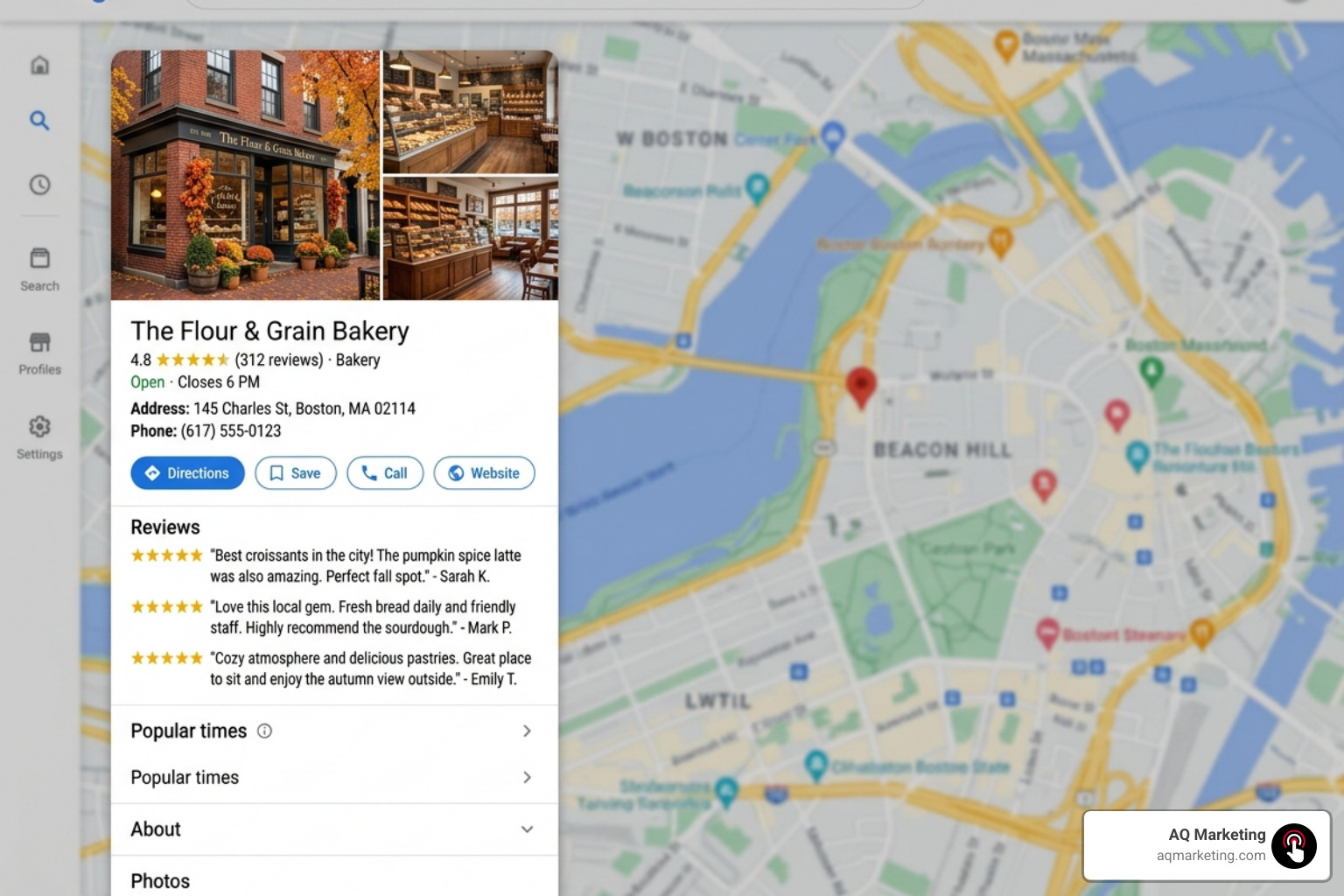
Your Google Business Profile (GBP) is arguably the single most critical asset for local SEO. It’s your digital storefront on Google Search and Maps, and optimizing it is paramount to appearing in local search results.
The first step is to claim and verify your GBP. Once verified, you must complete every section of your profile accurately and comprehensively. This includes your business name, address, phone number, website, hours of operation, and a detailed description of your services. Selecting the most specific primary and secondary categories for your business (e.g., “Italian Restaurant” instead of just “Restaurant”) helps Google understand exactly what you offer, improving relevance for specific searches.
Adding high-quality photos and videos to your GBP is also crucial. Include images of your interior, exterior, team members, and examples of your products or services. Listings with more photos receive more clicks, calls, and direction requests. Regularly utilize GBP posts to share updates, special offers, upcoming events, or news. Engage with the Q&A section by answering common questions customers might have. Most importantly, keep all your business information, especially hours, accurate and up-to-date, including any special holiday hours.
For comprehensive guidance on managing your GBP, refer to our resources on Google Business Profile, Google Business Search Engine Optimization, Google Business Marketing, and Google My Business SEO.
Google’s Core Local Ranking Factors: Relevance, Distance, and Prominence
Google’s algorithm determines local rankings based on three primary factors:
- Relevance: How well your business profile matches the user’s search query. A complete and accurate GBP helps Google understand your offerings and match them to relevant searches.
- Distance: How close your business is to the searcher’s location. If a user doesn’t specify a location, Google calculates distance based on their approximate location.
- Prominence: How well-known your business is. This is influenced by factors both on and off your GBP, including the volume and quality of your reviews, the number of links pointing to your website, and mentions of your business across the web.
Local rankings cannot be requested or paid for. Google’s algorithm is confidential to ensure fairness and provide the best results to users. Our focus is always on optimizing these controllable factors to improve your visibility organically.
Best Practices for GBP Content
Maintaining an active and optimized GBP is an ongoing process. Here are some best practices:
- Update Hours Regularly: Always keep your business hours current, including any temporary closures or special holiday hours.
- Add In-Store Products: If you’re a retail business, utilize the product editor feature to showcase your offerings directly on your profile.
- Use GBP Posts Strategically: Think of these as “micro-ads.” Use them to announce new services, promotions, events, or to share helpful tips relevant to your local community in Massachusetts.
- Respond to All Reviews: Engaging with customer feedback shows you value their input. We’ll delve deeper into reviews in a later section.
How Do You Ensure Your Website and Online Presence Support Local Visibility?
Beyond your Google Business Profile, your website plays a crucial role in reinforcing your local relevance and authority. A well-optimized website acts as a powerful signal to search engines, helping them understand your geographic focus and the services you provide to your local community.
A foundational element is NAP (Name, Address, Phone Number) consistency. Your business name, address, and phone number must be identical across your website, Google Business Profile, and all other online directories. Inconsistencies can confuse search engines and dilute your local SEO efforts.
Local Keyword Research and Content Strategy
Effective local SEO starts with thorough local keyword research. This involves identifying the specific terms your target customers in places like Cambridge, MA, or Springfield, MA, are using to find businesses like yours. We use tools like Google Keyword Planner and Google Search Console to uncover these keywords, and we also analyze what your local competitors are ranking for.
Key types of local keywords include:
- Explicit Local Keywords: These clearly state a location, such as “web design services Boston,” “SEO agency Lawrence MA,” or “plumber Waltham.”
- Implicit Local Keywords: These are terms like “best coffee shop near me” or “emergency electrician open now,” where the user’s location is inferred by the search engine.
We also pay close attention to the language your customers use in reviews and calls, as this can reveal valuable long-tail keywords. Once identified, these keywords need to be naturally incorporated into your website content, including:
- Title Tags and Meta Descriptions: These are the clickable headlines and descriptions that appear in search results.
- H1s and Other Heading Tags: Structure your content with headings that include local keywords.
- Body Text: Integrate keywords naturally throughout your service descriptions, blog posts, and about us pages.
- Image Alt-Text: Describe images using relevant local keywords.
Creating localized landing pages is another powerful strategy. If you serve multiple towns in Massachusetts, such as Acton, MA, and Concord, MA, having dedicated pages for each location, detailing your services in that specific area, can significantly boost your visibility. These pages should offer unique, valuable content relevant to that community, rather than just duplicating information. For expert assistance in optimizing your website for local searches, our Search Engine Optimization Experts are here to help. If you’re also considering a website refresh, explore our Website Design & Development services.
On-Page Optimization for Local Search
Beyond keywords, several on-page elements contribute to strong local search visibility:
- Optimized Title Tags and Meta Descriptions: Craft compelling titles (under 60 characters) and descriptions that include your primary local keyword and encourage clicks.
- Structured URLs: Use clean, descriptive URLs that incorporate geographic locations (e.g.,
yourbusiness.com/services/boston-plumbing). - Embedded Google Maps: Include an embedded Google Map of your business location on your contact page. This provides a clear visual cue to both users and search engines about your physical presence.
- Mobile Optimization: More than half of search traffic comes from mobile devices. Your website must be mobile-friendly, ensuring a seamless experience on smartphones and tablets. This includes fast loading times (ideally under 3 seconds), easy navigation, and readable text.
- Schema Markup: Implement schema markup (structured data) such as
LocalBusiness,Review,Event, orProductschema on your website. This code helps search engines understand specific details about your business, like your address, hours, services, and customer ratings, which can lead to richer search results and improved visibility.
By meticulously optimizing these on-page elements, you provide search engines with clear signals about your local relevance, helping your website rank higher for the searches that matter most to your business. For businesses offering specialized services, optimizing for local searches is key. Learn more about our strategies for SEO for Service Providers.
What Role Do Reviews, Citations, and Backlinks Play in Local SEO?
Customer reviews, local citations, and backlinks are powerful off-page SEO factors that significantly influence your local search visibility. They build trust, establish authority, and signal to search engines that your business is legitimate and valued by its community.
Managing Your Online Reputation
Customer reviews are paramount. 95% of customers read online reviews before making a purchase. Google considers not just the volume of reviews, but also their velocity (how often new reviews come in), frequency, and sentiment (positive vs. negative). A consistent stream of positive reviews can significantly boost your prominence in local search results.
- Encourage Reviews: Make it easy for satisfied customers to leave reviews. This can be done through direct asks, automated follow-up emails or SMS after a service, or QR codes placed at your physical location in places like Quincy, MA, or Newton, MA. Never offer incentives for reviews, as this violates Google’s guidelines.
- Respond to All Reviews: This is critical for reputation management.
- Positive Reviews: Thank the customer for their feedback and reiterate your commitment to quality service.
- Negative Reviews: Respond professionally, empathetically, and promptly (ideally within 24 hours). Acknowledge their concern, apologize if appropriate, and offer to resolve the issue offline. Turning a negative experience into a positive resolution can build immense trust with potential customers.
Engaging with reviews demonstrates that you care about your customers, which builds trust and confidence, making them more likely to choose your business. For comprehensive support in managing your online reputation, explore our Reputation Management services and learn how we help businesses in Massachusetts cultivate a strong online presence. You can also find more information on our Customer Reviews page.
Building Local Authority Through Citations and Backlinks
Local Citations are mentions of your business’s NAP (Name, Address, Phone Number) on other websites, even without a direct link to your site. These include online directories, local business listings, and social media platforms. Consistency is key here; every citation should match your GBP exactly.
- Prioritize High-Visibility Directories: Ensure your business is listed on major platforms like Yelp, Apple Maps, Facebook, and industry-specific directories relevant to your niche (e.g., TripAdvisor for restaurants, Avvo for lawyers).
- Audit and Clean Up Inconsistent Citations: Regularly check for and correct any outdated or incorrect NAP information across the web. Tools can help identify these inconsistencies.
Local Backlinks are links from other websites to your website. For local SEO, the quality and relevance of these links are more important than sheer volume. Links from reputable local sources signal to Google that your business is a trusted part of the community.
- Community Partnerships: Engage with local organizations, sponsor youth sports teams in towns like Framingham, MA, or Peabody, MA, participate in charity events, or join your local chamber of commerce. These activities can often lead to valuable backlinks from their websites.
- Local PR: If your business is featured in a local newspaper or blog, ensure they link back to your website.
- Reciprocal Link-Building: Consider partnering with complementary local businesses (e.g., a coffee shop and a bakery) to cross-promote and link to each other’s websites.
Building a strong network of local citations and backlinks reinforces your business’s credibility and authority within your geographic area, further boosting your local search visibility. For specialized guidance on building these crucial off-page signals, particularly for service-based businesses, see our insights on Off-Page SEO for Home Services.
How Has AI Search Impacted Local SEO, and How Can You Adapt?
The digital landscape is constantly evolving, and the rise of Artificial Intelligence (AI) in search, with tools like ChatGPT, Google’s Search Generative Experience (SGE), and Perplexity, is ushering in a new era for local SEO. These AI systems are designed to understand user intent more deeply and provide direct, conversational answers, often summarizing information from various sources.
AI tools scour not just traditional search results but also an extended network of publishers, including review sites, social media platforms, and niche directories, to gather comprehensive information about businesses. This means that your digital presence needs to be robust and consistent across a wider array of online properties than ever before. The focus is shifting from merely ranking for keywords to ensuring your business is recognized and trusted as an “entity” that AI systems can confidently recommend.
The impact of AI Overviews, which appear in a significant percentage of local search queries, highlights this shift. Instead of just a list of links, users might see an AI-generated summary of businesses, including key details pulled from your Google Business Profile, website, and reviews. This emphasizes the need for clear, concise, and answer-first content that AI can easily interpret. For a deeper dive into adapting your strategies, read about 6 Ways to Improve Your Local SEO Strategy in the Age of AI Search.
Adapting Content for AI-Driven Search
To thrive in the age of AI search, your content strategy needs to evolve:
- Answer-First Structure: Organize your website content to directly answer common questions. Use question-style headings (H2s, H3s) followed by concise, direct answers, before delving into more detailed explanations. This mirrors how AI generates responses.
- Focus on Conversational Queries: AI excels at understanding natural language. Optimize your content for longer, more conversational search queries that people might ask a voice assistant (e.g., “What’s the best Italian restaurant in Worcester open late tonight?”).
- Website as an Authority: Your website remains a primary source of authoritative information. Ensure it’s well-structured, comprehensive, and provides in-depth details about your services, pricing, and unique selling points.
- Leverage Social Media: 88% of customers look on social media platforms for more information about a brand. Maintain an active and consistent presence on relevant social channels. AI systems also draw information from social media to build a complete picture of your brand.
Entity Optimization for AI
AI systems are excellent at connecting disparate pieces of information to form a coherent understanding of an “entity” (your business). Therefore, consistency and interconnectedness are paramount:
- Consistent Business Information: Ensure your business name, description, categories, and contact details are identical across your GBP, website, social media profiles, and all other online listings.
- Topic Clusters: Organize your website content into topic clusters, where a central “pillar page” (e.g., “Comprehensive HVAC Services in Boston”) links to several related, in-depth articles (e.g., “Emergency AC Repair in Boston,” “Furnace Maintenance in Boston”). This helps AI understand the breadth and depth of your expertise.
- Entity Mentions: Encourage mentions of your business on credible local websites, news outlets, and community forums. These mentions, even without a direct link, contribute to your overall prominence and help AI recognize your brand.
How Can You Measure and Refine Your Local SEO Strategy?
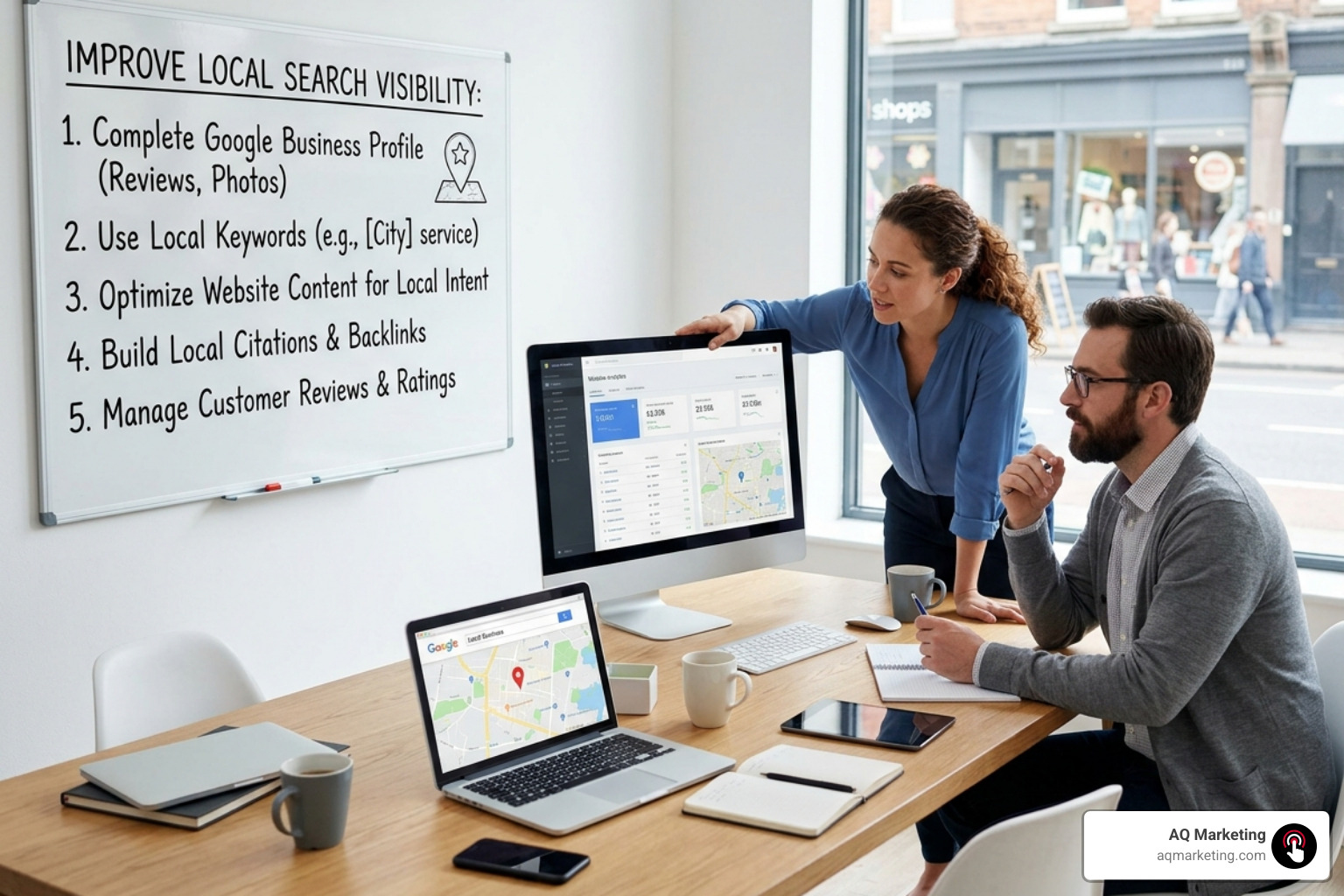
Implementing local SEO strategies is only half the battle; measuring their effectiveness and continuously refining them is crucial for sustained success. Without tracking, you won’t know what’s working, what needs adjustment, or how your efforts are impacting your business goals.
We track key performance indicators (KPIs) to assess the health of your local search visibility:
- Google Business Profile Insights: Monitor views, calls, direction requests, and website clicks directly from your GBP. These metrics offer direct insight into local user engagement.
- Website Traffic from Local Searches: Use analytics tools to identify how much traffic your website receives from local, geo-modified keywords.
- Local Keyword Rankings: Track your positions for specific local keywords in your target service areas, such as “SEO agency in Amherst, MA” or “digital marketing services in Taunton, MA.”
- Conversion Rates: Local SEO aims to drive business. Track how many local visitors convert into leads, phone calls, or actual customers.
Essential Tools for Local SEO Tracking
Several tools, both free and paid, can help you monitor and improve your local SEO:
| Tool Category | Free Options | Paid Options |
|---|---|---|
| Google Essentials | Google Search Console, Google Analytics, GBP Insights | |
| Local Rank Tracking | (Limited via Google Search Console) | BrightLocal, Semrush, Ahrefs, Moz Local |
| Citation Management | Manual checks | BrightLocal, Moz Local, Yext |
| Review Management | Google Business Profile, Yelp, Facebook | BrightLocal, BirdEye, Podium |
| Keyword Research | Google Keyword Planner, Google Autocomplete | Semrush, Ahrefs, BrightLocal |
Common Local SEO Mistakes to Avoid
Many businesses inadvertently hinder their local SEO efforts by making common mistakes:
- Not Verifying Your Google Business Profile: An unverified or incomplete GBP is a missed opportunity, as it’s the cornerstone of local search.
- Inconsistent NAP Information: Discrepancies in your business name, address, or phone number across different platforms confuse search engines and erode trust.
- Neglecting Customer Reviews: Ignoring reviews, especially negative ones, can damage your reputation and signal to Google that you’re not engaged with your customers.
- Failing to Optimize for Mobile: With over half of all search traffic coming from mobile devices, a slow or non-responsive website will deter both users and search engines.
- Ignoring Local Keyword Research: Without understanding what local customers are searching for, your content won’t be optimized to capture their intent.
- Operating Off a Generic Website Without Local Targeting: A website that doesn’t explicitly mention your service areas or local relevance will struggle to rank for local queries.
- Not Regularly Updating GBP and Website Content: Local SEO is not a “set it and forget it” strategy. Consistent updates and fresh content signal activity and relevance.
Continuous Improvement and Adaptation
The digital marketing landscape, particularly local SEO, is constantly evolving with algorithm updates and new AI advancements. Therefore, continuous improvement is essential. Regularly audit your local SEO performance, stay informed about industry changes, and adapt your strategies accordingly.
At AQ Marketing, we offer comprehensive Search Engine Optimization Waltham MA and Search Engine Optimization Lawrence MA services, among others, to help businesses like yours navigate these complexities. Our team of experts keeps abreast of the latest trends and implements data-driven strategies to ensure your business maintains and improves its local visibility, driving lasting results. You can find more of our insights and articles on our Category: Search Engine Optimization (SEO) Articles page.
Frequently Asked Questions about Local Search Visibility
What are the main factors Google uses to determine local rankings?
Google primarily uses Relevance, Distance, and Prominence to rank local businesses. Relevance assesses how well a business profile matches a search query, Distance measures proximity to the searcher, and Prominence reflects how well-known and authoritative a business is, influenced by factors like reviews and backlinks.
How long does it typically take to see results from local SEO efforts?
While initial improvements can often be observed within 4-6 weeks, significant local pack rankings and substantial traffic increases usually take 60-90 days of consistent optimization. Long-term success requires ongoing effort and adaptation.
Can I pay Google to improve my local search ranking?
No, Google explicitly states that businesses cannot pay to improve their local ranking. The algorithm is designed to be fair and confidential, focusing on organic factors like relevance, distance, and prominence to provide the best results for users.
Conclusion
Improving your website’s local search visibility is a dynamic and ongoing process, but one that offers immense rewards for businesses targeting a local clientele. By meticulously optimizing your Google Business Profile, ensuring NAP consistency, leveraging customer reviews, building local authority, and adapting to the evolving landscape of AI search, you can significantly enhance your online presence. The goal is to build trust and relevance with both search engines and your local audience in Massachusetts and beyond.
If you’re looking for expert guidance to navigate these strategies and achieve impactful, long-term results, consider partnering with a dedicated team. AQ Marketing specializes in comprehensive digital marketing solutions, including Local SEO for Home Service Companies and SEO for Insurance Agencies, designed to help businesses like yours thrive in the local search ecosystem.
