Why Choosing the Right Graphic and Web Design Company Can Make or Break Your Business in 2026
Hiring the right graphic and web design company is one of the most important decisions a small business can make. Your website is often the very first thing a potential customer sees — and first impressions happen fast.
Quick answer: Top graphic and web design companies to know in 2026
| Type of Partner | Best For | Typical Strength |
|---|---|---|
| Full-service digital agencies | SMBs wanting design + SEO + leads | End-to-end strategy and execution |
| Branding-first creative studios | Rebrands and visual identity | Logo, color, typography systems |
| Web development specialists | Custom builds and eCommerce | Technical depth and CMS expertise |
| Freelance marketplaces | One-off logos and quick assets | Speed and global design variety |
| Subscription design services | Ongoing creative at volume | Flat-rate, scalable output |
| Local SMB-focused partners | Home services, insurance, fitness | Local SEO and relationship-based support |
Here is the reality: a beautiful website means nothing if it does not bring in leads. And a site that ranks well but looks unprofessional loses trust just as fast. The best design partners know how to do both.
With over 93,000 web design companies listed on Clutch alone as of May 2026, the options are overwhelming. The challenge is not finding a designer — it is finding the right partner for your business goals, budget, and industry.
I’m Robert P. Dickey, President and CEO of AQ Marketing, and over my 20+ years in digital marketing I have helped hundreds of small and medium-sized businesses navigate exactly this decision — from evaluating a graphic and web design company to ensuring their final site actually drives growth. This guide cuts through the noise so you can move forward with confidence.
Graphic and web design company word list:
- Home services SEO
- Plumber SEO services
- Insurance lead generation
What a Graphic and Web Design Company Actually Does
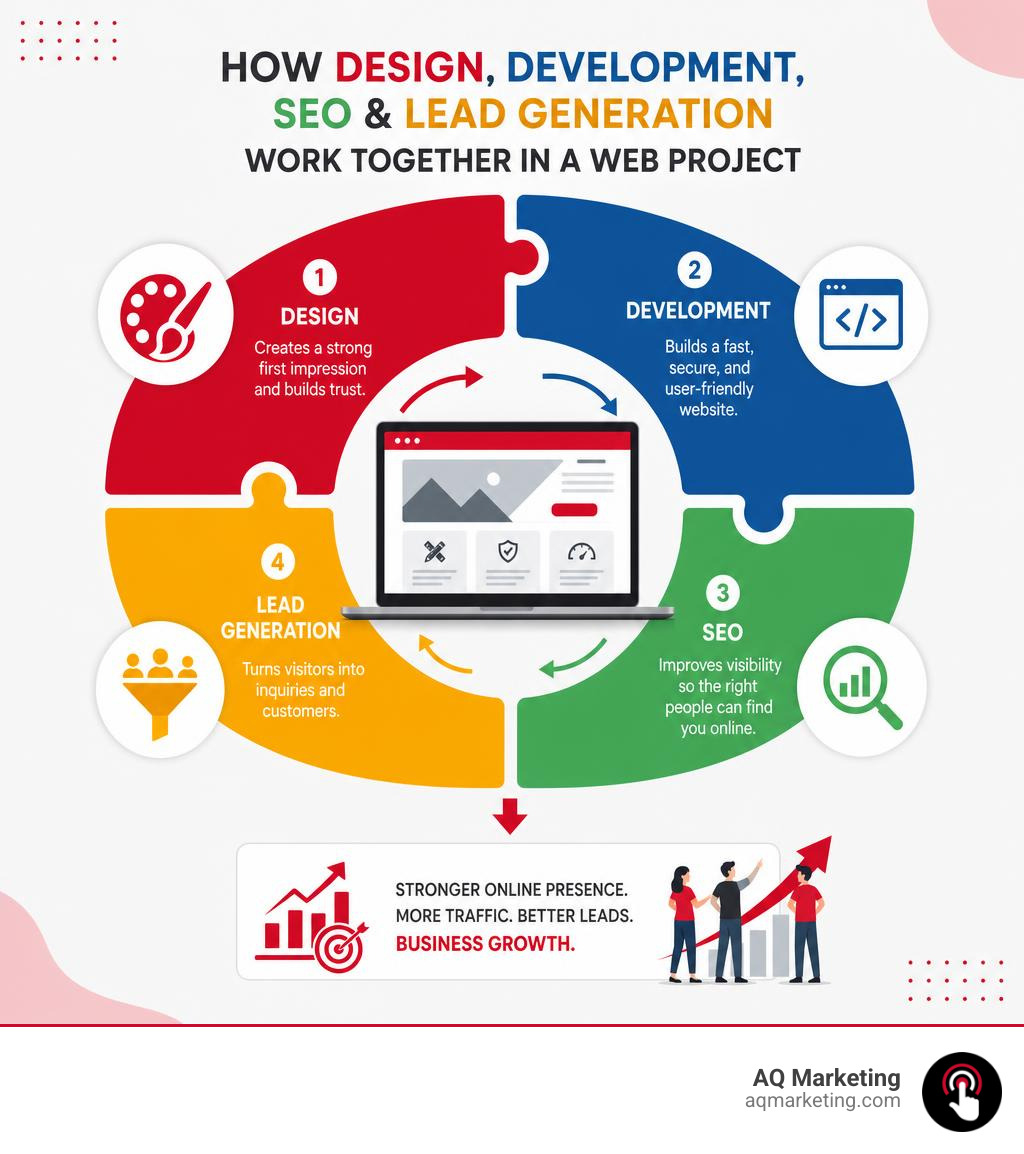
A graphic and web design company helps your business look trustworthy, communicate clearly, and convert visitors into leads or customers. At its best, it combines visual design, website strategy, development, content structure, search visibility, and ongoing support.
For small and mid-sized businesses, this matters because your website is not just a digital brochure. It is often your salesperson, receptionist, credibility builder, local search asset, and lead generation engine all in one. No pressure, right?
A professional partner should help with:
- Brand identity and visual consistency
- Logo design or logo refinement
- UX/UI planning
- Responsive website design
- Website development
- Content layout and page structure
- SEO foundations
- Conversion strategy
- Accessibility checks
- Hosting or technical support coordination
- Post-launch updates and improvements
If you want a deeper look at how website strategy and buildout work together, see our Web Design and Development service overview.
Core services most businesses should expect
Most businesses should expect more than a homepage mockup and a “good luck” handshake. A strong design project usually includes:
- Brand strategy: Who you serve, what makes you different, and how your message should sound.
- Visual identity: Logo systems, color palettes, typography, icon styles, and imagery direction.
- Marketing collateral: Business cards, brochures, print materials, ads, social graphics, and branded templates where needed.
- Website architecture: Sitemap planning, navigation structure, and user flow.
- Wireframes: Simple page layouts that map content and conversion paths before full design.
- Page design: Custom visual layouts for key pages.
- CMS setup: A content management system that lets your team update core content.
- Mobile optimization: Layouts that work well on phones, tablets, and desktops.
- Analytics setup: Tracking tools to measure traffic, leads, and engagement.
- Lead forms: Contact forms, quote forms, booking paths, or call tracking.
- Content migration: Moving and formatting content from an old site when appropriate.
- QA testing: Browser, device, speed, form, link, and usability checks.
- Launch support: Final deployment, redirects, testing, and post-launch fixes.
The best agencies do not treat these as random tasks. They connect them into one plan.
How a graphic and web design company differs from a general digital agency
A graphic and web design company usually focuses on creative direction and visual execution first. That includes branding, page design, UX/UI, and visual systems. A general digital agency may offer a wider range of marketing services, such as SEO, PPC, social media, CRM workflows, reputation management, and ongoing lead generation.
The difference is not always black and white. Some partners specialize in design only. Others combine design, development, and marketing into one growth-focused service model.
Here is the practical distinction:
| Partner Type | Primary Focus | Common Strength | Possible Gap |
|---|---|---|---|
| Graphic and web design company | Brand visuals and website design | Strong creative execution | May not include ongoing SEO or lead generation |
| Web development team | Technical buildout | Custom functionality and integrations | May rely on others for branding or content |
| Digital marketing agency | Growth and visibility | SEO, ads, content, analytics, leads | Design quality varies by agency |
| Full-service growth partner | Design, development, and marketing | Strategy through post-launch support | Requires clear scope and communication |
At AQ Marketing, we focus on helping small to medium-sized businesses improve their online presence through website design, SEO, content, social media, and digital marketing support. If you are comparing partner types, our guide on What to Expect from a Digital Marketing Agency can help clarify what should be included.
Why design alone is not enough for measurable growth
A beautiful website can still underperform if it has weak messaging, poor page speed, confusing navigation, thin content, or no SEO strategy. Good design earns attention. Good strategy turns that attention into action.
A growth-focused website should include:
- Clear conversion paths
- Search-friendly page structure
- Helpful, well-written content
- Fast load times
- Mobile usability
- Trust signals, such as reviews, credentials, and project examples
- Strong calls-to-action
- Visitor tracking
- Lead nurturing workflows
- Analytics and reporting
That is why we recommend approaching design as part of a complete digital growth system. Learn more about strategy-driven site design through our Custom Website Design service.
Top Types of Design Partners to Compare in 2026
There is no single “best” design partner for every company. The right choice depends on your goals, budget, timeline, internal team, and how much support you need after launch.
| Partner Model | Best Fit | Limitations | Pricing Structure | Support Level | Scalability |
|---|---|---|---|---|---|
| Full-service website and marketing partner | SMBs that need website, SEO, content, and leads | May require a broader monthly plan | Project plus retainer | High | High |
| Branding-first creative studio | Rebrands, naming, logo systems, print assets | May not handle technical SEO or development deeply | Project-based | Medium | Medium |
| Web development and UX/UI specialist | Custom sites, portals, eCommerce, integrations | May need outside marketing support | Project-based or hourly | Medium to high | High |
| Freelance marketplace | Logos, one-off graphics, quick concepts | Strategy and consistency can vary | Fixed project or contest | Low to medium | Low to medium |
| Subscription design service | Ongoing graphic production | Often less strategic for websites | Monthly subscription | Medium | Medium |
| Local SMB-focused agency | Service businesses needing local visibility | May not be ideal for enterprise software complexity | Project plus ongoing support | High | High for SMBs |
Full-service website and marketing partners
A full-service partner connects website strategy, UX design, development, SEO, content writing, lead generation, advertising, analytics, and ongoing support.
This model is often best for businesses that want a website to do more than look nice. If your goals include ranking in search, generating phone calls, improving form submissions, building trust, and supporting long-term marketing, this is usually the strongest fit.
A full-service website project may include:
- Website strategy
- UX and conversion planning
- Website design and development
- SEO setup
- Website content writing
- Local SEO support
- Google Business Profile optimization
- Paid advertising readiness
- Analytics and reporting
- Ongoing maintenance and improvements
Explore our Website Design and Development Services if you want this type of connected approach.
Branding-first creative studios
Branding-first studios are strong at visual systems. They help businesses define how they look, sound, and feel across every customer touchpoint.
They may work on:
- Brand strategy
- Naming
- Messaging
- Logo design
- Color and typography systems
- Print design
- Packaging
- Environmental graphics
- Campaign assets
- Brand guidelines
This is a good fit for businesses going through a rebrand, launching a new company, or trying to unify inconsistent visuals. The main caution is handoff. If the branding studio does not also handle website development, SEO, or conversion strategy, you need a plan for turning the brand system into a working website.
Web development and UX/UI specialists
Web development and UX/UI specialists are ideal when the site needs technical depth. Think eCommerce, custom integrations, advanced CMS functionality, booking systems, portals, or complex user flows.
They often help with:
- CMS selection
- Custom development
- eCommerce functionality
- Mobile-first design
- Prototyping
- Usability testing
- Accessibility standards
- Technical documentation
- API or third-party integrations
This model can be powerful, but make sure someone owns the full business strategy. A technically impressive website still needs clear messaging, SEO, trust-building content, and conversion planning.
Freelance marketplaces and design subscriptions
Freelance marketplaces and design subscriptions can be useful for quick, lower-commitment design needs. Some platforms connect businesses with designers across many countries, and public marketplace data shows huge demand for fast design work, including new designs created every few seconds and tens of thousands of customer reviews across major platforms.
These options can work well for:
- One-off logos
- Social media graphics
- Presentation design
- Basic landing page concepts
- Ad creative
- Simple brand assets
- Overflow design production
The tradeoff is consistency. You may get speed and variety, but not always deep strategy, accountability, SEO insight, or long-term ownership of results. For a flyer or one-time graphic, that may be fine. For your main business website, be careful.
Local SMB-focused design partners
Local SMB-focused partners are often the best fit for service businesses that depend on trust, phone calls, local rankings, and repeat visibility. This includes home services, insurance agencies, professional services, health and wellness, fitness, and local retail.
A local partner should understand:
- Service-area pages
- Local SEO
- Google Business Profile marketing
- Review generation
- Phone call conversion
- Form lead quality
- Local trust signals
- Reputation management
- Seasonal campaigns
- Relationship-driven support
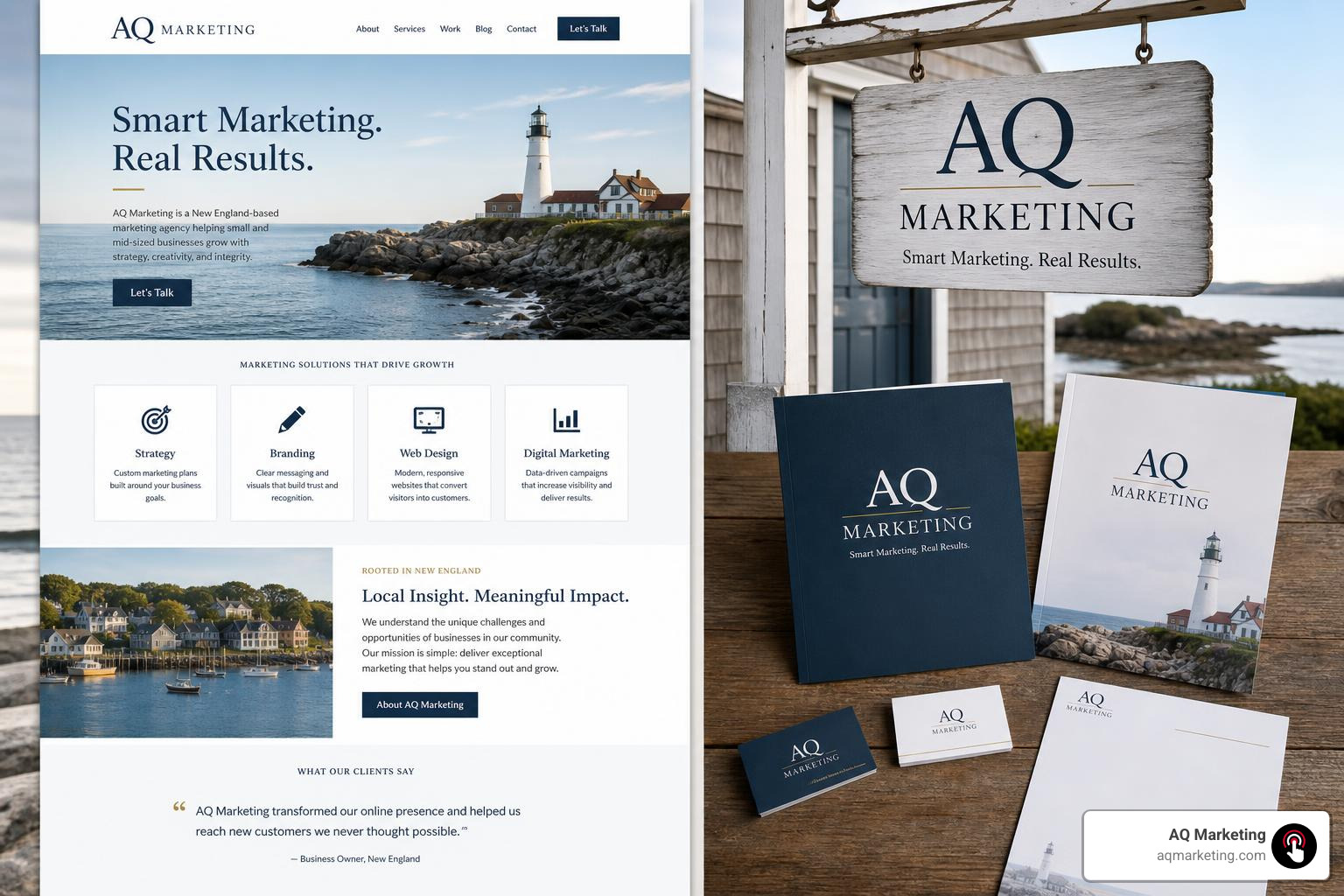
For small business owners in Massachusetts communities from Woburn and Burlington to Worcester, Lowell, Cambridge, Boston, and beyond, local context matters. A plumber, insurance agency, law office, or HVAC company does not need a website that only wins design awards. It needs a website that earns trust and helps real customers take the next step.
Our Small Business Website Design service is built around that practical goal.
How to Evaluate, Price, and Plan Your Design Project
Before you hire any graphic and web design company, slow down and compare more than the homepage of their portfolio. A flashy design can hide weak process. A simple-looking agency site can sometimes hide deep strategic talent. The trick is knowing what to ask.
What to ask a graphic and web design company before signing
Use this list during discovery calls:
- What does your discovery process include?
- Who will work on our project?
- Do you handle both design and development?
- Which CMS do you recommend, and why?
- What SEO work is included in the project?
- How do you approach accessibility?
- How many revision rounds are included?
- Do you help with website copy or content planning?
- What do you need from us before the project starts?
- What is your launch plan?
- What happens after launch?
- Will we own the website, content, graphics, and source files?
- Will we receive training?
- How do you report performance after launch?
- Do you have experience in our industry?
- How do you handle missed timelines or scope changes?
Good partners answer clearly. Great partners ask thoughtful questions before answering.
Reputation signals that actually matter
Reputation matters, but not all signals are equal. A long list of logos may look impressive, but you want proof that the partner can solve problems like yours.
Look for:
- Verified reviews
- Relevant case studies
- Measurable outcomes
- Before-and-after examples
- Awards or industry recognition
- Repeat clients
- Referrals
- Industry specialization
- Communication feedback
- Timeline accuracy
- Lead generation results
Independent directories can help because they often include filters for budget, location, service type, industry, hourly rate, and verified client feedback. As of May 2026, large review platforms list tens of thousands of web design providers, which is helpful but also overwhelming. Use them as a starting point, not the final decision-maker.
You can also review what our clients say on our Customer Reviews page.
Typical project costs based on average online data
Important pricing note: The ranges below are based on average online data and broad industry research. They do not represent AQ Marketing’s actual pricing. Actual costs vary based on scope, page count, content needs, functionality, SEO requirements, integrations, timeline, and support.
Typical online industry ranges in 2026:
| Project Type | Typical Online Cost Range |
|---|---|
| Single landing page | $1,500 to $15,000+ |
| Small business website | $3,000 to $30,000+ |
| Custom business website | $10,000 to $100,000+ |
| eCommerce website | $15,000 to $150,000+ |
| UX/UI prototype | $1,500 to $20,000+ |
| Brand identity package | $2,000 to $50,000+ |
| Ongoing design or marketing retainer | Varies widely by scope |
Why such a wide spread? Because a five-page brochure website is not the same as a 200-page SEO-driven site with custom service pages, CRM workflows, accessibility remediation, lead tracking, and ad campaign landing pages.
For more context, read our guide on How Much Does It Cost to Design a Website?.
Typical timelines and deliverables
Project timelines also vary, but most professional website projects follow a similar sequence.
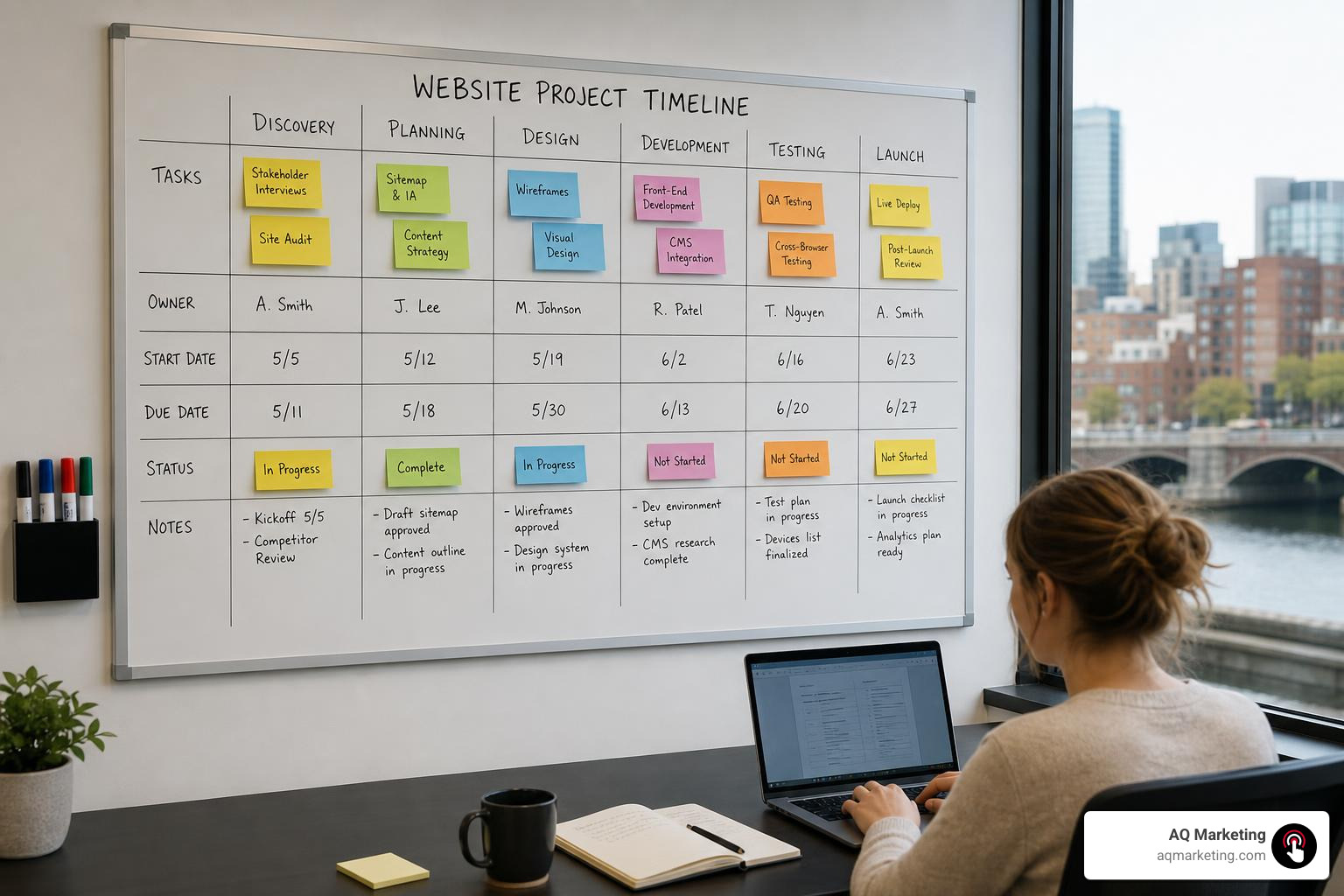
Common timeline ranges:
- Landing page: 2 to 4 weeks
- Small business website: 6 to 12 weeks
- Custom website: 12 to 20 weeks
- eCommerce or complex build: 16 weeks or more
Typical deliverables include:
- Discovery summary
- Sitemap
- Wireframes
- Design mockups
- Brand assets or design system
- Website development
- Content entry
- SEO setup
- Metadata and heading structure
- Analytics setup
- Form testing
- Mobile and browser testing
- Accessibility checks
- CMS training
- Launch support
- Post-launch fixes
If an agency promises a full custom website in a few days, ask what is being skipped. Sometimes speed is possible. Sometimes it is just a template wearing a fake mustache.
Modern Priorities for High-Performing Graphic and Web Design
A modern website must be attractive, fast, searchable, accessible, and easy to update. It should also support automation, lead generation, and long-term growth.
Creative design still matters, but in 2026 it needs to work harder. Learn more about our approach to Creative Web Design.
Accessibility is now a core design requirement
Accessibility is no longer optional. It is part of professional web design.
An accessibility-aware website considers:
- WCAG standards
- Keyboard navigation
- Alt text for images
- Color contrast
- Readable typography
- Clear link labels
- Accessible forms
- Logical heading structure
- Error messages users can understand
- Screen reader compatibility
- Testing and remediation
Accessibility helps more people use your website, improves usability for everyone, and can reduce legal risk. It also reflects well on your brand. A business that makes its website easier to use is telling customers, “Yes, we thought about you.”
For help improving accessibility, visit our Web Accessibility Solutions page.
AI, automation, and smarter customer experiences
AI is changing web design, but not by replacing strategy. The best use of AI is to improve customer experience, speed up response times, and support better decision-making.
Modern websites may include:
- AI webchat
- AI voice receptionist tools
- Lead qualification
- CRM integration
- Automated follow-up workflows
- Content assistance
- Personalization
- Visitor identification
- Email outreach support
- Faster internal routing
The key is human oversight. AI should support your brand, not make your business sound like a robot wearing a name tag at a networking event.
For small businesses, the most practical AI use cases are often simple: answer questions faster, capture leads after hours, route inquiries correctly, and help your team follow up.
Branding, UX/UI, and conversion strategy by industry
Different industries need different design choices.
For example:
- Home services: Clear phone numbers, service-area pages, emergency calls-to-action, reviews, financing information, and before-and-after project photos.
- Insurance: Trust signals, quote forms, carrier information, local expertise, educational content, and easy contact options.
- Professional services: Credibility pages, bios, case studies, consultation forms, and clear service explanations.
- Healthcare and wellness: Accessible design, reassuring messaging, appointment paths, and privacy-aware forms.
- Education and nonprofit: Mission-focused storytelling, donation or inquiry paths, event content, and community trust.
- eCommerce: Product filtering, reviews, shipping clarity, fast checkout, and abandoned-cart support.
- B2B: Lead magnets, industry pages, technical proof, case studies, and CRM-connected forms.
The design should match the customer’s decision-making process. A homeowner with a burst pipe does not want a cinematic brand manifesto. They want to know if you can help today.
For brand consistency, see our Brand Identity and Logo Design service.
Emerging trends shaping 2026 and beyond
The strongest web design trends in 2026 are less about flashy effects and more about performance, trust, and usability.
Important trends include:
- Data-driven design decisions
- AI-assisted prototyping
- Sustainable web practices
- Lightweight, faster websites
- Accessibility-first layouts
- Privacy-friendly analytics
- Personalized content experiences
- Voice search readiness
- Reputation signals built into page design
- Conversion-focused service pages
- Mobile-first content hierarchy
Sustainability is also gaining attention. Lighter websites can reduce server load, improve performance, and create a better user experience. In plain English: fewer bloated pages, fewer giant files, fewer visitors angrily tapping their screen.
For more trend insights, read 5 Website Design Trends to Watch.
Frequently Asked Questions About Hiring a Graphic and Web Design Company
How do I know which design partner is the right fit?
Start with your business goals.
Choose a partner based on:
- Your growth stage
- Your budget range
- Your timeline
- Your technical needs
- Your industry
- Your internal marketing capacity
- Your communication style
- The partner’s portfolio relevance
- Post-launch support expectations
- Brand alignment
- Long-term roadmap
If you only need a logo, a freelance or project-based designer may be enough. If you need a website that ranks, converts, tracks leads, and supports ongoing marketing, look for a partner with web design, SEO, content, and growth strategy under one roof.
The best fit is not always the biggest agency or the cheapest quote. It is the partner that understands where your business is going and can help you get there.
What should be included in a professional website design project?
A professional website design project should include more than page visuals.
At minimum, look for:
- Discovery
- Strategy
- Sitemap
- UX planning
- Copy guidance
- Custom design
- Development
- Mobile responsiveness
- Basic SEO setup
- Analytics
- Accessibility checks
- QA testing
- CMS training
- Launch support
Also ask about what happens after launch. Websites need updates, security attention, content improvements, SEO work, and performance monitoring.
To avoid common problems, review 5 Website Design Mistakes to Avoid.
Is the cheapest option ever the best choice?
Sometimes the cheapest option is fine for a temporary landing page, early concept, or simple one-off asset. But for your main business website, the lowest price can become expensive later.
Common low-cost tradeoffs include:
- Template limitations
- Weak SEO setup
- Poor mobile experience
- Generic messaging
- Limited ownership rights
- No content strategy
- No accessibility review
- Slow page speed
- No support after launch
- No lead tracking
- Difficult future updates
That does not mean every business needs the most expensive custom build. It means you should consider total cost of ownership. A scalable, SEO-ready foundation usually saves time and money over the long term.
For budget-conscious planning, read The Cheapest Way to Create a Website for Your New Small Business.
Conclusion
Hiring a graphic and web design company in 2026 is not just about choosing who can make the prettiest homepage. It is about finding a partner that understands your brand values, technical needs, customer journey, and long-term growth goals.
The right partner should help you:
- Build visual trust
- Improve search visibility
- Create a better user experience
- Generate more qualified leads
- Support accessibility
- Connect design with marketing
- Measure performance
- Keep improving after launch
At AQ Marketing, we help small and medium-sized businesses create websites that look professional, communicate clearly, and support long-term digital growth. Since 2003, our focus has been practical: better websites, stronger SEO, improved visibility, and more meaningful results for local businesses.
If you are ready to build a website that supports your brand and your bottom line, start with our Website Design and Development services.