Why Insurance Marketing Matters in a Crowded Market
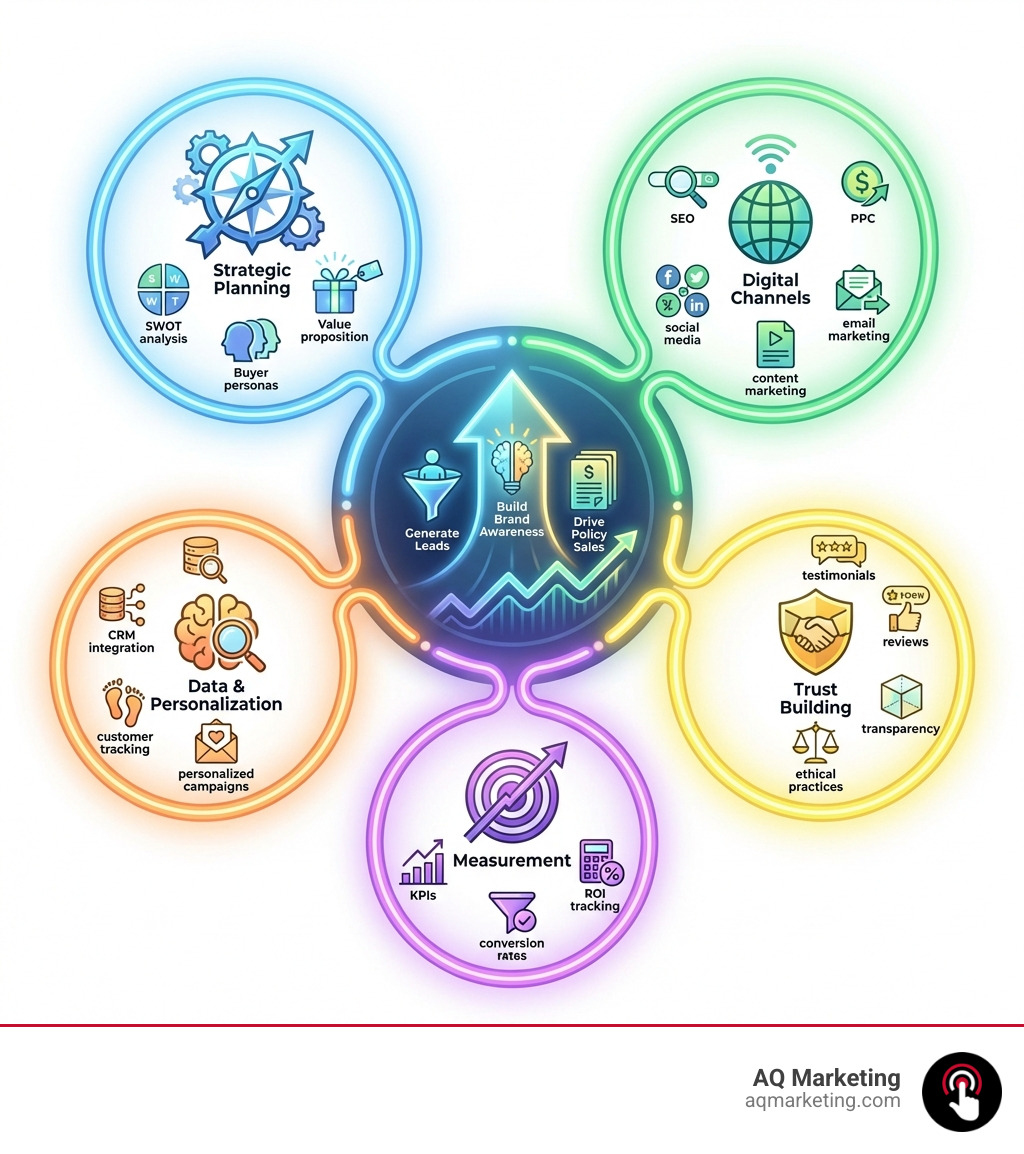
In a crowded marketplace, Insurance Industry Marketing is the strategic process of promoting insurance products and services to well-defined target audiences through digital and traditional channels. Done well, it generates high-quality leads, builds brand awareness, and, most importantly, establishes trust in a competitive environment.
Core Insurance Marketing Strategies:
- Digital Marketing Dominance – SEO, PPC advertising, social media, and content marketing drive customer acquisition.
- Trust-Building – Transparent communication, testimonials, and educational content establish credibility.
- Multi-Channel Approach – Combining traditional methods with digital tools for maximum reach.
- Data-Driven Personalization – Using customer insights to tailor messaging and improve conversion rates.
- Customer Experience Focus – Providing seamless interactions across all touchpoints.
The insurance industry is booming, with the global market projected to grow significantly. Yet this growth comes with intense competition—more than 5,978 active insurers operate in the United States today.
The challenge? Standing out in a crowded market where consumers are skeptical and digitally savvy. With nearly half of consumers viewing brand data usage negatively, trust is a precious commodity.
The opportunity? Carriers delivering excellent customer experiences attract two to four times more new business and 30% more revenue. Winners combine smart digital strategies with genuine relationship-building.
The digital shift has changed how people buy insurance. With 96.3% of internet users on mobile devices and 80% of Google searches being informational, marketing must meet customers online and on mobile, ready to answer their questions.
Yet, digital doesn’t replace the human touch. 68% of insurance shoppers still use the phone. Successful strategies blend digital efficiency with personal connection, using tools like AI webchat to respond quickly while maintaining the relationships that close deals.
I’m Robert P. Dickey, President and CEO of AQ Marketing. For over 20 years, I’ve helped businesses, including insurance agencies, succeed in the digital landscape. Since founding AQ Marketing in 2003, I’ve seen how the right marketing approach transforms struggling businesses into thriving operations.
Must-know Insurance Industry Marketing terms and approaches for agencies and carriers:
- Content Marketing for Insurance Companies
- Email Marketing Insurance Industry
- Insurance Agency Branding
The Evolving Landscape: From Traditional Outreach to Digital Dominance
The world of Insurance Industry Marketing has shifted from traditional outreach to digital supremacy. Decades ago, marketing involved newspaper ads and direct mail. Today’s consumer journey is vastly different.
Digitalization has been profound. Consumers now rely on digital tools for insurance research and evaluation, creating new opportunities for agencies and carriers to connect. Bain & Company research shows that while digital channels are great for simple tasks, a human-digital mix is preferred for complex ones like claims. A robust digital presence is essential to stay competitive.
This shift is driven by consumer behavior. People expect instant, personalized, and seamless experiences. With an astounding 96.3% of internet users accessing websites from their mobile devices, a mobile-optimized site is non-negotiable.
Customer experience is a necessity. According to McKinsey, US auto insurers that deliver excellent customer service see two to four times more new business and 30% more revenue. A superior digital experience directly boosts profitability by streamlining processes and enabling instant, personalized support.

The Modern Insurance Customer Journey
The modern customer journey is a hybrid of digital exploration and human interaction. It’s a complex web of touchpoints, requiring a presence in both digital and traditional spaces.
The journey often starts with online research for answers, not just quotes. A strong, informative online presence is crucial. Yet, the human element remains vital; 68% of insurance shoppers still use the phone during their decision-making process, highlighting the need for direct communication.
To succeed, we must create a seamless omnichannel experience, ensuring every client interaction is consistent and personalized. AI-powered tools like webchat can provide instant answers while offering a connection to a live agent for complex issues, improving satisfaction and conversions. Our website chat services ensure your clients always feel supported.
Primary Goals of Modern Insurance Marketing
At its heart, Insurance Industry Marketing aims to achieve several key objectives:
- Lead Generation: Attracting potential clients interested in our services.
- Brand Awareness: Making our brand recognizable and synonymous with trust.
- Customer Retention: Keeping existing clients happy and loyal through relationship nurturing.
- Building Trust and Authority: Establishing our agency as credible experts and reliable partners.
- Education: Helping clients understand their needs and the value of their coverage to build confidence.
- Policy Sales: All marketing efforts converge on increasing policy sales.
Building Your Strategic Blueprint: Key Components of Insurance Industry Marketing
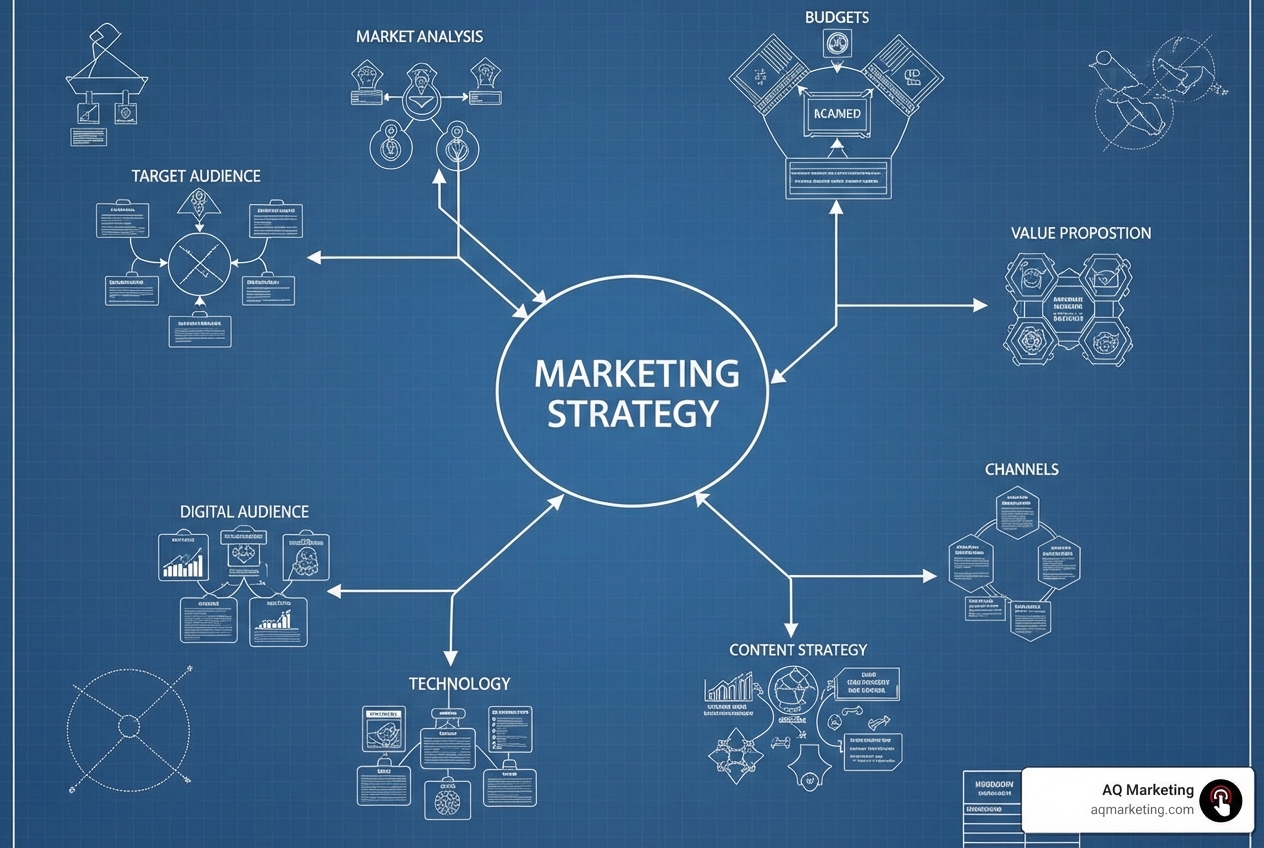
A successful Insurance Industry Marketing strategy requires a precise blueprint. It outlines how to reach, convert, and retain clients by considering resources, audience needs, competition, and trends to align marketing with business goals.
Before tactics, a SWOT analysis (Strengths, Weaknesses, Opportunities, Threats) is key to understanding internal capabilities and external market conditions. From there, we define brand messaging and articulate a clear value proposition: what makes us different and better?
Identifying and Understanding Your Target Audience
Understanding your target audience is paramount. We develop detailed buyer personas—fictional representations of ideal customers—that go beyond basic demographics to include:
- Demographic Data: Age, gender, income, location (especially for our Massachusetts-based agencies in areas like Amherst, Woburn, and Boston), family status.
- Psychographic Data: Lifestyles, values, interests, attitudes, and behaviors. What are their concerns and motivations?
- Life Stage Triggers: We recognize that insurance needs change with life events like marriage, a new baby, or starting a business.
This understanding allows for precise marketing messages. For B2B clients, we focus on business risks, regulations, and needs in sectors like healthcare or construction, where specialized coverage is vital. Learn more in our resources on digital marketing for insurance agents.
The Cornerstone of Success: Building Trust and Customer Relationships
In Insurance Industry Marketing, trust is the bedrock of every relationship. We sell peace of mind, and without trust, there are no sales.
How do we build it?
- Transparency: Be upfront about policy terms, claims processes, and data usage.
- Clear Communication: Avoid jargon and explain complex concepts in simple terms.
- Ethical Practices: Uphold high ethical standards in every interaction.
- Social Proof: Customer testimonials and reviews are powerful, as 95% of customers trust online reviews. Actively encouraging and showcasing positive feedback is crucial for credibility. Learn more about our reputation management services.
Differentiating Your Brand in a Competitive Market
With thousands of insurers and agencies, differentiation is key. We help companies carve out their unique space by focusing on:
- Unique Value Proposition (UVP): What makes you different? Is it unparalleled service, niche products, or an innovative approach?
- Niche Specialization: Focusing on a specific insurance type (e.g., commercial insurance for tech startups) or demographic can create a strong market position.
- Superior Customer Service: Excellent service drives new business and can be a significant differentiator.
- Innovative Use of Digital Tools: Leveraging AI-powered webchat and voice solutions positions your brand as modern and efficient.
- Brand Storytelling: Connect with your audience emotionally by telling your brand’s story and highlighting the security you provide.
Executing Your Strategy: Effective Digital and Traditional Channels
A comprehensive Insurance Industry Marketing strategy requires a multi-channel approach, integrating digital and traditional methods to create a cohesive brand experience across all touchpoints.
The Role of Content in Insurance Industry Marketing
Content marketing is the engine of modern Insurance Industry Marketing. By creating valuable content, we educate our audience, building trust and authority.
- Building Authority: Consistently publishing high-quality content establishes your agency as a trusted expert.
- Educating Consumers: Content simplifies complex policy details. Since 80% of Google searches are informational, people seek answers before buying.
- Storytelling and Humor: Storytelling makes insurance more relatable. Humor, when used appropriately, can connect with audiences and make complex topics more approachable.
- Content Formats: Diversifying content formats helps engage audiences across various platforms:
- Blogs: In-depth articles for SEO and thought leadership. See our best insurance agency blog ideas.
- Videos: Highly engaging for explaining topics or showing testimonials. 94% of marketers say video increases consumer engagement.
- Infographics: Distill complex information into easy-to-understand visuals for the 65% of people who are visual learners.
- Podcasts: Offer a personal touch and build trust with the 30% of the population who are auditory learners.
- White Papers/Ebooks: Long-form content that positions your agency as a thought leader.
Dominating Search: SEO and Paid Advertising
Dominating search engines is non-negotiable and involves a two-pronged approach:
Search Engine Optimization (SEO): This improves your website’s visibility in organic search results. For agencies in Massachusetts communities like Woburn or Plymouth, Local SEO is vital. Our strategies cover on-page, off-page, and technical SEO to help you rank higher on Google. Explore our search engine optimization services.
Paid Advertising (PPC): Paid ads offer immediate visibility.
- Google Ads (PPC): Based on online industry data, which does not reflect our pricing, insurance-related keywords can be expensive, sometimes costing over $50 per click. This makes strategic ad management crucial for a positive ROI. Well-targeted Google search ads can yield a 5.10% conversion rate.
- Social Media Advertising: Platforms like Facebook and LinkedIn allow for highly targeted ads, making them powerful for brand awareness and lead generation.
Engaging and Nurturing: Social Media and Email Marketing
Directly engaging and nurturing relationships is critical.
- Social Media Marketing: With 73% of the US population on social media, these platforms are indispensable. We help you select the right platforms (Facebook, LinkedIn, YouTube) and develop content to build thought leadership. Our social media marketing services are customized to your goals.
- Email Marketing: Email remains effective for nurturing leads and retaining customers, with industry open rates of 21.36%. We create segmented campaigns with custom messages to guide clients toward conversion.
Integrating Traditional Marketing Methods
Traditional marketing still holds value, especially when integrated with digital strategies.
- Direct Mail: Personalized mail can convey special offers with a personal touch.
- Sponsoring Local Events: Sponsoring community events in your service area increases brand visibility.
- Networking: Attending local business events allows for B2B partnership opportunities.
- Community Involvement: Being an active part of the community builds trust and loyalty.
- Print Advertising: Can still be effective for certain demographics or niche markets.
- Combining Offline and Online CTAs: A direct mail piece with a QR code linking to a landing page ensures traditional efforts feed your digital ecosystem.
Data, Personalization, and Measuring Success
To excel in Insurance Industry Marketing, we must accept data-driven decision-making. This means leveraging customer insights, personalizing interactions, and rigorously measuring campaign success.
Leveraging Data in Insurance Industry Marketing
Customer data is a goldmine for personalized marketing. By collecting and analyzing it, we can tailor outreach to individual needs.
- CRM Tools: Customer Relationship Management (CRM) tools are central, tracking every customer interaction to create a complete client profile for more personalized service.
- Customer Data Platforms (CDP): CDPs unify data from various sources to create a single, comprehensive view of each client, eliminating data silos and speeding up service.
- Personalization at Scale: With robust data, we can move beyond generic messages to send personalized communications that boost engagement. We also use data insights to power our digital advertising services, ensuring ads reach the most relevant audiences.
Challenges and Ethical Considerations of Using Consumer Data
While data offers immense opportunities, it also presents challenges and ethical considerations.
- Data Privacy Concerns: Consumers are wary of how their data is used. McKinsey reports that nearly half of people view brand data use negatively, making trust critical.
- Transparency in Data Usage: We must be transparent about what data we collect and why, obtaining clear consent.
- Regulatory Compliance: Insurance companies must ensure strict compliance with evolving data privacy regulations like GDPR and CCPA.
- Building an Ethical Framework: It’s vital to establish an ethical framework for data use, ensuring algorithmic transparency and preventing discriminatory practices. Balancing personalization with privacy is crucial for long-term success.
Measuring Campaign Success and Proving ROI
Measuring success and proving Return on Investment (ROI) is essential for optimizing strategies. We focus on key performance indicators (KPIs) such as:
- Lead Generation Rate: How many new leads are we attracting per channel?
- Conversion Rate: What percentage of leads become paying customers? For instance, the average conversion rate for an insurance search ad is 5.10%.
- Customer Acquisition Cost (CAC): How much does it cost to acquire a new customer?
- Customer Lifetime Value (CLV): How much revenue can we expect from a customer over their entire relationship?
- Brand Awareness Metrics: Tracking mentions, social reach, and website traffic to gauge brand resonance.
By monitoring these metrics, we can make data-driven adjustments to maximize marketing impact.
Frequently Asked Questions about Insurance Marketing
How can small insurance agencies compete with large carriers in marketing?
Small agencies in towns like Adams, Amherst, or Woburn, MA, can compete effectively in Insurance Industry Marketing by leveraging their agility and local presence. We advise focusing on:
- Local SEO: Optimize your Google Business Profile and website for local keywords (e.g., “auto insurance Boston MA”) to appear in local search results.
- Build Strong Community Relationships: Participate in local events and network with other businesses to build trust and generate word-of-mouth referrals.
- Offer Personalized Service: Highlight the attentive, personalized service that larger organizations often can’t match.
- Create Niche Content: Focus on specific insurance needs relevant to your local community to position yourself as a niche expert.
- Leverage Agility: Adapt to market changes and implement new marketing strategies much faster than bigger, slower-moving competitors.
What is the most effective digital marketing channel for insurance?
No single channel is “most effective” for Insurance Industry Marketing. The ideal mix depends on your audience, budget, and goals. An integrated strategy combining multiple channels is almost always the best approach.
- SEO is crucial for long-term organic traffic and authority.
- Paid Ads (PPC) can deliver immediate, targeted leads.
- Content Marketing supports SEO and lead nurturing by building trust.
- Social Media builds brand awareness and community.
- Email Marketing is excellent for nurturing leads and retaining customers.
The best approach involves testing and optimizing a blend of channels to find what resonates with your audience.
How long does it take to see results from insurance marketing?
The timeline for results from Insurance Industry Marketing varies by channel:
- Paid Advertising (PPC): Can generate leads and traffic almost immediately, often within days or weeks.
- Social Media Marketing: Building an engaged following and seeing direct sales can take a few months.
- SEO and Content Marketing: These are long-term strategies that typically take 6 to 12 months to show significant, compounding returns. However, the results are often more sustainable and cost-effective.
Patience and consistency are key, especially for strategies that build organic authority over time.
Conclusion: Partnering for Growth in the Digital Age
The Insurance Industry Marketing landscape is dynamic and full of opportunity. Success requires multifaceted strategies, from mastering the digital customer journey and building trust to using content and data-driven personalization.
The future of insurance marketing is integrated, customer-centric, and personalized, demanding a blend of digital skill and human connection. For our clients across Massachusetts, standing out requires a clear strategy, consistent execution, and continuous optimization.
At AQ Marketing, we believe in the value of expert guidance. We’re dedicated to helping small and mid-sized insurance agencies thrive by crafting winning marketing campaigns that deliver long-term, impactful results. Ready to transform your marketing efforts? Let us help you take your Insurance Industry Marketing to the next level.
Take your insurance marketing to the next level with a comprehensive digital strategy