
Marketing for insurance companies: Boost Growth 2025
Why Marketing for Insurance Companies Has Never Been More Complex
Marketing for insurance companies faces unprecedented challenges. The industry is experiencing a perfect storm of rising customer expectations, intense competition, and shifting consumer behaviors that demand a complete rethink of traditional marketing.
The current state of insurance marketing reveals key data points:
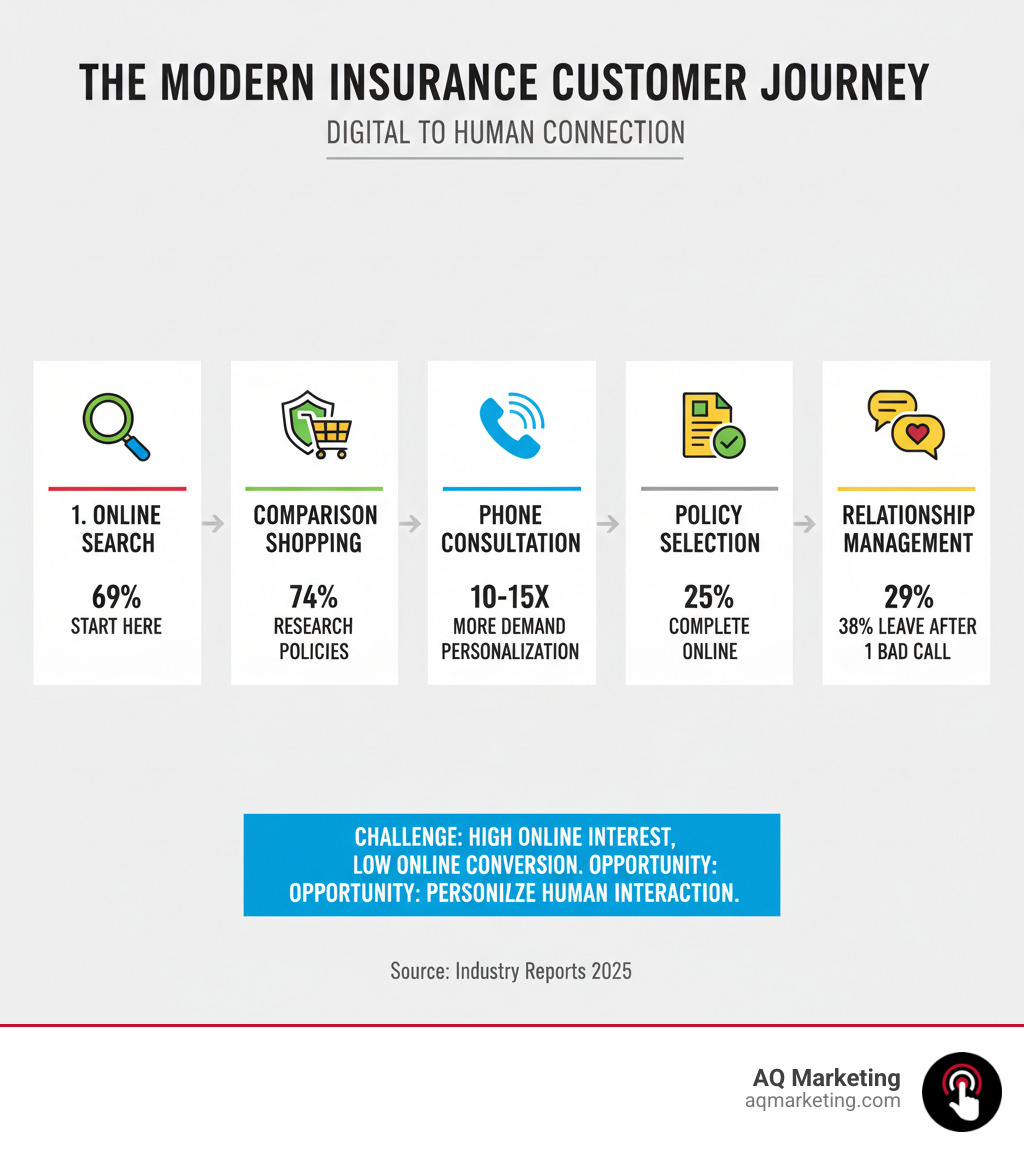
- 74% of consumers research policies online, but only 25% complete purchases there.
- Phone calls convert 10-15x more revenue than web leads.
- 88% of customers demand personalized experiences.
- Insurance keywords cost over $50 per click in Google Ads.
The reality is stark: most insurance consumers start their journey online but prefer to convert through phone calls. This creates a unique challenge for agencies serving Massachusetts and Southern New Hampshire, where local trust still matters immensely. Modern buyers expect instant online information, personalized service, and seamless transitions from digital research to human interaction.
Yet, less than one-third (29%) of insurance customers are satisfied with their current providers, and 38% will stop doing business with a company after one poor call experience. This satisfaction gap is a massive opportunity for agencies that invest in strategic, customer-focused marketing.
I’m Robert P. Dickey, President and CEO of AQ Marketing. With over 20 years of experience helping businesses in the Boston area and Southern New Hampshire, I have particular expertise in marketing for insurance companies. My background, from direct mail to digital ecosystems, provides unique insight into what works for local insurance agencies.
Marketing for insurance companies terms to know:
The Modern Insurance Marketing Maze: Challenges and Customer Behavior

Today’s insurance shoppers are digital detectives. The numbers show that 69% of consumers search online before an appointment, and 74% research insurance purchases online. They compare coverage and read reviews long before they consider making a call.
However, despite this digital research, only 25% complete their purchase online. Most people still want to talk to a real person, creating what J.D. Power calls the “trust bridge”—the critical moment when online interest meets offline conversation. The stakes are high; Invoca found that 38% of consumers will leave after a single bad call experience. With less than a third of customers satisfied with their current providers, there is enormous room for agencies that get the customer experience right.
The Local Customer Journey and Personalization
In our service areas—from Boston to Woburn, across Middlesex and Essex Counties, the Merrimack Valley, and into Southern New Hampshire—the insurance journey has a unique local flavor. “Insurance near me” searches have grown over 100% according to Google. A client in Woburn wants an agent who understands Massachusetts requirements and our brutal winters, not just the cheapest rate.
This local knowledge is a crucial differentiator. Your marketing for insurance companies must reflect this connection, addressing local concerns and demonstrating community involvement. With rising costs, customers are price-sensitive, but they also demand a better experience. Accenture research shows 88% of customers want more personalization, yet 21% feel their experiences aren’t customized at all.
Personalization means remembering a client has teenage drivers or understanding their business growth plans. The business case is compelling: McKinsey found that companies with excellent CX generate 2-4 times more growth and see 30% higher profitability. Since phone calls convert 10-15x more revenue than web leads, every conversation is valuable. The challenge is to be visible online where people research and deliver exceptional personal service when they’re ready to buy.
Building Your Digital Presence: The Foundation of Modern Insurance Marketing
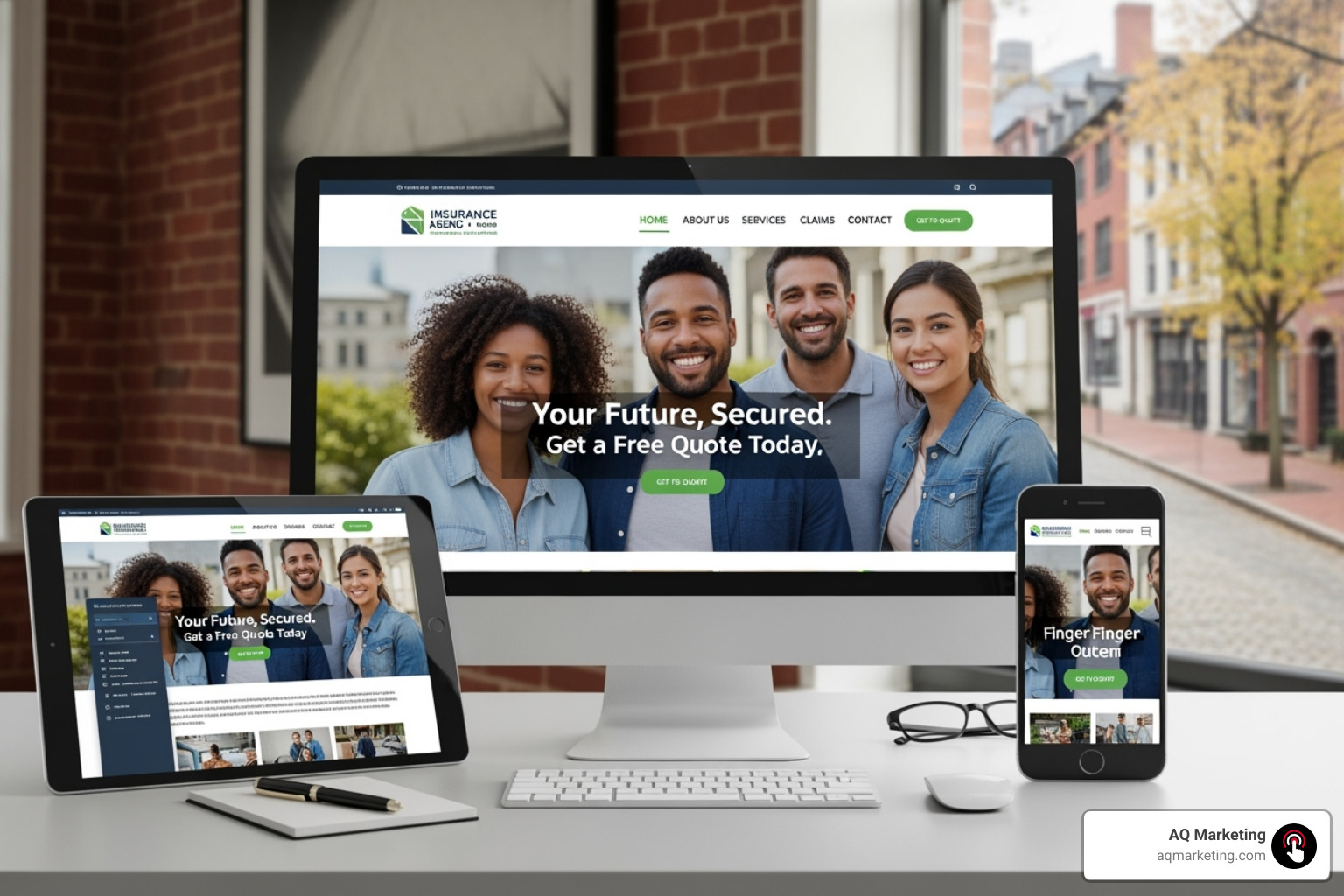
Your digital presence is your agency’s 24/7 front door. It’s the first impression for potential clients, and in marketing for insurance companies, that impression is critical. With over 50% of insurance searches happening on mobile devices, a slow or poorly designed mobile site means losing a customer before they even know what you offer.
Your website must be mobile-first optimized and fast. A clunky site sends the wrong message. User experience is paramount; visitors must easily find information, request a quote, or see your phone number. Your site should simplify the complexities of insurance, not add to them. Our website design approach focuses on creating sites that are both beautiful and functional.
Furthermore, 89% of customers read online reviews before choosing a provider. Your Google reviews and social media comments are your new word-of-mouth marketing. Managing your online reputation is essential for survival. A responsive WordPress website provides a flexible foundation to build a strong digital presence that generates leads and builds relationships around the clock.
Mastering Local SEO to Dominate Your Service Area
If you’re an agency in Essex County, you need clients from Andover, not Anaheim. Local SEO is your secret weapon.
- Google Business Profile optimization is your starting point. Ensure your address, phone number, hours, and services are accurate. Add high-quality photos to look established and trustworthy.
- Local keyword targeting is key. Focus on terms like “auto insurance Merrimack Valley” or “business insurance Boston MA.” These searches have less competition and attract qualified local buyers.
- Location-specific pages on your website for areas like Southern New Hampshire help you capture these searches and provide valuable local information.
- Building local citations on chamber of commerce sites and local directories proves to Google that you’re a legitimate local business.
- Generating positive reviews from local clients builds trust and improves your local search rankings. A review mentioning great service in Woburn carries extra weight with both Google and potential clients.
Our approach to Local SEO for Home Service Companies applies perfectly to insurance agencies, as both industries rely on local trust. Mastering local SEO means dominating your specific market where it matters most.
A Multi-Channel Approach to Marketing for Insurance Companies
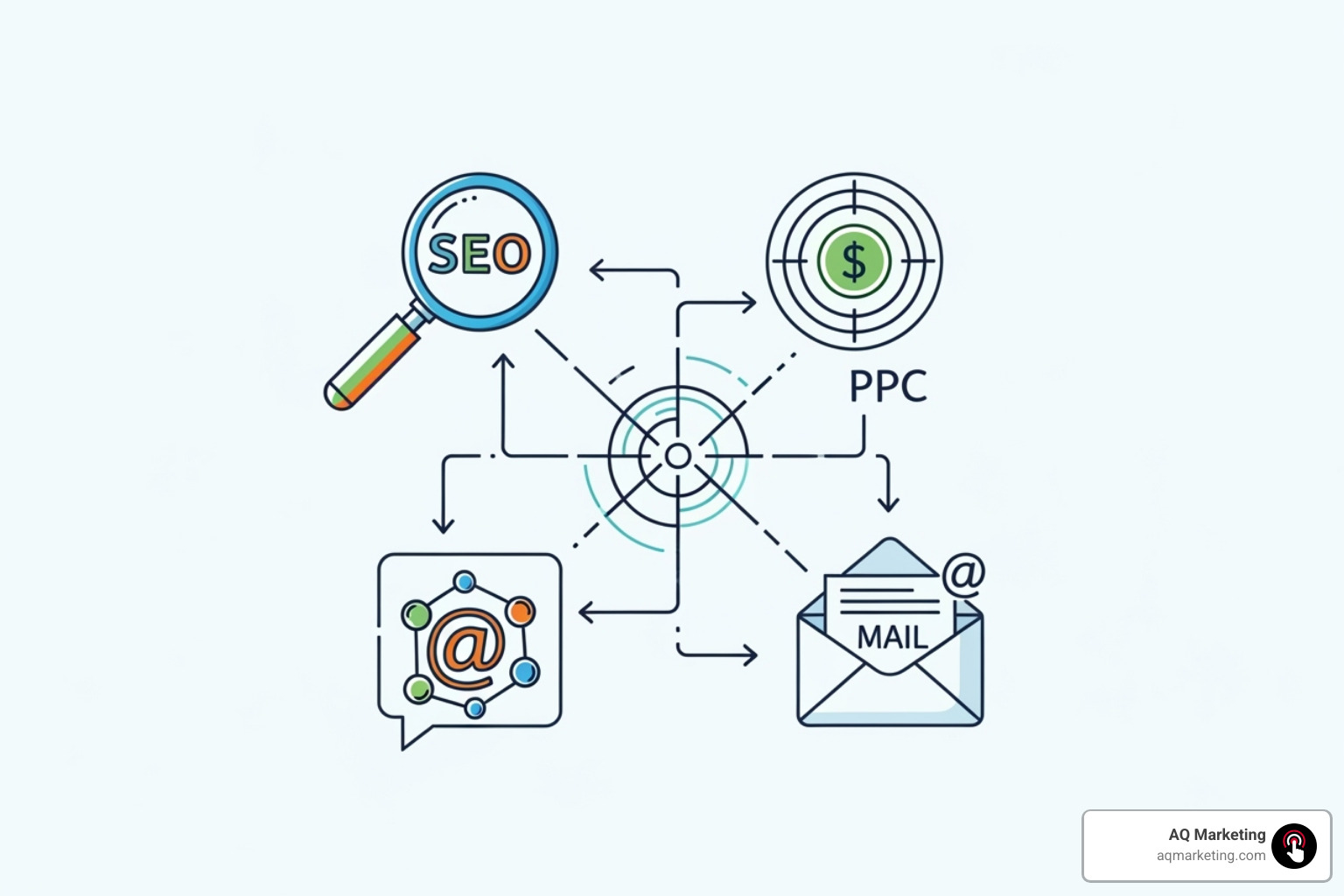
Effective marketing for insurance companies requires a blend of digital strategies working in concert. When a prospect sees your Google ad, finds your blog, and then encounters your social media content, you build familiarity and trust. This repetition is crucial for long-term decisions like buying insurance. Our insurance marketing strategies are built on this multi-channel foundation, establishing your agency as a reliable presence across Massachusetts and Southern New Hampshire.
SEO & Content Marketing: Earning Trust and Traffic
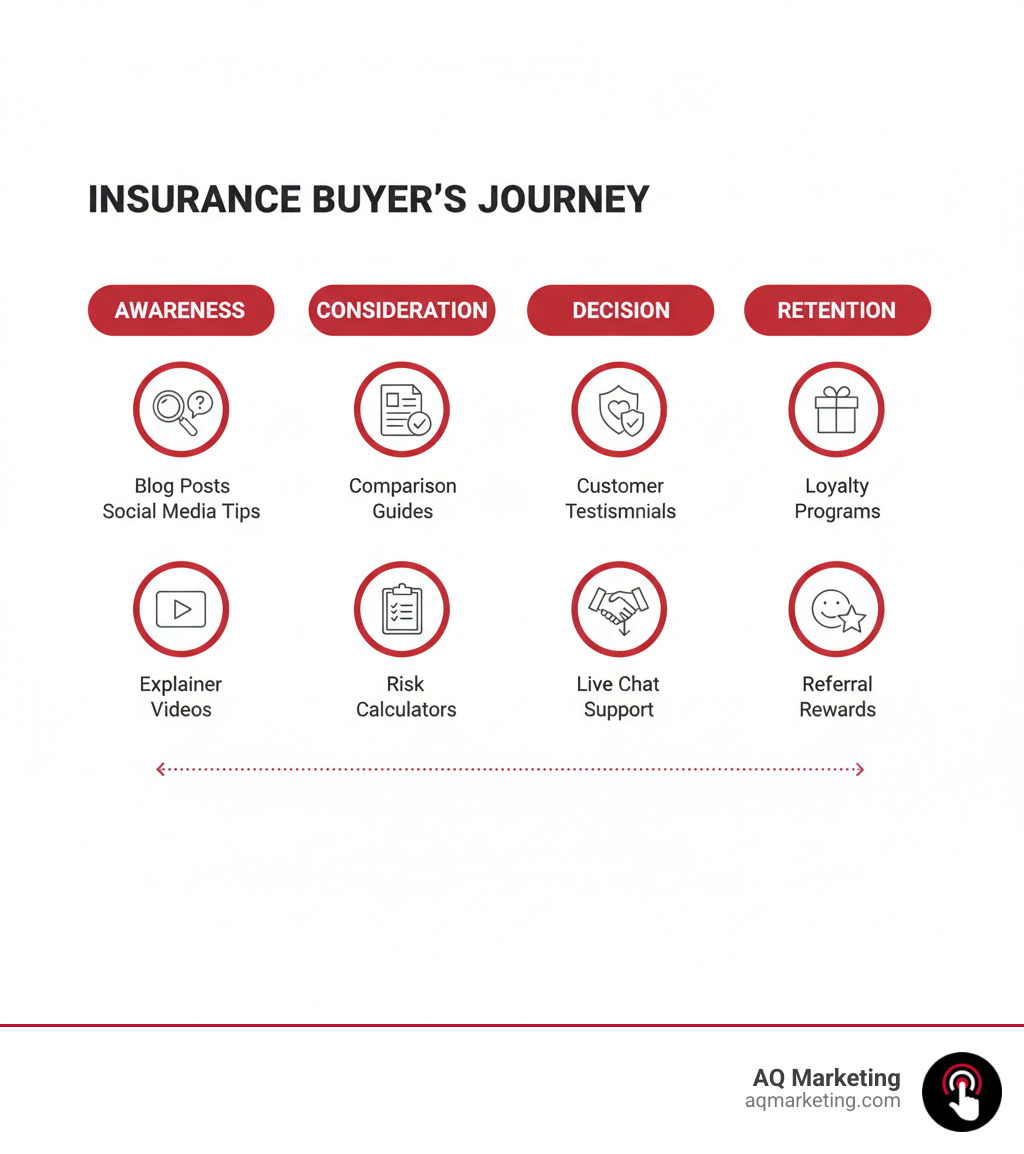
Content marketing builds trust before a sales call. By creating helpful blog posts, videos, or guides, you become an expert who educates. This is smart, considering insurance keywords cost over $50 per click. Quality content that ranks organically is a more sustainable way to attract leads, especially since 80 percent of Google searches are informational. Address real local questions, like flood insurance requirements near the Merrimack River or Massachusetts’ no-fault auto laws, to demonstrate your community expertise. Explore what content marketing is and learn about SEO for insurance agencies.
Paid Media: Reaching Local Insurance Buyers with Ads
For immediate visibility, paid advertising is your accelerator. Google and Bing PPC campaigns let you appear for high-intent searches like “business insurance Boston.” You can target users by location, time of day, and more. Social media offers different opportunities: Facebook and Instagram are great for consumer lines, while LinkedIn is a secret weapon for commercial insurance, connecting you with decision-makers. With the US insurance industry projected to spend over $15 billion on digital advertising in 2024, you need a smart, targeted presence to compete.
Email & Personalization: Nurturing Relationships for Retention
Turning one-time buyers into lifelong clients is where the magic happens. 78% of customers are more likely to respond to personalized messages, which can increase customer retention by 20%. Real personalization means sending timely renewal reminders, suggesting relevant coverage after a life event, or sharing safety tips based on policy types. A CRM system can automate this, segmenting clients to make every communication feel personal. This builds trust and encourages clients to share more data, creating a cycle of better service and stronger loyalty.
Social Media & Local Networking: Building Community and Referrals
For insurance agencies, social media is about becoming a trusted local voice. Use Facebook to share community news, Instagram for behind-the-scenes content, and LinkedIn for thought leadership on commercial insurance trends. Showcasing your involvement in communities like the Merrimack Valley or Boston makes you a trusted neighbor. Strategic partnerships with real estate agents, financial advisors, and local accountants can become your most valuable source of new business, amplifying the word-of-mouth referrals that are so powerful in this industry. Our social media marketing services can help amplify your community presence.
Creating and Implementing Your Data-Driven Marketing Plan
Effective marketing for insurance companies isn’t about guesswork; it’s about precision. A successful strategy requires a clear, data-driven plan.
First, set SMART goals (Specific, Measurable, Achievable, Relevant, Time-bound). Instead of “we want more customers,” a better goal is “increase qualified leads from small businesses in Woburn, MA by 25% in six months.” This provides a clear target.
Next, define your target audience. Are you focusing on young families in Southern New Hampshire or established businesses in Boston? The more precise your audience, the more effective your outreach.
Budget allocation requires a strategic mix. While insurance keywords can cost over $50 per click, a smart plan might invest heavily in long-term growth via local SEO and content while using targeted PPC for immediate visibility during peak seasons.
Tracking Key Performance Indicators (KPIs) is about understanding what the numbers tell you about the customer journey. We measure everything from website traffic from Middlesex County to email open rates. Using analytics to measure ROI helps us continuously optimize your marketing spend.
Finally, leverage conversation intelligence tools. Since phone calls convert 10-15x more revenue than web leads, analyzing these calls provides incredible insights into customer needs and objections. This data helps refine messaging and train your team. A data-driven approach takes the guesswork out of marketing, ensuring that when your leads double, you know exactly why and how to replicate that success. See how we build a digital marketing strategy.
The Future is Now: Trends and Examples in Insurance Marketing

The insurance industry is rapidly embracing cutting-edge marketing technologies, completely changing how marketing for insurance companies works. Artificial Intelligence is no longer fiction. Progressive used generative AI to test ad variants, boosting quote initiations by 31%—an optimization that would have taken years manually.
Other key trends include:
- Omnichannel Experiences: Customers expect seamless continuity when switching from your website to a phone call.
- Data Privacy: Adapting to regulations like the Gramm–Leach–Bliley Act (GLBA) is critical, as 80% of consumers demand transparency about data use.
- AI-Powered Tools: Predictive analytics help identify who is most likely to convert, while chatbots like GEICO’s provide 24/7 service and pre-qualify leads.
- Video Marketing: Agencies are using short-form video to explain complex policies and cut their cost per lead in half.
Inspiring Success and Future Strategy
While national brands grab headlines, the most inspiring successes often happen locally. Agencies serving Boston, Woburn, and the Merrimack Valley are finding creative ways to connect with their communities. Imagine creating videos on winter storm preparedness for New England homeowners or partnering with Essex County real estate agents for joint webinars. These are genuine community services that build trust and generate leads.
The lesson is to address customer needs with authenticity and local relevance. The future strategy for insurance marketing hinges on this, combined with technology. 82% of insurers state that AI adoption is critical. AI-powered ad testing, predictive analytics, and chatbots are becoming standard. As we move to a cookieless future, building trust to earn first-party data is paramount. The agencies that thrive will blend high-tech capabilities with the irreplaceable high-touch, human connection that defines the insurance industry.
Frequently Asked Questions about Marketing for Insurance Companies
What are the most effective marketing strategies for insurance companies?
The most effective marketing for insurance companies uses an integrated approach. It starts with a solid foundation: a fast, mobile-optimized website and strong local SEO so people in Boston or the Merrimack Valley can find you. On top of that, layer targeted outreach like helpful content marketing, localized digital ads, and authentic social media engagement. The final piece is relationship-building through personalized email and excellent customer service. The key is to bridge the gap between a customer’s online research and their need to speak with a real person before buying.
How can small, local insurance agencies compete with large national brands?
Local agencies can’t outspend national brands, but they can out-maneuver them. Your secret weapon is local expertise and community trust. Focus on a specific niche, like restaurants in Essex County or tech startups in the Boston area. Master local SEO to be the top result for searches in your service area. Most importantly, provide hyper-personalized service that a large corporation can’t replicate. Build genuine relationships with clients and local professionals like realtors and accountants. These human touches are your greatest competitive advantage.
How important is a mobile-friendly website for an insurance agency?
It is absolutely critical. Over 50% of all insurance searches happen on mobile devices, often through urgent “insurance near me” queries. If your website is slow, difficult to steer, or unreadable on a phone, you are effectively invisible to more than half of your potential clients. They will simply hit the back button and go to a competitor whose site works. Furthermore, Google prioritizes mobile-friendly websites in its search rankings. A poor mobile experience doesn’t just frustrate users who find you; it prevents many from finding you in the first place. In today’s market, a mobile-friendly website is the price of entry.
Conclusion: Partner with an Expert to Steer Your Marketing
The world of marketing for insurance companies is complex. Juggling customer expectations, competitive pricing, and digital trends is a full-time job. You don’t have to figure it all out alone.
Successful agencies put customers first, build a strong digital presence, and make data-driven decisions. These are the foundational elements for thriving in today’s market. This requires expertise across multiple disciplines, from local SEO that captures searches in Woburn to content that builds trust with families in Essex County. You must master the art of converting online interest into phone calls, which we know are worth 10-15 times more revenue than web leads.
This is why a strategic partner makes a difference. Since 2003, AQ Marketing has helped small to medium-sized businesses throughout Boston, Woburn, Middlesex County, Essex County, Merrimack Valley, and Southern New Hampshire steer their digital marketing. We have watched the insurance industry evolve and understand the unique challenges and opportunities in your backyard.
Our deep knowledge of these local markets sets us apart. We know a coastal Massachusetts homeowner has different concerns than a Southern New Hampshire business owner. With 82% of insurers calling AI adoption critical, the industry is moving fast. With the right strategy and partner, these changes are opportunities for growth.
Ready to build a comprehensive strategy that drives real growth for your insurance company? Let’s start a conversation about how our digital marketing services for insurance companies can make your agency the trusted choice in your community. We know what works, and we’d love to put our 20+ years of expertise to work for you.