

Why Results Driven Web Design Is Essential for Modern Business Growth
Results driven web design is a strategic approach to creating websites that prioritize measurable business outcomes—like lead generation, sales conversions, and customer engagement—over purely aesthetic considerations. Unlike traditional web design that focuses mainly on appearance, results-driven design uses data, user behavior insights, and conversion optimization techniques to transform your website into a revenue-generating asset.
Quick Answer: What Makes Web Design “Results-Driven”?
- Clear, measurable business goals (SMART objectives tied to revenue, leads, or engagement)
- Data-informed decisions using analytics, heatmaps, and A/B testing
- User-centric navigation designed to reduce friction and guide visitors toward action
- Mobile-first optimization ensuring performance across all devices
- Continuous improvement through testing and refinement based on real user behavior
- SEO integration to drive organic traffic without relying solely on paid ads
- Trust-building elements like testimonials, security badges, and professional design
- Fast loading speeds (under 3 seconds) to prevent visitor abandonment
Here’s the reality: 94% of first impressions are based on your site’s design and navigation, and 75% of your credibility is judged by your overall design. Even more striking, a single second of delay in page load time can reduce conversions by up to 7%. For small and medium-sized businesses competing in crowded markets, these numbers represent the difference between growth and stagnation.
Traditional web design often treats websites as digital brochures—pretty to look at but passive in generating business results. Results driven web design flips this approach. It starts with a fundamental question: What concrete results must this website generate for your organization? Every design choice, from button placement to color psychology, stems from that answer.
The research shows that 90% of customers will switch to a competitor if they encounter a site that’s not user-friendly, poorly designed, or outdated. This isn’t just about losing one sale—it’s about losing customer lifetime value and damaging your brand reputation. When over 70% of eCommerce sales happen on mobile devices and more than 75% of clicks go to the first page of search results, your website must perform flawlessly across all metrics.
What separates high-performing websites from the rest? It’s not guesswork or personal preference—it’s a systematic approach grounded in behavioral psychology, conversion optimization, and continuous testing. The Fogg Behavior Model teaches us that user action requires three elements converging: motivation, ability, and a prompt. Results driven web design engineers each of these elements deliberately.
I’m Robert P. Dickey, President and CEO of AQ Marketing, and over my 20+ years in digital marketing, I’ve seen how results driven web design transforms businesses—turning struggling online presences into lead-generating engines for home services companies, insurance agencies, and fitness centers throughout Massachusetts and beyond. The shift from aesthetic-focused to performance-focused web design isn’t just a trend; it’s a fundamental requirement for business survival in today’s digital landscape.
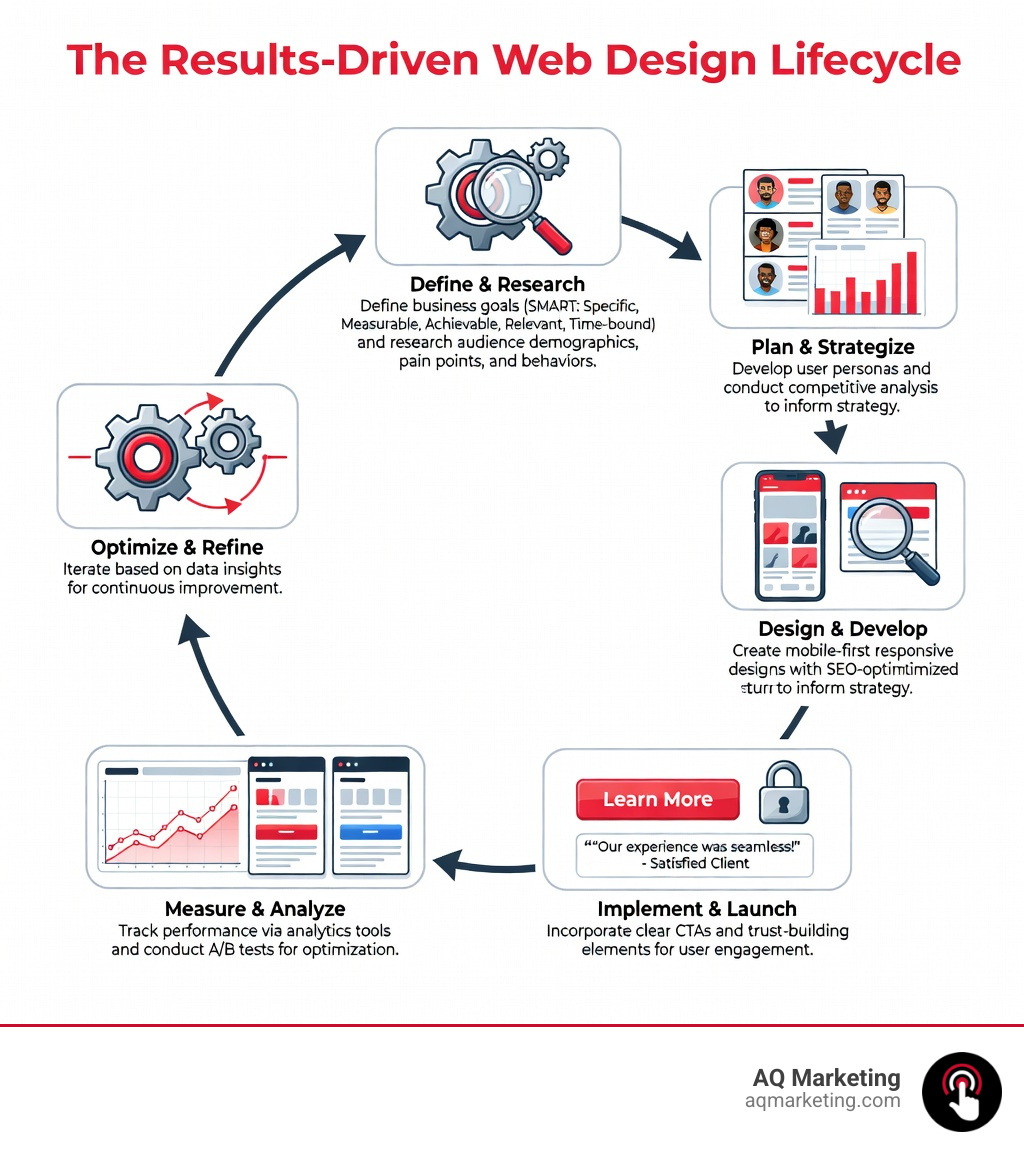
Simple results driven web design word guide:
Defining Results Driven Web Design vs. Traditional Aesthetics
When we talk about the difference between traditional and results driven web design, we are really talking about the difference between a painting and a tool. A painting is meant to be looked at; a tool is meant to be used to achieve a specific task. Traditional web design often falls into the trap of “subjective preferences”—the business owner likes the color blue, or the designer thinks a certain animation looks “cool.”
In contrast, results-driven design is rooted in business objectives. We don’t just ask if it looks good; we ask if it works. Does the layout guide the user toward a Professional Web Design that builds trust? Research from the Stanford Web Credibility Project shows that 75% of website credibility is judged by design. If your site looks like it was built in 2005, users won’t just think it’s “ugly”—they’ll think your business is unreliable.
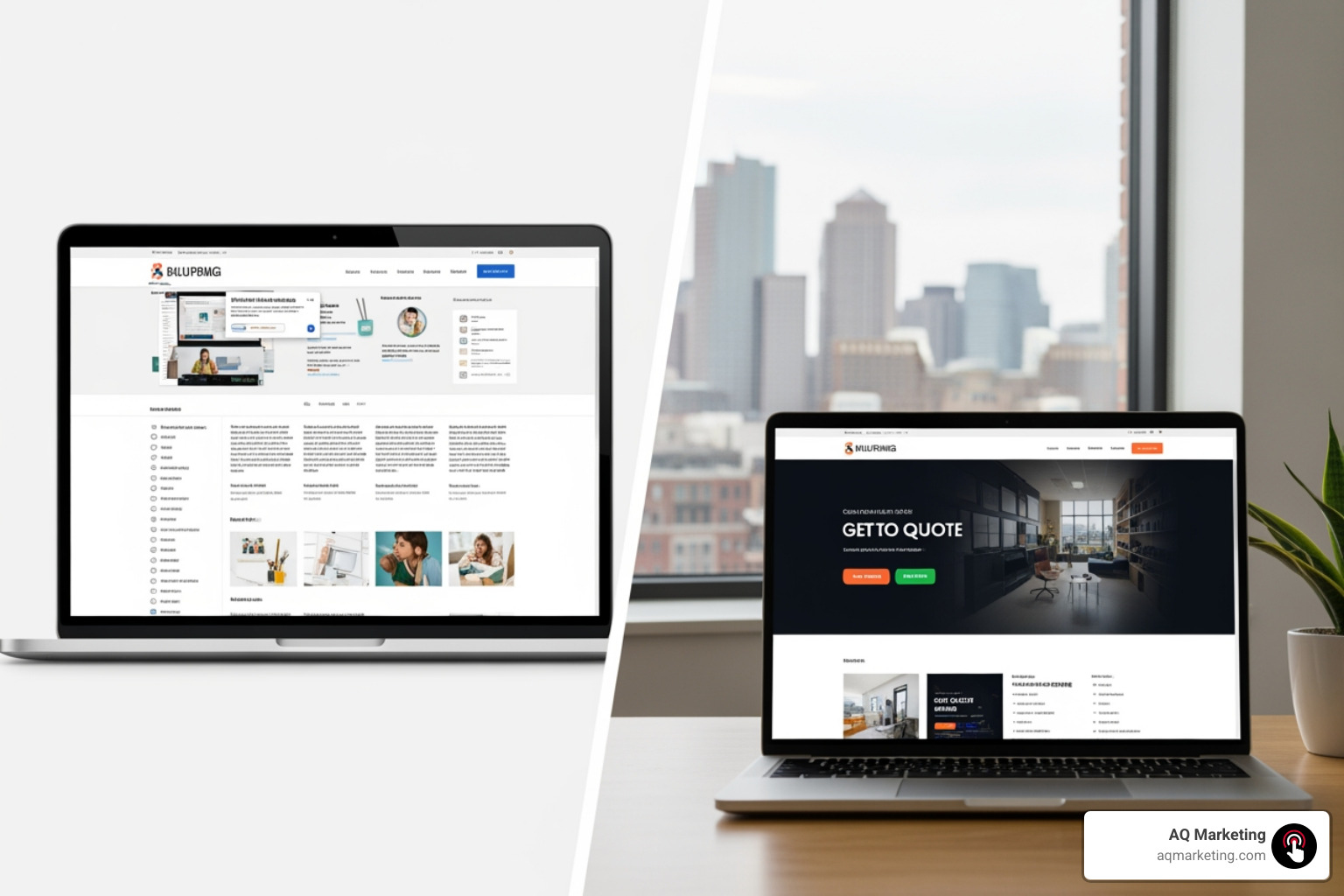
Shifting from Subjective Beauty to Objective Performance
To maximize ROI, we must shift our focus to quantifiable goals. This means looking at your website as a sales funnel. Every page should have a job. Whether it’s capturing an email address or encouraging a phone call, our Website Design and Development Services focus on moving the user from “just looking” to “ready to buy.” By prioritizing user-centricity over personal taste, we ensure the site serves the customer’s needs, which naturally leads to better performance.
Aligning Design with Business Objectives
A truly effective website requires a strategic analysis of your digital ecosystem. We look at your brand DNA and your market share goals to ensure the design reflects your unique value. This isn’t just about picking a logo; it’s about Custom Website Design and SEO working in harmony. If your goal is to dominate the local landscaping market in Woburn, MA, every pixel should be dedicated to making that happen.
The Psychology of Action: Applying the Fogg Behavior Model
Why do some people click “Get a Quote” while others hit the “Back” button? It isn’t random. It’s science. We utilize The Fogg Behavior Model (BMAP), which states that behavior (B) happens when Motivation (M), Ability (A), and a Prompt (P) come together at the same moment.
- Motivation: Does the user want what you have? (e.g., a dry basement or lower insurance premiums).
- Ability: Is it easy to take the next step?
- Prompt: Is there a clear Call to Action (CTA) telling them what to do?
If any of these are missing, the user won’t take action. This is why understanding Is Your Website UX Impacting Conversions? is so critical for business owners.
Tapping into System 1: Fast and Intuitive Decisions
Psychologist Daniel Kahneman famously described two modes of thinking: System 1 (fast, instinctive, and emotional) and System 2 (slower, more logical). Most web browsing happens in System 1. Users make snap judgments about your business in milliseconds. According to the Nielsen Norman Group, first impressions are made within milliseconds. If your visual hierarchy is confusing, you’ve lost them before they’ve even read your first sentence.
Reducing Friction to Increase User Ability
To help System 1 thinking, we must reduce cognitive load. This is where “Ability” comes in. We apply laws of design like:
- Hick’s Law: The more choices you give a user, the longer it takes them to make a decision. (Keep your navigation simple!)
- Miller’s Law: The average person can only keep about 7 items in their working memory.
- Progressive Disclosure: Don’t overwhelm users with information. Show them what they need now, and hide the complex details for later.
Avoiding 5 Website Design Mistakes to Avoid—like cluttered sidebars and hidden contact info—is the fastest way to increase a user’s “Ability” to convert.
Core Pillars: UX, Mobile Optimization, and SEO Integration
A website that looks great but can’t be found is a failure. A website that is easy to find but impossible to use on a phone is also a failure. Results-driven design requires a holistic approach to three core pillars: User Experience (UX), Mobile Optimization, and SEO.
Mobile-First Design and Global Accessibility
With over 70% of eCommerce sales occurring on mobile devices, we no longer “shrink” desktop sites for phones. We design for mobile first. This means touch-friendly buttons, readable fonts without zooming, and responsive elements that adapt to any screen size.
Furthermore, we prioritize accessibility. According to the World Health Organization, 16% of the global population experiences a significant disability. By following WCAG compliance, we ensure your site is usable for everyone, which isn’t just the right thing to do—it’s a growth strategy that expands your audience. For local businesses, like our Web Design for Contractors clients, this inclusivity builds immense trust.
Speed as a Conversion Catalyst
Speed is not a luxury; it’s a requirement. Think with Google research indicates that a 1-second delay in page load times can impact conversions by as much as 7%. If your site takes 5 seconds to load, you’ve likely lost half your potential leads. We focus on image optimization, minifying code, and using Content Delivery Networks (CDNs) to ensure your site is lightning-fast. Choosing the right Website Hosting for Small Business is often the first step in this performance journey.
Data-Backed Growth: Analytics and Continuous Improvement
The “driven” in results driven web design refers to data. We don’t guess what users want; we watch what they do. By using tools like Google Analytics and heatmaps, we can see exactly where users click, how far they scroll, and where they get stuck.
Setting SMART Goals and Tracking KPIs
We help businesses define SMART goals: Specific, Measurable, Achievable, Relevant, and Time-bound.
- Weak Goal: “I want more traffic.”
- SMART Goal: “I want to increase organic leads for my HVAC business by 20% over the next 6 months.”
By tracking Key Performance Indicators (KPIs) like bounce rate and session duration, we can follow a proven conversion research methodology to improve your site over time. This is the core of our Full Service Website Design and Management for Small Business.
The Investment in Strategic Design
Investing in a high-performance website is different from buying a “cheap” template. While a DIY site might cost very little upfront, the lost revenue from poor conversions is often staggering. Below is a comparison of typical investment tiers based on average online data.
Disclaimer: The pricing listed below is based on average online data and does not represent AQ Marketing’s actual pricing.
| Investment Tier | Typical Focus | Average Price Range |
|---|---|---|
| Basic/Template | Visual presence, limited features | $1,500 – $5,000 |
| Growth/Strategic | Custom UX, SEO integration, lead gen | $7,500 – $25,000 |
| Enterprise/Data-Driven | Advanced CRO, deep research, full integration | $25,000 – $75,000+ |
As you can see, the high end of the market can be 3x to 10x the cost of a basic site because it involves 40-60 hours of research foundation and continuous A/B testing to reach statistical significance.
Frequently Asked Questions about Results-Driven Web Design
What are the benefits of results driven web design?
The primary benefit is a direct increase in ROI. By focusing on conversion, you turn more of your existing traffic into paying customers. It also enhances your brand’s credibility, improves your search engine rankings, and provides a better user experience that keeps customers coming back. For many, finding an Affordable Small Business Website Design Company that understands performance is the key to outcompeting larger rivals.
How do I implement a results driven web design strategy?
Start by defining your primary business goals. Who is your audience? What do you want them to do? Once you have a strategy, focus on optimizing the UX and implementing clear CTAs. The process doesn’t end at launch; you must use analytics for continuous testing and refinement. Our Custom Website Design Services are built around this exact lifecycle.
What role does AI play in modern web design?
AI is a game-changer for results-focused design. Chatbots can provide instant customer service (saving businesses billions annually), while dynamic personalization allows a website to change its content based on who is visiting. Predictive analytics can even help us guess what a user might need next, further reducing friction. As a leading Website Design Company, we stay at the forefront of these technologies to give our clients a competitive edge.
Conclusion
At AQ Marketing, we believe your website should be your hardest-working employee. Since 2003, we’ve been helping small to medium-sized businesses in Woburn, MA, and across the state—from the North Shore down to the Cape—achieve digital transformation. Whether you are in the home services industry or running an insurance agency, our focus remains the same: delivering long-term, impactful results that move the needle for your business.
Results driven web design is not just about a “new look.” It’s about a new way of doing business online. It’s about using data to build trust, psychology to drive action, and technology to ensure you’re always one step ahead of the competition. If you’re ready to stop guessing and start growing, it’s time to embrace a performance-first approach to Website Design and Development.
