

Local Audience Targeting: 6 Powerful Tips That Win in 2025
Why Local Audience Targeting Is Your Secret Weapon for Higher ROI
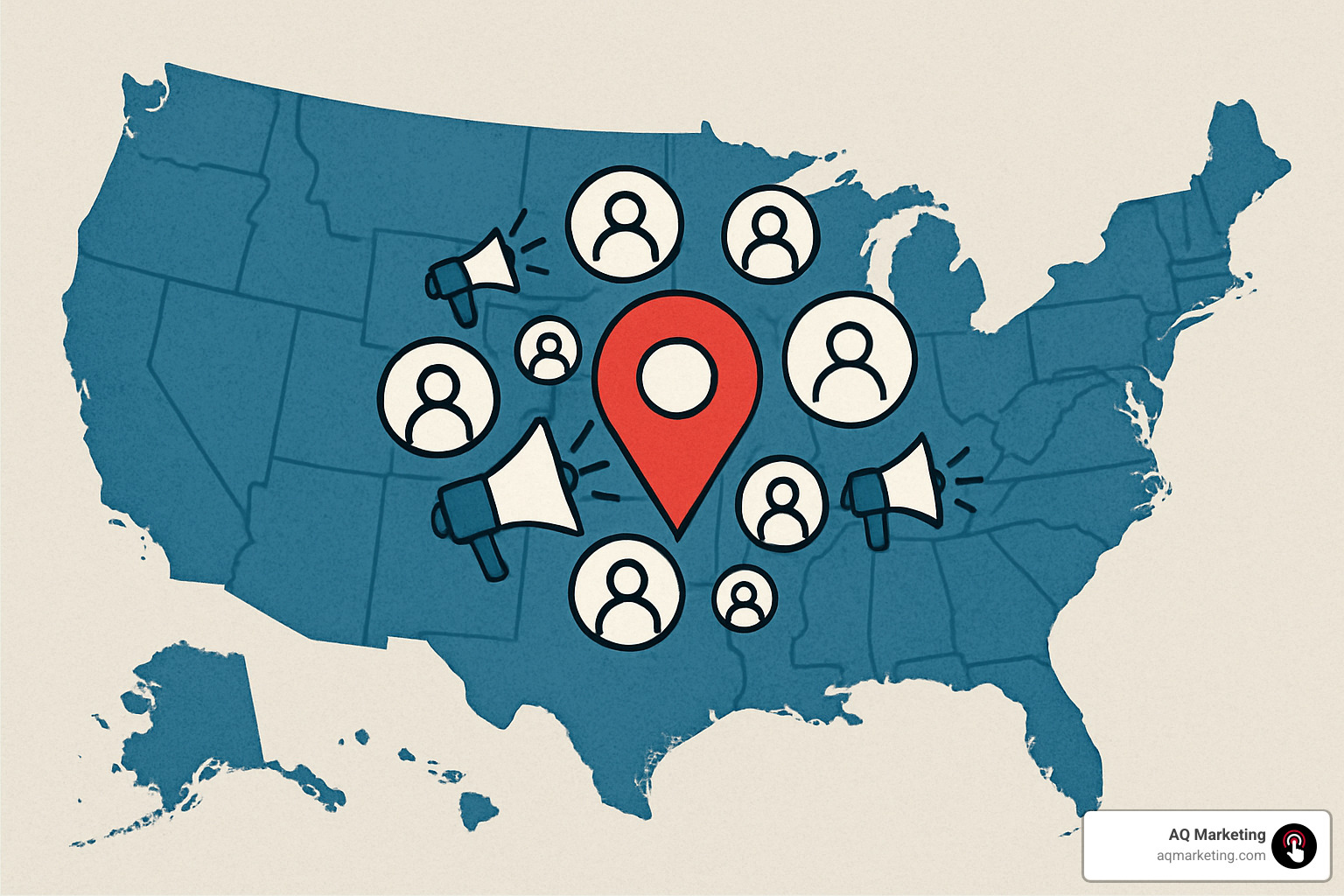
Local audience targeting is the practice of delivering marketing messages to people within specific geographic boundaries who are most likely to visit your business, make a purchase, or become long-term customers.
Quick Answer: How to Reach Your Local Audience
- Define your service area using ZIP codes, radius targeting, or neighborhood boundaries
- Identify your ideal customers through existing customer data and demographics
- Choose the right channels: Google Ads location targeting, Facebook radius ads, local SEO
- Create localized content featuring community landmarks, local events, and regional language
- Track key metrics: store visits, local calls, foot traffic, and neighborhood-specific conversions
The numbers tell the story. 83% of brands expect to allocate more than 20% of their marketing budget to local efforts in 2025 – up from just 46% in 2024. Why? Because local campaigns are 64% more cost-efficient than national messaging, and 78% of advertisers leverage local strategies for targeted audience reach.
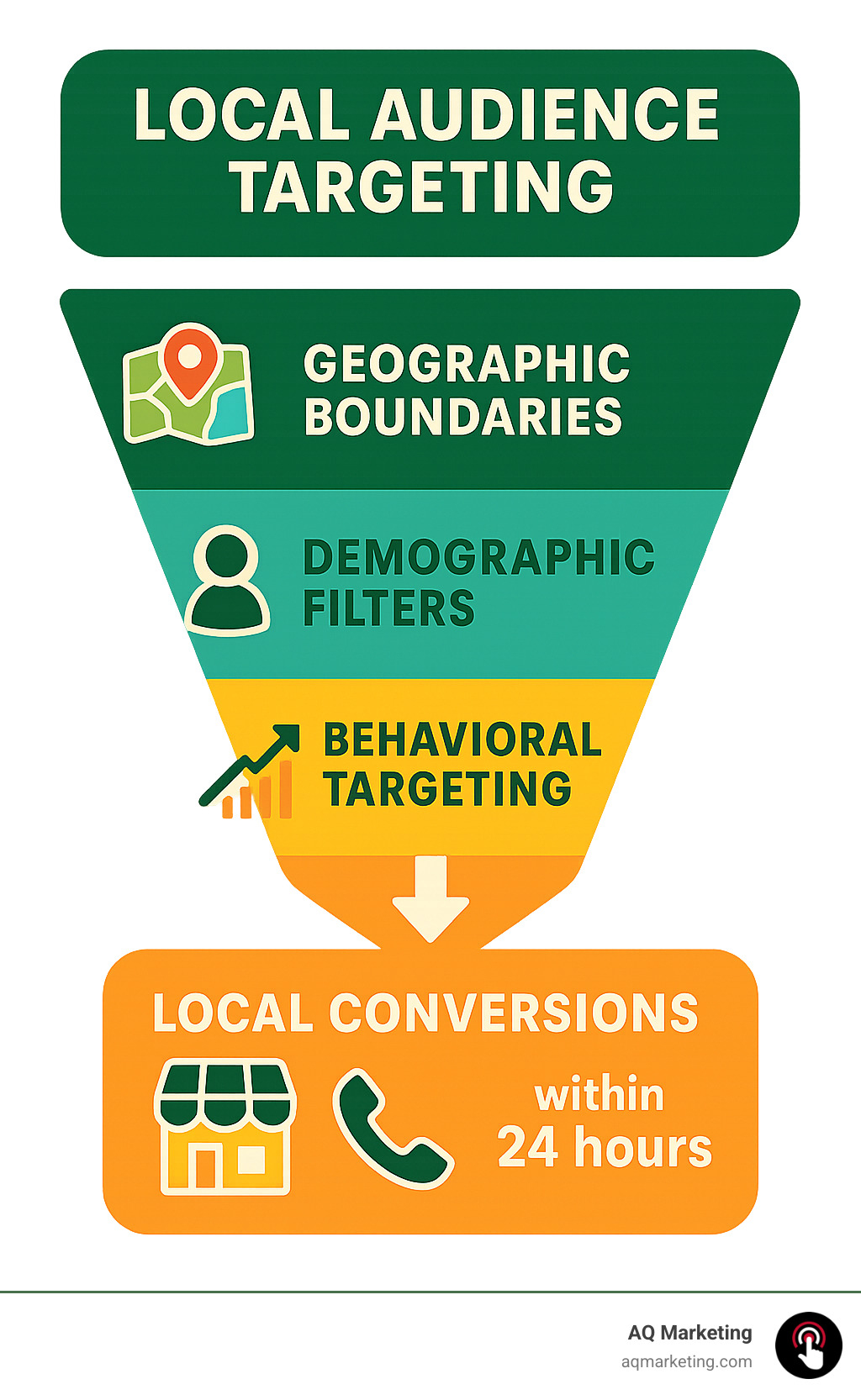
90% of customers use the internet to find local businesses, and 88% of local mobile searches result in a store visit or phone call within 24 hours.
Local audience targeting isn’t just about geography – it’s about understanding that a plumber in Boston speaks differently to customers than one in Austin. 71% of marketers say local strategies deliver more targeted, personalized messaging compared to generalized national campaigns.
I’m Robert P. Dickey, President and CEO of AQ Marketing, and over my 20+ years helping small businesses succeed digitally, I’ve seen how local audience targeting transforms marketing results from mediocre to remarkable.
What Is Local Audience Targeting & Why It Beats National Blasts
Local audience targeting is like being the friendly neighborhood shop owner who knows exactly what their customers need, rather than the faceless corporation shouting generic messages from a billboard.
46% of all Google searches are local, and “near me” searches have grown by over 900%. People aren’t just browsing – they’re actively hunting for local solutions.
The cost difference is dramatic. National TV campaigns can easily run tens of thousands versus a few hundred to a few thousand dollars for local efforts. A single 30-second national TV spot during prime time might cost $100,000+, while local slots typically range from $200 to $2,000.
Local vs. National: Key Differences
Budget allocation is changing fast. 72% of businesses allocate 40% or less of their budget to national advertising, but 71% plan to allocate 21%-60% to local efforts next year. 51% currently attribute 20% or less of their annual revenue to local advertising, but 81% expect to attribute more than 20% in 2025.
CPM comparison shows local campaigns consistently cost less per thousand impressions because you’re competing in smaller auction pools. Message relevance is where local targeting really shines – local campaigns can reference specific landmarks, weather events, or community celebrations that create instant connection.
Benefits Every SMB Should Know
Conversion lift is immediate – local campaigns often see conversion rates 2-3 times higher than national campaigns. 91% of people say positive reviews make them more likely to use a business, and local targeting helps you reach people who can actually visit and leave authentic reviews.
Posts with a location receive 79% more engagement on Instagram, translating into real foot traffic. The 83% budget shift toward local marketing reflects smart business owners realizing that being a big fish in a small pond beats being invisible in the ocean.
Defining & Identifying Your Ideal Local Target Audience
Before you can target your local audience effectively, you need to know exactly who they are. This goes beyond “people within 10 miles who might need our services.” We’re talking about creating detailed buyer personas that combine geographic boundaries with demographic insights.
Step 1: Start With Existing Customers
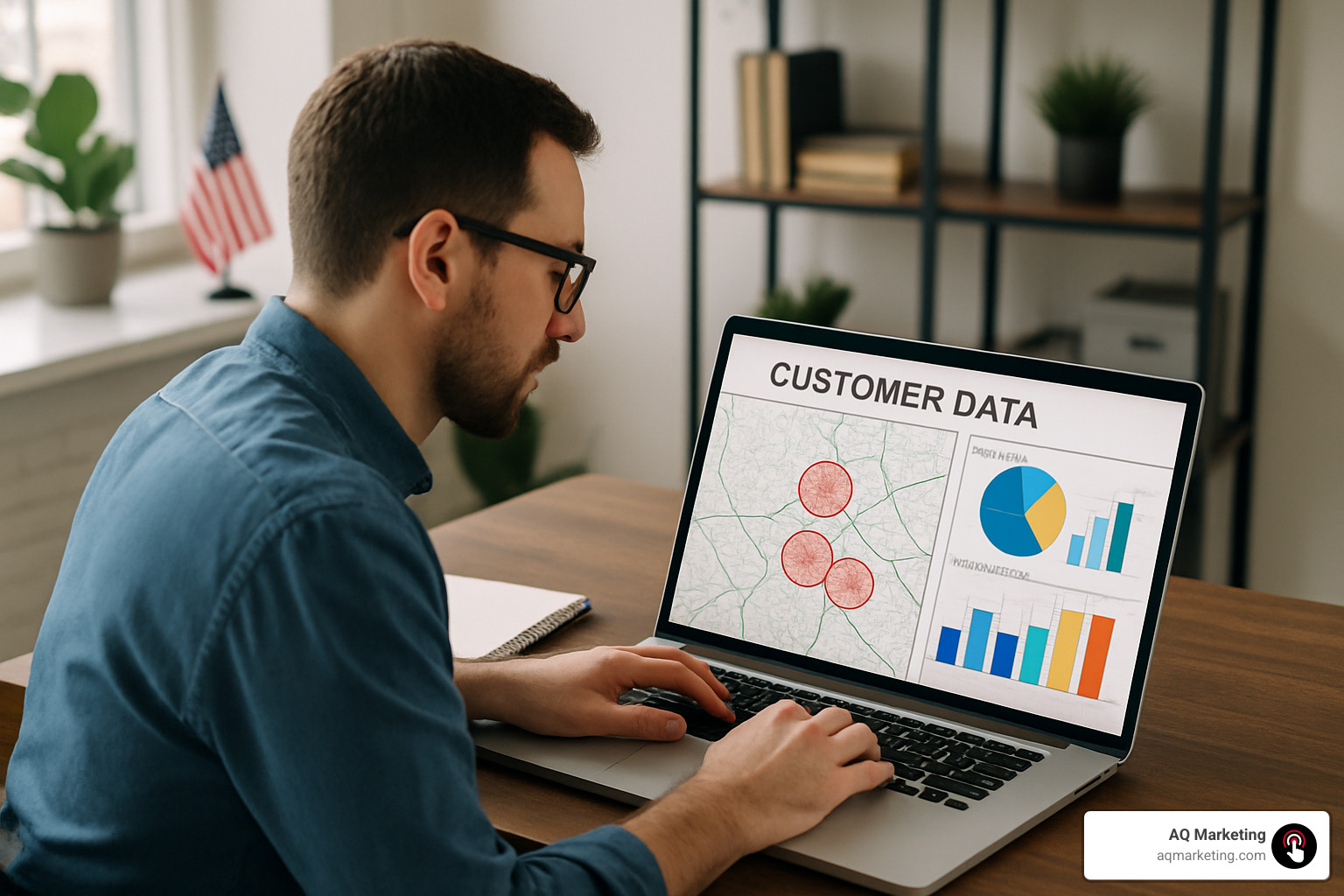
CRM Deep Dive: Export your customer database and look for patterns. What ZIP codes appear most frequently? What’s the average distance customers travel to reach you?
Lifetime Value Analysis: Identify your highest-value customer segments and their common characteristics. A customer who spends $500 annually and refers friends is worth more than someone who makes a single $50 purchase.
Loyalty Signals: Look at repeat purchase behavior, email engagement rates, and social media interactions to find patterns you can use for lookalike audiences.
For more insights on leveraging customer data, check out our guide on Small Business SEO Strategies.
Step 2: Map Local Segments
ZIP Code Clustering: Some ZIP codes perform dramatically better than others. We’ve seen cases where one ZIP code generates 10x more revenue per customer than an adjacent area.
DMA Boundaries: Designated Market Areas help you understand media consumption patterns. Neighborhood Personalities: Even within the same city, neighborhoods have distinct characteristics and needs.
Predictive Analytics: Use tools to identify where your best customers are likely to live based on lifestyle, income, and behavioral patterns.
Step 3: Validate Size & Demand
Audience Thresholds: Most platforms need minimum audience sizes to function effectively. Facebook requires at least 1,000 people in your target area for reliable delivery.
Platform Reach Index: Look for areas where your audience index score exceeds 100, indicating higher-than-average concentration of your target demographic.
Competitive Gap Analysis: Use tools to identify areas where demand exists but competition is light.
6-Step Framework to Master Local Audience Targeting
After helping hundreds of local businesses refine their targeting strategies, I’ve learned that success follows a systematic approach that gets you in front of the right people with the right message at exactly the right moment.
Step 1: Set Crystal-Clear Campaign Goals
Brand awareness goals need specifics: “increase brand recognition within a 5-mile radius by 25% over 6 months.” Store visit goals should be concrete: “Drive 150 additional monthly store visits from customers within a 10-mile radius.” Lead generation goals should tie to your business model: “50 qualified leads monthly from homeowners in Essex County with household incomes above $75,000.”
Step 2: Audience Finding & Enrichment
Lookalike models are your secret weapon. Upload your customer list to Facebook or Google to find people who share similar characteristics. Survey panels with existing customers reveal insights that change how you target new customers.
Layer different data sources: geographic boundaries, demographic filters, behavioral signals, interest targeting, and timing patterns.
Step 3: Select & Refine Geography
Radius targeting should reflect your natural service area – typically 5 to 15 miles. Consider traffic patterns, geographic barriers, and competitor locations. Geofencing creates virtual boundaries around specific locations. Strategic exclusions are equally important – exclude areas where your services aren’t relevant.
Step 4: Check Audience Size & Media Habits
An index score of 100 represents baseline average. Focus on areas where your target audience index exceeds 100. 67% of advertisers use social media advertising as a top channel for local advertising, but your specific audience might prefer other channels.
Step 5: Create Localized Content & Offers
Community landmarks create instant connection. Seasonal hooks tied to local events work incredibly well. User-generated content from real customers creates authenticity. Instagram giveaways help grow your following 70% faster while creating genuine local content.
Step 6: Localize Budget & Messaging for Local Audience Targeting Success
Bid modifiers let you pay more for customers who matter most. Dayparting schedules ads when your local audience is most active. Creative versioning acknowledges that different neighborhoods have different personalities. A/B testing different local references reveals what actually resonates.
Best Channels & Data Tactics for Hyperlocal Reach
The most effective campaigns layer multiple channels together, but start with mastering one or two before expanding.
Social Media Powerhouses
Facebook’s radius targeting can track people’s actual physical location, reaching people who live in your area, are currently visiting, or were recently nearby. You can target someone who lives in Woburn but works in Boston, or catch tourists during lunch hours.
Instagram’s location features are pure gold. Posts with a location receive 79% more engagement than those without. Encourage customers to tag your business, create location-specific Stories, and use local hashtags.
Nextdoor delivers 40% higher conversion rates for local service ads. The community-focused environment builds trust naturally – neighbor recommendations carry serious weight.
Search & Maps Domination
Local keyword targeting goes beyond obvious searches. Think “plumber near Burlington Mall” or “emergency repair Middlesex County.” Businesses with a completed Google Business Profile are 2.7x more likely to be considered reputable.
Local Services Ads put your business at the top of search results with a green checkmark. You only pay when someone contacts you. “Near me” searches have grown by over 900%, many from voice searches.
For detailed local search optimization, see our guide on Google My Business SEO and Location targeting in Google Ads Help.
Streaming & CTV Precision
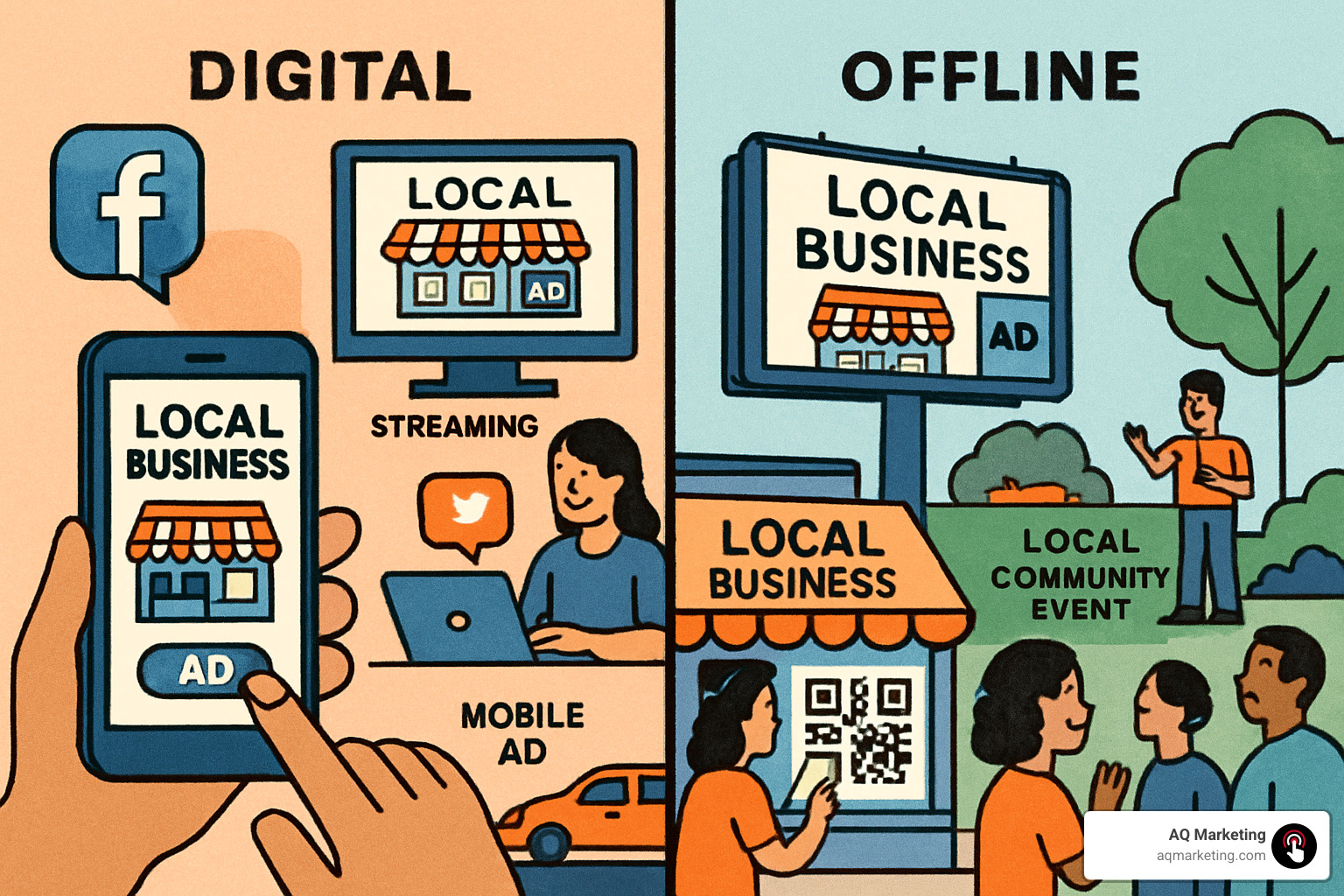
DMA targeting lets you reach cord-cutters with TV-quality impact. Dynamic ad insertion automatically customizes ads with your local phone number and address. Cross-screen synchronization ensures your message reaches customers across all devices.
Offline & Emerging Options
Digital out-of-home advertising targets specific ZIP codes or commuter routes. QR codes drive traffic to location-specific landing pages. Over 25% of shoppers want to preview local inventory using AR before visiting stores. Community events create content, build relationships, and establish your business as a community partner.
Measuring Success & Avoiding Pitfalls
Measuring local audience targeting success means connecting digital dots to real-world results. When someone sees your Facebook ad Tuesday, visits your website during lunch, then calls Thursday, how do you piece that story together?
Essential Metrics Dashboard
Reach and Frequency Tracking shows market penetration. Local impression share reveals how often you appear versus competitors. Unique local reach counts actual people, not just ad views.
Engagement Indicators reveal community response. Click-through rates by ZIP code often surprise business owners. Social engagement on location-tagged content tends to be much higher. Time spent on location-specific landing pages shows message resonance.
Conversion Tracking connects ads to actions. Store visit lift technology tracks when people who saw ads actually visit your location. Call tracking using local numbers connects calls to campaigns. Revenue Attribution shows which geographic segments deliver the best long-term value.
| Metric | Local Campaigns | National Campaigns |
|---|---|---|
| CPM | $2-8 | $8-25 |
| CTR | 2-5% | 0.5-2% |
| Conversion Rate | 5-15% | 1-3% |
| Customer LTV | Higher | Lower |
| Review Generation | 3-5x higher | Baseline |
Common Challenges & Fixes
Small sample sizes require extended testing periods and broader geographic areas initially. Ad fatigue hits local campaigns faster – create multiple creative versions and refresh monthly. Inaccurate location data needs multiple location signals and strategic exclusions. Budget creep requires strict geographic boundaries and cost-per-acquisition monitoring by area. Seasonal fluctuations need budget adjustments based on historical patterns.
Frequently Asked Questions about Local Audience Targeting
How small can my geo-radius be without losing scale?
This is the question I get most often from small business owners who want laser-focused targeting. The truth is, there’s a sweet spot between precision and performance that varies dramatically based on where you’re located.
In dense urban areas like downtown Boston, you can get away with a 2-3 mile radius and still reach 50,000+ potential customers. But if you’re serving areas in Southern New Hampshire or more suburban parts of Massachusetts, you might need to cast a 10-15 mile net to capture the same audience size.
Here’s the reality check: most advertising platforms need at least 1,000 people in your target audience for reliable ad delivery. Go smaller than that, and your ads might show sporadically or not at all. Facebook gets cranky with tiny audiences, and Google Ads starts acting unpredictably.
My recommendation? Start broader than you think you need. We typically begin with audiences of 10,000-100,000 people in the local market, then narrow down based on actual performance data. It’s easier to tighten your targeting than to expand from an audience that’s too small to generate meaningful results.
Which KPIs prove local audience targeting ROI fastest?
When you’re investing in local audience targeting, you need metrics that show results quickly – not vanity metrics that look good in reports but don’t pay the bills.
Store visits and phone calls are your best friends here. These actions happen fast – usually within hours or days of someone seeing your ad. More importantly, they directly connect to revenue. When someone calls your plumbing business after seeing your Facebook ad, that’s a clear line from marketing spend to potential income.
Review generation is another early indicator that often gets overlooked. Local campaigns that create genuine customer experiences typically see review increases within 2-4 weeks. This matters because reviews feed back into your local search rankings, creating a positive cycle.
For B2B service companies, qualified leads and appointment bookings tell the story fastest. A law firm running local ads can usually track consultation requests back to specific campaigns within the first month.
The key is setting up proper tracking from day one. Use call tracking numbers, location-based landing pages, and platform conversion tracking to connect your ad spend to real business outcomes.
How does location data respect user privacy regulations?
Privacy concerns around location data are legitimate, and it’s important to understand how modern local audience targeting actually works versus what people might imagine.
The good news is that today’s location targeting relies on aggregated, anonymized data rather than creepy individual tracking. Platforms piece together location signals from multiple sources: IP addresses that show general area, device location services when users have enabled them, locations people declare in their profiles, and behavioral signals like local searches or business check-ins.
Users maintain control through platform privacy settings. They can opt out of location-based advertising entirely if they choose. The responsibility is on us as marketers to be transparent about how we use this data and to provide clear value in return.
From a compliance standpoint, focus on first-party data whenever possible – information from your own customers who’ve chosen to share their location with you. This provides the highest accuracy while maintaining the strongest privacy compliance.
The bottom line: be transparent about data use, respect user choices, and always ensure your targeting practices comply with platform policies and local privacy laws. When done right, location targeting helps people find relevant local businesses rather than being bombarded with irrelevant national advertising.
Conclusion
The shift toward local audience targeting represents one of the most significant changes in marketing. 83% of brands are moving budgets toward local efforts, seeing 64% better cost-efficiency compared to national campaigns.
The human element matters most. When you master local audience targeting, you become part of your community’s fabric – the business people recommend to neighbors, the solution that comes to mind when someone has a problem you can solve.
The opportunity is enormous. 90% of customers use the internet to find local businesses, and 88% of those searches result in action within 24 hours. Your future customers are actively looking for what you offer, right now, in your service area.
The framework we’ve shared provides a roadmap, but it’s most valuable with an experienced guide. Local audience targeting requires both technical expertise and local market knowledge.
The businesses that will dominate their local markets aren’t necessarily those with the biggest budgets – they’re the ones that understand their communities best and use that knowledge strategically.
Your community is full of people who need exactly what you offer. They’re searching for solutions, reading reviews, and making decisions. The question isn’t whether the opportunity exists – it’s whether you’ll be ready when they find you.
Want to turn your nearby prospects into loyal customers who recommend you to their friends? Learn more about partnering with a team that understands both the technical side of digital marketing and the nuances of local markets in our guide on Why Work With a Local Digital Marketing Agency?.
Your community is waiting to find what makes your business special. Let’s make sure they find you first.
