Why Middlesex Web Design Is Your Path to a High-Demand Digital Career
Middlesex web design programs give you a clear, structured path into one of the fastest-growing fields in the U.S. economy. Here is what you need to know at a glance:
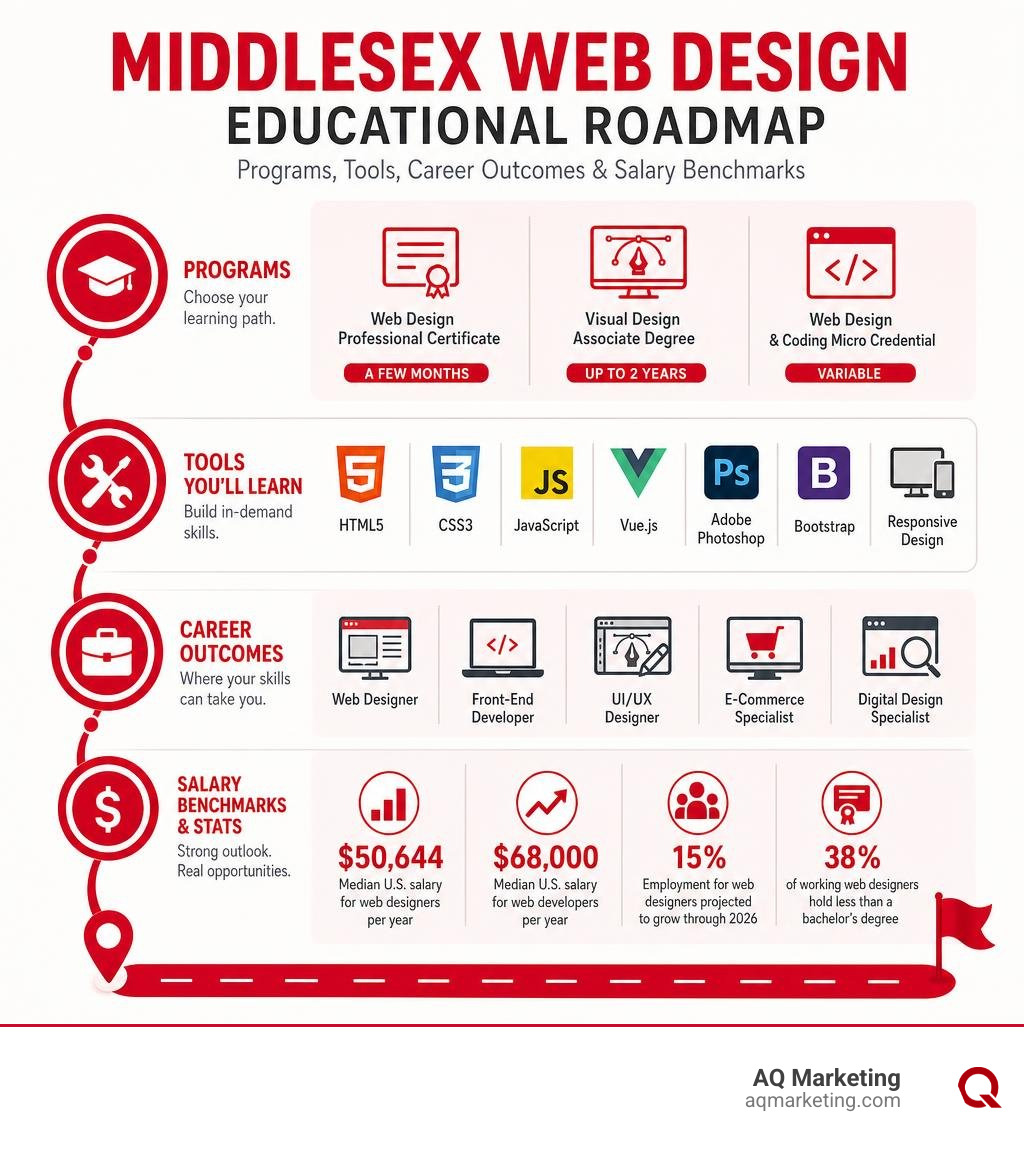
- Where to learn: Middlesex College offers a Web Design Professional certificate, a Visual Design associate degree, and a micro credential in Web Design and Coding.
- What you'll learn: HTML5, CSS3, JavaScript, Vue.js, Adobe Photoshop, Bootstrap, and responsive design principles.
- How long it takes: From a few months (certificate) to two years (associate degree), depending on the path you choose.
- What you can earn: The median U.S. web designer salary is around $50,644 per year, with web developers earning close to $68,000.
- Job growth: Employment for web designers is projected to grow 15% through 2026 — much faster than most occupations.
- No four-year degree required: 38% of working web designers hold less than a bachelor's degree.
Whether you are a business owner trying to understand what good web design looks like, or someone exploring a career change, Middlesex has practical options worth knowing about.
I'm Robert P. Dickey, President and CEO of AQ Marketing, Inc., a digital marketing agency based in Woburn, MA, with over 20 years of experience helping small and medium-sized businesses build strong digital presences — including Middlesex web design strategy and execution. In the sections below, I'll walk you through the programs, career paths, and real-world applications that matter most.
Middlesex web design terms at a glance:
Educational Pathways for Middlesex Web Design Students
Entering the digital creative field requires a blend of artistic vision, technical precision, and foundational business acumen. In Middlesex County and the surrounding New England region, aspiring web creators can access diverse academic pathways to build these competencies. Whether you are aiming for a full college degree, a targeted industry certification, or self-paced adult education, local institutions provide options suited to different schedules, learning styles, and career ambitions.
At Middlesex College and Middlesex Community College, web design curricula emphasize both conceptual design principles and technical execution. Students explore historical art movements, visual hierarchy, color theory, and typography while mastering modern digital studio software. Prerequisites for major coursework generally require basic competency in mathematics, such as Algebra I, to ensure students are prepared for logical programming and design layout calculations.
To understand why localized academic training creates such strong results for region-based businesses, explore our insights on Why Web Design Middlesex County Is The Secret To Local Success/.
Certification vs Degree in Middlesex Web Design
When selecting an educational track, students often weigh the time commitment and depth of a traditional college degree against the speed and direct skill-building of certificate programs.
An Associate Degree in Liberal Arts and Sciences with a Visual Design focus provides a well-rounded academic foundation. This two-year path blends graphic layout, commercial photography, visual storytelling, and general education requirements. It is ideal for students who plan to transfer to a four-year institution or desire a comprehensive understanding of visual communication across print, web, and interactive media.
Conversely, focused certificate tracks like the Web Design Professional program offered through continuing education focus directly on front-end coding and digital asset creation. These programs deliver around 390 course hours of instruction over 12 months. They are designed for quick career entry, skill upgrades, or adult career retraining. Similarly, specialized offerings like the Web Design & Coding Micro Credential give students bite-sized credentials in front-end markup and scripting.
Here is how these primary educational tracks compare for prospective students:
| Program Option | Typical Duration | Major Focus | Ideal Candidates |
|---|---|---|---|
| Visual Design Associate Degree | 2 Years (Full-Time) | Visual design theory, art history, typography, photography, general education | Students planning 4-year transfer or broad creative agency careers |
| Web Design Professional Certificate | 390 Hours / 12 Months | HTML5, CSS3, JavaScript, Vue.js, Photoshop, responsive site builds | Career switchers and professionals seeking practical coding skills |
| Web Design & Coding Micro Credential | Few Weeks to 1 Semester | Core HTML, CSS, foundational coding | Beginners wanting basic site management or fast credentialing |
| Professional Bootcamps | 12 to 24 Weeks (Intensive) | Full-stack coding, real-world portfolio builds | Career changers seeking immersive project work |
Essential Tools and Programming Languages
A complete Middlesex web design education bridges creative aesthetic styling with technical front-end code. Graduates emerge with functional fluency across industry-standard software tools, web languages, and development frameworks.
Core technical subjects taught in these academic tracks include:
- HTML5 Markup: Building semantic, accessible document structures that search engines and screen readers can read easily.
- CSS3 Styling & Modern Frameworks: Mastering layout systems, flexbox, CSS grid, and responsive frameworks like Bootstrap to ensure sites adapt to any mobile screen size.
- JavaScript & Modern Libraries: Implementing client-side interactivity, form validation, JSON data manipulation, and modern front-end frameworks such as Vue 3.
- Adobe Creative Cloud Suite: Using Adobe Photoshop for graphics rasterization and photo editing, alongside vector tools and Adobe Animate for web graphics.
- Usability & Web Accessibility: Applying user experience (UX) testing, wireframing, and web accessibility standards to build usable digital interfaces.
Career Opportunities and Salaries in the Local Market

The job market for skilled digital designers and web developers remains exceptionally buoyant across eastern Massachusetts and the broader region. As local enterprises across Woburn, Boston, Cambridge, and Chelmsford shift operations online, qualified technical creators are in high demand.
Data from the Bureau of Labor Statistics indicates that employment for web designers and developers is projected to grow by 15% through 2026, a rate significantly faster than the average across all U.S. occupations. Industry salary metrics show that the national median annual earnings for web designers stand near $50,644, while general web developers earn median annual salaries closer to $68,000. Experienced designers operating in major metropolitan commercial markets often command even higher compensation as they gain specialized technical expertise.
A notable characteristic of this sector is its flexible entry bar. Approximately 38% of working web design and development professionals hold less than a four-year college degree, proving that strong practical skills, industry certificates, and a standout portfolio carry significant weight with prospective employers. Furthermore, nearly 1 in 6 digital web professionals operate as self-employed freelancers or independent contractor consultants, managing their own business operations.
For a perspective on how independent regional professionals deliver custom development, review this external resource on Web Designer & Developer in Middlesex.
Portfolio Development for Middlesex Web Design Careers
Regardless of whether you graduate with an associate degree or complete a self-paced professional certificate, your portfolio is your most vital career asset. Prospective employers and digital agencies evaluate practical coding proficiency, design aesthetic, user interface flow, and site performance over academic credentials alone.
Academic programs structured around the Middlesex web design framework place heavy emphasis on practical capstone projects. During these projects, students conceive, design, code, and deploy fully functional, responsive websites from scratch.
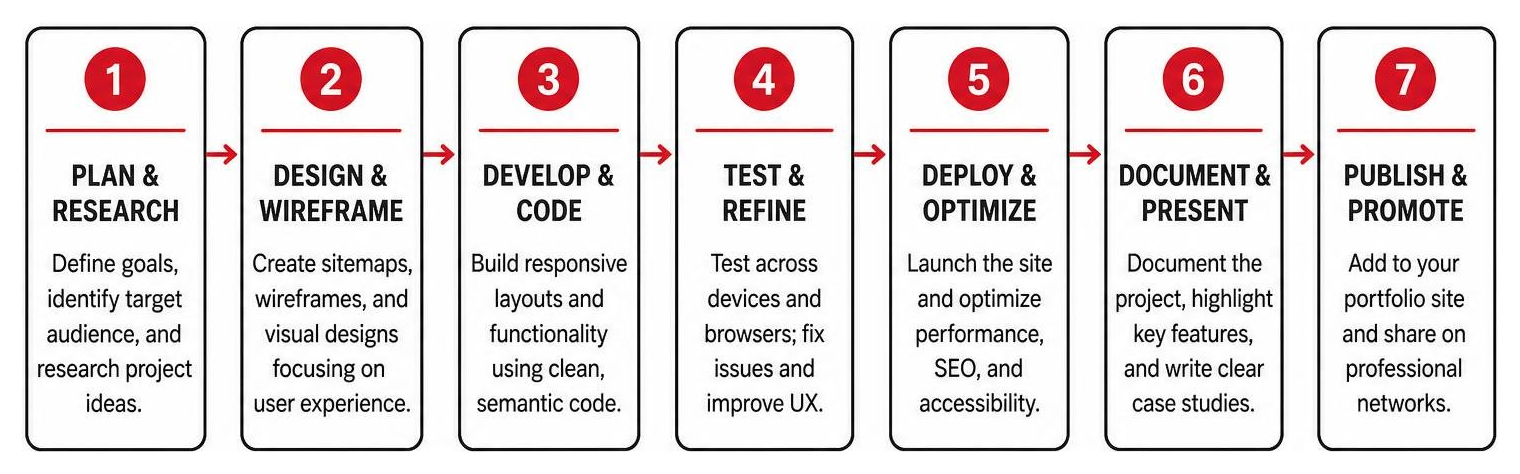
A well-constructed design portfolio demonstrates:
- Responsive Execution: Websites that reflow across mobile phones, tablets, and high-resolution desktop monitors.
- Clean, Validated Code: Semantic HTML5 and modular CSS3 written according to modern industry standards.
- Interactive Elements: Functional contact forms, mobile navigation drawers, and custom scripts built using JavaScript or Vue.js.
- User Experience Focus: Clear visual hierarchy, accessible color contrast ratios, fast page loading times, and logical site search.
Freelance Opportunities and Industry Demand
The density of commercial businesses across New England creates ongoing opportunities for independent freelance designers and boutique digital marketing agencies. Small business owners, local service providers, contractors, and non-profit organizations regularly require fresh website design, performance upgrades, and continuous content management.
Self-employed web designers operating locally build client bases by offering tailored services such as:
- Custom WordPress and CMS theme customization.
- E-commerce product catalog configuration.
- Localized landing page creation and search engine optimization.
- Website security maintenance, speed tuning, and mobile responsiveness audits.
By serving regional clients directly, freelance creators build long-term advisory relationships while generating recurring retainer income.
How Web Design Solves Real-World Business Challenges

For a local enterprise, a website is far more than a digital business card — it serves as the central engine for brand credibility, customer acquisition, and lead generation. At AQ Marketing, we have seen how an outdated, non-responsive, or slow website directly suppresses business growth. Professionally executed web design systematically addresses these operational roadblocks.
Modern web design directly improves real-world business outcomes through:
- Mobile Responsiveness: Over 60% of web traffic originates on mobile devices. Modern layout frameworks ensure that tap targets, text sizes, and contact forms adjust seamlessly for smartphone users. Explore our specialized Responsive Web Design Services/ to see how mobile-first architecture drives conversions.
- Search Engine Visibility: Clean code architecture, fast page load speeds, and semantic heading tags provide the foundational structure search engines need to index site content effectively.
- Conversion-Driven Layouts: Clear call-to-action buttons, intuitive navigation menus, and strategically placed contact forms convert casual visitors into active telephone inquiries and web leads.
- Accessibility Compliance: Designing according to web accessibility standards ensures people of all physical abilities can navigate your business site, protecting your brand while broadening your customer audience.
Serving B2B and Industrial Enterprises
In regions with rich manufacturing and B2B commercial ecosystems, web design requirements extend well beyond standard corporate service pages. Industrial equipment distributors, original equipment manufacturers (OEMs), and B2B suppliers require specialized digital architecture to display complex product lines.
Industrial e-commerce sites require custom catalog navigation, robust product filtering, and fast keyword search tools so business clients can identify specific replacement parts or equipment models quickly. Building these platforms on open-source or custom e-commerce engines allows industrial distributors to manage thousands of SKUs efficiently while offering buyers streamlined ordering workflows.
When paired with targeted local search strategy, a custom B2B web interface becomes a highly automated sales engine for regional manufacturing and supply businesses.
Web Design Pricing and Investment Benchmarks
When evaluating custom web development investment, business decision-makers often encounter widely varied market pricing. Understanding typical industry pricing structures helps organizations plan realistic budgets.
Based on average online industry data, custom business web design costs vary depending on site complexity, custom graphic requirements, functionality, and e-commerce capabilities.
To help illustrate standard industry benchmarks across the broader market, review the comparison table below:
| Project Scope | Average Online Market Price | Market Range Spread (Low to High) | Typical Deliverables Included |
|---|---|---|---|
| Starter Business Website | ~$2,500 | $1,200 – $7,500+ | 5–10 pages, responsive layout, standard contact form, basic SEO setup |
| Growth Business Website | ~$5,000 | $2,200 – $15,000+ | 10–25 pages, custom design assets, CMS integration, lead capture workflows |
| Custom Pro / E-Commerce | ~$10,000 | $4,000 – $30,000+ | Large product catalog, custom B2B portals, advanced API integrations, bespoke UX |
Note: The pricing figures listed above represent average online industry market estimates gathered from general web design benchmarks. They do not represent actual pricing schedules for AQ Marketing, Inc.
For detailed guidance on structuring web development investments for your business, examine our comprehensive guide on Custom Website Design Pricing/.
Frequently Asked Questions About Middlesex Web Design
What is the average cost range for professional web design services?
Across standard industry estimates online, basic starter business websites typically average around $2,500, whereas larger corporate sites or custom e-commerce platforms average between $5,000 and $10,000, with complex high-end custom enterprise builds ranging up to $30,000 or more depending on functionality and scope.
Do I need a four-year college degree to become a web designer?
No. Industry statistics indicate that 38% of working web designers and developers hold less than a four-year degree. Graduating from a structured academic certificate program, such as the Web Design Professional track at Middlesex College, or earning an associate degree while building a practical design portfolio provides a highly effective pathway into the industry.
How does local web design improve search engine rankings?
Local web design integrates geo-targeted keyword structures, fast mobile load speeds, clear site navigation, structured business markup, and local service landing pages directly into your site's code. This allows search engines like Google to accurately index your business for local customer searches across Middlesex County and surrounding New England communities. Discover more in our guide to Small Business Web Design/.
Conclusion
Mastering web design — whether by earning a formal credential through local academic institutions like Middlesex College or by partnering with experienced regional web professionals — is one of the most effective strategic moves a professional or business owner can make in today's digital economy.
At AQ Marketing, Inc., we have spent over two decades helping businesses across Woburn, Boston, Chelmsford, and eastern Massachusetts convert their online presence into an engine for long-term growth. From mobile-responsive web development and search engine optimization to automated lead generation workflows and brand identity, we deliver clear, sustainable results tailored specifically to your industry.
Ready to elevate your business's digital performance? Explore Professional Web Design Services with our expert team today, or schedule a strategy consultation to discuss your web design goals.