Business Online Marketing: 7 Powerful Success Strategies
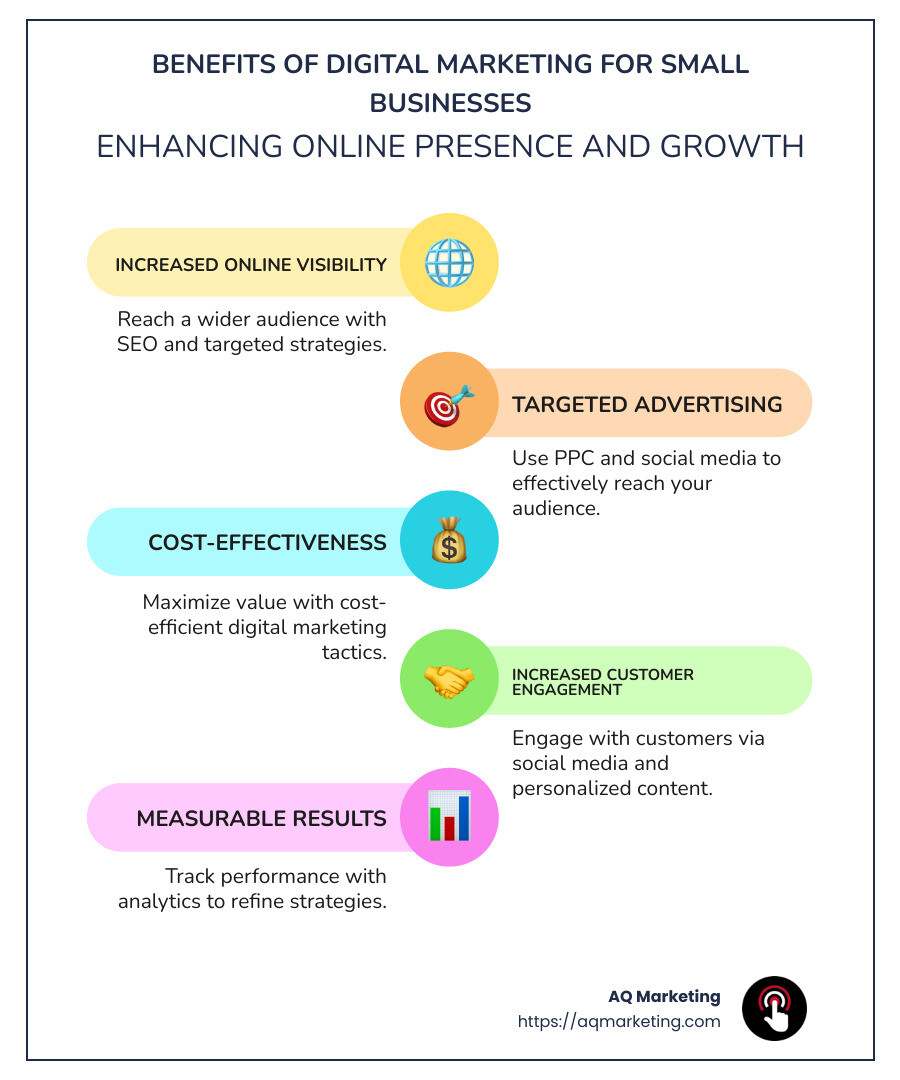
Business online marketing is the lifeblood of small businesses seeking to thrive in today’s digital-first world. To stand out, businesses must focus on building a robust online presence. Here are a few essential elements to consider:
- Search Engine Optimization (SEO) to increase visibility and drive organic traffic.
- Content Marketing to create value and engage users.
- Social Media and Email Campaigns to nurture relationships and maintain brand presence.
- Cost-Effective Strategies like mobile marketing ensure wide reach without breaking the bank.
In today’s digital climate, effective online marketing is not optional—it’s essential for growth and competitiveness.
As the President and CEO of AQ Marketing, Inc. based in Woburn, MA, I’ve spent over 20 years helping small businesses master the art of business online marketing. From eCommerce to SEO, my goal is to simplify digital marketing strategies, making them accessible and effective for businesses of all sizes.
Business online marketing terms made easy:
– Digital Marketing Services for Small Business
– business marketing service
– digital marketing for small business
Understanding Business Online Marketing
Business online marketing is all about using digital tools to promote your business. It’s about creating an internet presence that helps you connect with customers.
What is Digital Marketing?
Digital marketing is a broad term that covers all marketing efforts using the internet. It allows businesses to communicate directly with their audience. This includes everything from emails to social media posts.
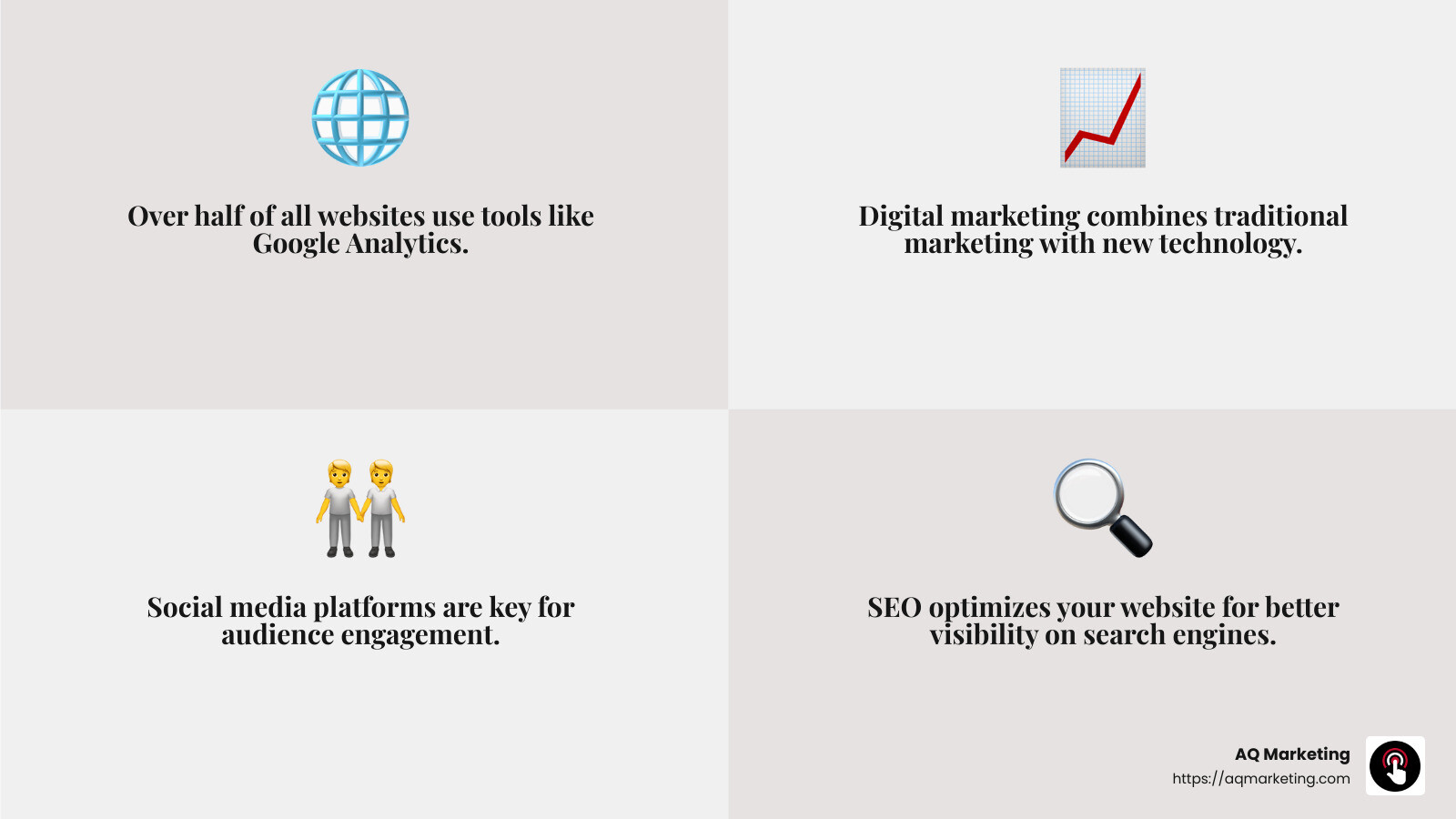
Dr. Jessica Rogers from Southern New Hampshire University explains, “Digital marketing requires marketing savvy, strategic thinking, and handling a great deal of data.” It combines traditional marketing principles with new technology to reach specific audiences.
Why is Online Marketing Important?
Online marketing is crucial because it helps businesses reach more people. With digital marketing, you can tailor your messages to specific groups. This means you can target people who are more likely to be interested in your product or service.
In fact, over half of all known websites use tools like Google Analytics to track web metrics. This data helps businesses understand their customers better and make smarter marketing decisions.
Building Your Internet Presence
Creating an internet presence is about more than just having a website. It’s about being active and engaging online.
- Social Media: Use platforms like Instagram and Facebook to connect with your audience. It’s a great way to get feedback and build relationships.
- SEO: Optimize your website to appear higher in search engine results. This increases your visibility and attracts more visitors.
- Content Marketing: Share valuable content that solves problems for your audience. This builds trust and establishes your brand as an authority.
A strong internet presence is key to successful business online marketing. It’s about being where your customers are and engaging with them in meaningful ways.
These strategies are essential for small businesses to thrive in the digital age. They help you stand out and reach your target audience effectively.
Next, we’ll dive deeper into Key Online Marketing Strategies to further improve your business’s digital footprint.
Key Online Marketing Strategies
Having a solid business online marketing strategy is essential for any small business aiming to thrive. Let’s explore some key strategies that can help you boost your online presence and connect with your target audience effectively.
Search Engine Optimization (SEO)
SEO is the process of improving your website to increase its visibility on search engines like Google. By using strategic keywords and optimizing your site structure, you can rank higher in search results and attract more organic traffic. It’s not just about stuffing your content with keywords; quality matters too. Moz highlights the importance of writing high-quality content that naturally incorporates keywords in headers and throughout the page.
Content Marketing
Content marketing is about creating and sharing valuable content to engage your audience. This could be blog posts, videos, or infographics that provide solutions to your audience’s problems. By consistently delivering relevant content, you build trust and establish your brand as an authority in your industry. Platforms like blogs and social media are great avenues to distribute this content and reach a wider audience.
Social Media Marketing
Social media marketing involves using platforms like Facebook, Instagram, and LinkedIn to connect with your audience. It’s more than just posting updates; it’s about engaging with your followers and creating a community around your brand. Consistency is key, and tools like automation can help keep your posts regular. However, ensure there’s a human touch in your interactions to build genuine relationships.
Email Marketing
Email marketing is a powerful tool for nurturing leads and maintaining customer relationships. With the right automation tools, you can send personalized emails to your audience, guiding them through the buyer’s journey. This strategy is especially beneficial for small businesses, as it allows for close, consistent contact without the need for daily manual effort.
Pay-Per-Click (PPC) Advertising
PPC advertising involves placing ads on platforms like Google Ads, where you pay only when someone clicks on your ad. This strategy can drive immediate traffic to your website and is effective for targeting specific audiences. By selecting the right keywords and refining your ad placements, you can maximize your return on investment and reach potential customers who are actively searching for your products or services.
By integrating these strategies, small businesses can effectively improve their digital footprint and engage with their audience in meaningful ways. Next, we’ll dig into the specifics of Search Engine Optimization (SEO) to help you further optimize your online presence.
Search Engine Optimization (SEO)
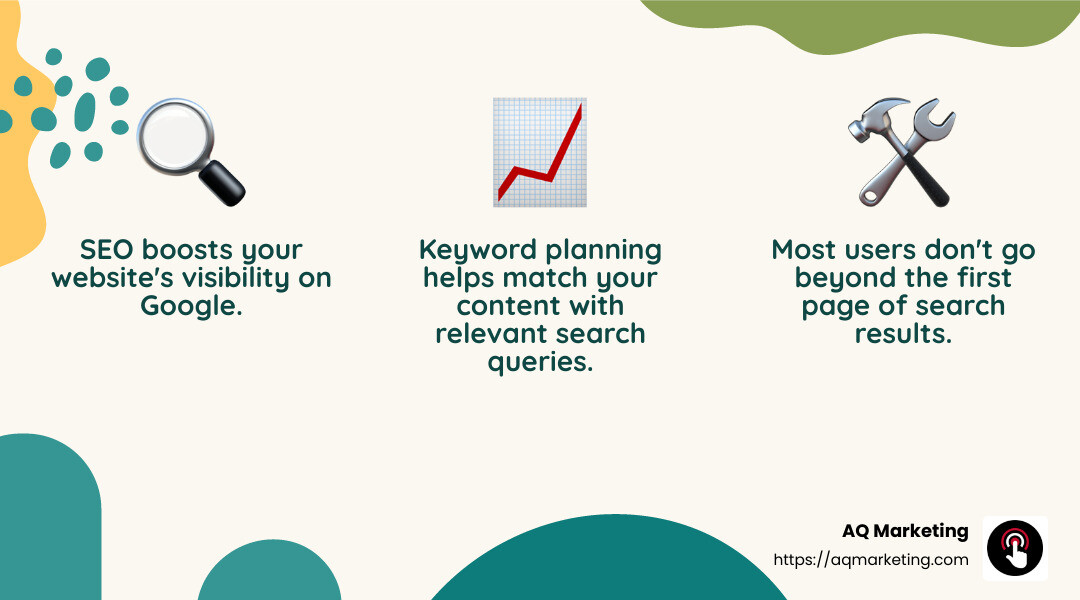
SEO is a cornerstone of business online marketing. It’s all about making your website more visible on search engines like Google. This visibility translates into more organic traffic, which means visitors find you naturally, without paid ads.
Organic Traffic
Organic traffic is the lifeblood of a website. Unlike paid traffic, it’s free and continuous. When your site ranks well in search results, more people will click through to your pages. According to research, most users don’t go past the first page of search results. So, the higher your site ranks, the more visitors you get.
Keyword Planning
Keyword planning is crucial in SEO. It involves researching the terms your potential customers use when searching for products or services like yours. Tools like Google Keyword Planner can help you find these keywords. Once you have them, integrate them naturally into your content. This helps search engines understand what your page is about and match it with relevant search queries.
Google Recognition
Google is the king of search engines, and getting recognized by it can boost your business significantly. To achieve this, ensure your website is optimized for Google’s algorithms. This includes having a mobile-friendly design, fast loading times, and secure connections (HTTPS). Also, regularly update your site with fresh, high-quality content. Google loves new content and rewards sites that provide valuable information.
By focusing on SEO, small businesses can improve their online presence and attract more potential customers. Next, we’ll explore Content Marketing and how it complements your SEO efforts to build brand authority.
Content Marketing
Content Marketing is all about creating and sharing valuable content to attract and engage your audience. For small businesses, it’s a powerful way to establish brand authority and drive customer action.
Relevant Content
Creating relevant content means understanding what your audience cares about. It’s not just about promoting your products or services. Instead, focus on providing useful information that solves their problems or answers their questions. This could be through blog posts, videos, podcasts, or infographics.
Consider the success of Dove, which uses video ads to spark conversations about beauty standards. This approach not only promotes their products but also engages their audience on a deeper level.
Brand Authority
When you consistently offer valuable content, you position your business as an expert in your field. This builds trust with your audience. They’re more likely to remember you when they need your product or service.
For example, Bite Beauty partners with influencers to reach beauty enthusiasts. By doing so, they not only promote their products but also build credibility and trust within their target market.
Content Creation Platforms
Creating content doesn’t have to be overwhelming. Platforms like WriterAccess connect you with freelance writers and editors who can help produce content at scale. This allows even small businesses to maintain a steady flow of high-quality content without breaking the bank.
With a 14-day free trial, WriterAccess offers affordable plans custom to different needs, making it a practical choice for businesses looking to improve their content marketing efforts.
By integrating content marketing into your business online marketing strategy, you can improve your SEO efforts and establish a strong online presence. Next, we’ll dive into Social Media Marketing and how it helps personify your brand and engage with your audience.
Social Media Marketing
In the field of business online marketing, social media marketing is your chance to bring your brand to life. It’s where you can engage with your audience and showcase the personality behind your business.
Brand Personification
Think of your brand as a person. What would it say? How would it act? Social media is the perfect stage for this type of interaction. It allows you to express your brand’s voice and values in a relatable way.
Andrew Delaney from HubSpot emphasizes the importance of being present where your potential customers are. By personifying your brand, you make it memorable and relatable. This connection can be the difference between a one-time visitor and a loyal customer.
Audience Engagement
Engagement is more than just accumulating likes and shares. It’s about building relationships. Respond to comments, ask questions, and share user-generated content. This interaction shows that you value your audience and are interested in their opinions.
Social media platforms are not just broadcasting channels; they’re communities. When your audience feels heard and appreciated, they’re more likely to engage with your content and spread the word about your brand.
Social Media Tools
Managing multiple social media accounts can be daunting. That’s where social media tools come in. Tools like Hootsuite allow you to schedule posts, track engagement, and analyze performance across different platforms. This streamlines your efforts and ensures your brand message is consistent.
For small businesses, these tools are invaluable. They save time and help focus your efforts on what truly matters—engaging with your audience and growing your online presence.
By integrating social media marketing into your overall strategy, you create a dynamic and interactive platform for your brand. This not only builds brand recognition but also fosters a community around your business.
Next, we’ll explore Email Marketing and how it can automate your marketing efforts and nurture leads effectively.
Email Marketing
In business online marketing, email marketing stands out as a powerful tool for reaching and nurturing leads. Unlike other channels, email provides a direct line to your audience, making it an essential part of any marketing strategy.
Automation
One of the biggest advantages of email marketing is automation. With the right tools, like Mailchimp or Constant Contact, you can set up automated email sequences that run on their own. This means once you plan and schedule your emails, they go out automatically, freeing up your time for other tasks.
Automation also ensures that your messages reach the right people at the right time, whether it’s a welcome email for new subscribers or a reminder about an abandoned cart. This targeted approach can boost engagement and conversion rates significantly.
Lead Nurturing
Email marketing is excellent for nurturing leads. By sending regular, valuable content, you can guide potential customers through the buyer’s journey—from awareness to consideration to decision.
Think of it as building a relationship. You start by introducing your brand and sharing helpful information. Over time, as trust grows, your leads become more likely to choose your products or services. This process can happen seamlessly with the help of automated email campaigns.
Email Campaigns
An effective email campaign is more than just sending promotional messages. It’s about delivering content that your audience finds valuable. This could be educational articles, exclusive discounts, or personalized product recommendations.
To maximize the impact of your campaigns, segment your email list. This means grouping subscribers based on their interests or behaviors. By doing this, you can tailor your messages to meet their specific needs, increasing the likelihood of engagement.
The goal of email marketing is not just to sell but to provide value. When done right, it can turn casual subscribers into loyal customers.
Next, we’ll dive into Pay-Per-Click (PPC) Advertising and how it can drive immediate traffic to your website.
Pay-Per-Click (PPC) Advertising
Pay-Per-Click (PPC) advertising is a powerful tool in the arsenal of business online marketing. It allows businesses to display targeted ads to users actively searching for specific keywords or browsing relevant websites. This strategy is particularly effective for driving immediate traffic and generating leads quickly.
Targeted Ads
The beauty of PPC lies in its precision. You can target your ads to specific audiences based on demographics, interests, and search behaviors. For instance, if you’re a local business in Boston, MA, you can set your ads to appear only to users in that area. This ensures that your marketing dollars are spent reaching the right people.
Google Ads is one of the most popular platforms for PPC advertising. It offers robust targeting options and allows businesses to bid on keywords relevant to their products or services. When a user searches for one of these keywords, your ad can appear at the top of the search results, marked with a small “Ad” label.
Immediate Traffic
One of the main advantages of PPC advertising is its ability to generate immediate traffic. Unlike SEO, which takes time to build organic traffic, PPC can bring visitors to your site as soon as your campaign goes live. This makes it an excellent option for promotions, product launches, or any situation where you need quick results.
Imagine running a special discount for your store in Woburn, MA. With PPC, you can create an ad campaign targeting users in that region, and start seeing traffic almost instantly. This immediacy is why many businesses, especially small ones, find PPC an indispensable part of their marketing strategy.
Google Ads
Google Ads is a cornerstone of PPC advertising. It offers a pay-per-click model where you only pay when someone clicks on your ad, making it a cost-effective choice. The platform allows for detailed campaign management, including keyword research, ad creation, and performance tracking.
When setting up a Google Ads campaign, it’s crucial to conduct thorough keyword research. High-competition keywords might be more expensive, but they also have the potential to drive more traffic. Balancing these factors can help maximize your return on investment.
Regularly monitor your campaigns to adjust bids, refine targeting, and optimize ad copy. This ongoing management ensures that your ads continue to perform well and deliver the desired results.
In the next section, we’ll explore Frequently Asked Questions about Business Online Marketing, addressing common queries and providing insights into digital strategies.
Frequently Asked Questions about Business Online Marketing
What is online business marketing?
Online business marketing involves using digital communication methods to promote a brand and its products or services. This includes tactics like SEO, social media, and email marketing. The goal is to reach potential customers where they spend time online, whether that’s browsing websites, checking emails, or scrolling through social media.
How to start marketing business online?
To start marketing your business online, the first step is to build a professional website. Your website is your digital storefront, so it should be easy to steer, mobile-friendly, and reflective of your brand. Once your website is up, focus on SEO techniques to improve its visibility in search engines. This involves keyword research, optimizing content, and building backlinks.
How to market your small business online?
Marketing a small business online can be achieved through a mix of strategies. Consider writing guest posts on popular blogs in your industry to reach a broader audience. This not only boosts your brand’s visibility but also improves your website’s SEO through backlinks.
Email marketing is another effective strategy. By building a list of subscribers, you can send targeted messages to nurture leads and keep your audience engaged. Use automation tools to send personalized emails based on user behavior and preferences.
Together, these strategies form a comprehensive approach to business online marketing, helping small businesses grow their online presence and connect with their target audience.
In the next section, we’ll dive into the Conclusion, summarizing the long-term results and impactful strategies offered by AQ Marketing.
Conclusion
Establishing a strong online presence is crucial for small businesses. At AQ Marketing, we specialize in creating impactful strategies that deliver long-term results for our clients. Our approach combines business online marketing techniques like SEO, content creation, and social media management to ensure your business not only reaches but also engages your target audience.
Since 2003, we’ve been dedicated to helping small to medium-sized businesses thrive in the digital landscape. We understand that every business is unique, which is why we tailor our services to meet the specific needs of each client. Our team of experts focuses on industries such as home services and insurance, applying our knowledge to deliver results that matter.
One of the key aspects of our strategy is building brand authority through consistent and relevant content. By using platforms like WriterAccess, we connect with talented freelance writers to produce high-quality content that resonates with your audience. This not only improves your brand’s credibility but also improves your website’s search engine rankings.
Furthermore, our social media marketing services ensure your brand is personified online. We engage with your audience, answer questions, and build relationships to foster a community around your business. This ongoing interaction not only boosts visibility but also strengthens customer loyalty.
In addition, our email marketing strategies are designed to nurture leads and keep your audience engaged. By automating email campaigns, we can deliver personalized content that speaks directly to your customers’ interests and needs.
At AQ Marketing, we believe in the power of digital marketing to transform businesses. Our goal is to provide you with a comprehensive strategy that not only meets your current needs but also prepares you for future growth. By choosing us, you’re investing in a partner committed to your success.
Ready to take your business to the next level? Get in touch with us today and find how our digital marketing services can make a difference for your business.