

What Is a Startup Content Strategy (And Why You Need One Now)
A startup content strategy is a focused plan for creating, publishing, and distributing content that builds trust, attracts the right audience, and drives business growth — before you ever spend a dollar on ads.
Here is what an effective startup content strategy includes:
- A clear target audience — Know exactly who you are writing for and what problems they have
- Content pillars — 3-5 core topics that reflect your expertise and your customer’s needs
- A publishing cadence — Consistent output on the right channels, even if it starts small
- Distribution channels — Where your audience actually spends time (LinkedIn, email, search)
- Metrics that matter — Track search impressions, time on page, and leads — not just likes
- Iterative improvement — Test, learn, and refine based on real data
One of the biggest mistakes early-stage startups make is waiting. Waiting until the product is polished. Waiting until the team is bigger. Waiting until funding comes through. But content is a compounding asset — the earlier you start, the more it pays off over time. Every blog post, LinkedIn update, or email newsletter you publish today is working for you months from now.
Think about it this way: 70% of the buying journey happens before a prospect ever talks to your sales team. If you are not showing up with helpful, relevant content during that window, someone else is.
I’m Robert P. Dickey, President and CEO of AQ Marketing, and with over 20 years of experience helping small and medium-sized businesses grow through digital marketing, I have seen how a well-built startup content strategy can transform a quiet website into a steady stream of inbound leads. In the sections ahead, we will walk you through exactly how to build one — from your first piece of content to a scalable, multi-channel system.
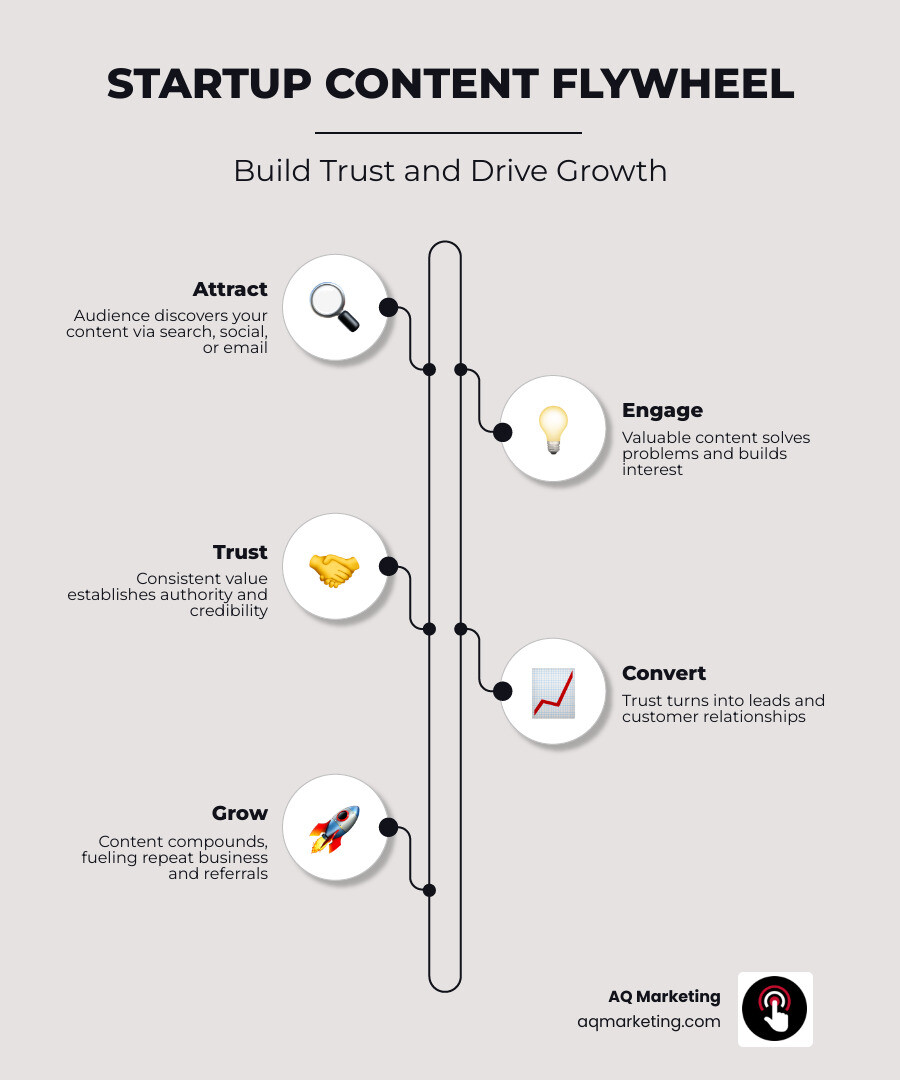
Relevant articles related to startup content strategy:
Why a Startup Content Strategy is Your Growth Engine
In the world of New England innovation—from the tech hubs of Cambridge to the growing small businesses in Worcester and Woburn—standing out is a challenge. A robust startup content strategy isn’t just a “nice-to-have” marketing checkbox; it is the primary engine that fuels long-term growth.
As noted in our introduction, 70% of the buying journey is completed before a prospect even reaches out to a salesperson. In today’s digital landscape, your content acts as your 24/7 sales representative. It educates, informs, and handles objections while your team focuses on building the product.
Compounding Assets vs. Fleeting Ads
Think of content like a high-yield savings account for your brand. While paid ads stop working the moment you stop paying for them, a high-quality blog post or whitepaper continues to attract visitors for years. This creates a sustainable way to lower your Customer Acquisition Cost (CAC) over time. By investing in content early, we help startups build “equity” in their niche, making every future marketing dollar work harder.
Building Trust at Scale
For a startup, trust is the most expensive currency. You are the “new kid on the block,” and prospects are naturally skeptical. Strategic content allows you to demonstrate expertise and build early-stage marketing momentum by solving small problems for your audience for free. When you provide value through your startup content strategy, you aren’t just selling a product; you are building a relationship.
Launching with a Minimum Viable Content Strategy (MVCS)
Just as you wouldn’t build a full-featured software product without first testing a Minimum Viable Product (MVP), you shouldn’t launch a massive content engine without a Minimum Viable Content Strategy (MVCS). This lean approach focuses on the smallest amount of content needed to test your message and start a conversation with your audience.
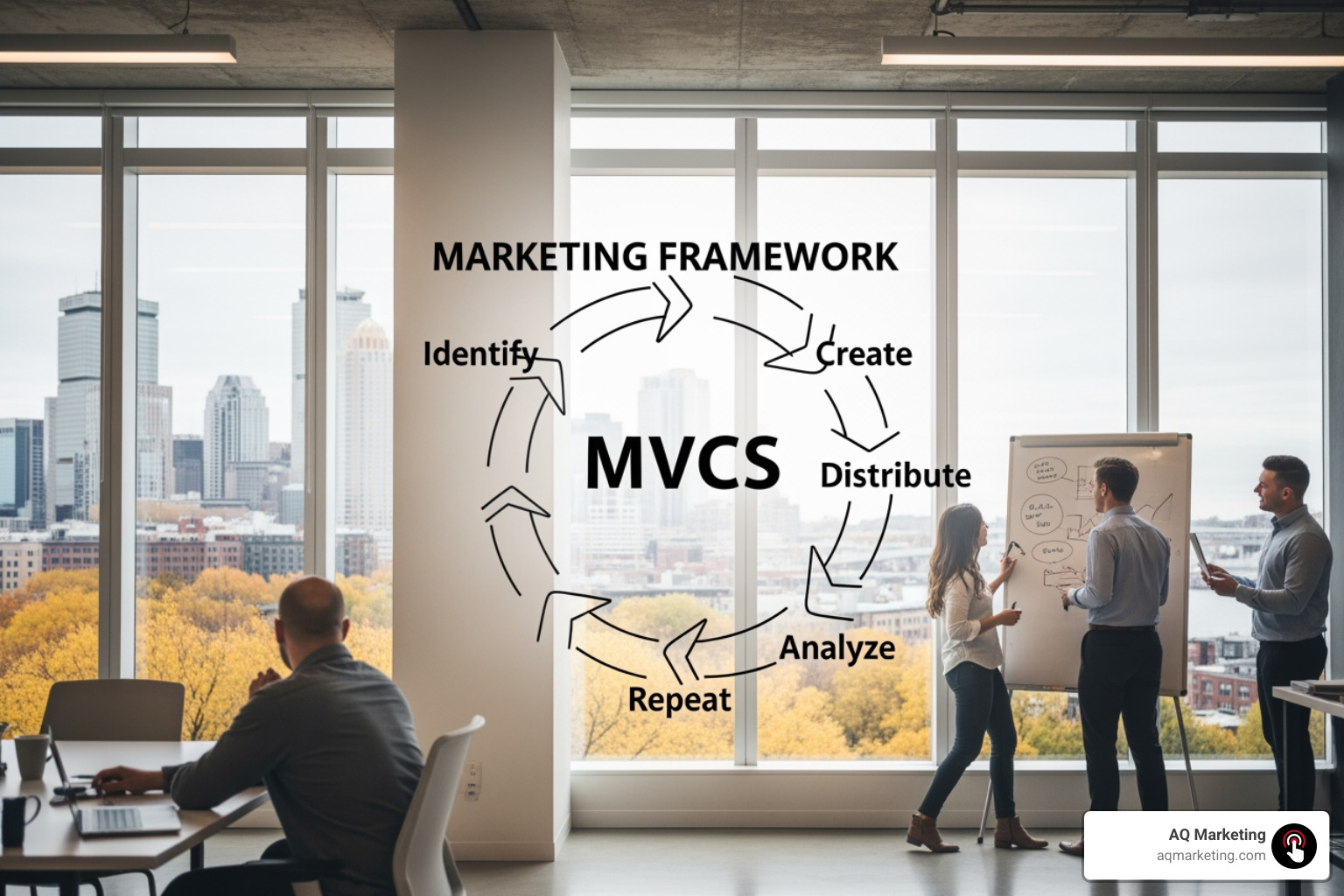
Lean Principles and Iterative Testing
The goal of an MVCS is speed and agility. Instead of spending months planning a 50-page ebook, we recommend starting with a few high-value LinkedIn posts or a single, deep-dive “how-to” guide. This allows you to see what resonates with your audience before you over-invest.
Defining Your Audience Personas
You cannot be everything to everyone. Your startup content strategy must start with a laser-focused definition of your Ideal Customer Profile (ICP). Are you speaking to a busy insurance agency owner in Braintree or a home services contractor in Lowell? Understanding their specific pain points allows you to create content that feels like a personal solution.
| Feature | MVCS (Startup Style) | Traditional Strategy (Corporate Style) |
|---|---|---|
| Primary Goal | Learning & Validation | Brand Awareness & Volume |
| Time to Launch | 1-2 Weeks | 3-6 Months |
| Content Volume | Low (Quality over Quantity) | High (Daily/Weekly frequency) |
| Flexibility | Pivots based on weekly data | Set in stone for the quarter |
| Cost | Minimal (Sweat Equity) | High (Agency/Production costs) |
Content Pillars and Feedback Loops
Choose 3-5 “content pillars”—broad topics that you can speak on with authority. For example, if you are a SaaS startup in the HR space, your pillars might be “Remote Culture,” “Compliance,” and “Recruitment Efficiency.” Use these to guide your creation and look for feedback loops (comments, DMs, or email replies) to refine your future topics.
The Evolution of Content Through Funding Stages
As your startup grows from a basement in Quincy to a Series A office in Boston, your startup content strategy must evolve with you. What works for a solo founder won’t sustain a 50-person marketing team.
Pre-seed: Learning, Not Selling
At this stage, content is a discovery tool. You are publishing to validate the problem. Share your learnings, interview potential customers, and “build in public.” Your goal is to signal to investors and early adopters that you understand the market deeply.
Seed: From Awareness to Early Traction
Once you have a product, content shifts toward digital-marketing-services-for-small-businesses-your-path-to-growth. You need to prove that people want what you’ve built. This is the time for case studies, tactical guides, and SEO-focused blog posts that answer “how-to” questions related to your solution.
Series A: Building a Repeatable Content Engine
With Series A funding, the focus turns to scale. You are no longer just “doing content”; you are building a content system. This involves hiring specialized writers, investing in better production for video, and creating a messaging playbook that ensures your brand voice is consistent across every channel.
Scaling Your Startup Content Strategy from Seed to Series A
Scaling requires turning your content into a “repeatable engine.” This means:
- Sales Enablement: Creating content specifically for your sales team to send to prospects during the deal cycle.
- Multi-channel Systems: Taking one big piece of content (like a webinar) and repurposing it into ten social posts, two blog articles, and an email newsletter.
- Series B and Beyond: At these stages, your content becomes about market leadership and IPO narratives—controlling the story on a global scale.
The Power of Founder-Led Storytelling and the IDEA Framework
One of the most effective tools in a startup content strategy is the founder’s own voice. Entrepreneur reported that 77% of customers are more likely to buy from a company if the CEO is active on social media.
Personal Branding and Building in Public
People buy from people, not faceless corporations. By sharing the “behind-the-scenes” journey—the wins, the losses, and the lessons learned—founders can build brand awareness through social media more effectively than any corporate ad campaign. This radical transparency builds a loyal “tribe” of supporters who feel invested in your success.
The IDEA Framework
To make founder-led content sustainable, we use the IDEA framework to structure your storytelling:
- I – Inspire: Share your “Origin Story.” Why did you start this company in your apartment in Medford? What is the big vision for the future?
- D – Demonstrate: Show your product in action. Don’t just list features; show how a real customer in Newton solved a real problem using your tool.
- E – Educate: Teach your audience something valuable. If you are an expert in SEO, share the “3 secrets” to ranking locally in Massachusetts.
- A – Activate: Give your audience a clear next step. Whether it’s signing up for a newsletter or booking a demo, every piece of content should have a goal.
Multi-Channel Execution: SEO, Social Media, and Community
A great startup content strategy doesn’t live on an island. It needs to be distributed where your customers actually hang out.
LinkedIn-First Approach
For B2B startups, LinkedIn is often the highest-leverage platform. It is a place where professionals are already in a “buying” or “learning” mindset. We suggest a “3-post-per-week” system: one teaching post, one “building in public” update, and one engagement-focused post to spark conversation.
Topical Authority and Long-form SEO
While social media provides immediate “spikes” in traffic, SEO provides the long-term “floor.” By focusing on topical authority—writing deeply about one specific niche—you can outrank even the biggest competitors. For a local business, this might mean dominating keywords related to social-media-strategies-for-businesses in the North Shore area.
Community and Engagement
Content is a two-way street. Building connections through community building and user-generated content (UGC) turns your customers into your best marketers. Encourage your users to share their own stories and respond to every comment on your posts. Live video is also a fantastic way to foster immediate engagement and show the human side of your startup.
Budgeting and Measuring Content Performance
How much should you spend on a startup content strategy? While you can start with just “sweat equity,” scaling usually requires a financial investment.
Industry Pricing Data
Based on average online data, most small to mid-sized startups invest between $2,000 and $10,000+ per month in their content marketing efforts. This typically covers strategy, writing, design, and distribution.
- Low End ($2,000/mo): Basic blog management and social posting.
- Mid Range ($5,000/mo): Comprehensive strategy, SEO, and founder-led content support.
- High End ($15,000+/mo): Full-scale multi-channel production, including high-end video and dedicated community management. Please note: These figures are based on industry averages and do not represent AQ Marketing’s actual pricing.
Leading Indicators vs. Vanity Metrics
Don’t get distracted by “likes.” In the early days of your startup content strategy, focus on leading indicators:
- Search Impressions: Are you starting to show up in Google?
- Time on Page: Are people actually reading what you write?
- DM Conversations: Are people reaching out with questions?
- Trial Signups: Is the content driving people to try your product?
Generative AI Integration
AI tools are a great way to speed up ideation and outlining, but they cannot replace human creativity. We use AI to help with keyword research and initial drafts, but a human expert always provides the final polish and unique insights that make content stand out.
Common Pitfalls in a Startup Content Strategy
Even with the best intentions, many startups fall into the same traps. Here is what to avoid:
- Inconsistency: Posting ten times in one week and then disappearing for a month. Consistency is the key to the algorithm and audience trust.
- Product-Only Posting: If every post is a “buy now” pitch, people will tune you out. Follow the 80/20 rule: 80% value, 20% promotion.
- Generic AI Copy: If your content sounds like a robot wrote it, nobody will read it. Your unique perspective is your competitive advantage.
- Ignoring Engagement: Posting content and then failing to reply to comments is like inviting someone to a party and then refusing to speak to them. Customer engagement is where the magic happens.
- Premature Outsourcing: Don’t hire an agency to “do your content” before you’ve figured out your brand voice and your audience’s needs.
Frequently Asked Questions about Startup Content Strategy
What is a Minimum Viable Content Strategy (MVCS)?
An MVCS is a lean, iterative approach to content marketing. It focuses on creating the smallest amount of high-impact content (like a few key blog posts or social threads) to validate your messaging and attract early users without a massive upfront investment.
How long does it take to see results from startup content?
Content marketing is a long game. While you might see some immediate engagement on social media, significant SEO results and inbound lead flow typically take 3 to 6 months of consistent effort to “flywheel.”
Should founders write all the content themselves?
In the beginning, yes—or at least provide the core ideas. Founder-led content is incredibly powerful for building trust. As you scale, you can work with a partner like AQ Marketing to take your raw ideas and refine them into a professional startup content strategy.
Conclusion
Building a powerful startup content strategy is one of the most rewarding investments you can make for your business. It allows you to compete with larger companies by out-teaching and out-helping them, rather than just out-spending them.
At AQ Marketing, we specialize in helping businesses across Massachusetts—from the South Shore to the Merrimack Valley—navigate this digital transformation. We focus on delivering long-term, impactful results through strategic consistency and expert execution. Whether you are just starting your journey or looking to scale your existing efforts, we are here to help you turn your story into your greatest growth lever.
Ready to build a content engine that works as hard as you do? Start your digital marketing journey with us today.
