

The Granite State Goes Social: Why Your NH Organization Needs a Strategy
Social media NH represents more than just posting updates—it’s about connecting with your local community, building trust, and driving real business results in the Granite State. Whether you’re a Manchester restaurant, a Portsmouth nonprofit, or a Nashua-based service provider, your potential customers are already using social media to research, engage, and make decisions about where to spend their money.
Quick Answer: Key Benefits of Social Media for NH Organizations
- Build Local Awareness – Reach neighbors and community members where they already spend time online
- Generate Quality Leads – Convert social engagement into phone calls, form fills, and foot traffic
- Showcase NH Pride – Highlight your connection to local events, seasons, and community values
- Compete Effectively – Level the playing field against larger, out-of-state competitors
- Strengthen Reputation – Respond to reviews and feedback in real-time
New Hampshire’s tight-knit communities present a unique opportunity for businesses and nonprofits. From the Lakes Region to the Seacoast, from the North Country to the Massachusetts border, residents value authenticity and local connections. Social media lets you tap into that community spirit at scale.
The challenge? Most organizations approach social media without a clear strategy. They post sporadically, ignore engagement opportunities, and fail to measure what matters. Or worse, they spread themselves too thin across every platform without understanding where their audience actually spends time.
According to research from NH-based agencies, businesses that combine organic content with strategic paid advertising see significantly better results than those relying on posting alone. The data backs this up—organizations using data-driven social media strategies report increases in organic traffic ranging from 360% to 664%, with lead generation growing by as much as 800%.
Social media also plays a critical role in how New Hampshire handles public communication. State agencies like the Department of Safety, Department of Environmental Services, and even local libraries maintain active social presences to inform, educate, and engage with residents. If government entities recognize the value of these platforms, businesses and nonprofits certainly should too.
But social media in New Hampshire comes with its own considerations. The state’s Right to Know Law can impact how public-facing organizations handle social communications. Seasonal businesses need to plan for tourism peaks and winter lulls. And in a state where everyone seems to know everyone, maintaining authenticity isn’t optional—it’s essential.
I’m Robert P. Dickey, President and CEO of AQ Marketing, and over my 20+ years in digital marketing, I’ve helped countless New England businesses build effective social media NH strategies that drive measurable results. My approach combines local market knowledge with proven digital tactics that work specifically for organizations serving Granite State communities.
The good news? You don’t need a massive budget or a dedicated social media team to succeed. What you need is a clear strategy, consistent effort, and an understanding of what makes New Hampshire audiences unique. This guide will walk you through exactly that—from choosing the right platforms to creating content that resonates with the 603 area code.
Understanding the NH Audience
Before you post your first update, you need to understand who you’re talking to. New Hampshire residents aren’t just New Englanders—they’re fiercely proud of their state’s unique character.
Local pride runs deep here. From “Live Free or Die” license plates to fierce debates about the best fall foliage routes, Granite Staters identify strongly with their home. Your social media should reflect and celebrate this pride, not ignore it.
The state’s small size creates a community-focused mindset. People support local businesses, attend town events, and value word-of-mouth recommendations. Social media amplifies these community connections, letting you reach beyond your immediate neighborhood while maintaining that local feel.
Small business support isn’t just talk—it’s action. Events like Small Business Saturday see strong participation across NH towns. Residents actively choose to shop local when they know about their options. Your social media helps them find and remember you.
The four-season lifestyle shapes everything in New Hampshire. Your social media strategy needs to adapt to these rhythms—ski season content differs dramatically from summer lake content or fall foliage posts. Organizations that acknowledge and accept these seasonal shifts connect better with their audience.
Tourism impacts even businesses that don’t consider themselves tourism-focused. Summer visitors to the Lakes Region, fall leaf-peepers, and winter skiers all use social media to find restaurants, shops, and services. Your local business can capture this seasonal revenue with the right social approach.
Key Benefits for NH Businesses and Nonprofits
Let’s talk about what social media actually does for your bottom line in New Hampshire.
Increased brand awareness is the most obvious benefit. When you post consistently, you stay top-of-mind with your community. The next time someone needs your service or product, you’re already familiar—not a stranger.
Direct customer engagement transforms relationships. Instead of one-way advertising, social media lets customers ask questions, share experiences, and interact with your brand. This two-way conversation builds loyalty that traditional marketing can’t match.
Lead generation happens when you give people clear next steps. A well-crafted Facebook post about your spring promotion, combined with an easy way to book or buy, turns scrollers into customers. The research shows NH organizations seeing lead increases of 360% to 800% with strategic social media.
Community building creates customers for life. When you engage with local events, support community causes, and participate in neighborhood conversations, you become more than a business—you become part of the fabric of your town.
Showcasing local expertise positions you as the go-to authority in your field. Share tips, answer common questions, and demonstrate your knowledge. In a small state like NH, being recognized as an expert in your town or region drives significant business.
For more specific tactics on converting social engagement into revenue, check out our guide on benefits of social media advertising.
Choosing Your Platforms: The Social Media NH Landscape

This section addresses the primary platforms used by New Hampshire organizations and how to choose the right ones. It’s tempting to try to be everywhere, but a smart strategy focuses on quality over quantity. We help businesses in Merrimack Valley and Southern New Hampshire make these crucial decisions.
Dominant Platforms in New Hampshire
When it comes to social media NH, certain platforms stand out due to their widespread adoption and utility for both businesses and public entities.
-
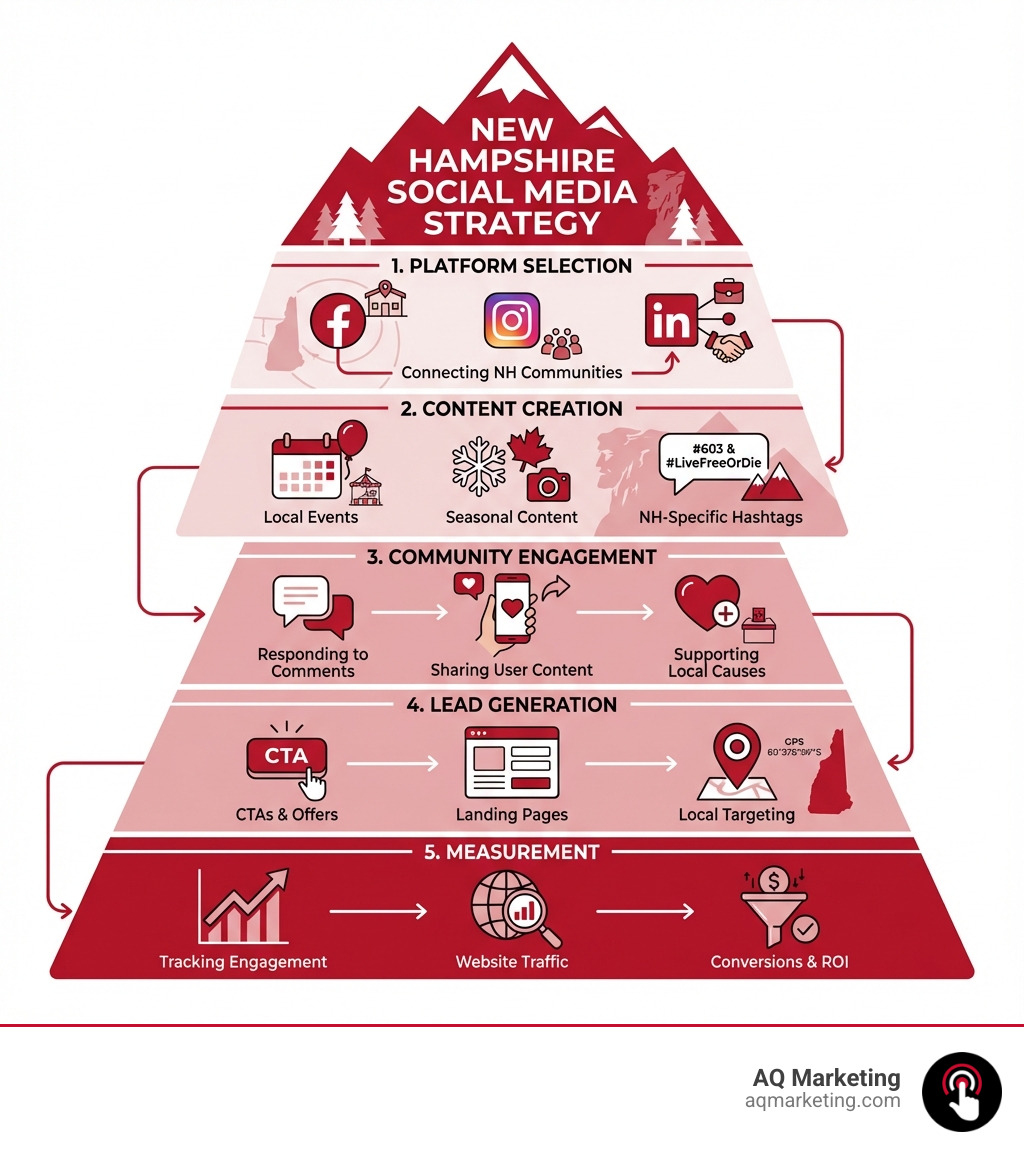
Facebook for community: Facebook remains a powerhouse in New Hampshire, especially for community groups, local businesses, and government agencies. The New Hampshire State Library, for instance, maintains multiple Facebook pages for different initiatives, including NH Audio Books and the Center for the Book. The NH Department of Safety also heavily uses Facebook for public information and interaction. For nonprofits, Facebook is invaluable for promoting events like NH Gives, sharing success stories, and fundraising. Its robust group features also foster strong local communities.
-
Instagram for visuals: Instagram is the go-to platform for visually driven businesses and organizations. New Hampshire’s scenic beauty, from its mountains to its seacoast, makes it a natural fit for Instagram. The NH Department of Environmental Services and NH Fish and Game both have active Instagram presences, showcasing the state’s natural resources. Businesses in tourism, hospitality, retail, and even local artists like Jeremy Noyes Photography leverage Instagram to display their work and attract followers. Nonprofits use it to share impactful images and video stories.
-
Twitter/X for news: While its name has changed, Twitter (now X) continues to be a primary source for breaking news, real-time updates, and quick communication in NH. Many state government entities, including Governor Sununu, the State Senate, and the NH Department of Transportation, use Twitter/X for official announcements and immediate information dissemination. For businesses, it’s a powerful tool for customer service, monitoring industry trends, and engaging in relevant conversations.
-
LinkedIn for B2B: For businesses operating in the B2B space or professional services, LinkedIn is indispensable. The NH Department of Economic Development maintains a strong LinkedIn presence, connecting with businesses and promoting economic growth. It’s the ideal platform for networking, recruiting talent, and establishing thought leadership within your industry.
-
YouTube for storytelling: YouTube is crucial for organizations that benefit from longer-form video content. State agencies like the NH Department of Safety and the NH Department of Agriculture and Markets use YouTube to share educational videos, public service announcements, and event highlights. Businesses can use it for product demos, tutorials, customer testimonials, and behind-the-scenes glimpses.
For a comprehensive look at how the state itself leverages these platforms, you can review a look at the state’s official accounts. This directory illustrates the broad adoption of social media across various public sector entities in New Hampshire.
How to Select the Right Channels for Your NH Entity
Choosing the right social media channels isn’t about joining every platform; it’s about strategic alignment. Our approach involves a deep dive into your unique situation.
-
Audience demographics: Where does your ideal customer or supporter spend their time online? If you’re targeting younger demographics, TikTok or Instagram might be more effective. For older, community-focused audiences, Facebook often yields better results. For professionals, LinkedIn is key. Understanding your audience is the first step to successful social media NH marketing.
-
Business goals: What do you want to achieve? If your goal is brand awareness, platforms with broad reach and visual appeal (like Facebook and Instagram) are good choices. For lead generation, platforms that support direct calls-to-action and advertising (like Facebook and LinkedIn) are often more effective. Nonprofits focused on fundraising might prioritize platforms with integrated donation features.
-
Industry type: Different industries thrive on different platforms. A restaurant or tourism business will benefit greatly from Instagram’s visual nature, while a financial advisor might find more success building trust on LinkedIn. A home services business could leverage Facebook for local community engagement and reviews.
-
Resource allocation: Be realistic about your capacity. Managing multiple active social media channels effectively requires time, content creation, and monitoring. It’s better to excel on one or two platforms than to spread yourself thin across many and achieve mediocre results. We help our clients identify where their efforts will have the most impact.
To truly amplify your message and reach the right people, we recommend a custom approach to platform selection. You can learn more about this in our guide on amplify your reach with the right channels.
Crafting Content That Connects with the 603

This section covers best practices for engaging with New Hampshire audiences and leveraging social media for business growth. In a state known for its authenticity, your content needs to reflect that.
Best Practices for Engaging the Social Media NH Audience
New Hampshire audiences appreciate genuine connection. Here’s how we recommend fostering that through your content:
-
Authenticity: Be real. New Hampshire residents value honesty and transparency. Share your story, your values, and the people behind your business. Avoid overly polished, generic corporate speak. For nonprofits, sharing the human impact of your work resonates deeply with supporters.
-
Responsiveness: Engage in conversations, don’t just broadcast. Respond to comments, messages, and mentions promptly. This shows you’re listening and value your community’s input. The NH Department of Safety’s “Rules of Engagement” highlight the importance of respectful and relevant interaction, a principle that applies to all organizations.
-
Highlighting local events: Participate in and promote local happenings. Whether it’s a town fair, a farmers market, or a community fundraiser, tie your content to these events. For example, the NH State Library promotes various local initiatives, demonstrating community involvement. This positions your organization as a true community partner.
-
User-generated content: Encourage your customers or supporters to share their experiences with your brand. Re-share positive posts (with permission, of course!). This builds social proof and creates a sense of community ownership. For nonprofits, this could be photos from volunteers or testimonials from beneficiaries.
-
NH-specific hashtags: Use hashtags that resonate with the local identity.
#603(the state’s primary area code),#LiveFreeOrDie, and#VisitNHare popular choices. You can also create hyper-local hashtags for your town or specific events, like#ExeterNHor#NHGives. Hashtags increase visibility and connect you with relevant conversations.
To dive deeper into effective content creation and engagement, explore our insights on how to market on social media effectively.
Leveraging Social Media for Lead Generation
Social media isn’t just for likes; it’s a powerful engine for generating leads and growing your business or mission.
-
Calls-to-action (CTAs): Every post should have a purpose. Do you want people to visit your website, call for a quote, sign up for a newsletter, or make a donation? Include clear, concise CTAs that guide your audience to the next step. “Learn More,” “Shop Now,” “Get a Free Estimate,” or “Donate Today” are all effective examples.
-
Landing pages: When driving traffic from social media, send users to dedicated landing pages designed for conversion. These pages should be relevant to the social post and have a single, clear objective. This streamlines the user experience and improves your conversion rates.
-
Contests and giveaways: These are fantastic for generating excitement and collecting leads. Ask users to like, share, and tag friends to enter, and require an email address for participation. This expands your reach and builds your email list for future marketing efforts. Consider partnering with other local NH businesses for even greater impact.
-
Social media advertising: Organic reach can only go so far. Paid social media advertising allows for precise targeting, ensuring your message reaches the most relevant audience in specific NH towns or regions. You can target by demographics, interests, behaviors, and even custom audiences. This is where we see those impressive lead generation increases for our clients.
For businesses looking to maximize their reach and lead generation specifically through paid campaigns, our Facebook Marketing Agency services can provide targeted solutions.
The Power of Video in Your NH Strategy
Video content dominates social media feeds, and for good reason—it’s engaging, informative, and highly shareable. For social media NH, video offers a fantastic way to showcase the state’s charm and your business’s personality.
-
Showcasing scenery: If your business benefits from New Hampshire’s natural beauty, video is your best friend. Short clips of local landmarks, seasonal changes, or outdoor activities can captivate your audience and tie your brand to the beloved Granite State landscape.
-
Business tours: Give potential customers a virtual walk-through of your establishment. A quick video tour of your restaurant, shop, office, or facility can build familiarity and trust before they even visit.
-
Customer testimonials: Authentic testimonials are incredibly powerful. Video testimonials allow satisfied customers to share their positive experiences in their own words, adding a layer of credibility that text simply can’t match.
-
Event recaps: Attended a local fair or hosted an open house? A short video recap with highlights and interviews can extend the reach of the event and show your community involvement.
-
Behind-the-scenes content: People love to see the human side of a business. Share videos of your team at work, the process behind your products, or a typical day at your office. This builds connection and authenticity.
Video content doesn’t have to be Hollywood-level production. A smartphone and good lighting can go a long way. The key is storytelling.
To understand more about why video is a must-have in your marketing toolkit, read our article on why use video in social media marketing.
Measuring Success and Navigating NH-Specific Rules
This section details how to measure campaign effectiveness and addresses unique challenges and regulations in New Hampshire. Without measurement, your social media efforts are just a shot in the dark.
How to Measure Social Media Effectiveness
Effective social media NH strategies aren’t just about posting; they’re about analyzing what works and what doesn’t. We focus on data-driven insights to refine your approach.
-
Key Performance Indicators (KPIs): Define what success looks like for your specific goals. For brand awareness, KPIs might include reach, impressions, and follower growth. For lead generation, focus on click-through rates, website visits from social, and conversion rates. Nonprofits might track donations, sign-ups, or volunteer registrations.
-
Engagement rate: This metric measures how actively your audience interacts with your content (likes, comments, shares, saves). A high engagement rate indicates your content is resonating. We look beyond vanity metrics to understand true audience connection.
-
Website traffic: How much traffic is your social media driving to your website? Use UTM parameters and Google Analytics to track visitors, bounce rates, and time on site from your social channels. This directly links social efforts to your online presence.
-
Conversion tracking: The ultimate goal for many businesses is conversion. Set up conversion tracking on your website to attribute sales, form submissions, or phone calls directly back to your social media campaigns. This is crucial for demonstrating ROI.
-
Follower growth: While not the only metric, steady, organic follower growth indicates that your content is attracting new, relevant audiences. We emphasize attracting quality followers who are genuinely interested in your offerings.
Understanding these metrics allows us to continually optimize your social strategy. For a deeper dive into these concepts, check out our guide on decoding social media analytics for effective strategy.
Common Challenges for NH Organizations
Even with a solid strategy, organizations in New Hampshire face specific problems in their social media marketing efforts.
-
Limited resources: Many small businesses and nonprofits operate with tight budgets and small teams. This can make consistent content creation, active engagement, and detailed analytics feel overwhelming. It’s about working smarter, not harder, and prioritizing where your efforts will have the biggest impact.
-
Seasonality: New Hampshire’s strong seasonal economy means businesses often have peaks and troughs in activity. Your social media strategy needs to adapt, with different content and advertising campaigns for summer tourism, fall foliage, winter sports, and quieter off-seasons. This requires flexible planning.
-
Standing out in a small market: In New Hampshire’s close-knit communities, word travels fast, and competition for local attention can be fierce. Authenticity, strong community ties, and a unique brand voice are essential to differentiate yourself from local competitors.
-
Keeping up with trends: Social media platforms are constantly evolving with new features, algorithms, and content formats. Staying current requires ongoing learning and adaptation, which can be challenging for busy business owners. This is where an experienced digital marketing partner can be invaluable.
New Hampshire Regulations and Guidelines
A unique aspect of managing social media NH for public entities, and a good guideline for all, involves understanding state-specific regulations.
-
Right to Know Law: For government agencies and potentially some nonprofits that receive public funding, communications on social media accounts are subject to New Hampshire’s Right to Know Law. This means that posts, comments, and messages can be requested as public records. The NH Department of Safety explicitly states this in their “Rules of Engagement,” emphasizing that all communications are potentially public.
-
Public records: This extends beyond just formal statements. Any interaction, whether by a state employee or the public, may be subject to these requests. This highlights the need for careful consideration of what is posted and how interactions are managed.
-
Importance of a social media policy: To steer these regulations and maintain brand consistency, every organization should have a clear social media policy. This policy should outline guidelines for content, engagement, moderation, and employee conduct. The NH Department of Natural and Cultural Resources provides a comprehensive “Social Media Rules of Engagement” document that serves as an excellent example of what such a policy entails, covering prohibited content, user responsibilities, and disclaimers.
We advise all our clients, especially those with public-facing roles or operating in regulated industries, to develop and adhere to robust social media policies. You can view an example of state-level Social Media Rules of Engagement to understand the considerations involved.
Frequently Asked Questions about Social Media in NH
What is the best social media platform for a small business in New Hampshire?
The best platform depends on your target audience and goals. However, Facebook is an excellent starting point for most NH businesses due to its large user base and strong community features. Many New Hampshire state agencies and local businesses use Facebook for broad communication and community engagement. Its ability to create local groups and events makes it ideal for connecting with tight-knit communities across the state. Visual-heavy businesses like restaurants, retail shops, or tourism operators should also prioritize Instagram, given New Hampshire’s scenic appeal. Instagram allows you to showcase your products, services, and the beautiful local environment, which resonates well with residents and tourists.
How can my nonprofit organization best use social media in NH?
Nonprofits in New Hampshire can leverage social media to amplify their mission and connect with their community. Platforms like Facebook and Instagram are ideal for telling impactful stories, sharing successes, and showcasing the human impact of your work. You can use these channels to promote fundraising events, such as the statewide NH Gives initiative, where social media is crucial for driving donations. We recommend sharing behind-the-scenes content, featuring volunteers, and providing clear calls-to-action for donations or sign-ups. Engagement is key; respond to comments, thank donors publicly (with consent), and use relevant local hashtags to reach a broader audience. Authenticity and transparency are highly valued by New Hampshire communities.
Is social media advertising effective for reaching customers in specific NH towns?
Yes, social media advertising is highly effective for local targeting and is a cornerstone of successful social media NH strategies. Platforms like Facebook and Instagram offer advanced targeting that allows you to reach users by specific towns, zip codes, or a radius around your business. You can also target based on demographics, interests, and behaviors, ensuring your ads are seen by the most relevant potential customers in communities like Manchester, Nashua, or Portsmouth. This precision makes social media advertising a powerful tool for local businesses to efficiently allocate their marketing budget and attract customers in their neighborhood or service area.
Taking Your NH Social Media to the Next Level
A strong social media NH presence is a vital part of a comprehensive digital marketing strategy for any New Hampshire organization. By understanding the local landscape, creating authentic content, and engaging with the community, you can build trust and drive growth. We’ve seen how a strategic approach transforms online presence into tangible business results for our clients in Merrimack Valley and Southern New Hampshire.
From choosing the right platforms that align with your audience and goals, to crafting compelling content that resonates with the Granite State’s unique character, every step should be intentional. Measuring your efforts through key performance indicators ensures you’re continually optimizing for success, while understanding local regulations keeps you compliant.
For businesses looking to implement a professional, results-driven strategy that handles the complexities of content, engagement, and analytics, partnering with an experienced agency can make all the difference. We pride ourselves on delivering long-term, impactful results custom to your specific needs. Learn more about our Social Media Marketing Services.