

Creative Web Design: 5 Stunning Trends for 2025
The Art of Creative Web Design: Where Vision Meets Technology
Creative web design is the process of changing ideas into visually stunning and functional websites that engage users and achieve business goals. It’s where artistic vision meets technical expertise to create digital experiences that stand out in today’s crowded online landscape.
What is Creative Web Design?
| Element | Description |
|---|---|
| Purpose | To create websites that are both visually appealing and highly functional |
| Key Components | Visual design, user experience (UX), responsive layout, brand integration |
| Benefits | Increased engagement, higher conversion rates, stronger brand identity |
| Latest Trends | Interactive animations, dark mode, minimalism, voice search optimization |
Creative web design isn’t just about making websites look pretty. It’s about solving problems, telling stories, and creating intuitive user journeys that guide visitors toward taking action. In today’s digital-first world, your website often serves as the first impression for potential customers—making creative design not just a luxury, but a necessity.
According to recent research, approximately 75% of consumers judge a company’s credibility based on its website design. With users making stay-or-leave decisions within just two seconds of landing on a page, the importance of thoughtful, creative design cannot be overstated.
“Most people get intimidated by the thought of designing a website. But with the right approach, creative web design can transform your online presence and set you apart from competitors.”
The best creative web designs blend several crucial elements:
- Strategic planning that aligns design with business goals
- User-centered approaches that prioritize visitor needs
- Visual storytelling that communicates brand values
- Technical excellence that ensures performance across all devices
- SEO-friendly architecture that improves visibility
I’m Robert P. Dickey, President and CEO of AQ Marketing with over 20 years of experience helping businesses transform their online presence through creative web design and digital marketing strategies. My career has been dedicated to helping small and medium-sized businesses stand out with innovative, conversion-focused creative web design solutions.
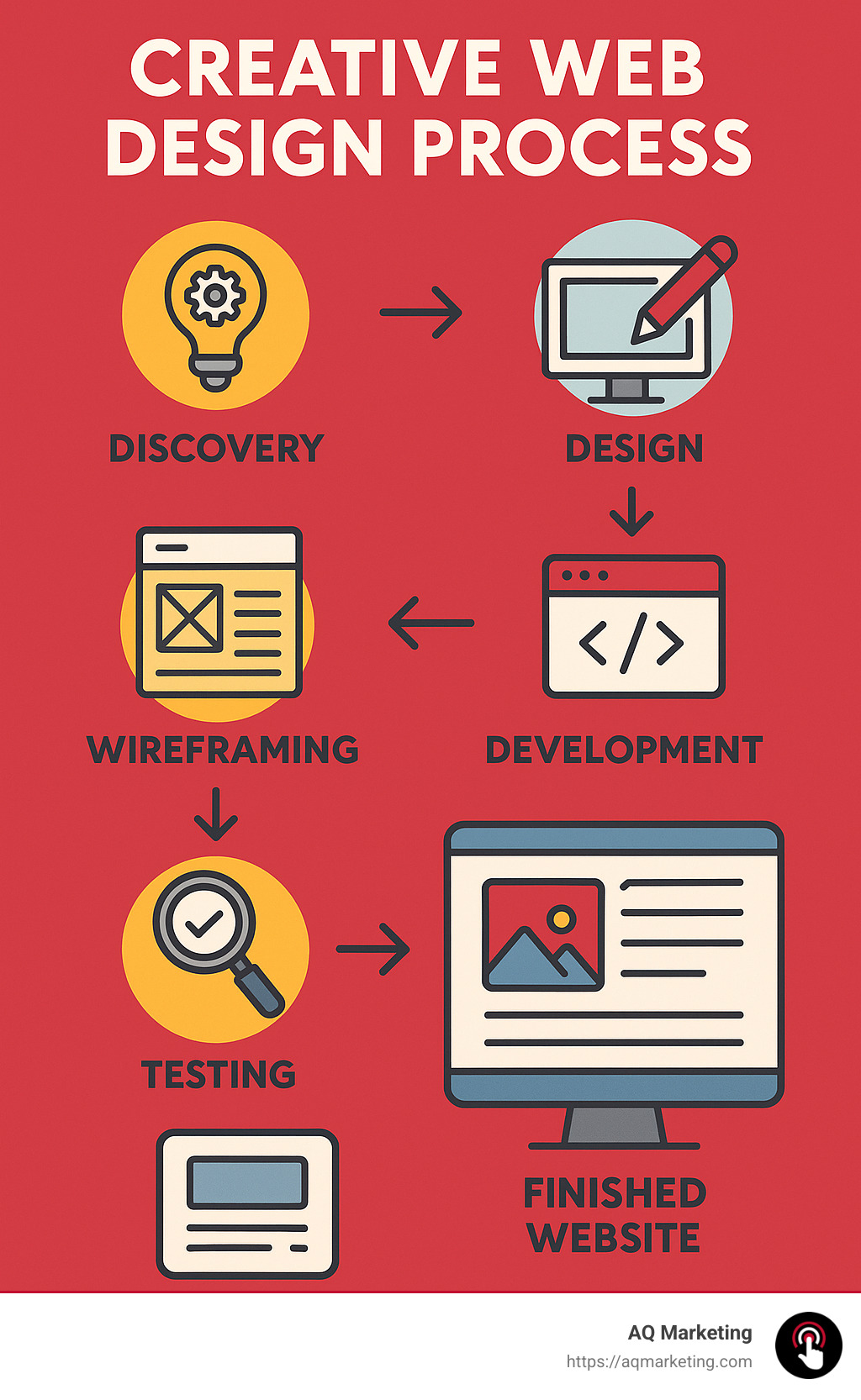
Creative web design terminology:
Understanding Creative Web Design
Creative web design goes far beyond simply arranging elements on a page. It’s a strategic blend of artistry, psychology, and technology that creates meaningful digital experiences. At its core, creative web design is about solving problems and communicating messages in visually compelling ways.
In today’s digital landscape, a website serves as the cornerstone of a business’s online presence. It’s often the first interaction potential customers have with your brand, making it crucial that your website not only looks appealing but also effectively communicates your value proposition and guides users toward desired actions.
The role of creative web design has evolved significantly over the years. What was once primarily focused on aesthetics now encompasses a much broader scope:
- Brand storytelling – Communicating your unique story and values visually
- User experience optimization – Creating intuitive, frictionless journeys
- Conversion optimization – Strategically designing elements to encourage action
- Technical performance – Ensuring fast loading times and smooth functionality
- Cross-device compatibility – Providing seamless experiences across all devices
As one industry expert noted, “Website design can be the determining factor in whether a user visiting the site converts to the brand.” This perspective highlights how integral creative design is to business success in the digital age.
For businesses in Boston, Woburn, and across Massachusetts, investing in creative web design means investing in a digital asset that works around the clock to attract, engage, and convert visitors. It’s not merely an expense—it’s a powerful marketing tool that, when executed well, delivers measurable returns on investment.
Latest Trends in Creative Web Design
In the changing world of creative web design, staying on top of the latest trends is like keeping up with the coolest dance moves—necessary if you want to stay ahead of the competition and keep your audience engaged. With technology and user expectations continuously changing, fresh designs are key to making your website both a visual treat and a functional delight.
Current Trends Shaping Creative Web Design in 2025
First up, immersive scrolling experiences have taken center stage. Parallax scrolling isn’t just about fancy backgrounds anymore; it’s a storytelling tool. By revealing content in a smooth, flowing narrative, it keeps users hooked and makes your brand story unforgettable.
Next, we have interactive animations. These aren’t just little sprinkles of magic—they’re part of the website’s personality. Think of playful hover effects or seamless page transitions that respond to user actions. They guide users, entertain them, and sometimes just add a bit of whimsy—like a digital high-five!
Dark mode design is here to stay as well. It’s not just a trend but a new standard. Besides looking super sleek, dark mode helps reduce eye strain and makes colors pop, giving your content that extra zing. Plus, it’s battery-friendly. Who doesn’t love saving a bit of juice?
With the rise of voice-activated tech, voice user interface integration is becoming essential. Websites are now getting ready to chat it up, optimizing for voice searches to cater to the growing number of people using smart speakers and assistants.
Another trend that’s making waves is micro-interactions. These are those subtle animations that happen when you click, hover, or scroll. They’re tiny but mighty, providing feedback, showing system status, or just adding a dash of fun.
Then there’s glassmorphism and texture. Think of frosted glass effects and subtle textures that create layers and depth. This trend gives your website a modern, tactile feel that’s both stylish and cool.
Oversized typography is a trend that shouts for attention, sometimes even replacing the need for a big hero image. Big, bold letters not only catch the eye but also make your message loud and clear.
Lastly, we’re seeing a shift towards app-like experiences on websites. Borrowing navigation styles and features from mobile apps, these websites offer more intuitive and engaging user experiences, blurring the lines between web and app interfaces.
At AQ Marketing, we don’t just chase trends. We analyze them and incorporate the ones that align with our clients’ goals, ensuring each website feels both fresh and timeless. Because, after all, a trendy website that doesn’t work for your business might as well be a passing fad.
Enhancing Brand Identity and Engagement through Web Design
A website is more than just a digital brochure—it’s the central hub of your brand’s online presence. Effective creative web design strengthens brand identity and fosters meaningful engagement with your audience, changing casual visitors into loyal customers.
Building Brand Identity Through Design
Your website should be an authentic extension of your brand’s personality, values, and promise. Here’s how we approach brand integration in web design at AQ Marketing:
Consistent Visual Language
We develop comprehensive design systems that ensure visual consistency throughout the user experience:
- Brand-aligned color palettes that evoke the right emotional responses
- Typographic systems that reflect your brand’s voice and maintain readability
- Custom iconography and illustrations that reinforce brand personality
- Photography direction that captures your unique perspective
Storytelling Through Design
As our research indicated, “The integration of interactive elements where typography, motion, and minimal imagery serve as powerful design tools” is increasingly important in modern web design. We use these elements to tell your brand’s story:
- Visual narratives that guide users through content in meaningful sequences
- Interactive elements that invite exploration and findy
- Content hierarchy that emphasizes your most compelling brand messages
- Spatial relationships that create rhythm and flow throughout the experience
Creating Emotional Connections
The most effective websites forge emotional connections with visitors. Our Custom Website Design approach focuses on:
- Authentic brand expression that resonates with your target audience
- Thoughtful microcopy that speaks directly to user needs and pain points
- Strategic use of whitespace that creates breathing room for emotional impact
- Sensory design elements that engage multiple perceptual channels
Driving Engagement Through Interactive Design
Engagement is the bridge between attention and action. Our creative web design strategies incorporate multiple techniques to keep users meaningfully engaged:
Interactive Elements
We strategically implement interactive features that invite participation:
- Hover states that reveal additional information or functionality
- Scroll-triggered animations that respond to user movement
- Interactive data visualizations that make complex information accessible
- Personalized content displays based on user behavior or preferences
Strategic Call-to-Action Design
Converting engagement into action requires thoughtful CTA design:
- Visual prominence through contrast, size, and positioning
- Clarity of purpose through concise, action-oriented language
- Contextual relevance by placing CTAs at moments of peak interest
- Reduced friction by minimizing steps between intent and completion
Community and Social Integration
For many of our clients in Boston and across Massachusetts, building community connections is essential. We incorporate:
- Social proof elements like testimonials and reviews that build trust
- Seamless social media integration that extends the conversation
- User-generated content displays that showcase community engagement
- Interactive feedback mechanisms that invite participation and improvement
By thoughtfully addressing both brand identity and engagement in our creative web design approach, we create websites that not only look distinctive but also actively work to build relationships with your audience and drive meaningful business results.
Case Studies of Award-Winning Creative Web Designs
The most inspiring examples of creative web design demonstrate how innovative approaches can transform user experiences and drive exceptional results. Let’s explore some notable case studies that exemplify excellence in web design.
Case Study 1: Immersive Storytelling Through Design
One award-winning website we analyzed created an interactive scavenger hunt experience that gradually revealed content through engaging clues. This approach transformed what could have been a standard corporate site into an trip that kept users engaged for an average of 7+ minutes—far above industry averages.
Key elements that made this design successful:
- Progressive disclosure of content that created a sense of findy
- Subtle animations that responded to user interactions
- A coherent narrative that tied the experience to the brand’s values
- Thoughtful performance optimization that maintained smooth interactions
As our research noted, “Web-based scavenger hunts” are emerging as an effective engagement strategy, with “puzzles and interactive clues” that transform passive browsing into active participation.
Case Study 2: Minimalism with Maximum Impact
Another standout example featured a one-page website for a creative professional that used oversized typography, strategic whitespace, and subtle parallax effects to create a memorable experience with minimal content.
The design succeeded by:
- Focusing attention on key messages through dramatic typography scaling
- Using negative space as an active design element
- Implementing subtle motion that created depth without distraction
- Prioritizing exceptional performance with minimal loading time
This approach aligns with our research finding that “One-page websites” with “streamlined navigation” and “focused content presentation” are increasingly effective for certain business objectives.
Case Study 3: Innovative E-Commerce Experience
A particularly impressive e-commerce site redesign resulted in a 200% increase in conversion rates by reimagining the typical shopping experience. Rather than presenting a standard product grid, the site created an immersive, editorially-driven experience that told the story behind each product.
The design’s success factors included:
- Context-rich product presentations that built emotional connections
- Custom product visualization tools that reduced purchase uncertainty
- Seamless transitions between inspiration and transaction
- Personalized recommendations based on browsing behavior
“Award-winning websites reject cookie-cutter, theme-based designs in favor of custom, innovative coding approaches.”
This observation from our research perfectly captures why these examples stand out—they prioritize unique, custom experiences over template-based solutions.
What Makes These Designs Stand Out
Analyzing these and other award-winning examples reveals common factors that contribute to exceptional creative web design:
- Purpose-driven creativity: Innovation that serves clear business and user goals
- Technical excellence: Flawless execution that supports the creative vision
- Emotional intelligence: Design choices that resonate on an emotional level
- Attention to detail: Meticulous refinement of every interaction and visual element
- Balance of familiarity and novelty: Interfaces that feel intuitive yet fresh
At AQ Marketing, we study these exemplary designs not to copy them, but to understand the principles that make them successful. We then apply these insights to create unique, effective solutions for our clients in Boston, Woburn, and beyond.
Approaches from Different Industries
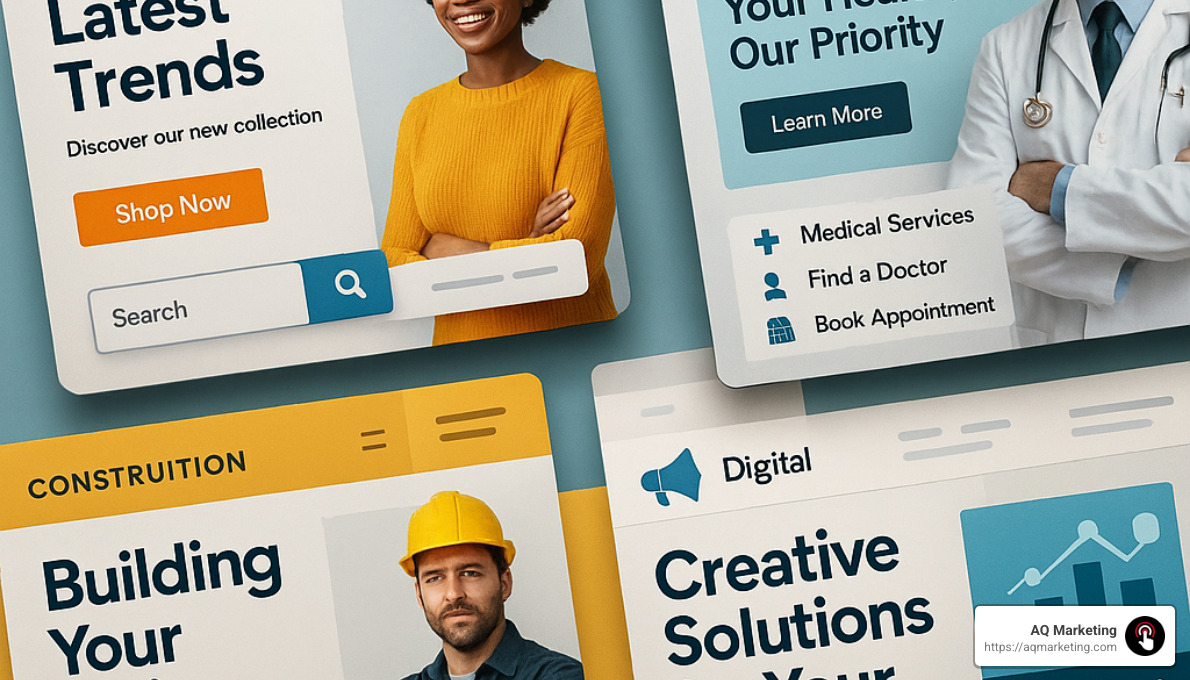
Creative web design strategies vary significantly across industries, with each sector facing unique challenges and opportunities. Understanding these industry-specific approaches helps us create more effective solutions for our diverse client base at AQ Marketing.
E-Commerce: Balancing Inspiration and Conversion
E-commerce websites must strike a delicate balance between inspiring desire and facilitating frictionless transactions. Our approach to e-commerce design includes:
- Visual merchandising that showcases products in context and from multiple angles
- Streamlined checkout processes that minimize abandonment
- Personalization features that tailor the shopping experience to individual preferences
- Trust-building elements strategically placed at decision points
Recent innovations in e-commerce design include virtual try-on experiences, AI-powered product recommendations, and immersive product storytelling that connects emotional benefits with features.
Real Estate: Creating Virtual Spaces
For our real estate clients in Boston and surrounding areas, websites must effectively represent physical spaces in a digital format:
- Immersive property tours using 360° photography and video
- Interactive site plans that help buyers visualize layouts and dimensions
- Neighborhood integration that provides context beyond the property itself
- Lead capture systems that balance information access with contact generation
Our research indicated that “A real estate project achieved top rankings in just two months” through strategic design and SEO integration—demonstrating how industry-specific design approaches deliver measurable results.
Healthcare and Wellness: Building Trust and Accessibility
Healthcare websites require special attention to accessibility, credibility, and emotional sensitivity:
- Clarity of information presented in accessible, jargon-free language
- Thoughtful use of imagery that represents diversity and creates comfort
- Intuitive appointment systems that reduce barriers to care
- Strict compliance with accessibility standards and privacy regulations
One healthcare project we analyzed featured “a design sample for a mental health website that combines emotional appeal with usability,” showing how specialized design approaches can address the unique needs of sensitive service areas.
Education: Engaging Multiple Audiences
Educational institutions face the challenge of speaking to diverse audiences—prospective students, parents, alumni, and faculty—all through a single website:
- Audience-based navigation paths that direct different users to relevant content
- Rich media integration that showcases campus life and learning experiences
- Interactive tools such as course finders and virtual campus tours
- Community-building features that foster connection and engagement
Our research noted a “Mobile app landing page design for educational institutions showing a clear call-to-action,” highlighting how education-focused designs are increasingly adopting mobile-first approaches to reach younger audiences.
B2B and Professional Services: Demonstrating Expertise
For professional service firms and B2B companies, websites must efficiently establish credibility and generate qualified leads:
- Case study presentations that demonstrate real-world impact
- Thought leadership integration through blogs, whitepapers, and resources
- Clear service explanations that explain complex offerings
- Strategic conversion paths custom to various stages of the buying process
At AQ Marketing, we’ve found that understanding these industry-specific approaches is essential to creating creative web designs that not only look impressive but also perform exceptionally well within their specific business contexts.
Key Elements of a Successful Web Design Project
Creating a successful website is a bit like cooking a gourmet meal—it requires the right ingredients, a clear recipe, and a dash of creativity to make it truly memorable. At AQ Marketing, our Web Design and Development Services are crafted with these elements in mind to ensure that our clients in Boston, Woburn, and beyond receive not just a website, but a digital masterpiece.
Clear Objectives and Strategy
Every creative web design project starts with a clear understanding of what you want to achieve. We don’t just dive in and hope for the best. Instead, we sit down with you to define specific business goals, identify key performance indicators (KPIs), and understand your target audience segments. We also explore your competitive positioning to ensure your website stands out in the crowd. This strategic groundwork helps us align your website with your business objectives, ensuring it doesn’t just look good but works hard for you.
Collaborative Design Process
Think of us as your digital design partners. We work closely with you throughout the process to ensure your vision is realized. The journey begins with findy workshops to dig deep into your business and audience. We then create mood boards and style tiles to set the visual tone, followed by wireframing sessions to nail down the structure before we get into the nitty-gritty of design. And because communication is key, we have iterative design reviews where your feedback is essential. One happy client even said, “Thrive has been wonderful to work with. There was a whole team behind getting my project done, and I got to be a part of it. There were no unpleasant surprises, and I was kept up to date through the entire project.”
Content Strategy and Development
Now, let’s talk about the heart of your website: the content. We believe that content should never be an afterthought. Our approach includes a content inventory to assess what you have and what you need, alongside planning a content structure that makes sense. We also ensure your content is SEO-optimized, so it not only resonates with your audience but also gets noticed by search engines. Plus, we develop a visual content strategy that aligns with your messaging, because design and content should work hand in hand. After all, a whopping “75 percent of site credibility comes from web page design,” and that design needs to be backed by compelling content to hit the mark.
Testing and Feedback Integration
No stone is left unturned when it comes to testing. We conduct usability testing to iron out any friction points and perform cross-browser and cross-device testing to ensure a smooth experience everywhere. Performance testing helps us optimize load speeds, while accessibility checks ensure everyone can enjoy your site.
SEO and Performance Optimization
We weave SEO into the fabric of our creative web design process. This includes setting up technical SEO foundations, performing on-page optimization, and adding schema markup to boost your search visibility. We also focus on Core Web Vitals optimization to improve your search rankings—because a well-optimized site attracts more organic traffic and keeps users engaged.
Launch and Post-Launch Support
The launch may feel like the grand finale, but it’s really just the beginning. We have pre-launch checklists to make sure everything is ready, and for more complex sites, we use phased launch strategies. We then implement analytics to track how well the site is meeting those all-important KPIs. And because we care about long-term success, we offer post-launch optimization based on real-world user behavior.
By focusing on these key elements, we ensure your website is not just a pretty face but a powerhouse that delivers real business results.
Overcoming Challenges in Creating Innovative Web Designs
Creating truly innovative creative web design solutions comes with significant challenges. At AQ Marketing, we’ve developed strategies to overcome these obstacles while delivering exceptional results for our clients in Boston, Woburn, and throughout Massachusetts.
Balancing Creativity with Usability
One of the most persistent challenges in creative web design is finding the sweet spot between innovative visual expression and intuitive usability. Too much creativity can compromise functionality, while too much focus on conventional patterns can result in forgettable experiences.
Our approach to this balance includes:
- Innovative application of familiar patterns: Finding fresh ways to implement established UI conventions
- Usability testing of creative concepts: Validating innovative ideas with real users before full implementation
- Progressive improvement: Starting with solid usability foundations, then adding creative layers
- Strategic creativity: Focusing innovative elements where they add value rather than distraction
As our research indicated, “Web design is shifting toward a playful, artful approach that blends nostalgia with futuristic techniques,” but this must be implemented thoughtfully to maintain usability.
Staying Ahead of Rapidly Evolving Trends
The web design landscape evolves at a blistering pace, creating challenges for businesses trying to stay current without constantly rebuilding their websites.
We address this challenge through:
- Modular design systems: Creating flexible components that can be updated independently
- Trend evaluation frameworks: Assessing new trends based on longevity and alignment with brand values
- Progressive implementation: Introducing new design elements strategically rather than overhauling entire sites
- Education and research: Maintaining a continuous learning approach to emerging technologies and techniques
Addressing Accessibility Standards
Creating inclusive websites that serve all users, including those with disabilities, is both a legal requirement and an ethical imperative. However, accessibility can sometimes seem at odds with creative design.
Our strategies include:
- Accessibility-first design thinking: Considering inclusive access from the beginning of the design process
- Creative compliance: Finding innovative ways to meet accessibility standards without compromising aesthetics
- Automated and manual testing: Combining tools with human evaluation to ensure thorough compliance
- Accessible interactions: Designing engaging experiences that work across input methods and assistive technologies
Our research highlighted that “Over 3.22 million Americans suffer from vision impairments, underscoring the need for accessible design,” making this a critical consideration for businesses serving the Boston area and beyond.
Page Speed Optimization
Site performance has become increasingly important for both user experience and search engine rankings, yet creative design elements can sometimes impact loading times.
We overcome this challenge through:
- Performance budgeting: Setting clear limits on page weight and loading metrics
- Next-gen media formats: Utilizing advanced image and video compression techniques
- Lazy loading and code splitting: Loading resources only when needed
- Critical rendering path optimization: Prioritizing content that users see first
As our research noted, “Page speed prioritization” is a key trend, with “performance optimization” and “SEO considerations” driving design decisions.
Security Considerations
Balancing creative functionality with robust security is another significant challenge in modern web design.
Our approach includes:
- Security by design: Incorporating security considerations from the earliest planning stages
- Regular vulnerability assessments: Proactively identifying and addressing potential issues
- Secure coding practices: Following industry best practices for all custom development
- Ongoing monitoring and updates: Maintaining vigilance after launch
By addressing these challenges head-on, we create creative web designs that are not only visually impressive and innovative but also practical, accessible, performant, and secure—delivering the best possible results for our clients and their users.
The Impact of Web Design on SEO and Online Visibility
When we talk about creative web design, many people picture eye-catching visuals and innovative layouts. But did you know that a well-crafted design also plays a crucial role in your website’s SEO and online visibility? At AQ Marketing, we blend creative vision with SEO strategies, ensuring that our designs not only impress the eye but also boost your site’s search performance.
Design Elements That Influence Search Rankings
Let’s explore how certain design elements can sway how search engines view your site. First up is site architecture and navigation. Picture this: your website is like a well-organized library. A clear, logical hierarchy helps both users and search engines find what they need. This includes using strategic internal linking and breadcrumb navigation to make exploring your site a breeze. And don’t forget those XML sitemaps—they’re like a treasure map for search crawlers, guiding them to all your important content.
Page speed is another big one. Nobody likes a slowpoke, and neither do search engines. Google’s Core Web Vitals, including measures like Largest Contentful Paint for loading speed, are key factors. Think of it like the difference between a cheetah and a tortoise—users (and Google) prefer the speedy cheetah every time.
Then, there’s mobile responsiveness. In today’s world, a mobile-friendly site isn’t optional—it’s essential. With mobile-first indexing being Google’s go-to, ensuring your site is accessible on all devices is critical. Responsive layouts, touch-friendly elements, and proper viewport settings all play a vital role here.
User Experience Signals and Their SEO Impact
But it’s not just about structure and speed. How users interact with your site speaks volumes. Engagement metrics such as bounce rate and time on page are clues for search engines about your content’s quality. A high bounce rate might signal that visitors aren’t finding what they need, whereas more time on page indicates they’re hooked.
When it comes to search result snippets, having a compelling title tag and an intriguing meta description can make all the difference. Think of these as your website’s opening line in a novel—they need to grab attention and invite clicks. Plus, schema markup can improve your listings, making them more attractive in search results.
Lastly, how you present content visually can influence both user engagement and search engine comprehension. Scannable layouts with clear headings and a good visual hierarchy can keep your visitors engaged. Strategic keyword placement in headlines and multimedia elements like images and videos enrich your content, making it more engaging and easier for both users and bots to digest.
“A well-designed website is not only visually appealing but also essential for business growth.”
This quote hits the nail on the head. A smart mix of design and SEO makes your site a double-threat: beautiful to look at and a top performer in search results. At AQ Marketing, we make sure that every element of your creative web design works hard to boost your online presence and help your business grow.
Frequently Asked Questions about Creative Web Design
How does user experience influence creative web design?
User experience, often referred to as UX, is really the backbone of effective creative web design. You see, a website can look great, but if it’s not user-friendly, it won’t quite hit the mark. UX is all about making sure your website is easy and enjoyable to use. Imagine walking into a beautiful store where you can’t find what you’re looking for—frustrating, right? That’s why UX is crucial. It shapes every decision in the design process to make sure visitors leave happy and maybe even come back for more.
Structure and Information Architecture play a big role here. It’s about organizing content in a way that makes sense. Think of it like arranging furniture in a room; you want everything to be in just the right spot. This includes creating easy-to-follow navigation and clear information paths. In fact, about 94% of people expect a website to be easy to steer. So, making sure your website is structured well is not just a nice-to-have—it’s essential.
When it comes to Visual Design Decisions, while it’s tempting to use all the colors and fonts, they need to serve a purpose. You want to choose colors that are easy on the eyes and typography that’s both stylish and readable. A good design guides users through the content naturally, almost like a friendly tour guide showing them around.
And let’s not forget Performance Optimization. We all know how annoying it is when a webpage takes ages to load. That’s why optimizing for speed and smooth transitions is so important. It ensures that users stay on the site longer instead of bouncing away out of frustration.
Finally, a good user experience is all about Testing and Iteration. You don’t just build a website and call it a day. It’s like baking; you tweak the recipe until it’s just right. This means testing with real users, trying out different designs to see what works best, and continuously improving based on feedback.
At AQ Marketing, we see UX as the guiding light that directs our creative decisions. We believe that by focusing on users’ needs, we create websites that are both stunning and successful in achieving business goals.
What are the challenges faced in creating innovative web designs?
Creating cutting-edge creative web design is a bit like walking a tightrope—it’s thrilling but comes with its challenges. Balancing innovation with familiarity is perhaps the trickiest part. You want your website to stand out, but you don’t want users to feel lost. It’s a fine line between being memorable and just plain confusing.
Technical limitations can also throw a wrench in the works. New design ideas can push the boundaries of what’s technically possible, often leading to issues like browser compatibility or performance hiccups. Sometimes, those fancy animations and interactions might not work across all browsers or could slow things down if not handled carefully.
Then there’s the complexity of content management. Innovative designs often demand more from content management systems. You might need custom features or flexible layouts, and ensuring these are easy for content creators to use is paramount.
Designing for mobile is another hurdle. With limited space and differing interactions compared to desktops, maintaining a consistent experience across devices can be quite the puzzle. It’s all about ensuring that the core experience on mobile is as delightful as on larger screens.
Let’s not forget about the budget and timeline pressures. Innovation often requires extra time for research, prototyping, and testing. We work closely with our clients to set realistic expectations and prioritize areas where creativity will have the biggest impact.
Despite these challenges, at AQ Marketing, we love pushing boundaries. By recognizing these problems and tackling them head-on, we deliver innovative designs that are practical and effective for our clients.
How does creative web design impact SEO and online visibility?
Creative web design and SEO are like peanut butter and jelly—they just go hand in hand. A website that’s visually appealing but hard to find isn’t going to do much for your business. So, how does design affect SEO?
First off, there’s the Site Structure and Navigation. Think of it like a well-organized library. Search engines need to find and understand your content, so a clear hierarchy and logical URL structures are key. It’s all about making sure that both users and search engines can find their way around easily.
Then there’s Page Speed and Performance. Nobody likes a slow-loading page, including search engines. Faster websites tend to rank better because they offer a better user experience. This means optimizing images, streamlining code, and ensuring quick server responses. Google’s recent updates emphasize page speed and user experience more than ever, so it’s crucial to keep this in mind.
Mobile Responsiveness is another biggie. With more people browsing on their phones, a mobile-friendly design is not just a nice touch—it’s essential. Google even uses mobile-first indexing, meaning it looks at the mobile version of your site to decide how to rank you. So, having a responsive design that works seamlessly across devices is crucial.
Let’s not forget about Structured Data Implementation. Adding schema markup can make your site more attractive in search results with rich snippets and improved listings, which can lead to more clicks.
On top of these technical factors, design also influences user engagement metrics. A well-designed site encourages visitors to stay longer, explore more pages, and come back for more—all positive signals that can improve your ranking.
At AQ Marketing, we understand that good design is more than just looking pretty. By incorporating SEO principles into our creative web design process, we ensure that our clients’ websites not only catch the eye but also get found by the right audience.
Conclusion
Creative web design is where imagination and strategy come together to make digital magic. It’s not just about making something look pretty—it’s about creating websites that grab attention and drive business results. We’ve journeyed through creative web design, exploring how it turns ideas into beautiful, efficient websites.
The Power of Creative Web Design
A truly effective website goes beyond just being nice to look at. It focuses on user-centered approaches that make navigation intuitive, employs strategic visual communication to strengthen brand identity, and ensures technical excellence for smooth performance across all devices. It also incorporates SEO integration to boost online visibility and is geared towards conversion optimization to turn visitors into loyal customers. For businesses in Boston, Woburn, and throughout Massachusetts, investing in creative web design is not just a luxury—it’s a must-have in today’s digital-first world.
The AQ Marketing Approach
At AQ Marketing, we blend creativity with practicality in our approach to Small Business Web Design. Since 2003, we’ve been empowering businesses in Boston and nearby areas to shine online and achieve measurable success.
Our process is comprehensive and straightforward. It begins with findy and strategy, where we get to know your business and its goals. We then move on to creative concept development, exploring visual pathways that align with your brand. User experience design comes next, ensuring visitors have an easy and engaging journey through your site. We focus on visual design to develop a distinctive look, followed by development and integration to build a responsive, high-performing website. Our testing and optimization phase guarantees quality across all devices. Finally, we support you through launch and ongoing maintenance, ensuring your site remains top-notch.
The Future of Creative Web Design
As technology leaps forward, the opportunities for creative web design will expand. Imagine AI-driven personalization, immersive 3D interactions, and voice-guided navigation opening new doors for digital creativity. But no matter how technology evolves, the core principles of user-centered design, strategic creativity, technical excellence, and business alignment will always be at the heart of effective web design. By focusing on these principles while embracing new tech, businesses can keep their websites effective and engaging in a shifting digital landscape.
Your Next Steps
Thinking about a new website or a fresh update? Check out our web design services. Our team at AQ Marketing is ready to help bring your ideas to life with a stunning, effective website that can drive real business results.
In the digital marketplace of today, your website is often the first impression potential customers have of your business. Make sure it counts. With creative web design, your website can truly reflect your brand and connect with your audience.
Partnering with AQ Marketing means you’re not just getting a gorgeous website—you’re investing in a strategic asset designed to attract, engage, and convert your ideal customers. Let’s create something exceptional together.
