

Small business SEO strategies: 10 Essential Success Tips
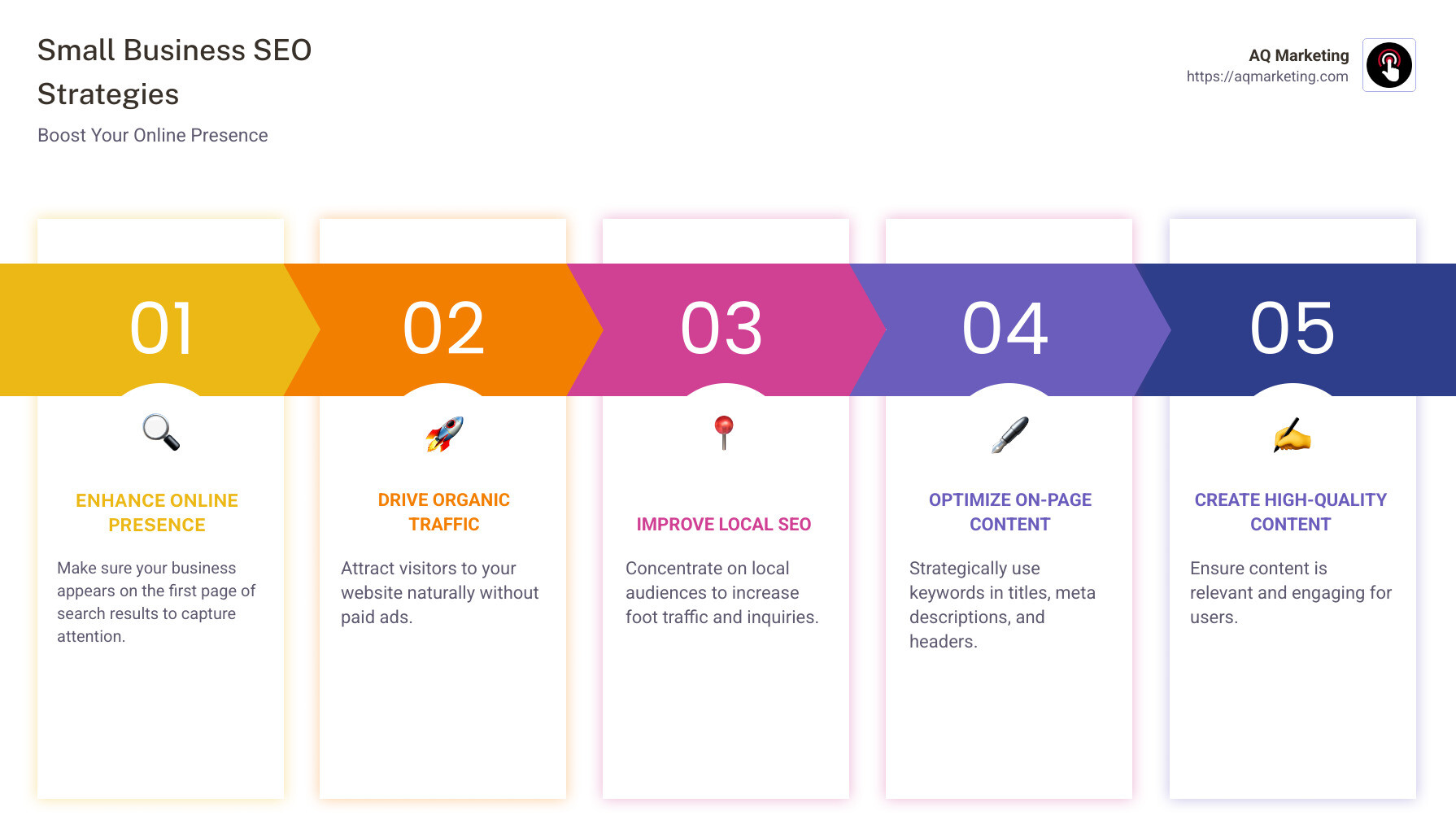
Small business SEO strategies are essential for boosting your online presence and driving organic traffic to your website. Whether you’re running a home services company, an insurance agency, or a fitness studio, implementing effective SEO techniques can propel your business forward by increasing your online visibility. Here’s a quick rundown:
- Improve Online Presence: Ensure your business appears on the first page of search results to grab potential customers’ attention.
- Drive Organic Traffic: Attract visitors to your website without needing to pay for ads.
- Improve Local SEO: Focus on your local audience to increase foot traffic and inquiries from nearby customers.
- Optimize On-Page Content: Use keywords strategically in titles, meta descriptions, and headers to improve search rankings.
By crisply focusing on these fundamental strategies, your business can reach its digital potential.
I’m Robert P. Dickey, President of AQ Marketing, Inc., with over two decades of experience in digital marketing. Specializing in small business SEO strategies, I have guided numerous businesses across various industries to improve their online presence and achieve measurable growth.
Understanding Small Business SEO
SEO, or Search Engine Optimization, is the practice of enhancing a website to improve its visibility in search engine results. For small businesses, SEO is crucial. It helps in connecting with the right audience and standing out in a crowded marketplace. By focusing on small business SEO strategies, companies can effectively compete with larger businesses, even with limited resources.
Why Small Business SEO Matters
Small businesses often operate with tight budgets, making cost-effective marketing essential. SEO offers a way to increase visibility without the ongoing costs associated with paid advertising. According to BrightEdge research, organic search contributes to 53% of all online traffic and 44% of revenue share. This makes SEO an invaluable tool for driving traffic and boosting sales.
The Role of Local SEO
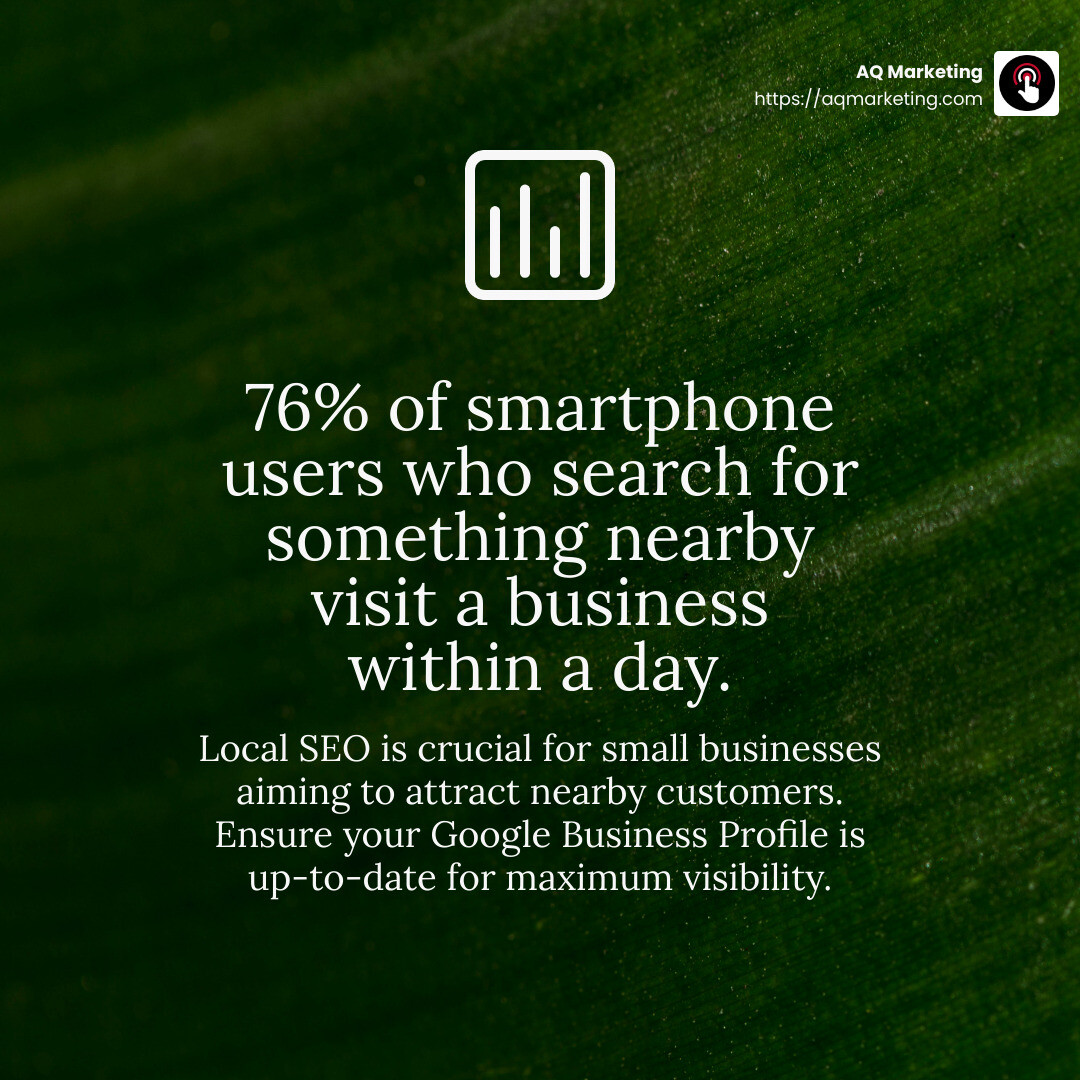
For small businesses, especially those with physical locations, local SEO is a game-changer. It focuses on optimizing a business’s online presence to attract more customers from relevant local searches. Nearly half of all Google searches have local intent, and 72% of consumers who perform a local search visit a store within five miles. This highlights the importance of being visible in local search results.
To leverage local SEO, small businesses should:
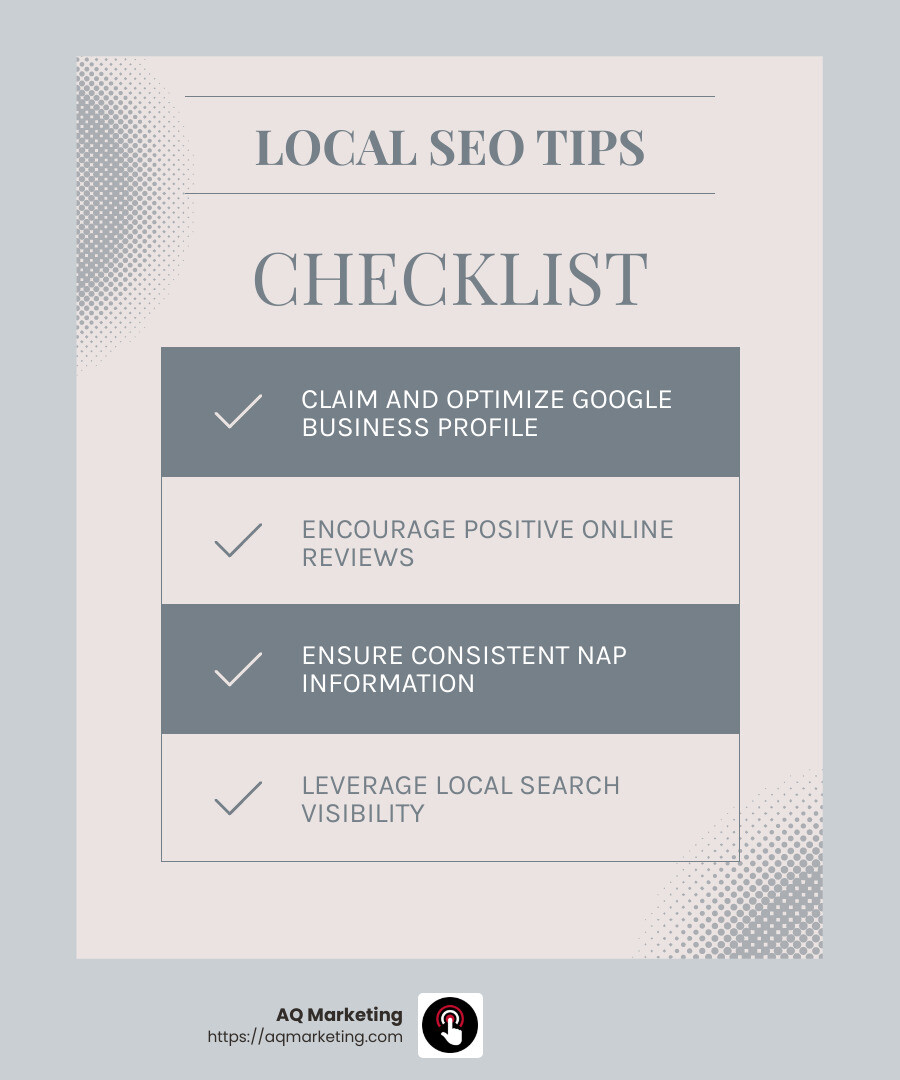
- Claim and optimize their Google Business Profile: This helps in appearing in Google Maps and “near me” searches.
- Encourage online reviews: Positive reviews can improve local search rankings and build trust with potential customers.
- Ensure consistent NAP (Name, Address, Phone number) information: Consistency across all online platforms helps in ranking better in local searches.
Small Business Focus: Custom Strategies
Small businesses must tailor their SEO strategies to meet their specific needs and goals. This involves:
- Understanding the target audience: Knowing who your customers are and what they search for can help in creating content that meets their needs.
- Keyword research: Using tools like SEMRush or Ahrefs to find relevant keywords that potential customers are using.
- Creating high-quality, relevant content: Content that answers customer questions and provides value is more likely to rank well and engage visitors.
By focusing on these targeted strategies, small businesses can effectively use SEO to increase their reach and impact in the digital space.
Essential Small Business SEO Strategies
To climb the ranks in search engine results, small businesses need a solid SEO strategy. Here are some essential elements to focus on:
Google Analytics: Understanding Your Audience
Google Analytics is a powerful tool that helps you understand your audience. It provides insights into how users interact with your website, where they come from, and what content they engage with. By analyzing this data, you can make informed decisions to improve your website’s performance and user experience.
Example: A small bakery in Boston used Google Analytics to find that their “gluten-free” page was the most visited. They then focused on promoting gluten-free products, which led to a 20% increase in sales.
Google Search Console: Monitoring Your Website’s Health
Google Search Console is essential for monitoring your website’s health in search results. It provides data on how your site appears in search, any issues Google has with your site, and suggestions for improvement. Regularly checking this tool helps ensure your site is optimized and free of errors that could affect your rankings.
Tip: Use Google Search Console to identify which keywords are driving traffic to your site. This can guide your content strategy and keyword focus.
Google Business Profile: Boosting Local Visibility
A Google Business Profile is crucial for local SEO. It helps your business appear in local search results and Google Maps. By keeping your profile updated with accurate information, photos, and customer reviews, you increase your chances of attracting local customers.
Keyword Research: Finding the Right Words
Keyword research is the foundation of any successful SEO strategy. It involves identifying the words and phrases potential customers use to find products or services like yours. Tools like SEMRush can help you find these keywords and assess their search volume and competition level.
Pro Tip: Focus on long-tail keywords—specific phrases that are less competitive but more targeted. For example, “artisan coffee shop in Woburn” instead of just “coffee shop.”
On-Page Optimization: Fine-Tuning Your Content
On-page optimization involves tweaking elements on your website to improve search engine visibility. Key areas to focus on include:
- Page Titles: Make sure they are descriptive and include relevant keywords.
- Meta Descriptions: Craft compelling descriptions that encourage clicks.
- Headers: Use headers to structure your content and include keywords where appropriate.
- Alt Text: Describe images with alt text to improve accessibility and SEO.
By focusing on these small business SEO strategies, you can improve your online presence and attract more customers. Next, we’ll dive into setting up Google tools for success.
Setting Up Google Tools for Success
To effectively implement small business SEO strategies, setting up essential Google tools is a must. These tools provide the data and insights needed to optimize your online presence and improve your search engine rankings. Let’s explore how to set up Google Analytics, Google Search Console, and a Google Business Profile.
Google Analytics Setup
Google Analytics is your go-to for understanding website traffic and user behavior. Here’s how to get started:
- Create a Google Analytics Account: Sign up at Google Analytics and follow the prompts. You’ll need to decide on data-sharing settings with Google.
- Add a Property: This involves entering your business details like industry, size, and how you plan to use the data. This helps tailor the analytics to your needs.
- Add a Data Stream: Enter your website URL to start tracking. You can enable “improved measurement” to capture more detailed interactions.
- Add Tags for Data Collection: Depending on your website platform, you can add tags directly or use a tag manager for more complex setups.
Example: A local restaurant in Essex County used Google Analytics to track which menu items were viewed most online. This data helped them optimize their menu offerings, resulting in increased customer orders.
Google Search Console Setup
Google Search Console is vital for monitoring how Google views your site. To set it up:
- Create a Google Account: If you don’t already have one, you’ll need this to access Search Console.
- Add Your Website: Enter your site’s URL and verify ownership. This step is crucial as it gives you access to sensitive data about your site’s performance.
- Explore Search Console: Familiarize yourself with the dashboard. Google provides guides to help you understand the data and reports available.
- Regular Checks: Log in monthly or whenever you update your site to ensure everything is running smoothly. Look out for issues that might affect your search visibility.
Tip: Use Search Console to track which keywords are bringing traffic to your site. Adjust your content strategy based on this data to improve visibility.
Google Business Profile Setup
A Google Business Profile is essential for local SEO. It ensures your business appears in local search results and Google Maps.
- Sign Up for a Google Business Profile: Visit Google Business and create an account. Fill in your business details accurately.
- Verify Your Business: Google will send a verification code to your business address. Enter this code to confirm your listing.
- Complete Your Profile: Add photos, operating hours, and a detailed description of your services. Keep this information up to date to attract local customers.
Pro Tip: Encourage satisfied customers to leave reviews on your Google Business Profile. Positive reviews boost your local search rankings and attract new clients.
By setting up these Google tools, you lay a strong foundation for your small business SEO strategies. They provide invaluable insights that guide your optimization efforts, helping to drive traffic and grow your business. Next, we’ll explore how to conduct effective keyword research.
Conducting Effective Keyword Research
Keyword research is the backbone of any successful small business SEO strategy. It helps you understand what your potential customers are searching for and how you can meet their needs. Let’s explore keyword identification, the tools you can use, and the importance of search intent.
Keyword Identification
Identifying the right keywords is crucial. These are the words and phrases your potential customers type into search engines when looking for products or services like yours. For instance, if you own a sushi restaurant in Boston, keywords like “best sushi in Boston” or “sushi delivery near me” would be relevant.
Tip: Start by brainstorming a list of words related to your business. Think about what your customers might search for when looking for your products or services.
Keyword Tools
Once you have a list of potential keywords, it’s time to use keyword tools to refine and expand your list. Tools like Google Keyword Planner are great for small businesses. They provide insights into search volume, competition, and even suggest related keywords.
Example: A small bakery in Woburn used Google Keyword Planner to find that “gluten-free cakes Woburn” had a high search volume but low competition. By targeting this keyword, they attracted more local customers searching for gluten-free options.
Search Intent
Understanding search intent is key to choosing the right keywords. Search intent refers to the reason behind a search query. Are users looking for information, trying to make a purchase, or just browsing?
Types of Search Intent:
- Informational: Users are looking for information. Keywords like “how to bake a cake” fall into this category.
- Navigational: Users intend to find a specific website. For example, “Facebook login” is a navigational search.
- Transactional: Users are ready to make a purchase. Keywords like “buy Nike shoes online” indicate transactional intent.
Pro Tip: Align your content with the search intent of your target audience. If your keyword has transactional intent, ensure your page is optimized for conversions.
By conducting effective keyword research, you can create content that meets the needs of your audience and improves your search engine rankings. With the right keywords, your small business can attract more traffic and convert visitors into customers. Next, we’ll look at how to optimize on-page elements to further boost your SEO efforts.
Optimizing On-Page Elements
Optimizing on-page elements is a crucial step in any small business SEO strategy. These elements tell search engines what your page is about and help users decide if your content matches their needs. Let’s explore the key components: page titles, meta descriptions, headers, and alt text.
Page Titles
Page titles, also known as title tags, are the first thing users see when your page appears in search results. They should be concise and include your main keyword to grab attention.
Best Practices for Page Titles:
- Keep them between 55 to 60 characters.
- Use your target keyword naturally.
- Clearly describe the page content.
- Make them compelling to encourage clicks.
Example: For a Boston sushi bar, a good title might be “Top Sushi Restaurant in Boston | Fresh & Delicious Sushi.”
Meta Descriptions
Meta descriptions provide a brief summary of your page content. They appear under the page title in search results and can influence click-through rates.
Tips for Crafting Meta Descriptions:
- Aim for 140 to 160 characters.
- Include one or two relevant keywords.
- Add a call to action if appropriate.
- Make them engaging and informative.
Example: “Find the best sushi in Boston. Fresh ingredients and a cozy atmosphere. Visit us today!”
Headers
Headers (H1, H2, H3, etc.) help organize your content and make it easier to read. They also give search engines more context about your page.
Using Headers Effectively:
- Use an H1 for the main heading of the page.
- Break content into sections with H2s and H3s.
- Include keywords naturally in your headers.
- Ensure headers provide a logical structure.
Example: An H2 for a sushi restaurant’s blog post might be “Why Sushi is the Perfect Healthy Meal.”
Alt Text
Alt text is used to describe images on your site. It’s important for accessibility and helps search engines understand what the image is about.
Alt Text Guidelines:
- Describe the image clearly and accurately.
- Include keywords if they fit naturally.
- Keep it concise.
Example: For an image of a sushi platter, alt text could be “Assorted sushi rolls with fresh salmon and avocado.”
By optimizing these on-page elements, you improve both your search engine rankings and user experience. This makes it easier for potential customers to find and engage with your business. Next, we’ll explore how to create high-quality content that resonates with your audience.
Creating High-Quality Content
Creating high-quality content is a cornerstone of any successful small business SEO strategy. Engaging content not only attracts visitors but also keeps them coming back. Let’s explore the essentials: content relevance, user engagement, and keyword integration.
Content Relevance
Content relevance means creating material that resonates with your audience’s needs and interests. It’s about understanding what your customers are looking for and providing it in a way that’s both informative and engaging.
Ways to Ensure Content Relevance:
- Know Your Audience: Understand their questions, problems, and interests.
- Solve Problems: Create content that addresses common issues or questions.
- Stay Current: Keep up with industry trends and news to provide timely information.
Example: A Boston-based fitness studio might write about “Effective Home Workouts for Busy Professionals in Boston.”
User Engagement
User engagement is about making your content interactive and interesting so that visitors stay longer and interact more. Engaged users are more likely to convert into customers.
Tips for Boosting User Engagement:
- Use Visuals: Include images, videos, and infographics to break up text and add interest.
- Encourage Interaction: Ask questions or include calls to action that prompt readers to comment or share.
- Make It Scannable: Use bullet points, lists, and short paragraphs to make content easy to read.
Example: A local bakery might create a video tutorial on “How to Bake the Perfect Boston Cream Pie.”
Keyword Integration
Keywords are crucial for helping search engines understand your content’s focus. However, they should be used naturally and strategically.
Effective Keyword Integration:
- Place Naturally: Use keywords where they fit naturally in titles, headers, and body text.
- Avoid Overstuffing: Don’t force keywords into every sentence. This can harm readability and SEO.
- Focus on Long-Tail Keywords: These are more specific phrases that often have less competition and higher conversion rates.
Example: Instead of “Boston bakery,” use “best artisan bakery in downtown Boston.”
By focusing on content relevance, engaging your audience, and integrating keywords effectively, you can create content that not only ranks well in search engines but also resonates with your audience. This approach builds trust and authority, ultimately driving more traffic and conversions for your business.
Next, we’ll explore how to build a strong link-building strategy to further improve your SEO efforts.
Building a Strong Link-Building Strategy
Building a strong link-building strategy is vital for any small business SEO strategy. Links play a big role in how search engines view your website’s authority and relevance. Let’s break it down into three main areas: internal linking, external backlinks, and tapping into authoritative sites.
Internal Linking
Internal linking involves connecting different pages on your own website. This helps visitors steer your site and shows search engines how your content is related.
Benefits of Internal Linking:
- Improves Navigation: Helps users find relevant content easily.
- Distributes Page Authority: Shares the SEO value across your site.
- Increases Time on Site: Encourages visitors to explore more pages.
Example: A local coffee shop’s website might link from a blog post about “Best Coffee Beans” to their product page for “Organic Espresso Beans.”
External Backlinks
External backlinks are links from other websites that point to your site. These are like votes of confidence, boosting your site’s credibility and search engine ranking.
Strategies for Gaining External Backlinks:
- Create Shareable Content: High-quality, valuable content is more likely to be shared and linked to by others.
- Guest Blogging: Write articles for other websites in your industry to gain exposure and links back to your site.
- Engage in Community: Participate in local events or online forums where you can naturally share your website link.
Example: A Woburn-based restaurant might collaborate with a food blogger to feature their signature dish, earning a backlink in the process.
Authoritative Sites
Getting backlinks from authoritative sites can significantly boost your SEO ranking. These sites are trusted sources with high domain authority.
How to Connect with Authoritative Sites:
- Network with Industry Leaders: Build relationships through social media and industry events.
- Submit to Directories: Ensure your business is listed in reputable directories like Google Business Profile or Yelp.
- Offer Expertise: Provide quotes or insights to journalists and bloggers in your field.
Example: A Merrimack Valley tech startup could be featured in a local business journal, gaining a valuable backlink from a respected publication.
By focusing on internal linking, pursuing external backlinks, and engaging with authoritative sites, you can create a robust link-building strategy. This not only improves your SEO but also builds credibility and trust with both search engines and potential customers.
Next, we’ll dive into leveraging local SEO to attract more customers from your area.
Leveraging Local SEO for Small Businesses
Local SEO is a game-changer for small businesses. It helps you connect with people in your area who are searching for your products or services. Let’s explore three key areas: local search optimization, Google My Business, and online reviews.
Local Search Optimization
Local search optimization ensures that when someone nearby searches for a product or service you offer, your business shows up. This involves tweaking your website and online presence to make sure you’re visible to local customers.
Key Steps for Local Search Optimization:
- Use Local Keywords: Include your city or region in your keywords. For instance, “Boston pizza delivery” instead of just “pizza delivery.”
- Optimize Location Pages: If you have multiple locations, create a page for each one on your website with specific details like address, contact info, and operating hours.
- Schema Markup: Use schema markup to help search engines understand your business details, like your location and services.
Example: A Southern New Hampshire florist might use “flower delivery in Southern New Hampshire” to optimize for local searches.
Google My Business
Google My Business is a free tool that lets you manage how your business appears on Google Search and Maps. It’s crucial for local SEO success.
Steps to Optimize Your Google My Business Profile:
- Complete Your Profile: Fill out every section, including business hours, address, phone number, and website.
- Add Photos: Upload high-quality images of your products, services, and location.
- Regular Updates: Keep your information current, especially if there are changes in hours or services.
Example: A Middlesex County bakery can post photos of their latest pastries and update their business hours for holidays.
Online Reviews
Online reviews are powerful. They influence potential customers and affect your search rankings. Google values fresh and genuine reviews.
Tips for Managing Online Reviews:
- Encourage Reviews: Ask happy customers to leave a review on your Google My Business profile.
- Respond Promptly: Engage with all reviews, whether positive or negative, to show you care about customer feedback.
- Highlight Positive Feedback: Share glowing reviews on your website and social media.
Example: An Essex County mechanic could thank a customer for a positive review and address any issues raised in a negative one.
By focusing on local search optimization, maintaining a robust Google My Business profile, and actively managing online reviews, small businesses can effectively leverage local SEO. This approach not only boosts visibility in search results but also helps build trust and attract more local customers.
Next, we’ll tackle frequently asked questions about small business SEO strategies.
Frequently Asked Questions about Small Business SEO Strategies
How much should a small business pay for SEO?
SEO pricing can vary widely, depending on the services you need. Most small businesses can expect to pay anywhere from $500 to $5,000 per month for comprehensive SEO services.
Here’s a simple cost breakdown:
- Basic SEO: $500 – $1,000/month
Includes basic keyword research and on-page optimization. - Intermediate SEO: $1,000 – $3,000/month
Covers detailed keyword strategies, content creation, and local SEO. - Advanced SEO: $3,000 – $5,000/month and up
Involves comprehensive strategies, including link-building and technical SEO.
Tip: Always ensure the services offered align with your business needs and goals. Investing in SEO is about building long-term visibility and traffic.
What is the most effective SEO tactic?
When it comes to impactful SEO tactics, three stand out:
- Page Titles and Meta Descriptions: These are like your website’s first impression. They should be clear, include keywords, and entice users to click. A well-optimized page title can significantly improve your click-through rate.
- Page Load Speed: Faster websites rank better. A slow page can frustrate users and lead to high bounce rates. Tools like Google PageSpeed Insights can help you identify and fix speed issues.
- High-Quality Content: Content is king. Engaging, relevant content that answers user queries can boost your rankings and keep visitors on your site longer.
Example: A study found that improving page load speed from 8 seconds to 2 seconds increased conversions by 74%.
Does SEO work for small businesses?
Absolutely, SEO benefits small businesses by improving online visibility and attracting more visitors. It’s a powerful tool for leveling the playing field with larger competitors.
Competitive Advantage: By optimizing for local SEO, small businesses can dominate their niche markets. For example, appearing in local search results can drive foot traffic and increase sales.
Fact: Organic search accounts for 53% of all online traffic, making it a critical channel for small businesses.
SEO is not just for big brands. It’s a strategic investment that can lead to sustained growth, brand awareness, and a competitive edge in your industry.
Next, let’s dive into the conclusion, where we’ll explore how AQ Marketing can help you achieve long-term SEO success.
Conclusion
At AQ Marketing, we understand that small businesses need more than just quick fixes—they need long-term results. Our team specializes in crafting impactful strategies that ensure your business doesn’t just climb the ranks, but stays there.
Why Choose AQ Marketing?
- Proven Track Record: With over 20 years of experience in digital marketing, our expertise is best. We know what works and how to implement it effectively for small businesses like yours.
- Customized SEO Strategies: We believe in personalized solutions. Our strategies are custom to meet the unique needs of your business, ensuring you get the most bang for your buck.
- Focus on Local SEO: As a business located in Woburn, MA, we understand the importance of local markets. We help you leverage local search optimization to reach potential customers right in your neighborhood.
- Continuous Improvement: SEO is not a one-time effort. We continuously monitor and adjust our strategies to keep up with the ever-changing search engine algorithms. Our goal is to keep your business ahead of the competition.
By choosing AQ Marketing, you’re opting for a partner that is dedicated to your business’s growth and success. We offer a comprehensive suite of digital marketing services, including SEO, website design, and social media management, all aimed at enhancing your online presence.
Ready to lift your business’s SEO game? Contact us today to learn more about how we can help you achieve sustained growth and visibility in the digital landscape.
Investing in SEO is investing in your business’s future. Let’s climb the ranks together.
