
Web Developer Boston MA: 5 Essential Skills for Success
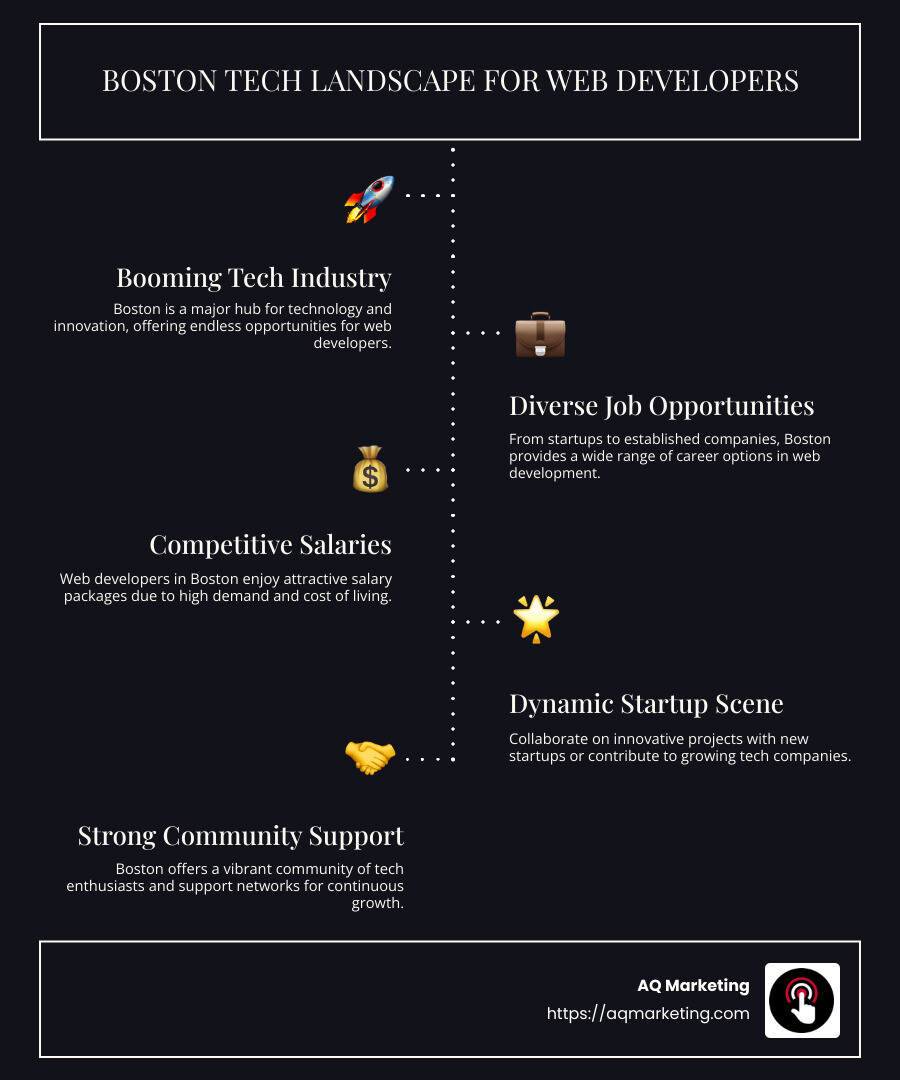
If you’re seeking to become a web developer boston ma, you’ve landed in one of the most promising regions for tech careers. Boston is a hub for innovation and offers a thriving ecosystem for web developers, from entry-level positions to advanced roles. Here’s a quick snapshot:
- Booming tech industry
- Diverse job opportunities
- Competitive salaries
- Dynamic startup scene
- Strong community support
Boston’s vibrant tech landscape not only provides opportunities for career growth but also a chance to build impactful projects in collaboration with leading startups and established companies. Whether working on complex CMS solutions or engaging in web design, Boston offers an ideal environment for developers looking to thrive.
As Robert P. Dickey, President and CEO of AQ Marketing, I have over 20 years of industry experience and a strong background in helping businesses leverage effective digital strategies in web development. Transitioning into web development in the dynamic Boston market promises a range of opportunities for aspiring professionals.
Terms related to web developer boston ma:
Understanding Web Development Basics
Becoming a web developer in Boston, MA starts with understanding the basics of web development. This involves grasping the fundamentals of coding and learning essential programming languages like HTML and CSS.
Coding: The Foundation of Web Development
Coding is the backbone of web development. It involves writing instructions that computers can understand. These instructions tell the computer what to do, like displaying a webpage or storing data. For beginners, learning to code can seem daunting, but it’s essential for building websites and applications.
HTML and CSS: The Building Blocks
HTML (Hypertext Markup Language) and CSS (Cascading Style Sheets) are the primary languages used to create and style web pages.
- HTML is used to structure content on the web. It defines elements like headings, paragraphs, and links. Think of HTML as the skeleton of a webpage.
- CSS is used to style and layout web pages. It controls the color, fonts, and spacing. CSS is like the skin and clothing that make the webpage visually appealing.
Programming Languages: Expanding Your Toolset
While HTML and CSS are crucial, learning other programming languages can improve your web development skills.
- JavaScript: Adds interactivity and dynamic features to websites. It’s essential for front-end development.
- Python: Known for its simplicity and readability, Python is great for back-end development and data analysis.
- PHP: Often used for server-side scripting and creating dynamic web pages.
A Case Study: Luke’s Journey
Luke’s journey as a web developer in Boston illustrates the importance of mastering these basics. Over five years, Luke has built and maintained web applications, focusing on both design integrity and functionality. His expertise in HTML and CSS allowed him to create visually appealing and user-friendly interfaces, while his coding skills ensured these applications met business goals.
Understanding these basics is the first step in your journey to becoming a successful web developer in Boston, MA. As you progress, you’ll find that these foundational skills will open doors to more advanced topics and exciting career opportunities in the vibrant Boston tech scene.
Mastering Front-End Development
Once you’ve got the basics down, it’s time to dive into front-end development. This is where you make websites not just functional, but beautiful and easy to use. Three key areas you’ll focus on are JavaScript, responsive design, and user experience.
JavaScript: Bringing Web Pages to Life
JavaScript is the magic behind interactive and dynamic websites. It allows you to add features like animations, form validations, and interactive maps. For instance, when you click a button and a menu appears, that’s JavaScript at work.
A web developer in Boston, MA like Luke, who excels in JavaScript, can turn a static webpage into an engaging experience. His ability to seamlessly integrate JavaScript into his projects keeps users engaged and satisfied.
Responsive Design: Adapting to Every Screen
People access websites from a variety of devices—phones, tablets, laptops. Responsive design ensures your website looks great on all of them. By using flexible layouts and grids, a site can adjust to different screen sizes without losing its functionality or aesthetics.
Imagine a restaurant’s website that looks just as appetizing on a smartphone as it does on a desktop. That’s responsive design, and it’s crucial for any web developer aiming to create accessible and inclusive web experiences.
User Experience: Prioritizing the User
User experience (UX) is all about making sure your website is easy and pleasant to use. This involves understanding what users need and designing your site to meet those needs. A good UX design can significantly impact how users perceive your brand and whether they return.
Luke’s work is a testament to the importance of UX. His clients praise his ability to maintain design integrity while ensuring the site is user-friendly. This balance between aesthetics and usability is what makes a web developer truly valuable.
Mastering these front-end skills not only improves your ability to create effective websites but also sets you apart in the competitive tech market of Boston, MA. As you continue your journey, keep these skills sharp, and you’ll be well on your way to becoming a sought-after web developer in Boston, MA.
Excelling in Back-End Development
While front-end development focuses on what users see, back-end development powers everything happening behind the scenes. This is where server-side programming, databases, and APIs come into play.
Server-Side Programming: The Backbone of Web Applications
Server-side programming is crucial for creating dynamic web applications. It involves writing code that runs on the server, handling requests from users, and delivering the right content back to them. Languages like Python, Java, and PHP are popular choices for server-side development.
For example, when you fill out a form on a website, server-side code processes your input and stores it in a database. A skilled web developer knows how to write efficient server-side code, ensuring that applications are fast and secure.
Databases: Storing and Managing Data
Databases are where all the data from a website is stored. They allow websites to retrieve and display information quickly. Common databases include MySQL, PostgreSQL, and MongoDB. Understanding how to design and query databases is essential for any back-end developer.
Imagine a local bookstore’s website. It needs to store information about thousands of books, customers, and orders. A well-structured database makes it easy to manage this data and provide users with a smooth shopping experience.
APIs: Connecting Systems and Services
APIs (Application Programming Interfaces) allow different software systems to communicate with each other. They are like bridges, connecting your website to external services, such as payment gateways or social media platforms.
For instance, when a user logs into a site using their Facebook account, an API facilitates this interaction. Web developers who are adept at integrating APIs can extend the functionality of a website, making it more versatile and user-friendly.
By mastering these back-end skills, you’ll be equipped to build robust web applications that meet the demands of today’s digital landscape. This expertise not only improves your value as a web developer in Boston, MA but also opens up opportunities to work on a wide range of projects, from startups to established businesses.
Staying Updated with Industry Trends
In the world of web development, staying updated with industry trends is crucial. Whether you’re a seasoned web developer in Boston, MA, or just starting out, keeping abreast of the latest advancements can set you apart.
Job Outlook: Growing Demand for Web Developers
The demand for web developers is expected to continue rising. According to the U.S. Bureau of Labor Statistics, employment of web developers is projected to grow much faster than the average for all occupations. This is due to the increasing popularity of mobile devices and e-commerce, which drive the need for skilled developers to create engaging and functional websites.
In Boston, a hub for technology and innovation, web developers are in high demand. Companies across various sectors are constantly seeking talented individuals to help them establish and maintain a strong online presence.
Technology Advancements: Embracing New Tools
Technology in web development is changing. New tools and frameworks emerge regularly, offering improved efficiency and capabilities. For instance, the rise of React and Vue.js has transformed front-end development by providing developers with powerful libraries to build interactive user interfaces.
Back-end technologies are also advancing. Developers are increasingly using Node.js for server-side programming due to its ability to handle multiple connections simultaneously. Staying updated with these technologies ensures you can build modern, high-performance web applications.
Continuous Learning: A Necessity in Web Development
Continuous learning is not just beneficial—it’s essential. Web developers must be proactive in expanding their skill sets and adapting to industry changes. Fortunately, there are numerous resources available, from online courses to coding bootcamps, that can help you stay current.
Networking with other developers, attending industry conferences, and participating in local tech meetups in Boston are also excellent ways to learn and grow. These activities provide opportunities to exchange knowledge, share experiences, and stay informed about the latest trends and technologies.
By keeping up with industry trends, web developers can improve their skills, improve their job prospects, and remain competitive in the ever-changing landscape of web development. This commitment to learning and adaptation is what makes a successful web developer in Boston, MA.
Frequently Asked Questions about Web Developer Boston MA
How much do web developers make in Massachusetts?
Salaries for web developers in Massachusetts can vary based on experience, skills, and location. Entry-level web developers in Boston typically start with salaries around $60,000 to $70,000 per year. However, as developers gain experience and improve their skills, they can expect to earn significantly more. Experienced web developers in Massachusetts can earn upwards of $100,000 annually.
The competitive salaries reflect the high demand for skilled web developers in the region, driven by Boston’s thriving tech industry and numerous startups. According to the U.S. Bureau of Labor Statistics, Massachusetts is one of the top-paying states for web developers, offering above-average compensation compared to other regions.
Are web developers still in high demand?
Yes, web developers are very much in demand, especially in tech-centric areas like Boston. The U.S. Bureau of Labor Statistics projects that employment of web developers will grow by 13% from 2020 to 2030, faster than the average for all occupations. This growth is fueled by the increasing need for companies to improve their digital presence and the ongoing expansion of e-commerce.
In Boston, the demand is even more pronounced due to the city’s reputation as a hub for technology and innovation. Companies across various industries are seeking talented web developers to help them build and maintain dynamic and user-friendly websites. This demand ensures a steady stream of job opportunities for web developers in the area.
What is the cost to hire a web developer?
Hiring a web developer can involve varying costs, depending on the type of project and the developer’s expertise. Freelancers often charge hourly rates, which can range from $50 to $150 per hour, based on their experience and the project’s complexity. For more extensive projects or ongoing website maintenance, businesses might opt to hire developers on a contract or permanent basis, which could involve a fixed salary or retainer.
It’s essential for companies to assess their specific needs and budget when considering hiring a web developer. Whether it’s a short-term project or a long-term collaboration, understanding the costs involved can help businesses make informed decisions and achieve their web development goals effectively.
Conclusion
In the busy tech landscape of Boston, web developers play a pivotal role in shaping the digital presence of businesses. As we’ve explored, the demand for skilled developers remains high, driven by the city’s thriving startup scene and established tech companies. This makes Boston a fertile ground for both aspiring and experienced web developers.
At AQ Marketing, we understand the importance of having a robust online presence. Our team specializes in creating impactful digital marketing strategies custom to your unique business needs. From website design and development to SEO and social media management, we offer comprehensive services to help you stand out in the competitive Boston market.
Our commitment to delivering long-term, impactful results is what sets us apart. We work closely with small to medium-sized businesses, particularly in industries like home services and insurance, to improve their digital footprint. By leveraging our local expertise and understanding of the Boston market, we ensure your business not only meets but exceeds its digital marketing goals.
Whether you’re looking to hire a web developer or need assistance with your digital strategy, AQ Marketing is here to support your journey. Let’s work together to transform your online presence and drive your business forward in Boston and beyond. Reach out to us today to learn more about how we can help you succeed in the digital world.