Web Designer: Top 5 Best Hires for 2024 Success
Having a standout online presence is crucial for businesses of all sizes. Many individuals often wonder what a web designer does and how they can improve their websites. Simply put, a web designer is responsible for the visual style and layout of a website. They focus on crafting user-friendly interfaces and ensuring aesthetic appeal. Among the tasks a web designer handles are:
- Designing and organizing site layouts
- Selecting color schemes, fonts, and images
- Ensuring the site is easy to steer and visually appealing
Online marketing, including digital marketing strategies, relies heavily on effective web design. A well-designed site can boost your digital marketing efforts by attracting more visitors and converting them into customers.
My name is Robert P. Dickey, and as the President and CEO of AQ Marketing, I’ve spent over 20 years assisting businesses in the digital field, including web design. My experience in marketing and branding helps companies craft a strong online presence.
Web designer word list:
– web design
– website design company
– website design services
What Does a Web Designer Do?
Key Responsibilities
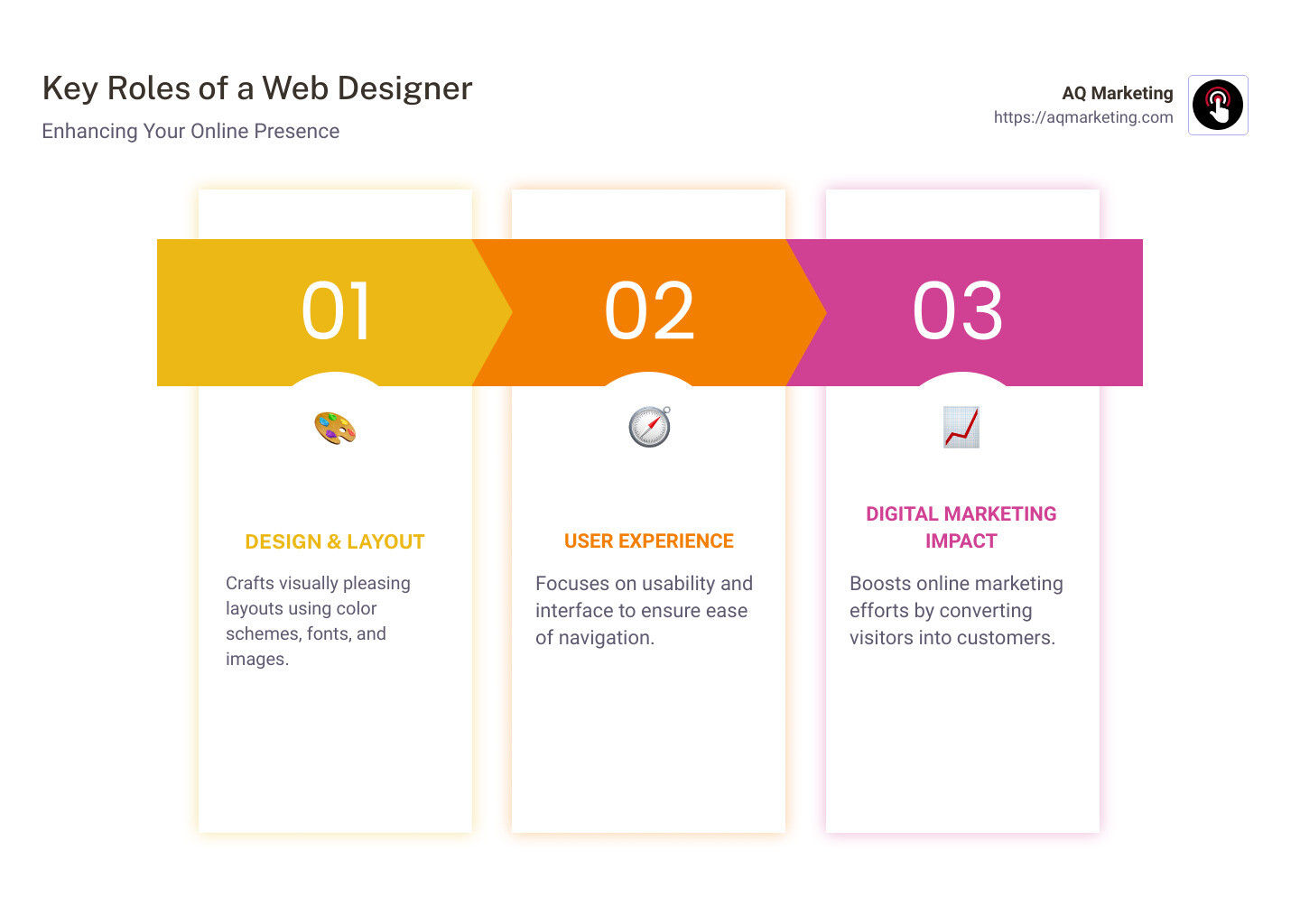
A web designer is the creative force behind the look and feel of a website. Their primary responsibility is to design and layout web pages that are both visually appealing and functional. This involves creating a cohesive design that aligns with the client’s brand and goals.
Here’s a quick breakdown of what a web designer typically does:
- Design and Layout: Web designers create the overall structure of a website. They decide where each element will go and how the pages will flow together. This means developing wireframes and mockups to visualize the layout.
- Visual Aspects: They choose color schemes, typography, and graphics to ensure the site is aesthetically pleasing. Using tools like Adobe programs, they craft visuals and animations that improve the user experience.
- Usability and User Interface: A critical part of a web designer’s job is ensuring the site is easy to use. They focus on user interface (UI) and user experience (UX) to make navigation intuitive and engaging.
- Navigation: Designers map out how users will move through the site, making sure the journey is smooth and logical.
- Collaboration: Web designers often work with developers, marketers, and content creators. They communicate design ideas and ensure the final product meets everyone’s expectations.
- File Organization and Web Domains: Keeping files organized and managing web domains are part of the backend tasks that ensure a seamless design process.
Skills Required
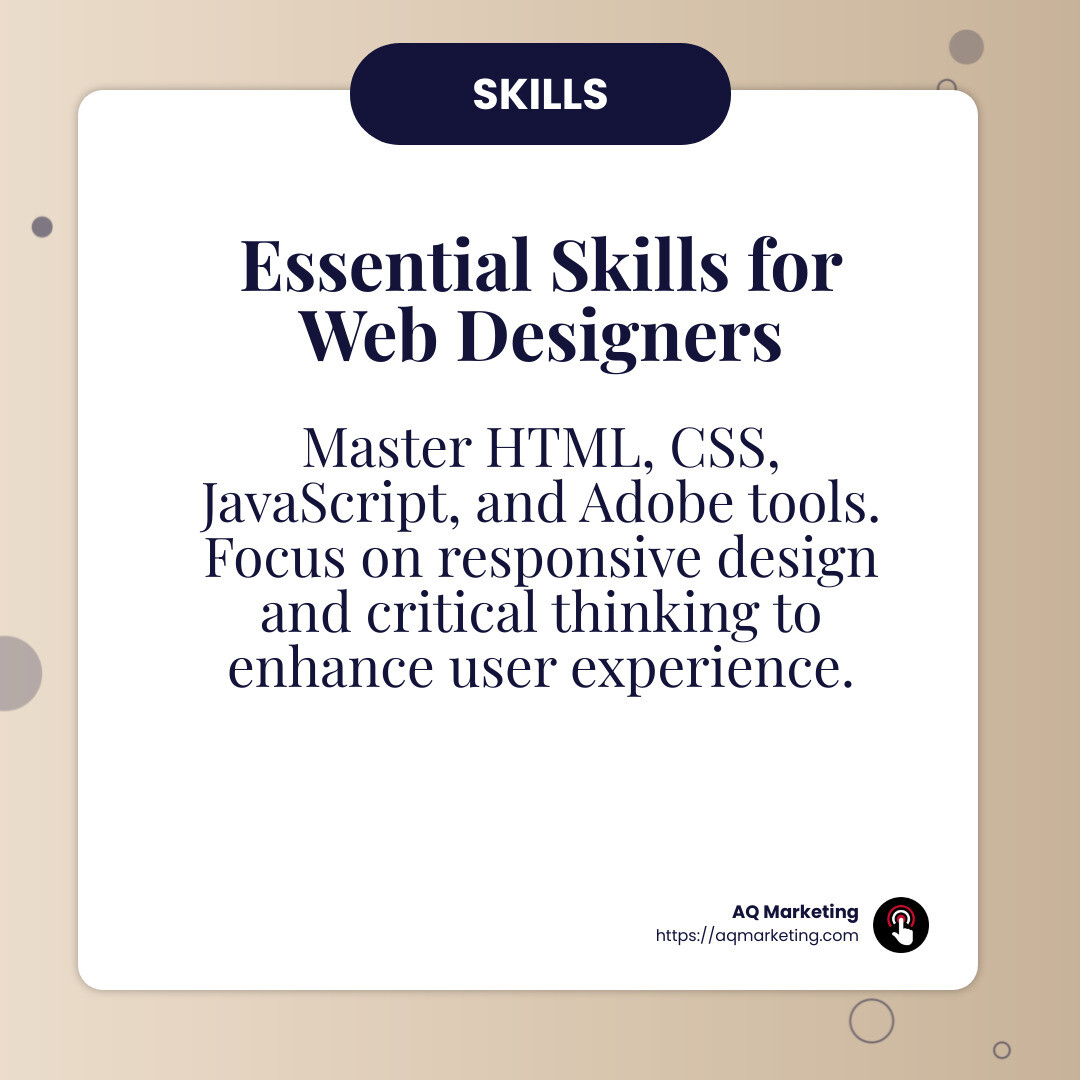
To excel, a web designer needs a blend of technical and creative skills. Here’s a snapshot:
- HTML and CSS: These are the building blocks of web design. HTML structures the content, while CSS styles it.
- JavaScript and PHP: These programming languages add interactivity and dynamic elements to websites.
- Adobe Programs: Tools like Photoshop and Illustrator are essential for creating and editing graphics.
- Responsive Design: Ensuring a site looks good on all devices is crucial. Designers use techniques like media queries to adapt layouts for different screen sizes.
- Critical Thinking: Problem-solving skills are vital for addressing design challenges and optimizing user experience.
- Online Marketing and Web Server Management: Understanding digital marketing and basic server management can improve a designer’s ability to create sites that perform well in search engines and are easy to maintain.
By mastering these responsibilities and skills, web designers play a pivotal role in shaping a company’s online presence. Their expertise not only makes websites look good but also ensures they function smoothly and meet business goals.
How to Hire a Web Designer
Factors to Consider
When you’re on the hunt for a web designer, there are several factors to weigh to ensure you hire the right person for the job.
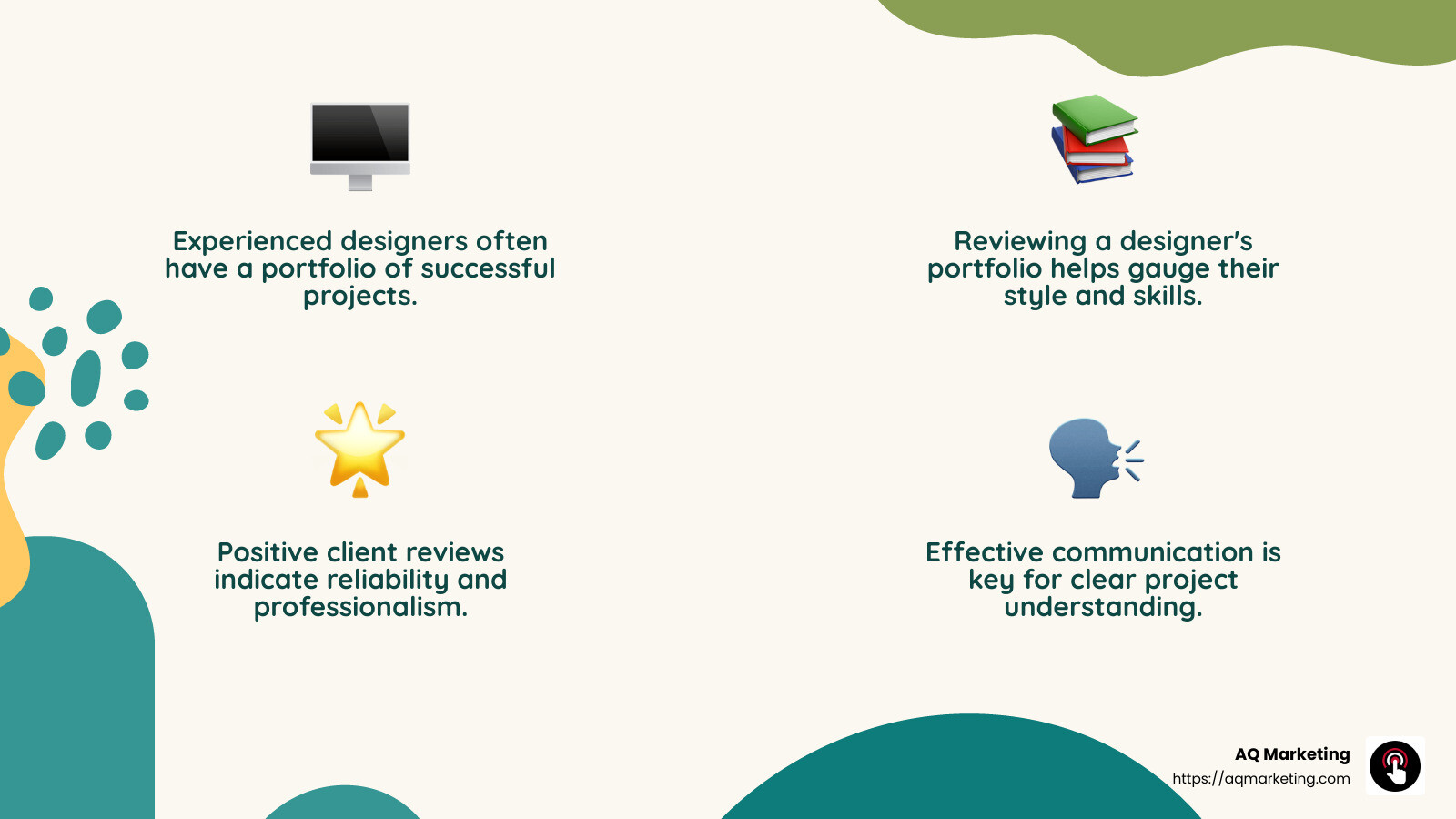
- Experience: Look for designers who have a track record of successful projects. Experience often translates to a deeper understanding of design principles and problem-solving capabilities.
- Portfolio: A designer’s portfolio is their showcase. Review it to see if their style aligns with your vision. Focus on quality over quantity and check if they have worked on projects similar to yours.
- Client Reviews: Feedback from previous clients can provide insights into a designer’s reliability and professionalism. Positive reviews often indicate a designer’s ability to meet deadlines and exceed expectations.
- Communication Skills: Effective communication is crucial. A good web designer should be able to explain complex concepts in simple terms and be open to your ideas and feedback.
- Technical Skills: Ensure the designer is proficient in essential tools and technologies like HTML, CSS, and JavaScript. Familiarity with design applications and responsive design is also important.
- Industry Knowledge: Designers with experience in your industry may better understand your specific needs and challenges, which can lead to more custom solutions.
Cost Expectations
Understanding the costs involved in hiring a web designer can help you plan your budget effectively.
- Hourly Rates: Depending on experience and expertise, hourly rates can range from $30 to $200. The lower end might be suitable for simpler tasks, while complex projects may require more seasoned professionals.
- Project-Based Pricing: Some designers offer flat rates for entire projects. This can range from a few hundred dollars for a basic site to tens of thousands for a complex, custom project.
- Estimated Hours: It’s essential to get an estimate of how many hours a project will take. This helps in understanding the potential total cost if you’re paying hourly.
- Freelance vs. Agency vs. Full-Time: Freelancers often offer flexibility and lower rates, while agencies provide a broader range of services and expertise. Hiring a full-time designer could be beneficial if you have ongoing design needs.
- Additional Costs: Be aware of extra charges such as domain registration, hosting, and ongoing maintenance. These can add up, so factor them into your budget planning.
By considering these factors and understanding the cost expectations, you can make an informed decision when hiring a web designer. This ensures you find someone who not only fits your budget but also aligns with your project goals.
Top Web Design Tools and Software
When selecting tools for web design, it’s crucial to choose software that fits your project’s needs. Here’s a look at some popular options and features to consider:
Wix
Wix is a user-friendly platform known for its drag-and-drop interface, making it ideal for beginners. It offers a wide range of templates and customization options, allowing users to build visually appealing websites without coding skills. With Wix, you can easily integrate various apps and features to improve your site’s functionality.
Adobe Dreamweaver
Adobe Dreamweaver is a robust tool favored by many professional web designers. It allows users to edit HTML, CSS, and JavaScript directly, offering both a design view and a code view for flexibility. Although it hasn’t seen significant updates recently, Dreamweaver remains a powerful choice for those comfortable with coding and looking for advanced customization.
WordPress
WordPress is a versatile content management system (CMS) that powers a significant portion of the web. It’s highly customizable, with thousands of themes and plugins available. WordPress is an excellent choice for building responsive websites, ensuring they look great on any device. Its user-friendly backend makes managing content straightforward for non-tech-savvy users.
Figma
Figma is a favorite among UI/UX designers for its collaborative design capabilities. It allows teams to work together in real-time, making it easy to create and iterate on web and mobile app designs. Figma’s intuitive interface and advanced tools make it a top choice for designing user interfaces that are both functional and visually appealing.
Google Web Designer
Google Web Designer is a tool designed for creating interactive HTML5-based designs and motion graphics. It excels in building responsive ads and animations, offering features like 3D content manipulation using CSS3. Google integrations, such as pulling assets from Google Drive, streamline the workflow, making it a practical choice for designers focusing on dynamic and interactive content.
Features to Look For
When choosing web design tools, consider these features:
- Animation and 3D Content: Tools like Google Web Designer offer capabilities for creating animations and 3D changes, enhancing the visual appeal of your designs.
- Workflow and Integrations: Seamless integration with other software, like Google products, can improve efficiency. A smooth workflow is essential for managing assets and collaborating with team members.
- Templates: Pre-made templates can save time and provide inspiration. Look for tools with a variety of templates that are easy to customize.
- Dynamic Workflow: The ability to tailor content to different audiences and devices is crucial. Responsive design ensures your site looks great on any screen size.
- Interactive Elements: Adding interactive components, such as galleries or video players, can engage users. Tools that simplify this process, like drag-and-drop features, are beneficial.
Selecting the right tools and software can significantly impact your web design project’s success. Choose based on your specific needs, whether it’s ease of use, advanced customization, or collaborative features.
Benefits of Hiring a Professional Web Designer
Impact on Business
Hiring a professional web designer can transform your business in several ways. Let’s explore how their expertise can make a significant impact:
User Experience
A well-designed website creates an enjoyable and seamless user experience. This means visitors can easily find what they’re looking for, navigate smoothly, and interact with your site without frustration. A positive user experience keeps visitors on your site longer and encourages them to return.
Brand Credibility
First impressions matter. A professional web designer ensures your website looks polished and credible. According to research, users form an opinion about a website in just 50 milliseconds. A clean, professional design can instantly boost your brand’s credibility, making potential customers more likely to trust and engage with your business.
Visual Appeal
A visually appealing website is more likely to capture attention and keep users engaged. Professional web designers use their artistic skills to create stunning visuals that reflect your brand’s identity. This includes thoughtful use of colors, typography, and imagery that align with your brand’s message.
Technical Expertise
Web designers possess the technical know-how to ensure your site functions flawlessly. This includes optimizing for speed, ensuring cross-browser compatibility, and implementing responsive design so your site looks great on any device. Their expertise helps prevent technical issues that could frustrate users and drive them away.
Time Management
Creating a website requires time and effort. By hiring a professional, you save valuable time that can be spent on other important aspects of your business. Web designers have streamlined processes and experience that allow them to deliver high-quality websites efficiently.
Collaboration
Professional web designers often work closely with other experts, such as developers and marketers, to create a cohesive online presence. This collaboration ensures your website not only looks great but also aligns with your overall marketing strategy, enhancing user engagement and conversion rates.
SEO Benefits
A well-designed website is more than just pretty; it’s optimized for search engines. Professional web designers understand the importance of SEO and incorporate best practices into their designs. This includes proper use of headings, meta tags, and mobile optimization, all of which can improve your site’s visibility on search engines and attract more organic traffic.
In summary, hiring a professional web designer is an investment in your business’s success. Their skills and expertise can improve your brand’s credibility, enhance user experience, and ultimately drive more conversions.
Next, we’ll explore the frequently asked questions about web designers to help you make informed decisions about your web design needs.
Frequently Asked Questions about Web Designers
What does a web designer do?
A web designer is responsible for the design and layout of websites. They focus on the visual aspects such as colors, fonts, and images to create an appealing look. But it’s not just about aesthetics; usability and the user interface (UI) are crucial. This means ensuring that visitors can steer the site easily and find what they need.
Web designers often create mockups and prototypes to test how a site will work. They collaborate with clients to understand their goals and make sure the site meets their needs. Tools like Adobe Photoshop and Illustrator are commonly used to craft these designs. While they may use coding languages like HTML, CSS, and JavaScript, their main focus is on the design rather than the technical build.
How much should I pay a web designer?
The cost of hiring a web designer can vary widely. It depends on factors like experience, the complexity of the project, and whether you’re hiring a freelancer or an agency.
Hourly rates typically range from $30 to $200 per hour. For a straightforward website, you might expect the project cost to be on the lower end. More complex sites with custom features could be more expensive. It’s important to discuss the estimated hours and project scope upfront to avoid surprises.
Some web designers may offer project-based pricing, which can provide clarity on the total cost from the start. Be sure to plan your budget accordingly and consider any additional costs, such as ongoing maintenance or updates.
Do web designers make money?
Yes, web designers can earn a good income. The average salary for a web designer varies depending on location, experience, and whether they work for a company or freelance. According to the U.S. Bureau of Labor Statistics, web designers are included in the larger category of web developers, with employment projected to grow 13 percent through 2026, which is much faster than average for all occupations.
Freelance web designers often have the flexibility to set their rates, and successful ones can command higher fees based on their portfolio and client reviews. In-house web designers may receive additional compensation such as benefits and bonuses, making it a lucrative career option.
In summary, a career in web design offers financial opportunities and job market growth, making it an attractive field for those with the right skills and creativity.
Next, we’ll dig into the top web design tools and software to help you choose the right resources for your projects.
Conclusion
At AQ Marketing, we understand the power of a well-designed website. Your website is often the first interaction potential customers have with your business. It’s crucial that this first impression is not only positive but impactful. Our team specializes in website design and digital marketing, focusing on delivering long-term results for small to medium-sized businesses.
We pride ourselves on crafting websites that are not just visually appealing but also user-friendly and optimized for search engines. This means your site will not only look great but also perform well in search results, driving more traffic and potential customers to your business.
Our approach is all about collaboration. We work closely with our clients to ensure their website aligns with their brand and business goals. We believe that a successful website is one that reflects the unique identity of your business while providing a seamless user experience.
By choosing AQ Marketing, you’re not just getting a service; you’re gaining a partner dedicated to your success. Our commitment to delivering impactful results is what sets us apart. Whether you’re in home services, insurance, or any other industry, we have the expertise to lift your online presence.
Ready to transform your website? Contact us today to get started on creating a site that truly represents your business and drives results.