Web Design for Fitness Centers: 10 Powerful Success Tips 2025
Why Your Fitness Center Needs Professional Web Design
Web Design for Fitness Centers is the foundation of your digital marketing success, serving as your 24/7 sales representative and the first impression potential members have of your brand. With over 92% of internet users accessing websites through smartphones, your fitness center’s online presence directly impacts membership growth and retention.
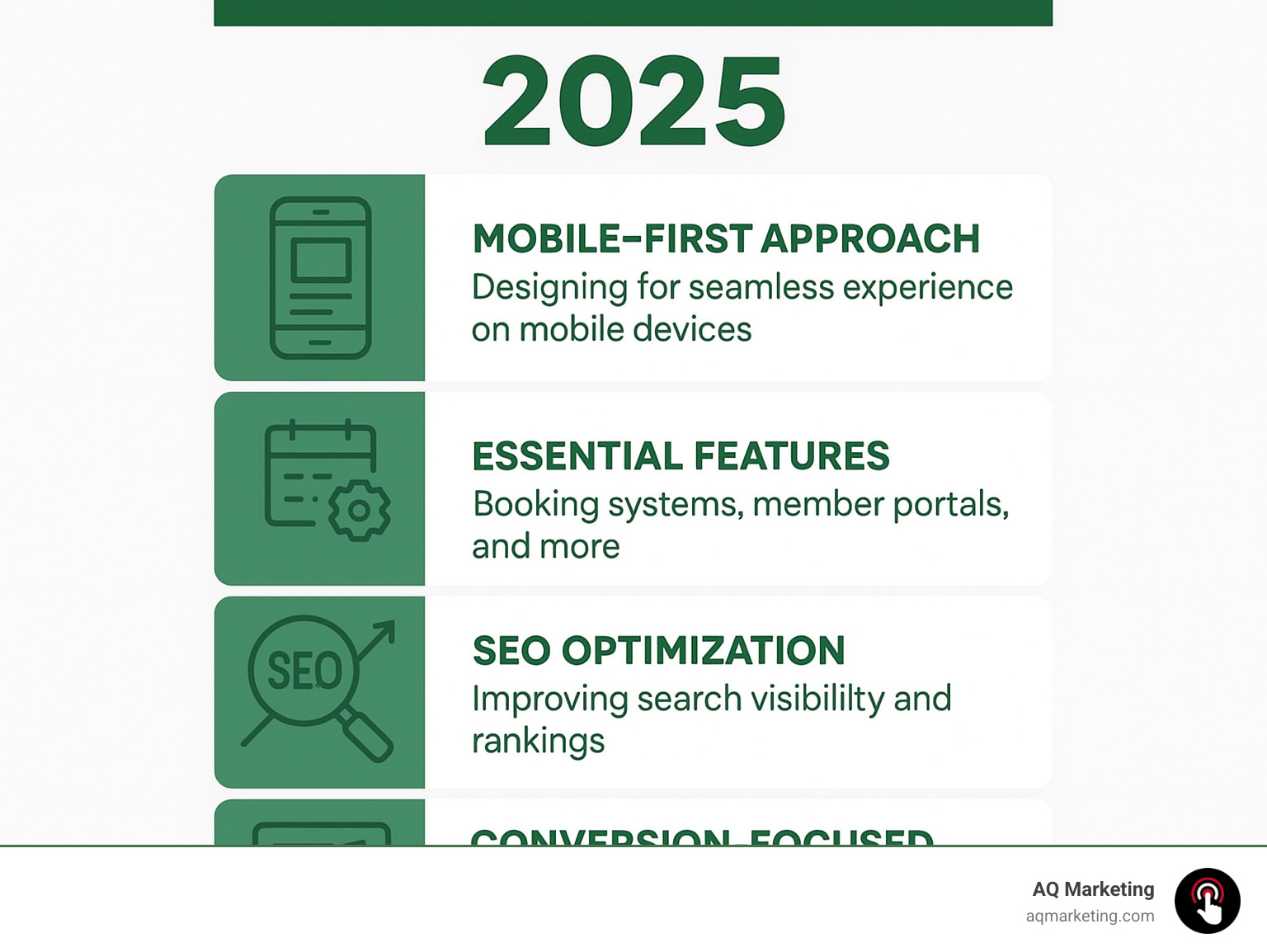
Here are the essential elements every fitness center website needs:
- Mobile-responsive design that works perfectly on all devices
- Online booking and scheduling integrated with your management system
- High-quality imagery and videos showcasing your facilities and classes
- Clear membership pricing and sign-up processes
- Member testimonials and success stories for social proof
- Interactive features like workout demos and fitness calculators
- Local SEO optimization to attract nearby prospects
Your website isn’t just a digital brochure – it’s a powerful lead generation tool that can increase your Google search traffic by 30% and generate 2-5x more leads when properly designed. Modern fitness consumers expect seamless online experiences, from browsing class schedules to purchasing memberships.
The fitness industry has shifted dramatically toward digital-first interactions. People research gyms online before visiting, book classes through websites, and expect instant access to information about pricing, schedules, and amenities.
I’m Robert P. Dickey, President and CEO of AQ Marketing, with over 20 years of experience helping businesses succeed in the digital landscape. My expertise in Web Design for Fitness Centers comes from working with numerous fitness businesses to create websites that convert visitors into loyal members.
Web Design for Fitness Centers terms to remember:
Why Great Web Design Matters to Fitness Centers in 2024
The fitness industry has undergone a digital revolution, and your website is now the cornerstone of your marketing strategy. With over 92% of internet users accessing the web through smartphones, your fitness center’s online presence can make or break your business growth.
Consider this: when someone searches for “gyms near me” or “fitness classes,” your website is competing against dozens of other fitness centers. If your site takes too long to load, looks outdated, or doesn’t work properly on mobile devices, potential members will click away to your competitors within seconds.
We’ve seen fitness centers that switched to professionally designed websites experience dramatic improvements. Research shows that specialized fitness websites typically see a 30% increase in Google search traffic and generate 2-5x more leads compared to generic, poorly designed sites.
The pandemic accelerated the shift toward digital-first interactions. People now expect to research facilities, view class schedules, read reviews, and even sign up for memberships online before ever stepping foot in your gym. Your website needs to facilitate this entire customer journey seamlessly.
Web Design for Fitness Centers & Changing Consumer Behavior
Today’s fitness consumers have fundamentally different expectations than they did even five years ago. They want instant access to information, on-demand booking capabilities, and the convenience of managing their fitness journey online.
Modern fitness enthusiasts expect:
- Immediate access to class schedules and availability
- Online booking without phone calls or in-person visits
- Transparent pricing displayed clearly on your website
- Social proof through member testimonials and success stories
- Community features that connect them with other members
- Mobile-first experiences that work flawlessly on smartphones
These changing expectations mean your website must serve as more than just an online brochure. It needs to be an interactive platform that engages visitors and guides them toward becoming members.
From Brochure to Sales Engine
The most successful fitness centers treat their websites as automated sales engines rather than static information displays. Your website should work around the clock, capturing leads, answering common questions, and moving prospects through your sales funnel even when your staff is off-duty.
A well-designed fitness website functions as:
- 24/7 sales representative that never takes a break
- Lead capture system that collects contact information
- Automated booking platform that reduces administrative work
- Customer service hub with FAQs and self-service options
- Community building tool that fosters member engagement
By integrating your website with your CRM and membership management systems, you can automate much of the sales process while providing a superior customer experience.
Web Design for Fitness Centers: Key Features Checklist
Creating an effective fitness center website requires careful attention to specific features that drive conversions and improve user experience. Based on our research and experience, here are the essential elements every successful fitness website needs:
Essential Features:
- Hero section with compelling video or imagery
- Integrated class scheduling and booking system
- Member portal for account management
- E-commerce functionality for memberships and merchandise
- Testimonials and success stories
- FAQ section with accordion-style design
- Accessibility features for all users
- Mobile-responsive design
At AQ Marketing, we specialize in Custom Website Design that incorporates all these elements while reflecting your unique brand identity. Our Responsive Website Design Company services ensure your site performs flawlessly across all devices.
High-Impact Imagery & Video
Visual content is absolutely crucial for fitness websites. High-quality images and videos can significantly increase user engagement and build trust with potential clients. However, avoid stock photos at all costs – they quickly lead to skepticism and distrust among visitors.
Best practices for fitness website visuals:
- Use authentic photos of your actual facility and equipment
- Showcase real members (with permission) rather than stock models
- Include workout demonstration videos
- Feature before-and-after success stories
- Optimize images for fast loading without sacrificing quality
- Use video backgrounds in hero sections to immediately capture attention
All the selfies taken at gyms daily prove how visual appeal drives fitness motivation. Your website should tap into this same psychology by showcasing the energy and results people can achieve at your facility.
Mobile-First Layout & Speed
With over 92% of internet users accessing websites via smartphones, mobile-first design isn’t optional – it’s essential. Your fitness website must provide an exceptional experience on mobile devices, or you’ll lose potential members before they even learn about your services.
Mobile optimization essentials:
- Responsive design that adapts to all screen sizes
- Touch-friendly buttons and navigation elements
- Fast loading times (under 3 seconds)
- Lazy loading for images and videos
- Simplified forms that work well on small screens
- Thumb-friendly navigation placement
Page speed directly impacts both user experience and search engine rankings. Implement core web vitals optimization to ensure your site loads quickly and provides smooth interactions.
Clear Navigation & User Journeys
Your website navigation should guide visitors naturally toward becoming members. Poor navigation is one of the most common reasons people leave fitness websites without taking action.
Navigation best practices:
- Use clear, descriptive menu labels
- Implement sticky headers for easy access to key pages
- Include breadcrumb navigation for complex sites
- Create logical information architecture
- Ensure all important pages are accessible within 3 clicks
- Use mega menus for sites with extensive class offerings
Structure your user journey to address common questions and concerns while gradually building trust and encouraging action.
Conversion-Ready CTAs
Your call-to-action buttons are where visitors become members. These elements need to be strategically placed, visually prominent, and compelling enough to drive action.
Effective CTA strategies:
- Use action-oriented language like “Join Today” or “Start Your Free Trial”
- Make buttons bright and contrasting colors
- Place CTAs above the fold and throughout the page
- Create urgency with limited-time offers
- A/B test different button colors and text
- Ensure CTAs are easily tappable on mobile devices
Engaging Visitors with Interactive & Multimedia Elements
Modern fitness websites go beyond static information to create engaging, interactive experiences that keep visitors on your site longer and encourage them to take action. Interactive elements can transform your website from a simple brochure into a powerful engagement tool.
Interactive features that work:
- Virtual workout demonstrations and tutorials
- BMI calculators and fitness assessments
- Progress tracking tools for members
- Virtual facility tours using 360-degree photography
- Gamification elements like achievement badges
- Interactive class calendars with real-time availability
These features serve multiple purposes: they provide immediate value to visitors, showcase your expertise, and create a sense of community before someone even becomes a member.
For fitness centers looking to implement advanced interactive features, consider exploring University courses on interaction design to better understand user experience principles.
Web Design for Fitness Centers & Member Tools
Web Design for Fitness Centers should include robust member-only areas that improve the customer experience and increase retention. These tools transform your website into a comprehensive fitness platform rather than just a marketing tool.
Essential member tools:
- Personal dashboards showing progress and goals
- Workout logging and tracking capabilities
- Class booking and cancellation systems
- Nutrition tracking integration
- Community forums and message boards
- Achievement systems and streak badges
- Personalized workout recommendations
These features create stickiness – members become more invested in your platform and less likely to cancel their memberships when they’ve built up progress data and community connections.
Building Community & Social Proof
Social proof is incredibly powerful in the fitness industry. People want to see that others have succeeded at your facility before they commit to joining. Your website should showcase this social proof prominently and authentically.
Community building features:
- Member success stories with before/after photos
- User-generated content galleries
- Member spotlights and testimonials
- Community challenges and leaderboards
- Social media integration
- Comment sections on blog posts
- Member referral programs
Create spaces where members can share their journeys, celebrate achievements, and support each other. This builds a sense of belonging that extends beyond just using your equipment.

SEO, Accessibility & Maintenance for Long-Term Growth
A beautiful website means nothing if people can’t find it or use it effectively. Search engine optimization, accessibility, and ongoing maintenance are crucial for long-term success.
SEO fundamentals for fitness websites:
- Local keyword research targeting your geographic area
- Google My Business optimization
- Schema markup for local business information
- Regular content creation and blog updates
- Local link building and citations
- Review management and response strategies
At AQ Marketing, our SEO Search Engine Optimization services help fitness centers dominate local search results. We also provide comprehensive Website Development Agency services that ensure your site is built for both users and search engines.
Accessibility considerations:
- Alt text for all images and videos
- Keyboard navigation support
- Color contrast compliance
- Screen reader compatibility
- WCAG 2.1 AA compliance
- Captions for video content
Making your website accessible isn’t just the right thing to do – it also expands your potential customer base and can improve your search engine rankings.
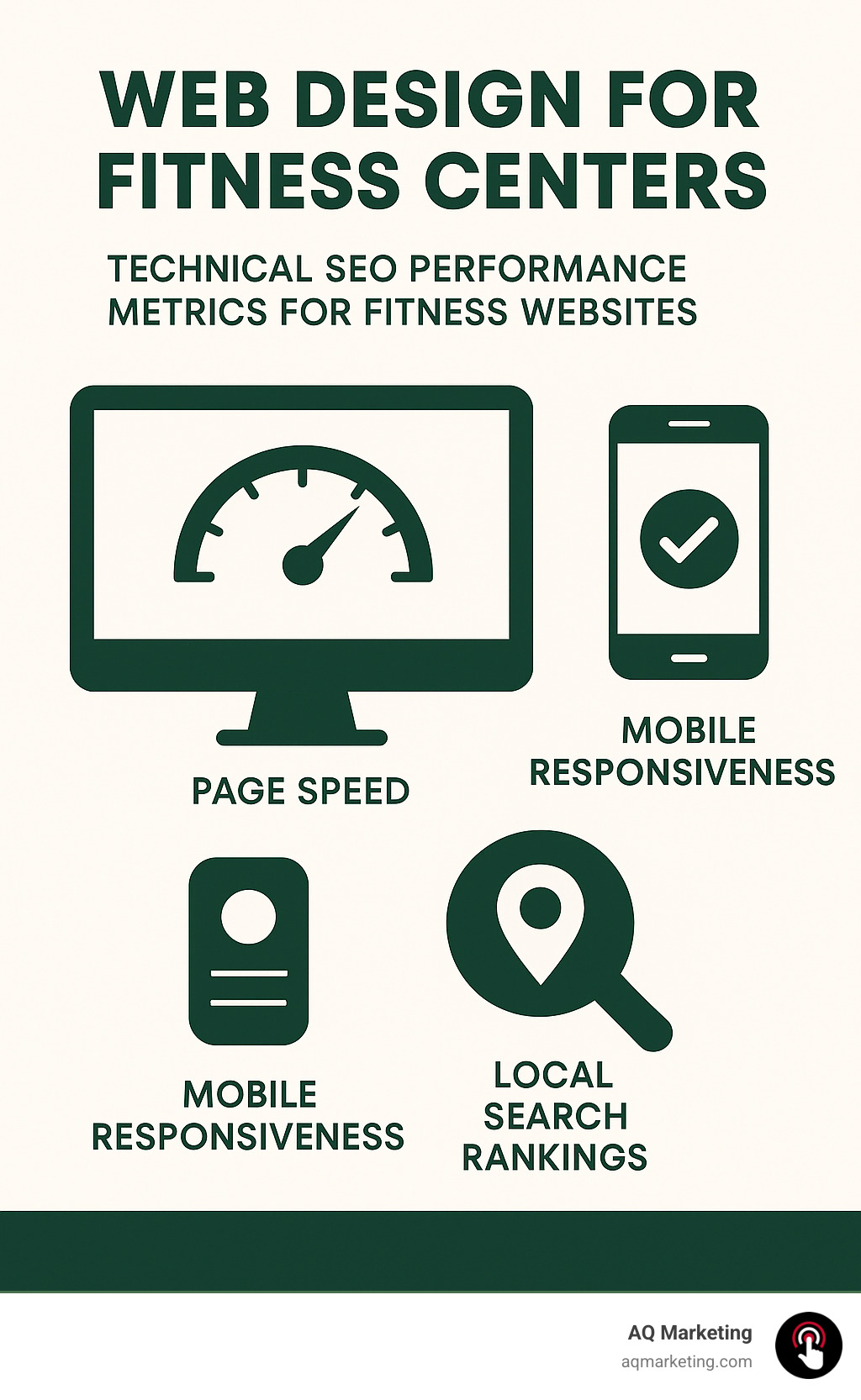
Technical SEO Essentials
Technical SEO forms the foundation of your website’s search engine performance. Without proper technical optimization, even the best content won’t rank well in search results.
Technical SEO checklist:
- XML sitemap submission to search engines
- Robots.txt file optimization
- Page speed optimization (target under 3 seconds)
- Mobile-first indexing compliance
- SSL certificate installation
- Structured data markup
- Internal linking strategy
- Image optimization and compression
These technical elements work behind the scenes to ensure search engines can crawl, understand, and rank your website effectively.
Ongoing Support & Hosting Best Practices
Your website is never truly “finished” – it requires ongoing maintenance, updates, and optimization to continue performing well. Many fitness centers make the mistake of launching their website and then neglecting it, which leads to security vulnerabilities, outdated content, and declining search rankings.
Maintenance essentials:
- Regular software and plugin updates
- Security monitoring and backup systems
- Content freshness and blog updates
- Performance monitoring and optimization
- Analytics review and reporting
- User feedback collection and implementation
Choose reliable hosting that can handle traffic spikes during peak enrollment periods. Our Best Business Website Hosting services provide the stability and speed your fitness center needs.
Frequently Asked Questions about Web Design for Fitness Centers
How much does a fitness website cost?
Fitness website costs vary significantly based on complexity and features. A basic template-based site might cost $2,000-$5,000, while a fully custom solution with advanced features can range from $5,000-$15,000 or more.
Factors affecting cost include:
- Custom design vs. template usage
- Number of pages and features
- Integration with booking systems
- E-commerce functionality
- Ongoing maintenance and support
Your website is an investment that should generate returns through increased memberships and reduced administrative costs.
Which platform is best for gym websites?
The best platform depends on your specific needs and technical comfort level. WordPress offers the most flexibility and customization options, making it ideal for fitness centers with complex requirements. Squarespace provides excellent templates and ease of use for smaller studios. Webflow offers powerful design capabilities for those who want custom aesthetics without extensive coding.
Consider factors like:
- Ease of content updates
- Integration capabilities with your existing systems
- Scalability for future growth
- SEO capabilities
- Mobile responsiveness
How quickly can we launch a new site?
Timeline depends on project complexity and your responsiveness during the design process. A basic fitness website can typically be launched in 2-4 weeks, while complex custom sites may take 8-12 weeks.
Typical timeline breakdown:
- Planning and strategy: 1-2 weeks
- Design and revisions: 2-4 weeks
- Development and testing: 2-4 weeks
- Content creation and optimization: 1-2 weeks
- Launch and final testing: 1 week
The key is having all your content, images, and requirements ready before starting the project.
Conclusion
Web Design for Fitness Centers has evolved from a nice-to-have marketing tool to an essential business asset that directly impacts your bottom line. The research is clear: fitness centers with professionally designed, mobile-optimized websites see 30% increases in search traffic and 2-5x more leads than those with outdated or poorly designed sites.
Your website serves as your 24/7 sales representative, community builder, and member service platform all in one. By implementing the strategies we’ve outlined – from mobile-first design and high-impact visuals to interactive features and technical SEO – you’ll create a digital presence that attracts new members and keeps existing ones engaged.
The fitness industry continues to become more competitive, and your website is often the deciding factor between someone choosing your facility or your competitor’s. Don’t let a subpar website hold back your growth potential.
At AQ Marketing, we’ve been helping businesses succeed online since 2003. Our specialized approach to fitness center web design combines conversion-focused design with technical excellence to deliver results that matter to your business. Whether you’re a small studio in Woburn or a large gym chain serving the greater Boston area, we understand the unique challenges and opportunities in the fitness industry.
Ready to transform your fitness center’s online presence? Our Custom Website Design and SEO services are specifically custom to help fitness businesses like yours attract more members and grow revenue through strategic web design.
Your members deserve a website experience that matches the quality of your fitness services. Let’s make that happen together.