

Why a Launch Strategy is Your Startup’s Most Critical Mission
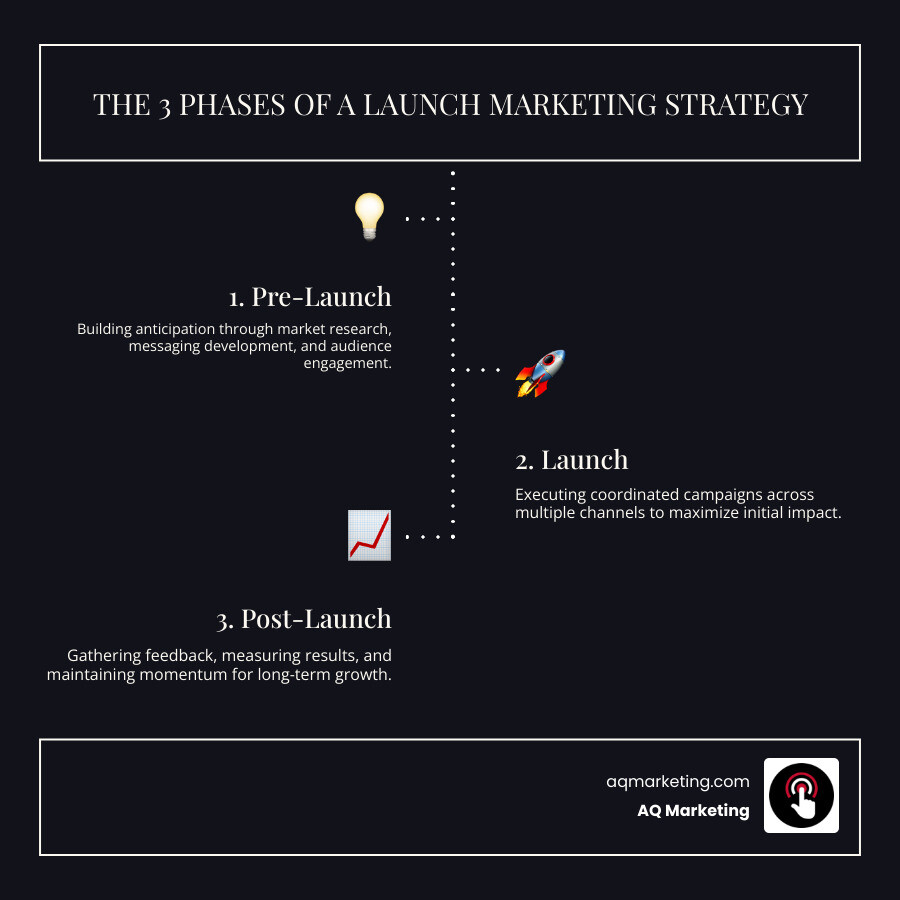
A launch marketing strategy is a structured plan that coordinates all marketing activities before, during, and after introducing a new product or service to the market. It typically includes three key phases:
- Pre-Launch – Building anticipation through market research, messaging development, and audience engagement
- Launch – Executing coordinated campaigns across multiple channels to maximize initial impact
- Post-Launch – Gathering feedback, measuring results, and maintaining momentum for long-term growth
Many new offerings never get the traction they deserve. Across industries, a significant percentage of developed products never make it to market, and many of those that do struggle to generate meaningful revenue.
A major reason is weak or poorly timed marketing. Even brilliant products can disappear without a trace if nobody knows they exist or understands their value. Your launch day is not just about announcing your product – it is your best early opportunity to capture attention, build credibility, and create the momentum you need to grow.
The stakes are high. Launch day creates a unique window where friends, family, press, and early adopters are actually paying attention. Miss that window, and you’re fighting an uphill battle for every customer. Get it right, and you set yourself up for sustainable growth.
This is where AQ Marketing comes in. Led by Robert P. Dickey, and drawing on more than 20 years in marketing, our team has helped countless businesses develop effective launch marketing strategies that turn product releases into revenue generators. At AQ Marketing, we’ve learned what works – and what doesn’t – when it comes to making your big reveal count.
Quick launch marketing strategy terms:
Phase 1: The Pre-Launch Foundation
Before your product even sees the light of day, the groundwork for its success must be carefully laid. This pre-launch phase is where we transform uncertainty into a clear, actionable plan. A staggering 95% of new products don’t achieve their goals, often due to a lack of a systematic approach to their launch strategy. We believe this is a preventable problem.
Our approach begins with in-depth market research, competitive analysis, and the creation of detailed buyer personas. We dig into understanding your target audience’s demographics, preferences, and, most importantly, their pain points. What problems are they facing that your product can solve? By truly understanding your future customers, we can tailor your messaging to resonate deeply.
Next, we define clear, measurable, and time-bound (SMART) goals for your launch. These aren’t just vague aspirations; they are specific objectives like “achieve X sales in the first 90 days” or “generate Y number of leads.” We also identify Key Performance Indicators (KPIs) that will allow us to track progress and measure success from day one. This meticulous planning is crucial for increasing the chances of your product reaching its target market and reducing the likelihood of failure.
For more insights into crafting compelling narratives for your online presence, explore our website content writing services.
Developing Your Unique Selling Proposition (USP) and Product Story
In a crowded market, your product needs to stand out. This is where your Unique Selling Proposition (USP) comes into play. Your USP isn’t just a tagline; it’s the core reason customers should choose your product over alternatives. We help you identify the distinctive features and benefits that make your offering special and then weave this into all your marketing efforts.
But a great product is more than just its features; it’s also about its story. A compelling product story encapsulates its purpose and benefits, creating an emotional connection with your audience. We’ve seen how a strong product story fosters loyalty and drives repeat business. It’s about communicating not just what your product does, but why it matters and how it will improve your customers’ lives. For instance, when Nikon launched their COOLPIX P1000 camera, their opening line, “Meet the camera that thinks it’s a telescope,” immediately conveyed its unique value proposition – a super zoom lens. This clear, benefit-driven messaging helps set your product apart.
We also focus on ensuring your brand messaging is clear, concise, and consistently aligned with your product story across all channels. Using your customer’s language in your copy, often derived from Voice of Customer (VoC) data, can build stronger connections and increase conversions. This ensures that your value proposition, clearly stating relevance, measurable value, and points of differentiation, truly resonates.
The Critical Role of Market Research
Effective launch marketing strategy is built on a foundation of solid market research. We can’t stress this enough: thorough market research is essential to understand both customer needs and the competitive landscape. Without it, you’re essentially launching blindfolded.
Our market research process involves:
- Target audience identification: We go beyond basic demographics to understand psychographics, behaviors, and what truly motivates your ideal customers. What are their hopes, dreams, and aspirations?
- Customer needs analysis: We explore the problems your customers are experiencing and how your product provides a unique solution. This often involves looking at what we call the Minimum Viable Segment (MVS) – a niche small enough for you to completely dominate, yet viable enough that they genuinely want a product you can deliver. For example, a payment device startup successfully targeted millennials who were tired of carrying multiple credit cards, achieving significant crowdfunding success.
- Competitor strengths and weaknesses: We analyze what your rivals are doing well, where they fall short, and how your product can differentiate itself.
- Market trends: We keep an eye on broader industry shifts and emerging opportunities to ensure your product is positioned for future growth.
This deep dive ensures that your product is not just a solution looking for a problem, but a precise answer to a clear market demand. For businesses looking to improve their online visibility and reach the right audience, our website SEO services are designed to ensure your message is seen by those who need it most.
Phase 2: Building Unstoppable Pre-Launch Hype
Once the foundation is set, it’s time to build anticipation. This pre-launch hype phase is critical for generating buzz and excitement, ensuring that when your product finally launches, there’s a crowd eagerly waiting. Starting your marketing efforts well before the launch date is a powerful way to engage your audience and leverage the psychological impact of anticipation, which scientific research links to well-being and eagerness for positive outcomes.
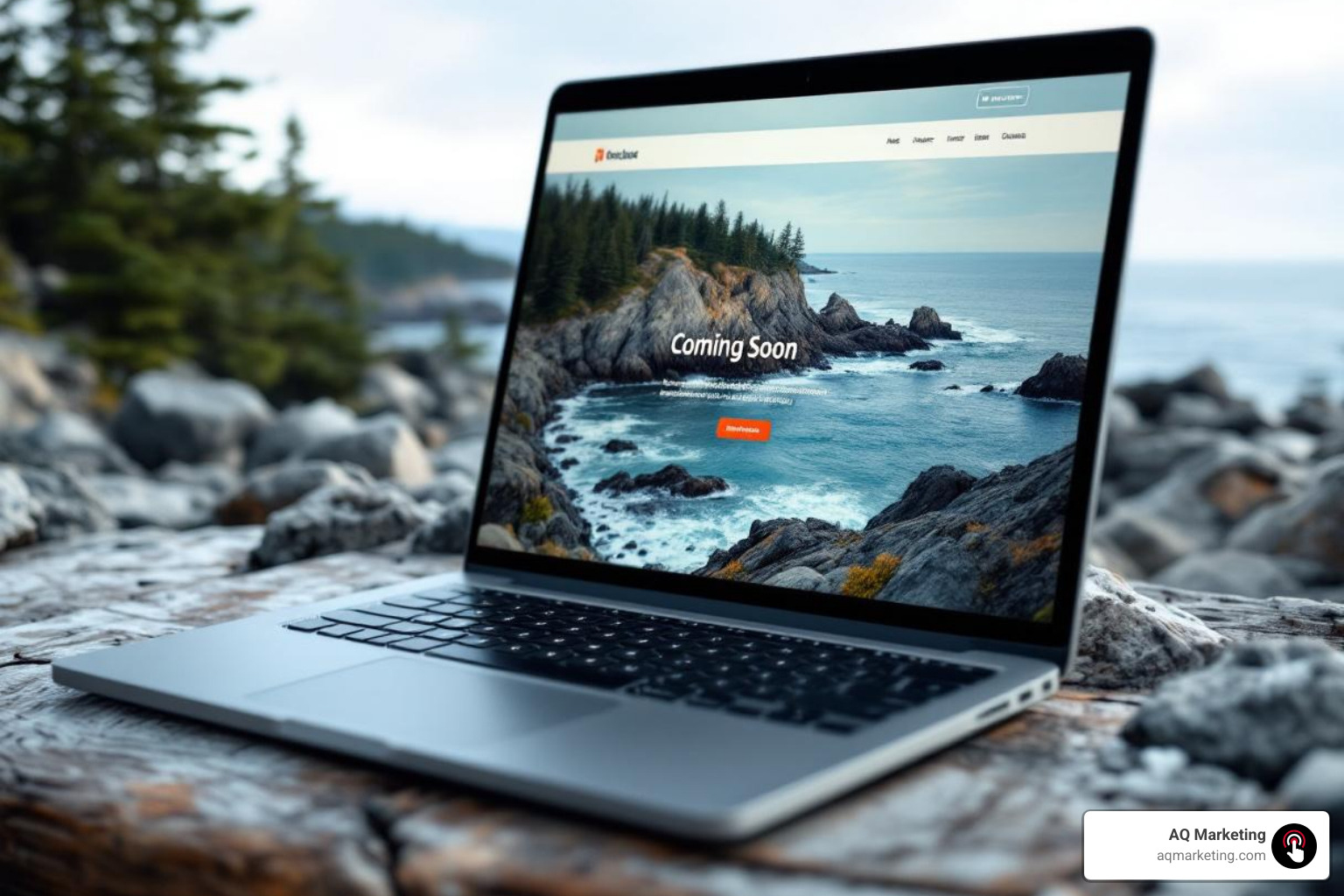
We use a blend of content marketing, social media teasers, and countdown campaigns to keep your audience engaged. Imagine a “Coming Soon” landing page on your website, collecting early sign-ups and building an email list. This is a highly effective tactic; for instance, the Xion CyberX eBike generated over 23,000 emails before its crowdfunding launch, leading to over $800,000 in sales! Offering an enticing offer like early access or a discount for email subscribers can significantly boost these conversions.
Visual countdowns on social media, like those used by Chobani for new yogurt flavors, can keep your product top-of-mind and build awareness. We also leverage waitlists, which create a powerful sense of FOMO (Fear Of Missing Out). Robinhood famously used a referral waitlist to gather around 1 million potential users before their app was even live, demonstrating the immense power of early buzz.
For a deeper dive into how we can amplify your brand’s presence, check out our social media marketing services.
Crafting a Pre-Launch Launch Marketing Strategy for Maximum Buzz
To truly ignite excitement, we go beyond simple teasers. Our pre-launch strategy focuses on several high-impact tactics:
- Leveraging FOMO: As we mentioned, 56% of adults admit FOMO influences their digital behavior. An exclusive waitlist or limited early access can be incredibly effective.
- Influencer Outreach: Partnering with influencers in your niche can create authentic excitement. Direct-to-consumer underwear brand Thinx, for example, partnered with influencers in fashion, health, and wellness to launch a new product line. Similarly, Healthish leveraged niche influencers in fitness and fashion to build hype for their hydration-tracking water bottle, leading to significant buzz.
- Press Kits and Media Relations: Making it easy for journalists to cover your story is key. We help you create a comprehensive press kit with all the necessary information, photos, and founder stories. Seventy percent of publishers are open to being pitched on a topic via email if it’s within their area of coverage, and a well-crafted press kit ensures they have everything they need.
- Beta Testing Programs: Launching a beta program not only helps you gather crucial feedback to refine your product (like TestFlight for iOS apps) but also generates testimonials from eager early users. These real-user quotes add immense credibility.
- User-Generated Content (UGC): Encouraging beta testers or early enthusiasts to share their experiences can be a game-changer. Unsplash successfully funded a book via Kickstarter by involving influencers and showcasing user-generated content, exceeding their goal by $25,000. This kind of authentic endorsement is incredibly powerful.
By combining these strategies, we ensure your product builds a dedicated following and significant momentum long before launch day.
Phase 3: The Main Event and Post-Launch Growth
Launch day is not the finish line; it’s the starting gun. The main event requires flawless execution, but the post-launch phase is equally critical for sustaining growth and building long-term success. This is where we shift from building anticipation to nurturing relationships and continuously improving your offering.
We emphasize coordinated channel execution, ensuring all your marketing efforts are synchronized for maximum impact. Real-time monitoring of performance metrics allows us to make immediate adjustments. Crucially, we establish robust customer feedback loops. Gathering feedback and gauging customer reactions during a launch serves as a litmus test for market fit. This continuous iteration, based on what your customers are telling us, is vital for long-term momentum. For instance, when a company launched an innovative baby monitor, analyzing qualitative parent feedback revealed that developers had overlooked the emotional need for constant reassurance, not just problem alerts. This insight led to crucial product adjustments.
Executing a Powerful Launch Day
When the clock strikes zero, it’s time for action. Our launch day strategy includes:
- Email Marketing Campaigns: We craft targeted email campaigns with compelling subject lines and clear calls to action, personalized to different segments of your audience. Email remains a highly effective channel for reaching customers, with many businesses finding a significant portion of their revenue comes from email subscribers.
- Social Media Announcements: A coordinated blast across relevant social media platforms is essential. We’ll leverage engaging visuals, videos, and interactive content to announce your launch and direct traffic to your site.
- The Role of Paid Advertising: Paid advertising plays a significant role in amplifying your message. Facebook Custom Audience ads, for example, can be highly effective remarketing tools, targeting users who have already shown interest. Adding the Facebook pixel to your website allows us to track visitors and create custom audiences for these campaigns. Beyond social media, we’ve seen success with audio ads on platforms like Spotify and Pandora. Mattress brand Eight Sleep, for instance, found a better return on ad spend by using audio to explain the in-depth features of their premium product. For more information on how we can help you with your paid campaigns, explore our digital advertising services.
- Website Readiness: Your website is your storefront. We ensure it’s robust, responsive, and ready to handle an influx of traffic, providing a seamless user experience.
- Customer Support Preparation: Anticipating customer questions and having a well-trained support team in place is non-negotiable. A launch FAQ, built from beta feedback, can be a top priority to address common inquiries.
Measuring the Success of Your Launch Marketing Strategy
How do you know if your launch marketing strategy is working? We track and analyze a comprehensive set of Key Performance Indicators (KPIs):
- Sales Velocity: How quickly are sales coming in?
- Customer Acquisition Cost (CAC): How much does it cost to acquire a new customer? For SaaS companies, unoptimized lead generation can lead to staggeringly high CAC.
- Conversion Rates: What percentage of visitors are taking the desired action (e.g., signing up, making a purchase)? Most B2B SaaS free trials convert at 15-25%, with 30%+ considered exceptional.
- Social Media Engagement: Likes, shares, comments, mentions – these qualitative metrics give us a sense of buzz.
- Website Traffic: Are we driving the right volume and quality of visitors to your site?
- Customer Satisfaction (CSAT) and Net Promoter Score (NPS): These qualitative metrics provide a deeper understanding of consumer sentiment and product reception. For example, after being targeted through a beauty community, 96% of users familiar with Image Skincare’s Vital C Anti-Aging Serum said they’d recommend it to a friend.
By continuously monitoring these KPIs, we can evaluate how well your launch met its objectives and inform future marketing initiatives.
Adapting Your Launch Marketing Strategy for Success
A launch marketing strategy is not a one-size-fits-all endeavor. It must be flexible, adaptable, and responsive to the unique challenges and opportunities your product and market present.
One of the most critical aspects is avoiding common pitfalls. Poor marketing is a leading cause of startup failure. We’ve seen that a lack of communication and planning, poor timing, neglecting post-launch follow-up, and confusing product messaging are frequent culprits.
Here are some common launch marketing pitfalls to avoid:
- Poor market research: Launching without truly understanding your audience or competitive landscape.
- Unclear USP: Failing to articulate what makes your product unique and valuable.
- Bad timing: Releasing your product when the market isn’t ready or during a period of high noise.
- Neglecting post-launch follow-up: Assuming the work is done after launch day.
- Inconsistent messaging: Sending mixed signals across different marketing channels.
- Technical issues on launch day: Website crashes, broken links, or payment processing problems.
Budgeting considerations are also crucial. While large corporations might have vast marketing budgets, startups and small businesses often need to be more strategic. Apple, for instance, is known for its relatively small advertising budget compared to competitors, relying heavily on hype, brand loyalty, and compelling product presentations. On a smaller budget, prioritizing organic channels like content marketing, social media, and email outreach becomes paramount. We focus on high-impact, low-cost activities that generate genuine interest.
Please note: Any cost discussions are based on general online data and do not reflect AQ Marketing’s pricing.
Scalability is another factor. Your initial launch might target a specific segment or region, but your strategy should consider how to expand. Industry differences also profoundly influence strategy. For example, marketing a B2B SaaS product will look very different from launching a new e-commerce product or a mobile app. We tailor our approach to your specific industry and product type.
Frequently Asked Questions about Launch Marketing
Let’s address some common questions we encounter when developing launch marketing strategies.
How does a launch strategy differ for a B2B vs. a B2C product?
The core principles of a launch marketing strategy remain, but the execution shifts significantly between B2B (Business-to-Business) and B2C (Business-to-Consumer) products:
-
B2B Focus:
- Audience: Businesses, decision-makers, and key stakeholders.
- Motivation: Logic, ROI, efficiency, problem-solving, competitive advantage.
- Sales Cycle: Typically longer, often involving multiple touchpoints and decision-makers (enterprise SaaS sales cycles can stretch from 3 to 18 months).
- Channels: LinkedIn is preferred by 93% of B2B customers. We also focus on industry-specific forums, webinars, case studies, and personalized outreach.
- Messaging: Emphasizes quantifiable benefits, security, reliability, and long-term partnership.
- Relationship Building: Crucial for trust and ongoing sales.
-
B2C Focus:
- Audience: Individual consumers.
- Motivation: Emotional connection, convenience, aspiration, solving personal pain points.
- Sales Cycle: Generally shorter, often impulse-driven or with fewer decision layers.
- Channels: Social media platforms like Instagram and Facebook, influencers, traditional advertising, and mass-market appeal.
- Messaging: Highlights lifestyle benefits, ease of use, personal change, and immediate gratification.
How can I create a launch plan on a small budget?
A limited budget doesn’t mean a limited impact. We focus on maximizing organic reach and leveraging existing resources:
- Content Marketing: Create valuable blog posts, guides, or videos that address your audience’s pain points. This builds authority and attracts organic traffic.
- Social Media: Build a strong organic presence on platforms relevant to your audience. Engage with communities, participate in discussions, and share compelling content.
- Email Outreach: Build an email list early, as demonstrated by the Xion CyberX eBike’s success. Personal emails to friends, family, and colleagues can also generate early support.
- Guerilla Marketing Tactics: Think outside the box! This could involve local partnerships, community events, or creative stunts that generate word-of-mouth.
- Niche Communities: Engage with online forums and groups where your target audience congregates. Provide value and subtly introduce your product.
- Earned Media/PR: Focus on crafting a compelling story that local news outlets or industry blogs might pick up, rather than paying for advertising.
By prioritizing high-impact, low-cost activities and focusing on genuine engagement, even small businesses can make a significant splash.
Please note: Any cost discussions are based on general online data and do not reflect AQ Marketing’s pricing.
What are the most common pitfalls in a product launch?
Despite meticulous planning, launches can hit snags. Recognizing common pitfalls helps us avoid them:
- Poor Market Research: As highlighted earlier, not truly understanding your target audience or competitive landscape is a recipe for disaster.
- Unclear USP: If you can’t articulate what makes your product unique and valuable, your customers won’t either.
- Bad Timing: Launching during a holiday, a major competitor’s announcement, or when the market simply isn’t ready can stifle momentum.
- Neglecting Post-Launch Follow-Up: A launch is a marathon, not a sprint. Failing to engage with early customers, gather feedback, or address issues can quickly derail success.
- Inconsistent Messaging: If your brand story or value proposition changes from one platform to another, it creates confusion and erodes trust.
- Technical Issues on Launch Day: A website crash, broken checkout process, or non-functional app can lead to lost sales and a damaged reputation. Always thoroughly test every aspect of your customer journey.
Conclusion: Your Launch is Just the Beginning
Launching a new product or service is undeniably one of the most exhilarating and challenging endeavors for any business. It’s a moment of immense potential, a chance to define your place in the market and capture the attention of eager customers. But as we’ve explored, success isn’t left to chance. It’s the result of a well-crafted, carefully executed launch marketing strategy that spans from deep pre-launch preparation to sustained post-launch engagement.
At AQ Marketing, we believe that your launch is just the beginning of your product’s journey. We work with small to medium-sized businesses across Massachusetts, from Woburn to Worcester, helping them steer the complexities of digital marketing. Our expertise in SEO, website design, and social media management ensures that every phase of your launch is optimized for long-term, impactful results. We help you build the momentum, gather crucial insights, and continuously iterate to ensure your product not only makes a splash but thrives.
Ready to make your next big reveal a resounding success? Let’s discuss how a strategic partnership with AQ Marketing can transform your product launch into a powerful growth engine. Find out more about our comprehensive digital marketing for small business solutions.
