The 10 Best Online Reputation Management Tools 2024: Ultimate Guide
The 10 Best Online Reputation Management Tools for 2024 are essential in today’s digital landscape, as they help businesses track and shape how they’re perceived online. With so much happening on social media, review sites, and forums, understanding and managing your brand’s reputation has never been more crucial. Whether it’s through review monitoring, sentiment analysis, or social listening, these tools offer businesses the insights they need to improve brand perception and customer relationships.
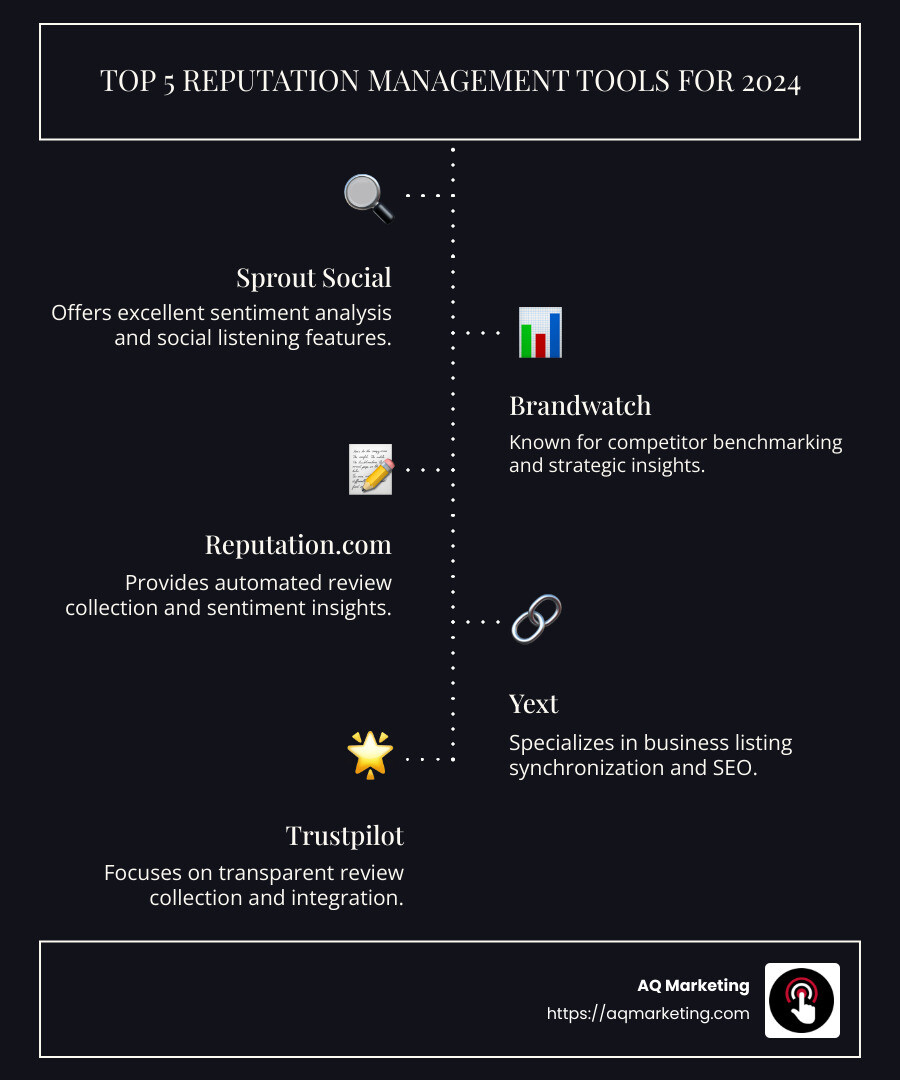
Here’s a quick look at the tools making a splash in 2024:
- Sprout Social: Known for its sentiment analysis and social listening capabilities.
- Brandwatch: Offers competitor benchmarking and strategic insights.
- Reputation.com: Provides automated review collection and customer sentiment insights.
- Yext: Specializes in business listing synchronization and local SEO optimization.
- Trustpilot: Focuses on transparent review collection and website integration.
- Talkwalker: Ideal for crisis monitoring and enterprise brand tracking.
- AQ Marketing: Offers comprehensive online reputation management services custom for small to medium-sized businesses.
Understanding and utilizing these tools can significantly improve a brand’s online reputation and perception, offering businesses a competitive edge.
I’m Robert P. Dickey, and with over 20 years of experience in digital marketing, I’ve seen how effective online reputation management can transform a business. The 10 Best Online Reputation Management Tools for 2024 provide essential strategies for maintaining a positive online presence, vital for success in today’s digital age.
Similar topics to The 10 Best Online Reputation Management Tools for 2024:
– online reputation management tools software
– reputation management software comparison
– online review management
The 10 Best Online Reputation Management Tools for 2024
In the digital world, your brand’s online reputation can make or break your business. That’s why The 10 Best Online Reputation Management Tools for 2025 are vital for companies wanting to monitor and improve how they are perceived online. These tools help businesses stay on top of customer reviews, analyze sentiment, and listen to social media conversations.
Review Monitoring
Review monitoring is crucial. It allows businesses to see what customers are saying about them across various platforms. Tools like Reputation.com and Trustpilot are leaders in this area. They automatically collect reviews from multiple sources, providing a centralized view of customer feedback. This helps businesses respond quickly to both positive and negative reviews, showing customers that they care about their experiences.
Sentiment Analysis
Understanding the emotions behind customer feedback is just as important as the feedback itself. Sentiment analysis tools like Sprout Social and Brandwatch dive deep into the emotional tone of reviews and social media mentions. These tools categorize sentiments as positive, negative, or neutral, allowing businesses to adjust their strategies accordingly. For example, if a product consistently receives negative reviews, a company can investigate and make necessary improvements.
Social Listening
Social listening involves tracking conversations about your brand on social media and other online platforms. It’s not just about counting mentions; it’s about understanding the context and sentiment behind them. Talkwalker excels in this area, offering real-time monitoring and crisis management features. By actively listening to what customers are saying, businesses can engage in meaningful conversations and address issues before they escalate.
These tools are more than just software—they are strategic partners in maintaining a positive online presence. By leveraging review monitoring, sentiment analysis, and social listening, businesses can build trust, improve customer relationships, and improve their overall reputation.
Incorporating these tools into your strategy will not only help you keep track of how your brand is perceived but also provide valuable insights that drive long-term success. As we move further into 2025, using these tools effectively will be key to staying ahead in the competitive online landscape.
Top 10 Reputation Management Tools
Managing your online reputation is crucial in today’s digital age. With so many tools available, finding the right fit for your business can be overwhelming. Here’s a closer look at the Top 10 Reputation Management Tools for 2024, each offering unique features to help you maintain a positive online presence.
HubSpot
HubSpot’s Marketing Hub is a comprehensive solution that offers a range of reputation management features. It provides tools for social listening, review monitoring, and sentiment analysis. HubSpot is ideal for businesses looking to integrate reputation management with broader marketing efforts. Its detailed analytics can help track customer sentiment and engagement across platforms.
Oktopost
Oktopost is designed for B2B marketers, especially in industries like tech and finance. It offers advanced social listening tools and in-depth analytics to monitor brand mentions and industry keywords. The platform integrates smoothly with CRM systems, making it easy to align reputation management with your broader marketing goals.
Reputation
Reputation.com focuses on managing reviews and social media interactions. Its Social Suite provides real-time social listening and centralized responding features. This tool is particularly beneficial for B2C businesses, helping them maintain a positive image by quickly addressing customer feedback.
Determ
Determ is a PR-focused tool that offers real-time monitoring of brand mentions across over 100 million online sources. It includes features like sentiment analysis and competitive analysis. An AI assistant, Synthia, improves reporting by providing strategic insights, making it a great choice for PR agencies.
Mention
Mention excels in social media reputation management. It offers automated reporting and robust data filtering to provide precise insights. With customizable alerts and detailed analytics, businesses can uncover trends and measure their reputation’s impact effectively.
Statusbrew
Statusbrew provides a unified platform for managing social media engagement and reputation. It offers automated scheduling, social listening, and sentiment analysis. This tool is perfect for businesses looking to streamline their social media strategies while keeping an eye on their online reputation.
Meltwater
Meltwater is known for its media intelligence capabilities. It offers tools for monitoring brand mentions across news sites, social media, and blogs. Meltwater’s AI-driven analytics help businesses understand public perception and respond to emerging trends effectively.
Cyfe
Cyfe is an all-in-one business dashboard that includes reputation management features. It allows businesses to monitor social media, reviews, and web analytics in one place. Cyfe’s customizable dashboards make it easy to track key metrics and stay informed about your brand’s online reputation.
Brand24
Brand24 provides real-time monitoring of brand mentions and sentiment analysis. It’s a powerful tool for tracking customer feedback and identifying potential PR crises before they escalate. With its intuitive interface, businesses can quickly understand their brand’s online presence.
GatherUp
GatherUp focuses on collecting and managing customer feedback. It offers tools for automated review requests and feedback management, helping businesses improve their online reputation by encouraging positive reviews and addressing negative ones promptly.
Each of these tools offers unique capabilities to help businesses manage their online reputation effectively. By choosing the right tool for your needs, you can improve customer trust, improve engagement, and maintain a positive brand image in the competitive digital landscape.
Key Features of Reputation Management Tools
In the digital world, managing your online reputation is more than just responding to reviews. It involves using advanced features to understand and shape how your brand is perceived. Let’s explore the key features that set apart the best reputation management tools in 2024.
AI-Powered Insights
Artificial Intelligence (AI) is changing reputation management. AI-powered tools can analyze vast amounts of data to provide deep insights into customer sentiment and behavior. For instance, Meltwater’s AI-driven analytics help businesses understand public perception by analyzing social media, news sites, and blogs. This allows you to respond to trends and shifts in sentiment faster than ever before.
Automated Review Management
Managing reviews manually can be overwhelming, especially for businesses with a large customer base. Automated review management tools, like those offered by GatherUp, streamline this process. They send automated review requests to customers, ensuring a steady flow of feedback. This not only helps in gathering more positive reviews but also allows businesses to address negative feedback promptly.
Influence Scoring
Understanding who influences conversations about your brand is crucial. Influence scoring tools identify key individuals shaping your brand’s narrative. Mention excels in this area by providing detailed analytics and customizable alerts that highlight influential voices. Engaging with these influencers can amplify your positive reputation and mitigate negative comments effectively.
Predictive Analytics
Predictive analytics use historical data to forecast future trends in brand perception. This proactive approach allows businesses to adjust strategies before issues arise. Tools like Determ, with its AI assistant Synthia, offer strategic insights by predicting shifts in sentiment and potential PR crises. This foresight helps in crafting messages that align with customer expectations and industry trends.
Sentiment-Driven Content
Creating content that resonates with your audience is key to maintaining a positive online reputation. Sentiment-driven content tools analyze current trends and provide content suggestions that align with customer sentiments. This ensures that your messaging is relevant and timely, addressing client concerns or highlighting positive topics of interest.
By leveraging these advanced features, businesses can not only manage their reputation but also build a stronger, more engaging brand presence. The right tool can make all the difference in maintaining a positive image in today’s digital landscape.
Benefits of Using Reputation Management Tools
In the changing digital landscape, reputation management tools are indispensable for businesses aiming to maintain a positive brand image. These tools offer several key benefits that can significantly improve how your brand is perceived and engaged with online.
Brand Monitoring
Staying informed about what people are saying about your brand is crucial. Brand monitoring tools provide real-time tracking of mentions across social media, review sites, and other online platforms. This helps businesses understand public perception and allows for quick responses to both positive and negative feedback. For instance, tools like Statusbrew consolidate mentions into a single dashboard, making it easier to keep track of your brand’s online presence.
Crisis Management
Reputation management tools are essential for crisis management. They offer alerts and response features to address potential PR issues before they escalate. With timely notifications about negative mentions, businesses can quickly engage with dissatisfied customers and mitigate any damage. This proactive approach is vital in preventing a single incident from spiraling into a larger crisis.
Improved Customer Engagement
Customer engagement is at the heart of reputation management. Tools that consolidate messages and mentions enable businesses to respond swiftly to customer inquiries and feedback. This responsiveness builds trust and loyalty, showing customers that their opinions are valued. For example, Reputation provides a unified inbox for handling customer interactions efficiently, enhancing the overall customer experience.
Competitor Benchmarking
Understanding your competitors’ strategies is crucial for staying ahead. Competitor benchmarking tools analyze competitors’ social media activities, helping businesses identify trends and opportunities. By monitoring what works for others, companies can refine their strategies and capitalize on market gaps. Brand24 excels in providing insights into competitor performance, enabling businesses to adapt and innovate effectively.
Brand Consistency
Maintaining brand consistency across all platforms is vital for reinforcing a unified brand identity. Reputation management tools ensure that your messaging and branding are consistent, helping potential customers recognize and trust your company. Tools like Cyfe offer dashboards that track brand consistency metrics, ensuring that your brand’s voice remains coherent across different channels.
By leveraging these benefits, businesses can not only protect their online reputation but also foster a stronger connection with their audience. In today’s digital world, reputation management tools are invaluable for building a resilient and trusted brand presence.
Frequently Asked Questions about Reputation Management
What are the features of reputation management tools?
Reputation management tools come packed with features designed to help businesses maintain a positive online presence. Key features include:
- Social Listening: This involves tracking conversations about your brand across social media platforms. It helps identify trends and gather insights into what people are saying about your brand in real-time.
- Review Monitoring: Tools that monitor online reviews allow businesses to keep track of customer feedback across various platforms. This enables timely responses to both positive and negative reviews, which is crucial for maintaining a good reputation.
- Sentiment Analysis: This feature evaluates the tone of online mentions and reviews to understand public sentiment toward your brand. By analyzing whether conversations are positive, negative, or neutral, businesses can gauge overall brand perception.
How to measure online reputation?
Measuring online reputation involves several key metrics:
- Review Volume: The number of reviews your business receives can indicate customer engagement levels. A high volume of reviews, especially positive ones, can improve credibility and attract more customers.
- Sentiment Analysis: As mentioned earlier, sentiment analysis helps determine the emotional tone of mentions and reviews. It provides insights into how customers feel about your brand, allowing you to make informed decisions.
- Social Media Reach: This metric measures how far your brand’s message spreads across social media platforms. A broad reach signifies strong brand visibility and influence, which are critical components of a positive online reputation.
What are the 4 components of reputation management?
Reputation management is a comprehensive process that involves four main components:
- Monitoring: This is the ongoing process of tracking brand mentions, reviews, and discussions across various online platforms. Effective monitoring helps businesses stay informed about public perception.
- Response: Addressing feedback—both positive and negative—is vital. Quick and thoughtful responses to customer interactions can mitigate negative impacts and improve customer satisfaction.
- Engagement: Actively engaging with your audience through social media interactions and thoughtful content helps build relationships and trust. Engagement demonstrates that the brand values its customers’ opinions.
- Strategy: Developing a strategic plan for managing your brand’s reputation is crucial. This includes setting goals, identifying key platforms, and determining the best approaches for maintaining a positive image.
By understanding and implementing these components, businesses can effectively manage their online reputation and foster a strong, positive brand image.
Conclusion
In the changing digital landscape, managing your online reputation is more crucial than ever. At AQ Marketing, we understand how vital it is for small to medium-sized businesses to maintain a strong online presence. Since 2003, we’ve been committed to delivering long-term, impactful results for our clients through our comprehensive digital marketing services.
Online reputation management is not just about responding to reviews or monitoring social media mentions. It’s about crafting a consistent and positive brand image that resonates with your audience. Our expertise in SEO, website design, and social media management ensures that your business stands out in the crowded digital space.
By leveraging The 10 Best Online Reputation Management Tools for 2024, we help our clients monitor and improve their brand perception. These tools provide valuable insights through features like sentiment analysis and social listening, enabling businesses to engage effectively with their audience and address any potential issues proactively.
Our approach focuses on building trust and credibility over time. We believe that a positive online presence is a cornerstone for business success, and we are dedicated to helping our clients achieve this. Whether you’re in Boston, Woburn, or anywhere in the areas we serve, our team is here to support your digital marketing journey.
As we continue to steer the complexities of the digital world, our commitment remains the same: to empower businesses with the tools and strategies they need to thrive online. Let’s work together to improve your brand’s reputation and ensure your business’s long-term success.