

Why Marketing Budgets Matter for Small Business Growth

Marketing budgets for small businesses are strategic investments that fuel growth. The core challenge for every owner is finding the right spending balance—enough to compete in markets like Boston or Southern New Hampshire, but not so much that it drains resources.
Quick Answer: How Much Should You Spend?
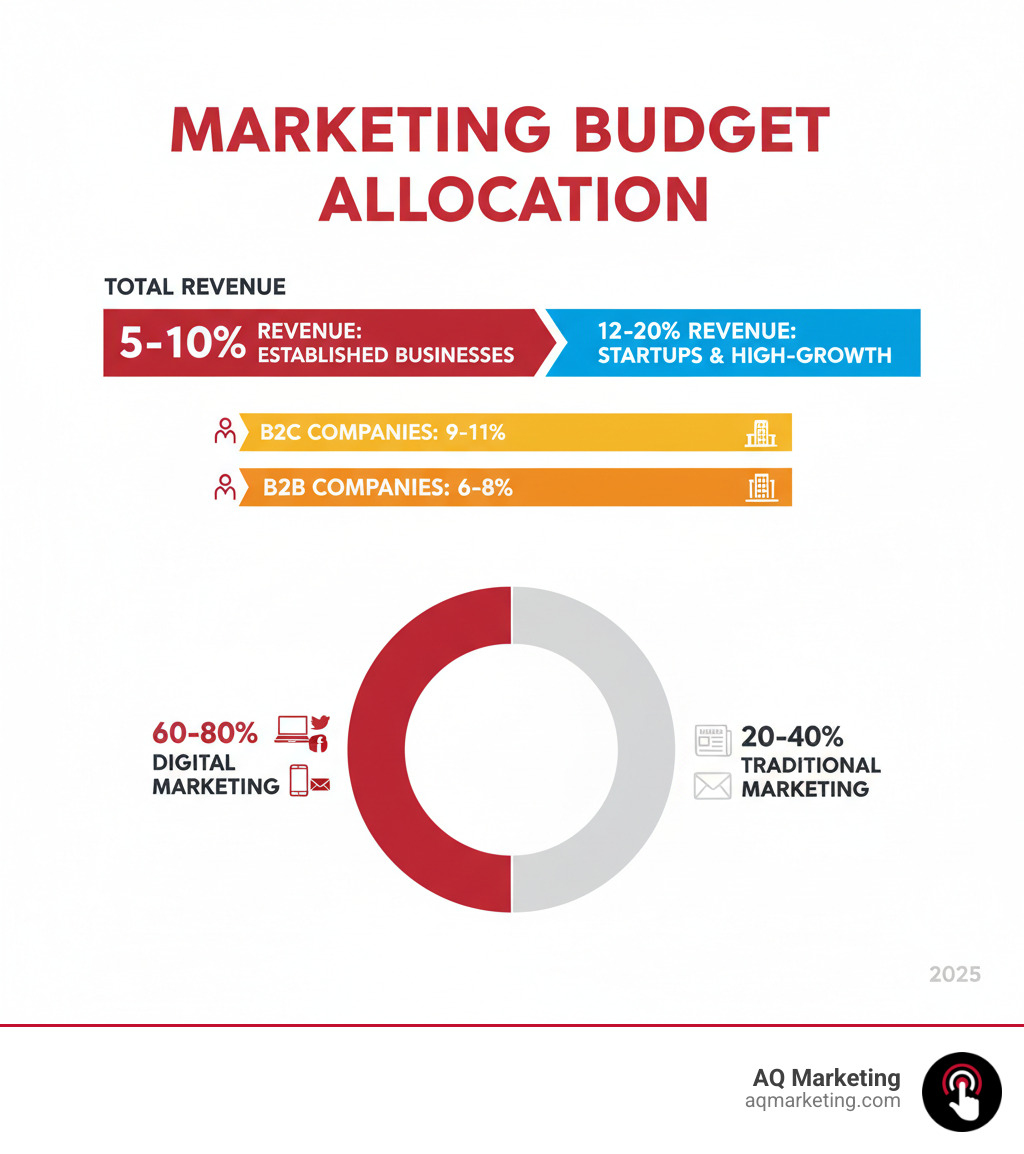
- General Rule: 5-10% of your gross revenue
- Startups/High Growth: 12-20% of projected revenue
- Established Businesses: 5-10% of revenue
- B2C Companies: Typically 9-11% of revenue
- B2B Companies: Typically 6-8% of revenue
While most small businesses spend about 8.7% of their revenue on marketing, this figure varies by industry, growth stage, and goals. A home services company in Woburn has different needs than an insurance agency in Middlesex County.
The key is to view marketing as an investment, not an expense. Every dollar should generate a return in customer acquisition and revenue. Knowing where to invest and how to adjust based on performance is critical.
I’m Robert P. Dickey, President and CEO of AQ Marketing. For over 20 years, I’ve helped small businesses in Greater Boston create effective marketing budgets for small businesses that drive real results. My experience spans from direct mail to digital strategies, giving me insight into what works in competitive New England markets.
How Much Should a Small Business Typically Spend on Marketing?
While there’s no single answer, solid benchmarks can guide your investment. The U.S. Small Business Administration (SBA) recommendations suggest marketing budgets for small businesses should be 5% to 10% of gross revenue. New businesses need to budget more aggressively to build awareness, while established companies can maintain momentum with a smaller percentage. Your industry, growth stage, and local competition—from Woburn to Boston’s Seaport District—all play a role.
B2B vs. B2C Spending Differences
Selling to consumers (B2C) typically requires a larger marketing investment than selling to other businesses (B2B). B2C marketing often involves broader campaigns to drive purchasing decisions, while B2B focuses on targeted outreach and relationship-building.
- B2C companies spend more, with product companies allocating about 13.9% of revenue and service companies around 15%. Think of a Middlesex County restaurant running social media ads or an Essex County retailer using email promotions.
- B2B companies generally spend less. Product companies average 8.3%, while service companies invest about 12%. This could be a Merrimack Valley software company using case studies or a Southern New Hampshire consulting firm building authority with content.
| Company Type | Average Marketing Spend (% of Revenue) |
|---|---|
| B2B Product | 8.3% |
| B2B Service | 12% |
| B2C Product | 13.9% |
| B2C Service | 15% |
Industry Benchmarks with Local Context
Your specific industry also has its own spending patterns. High-growth sectors like technology and service consulting often invest around 21% of revenue, while healthcare averages about 18%. In contrast, retailers typically spend about 4% and restaurants around 1.93%.
For a business in Greater Boston, this context is key. A home services company in Woburn must invest in local SEO to compete for visibility on Google Maps. A tech startup in Boston needs to fund content and paid search to reach a national audience. An insurance agency in Middlesex County might focus on reputation management to build local trust.
These percentages are starting points. Your actual marketing budgets for small businesses must reflect your unique goals, competitive landscape, and local market challenges.
Key Factors That Shape Your Marketing Budget
Your marketing budgets for small businesses shouldn’t be a generic number. It’s a strategic decision based on your business stage, growth goals, industry, and target audience. A home services company in Essex County faces different competition than a tech consultant in the Merrimack Valley, and their budgets should reflect that.
Your target audience also shapes spending. Reaching professionals in Middlesex County via LinkedIn requires a different budget than connecting with homeowners through local SEO. The channels your customers use should drive your investment, which is why it’s crucial to have digital marketing strategies for small businesses that align with audience behavior.
How Business Stage Impacts Marketing Budgets for Small Businesses
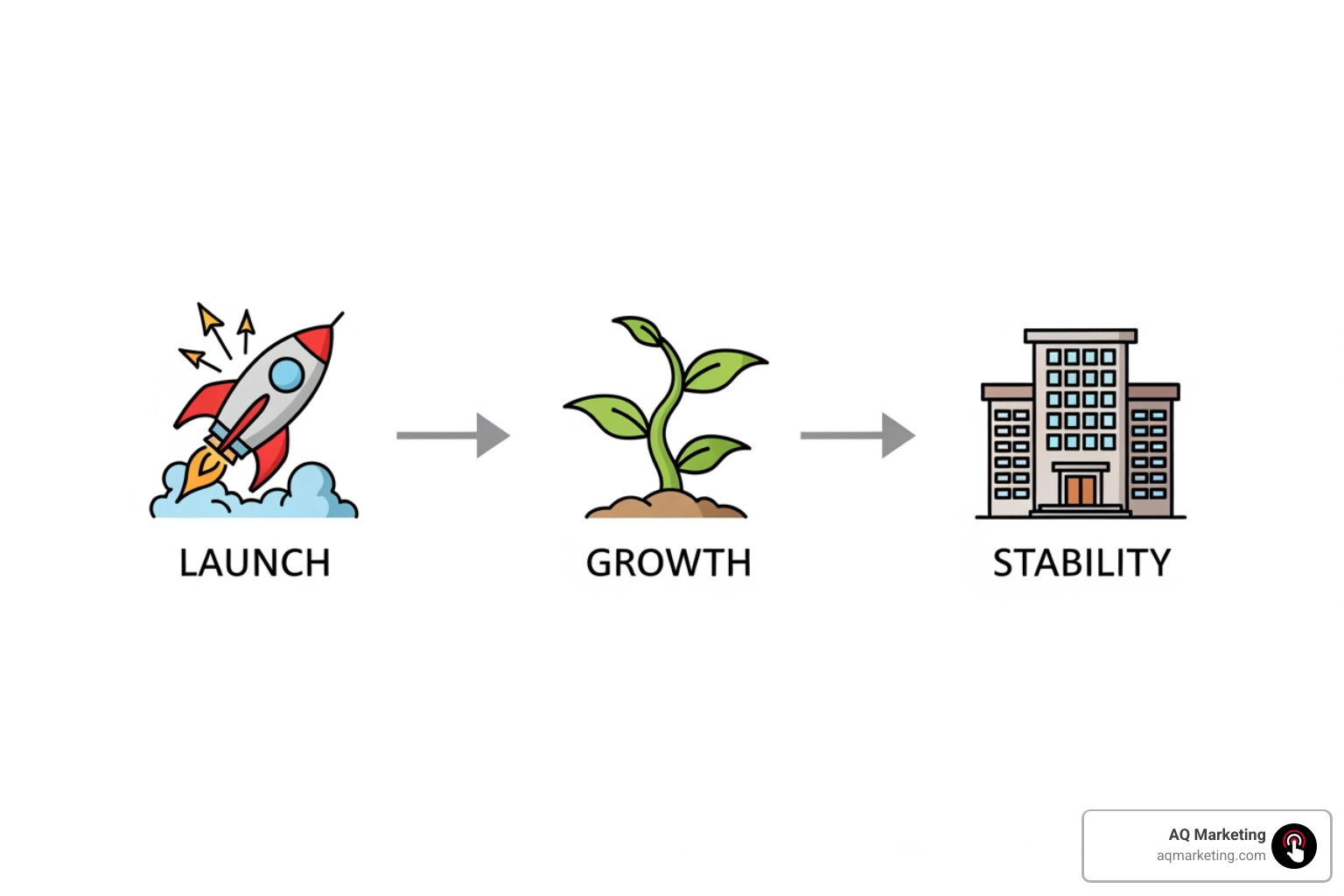
Your business’s maturity level is a primary factor in your marketing spend.
- Startups and high-growth companies must invest aggressively, typically 12-20% of projected revenue. You’re building brand awareness from scratch in competitive markets like Boston or Southern New Hampshire, and customer acquisition costs are at their highest.
- Moderate growth companies with some traction can budget 10-15% of total revenue to refine and scale successful strategies.
- Established businesses with stable growth and brand recognition can often reduce their spend to 5-10% of revenue. The focus shifts from introduction to engagement, like a well-known Woburn restaurant announcing a new menu.
As you build brand awareness and reputation, each new customer becomes cheaper to acquire. Your budget should reflect this journey.
Aligning Your Budget with Business Goals
Your marketing budget must directly support your business objectives. Spending on activities that don’t connect to your goals is a common and costly mistake.
Using SMART goals (Specific, Measurable, Achievable, Relevant, Time-bound) transforms vague wishes into a concrete plan. Instead of “more customers,” aim for “20 new clients in Essex County this quarter.”
- For lead generation, your budget should prioritize PPC ads, SEO, and content marketing. A home services company in the Merrimack Valley might invest heavily in local search ads.
- For brand awareness, allocate funds to social media, display ads, and PR. An insurance agency building its name in Middlesex County would use these tactics.
- For customer retention, focus on email marketing, loyalty programs, and reputation management, which are cost-effective ways to generate long-term value.
Understanding how digital marketing contributes to revenue is key. Digital channels offer precise tracking, allowing you to see which investments are profitable. Your goals—whether increasing foot traffic in Boston or building a client roster in Woburn—should always dictate your budget.
Building Your Small Business Marketing Budget From the Ground Up

Building your budget is a practical, strategic exercise. For businesses in Woburn, Boston, or Southern New Hampshire, we recommend a bottom-up budgeting approach: list the marketing activities needed to reach your goals, estimate their costs, and add them up. This is more strategic than top-down budgeting, where you pick a number and try to make everything fit. It ensures your budget reflects your specific needs, whether you’re a boutique in Essex County or a B2B firm in Middlesex County.
Essential Cost Categories for Your Budget
A comprehensive budget for a small business includes several key areas:
- Digital Marketing: This is the largest category for most, covering Search Engine Optimization (SEO) to get found by local customers in places like Woburn, Pay-Per-Click (PPC) ads for immediate visibility, and social media marketing to target specific demographics in Greater Boston. Our small business SEO strategies are designed for this.
- Content Marketing: This includes blogs and videos that establish your expertise. It generates three times as many leads as traditional marketing at a lower cost.
- Website Costs: Your site is your digital storefront. Budget for website design and development, plus ongoing hosting, security, and maintenance.
- Traditional Marketing: Don’t overlook print, direct mail, or local events like sponsoring a team in the Merrimack Valley, which can build powerful community connections.
- Software & Tools: This includes subscriptions for analytics, CRM, and email marketing platforms.
- Personnel & Execution: The cost of who will do the work—you, an employee, or an agency.
Choosing Your Execution Method: DIY, In-House, or Agency?
How you execute your strategy is a major budget decision with trade-offs in cost, time, and expertise.
- DIY Approach: This seems cheapest, but your time is valuable. Every hour spent learning Facebook ads is an hour not spent running your business. It’s a viable option only in the very early stages.
- In-House Team: Hiring a marketing manager in Massachusetts can cost over $67,000 annually plus benefits. This provides a dedicated resource but is a significant expense, and one person rarely has expertise in all areas of digital marketing.
- Working with an Agency: For a monthly retainer, often between $1,000 to $10,000, you get access to a full team of specialists—SEO experts, writers, designers, and more. The benefits of working with a local digital marketing agency like ours include deep knowledge of the Greater Boston market. We know what works for a home services company in Middlesex County versus an insurance agent in Southern New Hampshire, ensuring your marketing dollars work harder.
How to Track, Optimize, and Maximize Your Spend
A budget is useless without tracking. The power of digital marketing is that you can measure its impact on your business, whether it’s a customer walking into your Woburn shop or a call from a lead in Southern New Hampshire.
The goal is to treat your marketing budgets for small businesses as a flexible guide that evolves with performance. Analyze your data regularly—monthly at a minimum—focusing on metrics that matter:
- Return on Investment (ROI): Is a channel making more money than it costs?
- Customer Acquisition Cost (CAC): How much does it cost to win one new customer?
- Lifetime Value (LTV): How much is a customer worth over their entire relationship with you? A high LTV justifies a higher CAC.
Use tools like Google Analytics to understand website traffic and A/B testing to optimize ads and emails. This data-driven approach is crucial. If Google Ads in Woburn generate leads for $40 and Facebook Ads cost $80, it’s a clear signal to shift funds to the higher-performing channel. This agility is essential in competitive markets like Boston.
Be prepared to increase your budget for channels with strong ROI or decrease spending on those that consistently underperform. As data from The CMO Survey on budget trends shows, proving ROI is paramount. This isn’t about being cheap; it’s about being strategic. Strong reputation management services for small businesses also help by lowering your CAC as more customers arrive with pre-established trust.
Leveraging Low-Cost Marketing for High Impact
Not all effective marketing is expensive. These tactics require more time and creativity than money, delivering remarkable returns.
- Google Business Profile Optimization: This is the best free tool for local businesses. A complete profile helps you appear in local searches in Middlesex County, driving calls and foot traffic.
- SEO Basics: Implementing fundamental small business SEO strategies, like using relevant keywords and ensuring your site is mobile-friendly, costs little but has a lasting impact.
- Email Marketing: Building an email list provides a direct line to your audience with an incredible ROI. Free plans are available for small lists.
- Social Media Engagement: Focus on platforms where your customers are. Engaging with your community in places like Merrimack Valley Facebook groups builds relationships that lead to sales.
- Generating Local Reviews: Simply asking satisfied customers for a review costs nothing and builds immense trust and improves local search rankings.
Frequently Asked Questions about Small Business Marketing Budgets
Here are straightforward answers to the questions we hear most from business owners in Greater Boston and Southern New Hampshire.
What percentage of revenue should a startup spend on marketing?
Startups must invest more aggressively to build brand awareness from scratch. Plan to allocate 12% to 20% of your projected revenue for marketing. This initial investment is crucial for gaining visibility in competitive markets like Boston’s Seaport, acquiring your first customers, and building momentum.
How do I create a marketing budget with no revenue yet?
If you’re pre-revenue, base your budget on your business plan’s financial projections and available capital. Focus your limited funds on low-cost, high-impact strategies: optimize your Google Business Profile, start content marketing, network at local events in places like Woburn or Essex County, and build an email list. These foundational activities build a runway for growth.
Should my marketing budget be fixed or flexible?
Your marketing budget must be flexible. Treat it as a living document, not a rigid rule. While you need a plan, you also need the agility to adapt. Review performance quarterly and be prepared to shift funds from underperforming channels to those delivering a high ROI. In fast-moving markets like Greater Boston, flexibility allows you to capitalize on new opportunities and stay ahead of the competition.
Spend Smart and Grow Your Local Business
Managing marketing budgets for small businesses is about changing an expense into a strategic investment. The key is to create a budget that reflects your unique situation, whether you’re a startup in Boston or an established firm in Southern New Hampshire.
The most important principles are to:
- Be Strategic: View every dollar as an investment with measurable returns.
- Be Goal-Oriented: Base your spending on clear business objectives.
- Be Data-Driven: Track your results consistently to see what’s working.
- Be Flexible: Adapt your budget to capitalize on high-performing channels.
A strategic marketing plan custom to your local market can be the difference between struggling and thriving. For over 20 years, AQ Marketing has helped small businesses in Woburn, Middlesex County, and across New England steer these challenges. We understand the local competitive pressures and the need to make every dollar count.
If you’re ready to create a marketing plan that delivers real, measurable growth, an experienced local partner can make all the difference.
