Why Insurance Broker Marketing Determines Who Wins New Clients
Insurance broker marketing is the set of digital and traditional strategies brokers use to attract prospects, build trust, and convert them into long-term clients. Here’s a quick look at the most effective tactics:
| Strategy | What It Does | Best For |
|---|---|---|
| Local SEO | Gets you found in “near me” searches | Attracting nearby clients |
| Content Marketing | Builds trust and expertise | Long-term lead generation |
| PPC Advertising | Delivers immediate visibility | Quick lead flow |
| Social Media | Humanizes your brand | Engagement and awareness |
| Email Marketing | Nurtures existing relationships | Retention and upsells |
| Online Reviews | Builds credibility | Converting warm prospects |
| Referral Programs | Turns clients into advocates | High-quality lead generation |
The insurance landscape has changed dramatically. Clients no longer call a broker they heard about from a neighbor — they search Google, read reviews, compare options, and make decisions before ever speaking to anyone. In fact, 97% of customers read online reviews before making a purchase, and 46% of all Google searches are looking for local information.
That shift puts brokers who aren’t visible online at a serious disadvantage. Traditional word-of-mouth and print ads still have a place — but they can’t carry the full load anymore. A strong digital presence isn’t optional. It’s how you get from prospect to policy.
I’m Robert P. Dickey, President and CEO of AQ Marketing, and with over 20 years of experience helping small and mid-sized businesses grow through digital marketing, I’ve seen how the right insurance broker marketing strategy can transform a brokerage’s growth trajectory. In the sections ahead, I’ll walk you through the tactics that actually move the needle.
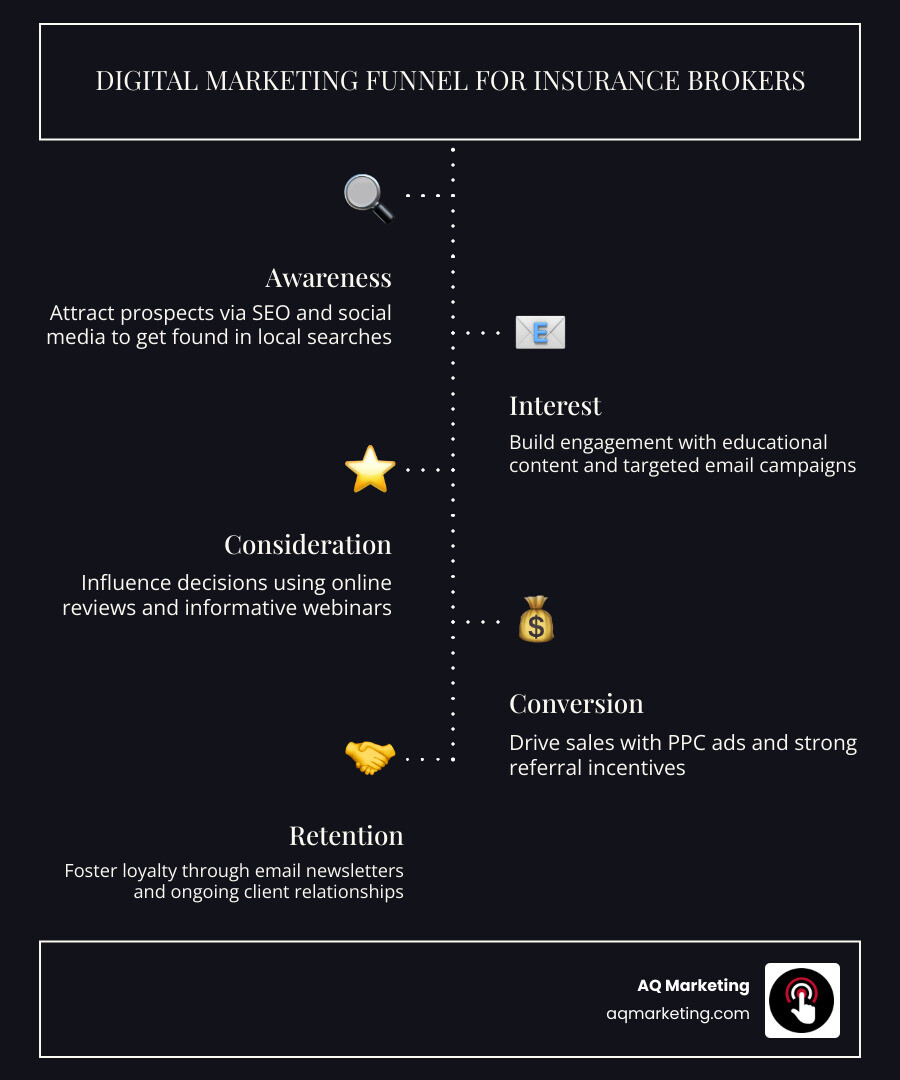
Insurance broker marketing terms explained:
- insurance agency branding
- insurance agency local seo
- insurance agency marketing tips
The Digital Shift: Why Modern Insurance Broker Marketing is Essential
In the past, a broker could survive on a firm handshake and a listing in the Yellow Pages. Today, the game is played on smartphones and search engines. We’ve seen that 71% of brokers have already utilized digital marketing strategies for a year or longer, and for good reason. The competitive landscape in Massachusetts—from Medford and Burlington to Quincy and Worcester—is tighter than ever.
One of the biggest hurdles we face is a trust deficit. Research shows that a report found 43% of U.S. adults do not trust insurance companies. This puts brokers at a natural disadvantage. Digital marketing allows us to bridge that gap by providing transparency, education, and social proof.
Furthermore, the “primary buyer” persona is shifting. Baby Boomers are no longer the only ones buying commercial or life policies. Millennials and Gen Z now make up a massive portion of the market, and they crave self-service options and comprehensive information before they ever pick up the phone. If your brokerage doesn’t appear in their search results, you effectively don’t exist to them. Embracing Digital Marketing Insurance Industry standards is how we ensure our local New England brokerages remain relevant.
Building a High-Converting Digital Storefront
Your website is more than just a digital business card; it’s your 24/7 salesperson. In our 20+ years at AQ Marketing, we’ve found that even the best insurance broker marketing campaign will fail if it sends traffic to a broken, slow, or confusing website.
First, let’s talk about speed. We live in an era of instant gratification. A study found that the average loading speed customers expect is 2.5 seconds or less. Even more striking? Websites that load in just 1 second have a 40% higher chance of converting a visitor into a lead. If your site takes five seconds to load while a prospect is sitting in traffic in Braintree or Cambridge, they’re going to click “back” and find a competitor.
Security is also non-negotiable. Potential buyers need to see that your site uses HTTPS to feel safe sharing their sensitive personal or business data. Beyond that, mobile responsiveness is king. In 2024, mobile devices generated almost 63.5% of global website traffic. If your site doesn’t look great on an iPhone, you’re losing more than half of your potential clients. For more details on how we build these high-performance sites, check out our more info about website design services.
Optimizing Your Website for Insurance Broker Marketing Success
Beyond the technical basics, your website needs to be accessible and interactive. ADA compliance is a major factor we focus on at AQ Marketing. Ensuring your site is usable for everyone isn’t just the right thing to do—it actually helps your search engine rankings.
We also recommend modern tools like AI webchat or live chat. Younger buyers often prefer typing a quick question over making a phone call. Pair this with clear, jargon-free language. Insurance is complex enough; your website should make it feel simple. Instead of “utilizing synergistic risk mitigation strategies,” try “we help you find the right coverage at the best price.”
Dominating Local Search with Insurance Broker Marketing SEO
Search Engine Optimization (SEO) is the long game that pays the highest dividends. Since Google accounting for more than 90% of all searches, appearing on page one is the holy grail of insurance broker marketing.
Local SEO is particularly vital for brokers in Massachusetts. Statistics show that 46% of users searching Google are seeking local information, and “near me” searches have skyrocketed by 136% in recent years. If someone in Amherst or Newton searches for “best commercial insurance broker,” you want your name to be the first thing they see.
To win at local SEO, we focus on:
- Google Business Profile: This is your digital storefront on Google Maps. We help our clients optimize these profiles with high-quality photos, updated hours, and a steady stream of reviews.
- Keyword Research: Don’t just target “insurance.” Target specific, high-intent phrases like “restaurant insurance in Boston” or “workers comp broker in Worcester.”
- Local Citations: Ensuring your name, address, and phone number (NAP) are consistent across the web (Yelp, BBB, local chambers of commerce) builds massive trust with Google’s algorithm.
We’ve seen the power of this firsthand. For example, our work on Project Stanton Insurance Agency Inc shows how a focused local strategy can drive real-world results for independent agencies.
Content Variety: Positioning Yourself as an Industry Expert
If content is king, then variety is the queen that keeps the kingdom running. Gone are the days when a monthly blog post was enough. To stand out, brokers need to embrace different formats.
Video is currently the most powerful tool in the shed. Research shows that 90% of marketers incorporate video into their marketing strategy, and consumers are watching an average of 17 hours of online video per week. Creating short “explainer” videos—like “3 Things to Check in Your Cyber Liability Policy”—can humanize your brand and make complex topics digestible. In fact, 90% of marketers see an increase in leads after investing in video.
Other effective formats include:
- Webinars: Hosting a session on “Navigating 2024 Health Insurance Changes” positions you as a thought leader. Statistics on webinars’ effectiveness show that people will participate if the content is educational and actionable.
- Podcasts: With 162 million Americans listening to podcasts, this is a massive opportunity for brokers to reach a captive audience. 60% of podcast listeners report buying products based on podcast ads.
- Guest Blogging: Writing for local business journals or industry sites can earn you high-quality backlinks, which can help move 300% more leads through your sales funnel.
Multi-Channel Tactics: Social Media, Email, and Paid Advertising
The most successful insurance broker marketing plans don’t rely on just one channel. They use an “omnichannel” approach. Why? Because using multiple channels can lead to a nearly 500% increase in conversions compared to single-channel efforts.
Email marketing remains a powerhouse. It achieves a staggering return on investment (ROI) of $36 per $1 spent. Whether it’s a monthly newsletter with safety tips or a personalized renewal reminder, email keeps you top-of-mind.
For immediate results, we turn to Pay-Per-Click (PPC) advertising. While SEO takes 4 and 12 months to show major results, Google Ads can put you at the top of the search results tomorrow. Statistics show an 80% increase in brand awareness for businesses using Google Ads. To learn more about how we balance these, see our Insurance Marketing Strategies.
Leveraging Social Media in Your Insurance Broker Marketing Plan
Social media is no longer just for pictures of lunch; it’s a major business driver. 71% of survey respondents reported being active on a social media platform, and social media influences the purchasing decisions of 75% of B2B buyers.
We recommend focusing on:
- LinkedIn: The gold standard for commercial brokers. Use it to share thought-leadership articles and connect with local business owners in towns like Peabody or Marlborough.
- Facebook & Instagram: Great for personal lines (auto, home, life). Share “behind-the-scenes” photos of your team or community involvement to humanize your brand.
- Consistency: Use tools like Hootsuite or Buffer to schedule your posts. We tell our clients: “Don’t just post when you’re looking for a sale; post to provide value.”
Nurturing Relationships through Reviews and Referrals
In the insurance world, your reputation is your currency. 97% of customers now read online reviews for local businesses, and 90% read them before making a decision.
Positive reviews provide a dual benefit: they convince prospects to call you, and they provide an SEO boost that gives your website more authority. However, you must be active. 53% of reviewers expect a response to a negative review within a week. Ignoring them can be fatal to your brand.
Referral programs are another high-impact tactic. 90% of consumers are more likely to trust purchasing advice from friends and family. A well-structured referral program can increase your conversion rate by 71%. We often suggest using Reputation management software to automate the process of asking for feedback and referrals after a successful policy binding.
Budgeting for Your Marketing Strategy
One of the most common questions we get at AQ Marketing is, “How much should I spend?” The answer depends on your goals, but it’s important to have a realistic starting point.
| Marketing Type | Timeline to Results | Cost Predictability | Primary Goal |
|---|---|---|---|
| Organic SEO | 4 – 12 Months | High (Fixed Monthly) | Long-term Authority |
| PPC (Google Ads) | Immediate | Variable (Daily Budget) | Quick Lead Generation |
| Social Media | 3 – 6 Months | High (Fixed Monthly) | Brand Awareness |
Disclaimer: Pricing listed below is based on average online data and does not represent AQ Marketing’s actual pricing.
Typical monthly digital marketing budgets for small to mid-sized brokerages in the New England area generally range from $750 to $4,500+. A smaller budget might focus strictly on local SEO and a basic social media presence, while a larger budget would incorporate aggressive PPC campaigns, video production, and advanced lead nurturing workflows.
Frequently Asked Questions about Insurance Broker Marketing
How long does it take to see results from SEO?
SEO is a marathon, not a sprint. Typically, it takes between 4 and 12 months for brokers to see significant movement in their search rankings. However, the leads generated through organic SEO are often higher quality and have a lower cost-per-acquisition over time compared to paid ads.
Which social media platforms are most effective for brokers?
For commercial insurance, LinkedIn is the undisputed leader for B2B networking. For personal lines like home and auto, Facebook and Instagram are highly effective for reaching local families. YouTube is also becoming essential for hosting educational video content that ranks well in Google searches.
Why is mobile responsiveness critical for lead generation?
Since mobile devices generate over 63% of global web traffic, a non-responsive site is a major barrier to entry. If a prospect in Framingham tries to get a quote on their phone and the buttons are too small or the text is cut off, they will leave. A mobile-friendly site ensures you capture leads wherever they are.
Conclusion
The digital transformation of the insurance industry isn’t coming—it’s already here. From the trust-building power of online reviews to the immediate visibility of PPC, the tools available to modern brokers are more powerful than ever.
At AQ Marketing, we’ve spent two decades helping businesses in Massachusetts and beyond navigate these changes. Whether you’re a small agency in Woburn or a larger brokerage serving the entire state, our goal is to help you build a sustainable, long-term growth engine. By combining a high-converting website with smart SEO and multi-channel marketing, you can move more prospects from “just looking” to “policy bound.”
Ready to take your brokerage to the next level? Explore our guide on Digital Marketing for Insurance Companies to start your journey today.