Why the Insurance Industry Social Media Gap Is Costing You Clients
The insurance industry social media gap is real — and it’s growing. Most consumers research coverage options online long before they ever call an agent. In fact, 74% of consumers research insurance online before making a purchase decision, yet only 25% actually buy online. That gap is where trust is built — or lost.
Here’s a quick snapshot of what effective social media does for insurance agencies:
- Builds credibility before a prospect ever contacts you
- Generates qualified leads through educational and targeted content
- Supports existing clients with timely updates and easy communication
- Keeps your agency visible between renewals and policy reviews
- Establishes local proof that search engines and AI tools increasingly prioritize
Nearly 90% of consumers rely on social media to keep up with trends — and your prospects are no different. Whether they’re comparing home insurance options or researching Medicare coverage, they’re checking your social presence before they pick up the phone.
The challenge? Insurance isn’t a naturally “exciting” topic on social media. It takes a smart, consistent strategy to turn followers into leads and leads into clients.
I’m Robert P. Dickey, President and CEO of AQ Marketing, and over my 20+ years in digital marketing I’ve helped small and mid-sized businesses — including insurance agencies — close the gap between online visibility and real revenue. My work spans everything from content strategy to paid social advertising, giving me a front-row seat to what actually moves the needle in insurance industry social media marketing. In the sections ahead, I’ll walk you through exactly how to build a strategy that works.
Insurance industry social media word roundup:
- digital marketing for insurance agents
- email marketing insurance industry
- insurance industry marketing trends
Navigating the Insurance Industry Social Media Landscape in 2026
In 2026, the digital landscape is more crowded than ever, and independent insurance agencies across Massachusetts — from the historic streets of Boston to the scenic suburbs of Amherst and Agawam — are discovering that traditional word-of-mouth marketing is no longer enough on its own. Today, social media serves as a digital storefront. When a local business owner in Woburn, MA, needs commercial property coverage, or a growing family in Acton, MA, searches for a comprehensive umbrella policy, their first instinct is to look up your agency online.
If they find an inactive profile with no posts since last year, they may assume your business is closed or falling behind the times. On the flip side, an active, helpful, and community-focused profile instantly establishes credibility.
Developing an effective social media presence is not about chasing viral fame; it is about building a sustainable pipeline for brand awareness, lead generation, and customer retention. When you share useful, localized information, you build a layer of “social proof” that supports all your other marketing efforts. To understand how social media fits into your broader growth plans, it helps to look at the core Benefits of Social Media Marketing and explore how these channels integrate with comprehensive Digital Marketing for Insurance Agents.
Overcoming Compliance Hurdles in Insurance Industry Social Media
One of the biggest reasons insurance agencies avoid social media is the fear of regulatory compliance. Insurance is a highly regulated field, and a single non-compliant post can lead to serious headaches. However, staying compliant does not mean you have to stay silent.
To protect your agency while maintaining an active online presence, it is vital to establish clear internal guidelines. First, never make absolute product claims or guarantee specific coverage outcomes. Instead of saying, “This policy will cover every type of water damage,” frame your content educationally: “Here is the difference between basic home insurance and a flood insurance rider.”
Second, set up a strict approval workflow. Even if you use external help or automated tools to draft your posts, a licensed agent should always review the final text before it goes live. For a deeper dive into managing these parameters safely, you can review the industry standards outlined in the Social Media Best Practices for Insurance Agents – AgencyBloc guide.
Understanding Customer Demographics and Acceptance
Not every customer wants to interact with their insurance provider in the same way, and demographics play a massive role in how social media communications are received. Academic research has shown that while older generations still prefer traditional communication channels like phone calls and emails, younger cohorts are increasingly open to social media touchpoints.
According to a detailed study on customer preferences, Do Customers Want to Communicate with Insurers on Social Media? An Investigation of the Swiss Market , there is a strong correlation (0.35) between a user’s daily social media usage and their acceptance of insurer presence on those platforms. The study highlights that younger customers are nearing acceptance levels of traditional channels for social media communication, particularly when the interaction is convenience-driven rather than purely sales-focused.
Additionally, the concept of “context collapse” — where personal and professional lives collide on platforms like Facebook — means agencies must tread carefully. To prevent customers from feeling that their personal space is being invaded, your messaging should focus on adding value, offering risk management tips, and engaging with the local community rather than pushing hard sales pitches.
Choosing the Right Platforms for Your Agency
You do not need to be active on every single social media platform to succeed. In fact, trying to manage five or six different accounts often leads to burnout and inconsistent posting. The smartest strategy is platform selection based on your target audience and the specific lines of insurance you want to write.
To help you decide where to focus your resources, we have put together a comparison table of the top social media channels for various insurance lines. For a broader look at platform dynamics, you can also read our guide on how to Amplify Your Reach: Top Social Media Channels for Business Marketing.
| Platform | Primary Demographic | Best Insurance Lines | Content Style |
|---|---|---|---|
| Ages 35–65+ | Home, Auto, Medicare, Life | Community news, local events, Q&As, images | |
| YouTube | All ages (strong 50+ reach) | Medicare, Retirement, Complex Commercial | Educational videos, deep-dive tutorials |
| Ages 18–45 | Renters, First-time Homebuyers, Life | High-quality visuals, short reels, team photos | |
| Ages 25–65 (Professionals) | B2B Commercial, Cyber Liability, Workers’ Comp | Industry insights, business tips, networking | |
| TikTok | Ages 13–35 | Renters, Auto, Financial Literacy | Fast-paced, informal, educational short video |
Facebook and YouTube for Older Demographics
If your agency specializes in personal lines, Medicare, or retirement planning, Facebook and YouTube are your most valuable assets. These two platforms are incredibly popular with the over-50 demographic, making them highly effective for reaching Medicare-eligible prospects.
Facebook is excellent for building a digital community around your local agency. You can share photos of your team participating in local charity events in Woburn, announce holiday office hours, and post seasonal safety tips. YouTube, on the other hand, acts as the world’s second-largest search engine. By creating simple, informative videos that answer common questions — such as explaining the difference between Medicare Part A, B, and D — you can build long-term search authority. To explore how independent agencies leverage these community-building tools, check out Social media for independent insurance agencies .
Instagram, TikTok, and Threads for Younger Audiences
To reach Millennials and Gen Z prospects who are buying their first homes, renting apartments, or starting families, visual-first platforms like Instagram, TikTok, and Threads are essential. These younger demographics do not want to read long, dry policy documents. They respond to snackable, highly engaging visual content.
For example, you could create a 45-second Instagram Reel explaining why renters insurance is vital for college students moving into off-campus housing in Amherst, MA. Authenticity is key here; younger users prefer raw, smartphone-shot video over highly polished, corporate-looking advertisements. They want to see the real people behind the agency. For insights on how the industry is shifting to meet these younger buyers, see how Life Insurers Lean into Millennial and Gen Z Social Media Marketing .
LinkedIn for Commercial Lines and B2B Networking
For agencies looking to grow their commercial lines, write business owner policies (BOPs), or connect with local business owners in Massachusetts, LinkedIn is the undisputed champion. It is a professional environment where users are already in a business mindset.
Instead of posting about personal auto safety, use LinkedIn to share high-level industry insights, risk management strategies, and tips for protecting a business from cyber liabilities. You can also use the platform to bypass traditional gatekeepers by connecting directly with local decision-makers, HR managers, and business owners. To learn more about tailoring your B2B strategy, explore our resources on Social Media Marketing.
Crafting High-Performing Content for Insurance Marketing
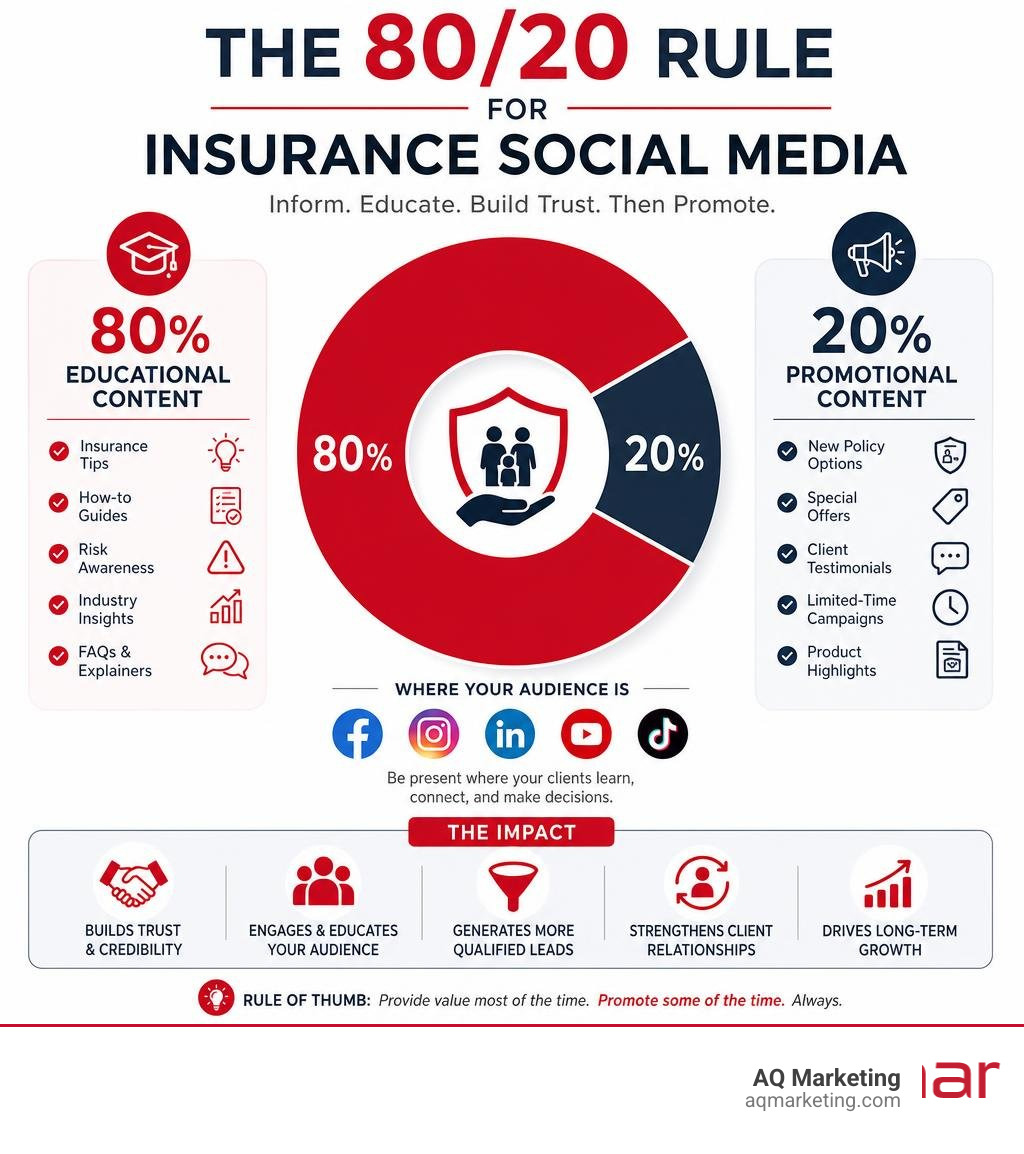
The secret to successful insurance marketing on social media is simple: teach more than you sell. We highly recommend following the 80/20 rule—80% of your content should be educational, entertaining, or community-focused, while only 20% should directly promote your products or ask for a quote.
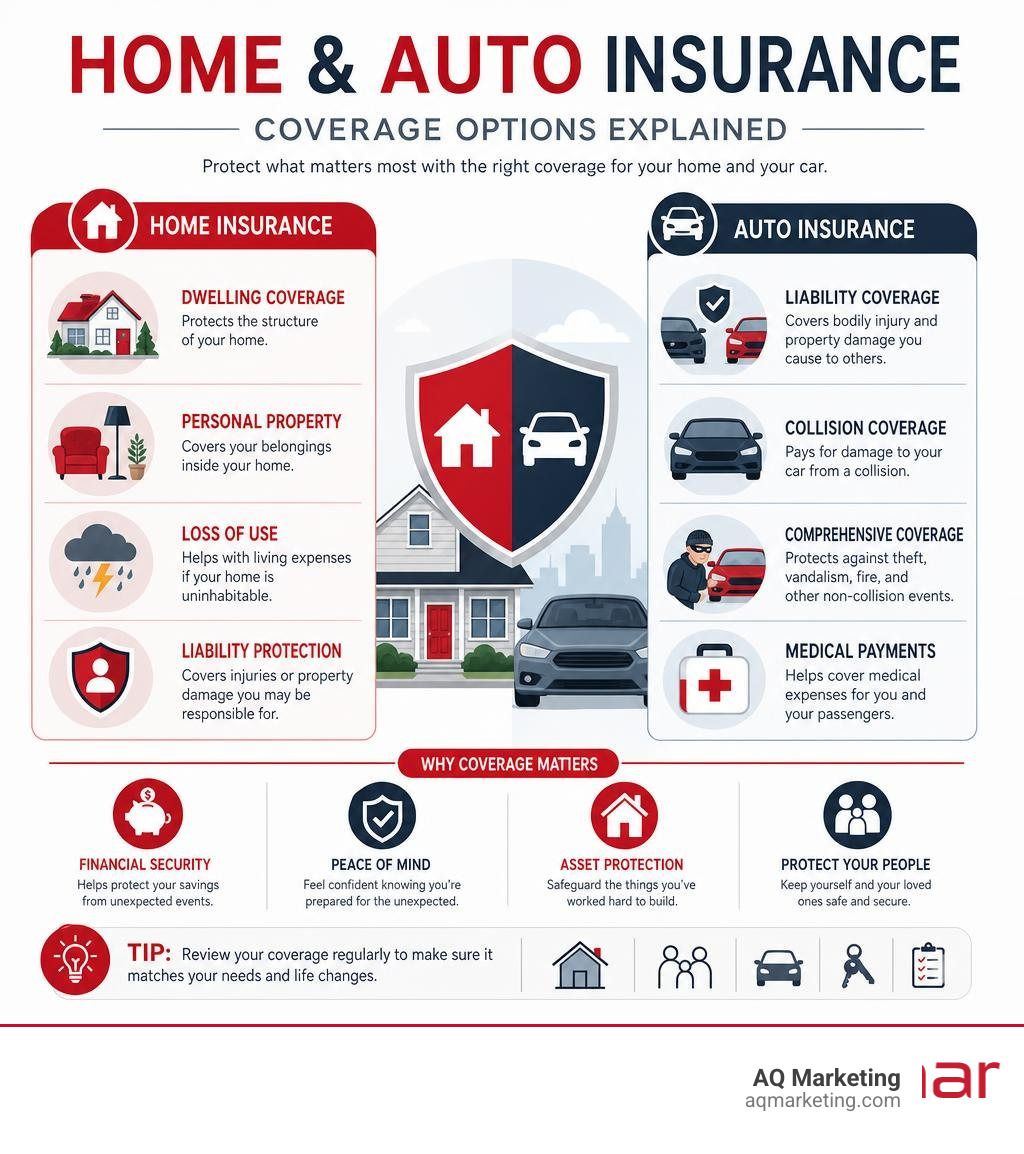
When you consistently provide valuable information, you build trust. When a follower eventually needs a quote, your agency will be the first one they think of. For strategies on developing a winning balance, read about Harnessing the Power of Social Media: A Marketing Gamechanger.
Leveraging AI Tools for Insurance Industry Social Media Management
Managing a consistent social media presence can feel like a full-time job, which is why many agencies are turning to artificial intelligence (AI) to streamline their workflows. In 2026, AI tools are incredibly efficient at helping agents brainstorm post ideas, write initial drafts, and optimize posting schedules.
However, we always advocate for a “human-in-the-loop” approach. While AI can write a draft in seconds, it lacks your agency’s unique voice, local knowledge of Massachusetts communities, and compliance awareness. Use AI to handle the heavy lifting of content creation, but always have a licensed professional edit, brand, and approve every post. To see how automated workflows can fit into your daily operations, explore our guide on Social Media Management for SMBs.
The Power of Video and Visual Storytelling
If you want to boost engagement, video is your best tool. According to industry statistics, 61% of consumers find image and video content to be the most engaging format on social media.
You do not need an expensive camera setup or a background in television production to make great videos. A smartphone and a quiet room in your office are all you need to record quick, 60-second answers to frequently asked questions. For instance, you could film a short video explaining what an “uninsured motorist” coverage option actually means using a simple real-world analogy.
Additionally, sharing client success stories (with their permission) or highlighting your team’s involvement in local New England community events helps humanize your brand and build trust. To learn more about how visual storytelling drives engagement, check out How Insurance Companies Can Leverage Social Media – Ditto .
Measuring Success and Optimizing Your Strategy
You cannot manage what you do not measure. To ensure your social media efforts are actually helping your business grow, you need to track your performance and adjust your strategy over time.
Instead of getting overwhelmed by complicated data, focus on the key performance indicators (KPIs) that align with your business goals, such as website traffic, lead form submissions, and direct inquiries. For a comprehensive look at tracking your marketing efforts, check out our guide on Marketing for Insurance Companies.

Tracking Conversations Over Vanity Metrics
It is easy to get caught up in “vanity metrics” like likes, shares, and follower counts. While having thousands of followers looks nice, those numbers do not pay the bills. A small, highly engaged local audience is far more valuable to an independent agency than a massive, disengaged global following.
In 2026, the most successful agencies focus on tracking real conversations. Keep an eye on:
- How many direct messages (DMs) you receive asking about policy options
- The number of phone calls generated from your social media profiles
- Click-through rates from your social posts to your website’s quote forms
By focusing on these high-value interactions, you can measure the true return on investment of your social media campaigns. For practical templates and tracking frameworks, you can refer to THE AGENCY GUIDE .
Frequently Asked Questions About Insurance Social Media
How often should an insurance agency post on social media?
Consistency is much more important than sheer volume. We recommend posting at least 1 to 2 times per week on platforms like Facebook and LinkedIn, and 3 to 5 times per week on highly visual platforms like Instagram. Creating a simple, monthly content calendar helps you plan your posts in advance so you never have to scramble for ideas at the last minute.
What is the average cost of outsourcing social media management for an insurance agency?
The cost of professional social media management varies widely depending on the size of your agency, the number of platforms you want to manage, and whether you require custom video production. Based on average online data, typical industry pricing ranges from $800 to $3,500 per month for comprehensive management.
Please note: This pricing is based on average online industry data and does not represent AQ Marketing’s actual pricing.
Can insurance agents use AI to write social media posts?
Yes, AI tools are excellent for brainstorming and drafting content. However, because insurance is a heavily regulated industry, you should never publish AI-generated content without a thorough review by a licensed agent to ensure compliance, accuracy, and brand alignment.
Conclusion
Building a strong presence in the insurance industry social media space is no longer optional — it is a vital part of staying competitive and accessible to your clients. By choosing the right platforms, focusing on educational content, and prioritizing real conversations over vanity metrics, your agency can turn social media into a powerful engine for long-term growth.
At AQ Marketing, based in Woburn, MA, we have spent over two decades helping small and medium-sized businesses across Massachusetts navigate the digital world. We specialize in creating custom, compliant, and highly effective marketing strategies that deliver lasting results. Ready to elevate your agency’s online presence? Explore our AQ Marketing Social Media Marketing Services or contact us today to start building a strategy that converts likes into loyal clients.