

Facebook Marketing Agency: 7 Proven Winning Strategies 2025
Why Finding the Right Facebook Marketing Agency Matters
A Facebook Marketing Agency can transform your business growth, but choosing the wrong one wastes money and time. Here’s what you need to know:
Quick Agency Selection Guide:
– Services: Strategy, audience targeting, creative production, campaign management, reporting
– Pricing: $800-$2,000+ monthly management fees, plus 15-25% of ad spend
– Timeline: 30-90 days to see meaningful results
– Red Flags: High setup fees ($7,000+), no case studies, poor communication
– Must-Haves: Meta Partner status, industry experience, transparent reporting
With over 3 billion monthly Facebook users spending an average of 33 minutes daily on the platform, the opportunity is massive. Yet most business owners struggle to steer Facebook’s complex advertising system effectively.
The difference between a great agency and a mediocre one can mean the difference between 3X return on ad spend versus breaking even. Research shows that 70% of B2B marketers consider case studies essential when evaluating potential partners.
But here’s the challenge: thousands of agencies claim Facebook expertise, yet many deliver poor results. Some charge ridiculous $7,000 setup fees while others promise unrealistic outcomes.
I’m Robert P. Dickey, President and CEO of AQ Marketing, with over 20 years of digital marketing experience helping small and medium businesses succeed with Facebook Marketing Agency partnerships and in-house campaign management. My team has seen both the best and worst of what agencies offer, and I’ll share the exact strategies that separate winners from losers.
Related content about Facebook Marketing Agency:
– Facebook ad campaign analysis
– Facebook ad design
– Local Facebook advertising
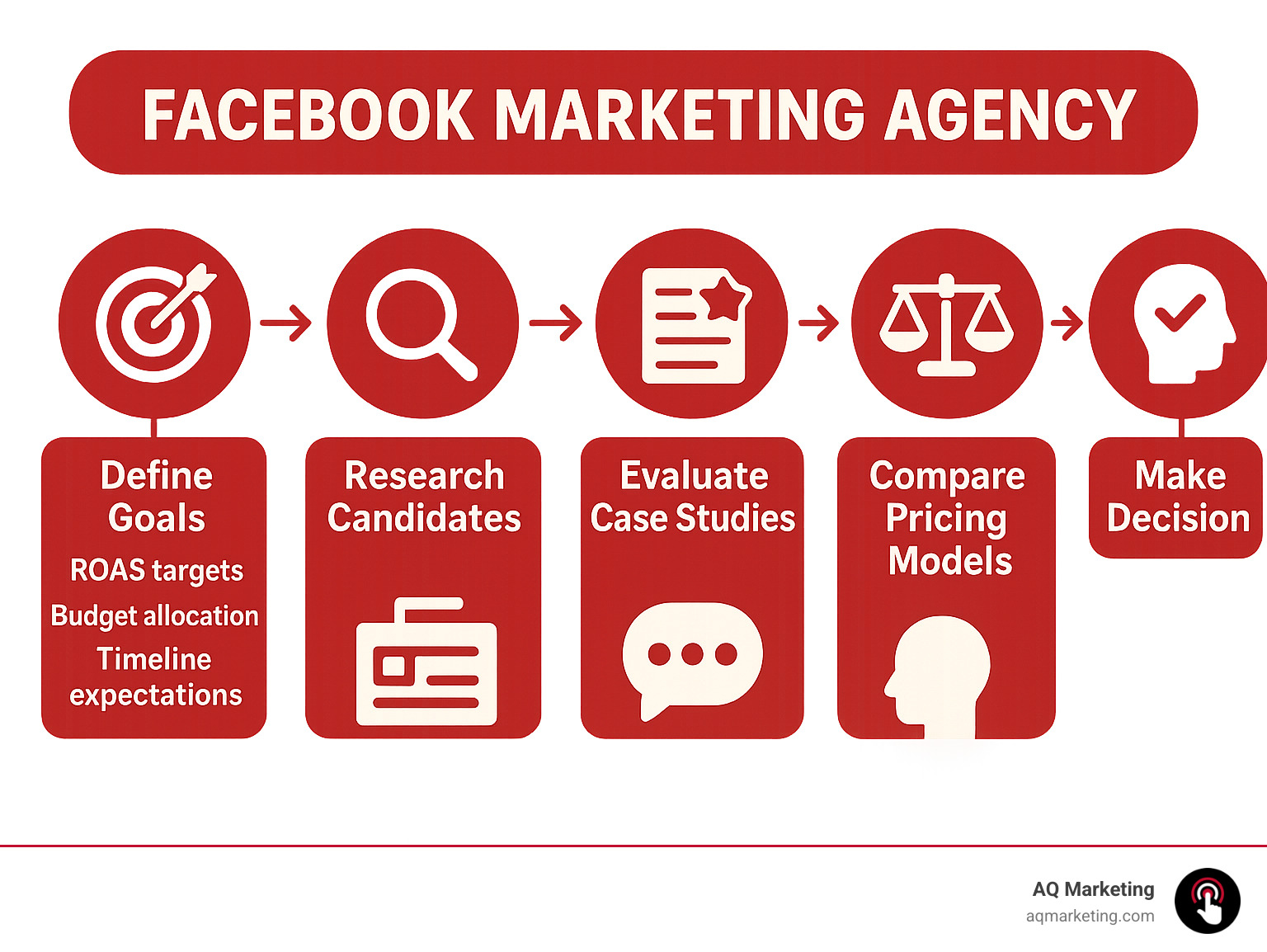
1. Define Crystal-Clear Goals and KPIs
Here’s the truth: most Facebook Marketing Agency partnerships fail before they even begin. Not because of poor execution, but because nobody took the time to define what success actually looks like.
I’ve watched countless business owners jump straight into agency research without answering one crucial question: What do you actually want Facebook ads to do for your business? This might seem obvious, but you’d be surprised how many meetings I’ve sat in where the answer was a vague “get more customers.”
Your primary objective shapes everything. Are you trying to build brand awareness for a new product launch? Generate high-quality leads for your sales team to nurture? Drive immediate sales conversions from your online store? Or maybe you want to re-engage existing customers who haven’t purchased in a while?
Each of these goals requires completely different strategies, audience targeting, and creative approaches. A Facebook Marketing Agency that excels at e-commerce conversions might struggle with complex B2B lead generation campaigns. Getting this clarity upfront saves you from costly mismatches down the road.
Now let’s talk numbers. Every goal needs specific metrics that both you and your agency can track. For lead generation, your primary focus should be Cost Per Lead (CPL) – but don’t ignore lead quality scores and conversion rates. Most industries see CPLs between $15-$50, though this varies wildly based on your market.
If you’re running e-commerce campaigns, Return on Ad Spend (ROAS) becomes your north star. A healthy ROAS typically ranges from 3:1 to 5:1, meaning every dollar spent generates three to five dollars in revenue. You’ll also want to track Cost Per Acquisition (CPA) and customer lifetime value to get the full picture.
Budget size completely changes the game. Agencies approach campaigns differently based on your monthly ad spend. With $1,000-$5,000 per month, expect focus on single funnel optimization and basic audience testing. Scale up to $5,000-$15,000 monthly, and you open up multi-audience testing and serious scaling opportunities. Above $15,000, you’re looking at advanced attribution modeling and cross-platform integration.
Timeline expectations need a reality check. Facebook’s algorithm isn’t magic – it needs time to learn what works for your business. The first two weeks are typically a learning phase with higher costs and inconsistent results. Real optimization starts around day 15-30, with meaningful improvements showing up in the 31-90 day range.
We always recommend setting 90-day initial goals with monthly check-ins. This gives your chosen agency enough runway to demonstrate real results while keeping everyone accountable. Anything shorter sets everyone up for frustration.
The agencies that ask the tough questions about your goals upfront are usually the ones worth working with. If someone promises immediate results without understanding your business model, that’s your first red flag.
2. Shortlist the Right Facebook Marketing Agency Candidates
Building your shortlist of potential agencies feels overwhelming when you’re staring at hundreds of options online. But here’s the thing—most agencies that claim Facebook expertise are actually generalists who dabble in everything. You need specialists who live and breathe Facebook advertising.
Start with Meta Partner status. This isn’t just a shiny badge to impress clients. Meta Partners get early access to new features, direct support from Facebook, and must maintain strict performance standards. If an agency doesn’t have this certification, they’re probably not serious about Facebook advertising.
Industry specialization matters more than you might think. A Facebook Marketing Agency that crushes it for restaurants might struggle with your plumbing business. The targeting strategies, creative approaches, and conversion funnels are completely different. Look for agencies that understand your specific market challenges and customer behavior.
Pay close attention to team structure during your conversations. Will you work with the agency owner or get passed off to a junior coordinator? What happens when your account manager leaves? The best agencies have clear processes and backup support, so you’re never left hanging.
Here’s something most business owners overlook: communication style. Transparent and regular communication can make or break your partnership. During initial calls, notice how quickly they respond to emails and whether they explain things clearly. If they’re hard to reach during the sales process, imagine how frustrating it’ll be when you’re paying them.
Geographic considerations still matter in our digital world. While Facebook ads can be managed from anywhere, local agencies understand your market better. They know your competitors, seasonal trends, and what messaging resonates with local customers.
2.1 Facebook Marketing Agency vs Freelancer vs In-House
This decision keeps many business owners up at night, and for good reason. Each option has real pros and cons that affect your bottom line.
Agencies bring resource depth that single freelancers simply can’t match. When you hire a quality Facebook Marketing Agency, you get a whole team—strategists, designers, copywriters, and analysts. If your designer gets sick or your account manager takes vacation, someone else steps in. With freelancers, you’re often stuck waiting.
Scalability is another huge advantage of agencies. When your campaigns start working and you want to double your ad spend, agencies can handle the growth. They have systems for managing larger budgets and more complex funnels. Most freelancers hit a ceiling around $10,000-$15,000 monthly ad spend.
But freelancers offer cost efficiency that’s hard to ignore. Without agency overhead, they often charge 30-50% less than agencies. You also get direct access to the person actually managing your campaigns, not filtered through account managers.
In-house hiring gives you complete control and someone who truly understands your business. But here’s reality—good Facebook advertising specialists cost $60,000-$80,000 annually, plus benefits and training. Unless you’re spending $20,000+ monthly on ads, the math doesn’t work.
For most small to medium businesses, a specialized agency provides the sweet spot of expertise, resources, and reasonable cost.
2.2 Evaluating Case Studies from a Facebook Marketing Agency
Case studies tell you everything about how an agency thinks and works. Research shows that 70% of B2B marketers find case studies essential when choosing partners, and for good reason—anyone can claim great results, but case studies prove it.
Look for detailed problem definition first. The best case studies don’t just say “client wanted more leads.” They explain the specific challenges—maybe the client’s cost per lead was too high, their sales team was overwhelmed with unqualified prospects, or they couldn’t scale past a certain revenue level.
Strategic thinking separates good agencies from great ones. The case study should walk you through their approach step by step. Why did they choose certain audiences? What made them test video ads versus image ads? How did they structure the campaign to move people from awareness to purchase?
Quantifiable results are non-negotiable. Avoid agencies that use vague language like “dramatically increased leads” or “significantly improved performance.” You want specifics: “Reduced cost per lead from $45 to $18 over three months” or “Generated 352% increase in qualified leads while maintaining lead quality.”
Pay attention to timeframes in case studies. Be skeptical of agencies claiming amazing results in just a few weeks. Facebook’s algorithm needs time to learn and optimize. Realistic case studies show gradual improvement over 60-90 days.
Client testimonials add credibility, but look beyond the praise. What do clients say about communication? How did the agency handle problems when campaigns weren’t working? These details reveal how the agency operates day-to-day.
Most importantly, focus on industry relevance. A case study about growing a SaaS company won’t help you evaluate their ability to generate leads for your HVAC business. The targeting, messaging, and conversion strategies are completely different.
3. Understand Pricing Models Before You Sign
Nothing kills a good agency relationship faster than surprise fees and unclear pricing. I’ve seen too many business owners get burned by agencies that weren’t upfront about costs from the start.
The truth is, pricing transparency separates professional Facebook Marketing Agency providers from those just looking to maximize their profits at your expense. When you understand how agencies typically structure their fees, you can spot fair deals and avoid expensive mistakes.
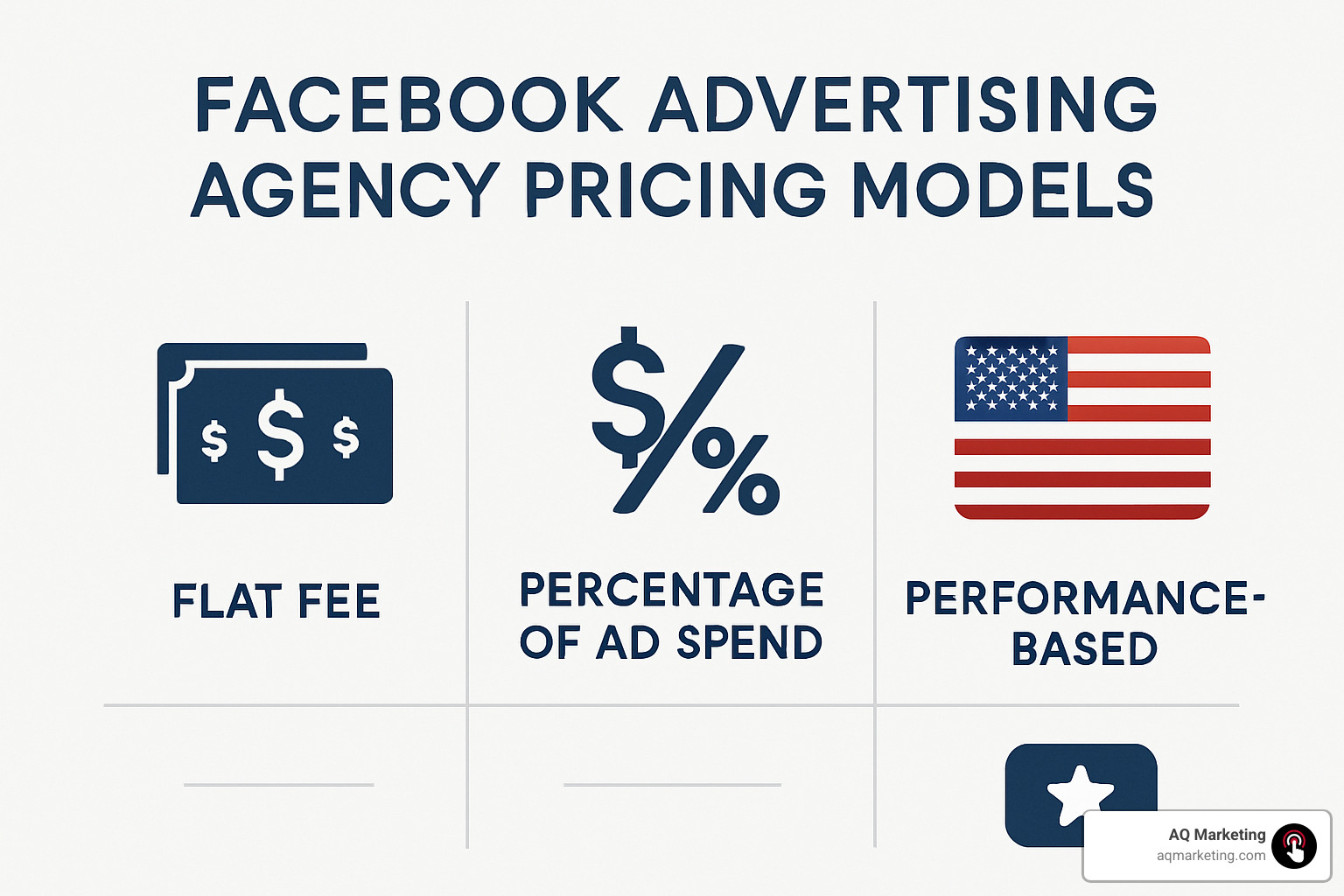
Most agencies use one of three main pricing approaches. The first is a monthly management fee plus a percentage of your ad spend. You’ll typically pay between $800 and $2,000 monthly for management, plus 15-25% of whatever you spend on ads. This works well if you have a consistent monthly budget, but watch out for agencies that keep pushing you to spend more just to increase their cut.
Flat monthly retainers range from $1,500 to $5,000 or more, depending on the scope of work. This usually includes strategy development, campaign management, reporting, and creative production. The big advantage here is predictable costs – you know exactly what you’ll pay each month. Plus, the agency is incentivized to optimize your performance rather than just increase your ad spend.
Some agencies offer performance-based pricing, where their fee is tied to specific results like leads, sales, or return on ad spend. This often includes a smaller base fee plus performance bonuses. It sounds appealing, but be careful – agencies might focus on short-term tactics that hurt your long-term growth.
Here’s where things get tricky – setup fees. We’ve seen agencies charge outrageous $7,000+ setup fees for work that honestly takes 4-10 hours. Standard setup includes configuring your Business Manager, installing the Facebook Pixel, implementing Conversion API, researching your initial audiences, and developing your campaign structure.
A reasonable setup fee should be between $500 and $1,500. Anything higher suggests the agency is either front-loading their profits or doesn’t understand efficient processes. Don’t let anyone convince you that Facebook advertising setup is rocket science.
Watch out for hidden costs that agencies sometimes spring on you later. Some charge extra for creative production that should be included in management fees. Others add fees for landing page optimization, premium reporting access, or contract cancellations. Always ask about minimum ad spend requirements upfront.
Contract length is another crucial consideration. Many agencies want 6-12 month commitments, which isn’t unreasonable given that Facebook campaigns need time to optimize. However, make sure you understand the exit clauses if things aren’t working out.
With 3 million businesses actively advertising on Facebook monthly, there’s plenty of competition among agencies. This works in your favor – you have options and shouldn’t settle for unreasonable terms or unclear pricing.
Facebook advertising is just one piece of your digital marketing puzzle. If you’re looking at your broader marketing strategy, our Social Media Marketing Services can help you understand how Facebook fits with your other marketing channels for maximum impact.
4. Scrutinize Targeting, Creative & Optimization Processes
Here’s where the rubber meets the road. A Facebook Marketing Agency can have all the right credentials and impressive case studies, but if their day-to-day processes are outdated or sloppy, your campaigns will suffer.
Think of it this way: anyone can drive a Ferrari, but only a skilled driver can win races with it. Facebook’s advertising platform is incredibly powerful, but it takes real expertise to extract maximum value from your budget.
The technical foundation matters more than ever. Since Apple’s iOS14 privacy updates shook up the digital advertising world, proper tracking setup has become make-or-break for campaign success. Professional agencies should implement both Facebook Pixel and Conversion API (CAPI) to capture the most accurate data possible.
Don’t just take their word for it. Ask specific questions: How do they validate event tracking? What’s their process for monitoring data quality? How do they handle attribution when users interact with ads across multiple devices? If they can’t give you clear, detailed answers, keep looking.
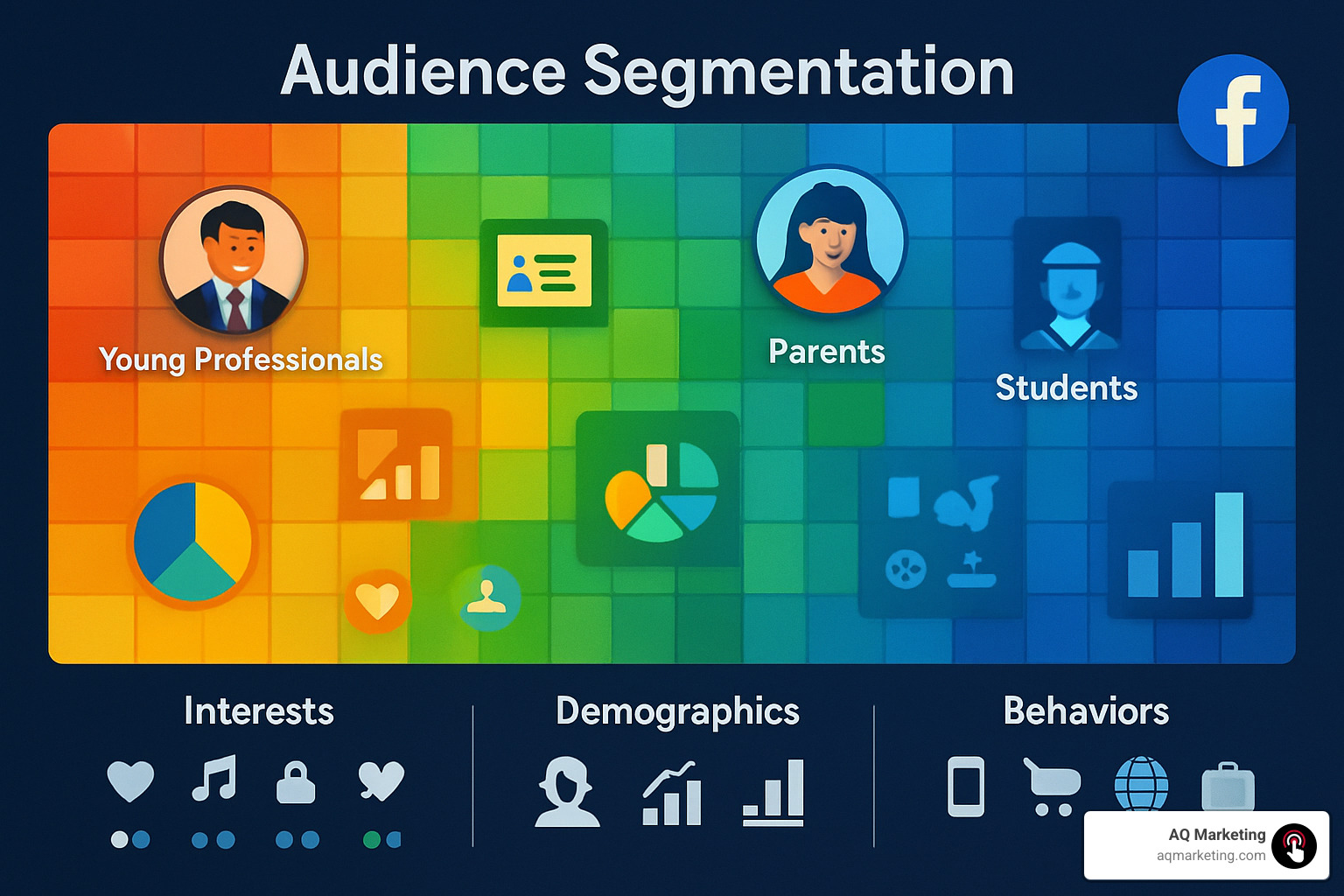
Modern audience targeting has completely changed from the days of hyper-specific interest targeting. The best agencies now accept Facebook’s machine learning capabilities by using broad targeting strategies that let the algorithm find your ideal customers. They’ll also build sophisticated lookalike audiences based on your best customers and create custom audiences from your existing email lists and website visitors.
Creative production and testing separate the pros from the amateurs. Your potential customers see hundreds of ads every day. Breaking through that noise requires both compelling creative and systematic testing approaches. Ask agencies about their creative variety capabilities – can they produce video ads, carousel ads, and collection ads, or are they stuck making basic image posts?
More importantly, what’s their testing methodology? Professional agencies should be running multiple creative variations simultaneously and have a clear process for identifying winners. They should also have a regular refresh schedule because even the best-performing ads eventually suffer from audience fatigue.
Campaign optimization is where experience really shows. Amateur agencies check campaigns once a week and make random adjustments. Professional agencies monitor performance daily and have specific metrics that trigger budget adjustments. They know exactly when to scale successful campaigns and how to handle underperforming ads without destroying valuable data.
The optimization process should feel methodical, not reactive. When you ask about their approach, you should hear systematic processes, not vague promises about “monitoring things closely.”
Reporting quality reveals agency sophistication immediately. If they’re planning to send you basic Facebook Ads Manager screenshots, run away. Professional agencies provide custom dashboards with metrics that actually matter to your business, competitive analysis to show how you’re performing against industry standards, and actionable insights that inform future strategy decisions.
For businesses wanting to understand advanced optimization techniques, our Facebook Ad Campaign Optimization guide covers strategies that separate winning campaigns from mediocre ones.
4.1 Reporting & Communication Cadence
Here’s something we’ve learned after 20 years in digital marketing: communication quality predicts campaign success better than almost any other factor. Technical skills matter, but if you can’t get clear information about what’s happening with your campaigns, even the best strategy becomes worthless.
Weekly updates should be standard, not optional. These aren’t just data dumps – they should include key performance metrics compared to your goals, explanations of optimization actions taken, and upcoming strategy adjustments. If an agency tells you monthly reporting is sufficient, they’re not paying close enough attention to your campaigns.
Monthly strategy reviews go deeper than weekly performance updates. These conversations should cover campaign performance trends, audience insights and learnings, creative testing results, and strategic recommendations for the following month. This is where you’ll see whether your agency is thinking strategically or just pushing buttons.
Real-time dashboard access isn’t negotiable in today’s digital marketing environment. You should have access to custom reporting dashboards and at minimum view-only access to Facebook Ads Manager. Some agencies resist this transparency, claiming it protects their intellectual property. That’s nonsense – you’re paying for the service and deserve to see exactly how your money is being spent.
Response time expectations prevent frustration down the road. Establish clear standards upfront: email responses within 24 hours, urgent issues addressed within 4 hours, and scheduled check-in calls weekly or bi-weekly. Professional agencies will appreciate these clear expectations because they help both sides stay accountable.
The best Facebook Marketing Agency partnerships feel like extensions of your internal team, not distant vendors who disappear between monthly reports.
5. Set Realistic Timelines and Commitments
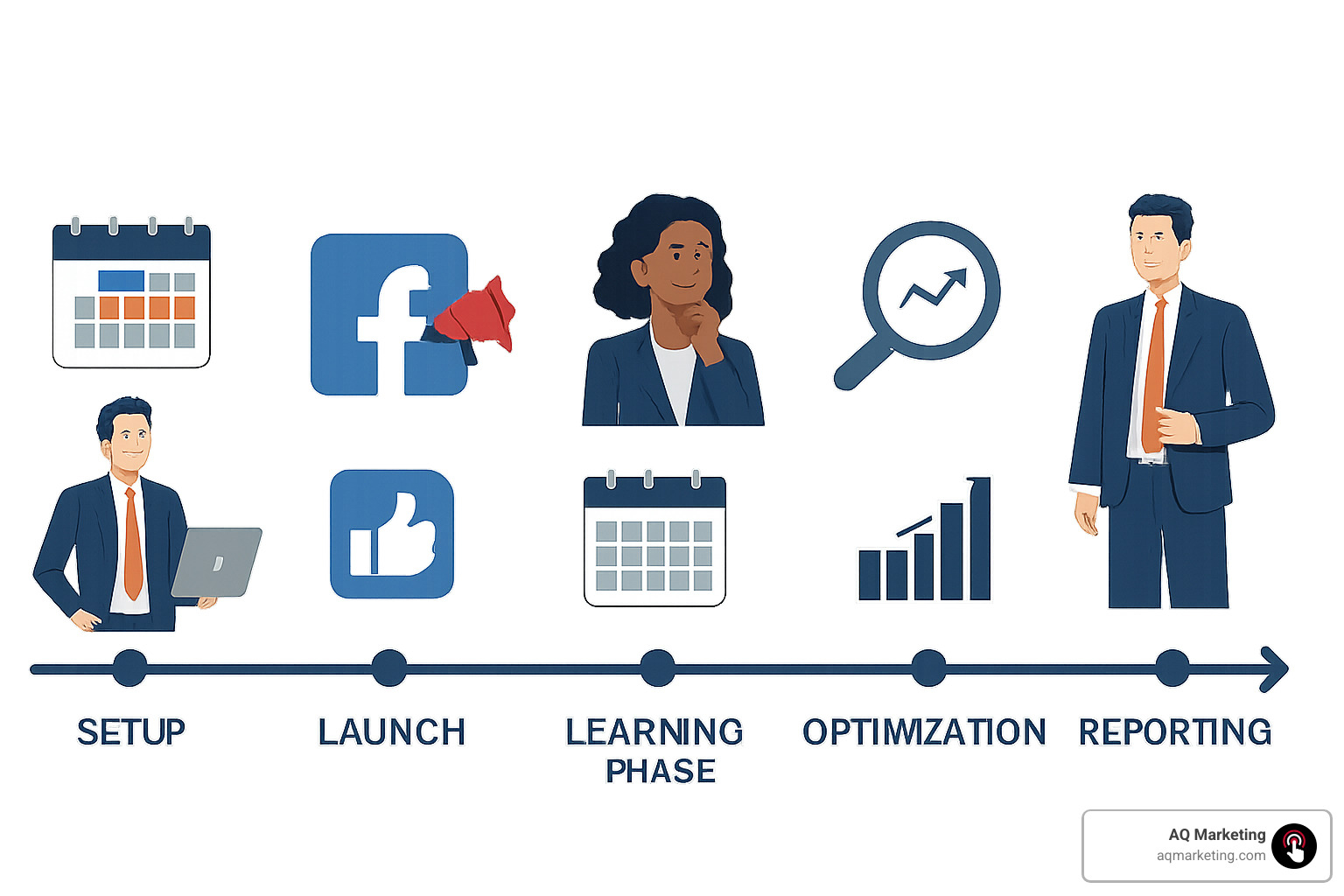
Here’s the truth that many agencies won’t tell you upfront: Facebook advertising takes time to work properly. I’ve seen too many business owners get frustrated and fire their agency after just three weeks because they expected instant magic.
Understanding realistic timelines protects you from making costly mistakes and helps you spot agencies making unrealistic promises. When a Facebook Marketing Agency guarantees incredible results in the first week, run the other direction.
Facebook’s algorithm needs time to learn. Every new campaign goes through what Facebook calls the “learning phase.” Think of it like training a new employee – they need time to understand what works before they become truly effective.
For simple campaigns targeting broad audiences, this learning phase typically lasts 7 to 14 days. More complex targeting or brand new audiences usually need 14 to 21 days. If you’re in a niche industry or have limited historical data, expect 21 to 30 days before the algorithm hits its stride.
During this learning phase, your costs will be higher and performance more unpredictable. This isn’t a sign of poor management – it’s how Facebook’s system works. Professional agencies will warn you about this upfront and set expectations accordingly.
Here’s what realistic progress looks like. In weeks one and two, your agency focuses on campaign setup, initial testing, and navigating the learning phase. Don’t expect stellar performance yet. Weeks three and four bring initial optimization and performance stabilization. You’ll start seeing clearer patterns in what’s working.
Month two is where things get interesting. Your agency can scale successful elements and eliminate poor performers with confidence. By month three, you should see consistent performance, advanced testing, and strategic refinements. Month four and beyond brings ongoing optimization, seasonal adjustments, and expansion testing.
Contract terms matter more than you might think. A three-month minimum commitment is reasonable and gives campaigns time to mature. Anything longer than six months primarily benefits the agency, not you. Smart contracts include specific performance guarantees with clear metrics and timeframes.
Make sure your contract includes reasonable exit clauses. Life happens, budgets change, and sometimes partnerships don’t work out. Excessive cancellation penalties are red flags that suggest an agency isn’t confident in their ability to retain clients through good work.
Scalability conversations should happen before you sign anything. What happens when your campaigns succeed and you want to double or triple your budget? How will the agency handle increased complexity? What additional resources become available at higher spend levels? These aren’t hypothetical questions – they’re real scenarios that successful campaigns face.
For small businesses just starting their Facebook advertising journey, our Social Media for Small Business guide provides essential foundation strategies.
5.1 Integrating Facebook Ads with Other Channels
The best Facebook Marketing Agency partners understand something crucial: Facebook advertising works best when it plays nicely with your other marketing efforts, not when it operates in isolation.
Email marketing and Facebook ads are natural partners. Your agency should create custom audiences from your email subscriber lists, allowing Facebook to find similar prospects who are likely to be interested in your business. When someone fills out a lead form from your Facebook ad, automated email sequences should nurture them toward a purchase.
Smart agencies also use your email subscriber data to build lookalike audiences. If your email list contains your best customers, Facebook can find thousands of people with similar characteristics and behaviors.
SEO insights can boost Facebook targeting. The keywords people use to find your website organically reveal their interests and intent. Professional agencies use this data to inform Facebook audience targeting and create landing pages optimized for both Facebook traffic and search engines.
AI tools are revolutionizing how agencies manage campaigns. Modern agencies leverage artificial intelligence for automated bid management, ensuring your budget gets allocated to the best-performing campaigns in real-time. AI-powered creative generation helps produce ad copy and images faster than ever before.
Performance prediction models powered by machine learning help agencies forecast campaign results and make proactive adjustments. For businesses interested in incorporating AI into their broader social media strategy, our guide on How to Use AI in Social Media Marketing provides practical implementation strategies.
The best campaigns create seamless customer journeys across multiple touchpoints. Facebook ads introduce your brand to new prospects. Retargeting ads nurture interested visitors who didn’t convert immediately. Optimized landing pages and email sequences work together to close sales. Finally, Facebook ads re-engage existing customers and encourage referrals.
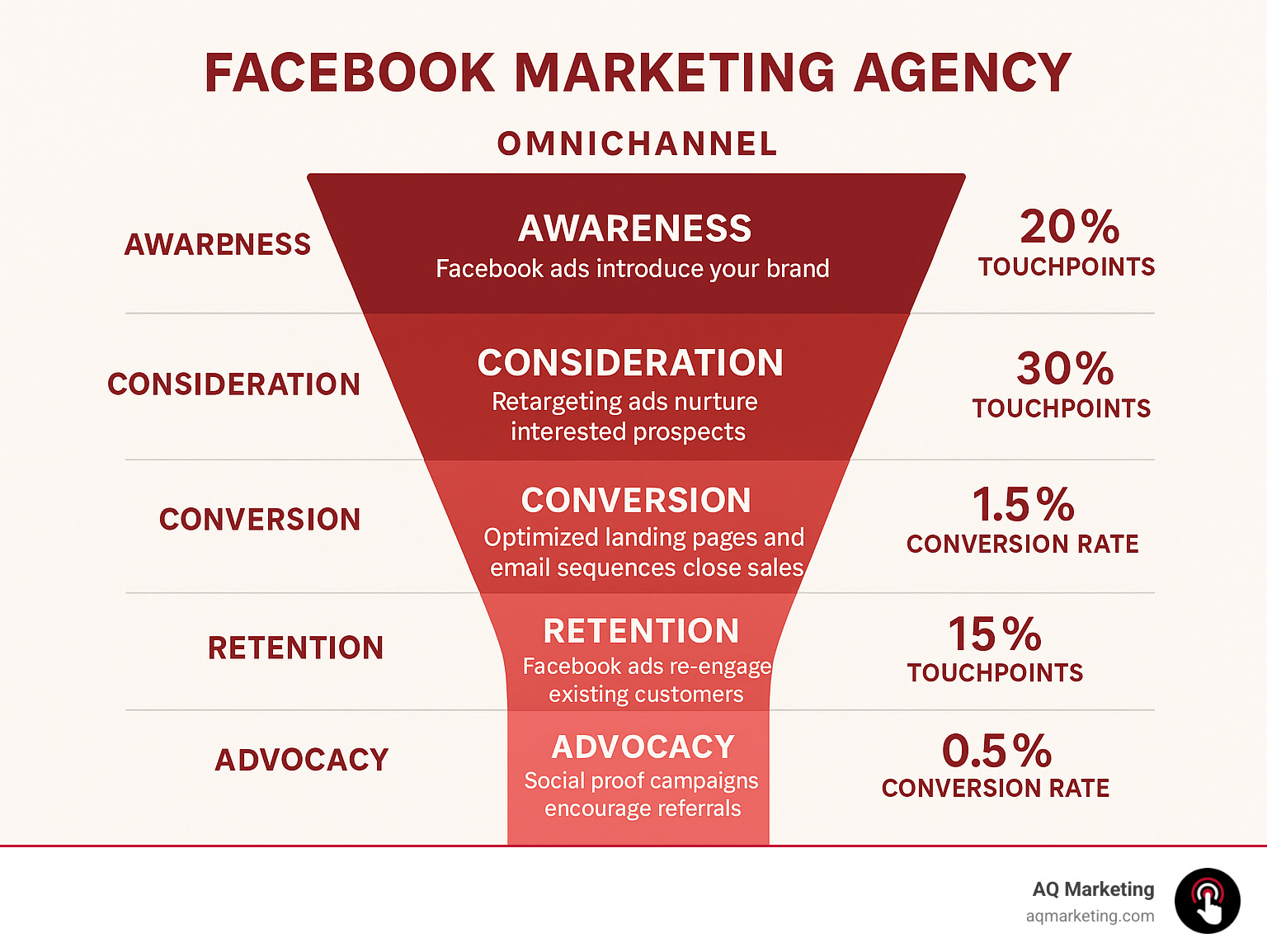
This integrated approach takes more planning and coordination, but it delivers significantly better results than treating Facebook ads as a standalone tactic. When evaluating agencies, ask how they coordinate with your other marketing channels and what systems they use to track cross-channel attribution.
Frequently Asked Questions about Hiring a Facebook Marketing Agency
Choosing the right Facebook Marketing Agency brings up plenty of questions. Let’s tackle the most common concerns we hear from business owners every day.
How long until I see results from Facebook ads?
Here’s the honest truth: most businesses notice initial activity within 2-4 weeks, but real, meaningful improvements take 60-90 days. I know that’s not what you want to hear, but understanding why helps set proper expectations.
During your first two weeks, Facebook’s algorithm is basically learning everything about your business. It’s figuring out who responds to your ads, when they’re most active, and what makes them click. Think of it like training a new employee—they need time to understand how things work. Your costs will often be higher during this learning phase, which is completely normal.
Weeks 3-4 bring more stability. The algorithm has gathered enough data to make smarter decisions about who sees your ads. You’ll start seeing consistent patterns in your metrics, and your Facebook Marketing Agency can identify what’s working well.
Months 2-3 are where the magic happens. This is when agencies can confidently scale successful campaigns and cut the underperformers. Most businesses see their biggest improvements during this period—whether that’s lower cost per lead or higher return on ad spend.
After month 4, you’re in optimization mode. Your agency focuses on incremental improvements and testing new strategies. Performance should consistently meet or exceed your goals.
Be very cautious of agencies promising amazing results in just a few weeks. They either don’t understand how Facebook actually works, or they’re setting you up for disappointment.
What should be included in a standard ad management package?
A professional Facebook Marketing Agency should handle way more than just creating ads and hoping for the best. Here’s what you should expect from a comprehensive package.
Strategy development forms the foundation of everything else. Your agency should analyze your business goals, research your competitors, develop detailed customer personas, and design a campaign structure that makes sense for your specific situation. This isn’t optional—it’s essential for success.
Campaign setup and management includes all the technical heavy lifting. They’ll configure your Facebook Business Manager, implement the Facebook Pixel and Conversion API for accurate tracking, research and set up your target audiences, and create optimized campaigns. This technical foundation determines whether your campaigns can scale successfully.
Creative production separates good agencies from great ones. They should write compelling ad copy, develop eye-catching images and videos, provide landing page recommendations or creation, and continuously test different creative elements. Facebook users see thousands of ads daily—yours need to stand out.
Ongoing optimization happens behind the scenes every day. Professional agencies monitor campaigns daily, adjust budgets and bids based on performance, expand successful audiences while refining underperformers, and analyze what’s working to improve results.
Reporting and communication keeps you informed and involved. Expect weekly performance reports, monthly strategy reviews, dashboard access for real-time monitoring, and regular consultation calls. You should never wonder what’s happening with your campaigns.
Avoid agencies that charge separately for basic services like pixel setup or initial strategy development. These fundamental elements should be included in standard management fees, not treated as expensive add-ons.
What red flags indicate a poor agency fit?
After 20+ years in digital marketing, I’ve seen every trick in the book. Here are the warning signs that should make you walk away immediately.
Pricing red flags are often the easiest to spot. Setup fees exceeding $1,500 for standard configuration work are unreasonable—most setup tasks take 4-10 hours maximum. Vague pricing with hidden costs revealed later shows they’re not being transparent from the start. High-pressure tactics to commit to long-term contracts before seeing any results protect the agency, not you. Management fees based solely on ad spend rather than performance create the wrong incentives.
Communication issues during the sales process predict future problems. Slow response times when they’re trying to win your business will only get worse after you sign. If they can’t explain their strategies in simple terms, they either don’t understand what they’re doing or they’re intentionally being confusing. Generic proposals without business-specific insights show they’re not really listening to your needs.
Technical concerns reveal whether they understand modern Facebook advertising. If they don’t mention Facebook Pixel or Conversion API implementation, they’re behind the times. Promises of immediate dramatic results ignore how Facebook’s algorithm actually works. Focus only on vanity metrics like likes and shares instead of business results shows misplaced priorities.
Process problems indicate organizational issues. Professional agencies have clear onboarding and strategy development processes. They should eagerly provide regular reporting and dashboard access. Be very suspicious of claims about “secret strategies” or “guaranteed results”—Facebook advertising success comes from systematic testing and optimization, not magic tricks.
Trust your gut during initial conversations. If something feels off when they’re trying to impress you, it won’t improve after you’ve signed a contract. The right Facebook Marketing Agency will be transparent, professional, and focused on your business success from day one.
Conclusion
Finding the right Facebook Marketing Agency feels overwhelming when you’re juggling everything else in your business. But here’s the truth: this decision can either accelerate your growth or set you back months while competitors pull ahead.
Think of it like hiring a key employee. You wouldn’t rush that decision, and you shouldn’t rush this one either. The checklist approach works best: clear goals with measurable targets, transparent pricing without sneaky fees, solid technical skills for pixel setup and optimization, regular communication with real reporting, realistic 60-90 day timelines, and understanding of how Facebook fits your bigger marketing picture.
Facebook’s world changes constantly. New privacy rules, algorithm updates, fresh ad formats—it never stops. Your agency needs to roll with these changes, not get buried by them. We’ve watched businesses struggle with agencies who learned Facebook advertising three years ago and never updated their playbook.
Since 2003, we’ve helped Massachusetts businesses from the heart of Boston to Woburn and throughout the Merrimack Valley tackle these exact challenges. What we’ve learned is simple: sustainable growth beats flashy short-term wins every single time. Quick fixes usually create bigger problems down the road.
The best agency partnerships feel more like collaborations than vendor relationships. Your chosen Facebook Marketing Agency should welcome your questions, explain their thinking clearly, and show genuine interest in understanding your business. If they seem impatient during the sales process, imagine how they’ll handle your concerns when things get challenging.
Don’t let analysis paralysis keep you stuck, though. Once you’ve done your homework and found an agency that checks your boxes, trust your gut and move forward. The cost of waiting often exceeds the risk of starting with a solid choice.
Ready to see how Facebook advertising could work for your business? Our Social Media Marketing Services show how we weave Facebook into complete digital strategies that build real, lasting growth—not just temporary traffic spikes.
