Why a Digital Marketing Budget for Small Business Matters
A digital marketing budget for small business is not just a line item in your annual planning—it’s your roadmap to growth, visibility, and sustainable customer acquisition. Without a clear budget, you risk either underinvesting and getting left behind, or overspending without seeing real returns.
Quick Answer: How Much Should Small Businesses Spend on Digital Marketing?
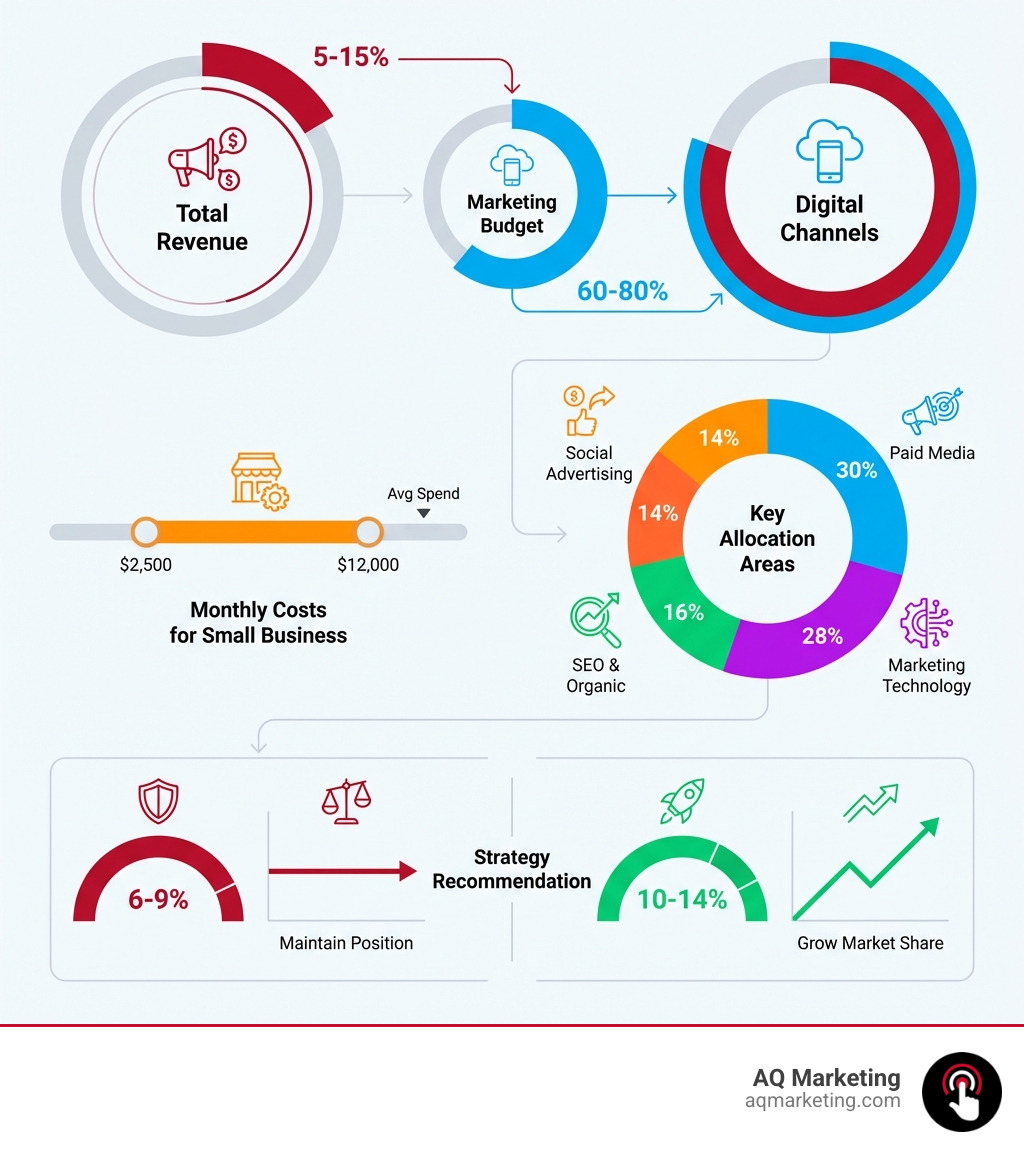
- Maintenance Mode: 6–9% of revenue to maintain your current market position
- Growth Mode: 10–14% of revenue to expand and capture more market share
- Average Monthly Spend: $2,500–$12,000 depending on industry and goals
- Minimum for Results: Around $3,000/month invested wisely can produce sustainable growth
- New Businesses: Often need 10–20% of expected revenue to build initial awareness
The data tells a compelling story. According to recent surveys, 70% of business leaders plan to spend the same or more on marketing in 2026, and marketers reported a 10.4% growth in spending last year—double the previous year’s growth. Yet 45% of businesses doing digital marketing don’t have a defined strategy, and many small business owners still allocate less than they need to compete effectively.
The truth is simple: businesses across your market are investing in digital marketing. If you’re not, potential customers won’t find you online. And in 2025, if you’re not online, you might as well not exist.
Why do so many small businesses struggle with this? The digital landscape keeps getting more complex. New channels emerge. Algorithms change. Costs fluctuate. And for busy business owners focused on operations, it’s hard to know where to start or what “enough” looks like.
I’m Robert P. Dickey, President and CEO of AQ Marketing, and I’ve spent over 20 years helping small and medium-sized businesses steer these exact challenges and create effective digital marketing budgets for small businesses that drive real results. This guide will give you a practical framework for planning, allocating, and optimizing your marketing spend.
Digital marketing budget for small business glossary:
- average marketing agency budget for small businesses
- cost effective marketing strategies
- what is the average marketing budget for a small business
How Much Should a Small Business Spend on Digital Marketing?
Determining the “right” amount to spend on your digital marketing budget for small business can feel like a puzzle. There’s no one-size-fits-all answer, but industry benchmarks and expert recommendations offer valuable starting points. Many small businesses, particularly local ones, aim to spend 5–10% of their total revenue on marketing. However, high-growth firms often push that figure to 14% or more to accelerate their expansion.
General guidelines suggest that if your goal is to maintain your current market position, allocating 6–9% of your revenue to marketing tends to be sufficient. But if you’re looking to grow, capturing more market share and expanding your reach, you should consider investing 10–14% of your revenue.
For small to mid-size businesses (SMBs) in the US, the typical cost of digital marketing ranges from $2,500 to $12,000 per month on average. For those just starting out or aiming for sustainable growth, a minimum of around $3,000 per month, invested wisely, can produce tangible results over time. Nearly 55% of SMBs spend less than $50,000 per year on marketing, highlighting a wide range of approaches.
Important Note on Pricing: All pricing listed in this guide is based on average online industry data and does not represent AQ Marketing’s actual pricing. When listing typical industry pricing ranges, we aim to provide a wide spread, with the high end often at least 3x the average price, to reflect the diverse market.
Factors That Influence Your Budget
Several critical factors shape the ideal size and allocation of your digital marketing budget for small business:
- Business Stage: New or growth-focused companies generally need to allocate more (often 10–20% of gross revenue) to build brand awareness, attract initial customers, and establish a market presence. Established companies with consistent revenue might spend 5–10% to maintain momentum.
- Industry and Competition Level: Highly competitive industries, or those with higher customer acquisition costs (CAC), will typically require larger budgets. For example, law firms and dental practices often spend more per lead due to the nature of their services. If your competitors are investing heavily, you may need to increase your spend to avoid fading into the background.
- Growth Goals: Your specific objectives dictate your budget. Are you aiming for rapid expansion, lead generation, increased sales, or brand awareness? Aggressive growth goals necessitate a more substantial investment.
- Profit Margins: Businesses with higher profit margins may have more flexibility to invest a larger percentage of revenue into marketing, as the return on investment (ROI) can absorb higher costs.
- Geographic Location: For local businesses across Massachusetts, targeting local keywords and audiences can sometimes be more cost-effective than broad national campaigns, but competition within specific local markets (like Boston, Worcester, or Springfield) can still drive up costs.
Determining Your Digital Marketing Budget for a Small Business
A custom approach is key to determining your digital marketing budget for small business. There’s no “true average” because every business is unique.
- Differences in Business Models: B2C companies often need to spend slightly more on marketing than B2B companies, particularly if they don’t have a dedicated sales team. B2B firms, with their longer sales cycles, might invest more in lead nurturing and content that builds trust over time.
- Recommendations from Small Business Organizations: The US Small Business Association and other experts generally advise budgeting a percentage of your revenue. This percentage should be a starting point, adjusted based on your specific situation.
- Sales Cycle Length: Businesses with longer sales cycles (common in B2B or high-value B2C services) often require sustained marketing efforts across multiple touchpoints, which can influence budget allocation towards nurturing campaigns.
- Customer Lifetime Value (LTV): Understanding the long-term value a customer brings to your business helps justify higher initial marketing investments. If a customer is likely to make repeat purchases or refer others, a higher customer acquisition cost might be acceptable.
For a deeper dive into how we tailor strategies to your business model and goals, explore our digital marketing services.
Core Components: Where to Allocate Your Budget
Once you have a general idea of your overall digital marketing budget for small business, the next step is to understand where those dollars typically go. A balanced allocation across various channels is crucial for maximizing impact.

Industry survey data provides valuable insights into how marketing budgets are being allocated. In 2024, paid media accounted for nearly 30% of spend, a notable increase from 23% in 2019. Marketing technology (martech) investment also climbed significantly to 27.9%. Conversely, agencies and in-house labor saw a slight dip, indicating a shift towards technology-driven solutions and potentially more strategic agency partnerships. Within digital channels, search advertising typically accounts for ~17%, SEO & Organic for ~16%, and Social Advertising for ~14%.
Foundational Assets: Website and SEO
Your website isn’t just an online brochure; it’s your 24/7 salesperson, lead generator, and customer service representative. Investing in a robust, user-friendly, and optimized website is a non-negotiable part of your digital marketing budget for small business.
- Website as a 24/7 Salesperson: A well-designed website educates buyers, earns trust, and guides visitors toward conversion with clear pricing, educational content, and custom conversion paths. It requires ongoing maintenance and optimization to perform effectively. Initial website design and development costs can range from $1,500 to $10,000 for design, with major website projects or redesigns potentially costing $25,000–$80,000. Monthly maintenance can run $200–$1,000.
- Search Engine Optimization (SEO) as a Long-Term Investment: SEO is crucial for organic visibility, helping customers find you when they search for your products or services. It’s a long-term strategy that lowers cost per lead over time. Budgeting for SEO typically ranges from $1,000–$2,500 per month, covering activities like keyword research, technical optimization, and link building. We can help you with this through our SEO services.
- Content Creation: High-quality content (blog posts, videos, case studies) fuels both your website and SEO efforts. It helps educate your audience, build authority, and attract organic traffic. Allocating funds for content creation, whether in-house or outsourced, is essential. Content marketing costs can range from $500–$4,000 per month.
Growth Accelerators: Paid Advertising and Social Media
To drive immediate traffic and accelerate growth, paid advertising and strategic social media efforts are vital components of your digital marketing budget for small business.
- Pay-Per-Click (PPC) Advertising: PPC, including Google Ads, allows you to target specific keywords and demographics, placing your business directly in front of potential customers actively searching for what you offer. A minimum of $1,000 per month for Google Ads is often suggested for measurable impact, with monthly costs typically ranging from $500–$3,000 (plus ad spend).
- Social Media Ads: Platforms like Facebook, Instagram, and LinkedIn offer powerful targeting capabilities for reaching your ideal audience. Social media advertising is a top investment for many businesses, with costs ranging from $100–$5,000 per month. Explore our digital advertising services to see how we can help you maximize your ad spend.
- Organic Social Media Management: While ads offer quick wins, consistent organic social media presence builds community and brand loyalty. This involves planning, creating, and publishing content, which requires resource allocation for personnel or tools. Monthly costs can range from $300–$3,000.
- Brand-Building Campaigns: Some budget should be dedicated to campaigns that increase brand awareness and recognition, even if they don’t lead to immediate sales. This can include influencer partnerships (like Gymshark’s early strategy) or community engagement.
Nurturing and Automation: Email, CRM, and AI
Once you’ve attracted leads, nurturing them into customers and retaining them is crucial. This is where email marketing, CRM, and AI tools shine.
- Email Marketing ROI: Email marketing consistently ranks as one of the highest ROI channels. It’s essential for lead nurturing, customer retention, and driving repeat business. Budget for tools like Mailchimp or HubSpot, plus the creation and automation of engaging campaigns. Monthly costs range from $50–$1,500.
- Lead Nurturing and CRM Software: Customer Relationship Management (CRM) tools (like HubSpot) are vital for managing customer interactions and sales pipelines. They help track leads, automate communications, and ensure no opportunity is missed.
- AI-Powered Tools: AI is changing marketing by optimizing creative production, customer research, and personalization. AI tools can streamline processes, improve efficiency, and save time, making them a wise investment within your digital marketing budget for small business. For example, AI-powered webchat solutions can handle initial customer inquiries 24/7, improving customer experience and freeing up staff. Learn more about our AI webchat solutions.
- Automation Workflows: Implementing automation for tasks like email sequences, social media posting, and reporting frees up valuable time and ensures consistent engagement.
How to Create Your Digital Marketing Budget for a Small Business
Creating a digital marketing budget for small business is more than just crunching numbers; it’s a strategic exercise that drives growth. A well-defined budget provides strategic alignment, ensuring every dollar works towards your business goals. It offers financial control, preventing overspending and allowing for accurate ROI forecasting. It enables performance tracking, letting you compare spend against results. Finally, it’s essential for growth planning, allowing you to scale successful tactics.
1. Define Your Business Goals
Before allocating a single dollar, you need to know what you want to achieve. Your marketing objectives should be SMART: Specific, Measurable, Achievable, Relevant, and Time-bound.
- SMART Goals: Instead of “get more customers,” aim for “increase qualified leads by 15% within the next six months.” This clarity guides your budget allocation.
- Aligning Marketing Objectives with Revenue Targets: Your marketing efforts should directly support your overall business revenue goals. If you aim to increase sales by 20%, your marketing budget and strategy must reflect the investment needed to achieve that.
- Lead Generation Goals: How many leads do you need to generate to hit your sales targets? Understanding your conversion rates at each stage of the funnel is critical.
- Brand Awareness Objectives: If you’re a new business in Massachusetts, building brand awareness might be a primary goal, requiring investment in channels like social media and content marketing.
2. Analyze Your Market and Past Performance
Understanding your competitive landscape and learning from your past efforts are crucial for smart budgeting.
- Competitor Research: Analyze what other businesses in your industry are doing. What channels are they active on? What kind of content are they producing? This doesn’t mean copying them, but rather identifying opportunities and understanding the level of investment required to compete.
- Industry Benchmarks: Use industry-specific data (like the percentages discussed earlier) as a guide, but always tailor it to your unique situation.
- Evaluating Past Campaign Data: Review your previous marketing campaigns. Which ones generated the highest ROI? Which underperformed? Leverage data from tools like Google Analytics to understand what worked and what didn’t.
- Identifying High-ROI Channels: Focus your budget on channels that have historically delivered the best results for your business.
- Eliminating Unnecessary Costs: If a channel or tactic consistently underperforms, be ruthless in cutting it from your budget to free up funds for more effective strategies.
3. Allocate Funds and Forecast Outcomes
This is where you translate your goals and research into a concrete plan.
- Choosing a Channel Mix: Based on your goals and audience, select a mix of digital marketing channels. A small business might dedicate 40% to paid ads, 20-25% to SEO/content, and the rest to email, CRO, and tools.
- Estimating Costs Per Channel: Research the typical costs for each chosen channel, including ad spend, content creation, software subscriptions, and potential agency fees.
- Paid Media (Google/Meta Ads): $500–$3,000/month (plus ad spend).
- SEO & Organic: $1,000–$2,500/month.
- Content Marketing: $500–$4,000/month.
- Email Marketing: $50–$1,500/month.
- Social Media Management: $300–$3,000/month.
- Website Maintenance/CRO: $200–$1,000/month.
- Forecasting Return on Investment (ROI): Estimate the expected returns for each channel. If you invest $1,000 in Google Ads, how many leads do you expect, and what’s the potential revenue from those leads? This helps prioritize.
- Building in a Contingency Fund (10%): The digital landscape is dynamic. Allocate about 10% of your budget for unexpected opportunities (e.g., a new platform, a trending topic) or unforeseen challenges. This ensures flexibility without derailing your core strategy.
Here’s a simplified example of how budget allocation might look for different small business types:
| Channel/Category | Service-Based Business (e.g., HVAC in Woburn, MA) | Product-Based Business (e.g., Online Boutique in Boston, MA) |
|---|---|---|
| Website & CRO | 15% | 20% |
| SEO & Content Marketing | 30% | 25% |
| Paid Ads (Google/Social) | 35% | 40% |
| Email & Automation | 10% | 10% |
| Social Media Organic | 5% | 5% |
| Contingency/Tools | 5% | 0% |
Measuring Success and Optimizing Your Spend
A digital marketing budget for small business isn’t static. It’s a living document that needs constant attention, measurement, and optimization. Data-driven decisions are the cornerstone of effective marketing.
The Role of Analytics in Budgeting
Analytics are your eyes and ears in the digital world. They tell you what’s working, what’s not, and where to adjust your spend.
- Tracking Traffic Sources: Understand where your website visitors are coming from (e.g., Google search, social media, email campaigns). This helps you see which channels are driving awareness.
- Conversion Tracking: Beyond traffic, track what actions visitors take on your site—form submissions, phone calls, purchases. This directly links your marketing efforts to tangible business outcomes.
- Unifying Data: Use tools like Google Analytics 4 and data dashboards (e.g., Looker Studio) to consolidate data from all your marketing channels. This provides a holistic view of performance. We can help you with comprehensive analytics setup to ensure you’re tracking what truly matters.
- Using Data to Justify Spend: When you can show that a $1,000 investment in a specific channel led to $5,000 in revenue, it’s easy to justify continued or increased spending to stakeholders.
Key Performance Indicators (KPIs) like Customer Acquisition Cost (CAC), Return on Ad Spend (ROAS), Cost Per Lead (CPL), and Customer Lifetime Value (CLTV) are crucial. For example, if your CAC is too high for a particular channel, it might be time to re-evaluate or pivot. We also emphasize the importance of reputation management as a key metric, as positive reviews and a strong online presence directly impact customer trust and conversion.
When and Why to Pivot Your Budget
Flexibility is a superpower for small businesses. Your digital marketing budget for small business should be agile, ready to adapt to new data or market conditions.
- Regular Budget Reviews (Monthly/Quarterly): We recommend reviewing your budget monthly to track spending and performance against goals. Conduct a more thorough strategic review quarterly or annually to make larger adjustments based on results and changing market conditions. This allows you to catch overspends, identify underperforming campaigns, and seize new opportunities.
- Reallocating Funds: If a channel consistently underperforms or fails to meet its forecasted ROI, reallocate those funds to channels that are delivering strong results.
- Responding to Market Shifts: The digital landscape is constantly evolving. A new social media trend, an algorithm update, or a change in consumer behavior might necessitate a shift in your budget.
- Scaling Successful Campaigns: When a campaign delivers exceptional ROI, be ready to increase its budget to amplify its impact.
Common Budgeting Mistakes to Avoid
Even with the best intentions, small businesses often stumble when creating and managing their digital marketing budget for small business. Being aware of these pitfalls can help you steer clear.
Common Mistakes with a Digital Marketing Budget for a Small Business
- Overspending Without Strategy: Throwing money at various channels without clear goals or a cohesive strategy is like shooting in the dark. It rarely yields results and quickly depletes your budget.
- Failing to Track Metrics: The “set it and forget it” mentality is a budget killer. Without consistent tracking of KPIs, you won’t know if your investments are paying off, leading to wasted spend.
- Ignoring Website User Experience: Driving traffic to a slow, confusing, or mobile-unfriendly website is a recipe for disaster. It’s like inviting guests to a party at a house with no roof. Your website is foundational, and poor UX will negate any marketing spend.
- Chasing Vanity Metrics: Focusing on metrics like “likes” or “followers” instead of tangible business outcomes (leads, sales) can lead to misallocated funds. While engagement is good, it must ultimately contribute to your bottom line.
- Underestimating Costs: Many small businesses often underestimate the costs associated with running successful digital marketing campaigns. This can lead to campaigns being cut short or not having the necessary resources to achieve their full potential.
- Not Aligning with Sales: Marketing and sales should be a united front. If your marketing efforts aren’t generating the right kind of leads for your sales team, your budget isn’t working efficiently.
- Lack of Flexibility: A rigid budget that can’t adapt to changing market conditions or campaign performance is destined to fail.
- Investing in Too Many Channels at Once: Spreading a limited budget too thin across too many channels can dilute your impact. It’s often better to focus on a few high-impact channels and do them well.
Frequently Asked Questions about Small Business Marketing Budgets
What is a good starting marketing budget for a new small business?
New businesses generally need to be more aggressive with their marketing spend to build initial awareness and attract customers. We recommend allocating a higher percentage of expected revenue, often 10–20%, especially in the first 1-3 years. Focus on foundational elements like a professional website, local SEO (crucial for businesses across Massachusetts), and targeted paid advertising to gain immediate visibility. It’s about building a strong digital footprint from day one.
How often should I review my marketing budget?
We strongly advise reviewing your marketing budget at least monthly to track spending and performance against your goals. This allows for quick adjustments to underperforming campaigns. For a more strategic overview, conduct a thorough review quarterly or annually. These larger assessments help you pivot your overall strategy, reallocate funds based on long-term results, and adapt to evolving market conditions.
Should I hire a marketing agency or build an in-house team?
This common question depends heavily on your budget, internal expertise, and long-term goals. Hiring a marketing agency, like AQ Marketing, can provide specialized skills across various digital marketing disciplines (SEO, PPC, social media, web design, etc.) without the overhead of full-time salaries. This can be cost-effective, especially for small businesses needing diverse expertise. An in-house team offers deep brand knowledge and immediate access, but requires significant investment in salaries, training, and tools. Many businesses find success with a hybrid approach, using an agency for specialized services and maintaining a lean in-house team for day-to-day coordination.
Conclusion: Turn Your Budget into a Growth Engine
Your digital marketing budget for small business is much more than just an expense; it’s a strategic investment in your future. By thoughtfully planning, allocating, and continuously optimizing your spend, you transform marketing from a cost center into a powerful growth engine for your business.
Remember these key principles:
- Strategic Roadmap: Your budget is a plan that aligns your marketing efforts directly with your business goals.
- Focus on ROI: Every dollar spent should be accountable, aiming to generate a measurable return.
- Agile Approach: The digital world moves fast. Your budget needs to be flexible, allowing you to pivot and adapt based on performance data and market shifts.
At AQ Marketing, we’ve been helping small and medium-sized businesses across Massachusetts, from Boston to Worcester and everywhere in between, improve their online presence and achieve long-term, impactful results since 2003. We understand the unique challenges and opportunities faced by local businesses.
Ready to stop guessing and start growing? Let’s work together to create a digital marketing budget for small business that propels you forward. Learn more about digital marketing for your small business and find how a strategic partnership can turn your marketing budget into your greatest asset.