Brand Reputation Management: Top 5 Expert Tips for 2024
Mastering Brand Reputation Management: A Strategic Must in the Digital Era
When it comes to thriving in today’s digital landscape, brand reputation management is crucial. At its core, brand reputation management involves actively shaping how people perceive your business online and offline. Here’s a quick summary to get you started:
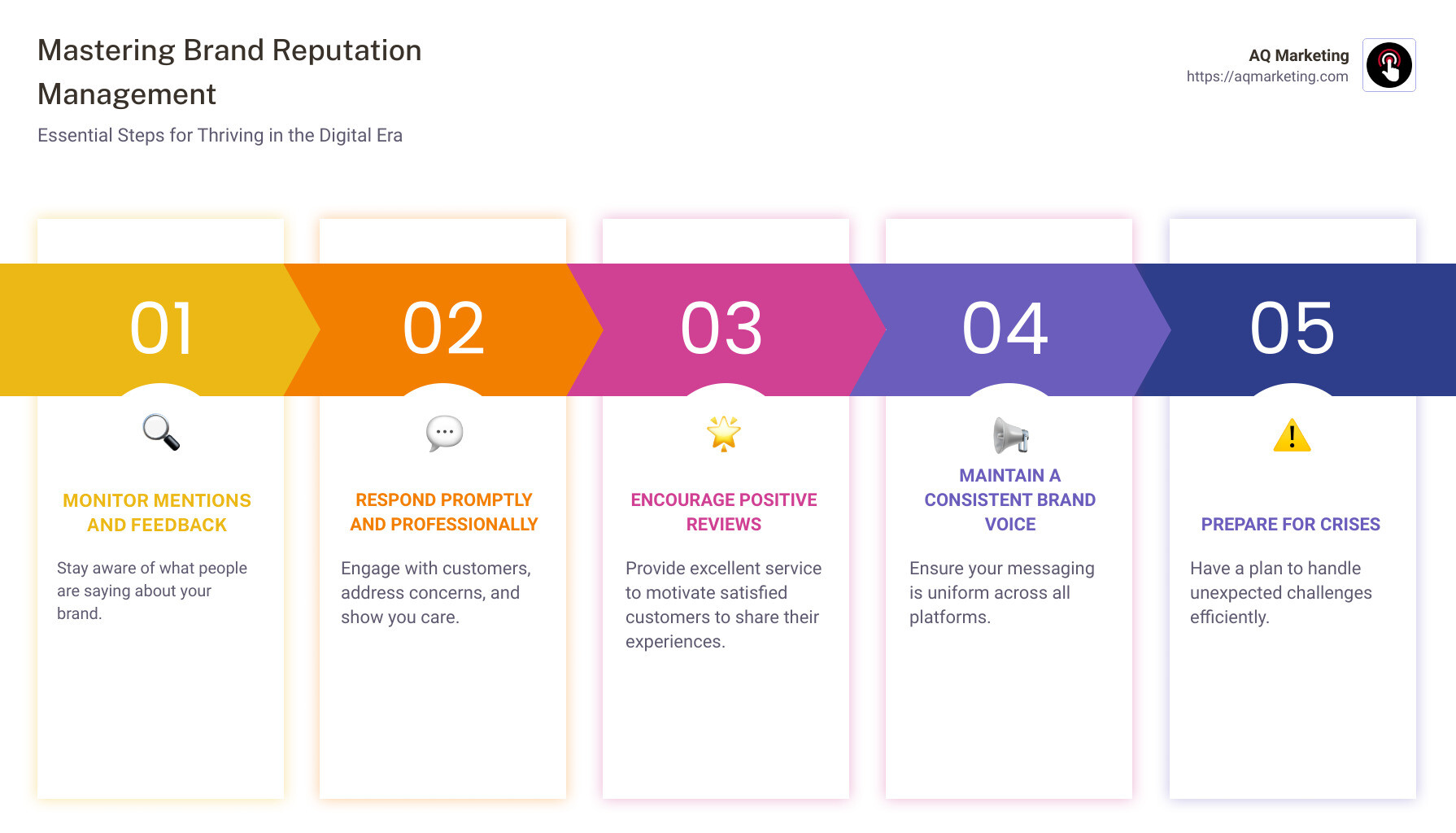
- Monitor mentions and feedback: Stay aware of what people are saying about your brand.
- Respond promptly and professionally: Engage with customers, address concerns, and show you care.
- Encourage positive reviews: Provide excellent service to motivate satisfied customers to share their experiences.
- Maintain a consistent brand voice: Ensure your messaging is uniform across all platforms.
- Prepare for crises: Have a plan to handle unexpected challenges efficiently.
- Leverage technology: Use tools to streamline and improve your reputation management efforts.
The importance of having a strong brand reputation cannot be overstated. A positive reputation builds customer trust, drives loyalty, and ultimately impacts your sales and bottom line. Where 93% of customers read reviews before purchasing, managing how your brand is perceived online is more important than ever.
As Robert P. Dickey, with over 20 years of experience in digital marketing and brand reputation management, I’ve seen how effectively managing your reputation can make or break a business. Whether you’re a small business or a larger enterprise, taking control of your brand’s narrative is essential.
Understanding Brand Reputation Management
What is Brand Reputation Management?
Brand reputation management is all about controlling how people see and think about your brand. It involves monitoring what people say online and offline, and influencing public perception to ensure a positive image.
Think of it as a combination of public relations, customer service, and marketing. It’s not just about reacting to negative feedback but also about being proactive in creating a positive image.
Here’s what it involves:
- Monitoring brand mentions: Keeping an eye on what people are saying about your brand on social media, review sites, and other platforms.
- Responding promptly: Addressing customer inquiries, comments, and concerns in a professional manner.
- Encouraging positive reviews: Engaging with satisfied customers and encouraging them to leave positive feedback.
- Maintaining consistency: Ensuring your brand voice and message are consistent across all marketing channels.
- Addressing negative feedback: Handling criticism in a proactive, empathetic, and solution-focused manner.
- Public relations strategies: Developing strategies to maintain a positive brand image and manage potential crises.
Why is Brand Reputation Management Critical?
Trust, loyalty, and sales are the three main reasons why brand reputation management is critical.
Trust
A positive brand reputation builds trust. When customers trust your brand, they are more likely to choose your products or services over competitors. According to a Sprout Social research, 79% of consumers expect brands to respond within 24 hours after reaching out on social media. Quick and effective responses build trust.
Loyalty
Managing your brand reputation well can significantly enhance customer loyalty. 80% of 18-34-year-olds have written online reviews, showing that younger consumers are highly engaged and likely to share their experiences. Engaging with these reviews, both positive and negative, can turn casual customers into loyal advocates.
Sales Impact
A strong reputation directly impacts sales. 77% of consumers read reviews when browsing local businesses, and nearly 93% of customers read online reviews before making a purchase. Positive reviews and a good reputation can lead to increased sales, while negative reviews can harm your bottom line.
Case Study: Netflix
Netflix’s Reputation Score reflects how well they manage their brand reputation. Their score can fluctuate based on various factors, like new content releases or controversies involving the company or its executives. When Netflix releases popular content and engages positively with their audience, their Reputation Score goes up, leading to increased subscriptions and customer satisfaction.
Brand reputation management is not just about avoiding negative feedback; it’s about actively creating a positive image and maintaining it. By doing so, businesses can build trust, enhance loyalty, and boost sales.

Next, let’s explore the three pillars of brand reputation management: Listening data, Competitor data, and Review data.
The 3 Pillars of Brand Reputation Management
Listening Data
Social media is like the world’s largest focus group. With social listening, you can tap into the conversations happening around your brand, industry, and audience. This goes beyond just monitoring your mentions. Think of it as getting a full pie instead of just a slice.
By analyzing this data, you can identify opportunities. For example, if customers are repeatedly asking for a feature, you can act on it. Social listening also helps in risk prevention. By accessing the full spectrum of conversations, you can spot potential issues before they blow up.
Example: A retail company noticed through social listening that customers were unhappy with their checkout process. They revamped it, leading to a 20% increase in customer satisfaction.
Competitor Data
Ninety percent of marketers agree that social data helps them stay ahead of the competition. Competitor data shows you where you stand in your industry. It reveals the strengths and weaknesses of competing brands, giving you a clearer picture of your market position.
Conducting routine social media competitive analyses can help you exceed industry standards. Use share of voice data to see how well you’re dominating conversations in your industry. This can highlight new opportunities to outshine your rivals.
Example: A tech company used competitor data to spot a gap in customer service quality among its rivals. They improved their service, which led to a higher market share.
Review Data
Online reviews are a goldmine of feedback. From Yelp to Glassdoor, reviews give you direct insights into what customers love and what needs improvement. Managing reviews can be challenging but is crucial for brand reputation management.
Use a central platform to manage all incoming reviews. This makes it easier to sort through positive and negative feedback. Look for patterns to inform your strategy. For instance, if many reviews mention slow delivery, you know where to focus your improvement efforts.
Example: A restaurant chain noticed a trend of negative reviews about their wait times. They streamlined their operations, resulting in better reviews and increased foot traffic.
By focusing on these three pillars—listening data, competitor data, and review data—you can create a robust brand reputation management strategy. Next, we’ll dive into how to develop a robust management strategy and the tools you can use to make it happen.
Strategies for Effective Brand Reputation Management
Developing a Robust Management Strategy
Creating a strong brand reputation management strategy is essential for maintaining a positive image. Here’s how to do it:
1. Assessment:
Start by assessing your current brand reputation. This involves gathering data from customer reviews, social media mentions, and industry reports. Tools like Sprout Social can help you collect and analyze this data.
2. Stakeholder Involvement:
Involve key stakeholders in the strategy development. This includes team members from customer service, marketing, and management. Their insights and buy-in are crucial for a cohesive approach.
3. Monitoring Routine:
Establish a routine for monitoring your brand’s reputation. Consistency is key. You might set aside time weekly or daily, depending on your industry’s pace. Regular monitoring helps you stay ahead of potential issues.
4. Proactive Management:
Don’t wait for problems to arise. Actively engage with your customers by responding to reviews and comments promptly. Encourage satisfied customers to leave positive reviews to build a buffer against occasional negative feedback.
Example: A tech company noticed a dip in customer satisfaction scores. By proactively reaching out to dissatisfied customers and addressing their concerns, they improved their ratings and customer loyalty.
Tools and Technologies for Brand Reputation Management
Using the right tools and technologies can streamline your brand reputation management efforts. Here’s what you need:
1. Software Solutions:
Invest in reputation management software. These tools automate the process of tracking mentions, reviews, and feedback across various platforms. Sprout Social is a popular choice that integrates with help desks and CRM platforms like Zendesk and HubSpot.
2. Social Media Platforms:
Social media is a goldmine for understanding public perception. Platforms like Twitter, Facebook, and Instagram allow you to engage directly with your audience. Use these platforms to share positive news and respond to customer inquiries.
3. Analytics:
Analytics tools help you make sense of the data you collect. They provide insights into customer sentiment, engagement levels, and brand mentions. Use these insights to refine your strategies and measure the effectiveness of your efforts.
Example: A fashion brand used analytics to track sentiment around their new product line. By analyzing the data, they identified areas for improvement and adjusted their marketing strategy, resulting in higher customer satisfaction.
Next, we’ll explore how to handle crises and negative feedback, ensuring your brand remains strong even in challenging times.
Handling Crises and Negative Feedback
Creating a Crisis Response Plan
When a crisis hits, your response can make or break your brand’s reputation. A well-prepared crisis response plan is essential.
Preparation is Key
Start by identifying potential crises. Common scenarios include product issues, employee errors, site outages, and global events. Knowing what might go wrong helps you prepare better.
Types of Crises
– Product Issues and Customer Criticism: Launch problems or a surge of negative reviews.
– Employee or Branch Errors: Complaints targeting specific employees or locations.
– Site or Platform Outages: Service disruptions that leave customers in the dark.
– Global Events: Natural disasters, pandemics, or social issues affecting public sentiment.
Response Roles
Assign specific roles to team members. For instance, who will handle social media updates? Who will communicate with the press? Clear roles ensure a swift, coordinated response.
Steps to Take
1. Immediate Action: Acknowledge the issue promptly.
2. Internal Communication: Inform your team and outline the steps.
3. Public Communication: Use all available channels to update your audience.
4. Resolution: Focus on solving the problem quickly.
5. Follow-Up: Keep the public informed about the resolution process.
Managing Negative Online Feedback
Negative reviews can sting, but they also offer a chance to show your commitment to customer satisfaction.
Addressing Reviews
Respond to genuine negative feedback promptly. Acknowledge the issue and express empathy. This shows you care about your customers’ experiences.
Example: Netflix’s Password Sharing Policy
Netflix faced backlash over new password-sharing guidelines. They responded quickly, explaining the reasons behind the policy change and showing empathy for affected users. This approach helped mitigate some of the negative sentiment.
Damage Control
When addressing negative feedback:
– Be Transparent: Explain what went wrong and what you’re doing to fix it.
– Show Empathy: Understand the customer’s frustration and apologize sincerely.
– Offer a Solution: Provide a clear, actionable solution to the problem.
Positive Spin
Turn negative feedback into a positive by demonstrating your dedication to improvement. Share how you’re using the feedback to make changes.
Example: Nike’s Labor Conditions Issue
In the 1990s, Nike faced global protests over labor conditions. They responded by increasing transparency about their supply chain and implementing better labor practices. This proactive approach helped rebuild their reputation over time.
By preparing for crises and managing negative feedback effectively, you can protect and even enhance your brand’s reputation.
Next, we’ll dive into frequently asked questions about brand reputation management, helping you understand the tools and strategies that can elevate your brand.
Frequently Asked Questions about Brand Reputation Management
What Tools are Used in Brand Reputation Management?
Brand reputation management involves various tools to monitor, manage, and improve how your brand is perceived.
Online Reputation Management Tools: These tools help you track mentions, reviews, and feedback across different platforms. For example, Sprout Social collects data from social media, review sites, and competitor mentions. This allows you to stay on top of what people are saying about your brand in real-time.
Social Listening Tools: Tools like Sprout Social also offer social listening features. These help you understand the broader conversations happening around your brand. By analyzing this data, you can identify trends, customer sentiments, and opportunities for engagement.
Review Management Tools: Managing customer reviews is crucial. Tools like AQ Marketing’s Online Reputation Management system automate review requests and alert you to negative reviews. This enables prompt responses and helps maintain a positive image.
How to Assess Your Company’s Current Brand Reputation?
Assessing your brand’s reputation involves gathering and analyzing data from multiple sources.
Audits: Conduct a brand audit to evaluate your current standing. This includes reviewing your online presence, customer feedback, and social media activity.
Customer Feedback: Collect feedback directly from your customers. Use surveys, feedback forms, and social media polls to understand their experiences and perceptions.
Social Media Analysis: Monitor your social media channels for mentions, comments, and reviews. Tools like Sprout Social can help you track engagement metrics and sentiment analysis to get a clear picture of your brand’s online reputation.
How Does Brand Reputation Management Improve Business?
Effective brand reputation management brings several benefits to your business.
Customer Trust: A strong reputation builds trust. Customers are more likely to buy from brands they trust. According to The Sprout Social Index, 36% of consumers share negative experiences with friends and family if companies take too long to respond to issues.
Brand Loyalty: Happy customers become loyal customers. When you manage your reputation well, you create a positive experience that encourages repeat business.
Increased Sales: Positive reviews and a strong online presence can lead to higher sales. Customers often rely on reviews before making a purchase. A well-managed reputation can tip the scales in your favor.
By using the right tools and strategies, you can assess and improve your brand’s reputation, leading to increased trust, loyalty, and sales.
Next, we’ll explore how to handle crises and negative feedback, ensuring your brand remains resilient in challenging times.
Conclusion
Brand reputation management is not just a one-time effort but a continuous process. The long-term benefits of maintaining a strong brand reputation can be substantial.
Long-Term Benefits: A positive brand reputation can lead to increased customer trust, loyalty, and higher sales. Over time, this creates a cycle of positive feedback and growth. Customers are more likely to return and recommend your business to others, which can significantly boost your market position.
Continuous Effort: To maintain and improve your brand reputation, you need to be proactive and consistent. Regularly monitor online reviews, engage with your audience on social media, and address any negative feedback promptly. This ongoing effort will help you stay ahead of potential issues and capitalize on opportunities for improvement.
At AQ Marketing, we specialize in helping businesses like yours master brand reputation management. Our comprehensive services include online review monitoring, listing management, and more. We are committed to ensuring your brand shines brightly in the digital landscape.
Contact us today to learn how our expertise can help you build and maintain a stellar brand reputation.