

Best Web Hosting for Ecommerce: Top 10 Proven Picks 2024
Best web hosting for ecommerce is crucial if you’re looking to run an online store that delivers a seamless shopping experience. Quick answers for those seeking the best platforms include:
- For speed: IONOS
- For budget: iPage
- For scalability: ScalaHosting
- For ease of use: Shopify
In the digital world, your ecommerce website is more than just an online store; it’s your brand’s frontline. The best ecommerce hosting ensures that your site loads quickly, stays secure, and operates smoothly, making it vital for an outstanding customer experience.
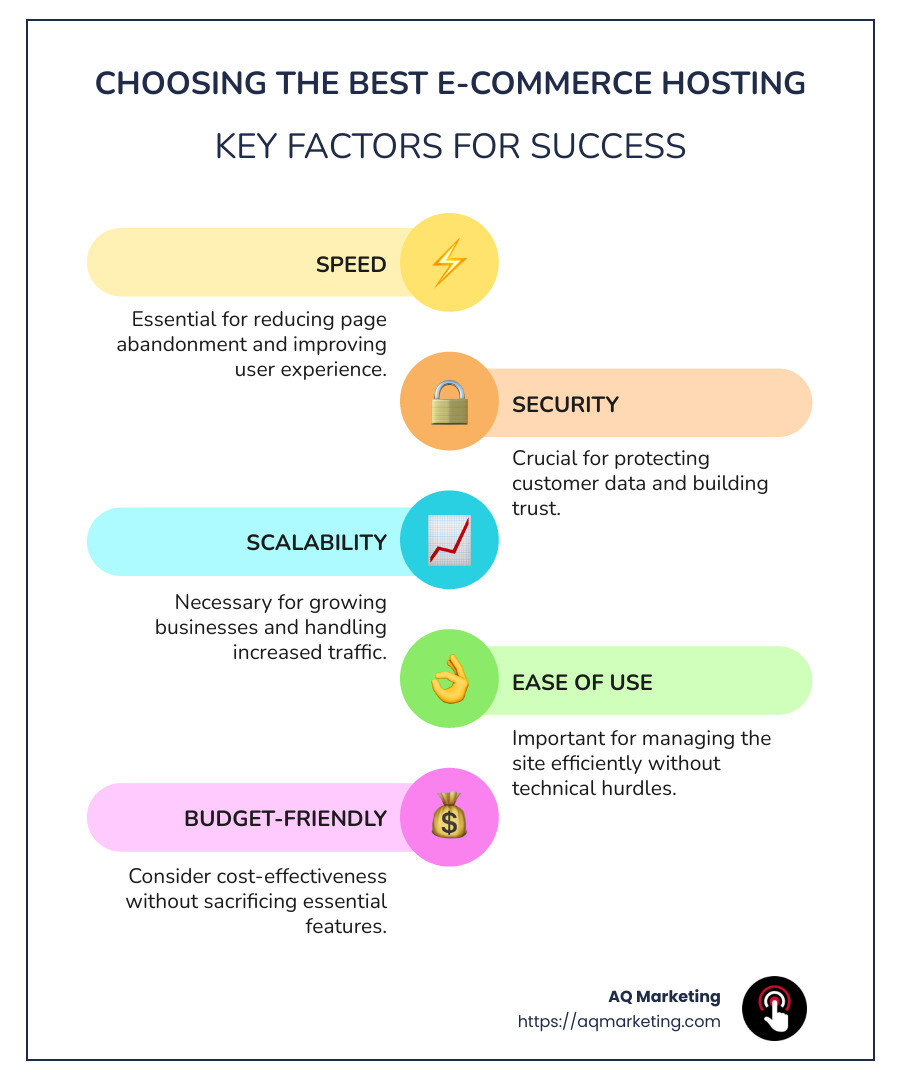
With nearly half of online shoppers abandoning pages that take too long to load, having fast page speeds is not just a luxury—it’s a necessity. Moreover, robust security features are non-negotiable for protecting customer data and building trust. Choosing the right hosting platform is a decisive step in boosting your site’s performance and reliability.
I’m Robert P. Dickey, President and CEO of AQ Marketing, Inc. With over 20 years in the digital landscape, I’ve helped numerous businesses steer their online presence. My experience emphasizes the importance of selecting the best web hosting for ecommerce to drive success.
What is E-commerce Hosting?
E-commerce hosting is the backbone of any online store. It provides the server space where your website’s text, images, and code live, making it visible and functional for online shoppers.
Imagine your e-commerce website is a busy digital marketplace. Just like a physical store needs a building to operate, your online store needs a virtual space to exist. That’s where e-commerce hosting comes in. It ensures your site is always available for customers, no matter when they decide to shop.
When a customer visits your site, their browser communicates with the hosting server. This server then delivers all the necessary elements—like product images, descriptions, and checkout pages—right to their screen. The faster and more efficiently this process happens, the better the shopping experience.

Why Server Space Matters
The right server space is crucial for handling your website’s needs. It determines how quickly your site loads and how well it can handle multiple visitors at once. A robust hosting service can manage high traffic without slowing down, ensuring that customers don’t abandon their carts due to frustrating delays.
Key Elements of E-commerce Hosting
- Text, Images, and Code: All the content that makes up your site is stored on the server. This includes everything from product descriptions to high-quality images.
- Browser Compatibility: A good host ensures your website is compatible with different browsers, so customers have a consistent experience whether they’re using Chrome, Safari, or Firefox.
- Security: Protecting customer data is paramount. Hosting providers often offer SSL certificates and other security measures to safeguard sensitive information like credit card details.
- Reliability: With e-commerce, downtime can mean lost sales. Reliable hosting ensures your site remains up and running, providing a seamless shopping experience.
E-commerce hosting is not just about storing your website’s data. It’s about creating a smooth, reliable, and secure shopping environment that keeps customers coming back. Whether you’re a small business or a large retailer, choosing the right hosting solution is a critical step in your e-commerce journey.
10 Best E-commerce Hosting Providers of 2024
Choosing the best web hosting for e-commerce can be a game-changer for your online store. Let’s explore the top 10 e-commerce hosting providers for 2024, each offering unique features to improve your business.
Shopify
Shopify dominates the e-commerce platform market with over 25% market share. Its hosting service ensures 99.99% uptime, which is crucial for keeping your store online and accessible. Shopify uses a Content Delivery Network (CDN) to speed up your site for global visitors. Plus, you get free SSL certificates, unlimited bandwidth, and a free domain name. It’s also PCI compliant, ensuring secure transactions.
- G2 Rating: 4.4 out of 5 stars
- Pricing: Starts at $29/month
IONOS
IONOS, previously 1&1, offers a range of hosting packages suitable for e-commerce. Their Web Hosting Expert plan provides 500 GB of storage and a one-click installer for platforms like Shopify. With 99.99% uptime and impressive loading speeds, it’s a solid choice for those keen on speed and reliability.
- G2 Rating: 3.5 out of 5 stars
- Pricing: $8/month for the first year; $16/month thereafter
Bluehost
Ideal for WordPress and WooCommerce users, Bluehost offers various packages, from shared hosting to VPS. It supports unlimited products and payment processing, and provides a free domain with 30 GB SSD storage. However, some features are reserved for premium packages.
- G2 Rating: 4.0 out of 5 stars
- Pricing: From $2.59/month
Siteground
Siteground powers over 2.8 million domains and boasts high customer satisfaction. It offers constant security monitoring, 24/7 support, and free daily backups. Though it integrates with WooCommerce, it lacks PCI compliance, requiring an extra layer for secure transactions.
- G2 Rating: 4.3 out of 5 stars
- Pricing: From $4.99/month
A2 Hosting
A2 Hosting is known for its fast loading speeds and green initiative. It offers shared hosting and managed VPS plans, supporting PHP-based platforms like Magento and Joomla. A free SSL certificate and 99.9% uptime commitment are part of the package.
- G2 Rating: 4.4 out of 5 stars
- Pricing: From $11.99/month
GoDaddy
A giant in the hosting space, GoDaddy offers packages custom for WordPress sites. It provides 24/7 network security, 150 free apps, and global data centers for quick loading times. However, growing businesses may need to upgrade plans as they expand.
- G2 Rating: 3.9 out of 5 stars
- Pricing: From $9.99/month
HostGator
With over two million websites hosted, HostGator is a popular choice. Its VPS plans offer a 99.9% uptime guarantee, 24/7 support, and weekly off-site backups. Be prepared for potential cost increases after introductory deals end.
- G2 Rating: 3.6 out of 5 stars
- Pricing: From $19.95/month
DreamHost
Recommended for WordPress, DreamHost guarantees 100% uptime. Its e-commerce plans include WooCommerce integration, unlimited email, and strong security features. It’s an excellent option for sites needing reliable uptime and security.
- G2 Rating: 4.0 out of 5 stars
- Pricing: $2.59/month
InMotion Hosting
InMotion Hosting caters to businesses of all sizes with a variety of plans. It offers a simple setup process, reliable support, and an SSL certificate. However, base plans have storage limits, so consider your needs carefully.
- G2 Rating: 4.1 out of 5 stars
- Pricing: From $1.99/month
These providers offer a range of features to meet different e-commerce needs. Whether you’re just starting or scaling up, there’s a hosting solution that can support your growth and ensure a smooth, secure shopping experience for your customers.
Types of E-commerce Hosting
When launching an online store, choosing the right hosting type is crucial. It impacts everything from your site’s speed to its security. Let’s explore the two main types of e-commerce hosting: SaaS Hosted and Self-Hosting.
SaaS Hosted
SaaS (Software as a Service) hosted solutions make life easy for those new to the e-commerce world. Platforms like Shopify bundle everything you need into one neat package.
- Website Builder: Most SaaS platforms come with a built-in website builder. This means you can design your store without needing to code. It’s as simple as dragging and dropping elements to create your perfect layout.
- Ecommerce Store: These platforms are designed specifically for e-commerce. They handle everything from displaying products to processing payments.
- Payment Processing: No need to worry about integrating with third-party payment processors. SaaS solutions usually have this built-in, ensuring secure and smooth transactions.
- Inventory Management: Keep track of your stock levels with ease. Most SaaS platforms offer tools to manage your inventory efficiently.
- POS Tools: If you have a physical store, these platforms often include Point of Sale (POS) tools. This helps you manage both online and offline sales in one place.
- Monthly Fee: All these features come at a cost, usually a monthly subscription. But, this fee often covers hosting, security, and support, making it a solid choice for beginners.
Self-Hosting
Self-hosting offers more control and flexibility, but it requires a bit more technical know-how.
- Shared Hosting: This is the most affordable option. Your site shares server space with others, which can impact performance. It’s suitable for small stores just starting out.
- VPS (Virtual Private Server): A step up from shared hosting, a VPS gives you a dedicated portion of a server. It offers better performance and more control over your hosting environment.
- Dedicated Server: For large businesses with high traffic, a dedicated server is ideal. You get an entire server to yourself, ensuring maximum performance and customization options.
- Flexibility: Self-hosting allows for greater customization. You can choose the software, security measures, and even tailor your server settings.
- Storage and Bandwidth: Unlike SaaS solutions, self-hosting often involves tiered pricing based on your storage and bandwidth needs. This can make costs unpredictable as your business grows.
- Website Costs: While self-hosting can be more cost-effective in the long run, initial setup and maintenance costs can be higher. You’ll need to factor in expenses for security measures, backups, and technical support.
Choosing between SaaS hosted and self-hosting depends on your business needs, technical skills, and budget. Both have their merits, so consider what’s most important for your store before making a decision.
How to Choose the Best Web Hosting for E-commerce
Selecting the right web hosting for your e-commerce store is essential. It affects everything from your site’s performance to its security. Let’s explore the key factors you should consider.
Pricing
When it comes to pricing, transparency is key. Always watch out for hidden fees that could surprise you later on. Some hosts offer low introductory prices but increase rates significantly upon renewal. Look for plans that offer unmetered bandwidth—this ensures your site can handle high traffic without extra costs.
Self-hosted providers often charge based on storage and bandwidth, which can make costs unpredictable as your business grows. On the other hand, some platforms bundle costs into a monthly fee, covering hosting, security, and support. This can be more predictable, especially for beginners.
Speed and Bandwidth
Speed is crucial for e-commerce success. Slow loading times can drive customers away. In fact, 47% of customers expect a page to load in two seconds or less. Fast page load speeds not only improve the customer experience but also boost ecommerce SEO.
Look for hosts that offer unlimited bandwidth. This ensures your site can handle large amounts of traffic without slowing down. Also, consider the processing power offered by the host. More power means your site can process requests faster, leading to quicker page loads.
Uptime
Downtime can be costly for e-commerce stores. Every second your site is offline, you risk losing sales. Choose a host with a strong uptime guarantee. Top providers often boast uptime rates close to 100%.
Check if the host provides regular backups, so you can quickly restore your site if something goes wrong. It’s also wise to ask about their data centers’ security, energy sources, and cooling systems. These factors contribute to keeping your site online and running smoothly.
Privacy and Security
Security is a top priority for e-commerce sites. You need to protect your customers’ sensitive information. Look for hosts that offer robust antivirus features like malware scanning and firewalls.
DDoS protection is also crucial. It prevents scammers from overloading your site with traffic, making it unavailable. Consider hosts that provide SSL certificates for free. This encrypts data being transmitted, keeping it safe from prying eyes.
Ensure the host is PCI compliant if you plan to accept online payments. This compliance is necessary for processing credit card transactions securely.
Customer Support
Good customer support can be a lifesaver, especially if you’re new to web hosting. Check if the host offers multiple contact options like phone, live chat, and a ticket system.
Some platforms often provide more comprehensive support, which can be helpful if you’re not technically inclined. If you choose a self-hosted platform, ensure they offer priority support for urgent issues.
By considering these factors, you can choose the best web hosting for ecommerce that meets your needs and supports your business growth.
Frequently Asked Questions about E-commerce Hosting
Which hosting is best for e-commerce?
When it comes to finding the best web hosting for e-commerce, it largely depends on your specific needs and level of expertise. For beginners, platforms like Shopify are a great choice. They offer a user-friendly interface with one-click installation, making it easy to set up your store without technical know-how. Shopify also includes features like SSL certificates and unlimited bandwidth, ensuring your site runs smoothly and securely.
For professionals and those looking to customize extensively, IONOS stands out. Known for its speed and performance, IONOS offers scalable resources to handle growing traffic efficiently. Its dual-platform technology boosts performance, making it ideal for businesses expecting high traffic volumes.
Businesses on a budget might consider HostGator. It allows you to start small and scale up as your business grows, offering flexibility with pricing. HostGator also provides a solid uptime guarantee, ensuring your site remains accessible to customers.
Which is the best platform for an e-commerce website?
The best platform for an e-commerce website balances omnichannel selling capabilities and ease of use. Shopify is a leader in this space, offering tools that integrate seamlessly with various sales channels, including social media platforms and marketplaces.
For those who already have existing sites, WooCommerce is an excellent option. It integrates with WordPress, allowing for a smooth transition and the ability to maintain your site’s current design and functionality.
If you’re venturing into dropshipping, platforms like Shopify and BigCommerce provide robust tools to manage inventory and process orders efficiently. BigCommerce offers a strong headless commerce solution, giving you the flexibility to create unique shopping experiences.
What is the best website builder for e-commerce?
Choosing the right website builder can significantly impact your store’s success. For those who value simplicity and ease of use, Shopify offers a drag-and-drop editor that makes building attractive designs straightforward. Its templates are professional and cater to various types of online stores.
For those seeking value for money, Bluehost with its WooCommerce integration provides an affordable option with powerful features. It supports unlimited products and includes SSD storage for faster load times.
Monthly pricing plans are common, and while they may seem costly upfront, they often include essential features like security, support, and updates. This can save you from unexpected expenses down the line.
By understanding your needs and comparing the features each host offers, you can select the most suitable platform for your e-commerce journey.
Conclusion
Choosing the right e-commerce host is crucial for the success of your online store. A good host ensures your site is always accessible, fast, and secure, enhancing the customer experience and driving sales. Page loading speeds and security are critical factors that can make or break your e-commerce business.
At AQ Marketing, we understand the importance of a strong online presence. As a digital marketing agency based in Woburn, MA, we specialize in helping small to medium-sized businesses thrive online. We offer a range of services, including SEO, website design, and social media management, custom to deliver long-term, impactful results.
Our team focuses on industries like home services and insurance, where building trust and visibility is key. We leverage our expertise to ensure your website not only looks great but also performs optimally, attracting more visitors and converting them into loyal customers.
Whether you’re just starting out or looking to improve your existing online store, making the right hosting choice is a step towards achieving your business goals. Let us help you steer the complexities of e-commerce hosting and digital marketing to ensure your business stands out in the crowded online marketplace.
For more information on how we can assist you, visit our website services page. Let’s work together to build a robust online presence that drives success for your business.
