
AI Marketing Strategy: Top 5 Powerful Tips for 2024
AI marketing strategy is changing how businesses connect with customers by leveraging data-driven insights and tailoring personalized experiences like never before. With AI in marketing, companies can efficiently analyze customer data, anticipate trends, and create targeted campaigns that resonate with specific audiences. This blend of advanced technology and marketing wisdom ensures businesses can stay competitive, foster customer loyalty, and optimize every marketing dollar spent.
Here’s a quick breakdown of what an AI marketing strategy entails:
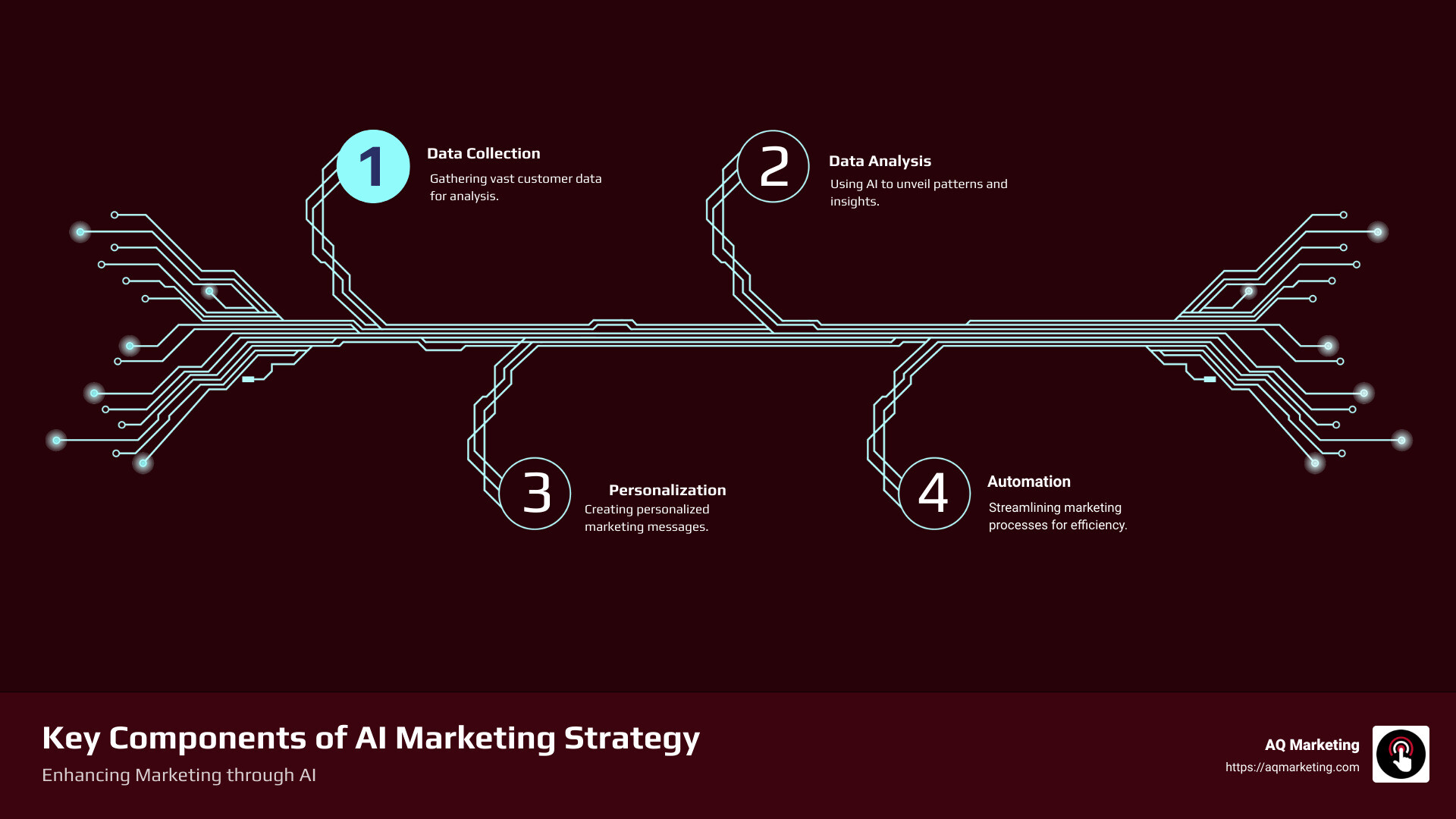
- Data Collection: Gathering vast customer data.
- Analysis: Using AI to uncover patterns and insights.
- Personalization: Crafting personalized marketing messages.
- Automation: Streamlining processes to improve efficiency.
By understanding and utilizing these key components, businesses can start on a journey toward creating a future-proof marketing plan that meets evolving customer needs. My name is Robert P. Dickey, and as the President and CEO of AQ Marketing, I’ve spent over 20 years helping businesses harness effective strategies, including ai marketing strategy, to thrive in today’s digital arena.
Ai marketing strategy terms at a glance:
– ai marketing automation
– how ai helps in digital marketing
– how to use ai in market research
Understanding AI Marketing Strategy
An AI marketing strategy is not just about adopting new technology; it’s about reimagining how businesses connect with their customers. At its core, this strategy leverages artificial intelligence to analyze data, understand customer behavior, and deliver personalized experiences at scale.
The Role of Data Analysis
Data is at the heart of any AI marketing strategy. By collecting and analyzing vast amounts of customer information, AI tools can identify patterns and predict future behaviors. This allows businesses to make informed decisions and tailor their marketing efforts to meet specific customer needs.
For example, AI can segment audiences based on their behaviors and preferences, ensuring that the right message reaches the right person at the right time. This level of precision was previously unimaginable and is now a game-changer for marketers.
Enhancing Customer Satisfaction
With AI, businesses can create personalized experiences that increase customer satisfaction. Imagine a world where each customer feels like your brand truly understands them. AI makes this possible by delivering content and offers that resonate with individual preferences.
Consider the success of companies like Netflix, which uses AI to recommend content based on viewing history. This approach not only improves user satisfaction but also boosts engagement and retention rates.
Key Components of an AI Marketing Strategy
- Data Collection: Start by gathering comprehensive customer data from various touchpoints.
- Advanced Analysis: Use AI algorithms to uncover actionable insights and predict trends.
- Personalized Messaging: Craft bespoke marketing messages that resonate with each segment.
- Automation: Streamline repetitive tasks, freeing up time for strategic initiatives.
By integrating these elements into your marketing strategy, you can achieve a competitive edge and foster lasting customer loyalty. This forward-thinking approach ensures that your marketing efforts are not just reactive but proactive, adapting to the ever-changing digital landscape.

The ultimate goal of an AI marketing strategy is to improve customer satisfaction while optimizing your marketing efforts. By understanding and implementing these components, businesses can open up new levels of efficiency and effectiveness in their marketing campaigns.
Implementing AI in Your Marketing Strategy
Integrating AI into your marketing strategy can transform how you engage with customers and optimize your campaigns. Here’s how to get started:
AI Integration
Integrating AI into your marketing strategy begins with identifying the processes that can benefit from automation and improved data analysis. Start by assessing your current marketing operations to pinpoint areas where AI can add value. This might include automating repetitive tasks like email marketing, social media posting, or customer segmentation.
AI integration also involves ensuring that your team is ready to accept these changes. Training your staff on how to use AI tools effectively is crucial. This not only maximizes the benefits of AI but also minimizes resistance to new technologies.
AI Tools
Selecting the right AI tools is key to a successful AI marketing strategy. There are various tools available, each designed for specific tasks:
- Data Collection Tools: Platforms that gather and organize customer data from multiple channels.
- Customer Segmentation Tools: AI-driven tools that classify your audience based on behavior and preferences.
- Personalization and Automation Tools: These tools help deliver custom content and automate marketing workflows.
For instance, AI tools can analyze customer interactions to suggest the best times to send emails or post on social media, enhancing engagement rates. By leveraging AI tools, marketers can gain deeper insights into customer behavior, allowing for more precise targeting and personalized messaging.
Marketing Optimization
Marketing optimization with AI is about using data-driven insights to refine and improve your campaigns. AI can analyze large datasets to identify trends and patterns that might not be obvious through manual analysis. This allows marketers to make informed decisions about where to allocate resources for maximum impact.
AI can also run A/B tests at scale, quickly determining which variations of a campaign perform best. This iterative approach ensures your marketing efforts are continually optimized for better results.
Moreover, AI-powered sentiment analysis can provide valuable insights into customer opinions and market trends, helping you adjust your strategy in real-time. This agility is essential in today’s digital landscape.
By integrating AI into your marketing strategy, you can automate routine tasks, gain deeper customer insights, and optimize your campaigns for better results. This approach not only improves efficiency but also leads to more personalized and effective marketing efforts.
Benefits of AI in Marketing
Incorporating AI into your marketing strategy offers numerous advantages. From personalization to predictive analytics and cost efficiency, AI has the potential to revolutionize how businesses connect with their customers.
Personalization
AI enables a level of personalization that was previously unimaginable. By analyzing customer data, AI can tailor marketing messages to fit individual preferences and behaviors. This means your customers receive content that resonates with them, increasing engagement and conversion rates. For example, Michaels Stores improved their email personalization from 20% to 95%, boosting click-through rates significantly.
The ability to deliver personalized content at scale is a game-changer. Imagine sending each customer a unique email that speaks directly to their interests or recommending products based on their past purchases. This not only improves the customer experience but also builds trust and loyalty.
Predictive Analytics
Predictive analytics is another powerful benefit of AI in marketing. By examining patterns in customer data, AI can forecast future behaviors and trends. This allows businesses to anticipate customer needs and adjust their strategies accordingly.
For instance, AI can predict which products a customer is likely to buy next or when they might be ready for an upgrade. This insight helps marketers craft timely and relevant offers, improving the chances of conversion. Predictive analytics also supports inventory management, ensuring that popular items are always in stock.
Cost Efficiency
AI doesn’t just improve marketing effectiveness; it also improves cost efficiency. Automating repetitive tasks such as data entry, email marketing, and customer service reduces the need for manual labor, saving time and money.
With AI, companies can allocate resources more effectively, focusing human efforts on strategic planning and creative tasks. This efficiency translates to lower operational costs and higher returns on investment. A recent study found that 68% of companies saw improved ROI from their content marketing efforts when leveraging AI.
In summary, the benefits of AI in marketing are clear. By embracing AI, businesses can deliver personalized experiences, leverage predictive insights, and achieve cost savings. This not only improves marketing effectiveness but also positions companies to stay competitive in an changing digital landscape.
Now, let’s explore how to use AI to create a marketing strategy that maximizes these benefits.
How to Use AI to Create a Marketing Strategy
Creating a marketing strategy with AI starts with understanding your current strategy. This involves assessing what’s working and what isn’t. A current strategy assessment is crucial because it provides a baseline for improvement. You need to identify areas where AI can make the most impact, such as improving customer engagement or streamlining ad spend.
Conduct a Social Media Audit: Begin by evaluating your social media performance. Look at engagement rates, follower growth, and content reach. This will help you pinpoint where AI tools can optimize your efforts, whether it’s through better targeting or automating post scheduling.
Evaluate Your Tech Stack: Next, examine your existing marketing technology stack. Are there tools that overlap or don’t perform efficiently? Identify gaps in technology that AI can fill. This might mean adopting new AI-powered tools or upgrading existing ones to handle larger data volumes and more complex tasks.
AI Tool Selection
Once you have a clear understanding of your current strategy, it’s time to select the right AI tools. The tools you choose should align with your marketing goals and integrate seamlessly with your existing systems.
AI Marketing Strategy Generator: Consider tools like AI marketing strategy generators, which can quickly analyze data and craft custom strategies. These tools save time and ensure consistency in messaging.
Data Analysis Tools: Use AI tools capable of processing large datasets, like Google Analytics or Tableau. These tools provide insights into customer behavior and preferences, helping you make informed decisions.
Automation Tools: For repetitive tasks, automation tools can be a game-changer. They free up your team to focus on creative and strategic work. This might include tools for automating email marketing or customer service responses.
Monitoring and Optimization
After implementing AI tools, continuous monitoring and optimization are key. AI marketing isn’t a set-it-and-forget-it solution. Regularly review your AI systems to ensure they are delivering the desired results.
Set Clear KPIs: Establish key performance indicators to measure the success of your AI marketing strategy. These might include metrics like conversion rates, customer acquisition costs, or return on investment.
Regular Audits: Conduct frequent audits of your AI systems to ensure they are using high-quality data and providing accurate insights. Poor data quality can lead to misguided decisions, so keep your data clean and relevant.
Iterate and Improve: Use the data collected to refine your strategy. AI can offer predictive insights, but human oversight is crucial to ensure these insights align with your brand’s goals and values. Make adjustments as needed to stay ahead of market changes.
By following these steps, you can harness the power of AI to create a marketing strategy that is both effective and future-proof. This approach not only maximizes the benefits of AI but also ensures your business remains competitive in the digital landscape.
Next, let’s address some frequently asked questions about AI marketing strategy to further clarify its applications and benefits.
Frequently Asked Questions about AI Marketing Strategy
How is AI being used in marketing?
AI is changing marketing by enabling personalized recommendations and customer data analysis. Businesses can now tailor their marketing efforts to individual preferences and behaviors. AI tools analyze vast amounts of data to understand customer patterns, allowing marketers to deliver targeted content and offers. This leads to higher engagement and conversion rates.
For example, AI can segment audiences based on behavior and demographics, making it easier to send the right message to the right people. This approach not only improves customer satisfaction but also boosts brand loyalty.
What is an example of an AI marketing strategy?
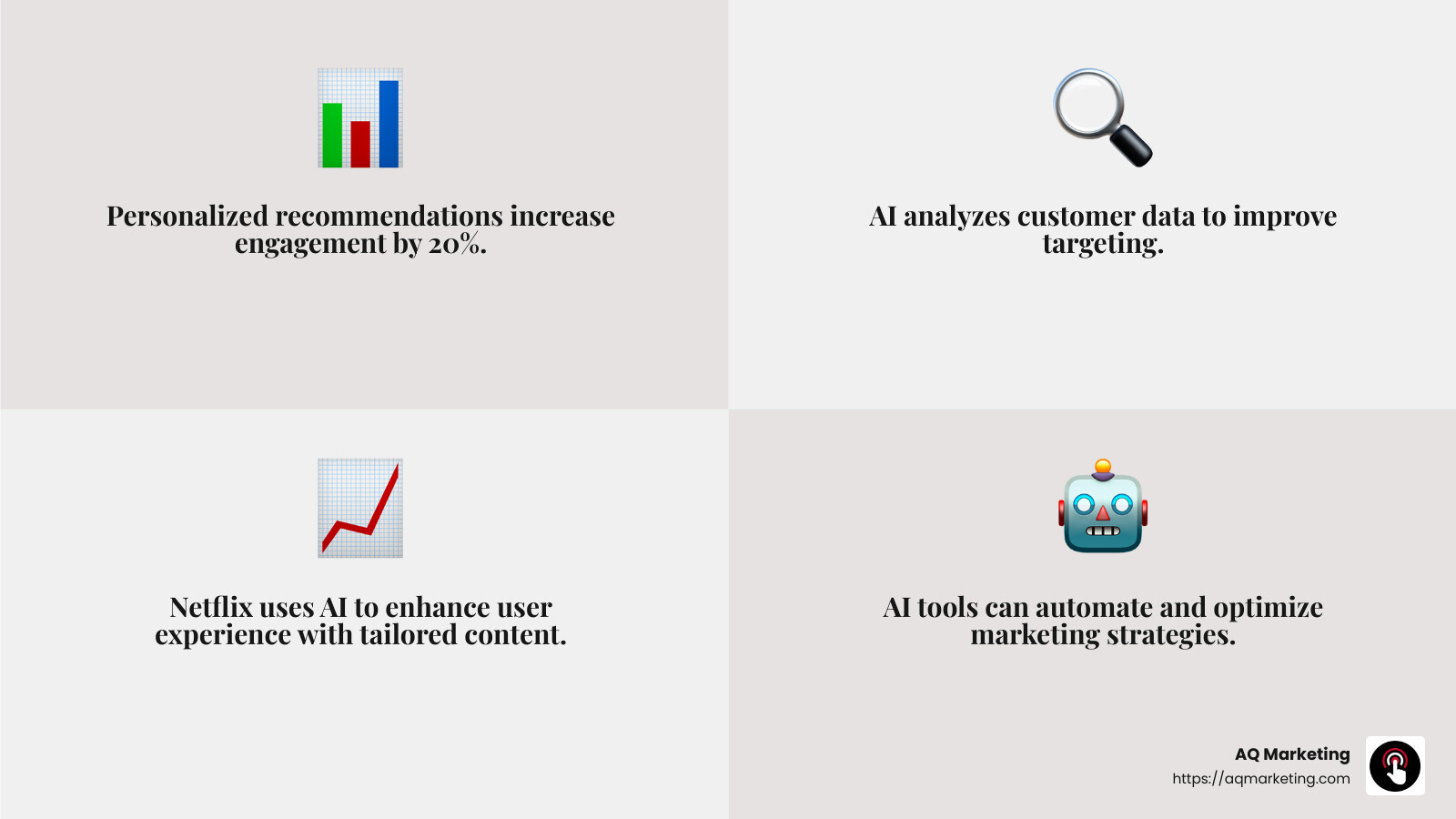
A well-known example of an AI marketing strategy is how Netflix uses AI to offer personalized content recommendations. Netflix’s algorithm analyzes viewing history, ratings, and user interactions to suggest movies and shows custom to each subscriber’s tastes. This level of personalization improves the user experience and keeps subscribers engaged.
By adopting similar strategies, businesses can create bespoke marketing campaigns that resonate with their audience, leading to improved customer retention and satisfaction.
Which AI tool is best for marketing?
Choosing the right AI tool depends on your specific marketing needs. Jasper AI and Surfer SEO are popular options for content creation and optimization.
- Jasper AI is known for generating high-quality content quickly. It’s particularly useful for crafting blog posts, social media updates, and marketing copy. Jasper AI can help you maintain a consistent brand voice across all platforms, saving time and resources.
- Surfer SEO is an excellent tool for optimizing content to rank better in search engines. It provides data-driven recommendations for improving on-page SEO, ensuring your content reaches the right audience. By analyzing competitors and identifying keyword opportunities, Surfer SEO helps you stay ahead in the digital landscape.
Both tools integrate seamlessly with existing marketing strategies, making them valuable assets for any business looking to leverage AI in their marketing efforts.
Next, let’s explore more about how AI can improve your overall marketing plan and drive long-term success.
Conclusion
As we accept the power of AI in marketing, it’s clear that businesses stand to gain substantial benefits. At AQ Marketing, we’re committed to helping small and medium-sized businesses in the Boston area and beyond harness these advantages. Our focus is on delivering long-term, impactful results through innovative digital marketing strategies.
By integrating AI into your marketing plan, you can achieve greater personalization, efficiency, and data-driven insights. These elements are crucial for staying competitive in today’s digital landscape. AI tools can streamline processes, reduce costs, and provide targeted content that resonates with your audience. This not only boosts customer engagement but also improves brand loyalty.
AQ Marketing specializes in creating custom strategies that leverage the latest AI technologies. Whether it’s through SEO, social media management, or content creation, we ensure that your business is positioned for sustained growth and success. Our team of experts is here to guide you every step of the way, making sure that your marketing efforts are not only effective but also future-proof.
Ready to take your marketing strategy to the next level? Contact us today and find how our digital marketing services can help your business thrive in the age of AI.