

AI Marketing Automation: Top 7 Powerful Benefits 2024
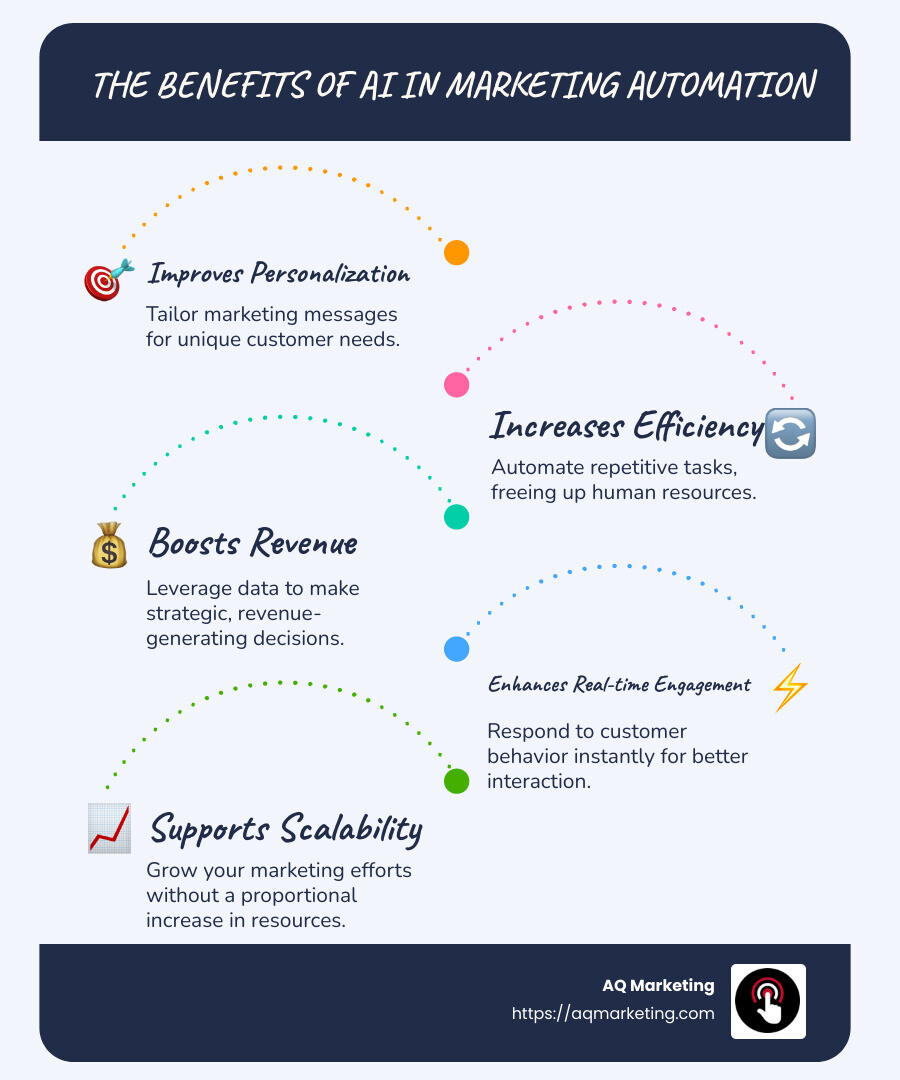
AI marketing automation is reshaping the landscape for businesses by streamlining how marketing tasks are done. From delivering custom messages to optimizing campaign results, AI is increasingly the go-to tool for creating personalized customer experiences at scale. Notably, AI marketing automation is not just about efficiency; it’s about understanding complex customer behavior and responding in real-time. This results in improved customer engagement, higher conversion rates, and ultimately, increased revenue. Here’s a quick snapshot:
- Improves Personalization: Tailor marketing messages for unique customer needs.
- Increases Efficiency: Automate repetitive tasks, freeing up human resources.
- Boosts Revenue: Leverage data to make strategic, revenue-generating decisions.
The significance of AI marketing automation isn’t just a hot topic — it’s a key driver of growth and competitive advantage. Projections indicate that revenue from AI software might soar to $126 billion by 2024, with machine learning spearheading growth in the marketing sector. This transformative power allows even small startups to compete on a global scale against established brands.
I am Robert P. Dickey, President and CEO of AQ Marketing, Inc., with over two decades of experience in digital marketing. I specialize in implementing ai marketing automation to help businesses thrive in a competitive online market. Let’s dig deeper into how AI is setting the stage for the future of marketing.
Related content about ai marketing automation:
– ai in digital marketing
– how to use ai in email marketing
– how to use ai in social media marketing
The Evolution of Marketing Automation with AI
Marketing automation has come a long way since its inception, and AI is at the heart of its change. Understanding its journey helps us appreciate how far we’ve come and where we’re headed.
Historical Perspective
In the early days, marketing automation was all about automating repetitive tasks like sending emails or posting on social media. These systems followed simple rules set by humans. While useful, they lacked the ability to adapt or personalize content based on individual customer behavior.
Transition Phases
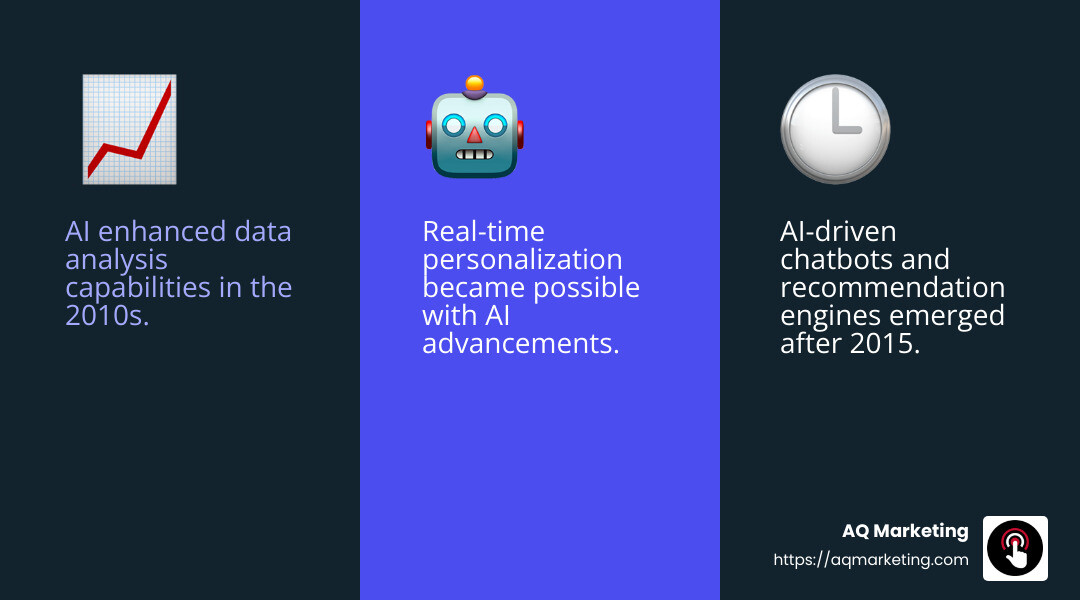
The integration of AI marked a significant shift. Initially, AI was used to improve data analysis, allowing marketers to make more informed decisions. Over time, AI capabilities expanded, enabling real-time personalization and predictive analytics. This transition was crucial in moving from static campaigns to dynamic, customer-centric strategies.
Key Milestones
Several milestones highlight the evolution of AI marketing automation:
- 2000s: The rise of basic automation tools like email schedulers.
- 2010s: Introduction of machine learning algorithms, improving data analysis and customer segmentation.
- 2015 onwards: AI-driven innovations like chatbots and recommendation engines became mainstream. These tools brought a new level of personalization and engagement.
Today, AI marketing automation not only automates tasks but also learns from customer interactions to optimize strategies continually. This evolution has made it possible for businesses to deliver highly personalized experiences at scale, a feat unimaginable just a decade ago.
As AI continues to evolve, it promises even more groundbreaking changes in marketing strategies, setting the stage for the next wave of innovation. Let’s explore how AI is revolutionizing marketing strategies in the next section.
Core Benefits of AI Marketing Automation
AI marketing automation has transformed how businesses engage with their audience. Here are the core benefits it offers:
Efficiency
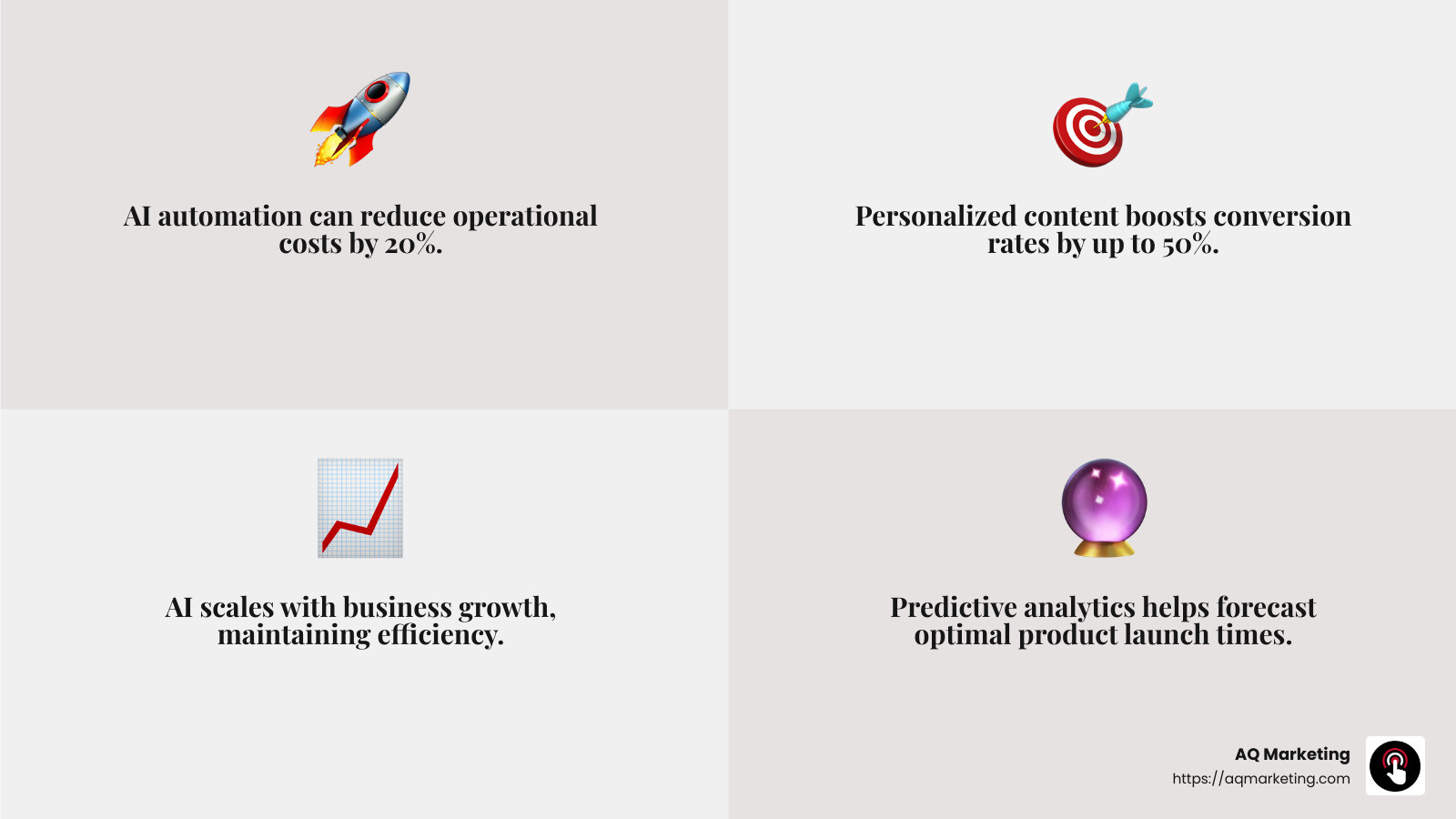
AI brings unparalleled efficiency to marketing tasks. By automating repetitive tasks like data entry, email campaigns, and social media management, AI frees up valuable time for marketers. This allows them to focus on strategic and creative endeavors. According to research, AI-driven automation can reduce operational costs by 20% for some businesses, showcasing its potential for cost savings.
Personalization
In today’s market, customers expect personalized experiences. AI excels at analyzing customer data to deliver custom content and recommendations. For example, Netflix uses AI algorithms to suggest content based on viewing history, increasing engagement and retention. Personalization not only improves customer satisfaction but also fosters loyalty and boosts conversion rates.
Scalability
As businesses grow, managing marketing efforts becomes more complex. AI marketing automation scales effortlessly, handling large volumes of data and interactions without compromising on quality or speed. This scalability ensures consistent customer experiences and efficient resource allocation, regardless of business size.
Predictive Analytics
AI’s ability to predict trends and customer behavior is a game-changer. By analyzing vast amounts of data, AI can forecast the best times to launch products or target specific customer segments. This predictive power allows marketers to adjust strategies proactively, maximizing return on investment and staying ahead of the competition.
These benefits make AI marketing automation an essential tool for modern businesses. As AI continues to advance, its role in marketing will only grow, offering new ways to connect with customers and drive success. In the next section, we’ll dig into how AI is revolutionizing marketing strategies.
How AI is Revolutionizing Marketing Strategies
AI is changing the way marketers operate, offering new tools and insights that were once unimaginable. Let’s explore some key areas where AI is making a big impact:
Data Handling
AI excels in handling large sets of data quickly and accurately. Traditionally, marketers spent countless hours sifting through data to gain insights. Now, AI tools can process vast amounts of information in seconds. This speed not only saves time but also allows marketers to act on fresh data, ensuring their strategies are always up-to-date. A study by Forbes highlights that AI can automate data analysis, enabling marketers to focus on creating value-driven strategies.
Real-Time Decisions
Making decisions in real time is crucial in today’s market. AI enables marketers to analyze campaign performance as it happens, allowing for immediate adjustments. For example, AI can track how well an email campaign is doing and suggest changes on the fly to improve engagement. This ability to adapt quickly can lead to better results and more efficient use of resources.
Customer Journey Mapping
Understanding the customer journey is vital for effective marketing. AI helps map out this journey by analyzing interactions across different channels. This means marketers can see how customers move from awareness to purchase and beyond. With these insights, businesses can create seamless experiences that guide customers smoothly through their journey. AI-driven customer journey mapping leads to higher satisfaction and loyalty by addressing customer needs at every stage.
Behavioral Predictions
Predicting customer behavior is a powerful advantage in marketing. AI uses past data to forecast future actions, such as purchase intent or preferences. This predictive capability allows marketers to tailor their strategies to meet anticipated needs, increasing the likelihood of conversion. For instance, AI can identify which products a customer is likely to buy next and recommend them proactively. This not only improves the shopping experience but also drives sales.
AI’s role in revolutionizing marketing strategies is undeniable. By handling data efficiently, enabling real-time decisions, mapping customer journeys, and predicting behavior, AI empowers marketers to create more effective and personalized campaigns. This change is just the beginning, as AI continues to evolve and offer even more innovative solutions.
Key Applications of AI in Marketing Automation
In AI marketing automation, there are several key areas where AI is making a significant impact. Let’s explore how AI is changing personalization, email automation, lead management, campaign optimization, and customer insights.
Personalization Techniques
AI is a game-changer for personalization. It uses recommendation engines to suggest products or content based on a user’s past behavior. Think of how Amazon suggests items you might like based on previous purchases.
Dynamic content is another powerful tool. AI can change website content in real-time, tailoring it to the visitor’s preferences. This means each visitor sees a version of the site that’s most relevant to them.
With AI, businesses can create custom experiences for each customer. This goes beyond just using their name in an email. It means showing them the right products, at the right time, in the right place.
Email Automation
Emails are more effective when they’re personalized and timely. AI helps by sending behavior-triggered emails. For instance, if a customer leaves items in their cart, an automated reminder can nudge them to complete the purchase.
Personalized messaging in emails can significantly boost engagement. AI analyzes customer data to craft messages that resonate with each recipient.
AI also aids in performance analysis. It tracks how well emails perform, providing insights to refine future campaigns. Marketers can see which emails are opened, read, and acted upon, all thanks to AI.
Lead Management
Managing leads can be a daunting task. AI simplifies this with lead scoring, which evaluates the likelihood of a lead becoming a customer. This helps sales teams focus on the most promising leads.
AI also assists in prioritization. By analyzing lead data, AI can rank leads based on their potential value, ensuring that the most important leads get attention first.
Nurturing strategies benefit from AI’s ability to send the right message at the right time. AI can automate follow-ups, keeping leads engaged until they’re ready to make a purchase.
Campaign Optimization
AI excels in multichannel orchestration, coordinating campaigns across various platforms. This ensures a consistent message reaches customers, no matter where they are.
Content curation is another area where AI shines. It helps marketers choose the best content for each audience segment, increasing engagement and conversion rates.
Timing optimization is crucial for campaign success. AI analyzes past data to determine the best times to reach out to customers, maximizing the chances of a positive response.
Customer Insights and Analytics
Understanding customers is key to effective marketing. AI provides deep insights through sentiment analysis, which gauges customer feelings from online reviews or social media posts.
AI also tracks purchase behavior, identifying patterns and trends. This helps businesses anticipate customer needs and tailor their offerings accordingly.
Trend forecasting is another strength of AI. By analyzing vast amounts of data, AI predicts future trends, allowing marketers to stay ahead of the curve and adapt their strategies proactively.
In summary, AI is revolutionizing marketing automation by enhancing personalization, streamlining email campaigns, optimizing lead management, improving campaign strategies, and providing valuable customer insights. These advancements empower marketers to deliver more effective, personalized, and timely marketing efforts.
Challenges and Considerations in Implementing AI
Implementing AI marketing automation can be a game-changer, but it comes with its own set of challenges. Let’s explore these problems and what businesses need to consider.
Integration Complexities
A challenge is integrating AI into existing systems. Many businesses have legacy systems that aren’t designed to work with AI. This can lead to compatibility issues and require significant changes to the current infrastructure. Companies need to plan carefully and possibly invest in new technology to ensure a smooth integration.
Data Privacy
Data privacy is a major concern when using AI. AI relies on vast amounts of data to function effectively, and this data often includes sensitive customer information. Businesses must ensure they comply with data protection regulations, like GDPR, to avoid hefty fines and maintain customer trust. Implementing robust data security measures and obtaining clear consent from users are crucial steps in this process.
Skill Requirements
A lack of skilled personnel is another hurdle. According to a report by Authority Hacker, 45.2% of marketers cited a lack of knowledge as a barrier to AI adoption. Training and reskilling the marketing team is essential. Companies might need to hire new talent or invest in training programs to fill the knowledge gaps. Providing opportunities for hands-on experience with AI tools can also help teams become more comfortable and effective in using AI.
Cost-Benefit Analysis
Implementing AI can be expensive. The costs of AI tools, training, and system upgrades can add up quickly. Small businesses, in particular, may find it challenging to justify these expenses. It’s important to conduct a thorough cost-benefit analysis to ensure that the benefits of AI, such as increased efficiency and sales, outweigh the costs. This analysis should include potential savings from automation and the expected increase in revenue from improved marketing strategies.
In conclusion, while AI marketing automation offers numerous benefits, businesses must steer integration complexities, address data privacy concerns, ensure their team has the necessary skills, and carefully weigh the costs and benefits. Addressing these challenges head-on will pave the way for successful AI implementation.
Next, we’ll explore how AI is shaping the future of marketing automation and the exciting trends and innovations on the horizon.
The Future of AI in Marketing Automation
As we look to the future, AI marketing automation promises to continue changing the marketing landscape. Let’s dig into the trends, innovations, and ethical considerations shaping this exciting journey.
Emerging Trends
One of the most promising trends is the rise of AI-powered predictive analytics. This technology enables marketers to anticipate customer needs and tailor campaigns with precision. By analyzing vast amounts of data, AI can identify patterns and forecast future behaviors, allowing businesses to stay ahead of consumer demands.
Another trend is the increasing use of AI-driven chatbots. These digital assistants are becoming more sophisticated, offering personalized customer interactions around the clock. They can handle queries, provide recommendations, and even assist in completing purchases, enhancing the overall customer experience.
Innovations on the Horizon
Generative AI is ready to revolutionize content creation. This technology can produce high-quality content at an unprecedented speed, freeing up marketing teams to focus on strategic initiatives. Imagine AI crafting personalized emails, social media posts, or even video content custom to individual customer preferences.
In the field of personalization, AI is set to make marketing campaigns more dynamic and engaging. Tools like Dynamic Yield are already using AI to deliver personalized experiences by showing relevant content and promotional messages based on customer behavior.
Predictions for the Future
As AI continues to evolve, we can expect more seamless integration into marketing strategies. Real-time decision-making will become the norm, allowing businesses to react instantly to changing market conditions or customer preferences. Additionally, AI will play a crucial role in mapping the customer journey, providing insights that enable brands to create more meaningful connections.
Ethical Considerations
With great power comes great responsibility. As AI becomes more ingrained in marketing, ethical considerations must be at the forefront. Data privacy and transparency are paramount. Businesses must ensure they use customer data responsibly and obtain explicit consent.
Moreover, AI systems should be designed to avoid bias. Ensuring fairness and equality in AI-driven marketing campaigns is crucial to maintaining customer trust and brand integrity.
In summary, the future of AI marketing automation is bright, with trends and innovations that promise to improve marketing strategies and customer experiences. As we accept these advancements, keep ethical considerations in mind, ensuring that AI is used responsibly and transparently. In the next section, we’ll explore how AQ Marketing leverages AI to drive client success and achieve long-term impacts.
How AQ Marketing Leverages AI for Client Success
At AQ Marketing, we’ve embraced AI marketing automation to deliver exceptional results for our clients. By integrating AI into our strategies, we’ve improved efficiency, personalization, and long-term client success.
Case Studies: Real-World Success
One of our standout success stories involves a local e-commerce business. By implementing AI-driven email automation, we significantly increased their customer engagement. The AI system sent behavior-triggered emails that were personalized based on user activity. This led to a 25% increase in open rates and a 15% boost in conversions within just three months.
Another client in the healthcare sector benefited from AI-powered lead nurturing. The AI tool analyzed patient interactions and sent custom content to guide them through the decision-making process. As a result, the client saw a 30% improvement in patient acquisition and retention rates.
Strategy Improvements: Leveraging AI for Better Outcomes
We’ve improved our strategies by using AI to optimize campaign timing and content. AI algorithms analyze customer data to predict the best times to engage with different audience segments. This ensures that our clients’ messages are not just seen but acted upon.
Moreover, AI helps us curate content that resonates with specific demographics. By understanding customer sentiment and behavior, we can tailor marketing messages that speak directly to their needs and preferences.
Long-term Impacts: Building Sustainable Success
The long-term impacts of AI marketing automation at AQ Marketing are profound. By automating repetitive tasks, our team can focus on strategic and creative initiatives, leading to more innovative campaigns. This not only improves operational efficiency but also reduces costs, allowing us to pass these savings onto our clients.
Furthermore, AI provides us with deep insights into consumer behavior, enabling us to forecast trends and adapt strategies proactively. This foresight helps our clients stay ahead in their industries, ensuring sustainable growth and success.
Incorporating AI into our marketing strategies has been transformative, and we’re excited to continue exploring its potential to drive even greater client success. Next, we’ll dig into the challenges and considerations businesses face when implementing AI, ensuring a comprehensive understanding of this powerful tool.
Conclusion
In wrapping up our exploration of AI marketing automation, it’s clear that AI is no longer a futuristic concept—it’s a present-day game-changer. By enhancing efficiency, personalization, and scalability, AI is reshaping how businesses approach marketing. At AQ Marketing, we’ve seen the transformative power of AI, as it helps us deliver impactful results for our clients.
Call to Action
If you’re ready to harness the power of AI for your business, now is the time to act. AI offers a competitive edge by improving customer engagement and optimizing marketing strategies. Whether you’re looking to boost conversions or improve customer experiences, AI can be a valuable ally in achieving your goals. We invite you to explore our digital marketing services and find how we can help you leverage AI for success.
Future Outlook
Looking ahead, the future of AI marketing automation is bright and full of potential. As technology continues to advance, we can expect even more innovative applications and tools that will further revolutionize marketing strategies. From improved predictive analytics to more sophisticated personalization techniques, AI will continue to push the boundaries of what’s possible in digital marketing.
Moreover, as AI becomes more integrated into everyday business practices, ethical considerations will play a crucial role. Ensuring data privacy and maintaining transparency will be essential as we steer the evolving landscape of AI.
In conclusion, AI is not just a tool—it’s a catalyst for change. At AQ Marketing, we’re excited to continue exploring its capabilities and helping our clients achieve long-term growth and success. Join us on this journey and let’s shape the future of marketing together.
