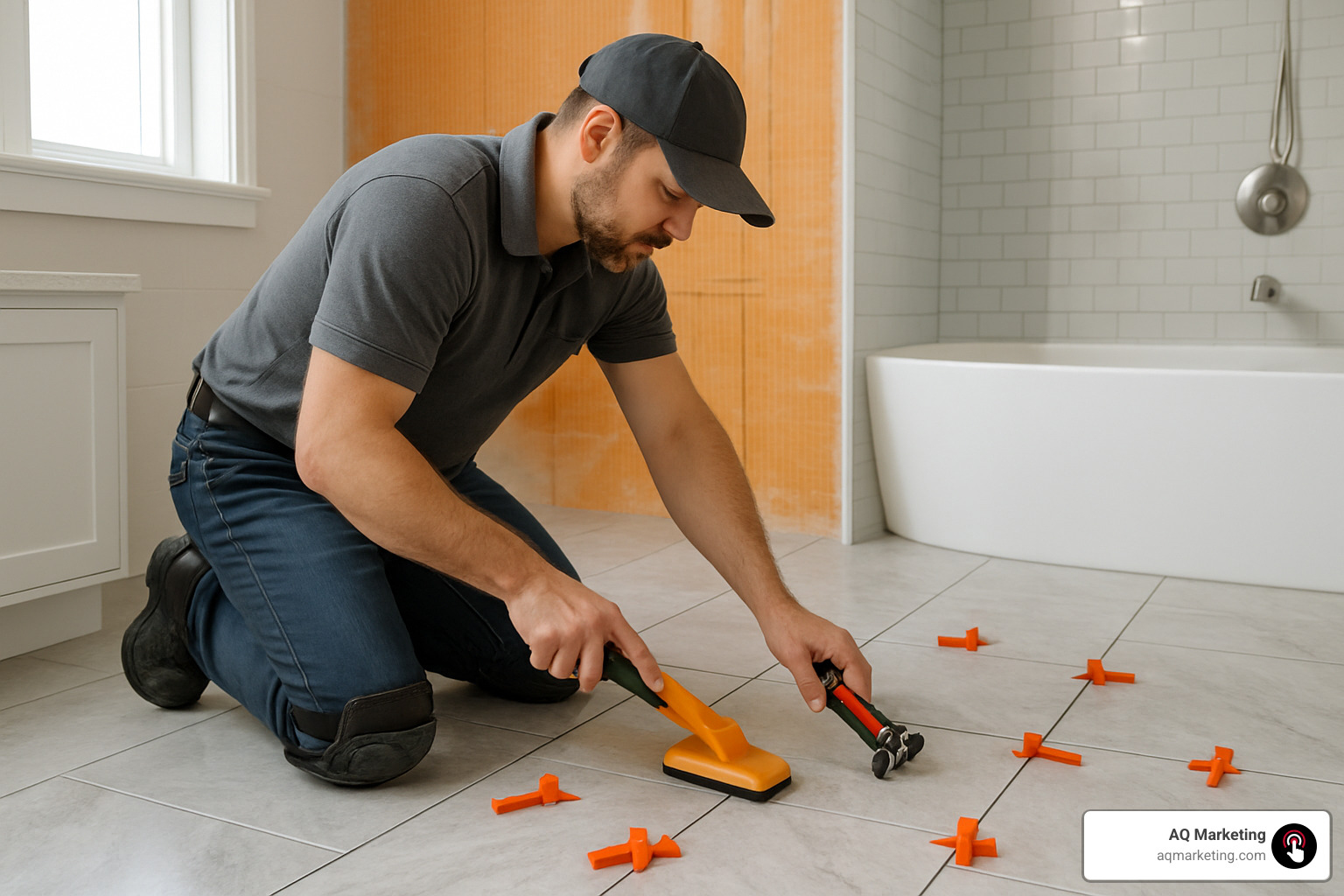
Bathroom Flooring Installers: 10 Best Expert Picks 2025
Finding Quality Bathroom Flooring Installers: Your Essential Guide
Looking for bathroom flooring installers near you? Here’s what you need to know:
- Professional bathroom flooring installers typically charge $6-$10 per square foot, depending on material and complexity
- Look for installers who are licensed, insured, and offer at least a one-year labor warranty
- The best installers have specialized experience with waterproofing techniques for bathrooms
- Read online reviews and check portfolios of previous bathroom installations
- Get at least three detailed quotes before making your decision
Changing your bathroom floor is a significant investment that requires careful planning and skilled execution. Bathroom flooring installers play a crucial role in ensuring your new floor not only looks beautiful but also stands up to the unique moisture challenges of bathroom environments.
Whether you’re considering porcelain tile, luxury vinyl, or natural stone, finding the right professional is just as important as selecting the perfect material. The right installer brings technical expertise, proper tools, and installation techniques that prevent future issues like leaks, loose tiles, or moisture damage.
In this comprehensive guide, we’ll walk you through everything you need to know about finding, vetting, and working with the best bathroom flooring installers in your area. We’ll cover material options, installation processes, costs, and the critical questions you should ask before hiring.
I’m Robert P. Dickey, President of AQ Marketing with over two decades of experience connecting homeowners with qualified bathroom flooring installers through effective digital marketing strategies that highlight installer credentials and showcase their craftsmanship.
Bathroom Flooring Materials 101: Pros, Cons & Trends
Before we dive into finding the perfect bathroom flooring installers, let’s talk about what they’ll actually be installing. Your material choice isn’t just about looks—it affects how complex the installation will be, how much you’ll spend, and how long your new floor will last in a moisture-rich bathroom environment.
Porcelain Tile
There’s a reason porcelain remains the bathroom flooring champion. It stands up beautifully to water, lasts for decades, and comes in an endless array of designs. Today’s porcelain can look remarkably like marble or hardwood, but without the moisture concerns.
Pros: Virtually waterproof, incredibly durable, easy to clean, and available in countless styles
Cons: Cold on bare feet (unless you add heating), quite hard if you drop something, and those grout lines do need regular attention
Luxury Vinyl Plank (LVP)
LVP has been a game-changer for bathroom floors. It gives you the waterproof protection you need while feeling warmer and softer underfoot than ceramic or porcelain.
Pros: 100% waterproof (perfect for bathrooms!), comfortable to walk on, more budget-friendly, and easier to install
Cons: Can show dents from heavy furniture, and might not boost your home value quite like natural materials
Natural Stone
There’s something timeless about marble, travertine, or slate bathroom floors. Each piece brings its own unique character and natural beauty to your space.
Pros: One-of-a-kind natural patterns, undeniable luxury appeal, and excellent return on investment
Cons: Requires regular sealing to maintain water resistance, costs more upfront, and can be slippery (though texturing helps)
Engineered Wood
If you love the warmth of wood but worry about bathroom splashes, engineered wood offers a compromise that many homeowners appreciate.
Pros: Genuine wood appearance, handles humidity changes better than solid hardwood
Cons: Not completely waterproof, and needs careful installation with proper moisture barriers
Cork
This eco-friendly option has been gaining fans for its unique combination of comfort and sustainability.
Pros: Naturally resists mold and mildew, feels wonderful underfoot, and comes from renewable sources
Cons: Needs proper sealing, and standing water can damage it if not promptly dried
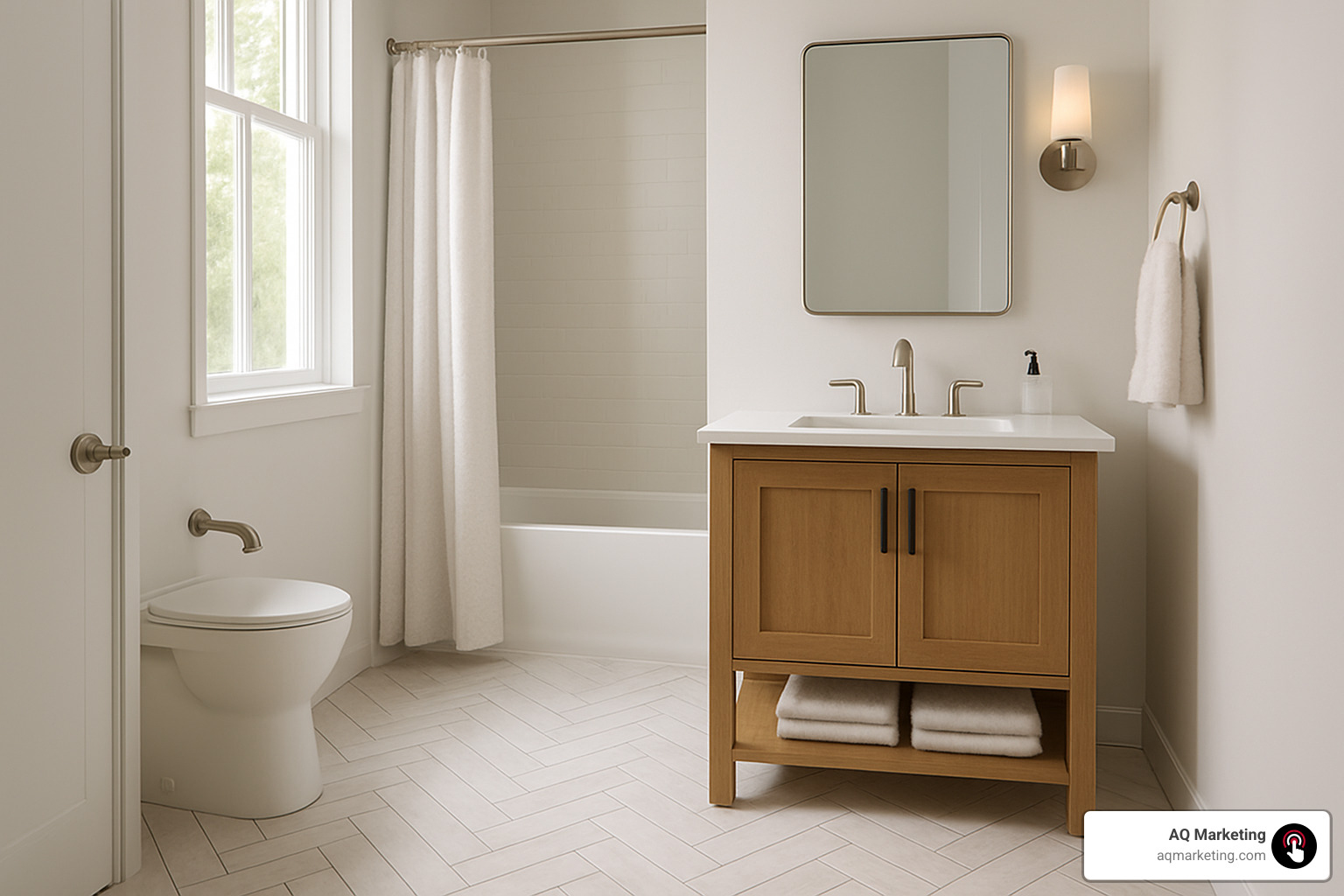
Safety matters in bathrooms, and experienced bathroom flooring installers can guide you toward materials with appropriate slip resistance without sacrificing style. Many professionals now also offer heated flooring installation—a luxury that not only keeps toes toasty but helps moisture evaporate faster after showers, adding another layer of protection for your new floor.
Comparing Popular Materials at a Glance
| Material | Cost Per Sq Ft (Installed) | Durability (1-10) | Waterproof Rating (1-10) | DIY Friendly? |
|---|---|---|---|---|
| Porcelain Tile | $6-$15 | 9 | 9 | Moderate |
| Luxury Vinyl | $4-$12 | 7 | 10 | High |
| Natural Stone | $10-$25 | 8 | 6 (requires sealing) | Low |
| Engineered Wood | $8-$15 | 6 | 5 | Moderate |
| Cork | $5-$12 | 5 | 5 (requires sealing) | Moderate |
Emerging Eco-Friendly Options
Many homeowners are increasingly concerned about sustainability, and bathroom flooring installers have responded by working with more earth-friendly materials:
Bamboo has become popular for its rapid renewability and natural resistance to moisture when properly finished. If you’re looking for something truly unique, recycled glass mosaics offer stunning beauty while repurposing materials that might otherwise end up in landfills.
Even the installation process itself can be more eco-friendly now, with low-VOC adhesives and sealers that reduce indoor air pollution both during installation and afterward as you enjoy your new bathroom.
Look for installers who carry green certifications and can help you select materials with recognized environmental standards like FloorScore or GreenGuard certification. These professionals can help you create a bathroom that’s beautiful, durable, and kinder to our planet.
Our How-To Videos, Guides & Tools Will Show You How
Choosing the right bathroom flooring material is just the first step. Working with knowledgeable bathroom flooring installers ensures your beautiful new floor is properly installed to handle the unique challenges of bathroom environments—something we’ll explore in depth in the next section.
Why Hiring Professional Bathroom Flooring Installers Pays Off
Let’s be honest—we’ve all watched those home renovation shows and thought, “I could do that!” But when it comes to bathroom flooring, there’s a world of difference between a DIY weekend project and professional installation. Your bathroom floor faces unique challenges that other rooms don’t—constant moisture, temperature fluctuations, and the need for perfect waterproofing.
Licensed and Insured Labor
When you hire professional bathroom flooring installers, you’re not just paying for the physical work. You’re investing in peace of mind. These pros come licensed (where required by state law), fully insured, and background-checked. If something goes wrong—maybe a pipe gets accidentally nicked or a worker gets injured—you’re protected. Without this coverage, you could be personally liable for accidents that happen on your property.
Precision and Expertise
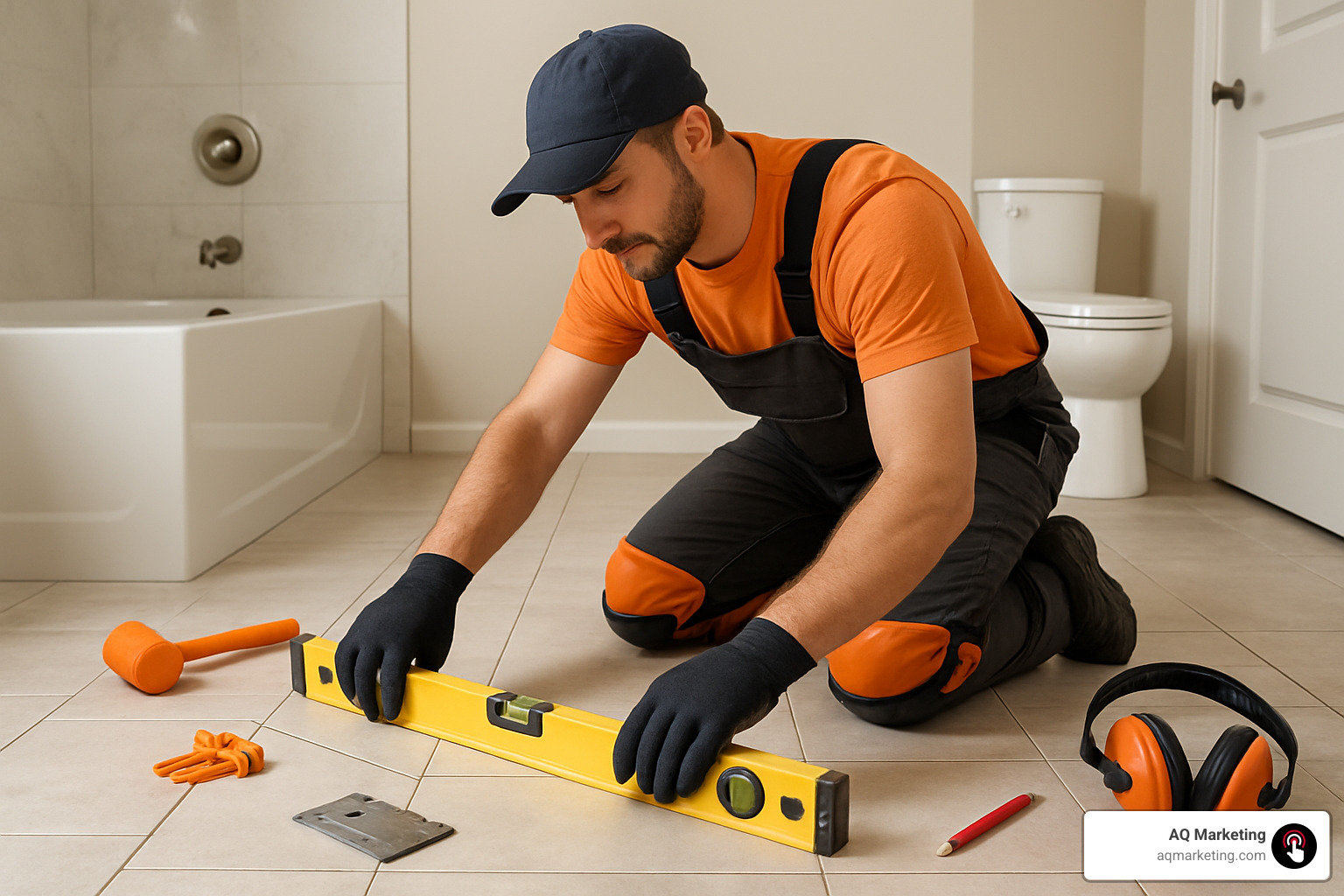
Have you ever tried cutting tile around a toilet flange or creating the perfect slope toward a drain? It’s not as easy as it looks! Professional bathroom flooring installers bring years of specialized knowledge to your project, including:
- Proper subfloor preparation that prevents squeaking and premature wear
- Advanced waterproofing techniques that protect your home’s structure
- Precision cutting around fixtures, corners, and tight spaces
- Selection of appropriate adhesives that stand up to bathroom humidity
- Creating proper drainage slopes that prevent water pooling
Warranties and Guarantees
That wobbly tile that keeps coming loose? The grout that’s cracking after just a few months? With DIY, these problems are yours to fix. But most professional bathroom flooring installers stand behind their work with at least a one-year labor warranty. If something isn’t right with the installation (not the material itself), they’ll come back and make it right—no additional cost to you. That warranty alone can be worth the installation price.
Proper Waterproofing
I can’t stress this enough: proper waterproofing is everything in bathroom installations. Water is sneaky—it can find the tiniest pathway into your subfloor and cause thousands in damage before you even notice a problem. Professional installers understand the appropriate moisture barriers, waterproof membranes, and sealing techniques required for bathroom environments. They know exactly where water is most likely to penetrate and how to prevent it.
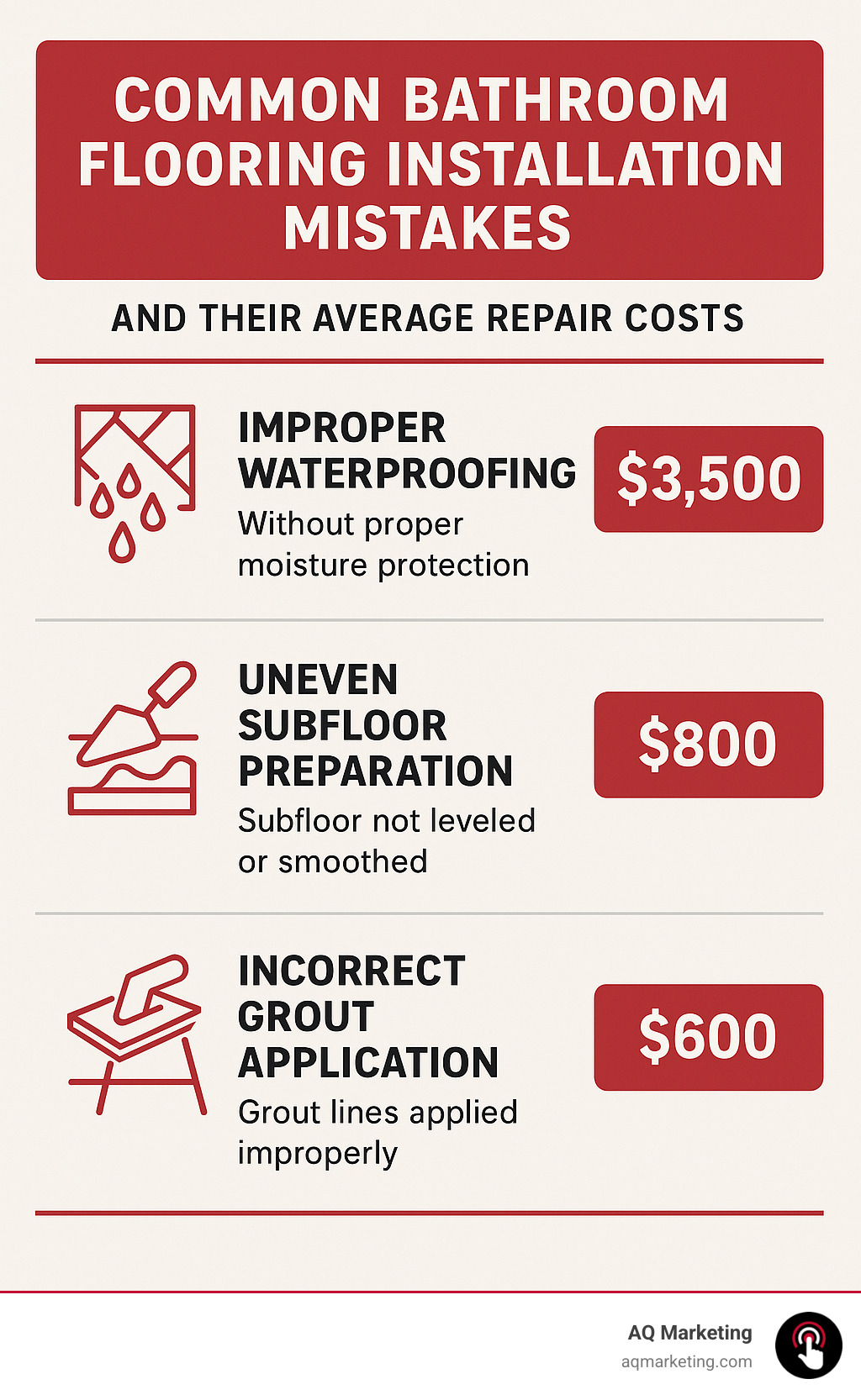
Cost of Mistakes vs. Cost of Pros
Yes, hiring professionals costs money—typically $6 to $10 per square foot for bathroom floor installation. But consider the alternative:
Water damage from improper waterproofing can easily cost $2,000-$10,000 in structural repairs. Uneven installation might require complete removal and reinstallation, doubling your project cost. And those expensive tiles you splurged on? If they’re cut incorrectly, that’s money down the drain.
Added Value Services Professionals Offer
The best bathroom flooring installers bring more to the table than just technical skills. They often provide valuable extras that improve your renovation experience:
Design Guidance that helps you make choices you’ll love for years to come. Many installers have seen hundreds of bathrooms and can suggest patterns or accent tiles that will lift your space from nice to stunning.
Complete Debris Removal saves you from dealing with the surprisingly complicated disposal of old flooring materials. No need to rent a dumpster or make multiple trips to special disposal facilities—they handle it all.
Financing Options make your dream bathroom more accessible. Many established installation companies partner with financial institutions to offer payment plans that fit your budget.
Post-Installation Support ensures your new floor stays beautiful. The best installers don’t disappear after the job is done—they provide maintenance guidelines and remain available to answer questions months after installation.
When you consider the expertise, warranties, proper tools, and potential cost of mistakes, professional bathroom flooring installers often represent not just the safest choice, but the most economical one in the long run. Your bathroom floor is an investment in your home’s value and your daily comfort—it deserves professional attention.
How to Choose the Best Bathroom Flooring Installers Near You
Finding the right bathroom flooring installers isn’t just about who offers the lowest price—it’s about finding professionals who will treat your bathroom with the care it deserves. After all, this is a space that faces unique moisture challenges and needs someone with the right skills to ensure your new floor stands the test of time.
Verify Credentials and Experience
Before you invite anyone into your home, take time to check their paperwork. Quality bathroom flooring installers should happily provide proof of:
Their state contractor license (requirements vary, but legitimate pros will know what’s needed in your area)
Current liability insurance and workers’ compensation coverage (protecting both your property and their team)
Industry certifications like NTCA (National Tile Contractors Association) or CTI (Certified Tile Installer) credentials
What really matters is finding someone with specific bathroom installation experience. As I always tell homeowners, installing flooring in a living room is worlds apart from handling the waterproofing complexities of a bathroom environment.
Check Reviews and References
A contractor’s reputation is just a few clicks away. When researching bathroom flooring installers, dig deeper than just star ratings:
Read the actual review content looking specifically for mentions of bathroom projects
Notice how the installer responds to any negative feedback (this tells you volumes about their customer service)
Look for consistency across multiple platforms like Google Business and social media
Ask for—and actually call—references from previous bathroom renovation clients
Perfect 5-star ratings across the board can sometimes be suspicious. Thoughtful installers with a mix of strong reviews and honest responses to occasional criticism often deliver the most reliable service.
Evaluate Their Portfolio
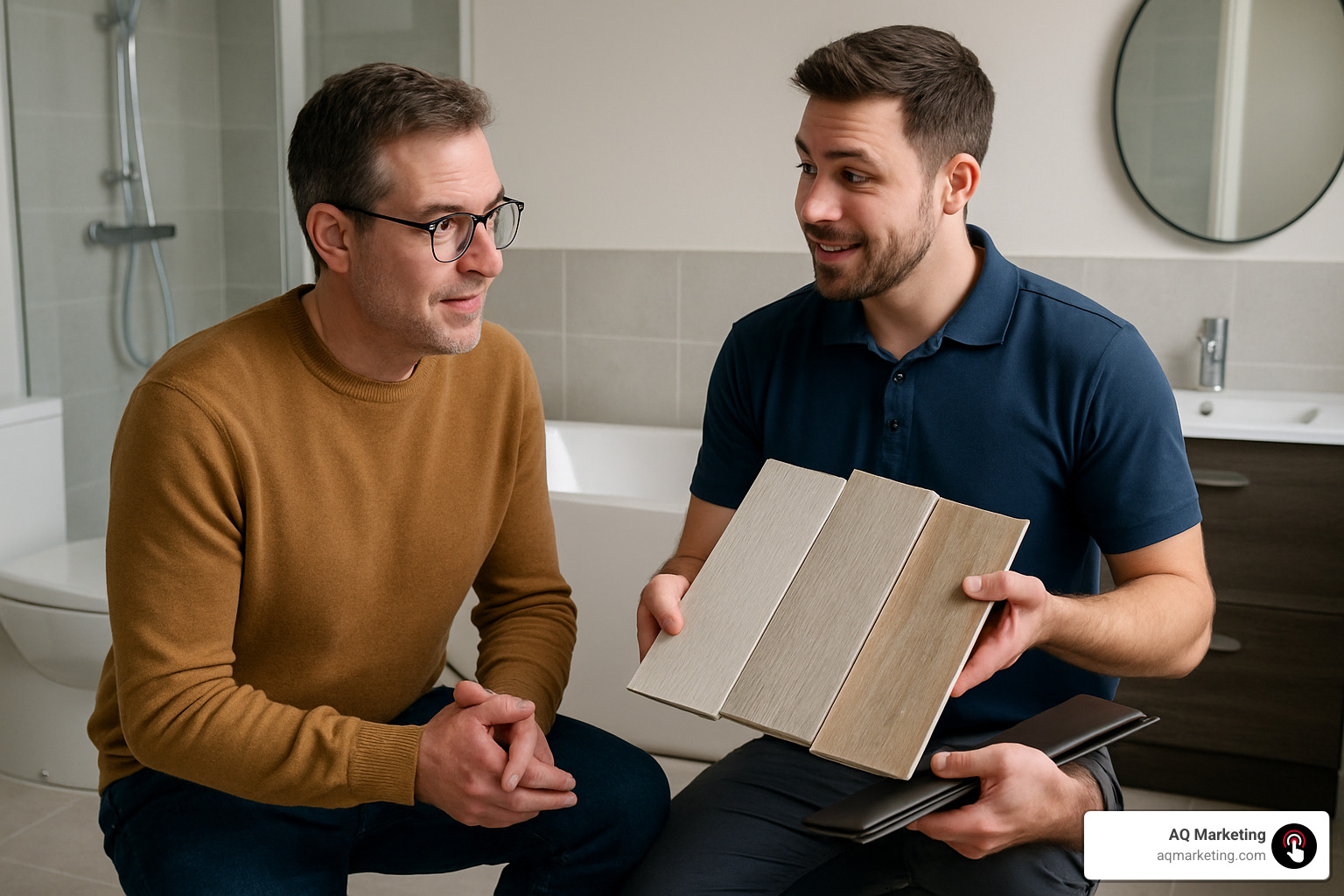
Pictures speak volumes when assessing bathroom flooring installers. Request to see their bathroom-specific portfolio and look for these telltale signs of quality craftsmanship:
Clean, consistent grout lines that follow a straight pattern
Precise cuts around toilet flanges, vanities, and other fixtures
Thoughtful transitions where the flooring meets other materials
Proper slope near shower areas to direct water toward drains
Complex pattern execution like herringbone or basketweave designs
A professional who takes pride in their work will eagerly show you detailed before-and-after photos that demonstrate their problem-solving abilities and attention to detail.
Must-Ask Questions for Bathroom Flooring Installers
When you sit down with potential bathroom flooring installers, the conversation should go beyond basic pricing. Here are essential questions that will reveal their expertise:
“Can you walk me through your waterproofing process?” Listen for specific membrane brands and application methods—vague answers suggest inexperience with bathroom moisture challenges.
“What kind of subfloor preparation is included?” They should mention moisture testing, leveling procedures, and appropriate underlayment options for your specific situation.
“How will you handle the transition between my bathroom and hallway?” This reveals their attention to those small but important details that make a finished project look polished.
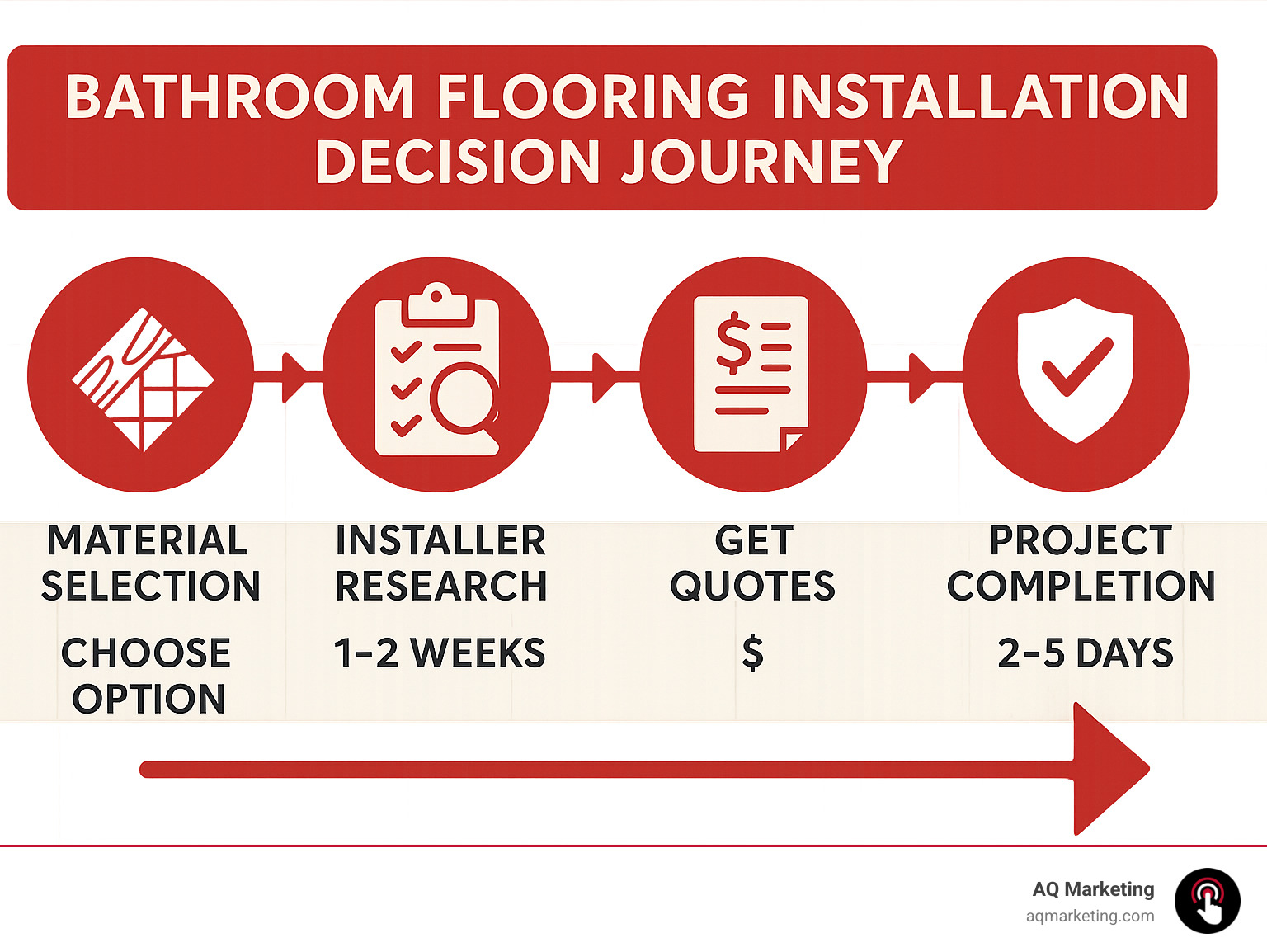
“What’s your typical timeline for a bathroom like mine, and what might cause delays?” Honest professionals will give realistic timeframes and explain potential complications.
“Do you handle permits, and what’s your payment schedule?” Be wary of anyone requiring full payment upfront—a reasonable deposit followed by progress payments is standard practice.
Red Flags When Interviewing Bathroom Flooring Installers
Trust your instincts when meeting with potential bathroom flooring installers. Watch out for these warning signals:
Dramatically lower bids than other quotes often mean corners will be cut on materials or preparation steps. Good waterproofing isn’t where you want to save money!
Vague contract language that doesn’t specify materials, timeline, or warranty details can lead to misunderstandings and disappointment.
Pressure tactics suggesting “this price is only good today” rarely come from truly qualified professionals who stand behind their work.
No physical business address or reluctance to provide insurance documentation should immediately raise concerns about legitimacy.
Cash-only payment requests might indicate a business operating outside normal tax and licensing requirements.
Leveraging Digital Marketing to Find & Judge Pros
The online presence of bathroom flooring installers can tell you a lot about their business approach. Look for:
A professional website featuring detailed service descriptions and an extensive project gallery
Active social media accounts where they regularly share recent work and customer feedback
Educational content that demonstrates their knowledge about bathroom flooring challenges
A complete Google My Business profile with verified reviews and timely responses
At AQ Marketing, we’ve helped countless flooring professionals in the Boston area develop their online presence to better showcase their craftsmanship. We’ve seen how the most reliable bathroom flooring installers use digital platforms not just for promotion, but as tools to educate homeowners and set realistic expectations.
For more information about how quality businesses present themselves online, check out our specialized More info about Tile Company Website Design Worcester MA resource, where we break down what makes an effective contractor website that truly serves both the business and potential clients.
Costs, Timelines & Waterproofing Secrets
Let’s talk about what you’re really investing in when you hire bathroom flooring installers – both in terms of your budget and your time. Understanding these details upfront helps set realistic expectations and prevents those mid-project surprises we all dread.
Cost Breakdown: What You’re Really Paying For
When you see that average cost of $6-$10 per square foot for professional bathroom floor installation, you might wonder where that money actually goes. Typically, it breaks down like this:
About 60-70% covers the skilled labor – the experienced hands that ensure your floor is installed correctly. The remaining 30-40% goes toward installation materials like underlayment, adhesives, and grout (this doesn’t include the cost of your actual flooring material).
What makes your project fall on the higher or lower end of that range? Several factors come into play. Bathrooms with irregular shapes or lots of fixtures require more precise cutting and fitting, which takes more time. If your subfloor needs significant repairs due to water damage or unevenness, that adds to both labor and materials. And removing existing flooring can be straightforward or challenging – pulling up old ceramic tile is much more labor-intensive than removing vinyl.
Don’t forget that where you live matters too – installation rates in Boston will be different than those in smaller Massachusetts communities.
Typical Installation Process Step-by-Step
When professional bathroom flooring installers tackle your project, they follow a methodical process that ensures lasting results:
First comes the complete removal of your existing flooring, taking it right down to the subfloor and clearing away all old adhesives or mortar. Next, they’ll carefully inspect that subfloor, looking for any water damage, unevenness, or structural issues that need addressing before moving forward.
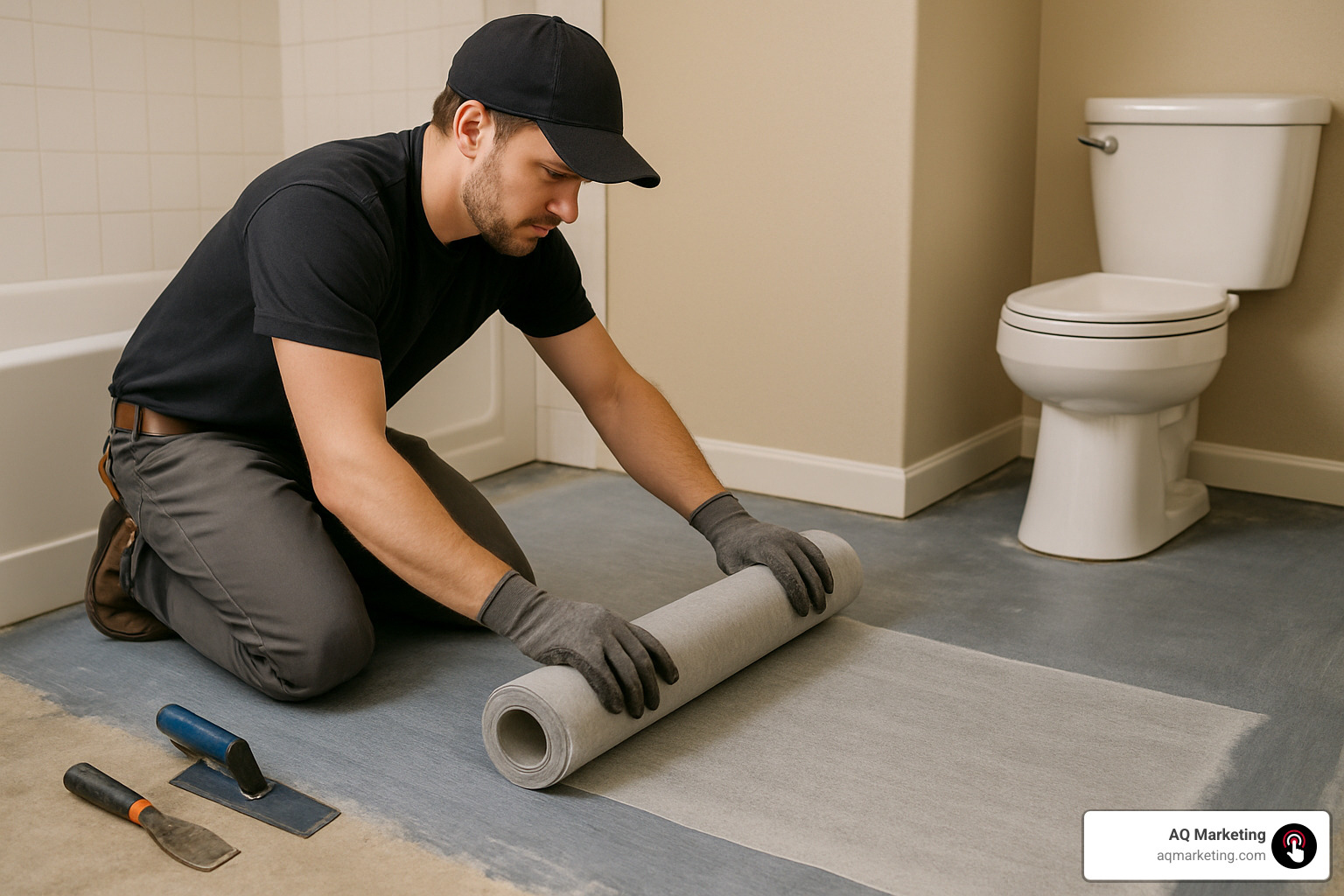
In bathrooms, moisture testing is critical – this step is often skipped by DIYers but never by pros. They’ll then plan the layout, often dry-fitting materials to ensure the pattern looks balanced and to minimize waste from cutting.
The real magic happens with the underlayment installation, which varies depending on your flooring choice. Then comes the actual flooring installation using the appropriate adhesives, mortar, or floating floor systems according to manufacturer specifications.
For tile installations, proper grouting and sealing follow, with careful cleanup and sealer application. The job finishes with installing trim and transitions, followed by a thorough cleaning and quality inspection.
How Long Do Bathroom Flooring Installations Take?
“How long will I be without my bathroom?” It’s one of the most common questions bathroom flooring installers hear, and for good reason. Here’s what you can realistically expect:
A small powder room of 20-30 square feet typically takes just 1-2 days. Your standard bathroom (40-60 square feet) usually requires 2-3 days from start to finish. Larger master bathrooms of 80-120+ square feet generally need 3-5 days for complete installation.
These timelines include removing your existing flooring, but several factors might extend the schedule. If your subfloor needs extensive repairs, that adds time. Choosing complex tile patterns like herringbone or basket weave looks gorgeous but requires more precise cutting and placement. Custom features like decorative borders or inlays are also time-intensive, as is adding heated flooring.
With tile installations especially, there’s curing time to consider. Your floor might be installed, but you’ll need to wait before it can bear weight or be exposed to water. A good installer will clearly explain when your bathroom will be fully functional again.
Waterproofing Secrets from Professional Installers
The true difference between amateur and professional bathroom flooring installers often comes down to their waterproofing expertise. This is where cutting corners can lead to disaster down the road.
Professional installers select the right waterproofing membrane for your specific situation – whether that’s sheet membranes like Schluter-KERDI or liquid-applied products. They pay special attention to transition areas like shower thresholds, tub edges, and toilet flanges, which are common sources of water infiltration.
The details matter tremendously: proper membrane overlap, careful seam sealing, and correct integration with drains and fixtures. Pros also know which sealants to use in movement joints and around fixtures to prevent water penetration.
Many homeowners don’t realize that different areas of the bathroom need different approaches. The shower area requires complete waterproofing systems, while areas further from water sources might need less intensive treatment. Professional installers understand these nuances and apply the appropriate solutions throughout your space.
Vapor barriers are another “secret weapon” that professionals deploy, especially over wood subfloors, to prevent moisture from moving up through the subfloor and compromising your new flooring. This attention to waterproofing detail is ultimately what protects your investment for years to come.
Frequently Asked Questions about Bathroom Flooring Installers
What warranties should I expect?
When investing in new bathroom flooring, understanding your warranty coverage provides important peace of mind. Most reputable bathroom flooring installers offer a dual warranty approach that protects both the work and the materials.
You should receive a labor warranty of at least one year from your installer. This covers any installation-related issues that might emerge, like tiles coming loose or grout cracking due to improper installation techniques. The better the installer, the more confident they typically are in standing behind their work.
Material warranties come directly from manufacturers and vary widely depending on what you’ve chosen. Luxury vinyl might carry a 15-year warranty, while premium porcelain could be warranted for 25 years or more. Your installer should provide these warranty documents and explain them clearly.
Be sure to read the fine print! Some warranties become void if you use harsh cleaning chemicals or fail to perform recommended maintenance. Always get warranty details in writing before your installation begins, and keep those documents in a safe place for future reference.
How do installers dispose of old flooring responsibly?
Environmental responsibility is increasingly important in home renovation, and flooring removal creates significant waste. Good bathroom flooring installers have established systems for handling your old materials properly.
Most professionals partner with specialized waste management companies that can separate and process different materials appropriately. Vinyl flooring, metal transition strips, and certain wood components can often be recycled rather than sent to landfills. If your home was built before the 1980s, your installer should also test for asbestos in older flooring, as this requires specialized handling by certified professionals.
Some installers include disposal fees in their quotes, while others list them separately. During your initial consultation, ask specifically about their disposal practices and any associated costs. Responsible disposal may cost slightly more, but it’s better for our environment and often required by local regulations.
What maintenance will my new floor need?
Your beautiful new bathroom floor will only stay that way with proper care, and maintenance needs vary significantly by material. Your bathroom flooring installers should provide specific guidance for your chosen flooring.
For porcelain or ceramic tile, regular sweeping and occasional mopping with a manufacturer-approved cleaner will handle day-to-day maintenance. The grout, however, typically needs annual sealing to prevent moisture absorption and staining. Avoid acidic cleaners like vinegar, which can damage grout over time.
Luxury vinyl plank flooring offers easier maintenance—regular sweeping and damp (not wet) mopping is usually sufficient. Avoid wax-based products that can leave residue, and use cleaners specifically formulated for vinyl flooring.
Natural stone requires the most vigilant care. Different stones need different sealers applied at varying intervals—some annually, others every few years. Always use pH-neutral cleaners designed for natural stone, and wipe up spills immediately to prevent staining or etching.
Engineered wood in bathrooms needs gentle treatment with minimal moisture. Use only slightly damp mops and cleaners specifically designed for engineered wood floors. Excessive water is the enemy of any wood product, even engineered varieties.
Your installer should leave you with specific written care instructions and product recommendations custom to your new flooring. Following these guidelines will help ensure your bathroom floor remains beautiful for many years to come.
Conclusion
Finding the right bathroom flooring installers makes all the difference between a floor that merely looks good on installation day and one that performs beautifully for years to come. When you invest in quality installation, you’re really investing in peace of mind.
Throughout this guide, we’ve explored the many factors that go into successful bathroom flooring projects. From material selection to waterproofing techniques, professional installers bring expertise that simply can’t be matched by DIY approaches. Their knowledge protects your home from moisture damage while ensuring your new floor looks its absolute best.
When searching for bathroom flooring installers near you, remember these key takeaways:
Verify all credentials thoroughly, including insurance coverage and specialized bathroom experience. A general flooring installer may not understand the unique moisture challenges bathrooms present. Take time to review portfolios with a critical eye, focusing specifically on previous bathroom projects that resemble your vision.
Don’t hesitate to ask detailed questions about waterproofing methods and subfloor preparation—quality installers welcome these conversations and will explain their approach clearly. Always get comprehensive written quotes and contracts that spell out exactly what’s included. And perhaps most importantly, check reviews and references from previous bathroom projects, paying special attention to comments about long-term performance.
At AQ Marketing, we’ve spent the last two decades helping skilled bathroom flooring installers in Boston, Woburn, and throughout Middlesex County connect with homeowners through effective digital marketing strategies. Our experience has taught us what truly separates exceptional installers from merely adequate ones—and how to help homeowners find the professionals they need for successful projects.
Future-proof your bathroom by making informed choices today. The right materials installed by qualified professionals will stand up to years of daily use while maintaining their beauty. Proper installation is just as important as the materials themselves when it comes to longevity and performance.
Whether you’re a homeowner starting on a bathroom renovation journey or a flooring installation professional looking to grow your business in today’s digital landscape, success comes down to quality, transparency, and technical expertise. More info about pay-per-click services can help installers reach more potential customers in their service areas.
Ready to transform your bathroom with beautiful, properly installed flooring? Start your search for qualified bathroom flooring installers today using the guidelines we’ve shared. With the right professional partner, you’ll enjoy the confidence that comes from knowing your bathroom floor will remain beautiful and functional for years to come.