

What is Search Engine Optimization? Top Guide 2025
What is search engine optimization? At its core, search engine optimization (SEO) is the art and science of enhancing your website to make it more visible on search engine results pages (SERPs). This process involves multiple tactics that aim to increase the quantity and quality of traffic to your site through organic, unpaid search results.
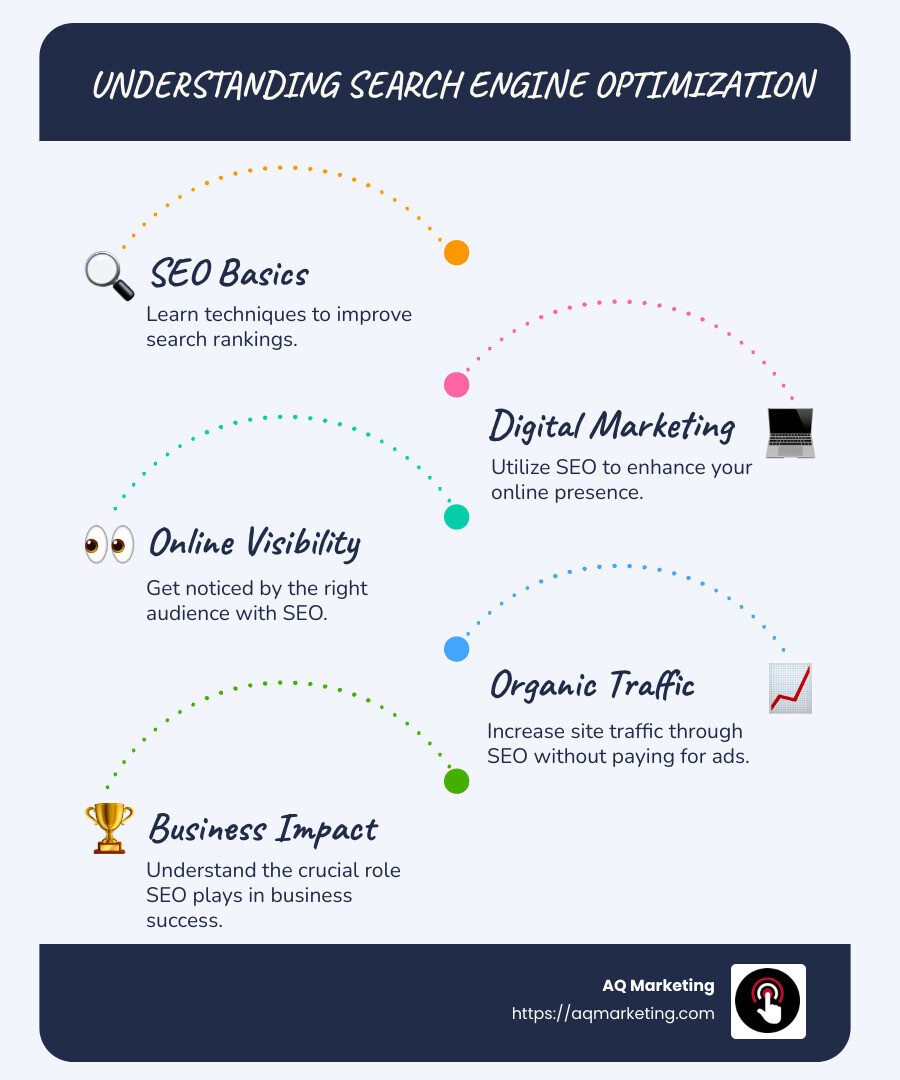
- SEO Basics: Techniques to improve your rankings on search engines.
- Digital Marketing: The use of SEO to improve online presence.
- Online Visibility: SEO’s role in getting your site noticed by the right audience.
In today’s digital-first world, understanding what is search engine optimization can significantly impact your business’s success online. SEO is a vital pillar of digital marketing that helps connect businesses with potential clients searching for their services or products online.
I’m Robert P. Dickey, the President and CEO of AQ Marketing. With over 20 years of experience in digital marketing, I have helped numerous businesses grasp the intricate details of what is search engine optimization to thrive online.
Simple guide to what is search engine optimization:
– search engine optimization services
– best seo tools for small businesses
– affordable seo
What is Search Engine Optimization?
Search Engine Optimization (SEO) is the process of making your website more attractive to search engines like Google. When done right, it helps your site appear higher on search engine results pages (SERPs). This means more people will see your site when they search for related topics, leading to increased organic traffic.
Understanding SEO
Imagine your website is a book in a huge library. SEO is like making sure your book has a clear title, a detailed table of contents, and is placed on the right shelf, so people looking for that kind of book can easily find it.
In the digital world, this means using the right words (keywords) in your content, having other websites link to yours (backlinks), and ensuring your site runs smoothly on all devices.
Search Engine Results Pages (SERPs)
When you type a query into a search engine, the results you see are called search engine results pages. These pages display two types of results: paid ads and organic listings. SEO focuses on improving your organic listings, which are the unpaid results.
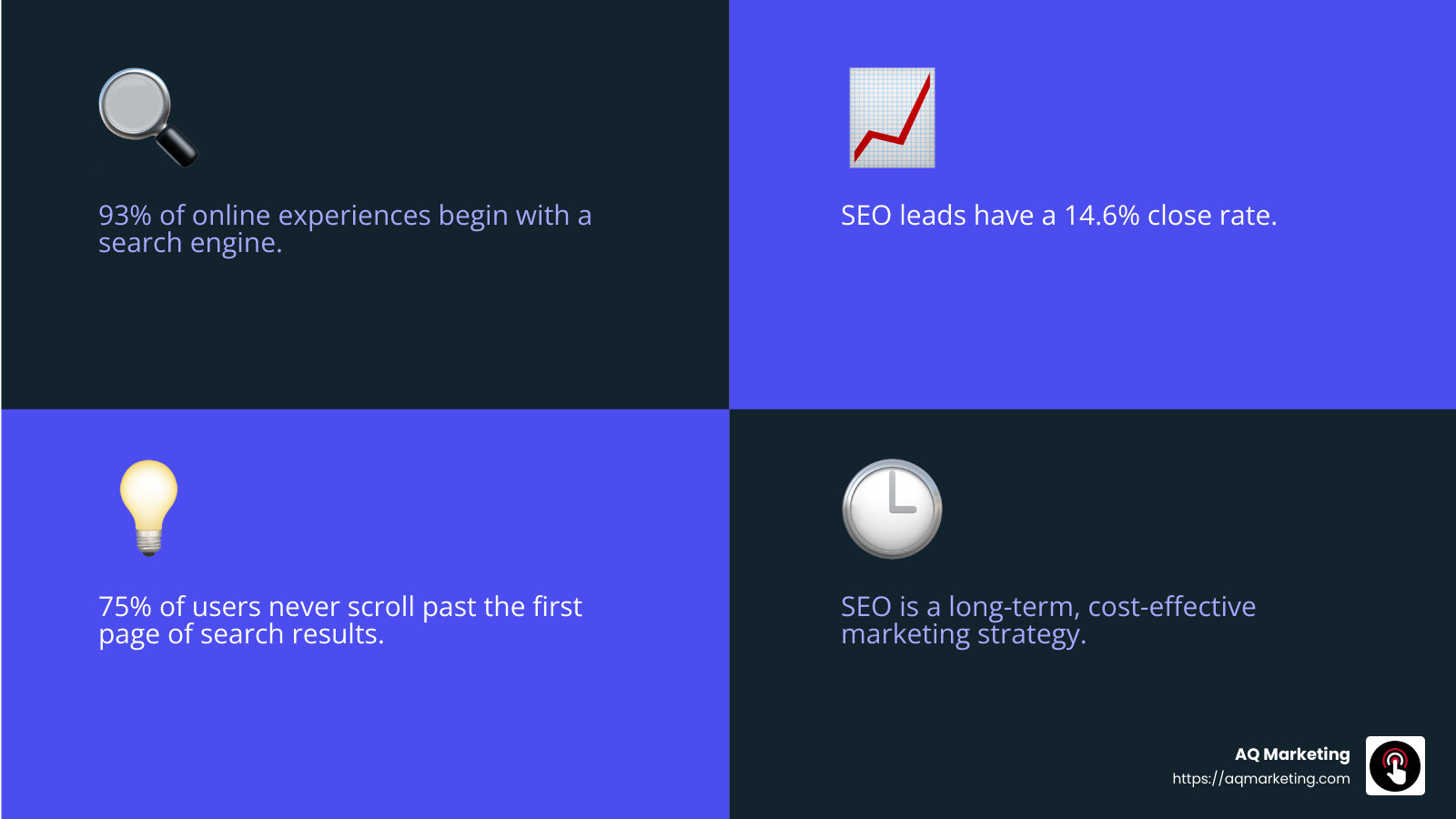
The goal is to get your website to appear at the top of these pages. Why? Because most users click on the first few results they see. In fact, only 0.63% of searchers click on results from the second page of Google.

Organic Traffic
Organic traffic refers to visitors who come to your site through unpaid search results. Unlike paid ads, which require ongoing investment, organic traffic is free. This makes SEO a cost-effective strategy for long-term growth.
Think of organic traffic as a stream of potential customers flowing to your site. The more optimized your site is for search engines, the larger this stream becomes.
In summary, search engine optimization is about making your website more visible and attractive to search engines, leading to increased organic traffic. This is a crucial part of digital marketing, helping businesses reach more potential customers online.
Next, we’ll dive into how SEO actually works, exploring the processes of crawling, indexing, and ranking.
How Does SEO Work?
To understand how SEO works, let’s break it down into a few key processes: crawling, indexing, ranking, and algorithms.
Crawling
Crawling is the first step in the search engine process. Imagine tiny robots, known as crawlers, scouring the internet to find new and updated content. These bots, like Google’s crawler, follow links from one page to another, much like a reader flipping through pages of a book. They look for new pages, changes to existing pages, and dead links.
But what if your site is a hidden gem? You can help these crawlers by providing a sitemap. A sitemap is like a treasure map for crawlers, guiding them to all the important pages on your site.
Indexing
Once a page is crawled, the next step is indexing. Think of indexing as organizing a giant library. Search engines analyze the content, images, and files on your page and store this information in a massive database, known as the index.
Not every page makes it into this index. For example, pages with duplicate content or those that are hard to steer might be left out. To increase your chances, ensure your content is unique, valuable, and easy to read.
Ranking
Now, how does Google decide which pages to show first? This is where ranking comes in. When you search for something, Google sifts through its index to find the most relevant pages. It then orders these pages based on their relevance and quality.
Ranking is influenced by many factors. Consistent publication of high-quality content is crucial, accounting for about 26% of Google’s ranking factors. Other important factors include keywords in the meta title (17%) and backlinks (15%).
Algorithms
Behind all these processes are complex algorithms. These are sets of rules that determine how pages are ranked. Google, for instance, uses algorithms to evaluate hundreds of factors, such as content quality, user engagement, and site speed.
These algorithms are like secret recipes. They are constantly updated to improve search results. This means SEO is not a one-time task but an ongoing process. Staying updated with algorithm changes is key to maintaining and improving your site’s ranking.
SEO involves understanding and optimizing these processes—crawling, indexing, ranking, and algorithms—to improve your website’s visibility on search engines.
Next, we’ll explore the key components of SEO, including keywords, backlinks, and technical SEO.
Key Components of SEO
Understanding the key components of SEO is like having a toolkit for boosting your website’s visibility. Let’s explore some of these essential tools: keywords, backlinks, technical SEO, and content optimization.
Keywords
Keywords are the words and phrases people type into search engines. Think of them as the bridge between what people are searching for and the content you provide. To find the best keywords, start with a seed list—words and phrases your ideal customers might use. Then, plug these into a keyword research tool to see which ones have a good search volume and low competition. A well-researched keyword strategy can help you rank higher and attract the right audience.
Backlinks
Backlinks are like votes of confidence from other websites. When a reputable site links to yours, it signals to search engines that your content is valuable and trustworthy. The more high-quality backlinks you have, the better your chances of ranking higher. However, not all backlinks are created equal. Focus on earning links from authoritative sites related to your industry. This can be achieved through guest blogging, creating shareable content, or simply reaching out to industry partners.
Technical SEO
Technical SEO is the backbone of your website’s performance. It involves optimizing the technical aspects to ensure search engines can easily crawl and index your site. Key elements include:
- Site speed: Fast-loading pages improve user experience and are favored by search engines.
- Mobile-friendliness: With more people searching on phones, a mobile-friendly site is crucial.
- Structured data: This helps search engines understand your content better, improving how you appear in search results.
A technically sound website is not just about pleasing search engines; it’s about providing a seamless experience for your visitors.
Content Optimization
Content optimization is about creating high-quality, relevant content that resonates with your audience. This involves more than just stuffing keywords into your text. Your content should:
- Align with the search intent of your keywords.
- Be well-organized, using headings and subheadings.
- Include multimedia like images and videos to enrich the experience.
- Be unique, in-depth, and regularly updated.
Google values content that is informative and valuable, so always aim to be a reliable source of information in your field.
By focusing on these key components—keywords, backlinks, technical SEO, and content optimization—you can improve your website’s visibility and attract more organic traffic. Up next, we’ll dig into the different types of SEO, including on-page, off-page, and local SEO.
Types of SEO
When it comes to search engine optimization, understanding the different types of SEO is crucial. Each type plays a unique role in improving your website’s visibility and attracting more visitors. Let’s explore the main categories: On-page SEO, Off-page SEO, Technical SEO, Local SEO, and Ecommerce SEO.
On-page SEO
On-page SEO is all about optimizing the content on your website. This includes using the right keywords, crafting compelling title tags and meta descriptions, and ensuring your content is well-structured with headers and subheadings. It’s like setting up a storefront; you want everything to look appealing and be easy to steer.
- Keywords in Titles and Headers: Make sure your main keyword is in the title and headers to signal search engines about your page’s topic.
- Content Quality: Write unique, well-written, and informative content that meets your audience’s needs.
Off-page SEO
Off-page SEO focuses on activities outside your website that can influence your rankings. This mainly involves building backlinks from other reputable sites. Think of it as your website’s reputation in the online world.
- Backlinks: Gain links from high-authority sites to boost your credibility.
- Social Signals: Engage with your audience on social media to increase brand awareness and drive traffic.
Technical SEO
Technical SEO ensures that search engines can easily crawl and index your site. It’s like the engine of a car; it needs to run smoothly for the car to perform well.
- Site Speed: Fast-loading pages are favored by both users and search engines.
- Mobile-Friendliness: Ensure your site looks good and works well on all devices.
- Structured Data: Use schema markup to help search engines understand your content better.
Local SEO
Local SEO is essential for businesses that serve specific geographic areas. It’s about making sure your business shows up in local search results, like when someone nearby searches for “pizza near me.”
- Google My Business: Claim and optimize your listing to appear in local search results.
- Local Keywords: Use keywords that include your city or region to attract local customers.
Ecommerce SEO
Ecommerce SEO is custom for online stores. It focuses on optimizing product pages to attract and convert potential buyers.
- Product Descriptions: Write detailed and unique descriptions for each product.
- User Reviews: Encourage customer reviews to build trust and improve rankings.
- Site Structure: Ensure easy navigation so users can find products quickly.
By understanding and implementing these different types of SEO, you can create a comprehensive strategy that boosts your website’s visibility and drives more traffic. Next, we’ll explore the differences between SEO and SEM, including how they fit into your overall marketing strategy.
SEO vs. SEM and PPC
In digital marketing, understanding the difference between SEO, SEM, and PPC is key to crafting a successful strategy. These terms are often used interchangeably, but they have distinct meanings and roles.
Search Engine Marketing (SEM)
Search Engine Marketing (SEM) is an umbrella term that covers both SEO and PPC. It’s all about increasing your website’s visibility on search engine results pages (SERPs). While SEO focuses on organic search results, SEM includes paid search strategies like PPC.
Pay-Per-Click (PPC)
Pay-Per-Click (PPC) is a type of online advertising where you pay each time someone clicks on your ad. Think of it like putting up a billboard, but you only pay when someone actually stops to look at it. Google Ads is a popular platform for PPC campaigns. Advertisers bid on specific keywords, and their ads appear at the top of search results when those keywords are searched.
- Immediate Results: Unlike SEO, which takes time to show results, PPC can provide immediate visibility.
- Targeted Reach: You can target specific demographics, locations, and times for your ads to appear.
Organic vs. Paid
The main difference between SEO and SEM lies in how search results are achieved:
- SEO (Organic Search): Involves optimizing your website to rank higher in unpaid search results. This requires time and effort but can lead to sustained visibility.
- SEM (Paid Search): Uses paid ads to achieve top positions on the search results page. This provides quick results but requires a budget.
Organic traffic is often seen as more valuable because users tend to trust non-paid search results more. However, combining SEO and PPC can be a powerful strategy. While SEO builds a strong foundation for long-term success, PPC can boost your visibility and reach in the short term.
Think of SEO as a marathon and PPC as a sprint. Both have their place in a well-rounded digital marketing strategy, and using them together can maximize your online presence.
Next, we’ll dive into some frequently asked questions about SEO to further clarify its role and importance in digital marketing.
Frequently Asked Questions about SEO
What is an example of SEO?
Imagine you own a bakery in Boston, MA. You want people searching for “best cupcakes in Boston” to find your website. On-page optimization is one way to achieve this. This involves using the right keywords in your content, such as “Boston cupcakes” or “best bakery in Boston,” to match what people are searching for.
Keyword usage is crucial here. By integrating these keywords naturally into your page titles, headers, and body text, you help search engines understand what your page is about. This increases the chances of your website appearing higher in search results.
How to do SEO for beginners?
If you’re new to SEO, start with the basics. First, create descriptive URLs. A URL like “yourbakery.com/best-boston-cupcakes” is more informative than “yourbakery.com/page1.”
Next, focus on link building. This means getting other reputable websites to link back to your site. Think of it as getting votes of confidence from other sites. For example, if a local food blog writes about your bakery and links to your site, it signals to search engines that your site is trustworthy and relevant.
Why is SEO important in digital marketing?
SEO is like a magnet for organic traffic. When done right, it draws people to your website without paying for ads. This is crucial because organic search is often the primary source of website traffic.
Moreover, SEO improves search engine visibility. When your site ranks higher, more people see it, which increases the chances of clicks and visits. This visibility builds your brand’s credibility and trustworthiness over time.
SEO is a foundational element of digital marketing. It helps you reach the right audience, improves your brand’s online presence, and ultimately drives growth. Next, we’ll explore how AQ Marketing can help you achieve long-term results and improve your online presence.
Conclusion
At AQ Marketing, we believe in the power of long-term results. Since 2003, we’ve been helping small to medium-sized businesses improve their online presence through effective SEO strategies. Our mission is to ensure that your business not only ranks higher but also stays there, driving consistent traffic and growth.
Improving your online presence is more than just climbing the search engine results pages. It’s about building a digital footprint that attracts and retains customers. With our expertise in SEO, website design, and social media management, we create a comprehensive digital marketing strategy custom to your needs.
Our focus on industries like home services and insurance means we understand the unique challenges and opportunities in these fields. We use this knowledge to deliver solutions that are both impactful and sustainable.
Whether you’re based in Boston, Woburn, or anywhere in the Middlesex County area, we’re here to help you steer the complexities of SEO. Our team is committed to making sure your business stands out in the crowded digital landscape.
Ready to take your online presence to the next level? Contact us today to learn how AQ Marketing can help you achieve lasting success.
