

Facebook Ad Campaign Analysis: Top 10 Powerful Insights
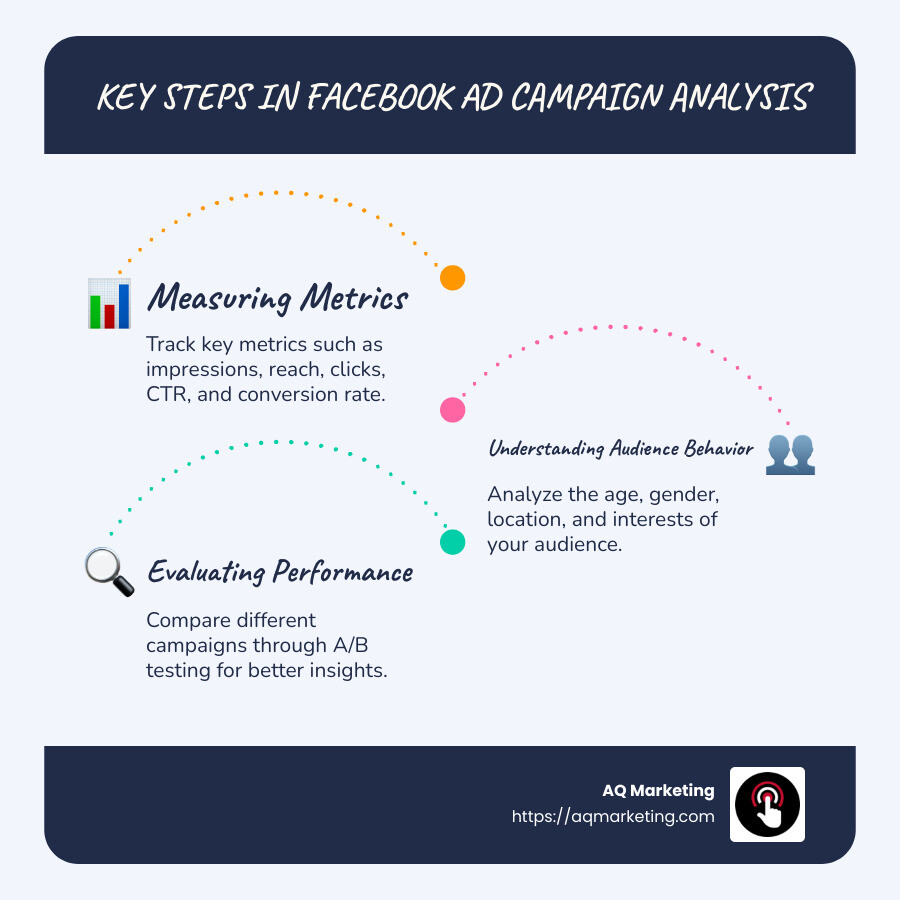
Facebook ad campaign analysis is essential for any business looking to optimize their marketing efforts on the platform. At a glance, this process involves:
- Measuring Metrics: Track key metrics such as impressions, reach, clicks, click-through rate, and conversion rate.
- Understanding Audience Behavior: Analyze age, gender, location, and interests of your audience.
- Evaluating Performance: Compare the performance of different campaigns through A/B testing for better insights.
Open uping insights from Facebook ad campaigns allows businesses to fine-tune their strategies, improve ROI, and better connect with potential customers by understanding their interactions and preferences.
Through Facebook ad campaign analysis, businesses gain the power to boost their brand’s visibility and engagement. This is done by assessing how well their ads perform and making informed decisions to improve their marketing efforts. This approach doesn’t just stop at understanding campaign success; it provides a roadmap for future initiatives as well.
I’m Robert P. Dickey, President and CEO of AQ Marketing, where I use over 20 years of expertise in marketing to help businesses excel through Facebook ad campaign analysis. My experience includes aiding small and medium-sized businesses in the digital space to effectively leverage marketing strategies.
Facebook ad campaign analysis vocab to learn:
- Local Facebook advertising
- best facebook marketing agency
- how to setup a marketing agency in facebook business manager
Understanding Facebook Ads Manager
Facebook Ads Manager is your central hub for managing and analyzing your ad campaigns. It’s like a control panel for all your advertising efforts on Facebook, where you can create, track, and optimize ads to reach your desired audience.
Campaign Management and Ad Sets
In Ads Manager, campaigns are organized into three levels: Campaigns, Ad Sets, and Ads.
- Campaigns: This is where you set the overall objective for your ads, such as increasing brand awareness or driving conversions.
- Ad Sets: Here, you define your target audience, budget, and ad placements. This level allows you to test different audience segments by creating multiple ad sets within a single campaign.
- Ads: This is where the creative magic happens. You design the visuals and copy that will engage your audience.
Tracking Performance
One of the key features of Ads Manager is its ability to track performance. You can monitor how each ad is doing in real-time, looking at metrics like reach, impressions, and click-through rates. This data is crucial for understanding how your ads are performing and where you might need to make adjustments.
A/B Testing
A/B testing, or split testing, is a powerful tool within Ads Manager that allows you to compare different versions of your ads to see which performs better. By changing one element at a time—like the headline or image—you can determine what resonates most with your audience. This method is essential for refining your strategies and improving your ad performance over time.
A/B testing is like a science experiment for your ads. By testing one variable at a time, you can pinpoint exactly what’s working and what’s not.
Targeting Demographics and Ad Placement
Targeting the right audience is crucial for the success of your ad campaigns. Ads Manager allows you to target users based on demographics such as age, gender, location, and interests. This ensures your ads are seen by the people most likely to be interested in your product or service.
Moreover, you can choose where your ads will appear, whether it’s in the Facebook News Feed, Instagram Stories, or the right-hand column on desktop. Selecting the right ad placements can significantly impact your campaign’s effectiveness.
By utilizing these tools and features within Facebook Ads Manager, you can effectively manage your campaigns, optimize your ads, and reach your target audience more efficiently. This comprehensive approach to campaign management is essential for any business looking to succeed in the digital advertising space.
Next, we’ll dig into the Key Metrics for Facebook Ad Campaign Analysis, exploring how to measure the success of your ads through reach, impressions, CTR, and more.
Key Metrics for Facebook Ad Campaign Analysis
Analyzing your Facebook ad campaigns effectively requires a deep understanding of key metrics. These metrics provide insights into how well your ads are performing and where you can make improvements. Let’s explore the essential metrics you need to track.
Reach and Impressions
Reach and impressions are foundational metrics in Facebook ad analysis.
- Reach refers to the number of unique users who have seen your ad. It’s crucial for understanding how widely your ad is being disseminated across your target audience. A healthy reach indicates that your ad is being shown to a significant portion of your potential customers.
- Impressions, on the other hand, measure how many times your ad is displayed, regardless of whether it was clicked or not. This number is often higher than reach because the same user might see your ad multiple times.
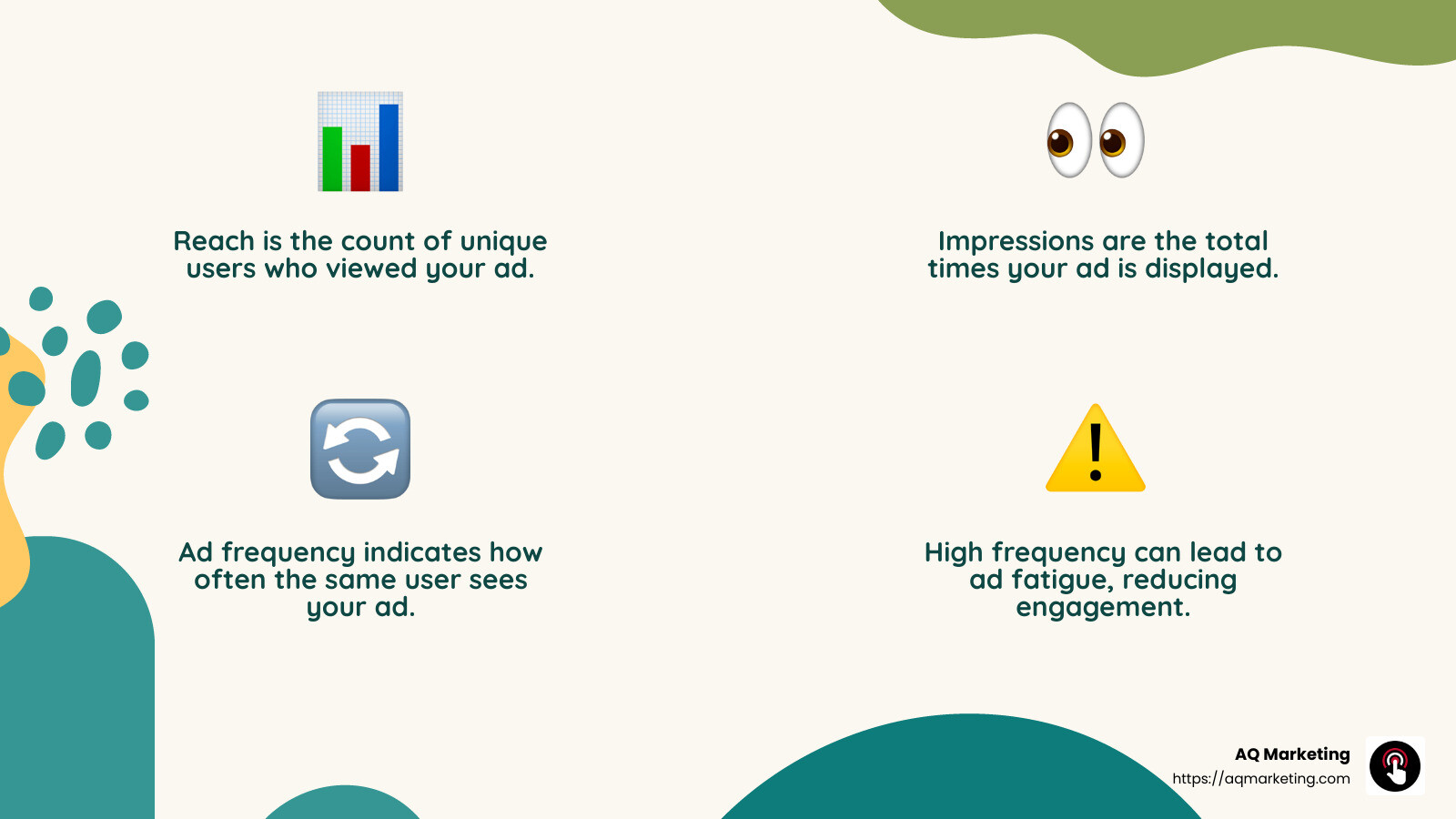
Monitoring these metrics helps in optimizing ad frequency—the average number of times a user sees your ad. A high frequency might lead to ad fatigue, where users become less responsive to your ads.
Click-Through Rate (CTR)
Click-Through Rate (CTR) is a direct measure of ad engagement. It is calculated by dividing the number of clicks your ad receives by the number of impressions, expressed as a percentage.
- A high CTR indicates that your ad resonates well with your audience and prompts them to take action. It reflects the ad relevance and effectiveness in capturing user interest.
When CTR starts to dip, it’s a sign to refresh your ad creatives or tweak your audience targeting. Monitoring user behavior and adjusting your strategy accordingly can keep your CTR healthy.
Conversion Rate
Conversion Rate is all about the desirable actions users take after interacting with your ad. Whether it’s signing up for a newsletter, making a purchase, or downloading an app, conversion rate measures the effectiveness of your ad in driving these actions.
- To calculate conversion rate, divide the number of conversions by the total number of clicks, then multiply by 100 to get a percentage.
A strong conversion rate signifies that your ad not only attracts clicks but also leads to meaningful user interactions and meets your conversion goals.
Return on Ad Spend (ROAS)
Return on Ad Spend (ROAS) is a critical metric for evaluating the financial success of your ad campaigns. It shows the revenue generated for every dollar spent on advertising.
- Calculating ROAS involves dividing the revenue earned from the ad by the total ad spend.
A high ROAS indicates that your campaign is profitable, while a low ROAS suggests the need for optimization. It’s essential to balance your total profits with ad spend to ensure sustainable revenue generation.
By focusing on these key metrics—reach, impressions, CTR, conversion rate, and ROAS—you can gain valuable insights into your Facebook ad campaign performance and make informed decisions to optimize your strategy.
Next, we’ll explore the Tools for Facebook Ad Campaign Analysis, highlighting how to leverage various platforms for more in-depth insights.
Tools for Facebook Ad Campaign Analysis
When it comes to Facebook ad campaign analysis, having the right tools can make all the difference. Let’s explore some essential tools and techniques that can help you get the most out of your campaigns.
Ads Manager
Ads Manager is your go-to tool for managing and analyzing Facebook ad campaigns. It offers a comprehensive set of features to develop, manage, and track the performance of your ad campaigns. With Ads Manager, you can:
- Create and edit ads: Use the intuitive interface to build your campaigns from scratch or modify existing ones.
- Track performance: Monitor key metrics like reach, impressions, CTR, and conversion rates in real-time.
- A/B testing: Test different versions of your ads to see which performs best.
Facebook Business Suite
The Facebook Business Suite integrates all your business tools in one place, making it easier to manage your Facebook and Instagram accounts. It provides:
- Cross-platform reporting: View insights from both Facebook and Instagram in a single dashboard.
- Automation features: Schedule posts, respond to messages, and manage notifications efficiently.
Events Manager
Events Manager is designed to track user interactions on your website and apps. It helps in:
- Conversion tracking: Monitor how users interact with your ads and measure conversions.
- Custom events: Set up specific actions you want to track, like purchases or sign-ups.
Third-Party Tools
In addition to Facebook’s native tools, several third-party platforms can improve your analysis capabilities. These tools often offer advanced features like:
- Custom dashboards: Create custom reports that focus on the metrics most important to you.
- Automation: Set up automated alerts and reports to stay updated without manual checks.
Automation and Cross-Platform Reporting
Automation can save time and ensure consistency in your ad analysis. By automating repetitive tasks, you can focus more on strategic decisions. Cross-platform reporting allows you to compare performance across different channels, providing a holistic view of your marketing efforts.
By leveraging these tools, you can gain deeper insights into your Facebook ad campaigns and make data-driven decisions to optimize performance. Next, we’ll discuss how to create Effective Reports that turn these insights into actionable strategies.
Creating Effective Reports
Analyzing your Facebook ad campaigns is just the beginning. To truly open up insights, you need to create custom reports that translate raw data into actionable strategies. This involves using tools like Power Editor to build reports that are custom to your specific needs.
Custom Reporting Views
With Power Editor, you can create customized columns to focus on the metrics that matter most to your business. By setting up these custom views, you can track everything from click-through rates to conversion rates without being overwhelmed by irrelevant data.
Here’s how to make the most of custom reporting views:
- Save Presets: Once you’ve set up a view that works for you, save it as a preset. This will save you time and ensure consistency in your analysis.
- Data Visualization: Use charts and graphs to make complex data easy to understand. Visuals can help spot trends and patterns quickly.
Actionable Insights
Creating reports is not just about collecting data; it’s about gaining actionable insights that can drive your future campaigns. Here’s how to extract these insights:
- Campaign Performance: Analyze historical data to see what strategies have worked in the past. Look for patterns in real-time data to adjust your campaigns on the fly.
- Future Strategies: Use insights from your reports to plan future campaigns. Identify which ad formats, targeting options, and creative elements lead to the best results.
- Optimization: Continuously refine your campaigns based on performance data. Test new ideas and optimize existing ones to improve return on ad spend (ROAS).
By focusing on custom reports and actionable insights, you can transform your Facebook ad campaign analysis into a strategic advantage. This approach not only helps in understanding current performance but also paves the way for more effective and efficient future campaigns.
In the next section, we’ll dig into Advanced Techniques for Facebook Ad Campaign Analysis, exploring methods like funnel visualization and retention reports to further improve your marketing efforts.
Advanced Techniques for Facebook Ad Campaign Analysis
Taking your Facebook ad campaign analysis to the next level involves diving into advanced techniques. These methods offer deeper insights into your audience’s behavior and the effectiveness of your ads. Let’s explore some key techniques: funnel visualization, retention reports, and revenue reports.
Funnel Visualization
Funnel visualization is a powerful way to understand the user journey from the first ad impression to the final conversion. By setting up a sales funnel, you can track how users interact with your ads at each stage.
- Conversion Tracking: Use Facebook’s tools to monitor conversions at each funnel stage. This helps identify where users drop off and what changes can increase conversions.
- User Journey Mapping: Visualize the path users take through your funnel. This can highlight bottlenecks and opportunities for improvement.
Example: A retailer noticed a significant drop-off at the checkout stage. By analyzing the funnel, they identified a confusing sign-up process as the culprit. Simplifying this step led to a 15% increase in completed purchases.
Retention Reports
Understanding how long users stay engaged with your brand is crucial. Retention reports can provide insights into user loyalty and engagement duration.
- User Retention: Track how many users return to your site or app after their initial visit. High retention rates often indicate satisfied customers.
- Engagement Duration: Measure how long users engage with your content. Longer engagement can signal more interest and potential for repeat purchases.
- Repeat Purchases: Identify which users make multiple purchases. This can help tailor future campaigns to focus on loyal customers.
Fact: According to research, increasing customer retention rates by just 5% can boost profits by 25% to 95% .
Revenue Reports
Revenue reports are essential for understanding the financial impact of your campaigns. They provide data on total revenue generated and average revenue per purchase.
- Total Revenue: Track the overall revenue generated from your Facebook ads. This helps assess the campaign’s financial success.
- Average Revenue per Purchase: Calculate the average income each purchase brings. This metric helps determine the profitability of your ads.
- Optimization: Use revenue data to tweak your campaigns. Focus on ads that generate the highest returns and adjust those underperforming.
A/B Testing: Continuously test different ad elements to see which combinations yield the highest revenue. This iterative process is key to optimizing your ad spend.
Case Study: A small business used A/B testing to compare two ad designs. The test revealed one design led to a 20% higher average purchase value, guiding future ad creative decisions.
By leveraging these advanced techniques, you can gain a comprehensive view of your campaign’s effectiveness and make informed decisions to improve performance. Up next, we’ll tackle frequently asked questions about Facebook ad campaign analysis to further refine your marketing strategy.
Frequently Asked Questions about Facebook Ad Campaign Analysis
How to analyze a Facebook ad campaign?
Analyzing a Facebook ad campaign involves understanding key metrics like reach, impressions, and engagement rates. Start by checking your reach, which tells you how many unique users saw your ad. If you notice a high reach but low engagement, it might indicate that your ad isn’t resonating with your audience.
Impressions show how many times your ad was displayed. A high number of impressions with low engagement might mean your ad is being shown too often to the same people, which can lead to ad fatigue.
Engagement rates measure how users interacted with your ad through likes, comments, and shares. High engagement suggests your ad is relevant and interesting to your audience. To improve these rates, consider testing different ad formats and messages.
How do I read a Facebook ad campaign?
To read a Facebook ad campaign, use the Ads Manager. This tool provides detailed insights into your campaign’s performance. You can view charts that break down metrics like clicks, impressions, and cost per result.
Steer to the campaign insights section to get an overview of how your ads are doing. Look for patterns or trends that can inform your future strategies. For example, if a particular ad set is performing well, consider increasing its budget or using similar strategies in new campaigns.
How do you measure the effectiveness of a Facebook campaign?
The effectiveness of a Facebook campaign is often measured using metrics like click-through rates (CTR), conversion rates, and return on investment (ROI).
Click-through rates indicate the percentage of people who clicked on your ad after seeing it. A low CTR might mean your ad isn’t compelling enough, while a high CTR suggests strong ad relevance and interest.
Conversion rates measure how many users took a desired action, such as making a purchase or signing up for a newsletter, after clicking your ad. This metric is crucial for assessing if your ad is driving meaningful results.
ROI evaluates the financial return of your campaign relative to its cost. It helps you understand if your ad spend is generating profitable returns. To improve ROI, focus on optimizing ads that drive high conversions and refining those that don’t.
By leveraging these metrics, you can gain a clear picture of your campaign’s success and make data-driven decisions to improve future performance.
Conclusion
In summary, effectively analyzing a Facebook ad campaign is crucial for achieving long-term success in digital marketing. By focusing on key metrics like reach, impressions, and engagement rates, businesses can gain valuable insights into their campaign performance. Understanding these metrics allows for informed decisions that improve future strategies.
At AQ Marketing, we specialize in helping small to medium-sized businesses open up the potential of their Facebook ad campaigns. Our expertise in social media marketing ensures that your business achieves impactful results. We are committed to delivering long-term success by implementing strategies that resonate with your target audience and drive meaningful engagement.
Our approach includes continuous optimization and testing to refine ad performance. We know that a successful campaign is not just about reaching more people but reaching the right people with the right message. By leveraging our knowledge and experience, we help businesses maximize their return on ad spend and achieve their marketing goals.
Ready to improve your Facebook ad campaigns? Explore our social media marketing services and find how AQ Marketing can help your business thrive.
In the changing landscape of digital advertising, staying ahead requires not only understanding the basics but also employing advanced techniques like funnel visualization and retention reports. By doing so, businesses can ensure they are not just meeting immediate objectives but also paving the way for sustainable growth.
Let AQ Marketing be your partner in this journey, guiding you through the complexities of Facebook ad campaign analysis and helping you achieve long-term, impactful results.
