"How much does a website cost?" is the most common question we hear from Massachusetts small business owners — and the honest answer is that the price tag matters far less than what the site returns. A cheap site that never brings in a call is expensive. A well-built site that books two extra jobs a month pays for itself and then keeps paying. Here's how to think about the real cost, and what drives it.
Why there's no single price
A website's cost tracks with how much it has to do. A single-page site for a one-person operation is a very different project from a multi-service site for a contractor covering a dozen Greater Boston towns. The main things that move the number:
- How many pages — each service and each key location often deserves its own page, and each page is real work.
- Custom design vs. template — a design built around your brand costs more than a stock theme, but it's what makes you look like the established local business you are.
- Features — booking, forms, galleries, and integrations all add scope.
- Content — words and images that actually sell take time to produce well.
- Ongoing support — hosting, updates, and security are part of the true cost of ownership, not an afterthought.
The three ways businesses usually buy
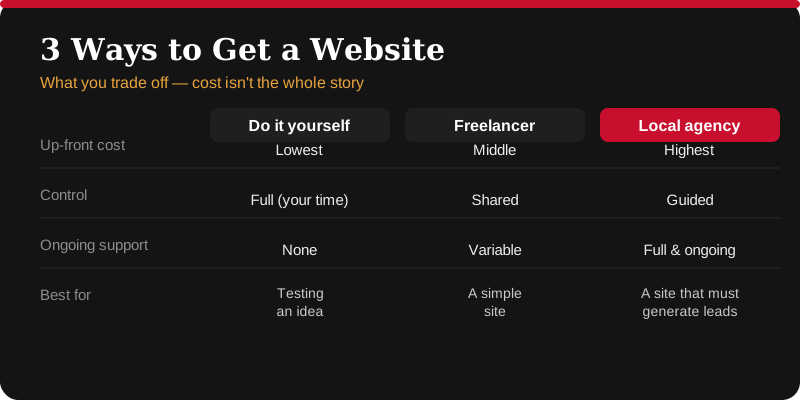
Do it yourself. The cheapest up front, and fine for testing an idea. The hidden cost is your time, and DIY sites often stall on the technical details that make a site fast and findable.
Hire a freelancer. A middle path. You can get good work, but you're depending on one person's availability for the life of the site, and support can be hit or miss.
Work with a local agency. The most complete option: design, content, and the search setup that gets you found, with a team behind it. It costs more than DIY, but for a business that relies on the site for leads, it's usually the best return.
What actually makes a site worth the money
Price aside, a site earns its keep when it does a few things well:
- Loads fast on a phone. Most visitors arrive on mobile; a slow site loses them before the first word.
- Makes the next step obvious. Call, book, or fill a short form — never make a visitor hunt.
- Is built to be found. A beautiful site that Google can't place locally is a billboard in the desert. The search setup is part of the build, not a separate luxury.
- Reflects your business honestly. Real photos, real reviews, clear services. Trust is what converts a visitor into a customer.
The question to ask instead of "how much?"
A better question than "what does a website cost?" is "what is my current website costing me in missed calls?" If your site is slow, unclear, or invisible in local search, the lost work is the real expense — and it's invisible on any invoice.
We build websites for Massachusetts small businesses that are made to get found and to turn visitors into customers — and we're straight with you about scope and price before any work begins. See what's included in our web design services, or get in touch for an honest estimate based on what your business actually needs.
Frequently asked questions
Is a cheap template website good enough for a small business?
It can be a fine starting point, but templates often fall short on speed, local search setup, and standing out from competitors using the same theme. For a business that depends on its site for leads, the difference usually shows up in results.
What ongoing costs should I expect after the site is built?
Plan for hosting, security updates, and occasional content changes. These keep the site fast, safe, and current — skipping them is how sites slowly break or get hacked.
Will a new website automatically rank on Google?
Not by itself. A good site is the foundation, but local ranking also depends on your Google Business Profile, reviews, and ongoing search work. The site and the search setup work together.