Small Business Website Builder: 7 Powerful Best Choices 2025
Why Small Business Website Builders Are Essential for Growth
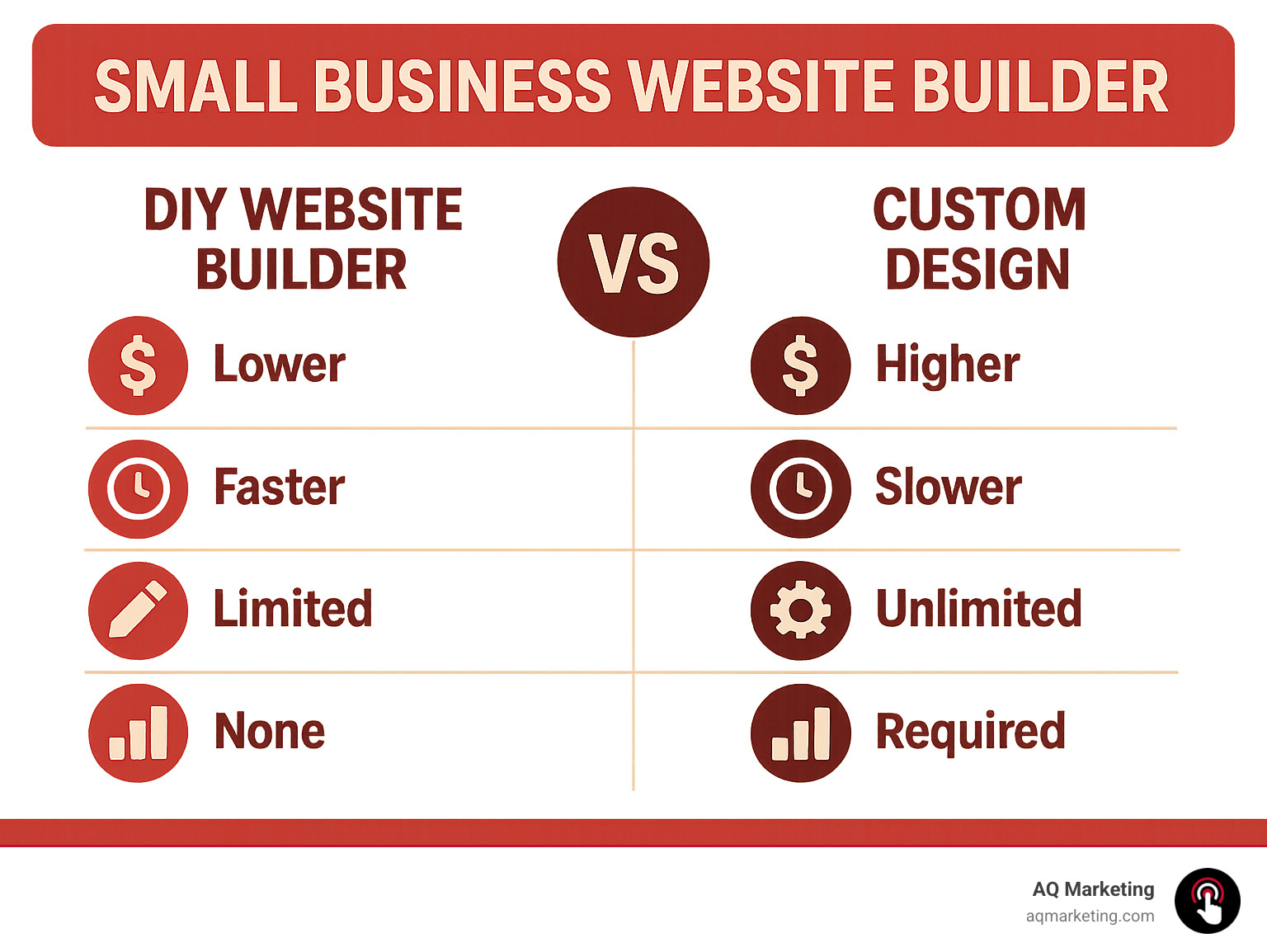
A small business website builder is your fastest path to a professional online presence without hiring expensive developers or learning complex code. These platforms let you create, customize, and launch business websites in hours instead of months.
Top Categories of Small Business Website Builders:
- All-in-one drag-and-drop platforms with hundreds of templates and intuitive editors
- Ecommerce-focused builders that support multiple payment gateways and inventory tools
- Design-centric builders offering polished, visually stunning templates for creative brands
- Budget-friendly options that bundle hosting, SSL, and basic marketing tools at a low monthly cost
- Rapid-setup builders that generate a starter site in minutes and include generous free trials
Modern website builders combine drag-and-drop editing with AI-powered tools that can generate entire sites from simple prompts. Whether you’re a home services contractor, insurance agent, or fitness coach, these platforms eliminate technical barriers while delivering mobile-responsive, SEO-optimized websites.
The key is matching your specific business needs—from simple brochure sites to full ecommerce stores—with the right builder’s strengths and limitations.
I’m Robert P. Dickey, and over my 20+ years in digital marketing, I’ve helped countless businesses choose and implement the right small business website builder solutions. My experience guiding companies through their online change gives me unique insight into what actually works for growing enterprises.
Small business website builder terms at a glance:
– full service website design and management for small business
– best website platform for service business
– how to build a website for a service business
Why Every Small Enterprise Needs a Small Business Website Builder
After helping businesses across Boston, Woburn, and throughout Middlesex County since 2003, I’ve watched small business website builders completely change the game. What used to require months of development time and thousands of dollars now happens in an afternoon with a modest monthly investment.
Today’s platforms pack enterprise-grade features into user-friendly interfaces that anyone can master. You get SSL certificates for security, mobile optimization that works flawlessly, and basic SEO tools that actually help customers find you – all built right in.
Speed matters more than ever in today’s market. While your competitors are still getting quotes from web developers, you could be online capturing leads by dinner time. Modern no-code platforms eliminate the technical headaches that used to keep small business owners awake at night.
The mobile-first approach isn’t optional anymore – it’s survival. Your customers are searching on their phones while standing in line at coffee shops or sitting in waiting rooms. Website builders automatically create mobile-responsive designs that look professional on every device.
Core Benefits for Small Businesses
The biggest game-changer is 24/7 lead generation. Your website works the night shift, weekend shifts, and holiday shifts without overtime pay. It qualifies prospects, collects contact information, and can even process payments while you’re sleeping or focusing on existing customers.
Trust badges and professional design instantly level the playing field with bigger competitors. Research shows visitors decide whether to trust your business within milliseconds of landing on your site. A polished, professional website signals that you’re established and competent.
Modern builders create omnichannel experiences that connect everything. Your website talks to your social media, email campaigns, and even your physical location. Many include built-in CRM systems and appointment scheduling, turning your simple website into a complete business management hub.
Common Pitfalls to Avoid
Template overload paralyzes more business owners than you’d expect. With hundreds of beautiful options, it’s easy to spend weeks comparing designs instead of getting online. Pick an industry-appropriate template in your first session and customize it gradually – perfect is the enemy of done.
Slow-loading sites kill conversions before visitors even see your amazing content. Free plans often come with speed limitations, and cramming too many high-resolution photos without optimization creates frustrating user experiences.
Those free plan advertisements might save money upfront, but they scream “amateur hour” to potential customers. Nothing undermines professional credibility like competitor ads showing up on your business website. Budget for at least a basic paid plan to remove platform branding.
Poor SEO setup wastes all your hard work on design. Many business owners obsess over colors and fonts while completely ignoring meta descriptions, alt tags, and page titles. These invisible elements determine whether customers can actually find your beautiful site through Google searches.
For detailed guidance on avoiding these costly mistakes, check out our comprehensive guide on 5 Website Design Mistakes that can seriously hurt your business growth.
Must-Have Features in a Small Business Website Builder

Choosing the right small business website builder feels overwhelming when you’re staring at dozens of options. After two decades of helping businesses steer these waters, I’ve learned that the best platforms share certain core features that make the difference between a site that works and one that frustrates.
The foundation starts with drag-and-drop editing that actually makes sense. You shouldn’t need a computer science degree to move a button or change a photo. The best builders let you point, click, and drag elements exactly where you want them – no coding required.
AI-powered site generation has become a game-changer for busy business owners. These smart tools can create your entire website from a simple conversation about your business. Describe what you do, and the AI handles the heavy lifting – writing content, selecting images, and structuring pages that convert visitors into customers.
Responsive templates ensure your site looks professional whether someone visits on their phone during lunch or their laptop at home. With most people browsing on mobile devices, this isn’t just nice to have – it’s essential for staying competitive.
The technical essentials include integrated ecommerce capabilities for selling products or services, appointment booking systems for service businesses, blogging platforms for content marketing, and SEO optimization tools that help customers find you online. Don’t forget analytics dashboards to track what’s working and 24/7 customer support for when things go sideways.
Design & Branding Essentials
Your website is often the first impression customers get of your business, so consistency matters more than perfection. The best small business website builder platforms include color themes and typography controls that keep your brand looking professional across every page.
Built-in logo makers save you hundreds of dollars on design fees. These AI-powered tools create multiple logo options based on your business name and industry. While they won’t replace custom design for major brands, they give small businesses a professional starting point without breaking the budget.
Accessibility features ensure everyone can use your website, including visitors with disabilities. Look for builders that prompt you to add alt text for images, check color contrast, and support keyboard navigation.
Ecommerce & Online Selling Toolkit
If you’re selling anything online, inventory management capabilities vary wildly between platforms. Simple product catalogs work for basic needs, while growing businesses need stock tracking, product variants for different sizes or colors, and automatic alerts when you’re running low.
Payment gateway integration determines how customers can pay you. The most flexible builders support dozens of payment methods including credit cards, PayPal, Apple Pay, and regional options your customers prefer. Watch those transaction fees though – they add up quickly.
Tax automation prevents costly compliance mistakes that can haunt small businesses. Choose builders that integrate with tax services, handle multi-state requirements, and generate reports your accountant will actually appreciate.
Marketing, SEO & Growth Tools
Meta tags and structured data form the invisible foundation of search engine success. Quality builders guide you through creating compelling titles and descriptions that appear in search results. This behind-the-scenes work directly impacts whether potential customers click through to your site.
Email campaign integration connects your website visitors to your marketing efforts. The best builders capture email addresses through opt-in forms and automatically add them to follow-up sequences. This turns one-time visitors into long-term customers.
Social media scheduling tools and CRM integration save hours each week while keeping your online presence consistent. Advanced platforms track where leads come from and how they behave on your site, giving you data to make smart business decisions instead of guessing what works.
Recent industry changes highlight why owning your web presence matters. Scientific research on business site shutdowns shows the risks of relying solely on third-party platforms for your online presence.
Emerging AI-Powered Helpers
AI copy generation tools create website content from simple prompts, turning “I need a page about my plumbing services” into professional copy in minutes. While you’ll want to review and personalize the results, these tools eliminate the blank page problem that stops many businesses from launching.
Heatmap analysis reveals where visitors actually click and scroll on your pages. This data often surprises business owners – that important call-to-action button might be in the wrong spot, or visitors aren’t scrolling down to see your best testimonials.
Comparing Types of Small Business Website Builders
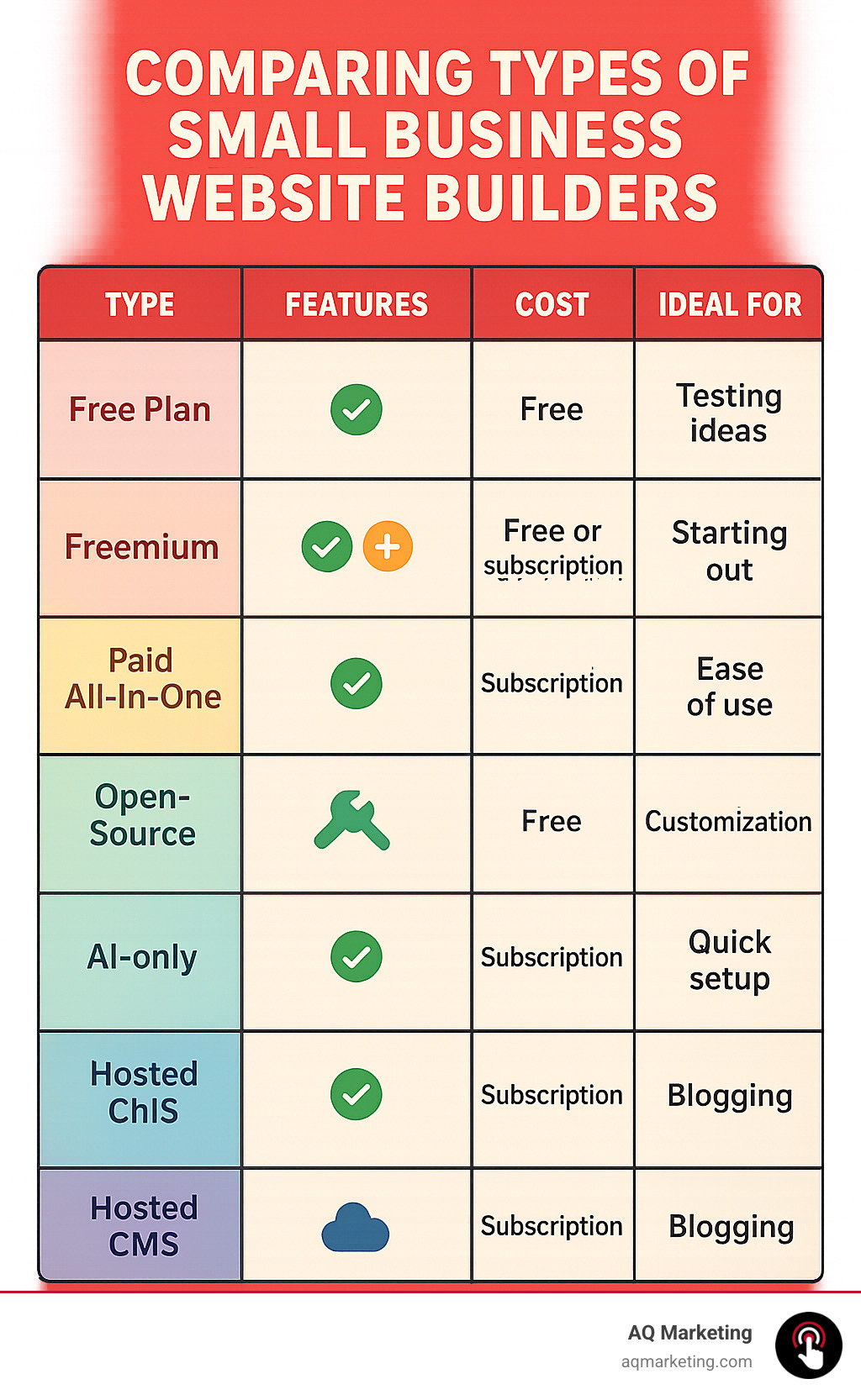
Choosing the right small business website builder feels overwhelming when you’re staring at dozens of options. After helping businesses steer this decision for over 20 years, I’ve learned that understanding the main categories makes everything clearer.
Think of website builders like cars – they all get you from point A to point B, but some are basic economy models while others are luxury vehicles with all the bells and whistles. Your choice depends on your budget, technical comfort level, and business goals.
Free-plan builders are like borrowing your friend’s car. They work for short trips, but you can’t customize them or remove the “Student Driver” sticker. These platforms give you basic website creation at no cost, but you’ll get a subdomain like “yoursite.buildersite.com” and display their advertisements.
Freemium models offer the best of both worlds – start free and upgrade when you’re ready. It’s like test-driving a car before buying. The free versions include enough limitations to encourage upgrades, so think of them as extended trial periods rather than permanent solutions.
Paid all-in-one solutions are the luxury SUVs of website builders. You pay more upfront, but everything’s included – website building, ecommerce, marketing tools, and analytics. No juggling multiple subscriptions or worrying about integration headaches.
Open-source platforms give you complete control, like building your own custom car from parts. They’re incredibly powerful and flexible, but you need technical knowledge to maintain them. Most small business owners find them more trouble than they’re worth.
AI-only builders represent the newest category – imagine a car that drives itself to exactly where you need to go. They create entire websites from simple business descriptions in minutes. The trade-off? Less customization than traditional builders.
Free vs. Paid Plans for a Small Business Website Builder
Here’s the uncomfortable truth about free plans: they work against your business credibility. When potential customers see “yoursite.wixsite.com” instead of “yoursite.com,” they immediately question your professionalism.
The bandwidth caps on free plans can crash your site during traffic spikes. Imagine finally getting featured in the local newspaper, only to have interested customers find a “bandwidth exceeded” error message instead of your website.
Platform advertisements on free plans might actually promote your competitors. Nothing undermines your marketing efforts like having ads for rival businesses displayed prominently on your website.
Transaction fees on free ecommerce plans add up quickly. Most charge 2-3% per sale, while paid plans often include transaction-free processing. If you’re selling $1,000 monthly, those fees already exceed most paid plan costs.
Traditional Drag-and-Drop vs. AI-Generated Sites
Traditional drag-and-drop builders give you complete creative control. You can position every button, adjust every color, and create unique layouts that perfectly match your vision. It’s like being the architect, interior designer, and contractor all rolled into one.
The learning curve varies dramatically between platforms. Some feel as intuitive as rearranging furniture in a room, while others require understanding technical concepts like responsive breakpoints and grid systems.
AI-generated sites prioritize speed over customization. Answer a few questions about your business, and the AI creates a complete website with appropriate content, images, and layout. It’s remarkably effective – what used to take weeks now happens in minutes.
The choice between traditional and AI approaches often comes down to personality. Detail-oriented business owners who enjoy the creative process prefer drag-and-drop builders. Busy entrepreneurs who want professional results quickly gravitate toward AI-generated solutions.
From Idea to Launch: Step-by-Step Blueprint
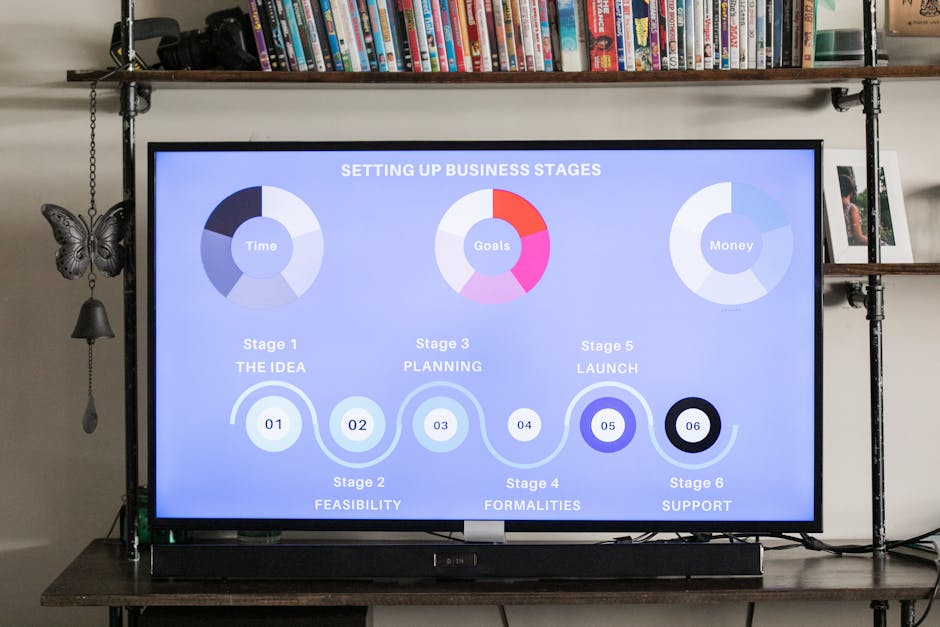
Launching your first small business website builder project doesn’t have to feel overwhelming. After helping businesses across Woburn and Boston get online since 2003, I’ve learned that success comes from following a clear roadmap rather than diving in headfirst.
The secret is planning before building. Companies that spend time thinking through their goals, organizing their content, and mapping out their site structure consistently create better websites than those who jump straight into design mode.
Start by asking yourself one crucial question: what’s the main thing you want your website to accomplish? Maybe you need to generate leads for your HVAC business, sell handmade jewelry online, or help clients book appointments at your salon. This core purpose will guide every decision you make.
Next comes sitemap creation – basically sketching out what pages you’ll need and how they’ll connect. Most small businesses need fewer pages than they think. Your home page introduces visitors to your business. An about page builds trust by sharing your story. Services or products pages explain what you offer. A contact page makes it easy to reach you.
Don’t forget the power of content preparation. Gather your business description, team photos, customer testimonials, service explanations, and contact details before you start building. Having everything ready prevents those frustrating moments when you’re staring at a blank template wondering what to write.
Registering Your Domain & Securing Hosting
Your domain name becomes your digital address, so choose something that’s easy to remember and spell. Stick with your business name when possible, and avoid hyphens or creative spellings that confuse potential customers trying to find you online.
Most small business website builder platforms handle the technical DNS stuff automatically, which is a huge relief if you’re not tech-savvy. Just know that once you register your domain, it can take up to 48 hours for everything to connect properly across the internet.
SSL certificates might sound technical, but they’re essential for protecting your visitors’ information. The good news? Modern website builders include SSL automatically. You’ll know it’s working when you see that little lock icon in your browser’s address bar.
Uptime guarantees ensure your website stays accessible when customers need it. Look for builders promising 99.9% uptime or better. Every minute your site is down potentially costs you sales and damages your search engine rankings.
For comprehensive guidance on domain registration and management, Domains offers detailed information about securing your online identity.
Customizing for Brand Consistency
Your color palette shapes how customers perceive your business before they read a single word. Professional services often gravitate toward trustworthy blues and sophisticated grays, while creative businesses might choose bold, energetic colors that reflect their personality. Pick three to five colors and use them consistently throughout your site.
Typography choices affect both readability and brand personality. Most builders suggest font pairings that combine clear body text with distinctive headings. Stick to two or three fonts maximum – using too many makes your site look scattered and unprofessional.
Logo integration creates instant brand recognition. Position your logo prominently in the header, make sure it links back to your homepage, and keep the sizing consistent across all pages.
Call-to-action optimization guides visitors toward taking the actions you want. Use clear, action-oriented language like “Schedule Your Free Consultation” or “Get Your Custom Quote Today.” Position these buttons prominently on each page and style them consistently so visitors know exactly what to do next.
Optimizing for Search & Conversions
Keyword mapping connects your content with the terms potential customers actually search for. Research the phrases people use when looking for businesses like yours, then incorporate them naturally into your page titles, headings, and content. Focus on being helpful rather than stuffing keywords awkwardly into sentences.
Internal linking helps both search engines and visitors steer your site effectively. Connect related pages naturally – link from your services page to relevant case studies, from blog posts back to your service offerings, and from general information to specific solutions you provide.
Page speed optimization keeps visitors happy and search engines satisfied. Compress your images, avoid overloading pages with unnecessary features, and choose builders with fast hosting infrastructure. Most modern platforms handle the technical speed optimization automatically.
For detailed guidance on creating effective websites that convert visitors into customers, check out our comprehensive guide on Website Design for Small Business.
Post-Launch Marketing & Maintenance
Analytics review reveals how visitors actually use your website versus what you assumed they’d do. Set up Google Analytics or use your builder’s built-in tracking to monitor page views, bounce rates, and conversion patterns. Regular review helps you spot optimization opportunities you might otherwise miss.
Content calendar planning keeps your website fresh and gives customers reasons to return. Plan blog posts, service updates, customer testimonials, and seasonal promotions in advance. Search engines favor sites with regularly updated content, and fresh information keeps your business top-of-mind with customers.
Security scans catch potential problems before they become expensive disasters. Many builders include automated security monitoring, but consider additional protection for sites handling sensitive customer information.
Frequently Asked Questions about Small Business Website Builders
How easy is it for a non-tech owner to build a site?
Here’s the honest truth: if you can use email or social media, you can build a website with a modern small business website builder. I’ve watched countless business owners who couldn’t even change their computer wallpaper successfully launch professional websites in a single afternoon.
The magic happens through drag-and-drop interfaces that work just like arranging furniture in a room. You literally click on elements and move them where you want them. No mysterious code, no technical jargon – just point, click, and customize.
What really changed the game is AI technology. Today’s smart builders can create your entire website by having a simple conversation with you. Tell it you run a plumbing business in Boston, and it’ll generate pages for your services, write initial content, and even suggest relevant images.
The learning curve is surprisingly gentle. Most platforms include video tutorials that walk you through each step, plus live chat support when you get stuck. Think of it like learning to use a new smartphone app – there might be a few “where’s that button?” moments, but you’ll be comfortable within hours, not weeks.
Can I switch builders later as my company scales?
Switching website builders isn’t like changing your phone number – it’s possible, but it requires some planning. The good news is that most small business website builder platforms make it relatively straightforward to export your content, images, and basic site structure when you’re ready to move.
The smoothest transitions happen when you upgrade within the same company’s ecosystem. Starting with a basic plan and moving to their premium features usually preserves everything perfectly. Your design, content, and even your SEO progress typically transfer seamlessly.
Moving between different companies gets trickier. While migration tools exist to help transfer your site, expect to spend some time recreating custom elements and fine-tuning the new design. It’s like moving houses – the big stuff transfers, but you’ll need to reorganize and make everything feel like home again.
What hidden costs should I budget for?
Nobody likes surprise expenses, so let’s talk about the costs that catch business owners off guard. Beyond your monthly small business website builder subscription, you’ll need a custom domain name (about $15 per year) and professional email addresses that match your domain (usually $5-10 monthly per email account).
Transaction fees can really add up for online sellers. Some builders charge 2-3% on every sale, which might seem small until you’re processing thousands in monthly revenue. Do the math – sometimes paying higher monthly fees for lower transaction costs saves money in the long run.
Premium features often require separate subscriptions. That advanced booking system, email marketing tool, or professional analytics dashboard might cost an extra $10-50 monthly each. These add-ons provide real value, but they can double or triple your website costs if you’re not careful.
The biggest hidden cost? Your own time. While builders are easier than ever, creating compelling content, optimizing for search engines, and maintaining your site requires ongoing effort. Budget time for regular updates, or consider professional help to maximize your website’s impact on your business growth.
Conclusion
The journey to finding the perfect small business website builder doesn’t have to be overwhelming. After exploring everything from drag-and-drop simplicity to AI-powered automation, you now have the roadmap to make an informed choice that fits your unique business needs and budget.
Your website isn’t just another business expense – it’s your hardest-working employee. While you’re sleeping, it’s qualifying leads, building trust with potential customers, and even processing sales. The small business website builder you choose becomes the foundation for all your digital marketing efforts, from social media campaigns to email marketing.
Future-proofing your decision means thinking beyond today’s needs. Will the platform grow with you as you expand? Does it offer emerging technologies like AI copywriting and advanced analytics? Can it handle increased traffic and more complex functionality as your business evolves?
The beauty of modern website builders lies in their accessibility. You don’t need a computer science degree or a massive budget to create something that looks like a Fortune 500 company designed it. The credibility boost alone – having a professional, mobile-responsive website with your own domain – levels the playing field against much larger competitors.
At AQ Marketing, we’ve watched countless small businesses transform their fortunes through smart digital choices. Since 2003, we’ve helped companies across Boston, Woburn, Middlesex County, Essex County, the Merrimack Valley, and Southern New Hampshire turn their online presence from afterthought to profit center.
The most successful business owners we work with understand a simple truth: small beginnings paired with the right tools create extraordinary outcomes. Your website builder choice is one of those pivotal decisions that compounds over time, generating more leads, building stronger customer relationships, and creating the professional image that drives growth.
Whether you’re a contractor looking to book more jobs, an insurance agent building client trust, or any service professional ready to expand your reach, the right platform is waiting. The technology exists, the templates are beautiful, and the opportunity is enormous.
Ready to see how the right digital strategy can amplify your website’s impact? Explore our Industries We Service to find how AQ Marketing helps turn small beginnings into lasting online success across diverse business sectors.
Your professional website is just the beginning – but what a beginning it can be.