CrossFit Gym Website Design: 10 Powerful Winning Ideas 2025
Why Your CrossFit Gym Website Needs to Be More Than Just a Digital Business Card
CrossFit gym website design is the critical foundation for attracting new members and building your box’s community online. Based on our research, an effective CrossFit website must achieve these four essential goals:
| Key Website Goal | What It Means |
|---|---|
| 1. Communicate Your Unique Value | Show what makes your coaching, community, and approach different |
| 2. Generate & Convert Leads | Turn visitors into trials and trials into members |
| 3. Provide Clear Location & Membership Info | Make it obvious where you are and what you offer |
| 4. Showcase Success Stories & Community | Build trust through real results and authentic community |
A responsive website is essential, as over 55% of website visits come from mobile devices. CrossFitters are busy, and most potential members will look you up on their phones first.
Your website is not just an online brochure – it is your 24/7 salesperson. As one gym owner noted: “Our site is now a salesman, not just a digital scrapbook.” The right design can generate 2-5x more leads after switching to a purpose-built CrossFit website.
When designing your CrossFit gym website, it needs to work harder than the average business site by simultaneously:
- Educating newcomers about CrossFit’s benefits
- Overcoming intimidation factors for beginners
- Showcasing your community’s energy and results
- Making scheduling and trying a class frictionless
- Keeping current members engaged with WODs and events
I’m Robert P. Dickey, President and CEO of AQ Marketing with over two decades of experience helping fitness businesses succeed online.
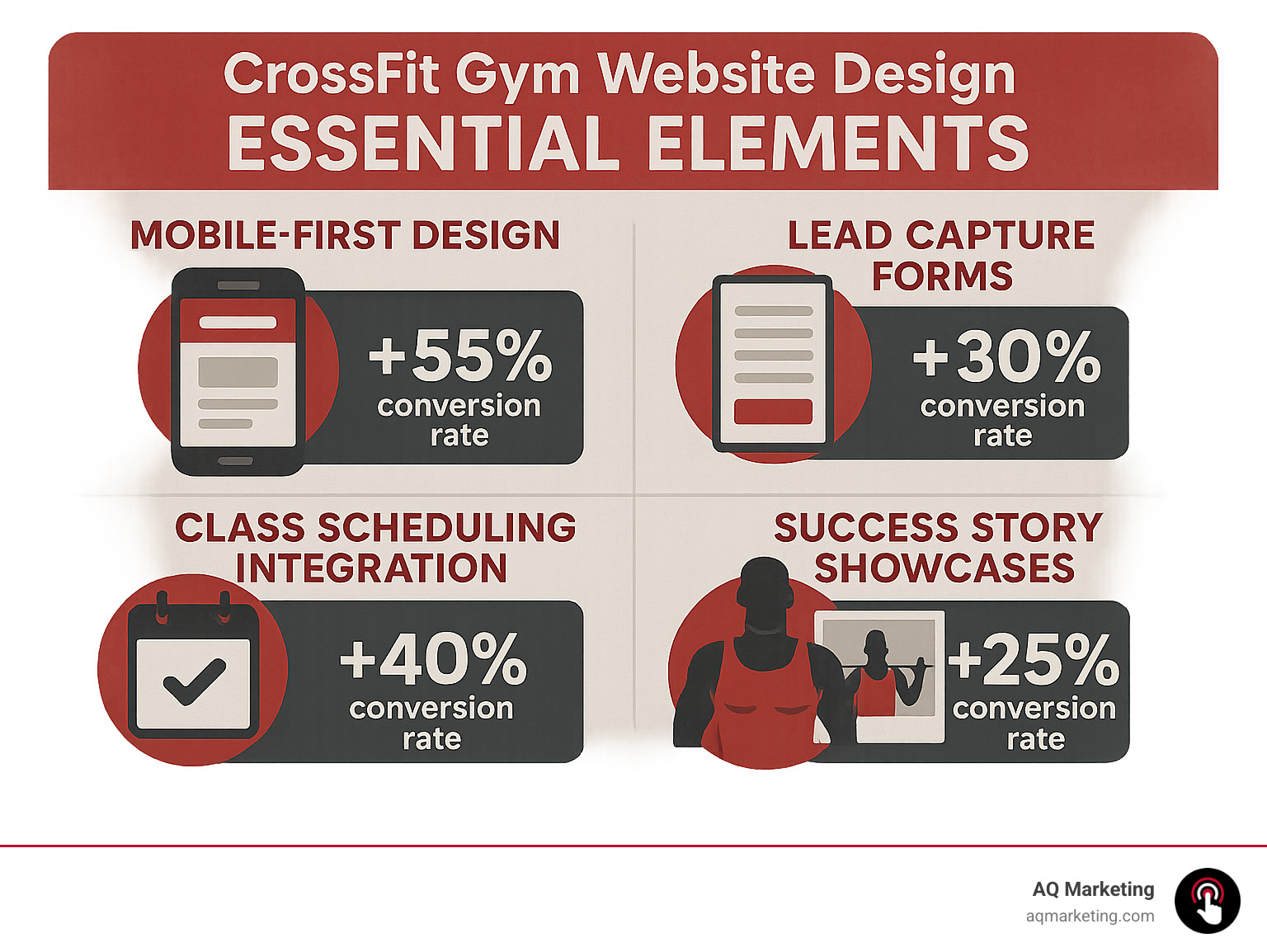
10 Essential Goals for CrossFit Gym Website Design
When building a CrossFit gym website design, you’re not just creating another fitness page – you’re crafting a digital home for your community and a powerful tool to grow your business. After working with dozens of fitness clients throughout Boston and Merrimack Valley, we’ve identified 10 must-have elements that truly move the needle:
- Clearly communicate your unique value proposition
- Build trust through social proof and testimonials
- Provide easy access to location and contact information
- Deliver a lightning-fast mobile user experience
- Capture leads with compelling offers
- Optimize for local SEO visibility
- Foster community engagement
- Enable frictionless class booking
- Provide WOD (Workout of the Day) access
- Maintain consistent branding across all pages
Let’s dive deeper into the elements that transform curious visitors into committed members.
Educate With a Killer UVP (Unique Value Proposition)
Your Unique Value Proposition is not just gym-speak – it is your promise to potential members. Within seconds of landing on your site, visitors should understand exactly why your box is worth their time and investment.
The most effective CrossFit UVPs go beyond generic “get fit” messaging. They offer a benefits snapshot that speaks directly to what members truly gain. Highlight your coaching edge too. One gym owner told us, “When we started showcasing our coaches’ certifications and specialties, people could see we weren’t just another box – we were experts.”
Don’t forget a virtual facility tour – today’s members want to see your space before they ever step foot inside.
Convert Visitors Into Members
Your website should work harder than your hardest-working coach. Its primary job? Turning visitors into paying members.
The secret sauce is a prominent free intro offer that is impossible to miss. Include risk-reversal language that addresses common fears. Many people worry CrossFit might be too intense or that they’re not fit enough to start.
Finally, make your CTAs pop with bold, contrasting colors that guide the eye exactly where you want it to go.
Clarify Logistics in Seconds
When someone’s considering your gym, they have three immediate questions: Where are you? When can I come? How much does it cost?
Answer these questions instantly with an embedded location map showing your exact position. Include a simplified schedule snapshot right on your homepage – not hidden three clicks deep.
Be transparent about pricing tiers and what’s included in each. Hiding prices does not prevent sticker shock – it just delays it until after you’ve wasted time on leads who can’t afford your services.
Showcase Proof & Community
CrossFit is not just fitness – it is family. Your website should capture this community spirit through real stories and results.
Create a compelling before-after gallery showcasing actual member changes. Include a testimonial slider featuring diverse member types – the competitive athlete, the busy parent, the former couch potato.
Don’t shy away from sharing specific change stats – whether it is pounds lost, PRs (Personal Records) achieved, or competitions won. Numbers tell a story that general statements can’t match.
Feature-Packed Pages: Must-Have Elements That Convert
The most effective CrossFit gym website designs include specific features that drive engagement and conversions. Here’s what your pages need to include:
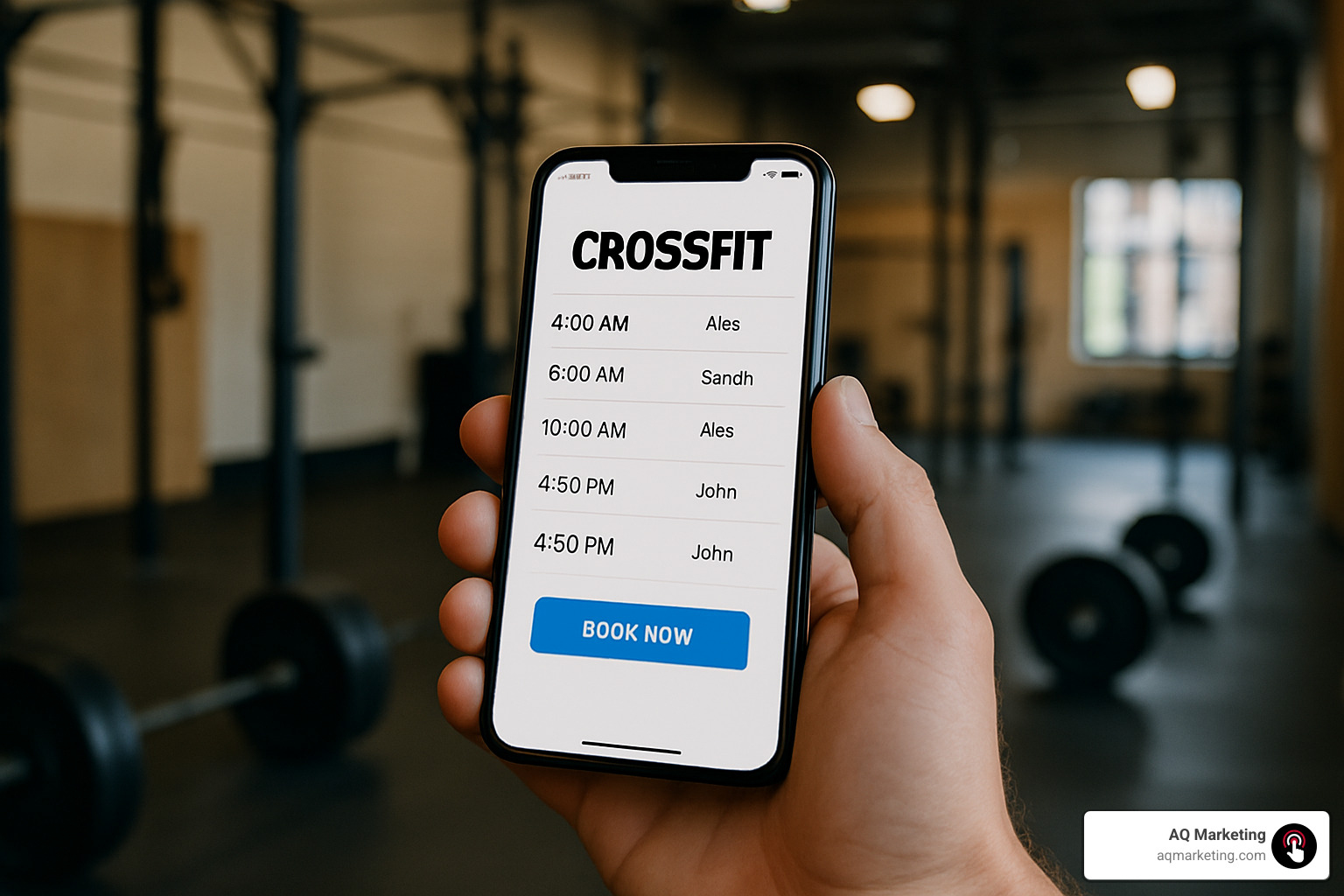
Lead-Generation Engines That Never Sleep
Your website should be working hard to bring in new members even when you’re catching some well-deserved rest. Think of it as your tireless sales team that never takes a day off.
We’ve seen remarkable results when gyms implement sticky CTAs that follow visitors as they explore your site. One gym owner I worked with recently told me, “Adding a simple pop-up offering a free nutrition guide increased our email capture by 215% in the first month.”
The secret sauce for CrossFit lead generation often comes in the form of irresistible content offers. Free workout guides, nutrition templates, and “what to expect” videos all make fantastic lead magnets that prospects genuinely want. When you pair these offers with streamlined forms that ask for just the essentials – name, email, phone – you remove friction from the signup process.
Don’t forget to implement Facebook Pixel integration for retargeting and connect everything to your CRM system for automatic follow-ups.
Mobile-Friendly CrossFit Gym Website Design Tips
With over 55% of website visits coming from mobile devices, your CrossFit gym website design absolutely must shine on smaller screens.
Fluid breakpoints are essential for a seamless experience across all devices. Position important buttons in what designers call the “thumb zone” – that sweet spot where people can easily tap without adjusting their grip.
Page speed is crucial for mobile users. Implement lazy-loading for your media so visitors don’t bounce while waiting for content to load. Make sure your text is comfortably readable without zooming (16px minimum), and enable tap-to-call functionality for your phone numbers.
Google now prioritizes mobile-first indexing, which means they primarily use your mobile site for ranking decisions. For more insights on mobile optimization, check out our guide on mobile-friendly website elements.
Class Scheduling & WOD Tracking Integration
The functionality that truly separates exceptional CrossFit websites from mediocre ones is seamless class scheduling and WOD tracking.
An embedded calendar view makes class booking intuitive and immediate. When members can see availability and reserve their spot in just a couple of taps, attendance improves dramatically. One gym we worked with in the Boston area reported, “After adding online booking, our class no-show rate dropped from 18% to under 5%.”
Member portals add tremendous value by giving your community a place to track personal records and attendance history. Automated reminder emails or texts for upcoming classes further reduce no-shows.
Popular integration options include MindBody, Wodify, ZenPlanner, PushPress, and Acuity Scheduling.
Testimonials & Success Stories for Credibility
Nothing builds trust quite like seeing real people achieve their goals. Your website should strategically showcase authentic success stories that potential members can relate to.
Video testimonials pack an emotional punch that written reviews simply can’t match. Pair these videos with specific, measurable results to provide concrete evidence of your program’s effectiveness.
Feature diverse member stories representing different ages, fitness levels, and goals. A busy professional who found time for fitness, a former athlete refinding their competitive edge, a complete beginner who overcame gym anxiety – these varied perspectives help prospects see themselves in your community.
Design Inspiration: 7 CrossFit Gym Websites That Crush It
Looking for some real-world examples to spark your creativity? I’ve gathered seven CrossFit gym websites that nail the essentials of CrossFit gym website design while driving serious results for their boxes:
Sharp Edge CrossFit – Grit Meets Clarity
When you land on Sharp Edge CrossFit’s homepage, you immediately feel the intensity of their training culture without feeling overwhelmed as a user. Their design brilliantly balances a dark theme with high-contrast elements that captures that raw, gritty CrossFit vibe. Their auto-playing background video shows diverse athletes mid-workout, instantly communicating what happens in their box.
What makes it work so well is how they’ve stripped away navigation clutter to focus visitors on the key conversion paths.
Bridgeport Athletics – Warm Visual Story
Bridgeport takes a refreshingly different approach that feels like a warm welcome rather than an intimidating challenge. Their site features everyday members engaged in workouts and celebrating together.
Their headlines focus on results and belonging rather than intensity, with messaging that addresses what people really care about: change and community. They display clear, transparent pricing tiers that remove the mystery from membership options.
SOCF CrossFit – Responsive Done Right
If you’re looking for a masterclass in mobile-first design, SOCF CrossFit delivers the blueprint. Their site features layouts that adjust beautifully whether you’re viewing on a desktop monitor, tablet, or smartphone.
Their cleverly designed sticky sign-up bar follows you as you browse, keeping the conversion opportunity present without feeling pushy. Everything loads lightning-fast, thanks to their optimized images and minimal scripts.
CrossFit NYC – Urban Energy
CrossFit NYC’s website captures the dynamic pulse of big city fitness with style. Their looping workout video immediately showcases the energy of their packed classes and impressive facility.
What stands out is their minimalist navigation that keeps visitors focused on the main conversion paths without distractions. The design elements themselves reflect their urban environment, creating an authentic brand experience.
Badger CrossFit – Community First
Badger CrossFit understands that people join for the workout but stay for the community. Their site puts their box’s culture front and center with a compelling testimonial wall featuring diverse member stories.
They publish daily WODs as blog posts, which serves double duty: keeping current members engaged while creating fresh, keyword-rich content that boosts their search visibility.
Foundation CrossFit – Education Hub
Foundation CrossFit takes a different approach, positioning themselves as the educational authority in their market. Their site features comprehensive nutrition guides and resources that provide value before you ever set foot in their facility.
Their clever FAQ accordions address common CrossFit questions, removing barriers to entry for newcomers intimidated by the terminology or movements.
CrossFit Amsterdam – Multilingual Reach
CrossFit Amsterdam shows how to effectively serve a diverse, international audience with their thoughtfully designed site. Their seamless language toggles make the experience accessible regardless of your primary language.
Looking for more inspiration? Check out CrossFit Panoply for another excellent example of effective CrossFit gym website design.
Build vs. Buy: Choosing the Right Platform
Let’s face it – deciding how to build your CrossFit gym website design can feel as challenging as your first muscle-up. Should you DIY it or invest in something custom? As someone who’s guided dozens of gym owners through this decision, I can tell you there’s no one-size-fits-all answer – but there is a perfect fit for your specific situation.
| Platform Option | Pros | Cons | Typical Cost | Best For |
|---|---|---|---|---|
| Custom Development | Completely unique design, full control | Highest cost, longest timeline | $10,000-$40,000 | Established boxes with unique needs |
| WordPress Theme | Flexible, widely supported | Requires some technical knowledge | $2,000-$10,000 | Mid-sized gyms with some tech comfort |
| Webflow | Visually stunning, no coding needed | Learning curve, subscription costs | $1,000-$5,000 + monthly | Design-focused gyms wanting visual impact |
| CrossFit-Specific Platforms | Built for the industry, WOD features | Less customization, ongoing fees | $50-$200/month | New gyms needing quick, functional sites |
| DIY Website Builders | Lowest initial cost, quick setup | Generic look, limited functionality | $0-$500 + monthly | Bootstrapping startups, temporary sites |
DIY Templates vs. Custom Builds
Many CrossFit gym owners, particularly those just opening their doors, gravitate toward DIY templates – and with good reason. They’re affordable, quick to launch, and don’t require you to know what HTML stands for.
“We started with a template site while we built our member base, then reinvested in a custom site once we had consistent revenue,” shared one gym owner we worked with. This approach makes perfect sense – your website can evolve as your business grows.
If you’re leaning toward the template route, look for options that at least give you some flexibility with custom color schemes to match your branding, easy embedding of scheduling tools, truly mobile-responsive layouts, and simple content updates.
CrossFit-Specific Platforms
Several platforms have emerged specifically for CrossFit gyms, offering specialized features that generic website builders simply don’t have. These platforms shine with their built-in WOD posting and archiving, member management systems, attendance tracking, and PR tracking features.
The main trade-off? Design limitations. As one gym owner candidly told us, “The CrossFit-specific platform gave us all the functionality we needed, but we struggled to stand out visually from other boxes in our area using the same platform.”
Custom CrossFit Gym Website Design Pros & Cons
For established boxes ready to create something truly unique, custom CrossFit gym website design offers significant advantages. You’ll get complete control over your visual identity, user experience custom to your specific community, seamless integration with your preferred tools, and a long-term asset that grows with your business.
The obvious drawbacks are the higher upfront investment and longer development timeline. But as many of our clients find, this approach often pays for itself through increased lead generation and conversion rates.
At AQ Marketing, we’ve helped CrossFit gyms across Boston, Woburn, and Southern New Hampshire develop websites that don’t just look good – they work hard as 24/7 marketing tools. More info about design services
SEO & Ongoing Marketing Playbook
A beautiful website won’t help your business if no one can find it. Implementing a strong SEO strategy is crucial for CrossFit gym website design success:
On-Page Fundamentals
Let’s start with the building blocks of good SEO that every CrossFit gym website needs. Think of these as the foundation movements – like learning proper squat form before adding weight.
Your title tags should include location-specific keywords (like “CrossFit Gym in Woburn, MA”) to help Google understand exactly where you are. Each page deserves a unique meta description that highlights specific benefits – this is your 155-character elevator pitch that appears in search results.
Don’t forget your images! Adding descriptive alt text isn’t just good for accessibility – it helps search engines understand what they’re looking at.
Schema markup might sound technical, but it’s essentially just structured data that helps Google display your business information more effectively. When implemented correctly, it can help you score that coveted Google Knowledge Panel that displays your hours, location, and reviews directly in search results.
For CrossFit gyms, local SEO isn’t just important – it’s essential. Make sure your NAP (Name, Address, Phone) information appears consistently on every page. An embedded Google Map shows visitors exactly where to find you.
Content That Builds Community
Creating regular content serves two masters: it feeds the Google algorithm while nurturing your community. It’s the perfect win-win strategy.
Daily WOD posts create a steady stream of keyword-rich content while keeping your members informed. Nutrition tips, member spotlights, and technique articles showcase your expertise while providing genuine value to readers.
One gym owner told me, “Publishing our WODs as blog posts improved our search rankings, but the unexpected benefit was how it created shareable content for our social channels.”
The most effective content strategy balances educational material for prospects, motivational content for current members, and community-building content that brings everyone together.
Tracking & Optimization
In CrossFit, you track your progress carefully – your website deserves the same attention. Setting up proper analytics isn’t just about collecting data; it’s about gathering insights that drive improvement.
Google Analytics helps you understand where your traffic comes from and how visitors behave on your site. Heatmapping tools show you exactly how visitors interact with your pages – where they click, how far they scroll, and what they ignore.
A/B testing critical elements like your call-to-action buttons, form layouts, and headlines helps you continually refine your conversion path. Even small improvements can compound over time – a 5% improvement in conversion rate might mean dozens of additional members over a year.
Many of our CrossFit clients in Middlesex County and Essex County see lead generation increases of 30% or more after implementing data-driven optimization strategies.
Want to learn more about optimizing your website for search engines? Check out our detailed guide to SEO optimization services.
Frequently Asked Questions about CrossFit Gym Website Design
What Makes a CrossFit Gym Website Design Convert Visitors Into Paying Members?
Converting website visitors into committed members isn’t magic – it’s about creating the right combination of elements that build trust and make taking action irresistible.
The secret sauce for a high-converting CrossFit gym website design comes down to three key ingredients:
First, your offer needs crystal-clear messaging. Within seconds, visitors should understand exactly what makes your box special, who thrives in your community, and the change you promise.
Second, nothing sells like seeing others succeed. Real member stories, authentic before-and-after photos, and community highlights help prospects envision their own journey at your gym.
Third, make signing up ridiculously simple. Every extra field in your form, every additional click, and any confusion about next steps will cost you members.
How Do I Integrate Class Bookings and Payments Seamlessly?
Nothing kills excitement faster than a clunky booking process. Your members shouldn’t need a user manual to sign up for tomorrow’s WOD!
The most successful gyms create a seamless experience by thoughtfully connecting their tech stack:
Popular scheduling platforms like MindBody, Wodify, and ZenPlanner offer direct API connections that let you embed booking functionality right into your website. This means members stay in your branded environment rather than being shuttled to a third-party site.
For payments, Stripe and PayPal provide developer-friendly tools that make transactions smooth and secure. The best implementations allow members to save payment information for one-click registration.
Consider creating a dedicated member portal that serves as a one-stop hub for all member activities – from booking classes to tracking PRs and managing payments.
Which Platform Fits My Budget and Growth Goals?
Choosing the right platform for your CrossFit gym website design is a bit like programming a good workout – it needs to challenge you appropriately without causing injury to your budget!
The perfect platform balances three critical factors:
Cost vs. control is your first consideration. Generally, the more customization and control you want, the higher the investment. Be honest about which aspects of your site truly need to be unique to your brand.
Next, think about future features. The platform that’s perfect today might become limiting as your box grows. Will you need to integrate with more sophisticated member management tools? Add e-commerce for supplements or gear?
Finally, be realistic about support needs. Some platforms expect you to handle technical issues yourself, while others provide extensive support.
For most CrossFit gyms we work with across Boston and Southern New Hampshire, WordPress with a fitness-focused theme provides the sweet spot – enough customization without requiring a computer science degree, with plenty of room to grow as your community expands.
Conclusion
Let’s be honest – your CrossFit gym website design needs to sweat as hard as your members do. It’s not just about looking pretty with some barbell photos and a contact form. Your website should be your hardest-working team member, generating leads and building community while you sleep.
After helping dozens of CrossFit boxes transform their online presence, we’ve seen what separates the high-performers from the digital deadweight. The most successful CrossFit websites consistently nail these essentials:
- Mobile-first design that looks amazing on phones (where 55% of your traffic comes from)
- Crystal-clear calls-to-action that make it obvious how to take the next step
- Seamless scheduling integration so booking that first class feels effortless
- Authentic community showcases that let your box’s unique culture shine through
- Regular content updates that build both SEO momentum and member engagement
Think about it – your website is often the first impression potential members get of your box. That first digital handshake needs to be firm, friendly, and followed by a clear path to your door.
The CrossFit landscape keeps evolving, and your website needs to serve double duty: captivating curious prospects while providing genuine value to your existing community.
Here at AQ Marketing, we’ve been partnering with fitness businesses throughout Boston, Woburn and Massachusetts since 2003. We understand the unique energy of the CrossFit community and how to translate that intensity into websites that don’t just look good, but actually perform.
Your website should be more than a digital business card – it should be a lead-generating, community-building powerhouse that works around the clock. When strategically designed, it becomes your most valuable marketing asset, consistently bringing new faces through your door.
Ready to give your CrossFit box’s online presence the same attention you give to perfecting your coaching? Let’s talk about creating a website that truly captures what makes your community special. More info about custom website design services