AI in Content Marketing: Top 10 Revolutionary Tools 2024
AI in content marketing is reshaping the way businesses engage with their audiences. From streamlining data analysis to enabling personalized communication, AI is changing content marketing into a more dynamic and efficient process. Here’s a quick overview of how it’s impacting the field:
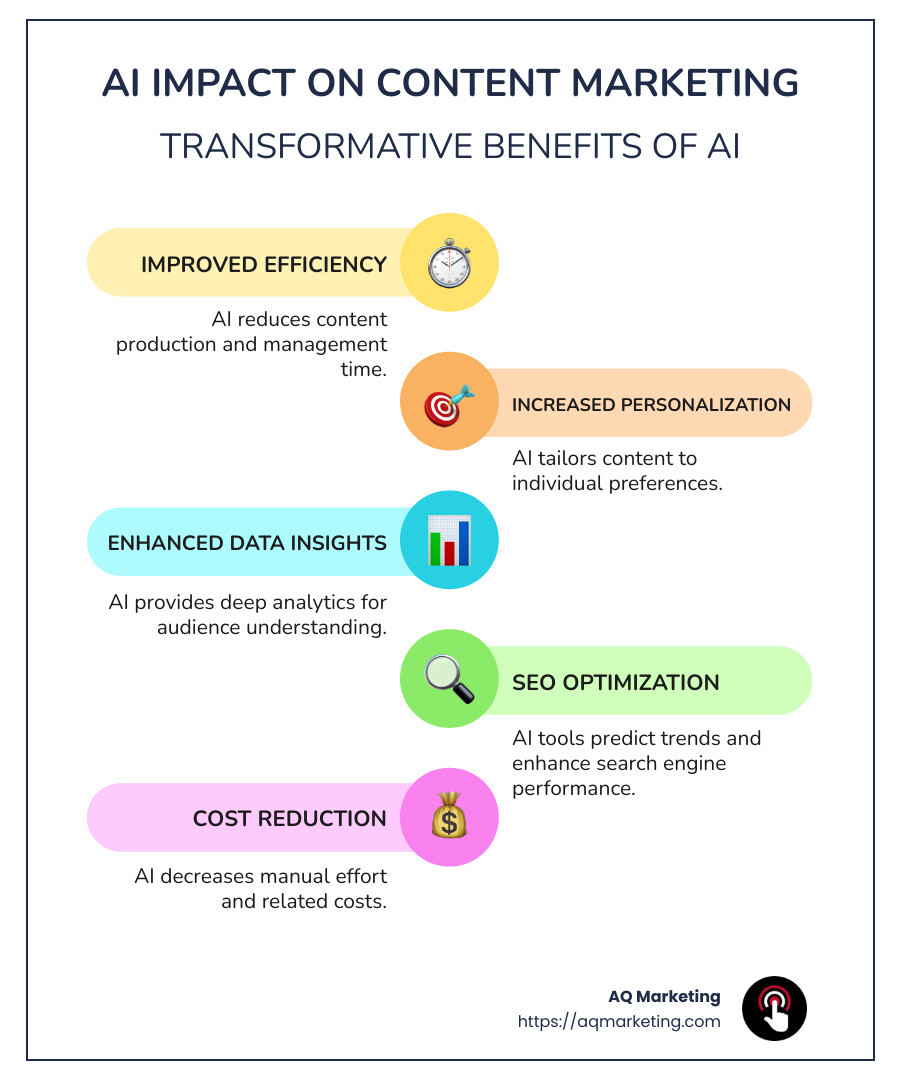
- Improved Efficiency: AI reduces the time it takes to produce and manage content.
- Increased Personalization: AI helps tailor content to individual user preferences and behaviors.
- Improved Data Insights: AI provides deep analytics, helping marketers understand their audience better.
- SEO Optimization: AI tools predict trends and optimize content for search engines effectively.
While the adoption of AI brings numerous benefits to content marketing, it’s crucial to address challenges around ethical concerns and balancing human touch with machine efficiency.
My name is Robert P. Dickey, and with over 20 years of experience in digital marketing, I’ve witnessed how AI in content marketing is revolutionizing the industry. At AQ Marketing, I’ve acceptd AI to improve our approach and deliver exceptional results for our clients.
The Role of AI in Modern Content Marketing
Artificial Intelligence (AI) is revolutionizing how we approach content marketing by making it more efficient and personalized. Let’s explore how AI is shaping content strategy and creation.
AI in Content Strategy Development
AI plays a critical role in content strategy by enhancing SEO and providing valuable audience insights. By analyzing vast amounts of data, AI helps marketers understand what their audience is searching for and how they behave online. This leads to more targeted and effective content strategies.
- SEO Improvement: AI tools can predict SEO trends and suggest keywords that help content rank higher on search engines. This proactive approach to SEO means content stays relevant longer.
- Audience Insights: AI analyzes user behavior to identify what content resonates most with different audience segments. This insight allows marketers to create content that is more engaging and relevant.
- Content Personalization: With AI, content can be custom to specific user preferences, leading to higher engagement rates. AI uses behavior analysis to deliver personalized experiences, making users feel valued and understood.
AI in Content Creation
AI is not just about strategy; it’s actively involved in the content creation process as well. From automated writing to generative AI, these technologies are changing how content is produced.
- Automated Writing: AI tools can generate first drafts of content quickly, allowing human writers to focus on refining and adding depth. This speeds up the content creation process significantly.
- Content Curation: AI can sift through vast amounts of information to curate content that is most relevant to a given audience. This ensures that the content shared is always timely and engaging.
- Generative AI: This technology can create new content based on existing data and patterns. It’s particularly useful for generating personalized content at scale, such as product descriptions or social media posts.

AI in content marketing is not about replacing human creativity but enhancing it. By automating repetitive tasks and providing deeper insights, AI allows marketers to focus on creating meaningful connections with their audience. This balance between machine efficiency and human creativity is where the true power of AI lies in content marketing.
Key AI Tools and Technologies Changing Content Marketing
Artificial Intelligence is reshaping content marketing through advanced tools and technologies. These innovations enable marketers to create more personalized, efficient, and impactful content.
Generative AI for Personalized Content
Generative AI is a game-changer in content marketing, especially for creating personalized experiences. By analyzing user behavior and preferences, AI can generate custom content that resonates with individual users.
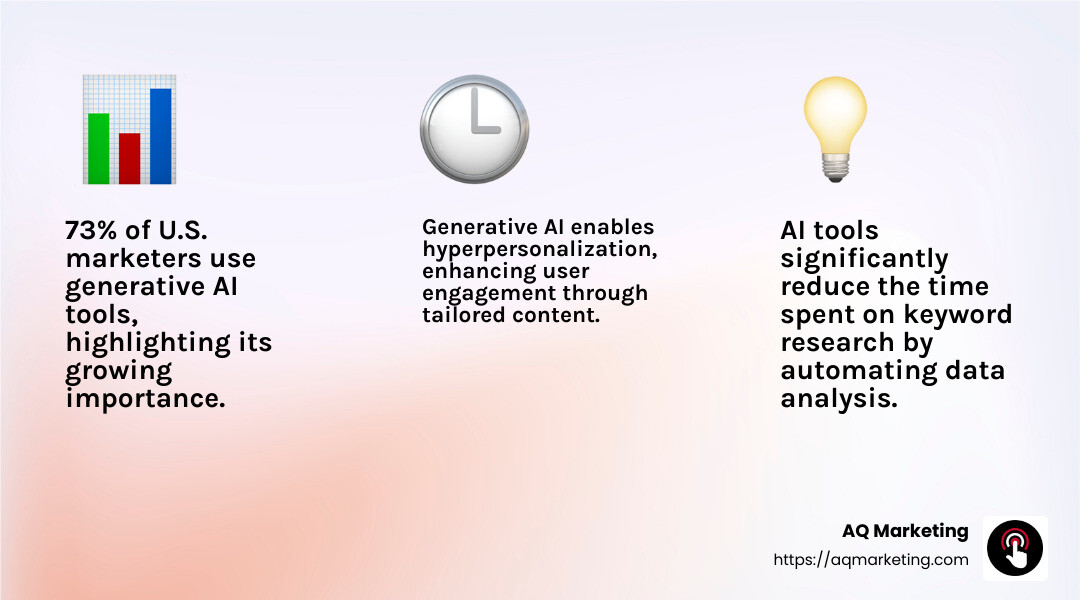
- Hyperpersonalization: Generative AI uses behavior analysis to customize content for each user. This approach goes beyond simple personalization by considering factors like browsing history and previous interactions. As a result, users receive content that feels uniquely crafted for them.
- Custom Content: AI can adapt content in real-time based on user interactions. For example, if a user frequently engages with certain topics, AI can prioritize similar content in their feed. This dynamic adjustment keeps users engaged and increases content relevance.
AI-Powered SEO Optimization Tools
AI is revolutionizing SEO by providing tools that make optimization more precise and efficient. These tools help marketers stay ahead in the competitive digital landscape.
- Keyword Research: AI SEO tools can analyze vast data sets to identify high-impact keywords. This process is much faster and more accurate than traditional methods, ensuring content is optimized effectively.
- Content Structuring: AI can suggest the best structure for content to improve readability and SEO performance. By analyzing successful content patterns, AI helps create well-organized and engaging articles.
- SEO Forecasting: AI tools can predict future SEO trends, allowing marketers to adjust strategies proactively. This foresight helps maintain or improve search rankings over time.
Analytics Platforms
Analytics platforms powered by AI provide deep insights into content performance and audience engagement.
- Behavior Analysis: AI analyzes user interactions to identify patterns and trends. This data helps marketers understand what content works best and where improvements are needed.
- Engagement Metrics: AI tools offer detailed metrics on how users engage with content. These insights enable marketers to refine their strategies and improve user experience.
By leveraging these AI tools and technologies, marketers can transform their content strategies, making them more targeted and effective. The integration of AI in content marketing is not just a trend but a necessity for staying competitive in today’s digital world.
Benefits of Using AI in Content Marketing
Artificial Intelligence (AI) brings a host of advantages to content marketing. It helps businesses become more efficient, reduce costs, and improve content quality. Let’s explore how AI achieves these benefits.
Time and Cost Efficiency
AI is a powerhouse when it comes to saving time and money. Many tasks that used to take hours can now be done in minutes.
- Automated Tasks: AI tools can handle repetitive tasks, like scheduling posts or generating reports, freeing up human resources for more creative work.
- Reduced Manual Effort: With AI, the need for manual data analysis and content creation is minimized. This means less time spent on mundane tasks and more focus on strategy and creativity.
- Cost Savings: By automating processes, businesses can cut down on labor costs. According to our 2024 AI content report, 68% of companies using AI report higher ROI in their content marketing efforts. This translates to more funds available for other growth areas.
Improved Content Quality and User Experience
AI not only speeds up processes but also improves the quality of content and user engagement.
- Quality Control: AI can analyze content for errors, inconsistencies, and improvements. This ensures that the final output is polished and professional.
- User-Centric Content: AI helps tailor content to meet user preferences. By analyzing user data, AI can suggest content that aligns with audience interests, increasing relevance and engagement.
- Engagement Metrics: AI tools provide insights into how users interact with content. These metrics help marketers understand what works and what doesn’t, allowing for continuous improvement.
By integrating AI into content marketing, businesses can achieve greater efficiency and quality. This not only saves time and money but also improves the overall user experience, making content more engaging and effective.
Transitioning into the next section, we’ll explore the challenges and ethical considerations in AI-driven content marketing, and how to balance AI with human creativity.
Challenges and Ethical Considerations in AI-Driven Content Marketing
As we accept AI in content marketing, we must also steer its challenges. AI offers speed and efficiency, but it can lack the human touch that makes content truly resonate. Let’s explore these challenges and the ethical considerations.
Balancing AI and Human Creativity
AI tools can generate content quickly, but they often miss the emotional nuances that human writers bring. This can lead to content that feels robotic or lacks personality.
- Creativity Limits: AI excels at producing data-driven content but struggles with original creativity. Human writers add storytelling, humor, and emotion, which are vital for engaging content.
- Emotional Connection: Readers connect with content that feels personal and relatable. AI can provide a foundation, but human touch is needed to infuse emotion and create a lasting impact.
- Brand Voice: Maintaining a consistent brand voice is crucial. While AI can mimic tones, it requires human oversight to ensure alignment with brand identity and values.
Michael Brenner, Founder of Marketing Insider Group, emphasizes this balance: “After AI helps us lay the groundwork, our in-house writers step in to add stories, depth, and visual support to each piece of content.”
Navigating Ethical and Privacy Concerns
Using AI in content marketing raises important ethical questions. Transparency and user trust are key issues that need careful handling.
- Data Handling: AI relies on vast amounts of data to function effectively. Marketers must ensure that data is collected and used responsibly, respecting privacy laws and user consent.
- Transparency: Consumers expect honesty about how their data is used. Being transparent about AI-generated content and data usage builds trust and credibility with your audience.
- User Trust: Trust is the cornerstone of any brand-audience relationship. Ethical AI use involves clear communication and safeguarding user information to maintain this trust.
Melanie Deziel, Co-Founder of Creator Kitchen, notes, “In 2024, we’ll start to see content creators and marketers become more personal and more vulnerable with their work, as an antidote to all the sterile and mass-produced content currently flooding the market.”
Navigating these challenges requires a thoughtful approach. By balancing AI capabilities with human creativity and maintaining ethical standards, marketers can leverage AI’s strengths while avoiding potential pitfalls.
Moving forward, let’s explore real-world applications and case studies that demonstrate the power of AI in content marketing.
AI in Content Marketing: Real-World Applications and Case Studies
Predictive Analytics in Content Marketing
Predictive analytics is changing how marketers understand and engage with their audience. By analyzing past consumer behavior, AI can forecast trends and predict what content will resonate in the future.
Consider Netflix, a pioneer in using AI for predictive analytics. By examining viewing habits, Netflix suggests shows and movies that users are likely to enjoy, enhancing engagement and satisfaction. This approach is not just about keeping users entertained; it’s about anticipating needs and adapting content strategies accordingly.
Market adaptation is another powerful application. AI tools can analyze vast datasets to identify emerging trends and shifts in consumer preferences. This allows marketers to adapt their strategies proactively, staying ahead of the competition.
AI-Driven Content Personalization Examples
User profiling and dynamic content are at the heart of AI-driven personalization. By understanding individual preferences and behaviors, AI can tailor content to meet specific needs, enhancing user experience and engagement.
A great example is Amazon’s recommendation engine. It uses AI to analyze purchase history and browsing patterns, offering personalized product suggestions. This not only improves user engagement but also drives conversion rates.
Engagement metrics are crucial for measuring the success of personalized content. AI tools can track how users interact with content, providing insights that help refine strategies. For instance, if a particular type of content consistently receives high engagement, marketers can focus on producing more of it.
The power of AI in content marketing lies in its ability to combine data-driven insights with personalized experiences. By leveraging predictive analytics and personalization, brands can create content that not only reaches their audience but truly resonates with them.
Next, let’s dig into the benefits of using AI in content marketing, focusing on how it improves efficiency and content quality.
Conclusion
As we look toward the future, the role of AI in content marketing is set to expand even further. The integration of AI offers a wealth of opportunities for marketers to improve their strategies and connect with audiences in meaningful ways. However, embracing AI requires a thoughtful approach.
Future Outlook
The future of AI in content marketing is bright, with advancements in technology promising even more sophisticated tools. AI systems will likely become more adept at understanding the nuances of human language and behavior, leading to even more personalized and engaging content experiences. This evolution will continue to blur the lines between human and machine-created content, offering new possibilities for creativity and innovation.
AI Integration Strategies
To effectively incorporate AI into content marketing, businesses need to develop clear strategies. This involves:
- Identifying areas where AI can add value, such as automating repetitive tasks or enhancing data analysis.
- Ensuring human oversight to maintain creativity and authenticity in content.
- Investing in training to equip teams with the skills needed to leverage AI tools effectively.
By focusing on these areas, businesses can harness AI’s potential while maintaining a human touch that resonates with audiences.
AQ Marketing’s Approach to AI in Content Marketing
At AQ Marketing, we recognize the transformative power of AI and are committed to integrating it into our content strategies. Our approach focuses on using AI to improve—not replace—human creativity and expertise. We prioritize:
- Personalization: Leveraging AI to deliver custom content that meets the unique needs of our clients’ audiences.
- Efficiency: Utilizing AI tools to streamline processes and reduce costs, allowing us to focus on strategic initiatives.
- Quality Control: Ensuring all AI-generated content undergoes rigorous review by our expert team to maintain high standards.
By adopting these strategies, AQ Marketing positions itself at the forefront of the AI-driven content marketing landscape, ready to adapt and thrive in an changing digital world.
As we continue to explore the potential of AI, we invite you to join us on this journey. Whether you’re looking to improve your current content strategy or explore new possibilities, AQ Marketing is here to help you steer the exciting future of AI in content marketing.
Next, let’s address some frequently asked questions about AI in content marketing, providing clarity on common concerns and misconceptions.
Frequently Asked Questions about AI in Content Marketing
What is AI content creation, and how does it work?
AI content creation involves using artificial intelligence to automatically generate written content. These AI tools work by processing prompts—specific inputs or commands that guide the content creation process. They use natural language generation (NLG) to produce human-like text based on the information provided. This technology allows marketers to create a wide range of content, from blog posts to social media updates, quickly and efficiently.
Can AI really replace human content creators?
While AI has made significant strides, it is not ready to replace human content creators. AI excels in generating large volumes of content and handling repetitive tasks, but it lacks the creativity, empathy, and nuanced understanding that human writers bring to the table. As Gabriel Lumagui from Forbes notes, AI and human collaboration is key. AI can augment human efforts by taking over mundane tasks, allowing creators to focus on strategic planning and storytelling.
What are the limitations of AI in content marketing?
Despite its capabilities, AI in content marketing has several limitations:
- Reliance on Prompts: AI tools require clear and accurate prompts to generate relevant content. Poorly defined prompts can lead to unsatisfactory outputs.
- Lack of Creativity: AI struggles with creativity and cannot replicate the emotional depth and originality that human writers provide.
- Contextual Understanding: AI may fail to grasp the full context or nuance of certain topics, leading to inaccuracies.
- Plagiarism and Originality: There’s a risk of producing content that lacks originality or inadvertently mirrors existing works.
- AI Detection: Some platforms can detect AI-generated content, potentially affecting SEO and audience trust.
While AI can improve content marketing efforts, use it thoughtfully and maintain a balance between machine efficiency and human creativity.
For more insights on how AI can transform your digital marketing strategies, explore our digital marketing services.