

Insurance brokerage industry: Future Growth 2025
The Global Insurance Brokerage Industry: A Market Snapshot
The insurance brokerage industry is a dynamic sector where intermediaries connect clients with the best insurance providers. Here’s a quick overview of this vital market:
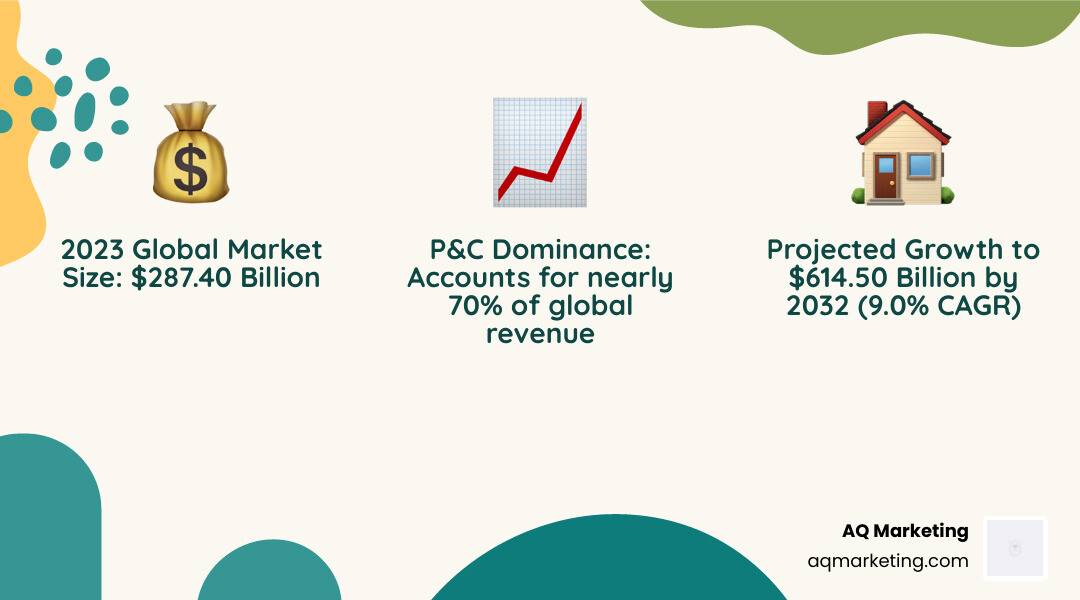
- Market Size (2023): Approximately $287.40 billion globally.
- Projected Growth (2024-2032): Expected to reach $614.50 billion by 2032, with a Compound Annual Growth Rate (CAGR) of 9.0%.
- Dominant Segment: Property & Casualty (P&C) insurance, making up nearly 70% of global revenue in 2023.
- Leading Region: North America, with over 30% of the market share in 2023.
The industry is changing rapidly due to advancing technology, evolving client expectations, and new regulations. This guide explores these shifts, what they mean for brokers and clients, and how to steer this complex landscape.
I’m Robert P. Dickey, President and CEO of AQ Marketing. With over two decades of experience, I’ve seen how effective marketing drives success in the insurance brokerage industry, where I’ve helped many clients with their digital journey.
Quick look at insurance brokerage industry:
This section provides a comprehensive overview of the current market, detailing its size, growth drivers, segmentation, and regional dynamics, setting the stage for understanding the forces at play.
Market Size and Growth Projections
The numbers paint a compelling picture of the insurance brokerage industry‘s health. Valued at USD 287.40 billion in 2023, the global market is projected to reach USD 614.50 billion by 2032, growing at a strong Compound Annual Growth Rate (CAGR) of 9.0% to 9.3%.
This optimism stems from the industry’s economic resilience. Insurance is a “must-have” expense for individuals and businesses, as the need to manage risk intensifies during economic downturns. This stability makes the sector attractive for investment, ensuring continued growth despite economic shifts like interest rate increases.
Insurance Brokerage Market Size, Share & Growth 2032
Key Growth Drivers
Several key factors are fueling this impressive growth:
- Complex Risk Landscape: The world faces increasingly complex risks, from climate-related natural disasters to cybersecurity threats. Brokers are essential for helping clients steer these sophisticated exposures and find appropriate coverage.
- Increasing Insurance Awareness: As economies expand, more people and organizations recognize insurance as a necessity for financial security and business continuity, not just a luxury.
- Population Growth and Urbanization: A growing global population, especially in urban centers, increases demand for insurance. Asia’s urban population alone is expected to grow by 50% by 2050, creating a massive new market.
- Digital Change: The digital revolution is improving efficiency and customer experience through mobile apps, AI-powered risk assessments, and other tools that make insurance more accessible and personalized.
- Regulatory Complexity: Navigating complex and varied insurance regulations is a major challenge. A broker’s expertise is invaluable for ensuring compliance and finding suitable, legal coverage.
At AQ Marketing, we understand how vital digital presence is for brokers to capitalize on these drivers. Our digital marketing services are designed to help brokers reach new clients and communicate their value effectively in this digital age.
Market Segmentation and Key Trends
The insurance brokerage industry is segmented to meet varied client needs:
- By Insurance Type:
- Property & Casualty (P&C) Dominance: P&C is the dominant segment, accounting for about 70% of global revenue in 2023. It covers risks to property and liabilities, with growth fueled by complex risk scenarios and urbanization.
- Life Insurance Growth: The life insurance segment is ready for significant growth, driven by a greater focus on financial planning. Regions like Asia-Pacific show massive untapped potential.
- By Brokerage Model:
- Retail Brokerage: Dominating the market in 2023, retail brokers serve clients directly. Their growth is tied to technology that improves the customer experience.
- Wholesale Brokerage: Wholesale brokers connect retail brokers with carriers for complex or specialty risks. This segment is growing as businesses focus more on robust risk management.
- By End-User:
- Individual Clients: This segment led the market in 2023, driven by demand for personalized advice on personal insurance lines.
- Corporate Clients: The corporate segment is set for major growth as businesses of all sizes require expert help with complex risks and compliance.
Regional Market Analysis
The insurance brokerage industry varies by region:
- North America’s Market Dominance: North America leads the global market, holding over 30% of revenue in 2023. This is due to its advanced technology, high insurance penetration, and complex regulatory framework, which necessitates broker expertise. The US market alone is estimated at $234.8 billion in 2025.
- European Market Complexity: Europe is a diverse market with varying levels of maturity. Businesses face complex risks like cyber threats and climate events, driving demand for specialized brokers. Regulatory divergence, especially post-Brexit, also highlights the broker’s value.
- Asia-Pacific’s Rapid Growth: This region is ready for the fastest growth (projected CAGR of 7.20% by 2030), driven by economic expansion, rising incomes, and urbanization. Low current insurance penetration rates represent a massive opportunity.
Insurance Brokers & Agencies in the US – Market Research Report (2015-2030)
The Age of Consolidation: M&A and Private Equity’s Influence
The insurance brokerage industry is experiencing a wave of consolidation. Mergers, acquisitions (M&A), and private equity investments are reshaping how brokerages compete, operate, and serve clients. This section explores the drivers behind this trend and its impact on brokerages of all sizes.
The Driving Forces Behind M&A
The insurance brokerage industry is seeing unprecedented M&A activity, with nearly 50 deals in Canada in the first half of 2024 alone. This is driven by several factors:
- High competition: Smaller brokers join larger platforms for more resources and market access.
- Aging founders: Many owners are retiring and see selling as a logical succession plan, especially with attractive valuations.
- Economies of scale: Larger firms can negotiate better carrier deals, invest in technology, and attract top talent more easily.
- Private Equity (PE) investment: PE firms are heavily investing in the industry due to its stability, strong cash flow, and client retention. More than half of the top 30 US brokers are now backed by financial sponsors, highlighting PE’s significant influence.
Want to dive deeper into this topic? You can find more insights at The Insurance Brokerage Business in 2024.
How Private Equity is Reshaping the Landscape
When private equity gets involved, it’s about more than just money; it’s about changing how brokerages operate.

PE firms reshape business models by focusing on operational efficiency, standardizing processes, and pursuing aggressive growth, often shifting from a local to a national approach. This drive for efficiency aims to build brokerages that can scale quickly.
The high demand from PE has also resulted in high valuation multiples, making it an attractive time for independent owners to sell.
Additionally, consolidated entities can capitalize on cross-selling opportunities, offering a wider range of products to an expanded client base and increasing revenue per client.
The Impact on Brokerages and Clients
This consolidation trend impacts both brokerages and their clients.
Local and regional brokers are consolidating into larger national or international companies through “roll-up” strategies designed to build scale. This has led to the rise of national platforms, which can benefit clients with more resources, deeper expertise, and competitive pricing due to greater bargaining power.
However, challenges exist. Post-merger integration can be difficult, involving the blending of cultures, systems, and talent. Poor integration can lead to inefficiencies. Another challenge is maintaining an entrepreneurial culture; larger firms must work to preserve the personal, client-centric approach of smaller brokerages while leveraging the benefits of scale.
At AQ Marketing, we understand how important it is to have a strong and consistent brand, especially when companies merge. Our brand identity & logo design services help merged entities present a unified, trustworthy image to their clients.
Navigating the Modern Risk Landscape: Challenges and Opportunities
While new challenges emerge, they bring unprecedented opportunities for growth and innovation. This section examines the problems brokers face and the tools they can use to overcome them.
Top Challenges Facing the Insurance Brokerage Industry Today
The insurance brokerage industry faces several key challenges:
- Regulatory Compliance: Constantly changing laws and licensing requirements vary by location, demanding that brokers stay current to protect clients and avoid penalties. For example, some regions require cyber incident reporting within 72 hours.
- Cybersecurity Risks: Brokers are prime targets for cyberattacks due to the sensitive client data they handle. Ransomware attacks have surged 1,281% since 2020, making data protection crucial for maintaining client trust.
- Market Volatility: Economic uncertainty and interest rate hikes can alter insurance needs and affordability, requiring brokers to be agile and adapt their strategies.
- Competition from Direct-to-Consumer Models: Online platforms and embedded insurance (a market projected to redirect USD 70 billion in P&C sales by 2030) offer convenience and lower prices, pushing brokers to emphasize their value through personalized service.
- Talent Acquisition and Retention: A global shortage of skilled workers and an aging workforce make it difficult to attract and retain talent, especially those with expertise in new technologies and complex risks.
The Insurtech Revolution: A Broker’s Greatest Opportunity
The Insurtech revolution offers powerful tools to empower brokers, not replace them.

- Digital Change: Essential for modern operations, digital platforms, mobile apps, and online portals improve efficiency and client connectivity, making insurance more accessible.
- Artificial Intelligence (AI) and Machine Learning: These game-changers help brokers assess risk, personalize recommendations, and automate tasks. For example, McGill & Partners used AI to cut quote times by up to 75%.
- Data Analytics for Risk Assessment: Deep data analysis allows for more precise policy recommendations, custom solutions, and early identification of market trends.
- Automation of Policy Processing: Automating tasks like policy issuance and claims management frees brokers to focus on expert advice and client relationships.
- CRM Tools: Customer Relationship Management systems are crucial for tracking interactions and providing personalized client care.
- Insurtech Collaborations: Partnering with Insurtech startups gives brokers access to cutting-edge technologies like blockchain or IoT without in-house development, as seen with Heffernan Insurance Brokers’ collaboration with TrustLayer.
At AQ Marketing, we understand how crucial a modern online presence is. Our website design & development services are built to integrate these powerful tools, giving brokers a strong digital foundation that makes operations smoother and client experiences even better.
The Evolving Value Proposition of an Insurance Broker
In a complex digital world, the value of an insurance broker is shifting from salesperson to trusted advisor. Their key contributions include:
- Expert Advice: Brokers provide deep knowledge of policies and conditions to ensure clients get the right coverage, embodying the idea that “Your Best Insurance is an Insurance Broker.”
- Personalized Service: Unlike automated channels, brokers offer custom solutions based on a deep understanding of a client’s specific risks and goals.
- Strategic Risk Management: Brokers help clients plan ahead by identifying potential problems and offering ongoing advice as risks evolve.
- Client Advocacy: During a claim, brokers guide clients through the process and negotiate with insurers to ensure a fair and timely resolution.
- Navigating Policy Complexity: Brokers simplify complex insurance terms, ensuring clients understand what they are purchasing.
- Access to Specialized Markets: They can find coverage for niche or hard-to-place risks that are unavailable through standard channels.
- ESG Factors: Brokers are increasingly helping clients align their insurance with Environmental, Social, and Governance (ESG) goals.
At AQ Marketing, our reputation management services help brokers effectively share this incredible value proposition, building trust and strengthening their standing in the community.
The Future Outlook for the Insurance Brokerage Industry
Looking ahead, the insurance brokerage industry is on an exciting path, shaped by amazing technology, ongoing consolidation, and what clients expect from their trusted advisors. This section will give you a peek into what’s coming and how brokerages can prepare to shine.
Key Predictions for the Next 5-10 Years
Several key trends will define the insurance brokerage industry over the next 5-10 years:
- Continued Consolidation: The M&A wave, driven by private equity, will continue, leading to fewer, larger national and international brokerage firms.
- Deeper Technology Integration: AI, machine learning, and data analytics will be integrated into all brokerage functions, making services more proactive and predictive.
- Hyper-Personalization of Services: Technology will enable custom-made solutions, including flexible pricing and dynamic risk advice based on real-time data.
- Greater Focus on Advisory: As technology automates routine tasks, the broker’s role will evolve into that of a strategic advisor, focusing on complex risk management and bespoke solutions.
- Rise of Niche Brokers: Demand will grow for brokers with deep expertise in specialized areas like cyber threats or climate change, who can command premium fees for their insights.
- ESG Factors Become Crucial: Environmental, Social, and Governance (ESG) considerations will become central to insurance products and investment strategies, with brokers helping clients manage ESG-related risks.
Adapting to Succeed: Strategies for Modern Brokerages
To thrive in this changing world, brokerages must adapt. Here are key strategies for success:
- Accept Technology: Invest in digital tools like CRM systems, automation, and AI-powered analytics to streamline operations and improve the client experience.
- Focus on Clients: Shift from a sales-focused to a client-centric model. Understand their needs, offer personalized services, and build lasting relationships.
- Prioritize Cybersecurity: Protect sensitive client data with robust security measures, regular checks, and cyber insurance for your own firm to build trust.
- Stay Informed on Regulations: Keep up with changing rules to ensure compliance and provide informed advice to clients on new requirements.
- Develop Niche Expertise: Specializing in specific industries or complex risks can differentiate your brokerage and command higher value.
- Cultivate a Strong Online Presence: A great website, search engine optimization, and active social media engagement are critical for building a powerful digital brand and attracting clients.
At AQ Marketing, we’re experts in search engine optimization and helping businesses like yours get found by the right clients. Whether you’re in Boston, MA, Woburn, MA, Middlesex County, MA, Essex County, MA, or Southern New Hampshire, we understand the local landscape and how to make your brokerage truly shine online.
Frequently Asked Questions about the Insurance Brokerage Industry
Curious about the ins and outs of the insurance brokerage industry? You’ve come to the right place! We’ve gathered some of the most common questions and provided clear, straightforward answers to help you understand this vital and evolving sector.
What is the main driver of growth in the insurance brokerage market?
The primary driver for growth in the insurance brokerage industry is the increasing complexity of modern risks, such as cyberattacks and climate-related events. Businesses and individuals need expert guidance to steer this landscape. Additionally, growing insurance awareness, demand for personalized policies, and the accessibility offered by digital tools are fueling the need for knowledgeable brokers.
How is technology changing the role of an insurance broker?
Technology, especially AI and data analytics, is changing the broker’s role from a transactional agent to a strategic risk advisor. It automates administrative tasks, enabling brokers to focus on high-value consultation. These tools also allow for more accurate risk assessment, personalized services, and improved client communication, freeing up brokers to build stronger relationships and provide proactive advice.
Is the insurance brokerage industry still a good business?
Yes, the insurance brokerage industry remains an excellent business. It is highly resilient, as insurance is a “must-have” expense that provides stability even during economic downturns. Strong M&A activity and private equity investment signal high investor confidence and profitability. For brokerages that accept technology, specialize in niche areas, and prioritize client relationships, the opportunities for growth are massive.
Conclusion: Partnering for Growth in a Dynamic Industry
The insurance brokerage industry is undergoing a fascinating change, driven by technology and consolidation. While much is changing, the core value of a broker’s expert, personal advice is more critical than ever. The future is bright for brokerages that adapt, innovate, and demonstrate their value in a digital world.
To thrive in this digital-first environment, a strong online presence is essential. AQ Marketing specializes in building powerful digital footprints for businesses in the Merrimack Valley, across New England, and from our local Woburn, MA office, helping them get noticed and connect with more clients.
Ready to build a future-proof brand and expand your reach?
