SEO Search Engine Optimization: 2025 Ultimate Guide!
SEO search engine optimization is the backbone of digital marketing today. If you’re wondering why SEO is crucial for your business, here’s the quick scoop:
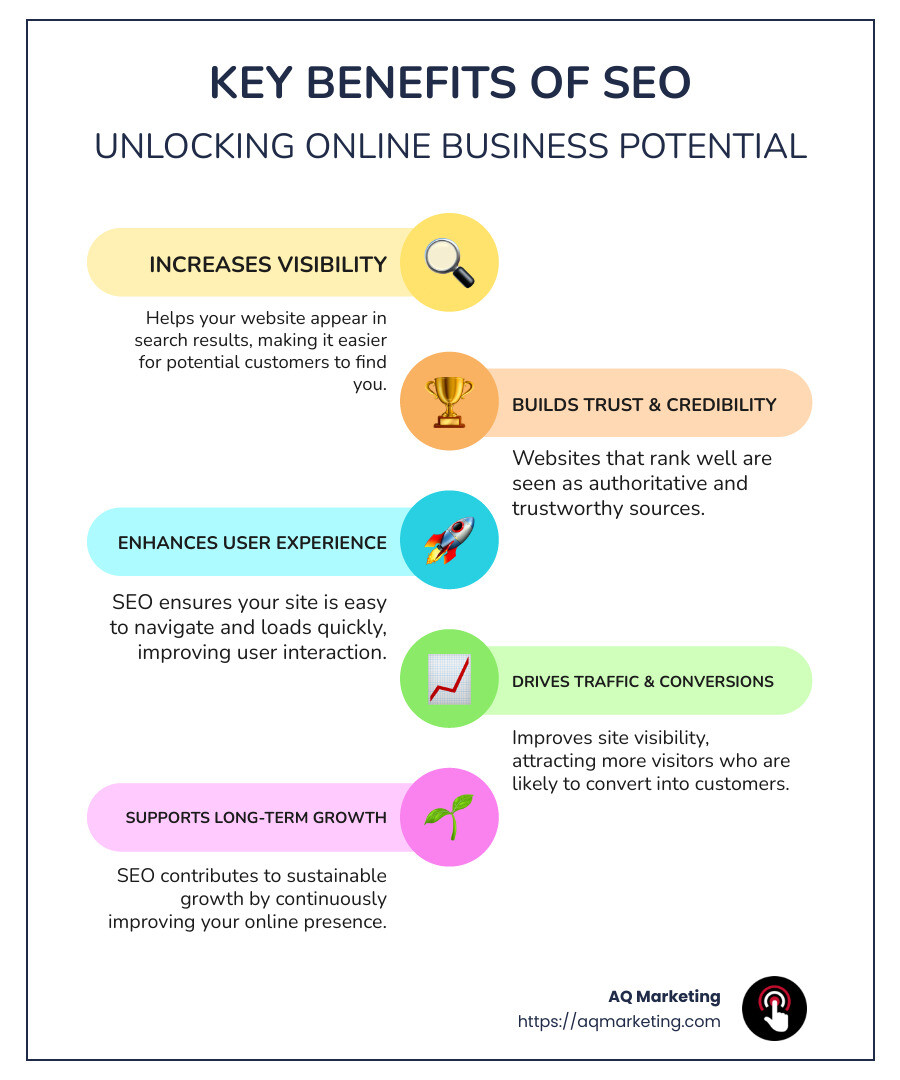
- Increases Visibility: SEO helps your website show up in search engine results, making it easier for potential customers to find you.
- Builds Trust and Credibility: Websites that rank well are often seen as authoritative and trustworthy.
- Improves User Experience: Effective SEO ensures your site is easy to steer and loads quickly, improving the user experience.
- Drives Traffic and Conversions: By improving your site’s visibility, SEO brings in more visitors who are likely to become customers.
In short, SEO is not just about search engines—it’s about creating a seamless experience for users and open uping opportunities for business growth.
Welcome! I’m Robert P. Dickey, the President and CEO of AQ Marketing. With over 20 years in the industry, I’ve been assisting businesses in leveraging SEO search engine optimization to thrive in the digital landscape. As we dig deeper into this guide, you’ll see how SEO can transform your online presence and boost your business.
Seo search engine optimization terms to remember:
– what is search engine optimization
– search engine optimization services
– seo specialist
What is SEO?
Search Engine Optimization (SEO) is the art and science of enhancing a website’s visibility on search engine results pages (SERPs). When someone types a query into a search engine like Google, SEO determines which sites appear at the top of the list. But how does this magic happen?
Organic Search: The Heart of SEO
Organic search refers to the non-paid listings that appear on search engines. These results are based on what the search engine considers most relevant to users’ queries. Unlike paid ads, organic search results are earned through effective SEO strategies. They’re crucial because they capture the majority of clicks. In fact, 49% of marketers say organic search provides the highest ROI.
The Visibility Game
Visibility in search results is like having a spotlight on your business. The more visible you are, the more likely people are to click on your site. Think of SEO as your ticket to getting noticed in a crowded marketplace. With over 3.5 billion searches on Google every day, being visible means tapping into a massive pool of potential customers.
How SEO Works
SEO involves optimizing various elements of your website, such as content, structure, and links, to align with search engine algorithms. These algorithms evaluate factors like relevance, quality, and user experience to rank sites. The ultimate goal of SEO search engine optimization is to improve your site’s ranking, making it more visible and attractive to visitors.
“Ranking higher on Google builds instant credibility for your business. If Google trusts you, then people trust you.”
Why Visibility Matters
When your website ranks high in organic search results, it not only attracts more visitors but also boosts your brand’s credibility. People tend to trust search engines, and if they see your website at the top, they are more likely to trust your business. This trust translates into higher engagement, more conversions, and ultimately, business growth.
SEO is more than just a marketing tactic; it’s a way to connect with your audience, answer their questions, and solve their problems. By leveraging SEO search engine optimization, businesses can position themselves as leaders in their industry and build lasting relationships with customers.
Next, we’ll dive into the mechanics of how SEO works, exploring the processes of crawling, indexing, and ranking.
How SEO Works
Understanding how SEO search engine optimization works involves diving into the processes of crawling, indexing, and ranking. These are the stages that search engines like Google use to find, analyze, and rank your website. Let’s break it down.
Crawling: The Findy Phase
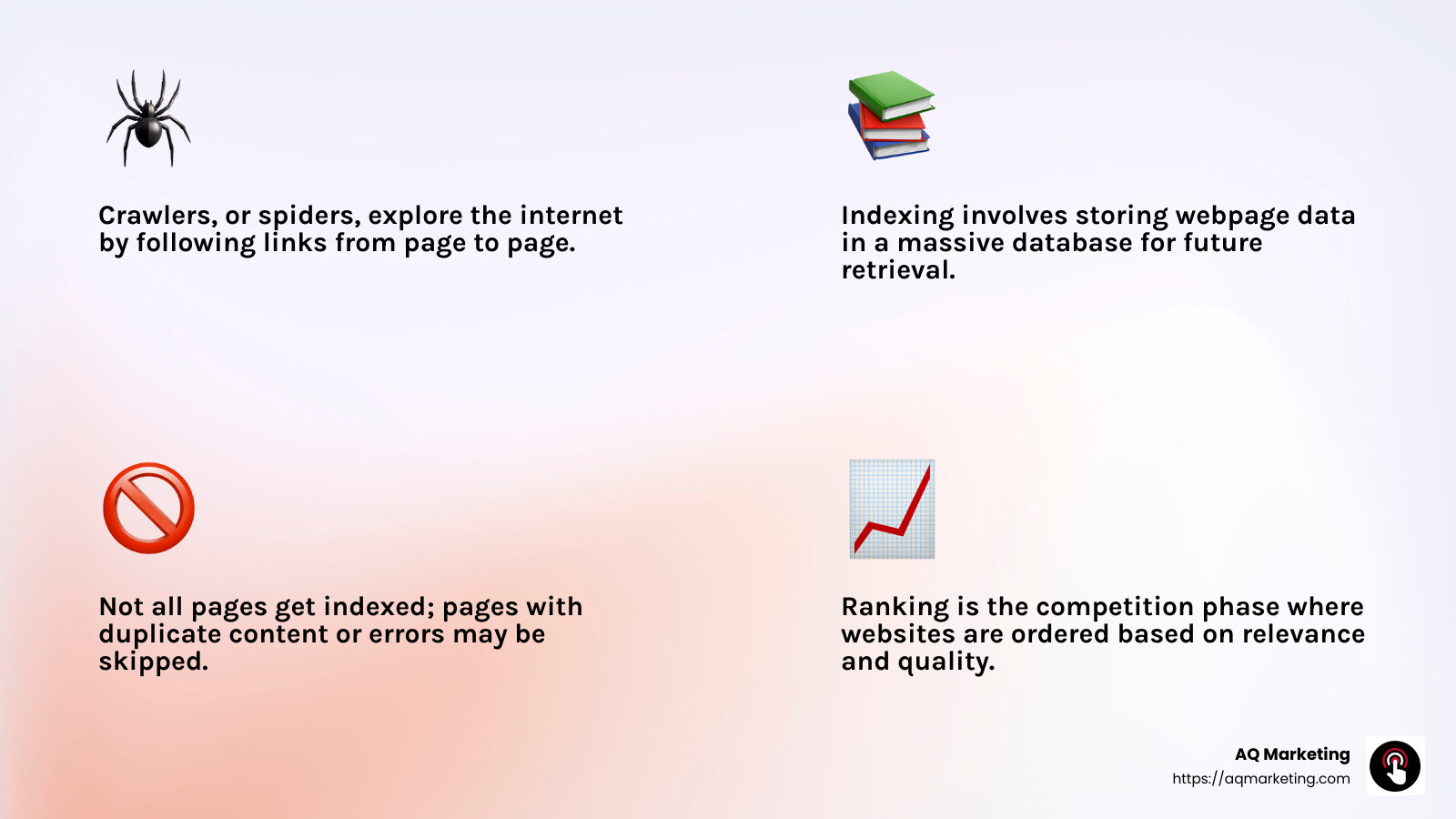
Crawling is the first step in the search engine process. Think of it as a digital exploration. Search engines send out bots, often called “spiders” or “crawlers,” to scour the internet for new and updated content. These bots follow links from page to page, collecting data as they go. If your site is well-linked, either internally or from other websites, these bots are more likely to find you.
Example: Imagine a librarian (the crawler) checking every book (webpage) in a library (the internet) to see if there are any new additions or updates.
Indexing: The Storage Phase
Once a crawler finds your site, the next step is indexing. This is like adding a book to a library catalog. The search engine analyzes the content and metadata of your site, deciding how and where to store this information in its massive database. Not every page gets indexed, though. Pages with thin content, duplicate information, or technical errors might be skipped.
Ranking: The Competition Phase
After indexing, it’s time for ranking. This is where the magic happens. Search engines use complex algorithms to determine the order in which pages appear in search results. These algorithms consider hundreds of factors, such as relevance, quality, and user experience.
Key Factors Influencing Ranking:
- Relevance: Does your content match the search query?
- Quality: Is your content valuable and trustworthy?
- User Experience: Is your site easy to steer and fast to load?
Fun Fact: A major Google update, called RankBrain, uses machine learning to better understand complex queries and improve search results.
Algorithms: The Rules of the Game
Algorithms are the secret sauce of search engines. They are sets of rules that determine how websites are ranked. Google, for instance, is known for frequently updating its algorithms to improve search quality. Notable updates like Panda, Penguin, and Hummingbird have shaped the way SEO is practiced today by emphasizing high-quality content and natural link-building.
“SEO is not about gaming the system. It’s about creating content that genuinely helps users.”
SEO is an ongoing process. It requires understanding these stages and optimizing your website to align with them. By doing so, you increase your chances of ranking higher, gaining more visibility, and ultimately driving more traffic to your site.
Next, we’ll explore the different types of SEO, including on-page, off-page, and technical SEO.
Types of SEO
When it comes to improving your website’s visibility and ranking in search results, there are three main types of SEO search engine optimization: on-page, off-page, and technical SEO. Each type plays a crucial role in ensuring your website is optimized for search engines and users alike. Let’s explore each one.
On-Page SEO
On-page SEO focuses on optimizing individual pages on your website. This involves ensuring that your content is relevant, high-quality, and easily digestible by both search engines and users. Key elements of on-page SEO include:
- Page Titles and Headers: Use your main keywords in page titles and headers to signal to search engines what your content is about.
- Meta Descriptions: These are short summaries of your page content and should include keywords to improve click-through rates.
- Alt Text for Images: Descriptive text for images helps search engines understand what the images are about, improving accessibility and SEO.
- Internal Links: Linking to other pages on your site helps search engines crawl your site more effectively and keeps users engaged.
Tip: Regularly update your content to keep it fresh and relevant, as search engines favor sites that consistently provide valuable information.
Off-Page SEO
Off-page SEO refers to actions taken outside of your website to improve its visibility and authority. This is primarily achieved through building backlinks from reputable sites. The more high-quality links pointing to your site, the more trustworthy it appears to search engines.
- Link Building: Earn links from authoritative websites by creating valuable content that others want to reference.
- Social Media Engagement: Sharing your content on social media platforms can drive traffic and indirectly boost your SEO.
- Guest Blogging: Writing articles for other websites can help you reach new audiences and earn backlinks.
Fun Fact: According to research, backlinks account for about 15% of Google’s ranking factors, making them a critical component of off-page SEO.
Technical SEO
Technical SEO involves optimizing the backend of your website to ensure that search engines can crawl, index, and understand it effectively. This type of SEO focuses on improving site performance and user experience.
- Site Speed: Fast-loading pages are favored by both users and search engines.
- Mobile-Friendliness: With more users accessing the web on mobile devices, having a mobile-responsive site is essential.
- Secure Sockets Layer (SSL): An SSL certificate ensures your site is secure, which is a ranking factor for Google.
- Structured Data: Using schema markup helps search engines understand your content better, potentially leading to improved search results like rich snippets.
Pro Tip: Regularly audit your site for technical issues like broken links or crawl errors to maintain optimal performance.
Each type of SEO is interconnected and essential for a successful SEO search engine optimization strategy. By focusing on on-page, off-page, and technical SEO, you create a strong foundation that improves your site’s visibility and authority.
Next, we’ll explore SEO best practices, including keyword research, content optimization, and link building.
SEO Best Practices
To make your website stand out in search results, you need to follow some key SEO search engine optimization best practices. These practices ensure your site is both search engine-friendly and user-friendly. Let’s break down the essentials: keyword research, content optimization, link building, and user experience.
Keyword Research
Keyword research is the backbone of any successful SEO search engine optimization strategy. It involves finding the words and phrases that your target audience is searching for. Here’s how to do it:
- Create a Seed List: Start with a list of words and phrases your customers might use.
- Use Tools: Plug these into tools like Google Keyword Planner or Moz Keyword Explorer to find data on search volume and competition.
- Prioritize: Focus on keywords with a good balance of high search volume and low competition.
Remember: It’s better to rank on the first page for a less competitive keyword than to get lost in the crowd for a highly competitive one.
Content Optimization
Once you have your keywords, the next step is content optimization. This means making sure your content aligns with what users are searching for:
- Align with Intent: Ensure your content matches the search intent behind the keywords.
- Use Keywords Wisely: Place them naturally in your content, titles, headers, and meta descriptions.
- Keep It High-Quality: Write informative, engaging, and accurate content. Aim for in-depth articles that provide real value.
Tip: Avoid keyword stuffing. Your content should flow naturally, like a conversation with your audience.
Link Building
Link building is about getting other sites to link to yours. This boosts your site’s authority and improves your rankings:
- Earn Quality Backlinks: Create content that others find valuable enough to link to.
- Engage on Social Media: Share your content to increase its reach and potential for earning links.
- Collaborate: Guest blog on reputable sites to reach new audiences and gain backlinks.
Fun Fact: High-quality backlinks are one of the top factors that Google uses to rank websites.
User Experience
User experience (UX) is crucial for keeping visitors on your site and encouraging them to return:
- Fast Loading Times: Ensure your site loads quickly to prevent users from leaving.
- Mobile-Friendly Design: With many users on mobile, your site should be easy to steer on any device.
- Clear Navigation: Make it easy for users to find what they’re looking for.
- Engaging Content: Use images, videos, and interactive elements to keep users engaged.
Pro Tip: A positive user experience not only helps with SEO but also increases the likelihood of conversions and repeat visits.
By focusing on these best practices—keyword research, content optimization, link building, and user experience—you can create a robust SEO search engine optimization strategy. Next, we’ll address some frequently asked questions about SEO to clear up any lingering doubts.
Frequently Asked Questions about SEO Search Engine Optimization
What is search engine optimization SEO?
Search engine optimization (SEO) is the process of improving your website to increase its visibility when people search for products or services related to your business on search engines like Google, Bing, or Yahoo. The better visibility your pages have, the more likely you are to attract attention and draw in prospective and existing customers.
The process involves several components:
- Crawling: Search engines use crawlers to scour the internet and find new or updated pages.
- Indexing: Once a page is finded, it’s analyzed and stored in the search engine’s database, ready to be retrieved when needed.
- Ranking: Based on several factors, such as relevance and quality, search engines rank pages to determine their order in search results.
Benefits of SEO include increased website traffic, higher-quality leads, and improved brand credibility. By appearing at the top of search results, your business can attract more visitors, which can lead to more sales and a stronger online presence.
Can I do SEO on my own?
Yes, you absolutely can do DIY SEO. Many small business owners start by optimizing their own websites. Here’s how you can get started:
- Learn the Basics: There are plenty of free resources online, like Google’s SEO Starter Guide, that can help you understand the fundamentals.
- Use SEO Tools: Tools like Google Analytics and Google Search Console can provide insights into your website’s performance and help you identify areas for improvement.
- Experiment and Monitor: Try different strategies and keep track of what works best for you.
However, SEO can be complex and time-consuming. If you find yourself overwhelmed, seeking professional help might be beneficial. An SEO expert can offer advanced strategies and a deeper understanding of the nuances involved in improving search rankings.
How to do SEO for beginners?
If you’re new to SEO, start with these steps:
Keyword Research
Begin by identifying the keywords your potential customers are using. Use tools like Google Keyword Planner to find relevant keywords with good search volume but low competition.
Content Creation
Create content that aligns with the keywords you’ve identified. Focus on:
- Quality: Write informative and engaging content that provides value.
- Relevance: Ensure your content matches the search intent behind the keywords.
Technical SEO
This involves optimizing the backend of your site to help search engines crawl and index your content effectively:
- Improve Site Speed: Use tools like Google’s PageSpeed Insights to identify and fix speed issues.
- Ensure Mobile-Friendliness: Test your site using Google’s Mobile-Friendly Test to ensure it’s accessible on all devices.
- Optimize Metadata: Use clear and concise meta descriptions and title tags to help search engines understand your content.
Starting with these basics can set a solid foundation for your SEO search engine optimization journey. As you gain more experience, you can explore advanced techniques to further boost your site’s visibility and performance.
Conclusion
AQ Marketing has been a trusted partner for small to medium-sized businesses since 2003, helping them improve their online presence through effective SEO search engine optimization strategies. Located in Woburn, MA, we specialize in delivering long-term, impactful results that help businesses grow and succeed in the digital space.
Our approach is simple yet effective. We focus on understanding your business needs and tailor our strategies to achieve the best possible outcomes. By combining our expertise in SEO with our knowledge of digital marketing, we ensure that your website not only ranks higher in search results but also attracts quality leads that convert into loyal customers.
Long-term results are at the heart of our strategy. We know that SEO is not a one-time effort but a continuous process. That’s why we stay updated with the latest trends and algorithm changes to keep your business ahead of the competition. Our goal is to build a strong online foundation that supports your business growth for years to come.
Having a strong online presence is crucial. It’s not just about being found—it’s about being the preferred choice. With our comprehensive SEO services, we help you achieve just that. From keyword research to content optimization, we cover all aspects of SEO to ensure your business stands out in the crowded online marketplace.
Ready to boost your online presence and achieve long-term success? Explore our digital marketing services and see how we can help your business grow.